
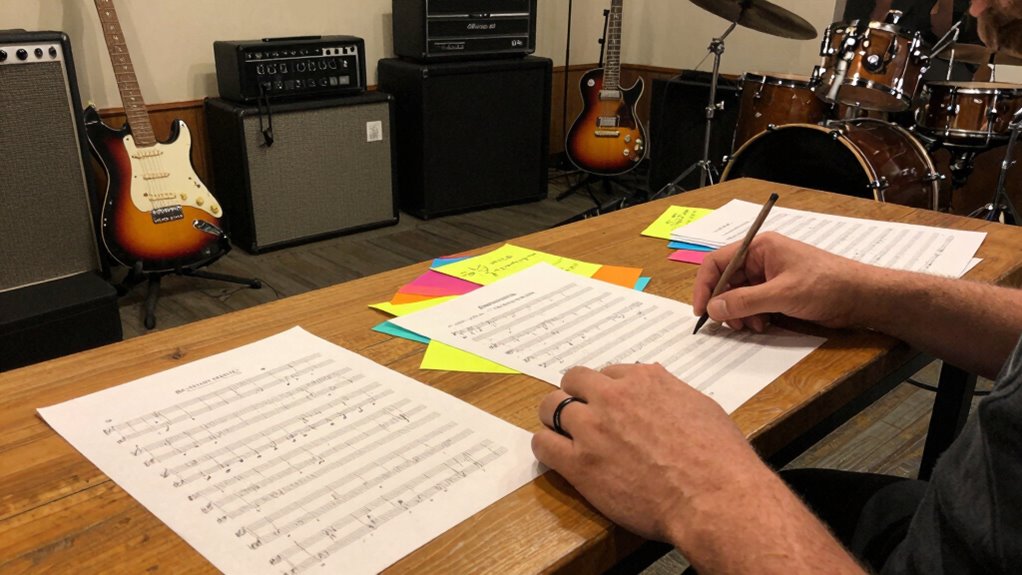

To build a smooth-flowing setlist for your garage band, start with an energetic opener to capture attention and follow with songs that have compatible tempos and keys for seamless progressions. Mix high-energy tracks with softer moments to maintain audience interest, and place your most memorable songs strategically, like near the end. Be flexible, watch the crowd’s responses, and adjust on the fly. Keep these tips in mind, and you’ll discover even more ways to keep your setlist engaging.
Key Takeaways
- Start with a popular, high-energy opener to immediately engage the audience.
- Sequence songs by matching tempos and keys for seamless transitions.
- Mix energetic tracks with softer moments to create dynamic ebb and flow.
- Use audience reactions and cues to adjust song order and pacing in real-time.
- Place your biggest hits at strategic points to maintain excitement and leave a lasting impression.
Why a Smooth-Flowing Setlist Matters for Your Band
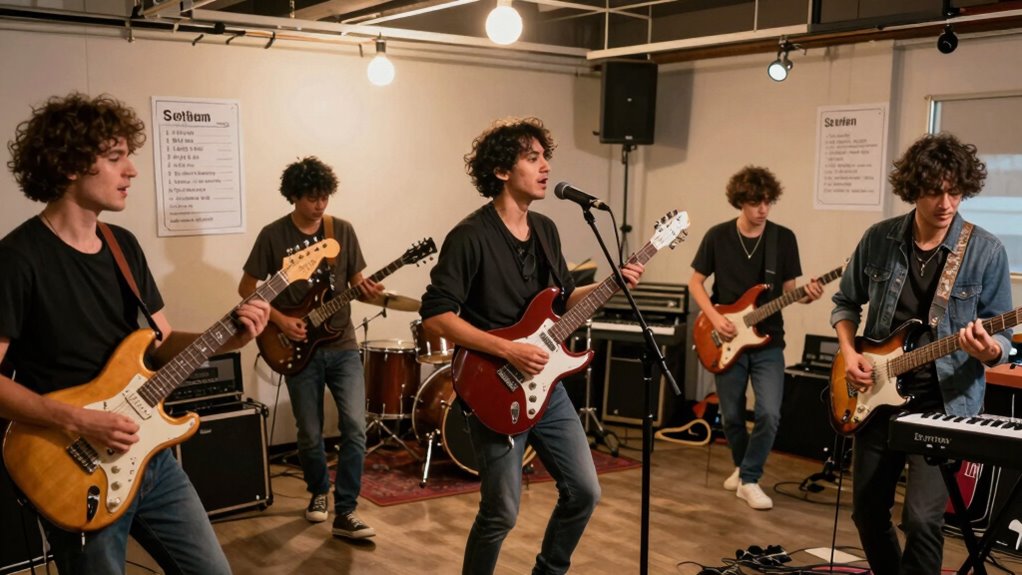
A smooth-flowing setlist is essential because it keeps your audience engaged and energized throughout your performance. The right song selection and setlist order create a natural progression that maintains momentum. When you plan your setlist thoughtfully, you avoid abrupt shifts that can disrupt the vibe or lose listeners’ interest. Carefully sequencing songs allows you to build excitement, create contrast, and give your audience moments to breathe. An intentional setlist keeps energy levels consistent and prevents lulls that might cause your crowd to tune out. Remember, the order in which you play songs is just as important as the songs themselves. A well-structured setlist ensures your performance feels cohesive, memorable, and keeps everyone hooked from start to finish. Additionally, applying innovative cloud solutions can help you organize and plan your setlist more efficiently, making adjustments on the fly with secure and energy-efficient tools.
How to Assess Which Songs Fit Best in Your Setlist

To figure out which songs fit best, you need to transition how their tempos work together and keep the energy flowing smoothly. Pay attention to how engaged your audience remains with each track, ensuring the set keeps their interest. Also, check that the musical keys to consider seamlessly to create a cohesive sound throughout your performance. Incorporating audience engagement insights can further enhance the flow and impact of your setlist.
Song Tempo Compatibility
Evaluating song tempo compatibility is essential for creating a smooth and engaging setlist. You want songs that flow seamlessly, maintaining rhythm consistency and beat matching. To do this, compare their tempos carefully:
| Song A Tempo (BPM) | Song B Tempo (BPM) |
|---|---|
| 120 | 122 |
| 130 | 128 |
| 140 | 143 |
Aim for songs within a 4-6 BPM range to ensure natural progression. Larger gaps can disrupt energy and make your set feel disjointed. When tempos are close, you can also adjust slightly during performance to keep the groove tight. This approach keeps your setlist cohesive, helping you maintain a steady rhythm that keeps your audience engaged. Additionally, understanding song tempo compatibility can help you select tracks that resonate well together, creating a more professional and polished performance.
Audience Engagement Levels
Understanding your audience’s engagement levels helps you choose songs that resonate and keep the energy alive throughout your set. Watch how they respond to different songs: do they dance, sing along, or seem uninterested? Your stage presence plays a pivotal role here; engaging interactions can boost audience involvement. Consider how your equipment setup influences your performance—clear sound and visual appeal can enhance engagement. If a song sparks excitement, follow it with another that maintains that energy, or gently shift to a more mellow tune if needed. Pay attention to subtle cues, like clapping or body language, to gauge if your audience is fully engaged. Adjust your song choices accordingly, ensuring each change keeps the momentum flowing and your audience hooked from start to finish. Additionally, understanding your audience demographics can help tailor your setlist more effectively to match their preferences and expectations.
Musical Key Transitions
Choosing songs that flow smoothly into each other often depends on their musical keys. By understanding music theory, you can assess how different keys relate through harmonic progression, which guides smooth passageways. Songs in the same key naturally connect, but you can also explore modulations to nearby keys for variety. Pay attention to chord progressions—especially pivot chords or common tones—that facilitate seamless shifts. Analyzing the tonal center of each song helps you identify compatible pairs, ensuring your setlist maintains musical coherence. Remember, a good transition isn’t just about key compatibility; it also considers the energy and mood of each piece. Using these principles, you can craft a setlist that feels cohesive, engaging, and professionally arranged—even if you’re a garage band. Additionally, considering preservation techniques can help maintain the integrity of your set over time.
How to Match Your Setlist to Your Audience’s Energy

To keep your audience engaged, you need to read their energy and adjust your setlist accordingly. You might increase the tempo when they’re lively or slow down to build anticipation, matching the song intensity to the vibe. Paying attention to these cues guarantees your performance stays dynamic and connected. Incorporating dynamic contrast ratios can also help in creating more engaging and visually stimulating transitions between songs, enhancing the overall experience.
Read the Crowd
Reading the crowd is essential for delivering a memorable performance, as your setlist should resonate with the energy and mood of your audience. Pay close attention to their reactions—if they’re energetic, keep the momentum with lively songs. If they seem subdued, slow down with softer tunes. Your song arrangement and stage presence play vital roles; adapt your setlist on the fly to maintain engagement. To visualize, consider this table:
| Audience Energy | Your Response |
|---|---|
| Excited | Play upbeat songs, interact more |
| Chill | Slow, soulful tunes, relaxed vibe |
| Mixed | Balance high-energy and mellow |
| Disengaged | Change the mood quickly, surprise |
Matching your setlist to their mood keeps the crowd involved and makes your performance unforgettable. Using audience cues effectively can help you anticipate and respond to their energy levels in real-time.
Adjust Your Tempo
Adjusting your tempo is essential for maintaining the crowd’s energy and ensuring your setlist hits the right emotional beats. Incorporate tempo variation carefully to match the vibe, speeding up during lively moments and slowing down when the crowd needs a breather. Consistent rhythmic flow helps keep the audience engaged, so avoid abrupt changes that could disrupt the groove. By paying attention to how your songs flow into each other, you create a seamless experience that feels natural and dynamic. Monitor the audience’s reactions and be ready to adjust your tempo on the fly—sometimes a slight shift can reignite energy or bring things back down. Balancing rhythmic consistency with thoughtful tempo variation keeps your set fresh and responsive, making sure your audience stays connected from start to finish. Additionally, understanding how to maintain a steady rhythmic flow can help prevent disjointed transitions and keep the energy consistent throughout your performance.
Match Song Intensity
Matching your song choices to your audience’s energy is key to creating a memorable set. When you gauge their vibe, you can better blend genres and select songs with lyrical themes that resonate. For high-energy crowds, pick upbeat tracks that encourage dancing, then ease into more mellow songs as the crowd relaxes. Use genre blending to keep the set fresh and engaging. Pay attention to the audience’s reactions; if they seem tired, slow down the tempo. Conversely, if they’re hyped, escalate the intensity. Here’s a quick guide:
| Audience Energy | Song Selection Tips |
|---|---|
| Excited | Fast-paced, energetic genre blending |
| Relaxed | Mellow, lyrical themes of reflection |
| Mixed | Balance of high and low intensity |
| Dancing | Upbeat, danceable beats |
| Listening | Focus on lyrical depth and melody |
Being adaptable and understanding audience engagement can make all the difference in how your set is received.
Tips for Choosing an Engaging Opener to Capture Attention

Want to grab your audience’s attention from the very first note? Choosing an engaging opener is key to setting the tone and building audience anticipation. Use opener strategies that excite and energize, like starting with a high-energy song or a familiar hit. Consider how your opener creates momentum for the rest of the set. Think about these tips:
- Kick off with a crowd favorite to instantly connect
- Start with a powerful, upbeat song to energize the room
- Use a song that introduces your band’s unique style
- Pick an opener that flows smoothly into the next tune
- Consider the mood you want to set from the outset
How to Build Seamless Transitions Between Songs
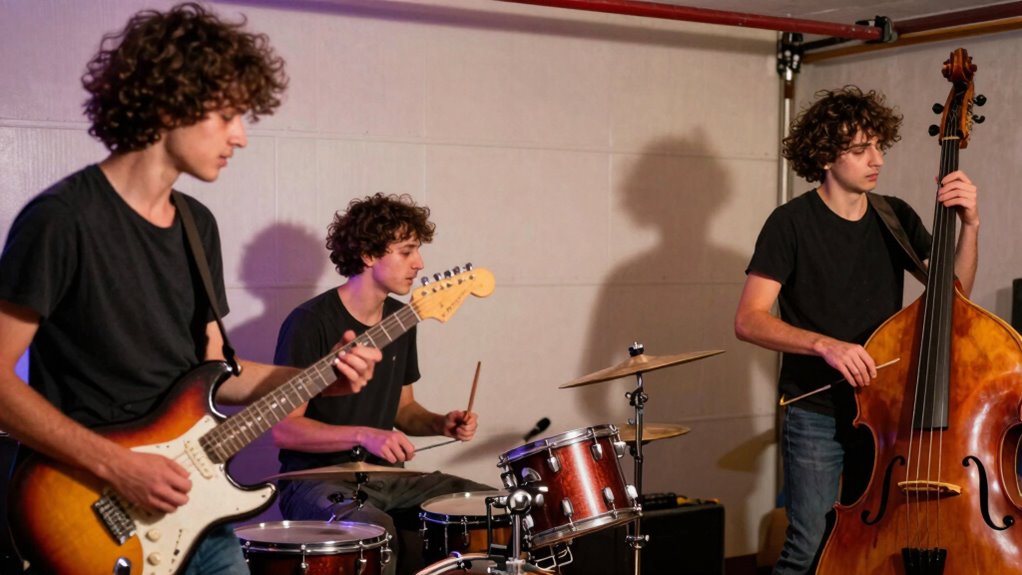
To create smooth progressions, you need to match tempos and keys so songs flow naturally from one to the next. Planning these progressions ahead allows you to maintain energy and avoid awkward pauses. By aligning these elements, your setlist stays cohesive and keeps the audience engaged. Incorporating essential gear for every prepper, such as portable food storage options, can also help ensure you’re prepared for unexpected situations that might arise during performances or rehearsals.
Match Tempos and Keys
Seamless shifts between songs rely heavily on matching their tempos and keys, ensuring a smooth flow that keeps the energy consistent. Focus on rhythm matching to maintain a steady groove and avoid abrupt changes that jar the audience. Key harmony helps create a natural progression, so songs with compatible keys make it easier to blend smoothly. To achieve this:
- Adjust tempos slightly to match the upcoming song
- Use songs with similar key signatures for easier key transitions
- Identify common chords to bridge songs effectively
- Pay attention to the song’s rhythm patterns for consistency
- Experiment with subtle tempo and key shifts for seamless flow
Plan Smooth Transitions
Building smooth shifts between songs involves more than just matching tempos and keys; it requires thoughtful planning of how one piece flows into the next. To achieve this, focus on seamless transitions through genre blending and strategic cover selection. You can use common elements or motifs to connect songs, making the changes feel natural. For example, blending a blues cover into a rock song creates continuity. Consider the rhythm and energy levels when sequencing tracks. Use the table below as a guide:
| Transition Technique | Example |
|---|---|
| Genre blending | Funk into soul |
| Cover selection | Original into cover of similar style |
| Dynamic shifts | Soft ballad into upbeat tune |
| Instrumental overlaps | Guitar solo bridging songs |
| Key/tempo adjustments | Slight tempo change for flow |
This planning guarantees your setlist flows effortlessly, maintaining audience engagement.
Varying Pace and Dynamics to Keep Your Audience Hooked

Varying the pace and dynamics throughout your set is essential for keeping your audience engaged. It prevents monotony and highlights your musical versatility. To achieve this, consider mixing up genres with mashups, blending energetic tracks with softer, more introspective moments. Switch tempos to build excitement or create contrast, and alter volume levels to emphasize key songs. Incorporate lyrical themes that resonate differently—some uplifting, others reflective—to deepen emotional impact. You can also experiment with song order to create a natural ebb and flow, keeping listeners on their toes. Remember, a well-placed change in energy can turn a good set into an unforgettable experience. Use these approaches to craft a setlist that keeps your audience hooked from start to finish.
Strategically Place Your Most Memorable Songs for Impact

To make a lasting impression, you should strategically place your most memorable songs at key moments in your set. Thoughtful song placement maximizes audience impact, creating peaks that resonate deeply. Consider starting strong with a song that hooks listeners immediately, then saving your biggest hits for moments when you want to energize or rally the crowd. Placing a well-known song near the end can leave a lasting impression, encouraging applause and engagement. Avoid clustering all your favorites at once; spread them out for sustained excitement. By intentionally positioning these standout tracks, you guide the audience’s emotional journey, ensuring your set feels cohesive yet dynamic. Remember, strategic song placement isn’t just about the songs you play—it’s about how they shape your audience’s experience.
Planning Breaks and Loops to Maintain Energy and Flexibility
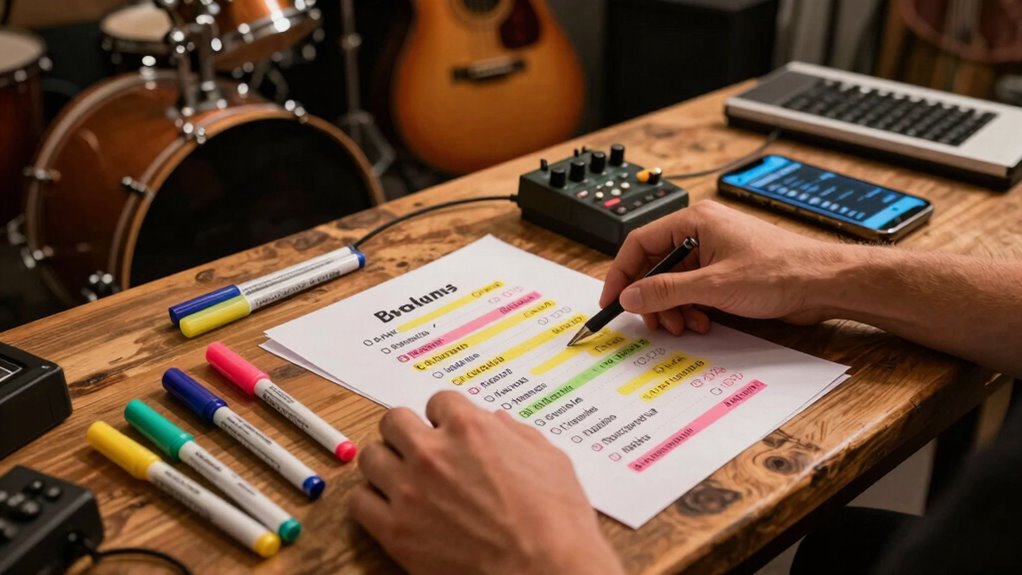
Incorporating planned breaks and loops into your setlist helps you maintain high energy levels while staying flexible to audience reactions. Use instrumental breaks to give both you and the crowd a breather, creating space for crowd interaction and connection. Loops can extend a song’s energy or serve as transition points, keeping the momentum alive. Consider these tips:
- Insert brief instrumental pauses to reset energy.
- Use loops to extend popular sections or build anticipation.
- Schedule a pause for crowd interaction, encouraging sing-alongs or cheers.
- Adjust your setlist on the fly based on audience response.
- Keep timing flexible to add spontaneous tempo changes or jams.
These strategies keep your performance dynamic, engaging, and adaptable—key to a memorable live show.
Rehearsing and Refining Your Setlist for Smooth Flow
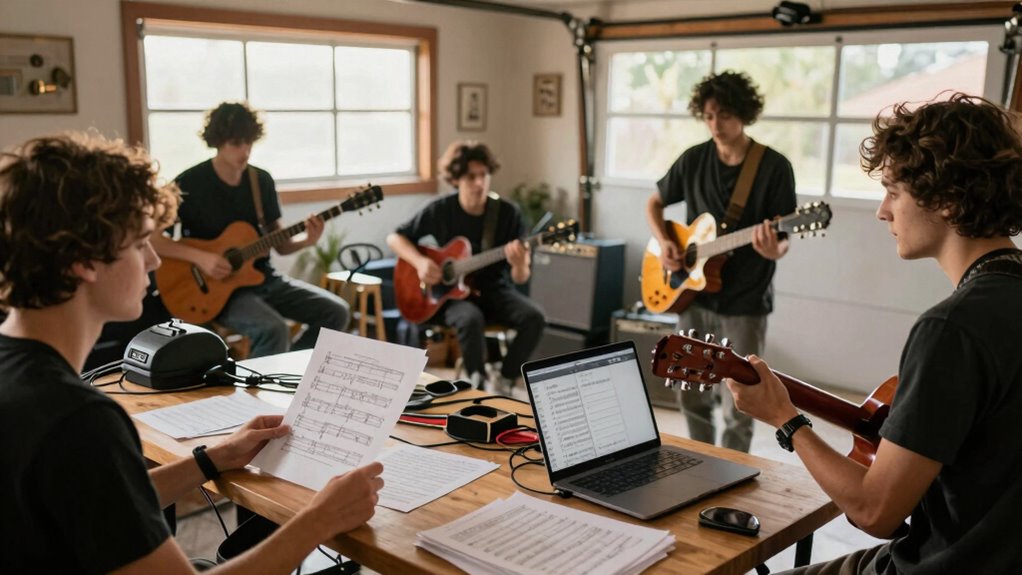
Once you’ve planned your setlist with strategic breaks and loops, the next step is to rehearse it thoroughly. Focus on your stage presence, ensuring each song flows naturally into the next. Pay attention to how your stage setup influences energy and movement; arranging gear and positioning yourselves can improve passages and engagement. During rehearsals, simulate live conditions to identify awkward pauses or abrupt changes. Practice your entrances and exits to smooth out the overall flow. Record rehearsals to spot areas needing refinement and to build confidence. As you refine, consider how the set feels emotionally and physically. The goal is a seamless performance where passages feel effortless, and your stage presence captivates the audience from start to finish.
How to Adapt Your Setlist on the Fly During Live Shows

Even with meticulous planning, live shows can surprise you, making it essential to adapt your setlist on the fly. Flexibility lets you respond to crowd energy or technical issues. Use musical improvisation to extend a song or switch gears if a tune isn’t resonating. Engage your audience with genuine stage banter to gauge their mood and adjust accordingly. Keep a few backup songs ready in your mind or setlist. Watch for cues from bandmates or audience reactions to pivot smoothly. Remember, staying relaxed and confident helps you make quick decisions. Practice improvising segue and banter to build confidence. Here are some tips:
Stay flexible during live shows by improvising, reading the crowd, and having backup plans.
- Read the room and pick up on crowd energy
- Use musical improvisation to extend or shorten songs
- Incorporate spontaneous stage banter
- Have backup songs or snippets prepared
- Stay flexible and confident
Frequently Asked Questions
How Long Should Each Song Typically Last in a Setlist?
Typically, each song in your setlist should last about 3 to 5 minutes, balancing energy and variety. Keep an eye on the overall setlist timing, aiming for around 30 to 60 minutes total. This way, you maintain audience engagement without rushing or dragging. Adjust song duration as needed, but try to keep transitions seamless to guarantee a cohesive flow and an enjoyable experience for your fans.
What Are Common Signs of a Poorly Flowing Setlist?
A poorly flowing setlist often shows through awkward song order and clunky set progressions, making the audience lose energy. If you notice abrupt genre shifts or inconsistent tempos, it signals that your set isn’t smooth. An interesting stat: 75% of live performances are rated higher when setlists are well-structured. Focus on seamless song order and natural set transitions to keep your audience engaged and your performance cohesive.
How Do You Handle Technical Issues During a Live Performance?
When you face technical issues during a live performance, stay calm and quickly troubleshoot by checking your equipment setup. Keep spare cables, batteries, and tools nearby for quick fixes. Use your knowledge of technical troubleshooting to identify problems fast, like loose connections or faulty gear. Communicate with your bandmates and audience if needed, and have a plan to adapt, so the show continues smoothly despite setbacks.
Can Setlist Flow Vary Across Different Music Genres?
Your setlist’s flow can definitely vary across genres, like different threads weaving unique tapestries. Genre variations and stylistic differences shape how songs connect, creating distinct emotional journeys. For example, rock might build energy, while jazz flows smoothly between solos. You adapt your shiftings to match each genre’s rhythm and vibe, ensuring your audience feels the story you tell through your music, making every performance unforgettable.
How Do You Involve the Audience in Improving Setlist Flow?
You involve the audience in improving setlist flow by encouraging audience participation and reading their reactions. You can incorporate improvisation cues, like extending a jam or inviting sing-alongs, based on their energy. Engage them with eye contact and ask for their input during breaks. This makes the experience interactive, helping you adapt your set in real-time, ensuring a seamless, energetic flow that keeps everyone engaged and connected throughout your performance.
Conclusion
Remember, a well-structured setlist keeps your audience engaged and energized. Studies show that audiences retain 65% more of a performance when the setlist flows smoothly. So, plan your progressions, choose your songs carefully, and stay flexible. With practice, you’ll create a seamless experience that leaves your crowd wanting more. Keep experimenting, and you’ll turn every gig into an unforgettable show that truly showcases your band’s talent.