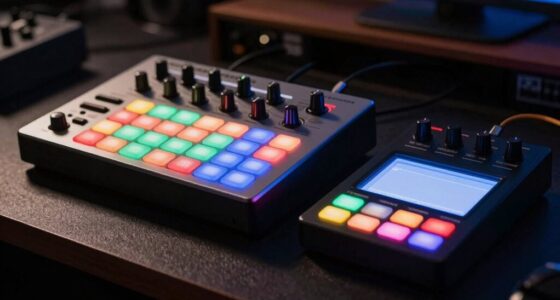
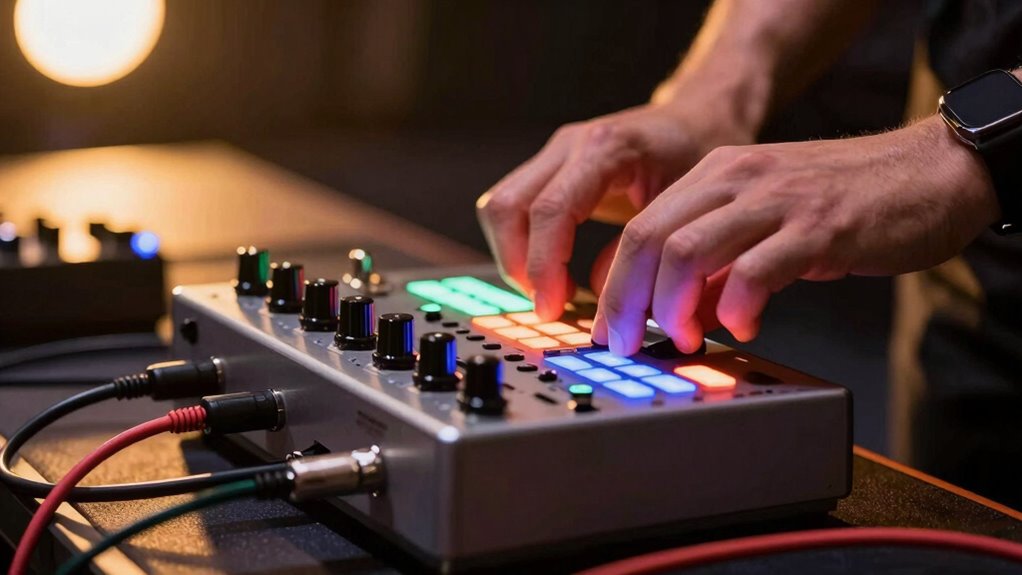

To choose a looper that matches your performance style, start by considering your preferred techniques like layering, ambient textures, or live looping, and guarantee the device offers quick overdubs, switching, and undo/redo features. Check that it integrates smoothly with your pedalboard and effects, supports stereo if needed, and is easy to operate during performances. Opt for a compact design if space is tight and consider future sync options like MIDI. Keep exploring to find the best fit for your unique style.

Get audio and creator gear delivered free with Prime
- Fast, free delivery on millions of items
- Prime Video, Amazon Music and more included
- Member-only deals all year
Key Takeaways
- Match loop features like multiple track memory and real-time editing to your preferred layering and live performance techniques.
- Ensure pedal compatibility and signal flow align with your existing setup for seamless integration.
- Prioritize controls for quick overdubbing, switching loops, and undo/redo functions for efficiency.
- Consider power options, device size, and future upgrade possibilities to fit your pedalboard and performance needs.
- Choose a looper that supports your style’s sound textures, effects compatibility, and synchronization requirements.
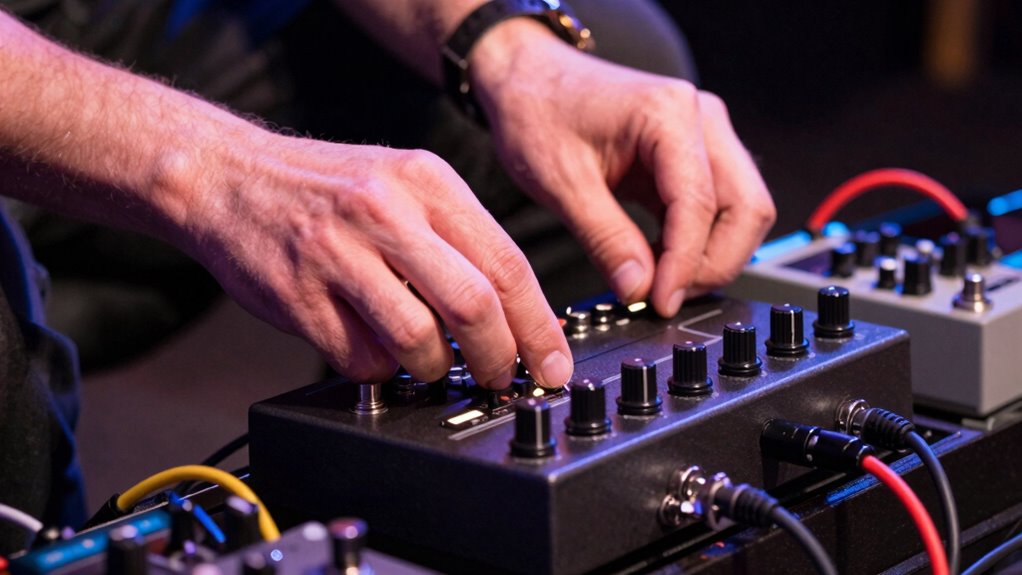
Have you ever wondered how musicians create layered, complex sounds during live performances or recordings? The secret often lies in looping technology. When choosing a looper, you need to consider your preferred looping techniques—that is, how you plan to build and manipulate your sound layers. Do you want to layer multiple parts, create ambient textures, or perform seamless live loops? Your style will determine what features to prioritize. For instance, if you want to quickly overdub ideas and switch between different loops, a looper with intuitive controls and multiple track memory might be essential. Alternatively, if you prefer slow, deliberate layering, look for one with undo/redo functions or real-time editing capabilities. Your approach to looping will influence the kind of device that fits best.
Another critical aspect is pedal compatibility. Many musicians use looping pedals as part of their pedalboard, so you want a looper that integrates smoothly with your existing setup. Check whether the looper is compatible with your current pedals and effects. Some loopers work best with certain buffer sizes or have specific input/output requirements. For example, if you frequently use modulation or delay effects, ensure the looper can handle these signals without loss of quality. Also, consider whether the looper has stereo inputs and outputs if your rig relies on stereo sound. Compatibility isn’t just about connections; it’s also about workflow. You want a device that feels like a natural extension of your setup, not something that complicates your performance. Additionally, understanding the signal flow in your setup can help you choose a looper that integrates smoothly. Incorporating signal routing options can further streamline your performance and make your setup more adaptable.
When assessing pedal compatibility, think about the type of power supply it requires and whether it can run on your existing power sources. Some loopers are battery-powered, which offers portability but might limit power stability, while others need an external power supply. Compatibility also involves the size and placement of the device—if you have a crowded pedalboard, a compact design might be preferable. Additionally, check if the looper can sync with other pedals or MIDI devices, especially if your performances involve complex setups or automation. Moreover, choosing a looper with MIDI synchronization capabilities can greatly enhance your overall control and flexibility during live performances. Being aware of future upgrade options might also be beneficial as your setup evolves over time.
best guitar looper pedal for live performance
As an affiliate, we earn on qualifying purchases.
As an affiliate, we earn on qualifying purchases.
Frequently Asked Questions
Can I Upgrade the Looper’s Features Later?
Yes, you can upgrade your looper’s features later, especially if you choose a model that supports Looper customization. Many modern loopers allow firmware updates and additional features through software, making future upgrades possible. Be sure to check if the device has upgrade options and compatibility with future updates before buying. This way, you can enhance your performance and keep your looper current without needing a new one.
What’s the Best Looper for Live Looping Performances?
For live looping performances, you want a looper that offers versatile features for various looping techniques and performance scenarios. Look for one with multiple tracks, undo/redo options, and real-time control. A pedal with seamless looping and immediate playback helps keep your flow smooth. Consider models that are durable and easy to operate on stage. This way, you can adapt quickly, improvise, and deliver dynamic performances confidently.
Do All Loopers Support MIDI Connectivity?
Not all loopers support MIDI connectivity. For example, if you’re upgrading your setup, you’ll want a looper with MIDI compatibility to sync seamlessly with other gear. Many modern loopers offer feature upgradeability through MIDI, allowing you to expand your control options and integrate with your studio or live rig. Check the specifications before buying to verify your chosen looper supports MIDI if that’s a priority for your performance setup.
How Long Do Looper Batteries Typically Last?
Loopers typically have a battery life ranging from 4 to 12 hours, depending on their power consumption and usage. Heavier use of features like LED lights or built-in effects can drain batteries faster. For extended performances, consider models with efficient power consumption or use an AC adapter. Always keep spare batteries handy to guarantee you don’t run out of power mid-set, especially during long gigs or practice sessions.
Are There Portable Loopers Suitable for Travel?
Yes, there are travel-friendly options perfect for your on-the-go performances. Portable features like compact size, lightweight design, and built-in batteries make these loopers easy to carry and use anywhere. You’ll find models with simple controls, durable builds, and versatile functionalities that fit seamlessly into your travel gear. These devices enable you to create, practice, and perform effortlessly while on the move, ensuring your music stays with you wherever you go.
stereo looper pedal with undo redo functions
As an affiliate, we earn on qualifying purchases.
As an affiliate, we earn on qualifying purchases.
Conclusion
So, when you pick a looper that fits your style, you’re stitching a musical tapestry that’s uniquely yours. Think of it as finding the perfect brush for your painting—each one adds a splash of your personality to every note. Trust your instincts, explore different options, and let your performance flow like a river—dynamic, unstoppable, and full of life. With the right looper, your music will soar, painting vivid stories that only you can tell.
compact MIDI compatible looper pedal
As an affiliate, we earn on qualifying purchases.
As an affiliate, we earn on qualifying purchases.
multi-track looping pedal for guitar
As an affiliate, we earn on qualifying purchases.
As an affiliate, we earn on qualifying purchases.
Halloween Picks
halloween
As an affiliate, we earn on qualifying purchases.