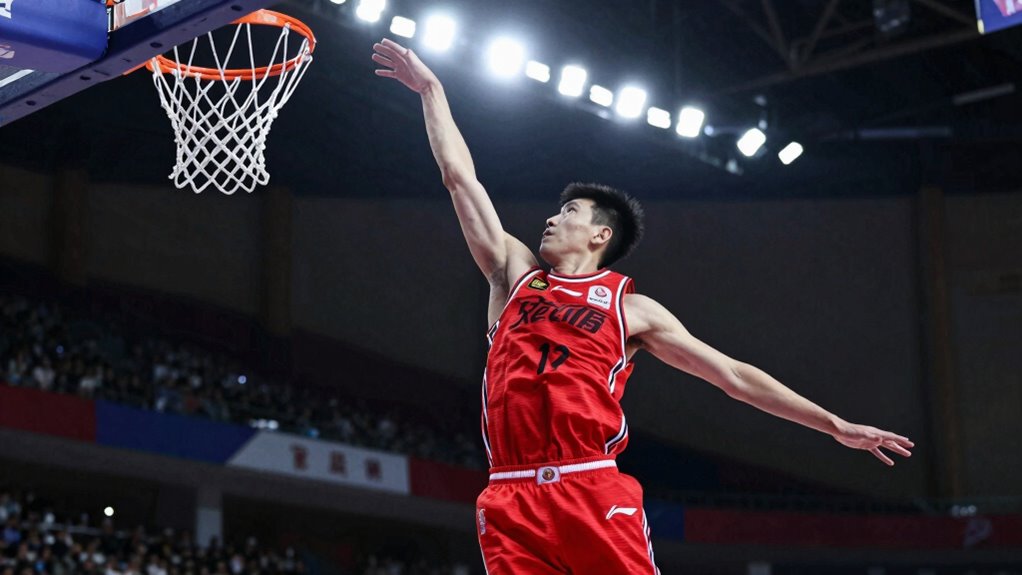

To stop overplaying, you need to follow the space rule, which great players use to keep proper court spacing. This means avoiding crowding or overcommitting, maintaining even distances, and recognizing when to shift position to create or exploit gaps. By doing so, you’ll prevent turnovers and open up more scoring chances for your team. Mastering these concepts helps you stay balanced and effective, revealing the strategies that top players constantly rely on to succeed.
Key Takeaways
- Great players recognize when teammates are overcovered and adjust their positioning to create space.
- They maintain proper court spacing to avoid crowding and facilitate quick ball movement.
- Using subtle body and footwork movements, they exploit defensive overcommitments.
- Effective spacing draws defenders out, opening passing lanes and scoring opportunities.
- They communicate and read the defense to prevent overplaying and maintain team flow.
What Is the Space Rule and Why Is It Important in Basketball?
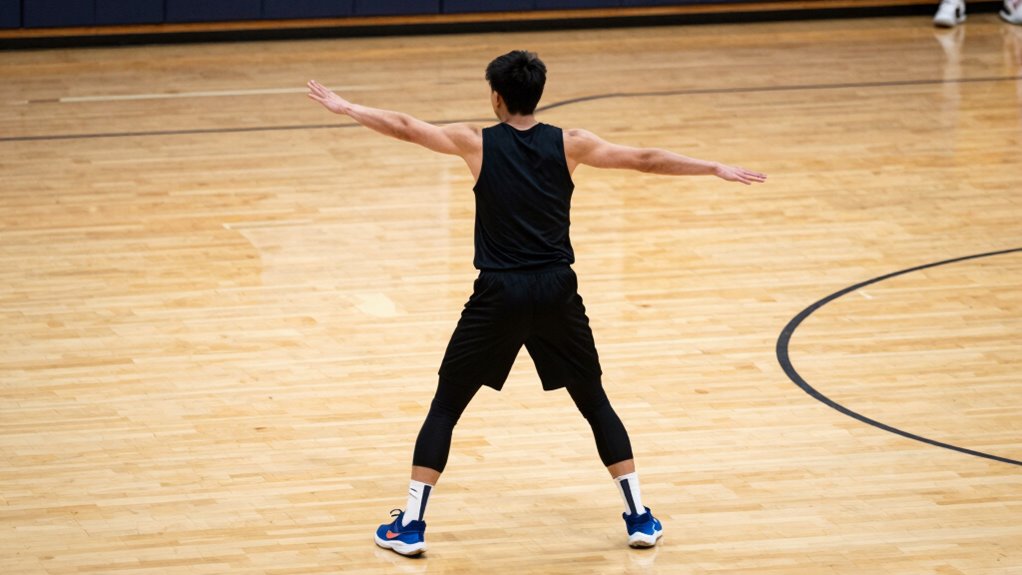
The space rule in basketball is designed to guarantee players maintain proper positioning and avoid unnecessary congestion on the court. When you follow this rule, you help create clear lanes for ball movement and open shots. Spacing drills are essential tools to develop your awareness of proper distances between teammates. These drills teach you to position yourself effectively, ensuring the defense can’t easily trap or double-team. Good spacing allows for quick passes, better ball movement, and more scoring opportunities. It also keeps your team balanced, making it harder for opponents to exploit gaps. By mastering the space rule, you keep the court open, making it easier to execute plays smoothly and efficiently. Ultimately, proper spacing elevates your game and benefits the entire team.
How Overplaying Can Hurt Your Game and Your Team
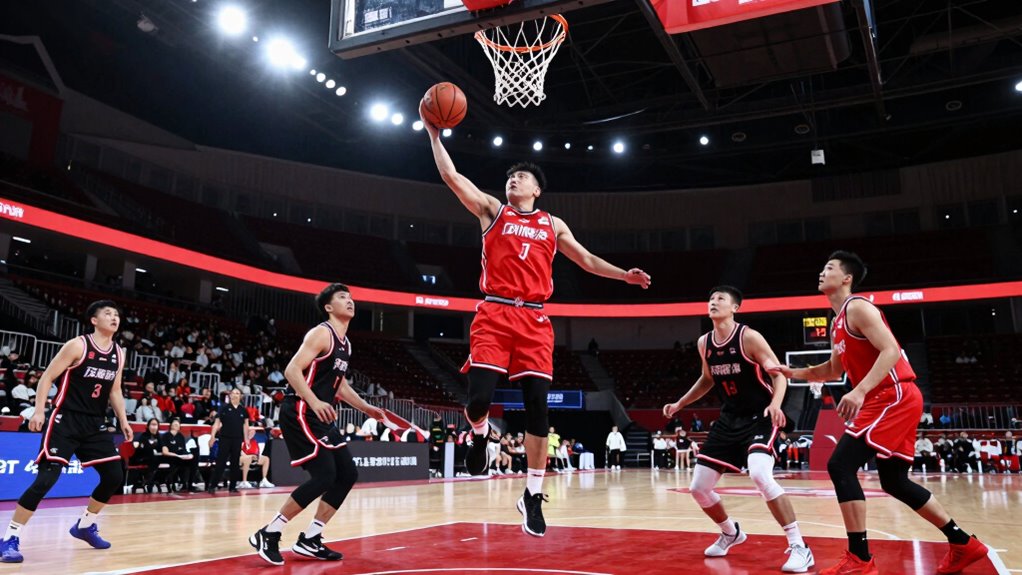
When you overplay, you risk losing key playmaking chances and putting more pressure on yourself and your teammates. This can lead to more turnovers and missed opportunities to score. Ultimately, it throws off your team’s balance and makes it harder to win. Incorporating seasonal flavor blends can keep your game fresh and exciting, helping you avoid the pitfalls of overplaying.
Loss of Playmaking Opportunities
Overplaying often leads you to dominate the ball excessively, which can quickly cut down your playmaking options. When you focus too much on dribble penetration, defenders anticipate your moves and trigger a defensive collapse. This leaves fewer passing lanes and limits your team’s scoring chances. Overdribbling can cause defenders to double-team, forcing turnovers or forcing you into tough shots. The more you overplay, the less you see open teammates, reducing your ability to create quality scoring opportunities. To avoid this, recognize when your dribble is stifling your options and reset the offense. The table below highlights common consequences of overplaying:
| Consequences | Example Situation | Result |
|---|---|---|
| Reduced vision | Over-dribbling | Missed open teammates |
| Defensive collapse | Too much dribble penetration | Fewer passing options |
| Turnovers | Overplaying in tight defense | Loss of possession |
| Limited creativity | No space to pass | Predictable offense |
| Forced shots | Overconfidence | Poor shot selection |
Additionally, maintaining proper spacing on the court can help preserve your playmaking options and prevent defenders from collapsing on you.
Increased Turnover Risks
Overdribbling increases the likelihood of turning the ball over, especially against aggressive defenses. When you hold onto the ball too long, defenders can easily anticipate your moves, forcing hurried passes or bad shots. Overplaying hampers smooth ball movement, making it easier for opponents to trap or double-team you. Defensive reactions become more aggressive, which increases the chance of steals or forced turnovers. Instead of relying on dribbling to create space, focus on efficient ball movement—quick passes and off-ball cuts—to keep defenders off balance. Additionally, incorporating Free Floating strategies can help you maintain better court awareness and avoid risky dribbling situations. By avoiding overplaying, you reduce risky dribbling situations, maintain better control, and limit turnovers. Keeping the game flowing with smart ball movement not only protects the ball but also creates more scoring opportunities for your team.
Reduced Team Balance
Overusing your dribble can disrupt your team’s overall balance, making it harder to execute a cohesive offense. When you rely too much on individual moves, ball movement slows down, giving defenders time to set up. This can lead to a lack of connected gameplay, which is essential for effective team offense and defense. Overplaying can hinder defensive communication, as teammates may hesitate to switch or rotate, unsure if you’ll draw help or get trapped. Without fluid ball movement and clear communication, your team struggles to find open shots or stop the opposition. Overplaying not only burdens you but also forces teammates into awkward positions, weakening team cohesion. To maintain balance, focus on sharing the ball, encouraging quick passes, and supporting effective defensive communication. This approach keeps your offense sharp and your defense organized.
How to Recognize When to Use the Space Rule During Play
Knowing when to use the space rule during play is essential for maintaining effective ball movement and creating scoring opportunities. You’ll recognize the right moment when teammates are in tight coverage or when dribbling techniques are becoming predictable, limiting options. Use team communication to gauge if a teammate is open or needs help, signaling when to spread out or collapse. The key is observing defenders’ positioning—if they’re overcommitting or shifting, that’s your cue to utilize space effectively. When your teammates signal or you notice gaps in the defense, it’s time to create space, allowing for better passing lanes or driving angles. Mastering this awareness helps you decide precisely when to implement the space rule, keeping the offense fluid and unpredictable. Additionally, understanding defensive positioning can help you anticipate when opponents are vulnerable to exploiting the space.
The Principles of Effective Court Spacing
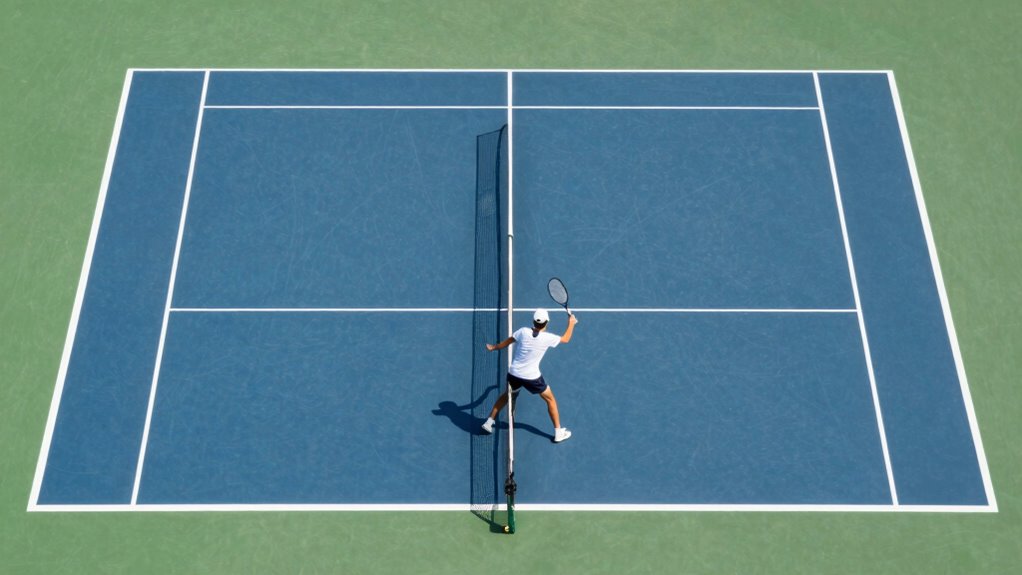
Effective court spacing is the foundation of a successful offense, as it creates clear passing lanes, open shots, and driving opportunities. To achieve this, maintain good ball movement, which keeps defenders guessing and prevents them from collapsing on one player. Your court awareness should guide you in positioning yourself where you can receive or make a pass easily. Proper spacing involves keeping players spread out, avoiding crowding, and understanding each other’s movements. When your teammates are well-spaced, you can quickly exploit gaps in the defense or initiate quick ball reversals. Consistent awareness of the court’s layout allows you to anticipate plays and react accordingly. Remember, the better your spacing, the more effective your offense becomes, making it harder for opponents to defend. Additionally, incorporating innovative strategies like leveraging energy-efficient technology can give your team a strategic edge.
Examples of Great Players Using the Space Rule Effectively
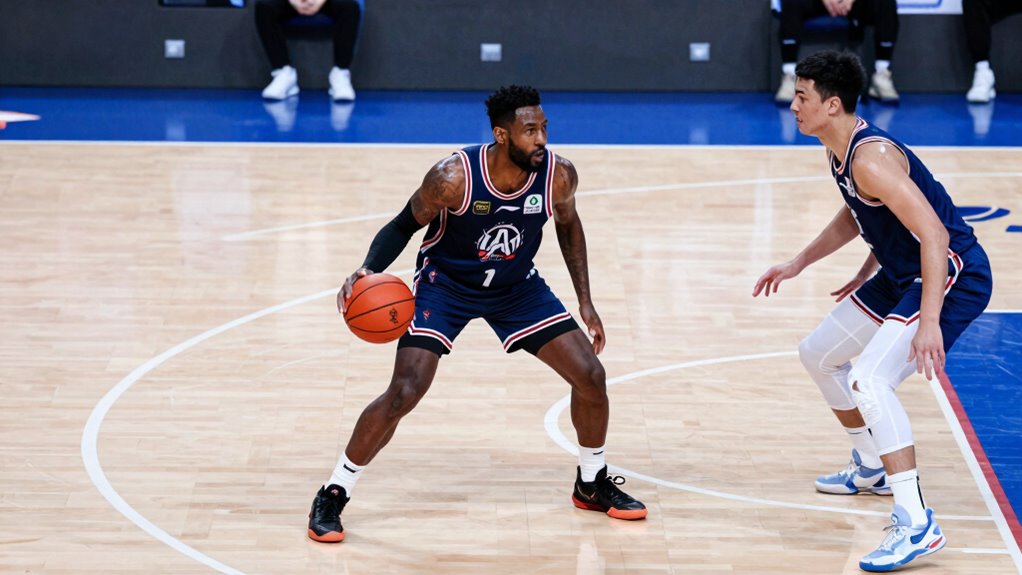
You can learn a lot by watching how great players use the space rule to their advantage. LeBron’s court positioning creates passing lanes, Curry’s shooting space forces defenses to spread out, and Jordan’s defensive spacing confuses opponents. These examples show how mastering space can elevate your game profoundly. Understanding architectural solutions can also help in designing optimal spaces that support strategic gameplay and movement.
LeBron’s Court Positioning
LeBron James exemplifies the power of smart court positioning by consistently leveraging the space rule to maximize his impact. His ability to read the game allows him to stay in ideal spots, creating scoring opportunities. To do this effectively, he:
- Maintains good spacing, staying just outside the paint to open lanes.
- Uses his impressive player agility to shift positions quickly, confusing defenders.
- Keeps an eye on ball movement, positioning himself where passes are most likely to come.
- Adjusts his location to support teammates, making himself available for quick passes and easy shots.
- By understanding and applying the concept of proper spacing, he ensures he remains an effective threat on the court.
Curry’s Shooting Space
Have you ever wondered how Stephen Curry consistently creates open shots? It all comes down to his exceptional court awareness and understanding of passive defense. Curry recognizes when defenders are overplaying him or losing track of his movement. Instead of forcing shots, he uses subtle changes in his positioning to exploit gaps in passive defense. By maintaining sharp awareness of his surroundings, he draws defenders out of position, opening up his shooting space. Curry’s ability to read the defense allows him to quickly find the right moment to shoot or pass. His mastery of the space rule shows how great players use passive defense against them, turning it to their advantage. This relentless court awareness is what makes Curry a constant threat from anywhere on the court. Additionally, court awareness enables players to anticipate opponents’ movements and make smarter decisions, which is essential for mastering the space rule.
Jordan’s Defensive Spacing
Ever wonder how great defenders like Michael Jordan used spacing to shut down opponents? Jordan mastered defensive spacing by maintaining ideal distance, disrupting shooters’ shot selection, and using precise defensive footwork. Here’s how he did it:
- He kept a close but respectful distance, forcing opponents to take tough shots.
- His defensive footwork allowed quick shifts, staying in position without overcommitting.
- Jordan anticipated passes, clogging lanes and limiting scoring options.
- He used his body to influence shot angles, making opponents choose less efficient shots.
- He also understood the importance of defensive positioning, adjusting his stance based on the situation to maximize effectiveness.
Drills to Master the Space Rule and Improve Your Spacing
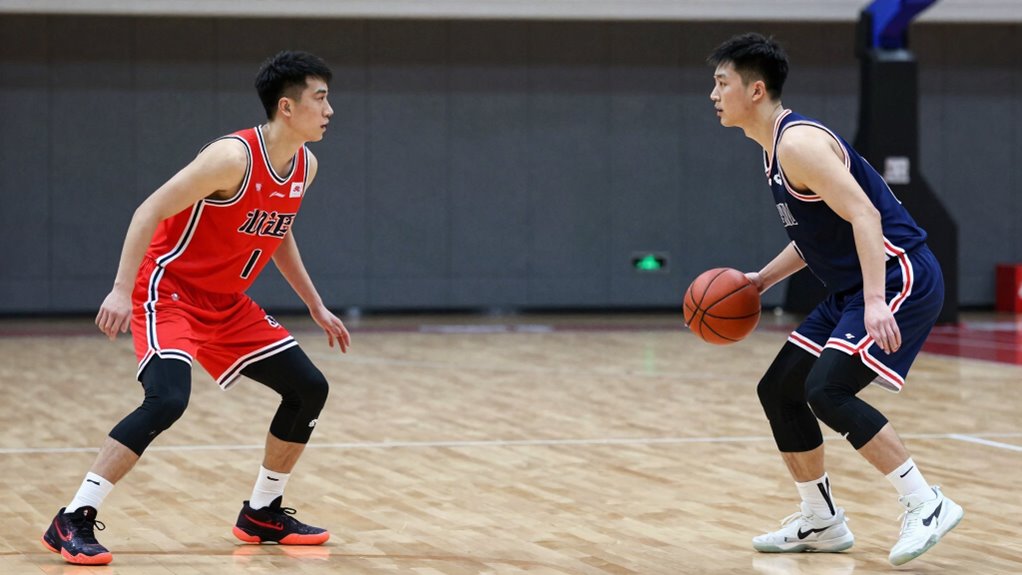
Are you struggling to consistently maintain proper spacing on the court? To improve, focus on specific dribbling drills that emphasize control and awareness of your position relative to teammates and opponents. Incorporate footwork exercises that enhance your agility and balance, making it easier to adjust your position quickly. Practice cone drills that simulate game situations, encouraging you to stay spaced out and avoid overplaying. Use partner drills where you rotate between attacking and defending, reinforcing the importance of maintaining ideal distance. These drills help you develop the instinct to find open spots and keep proper spacing. Consistently practicing these techniques will make maintaining the space rule second nature, ultimately leading to smarter plays and better team flow.
Common Spacing Mistakes That Cause Overplaying: and How to Fix Them

If your spacing isn’t consistent, you’re likely to overplay your hand and overwhelm your partner. Avoid overloading the space by maintaining even, deliberate distances. Fixing these mistakes helps you stay balanced and confident during play.
Spacing Consistency Matters
Have you noticed how inconsistent spacing can make your playing sound uneven or overdone? Spacing consistency is key to maintaining a smooth, controlled sound. When your spacing varies, it disrupts the flow and reveals a lack of positional discipline. To improve, focus on these areas:
- Practice keeping your distances uniform between notes to create a steady rhythm.
- Use visual cues or markers to maintain consistent spacing on your instrument.
- Record your playing to identify irregularities in spacing and adjust accordingly.
- Develop a routine that emphasizes controlled, deliberate movement rather than rushing through phrases.
Avoid Overloading the Space
When you focus too much on maintaining perfect spacing, you might unintentionally overload the space between notes, making your playing feel cluttered or overdone. Overloading occurs when you try to fill every gap with constant ball movement or overly detailed player positioning. This can create confusion, reducing clarity and making the overall rhythm feel busy instead of balanced. To fix this, prioritize intentional spacing—leave some pauses and trust your natural flow. Use deliberate ball movement to create breathing room, and position players strategically so they complement each other without crowding. Remember, less is often more; freeing up space helps highlight key notes and makes your playing more dynamic and engaging. Balance and restraint are your best tools to avoid overloading the space.
Reading the Game and Adjusting Your Spacing on the Fly

Reading the game effectively allows you to recognize how your opponents are adjusting their defense and positioning in real time. By observing ball movement and defensive alignment, you can make smarter spacing decisions. For example:
- Notice when defenders shift closer to the ball, indicating help defense or a trap.
- Recognize when defenders sag off, giving you space to attack or pass.
- Track how defensive alignment changes as the ball moves, revealing weak spots.
- Adjust your spacing accordingly to exploit gaps or avoid overcommitting.
Staying alert lets you anticipate their next move, ensuring your positioning remains ideal. This quick adjustment keeps you one step ahead, making it harder for opponents to disrupt your offense or trap you. Mastering this skill is key to controlling the game’s flow.
Benefits of Following the Space Rule for Offense and Defense
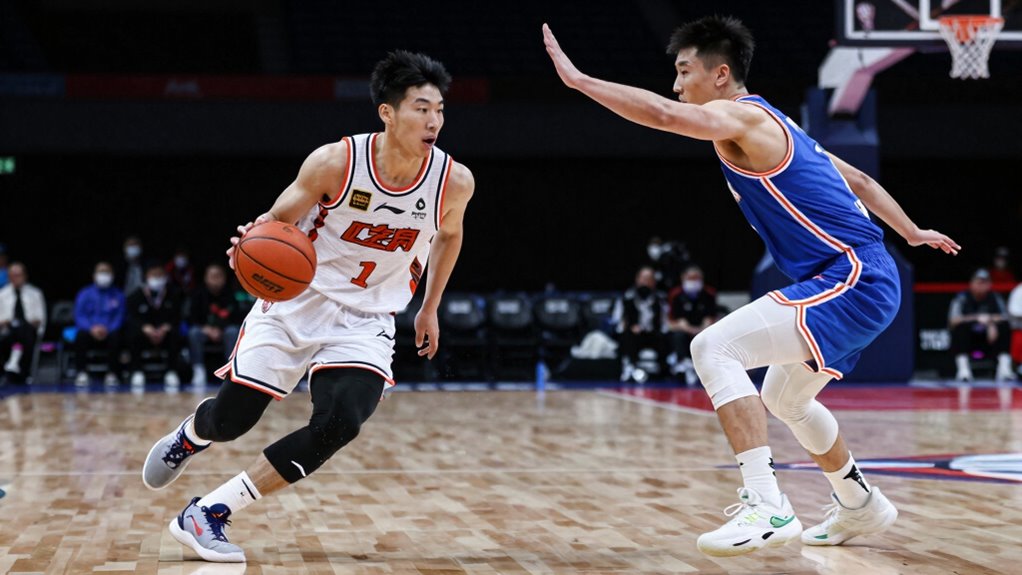
Following the space rule in basketball keeps both your offense and defense organized and effective. When you maintain proper spacing, ball movement becomes smoother, making it harder for defenders to anticipate passes. Good player positioning creates open shots and lanes, giving your team more scoring options. On defense, proper spacing prevents opponents from collapsing the paint or finding easy passing lanes, forcing them into tougher shots or turnovers. It also helps you stay balanced, ready to switch or rotate quickly. By following the space rule, you enhance team chemistry and clarity, reducing chaos on the court. This discipline guarantees everyone understands their role, making your offense more dynamic and your defense more resilient. Ultimately, disciplined spacing elevates your team’s overall performance and winning potential.
Tips for Coaches and Players to Reinforce Smart Spacing Habits
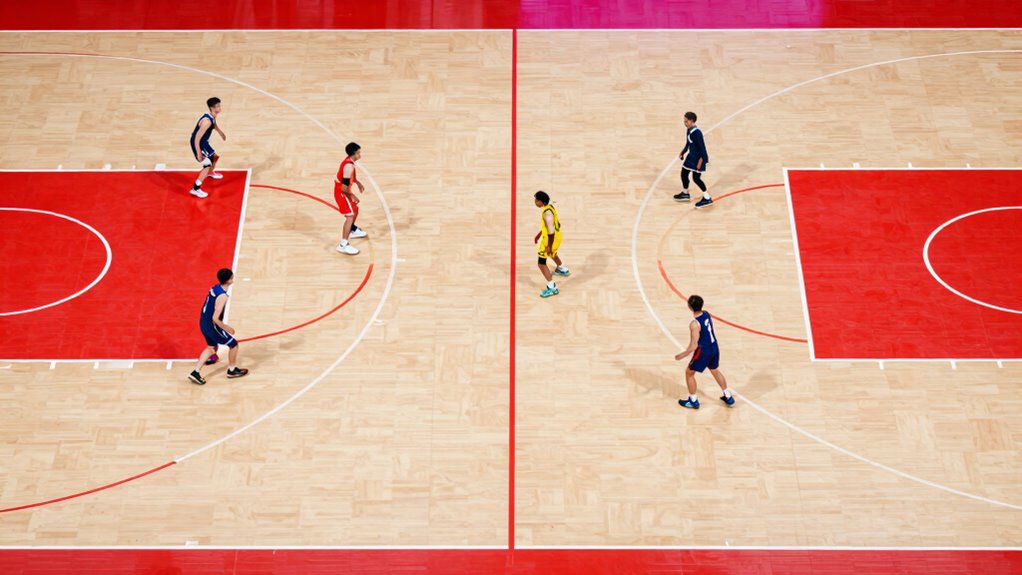
To reinforce smart spacing habits, coaches and players should prioritize consistent communication on the court. Clear calls and signals keep everyone aware of positioning and help prevent overplaying. Additionally, incorporate these tips:
Consistent communication on the court is key to maintaining smart spacing and preventing overplaying.
- Practice dribbling techniques that emphasize control and awareness to maintain proper spacing during movement.
- Use conditioning drills that simulate game scenarios, emphasizing quick decision-making and positioning.
- Reinforce the importance of maintaining proper distance through drills that focus on spacing, such as passing and moving.
- Review game footage with players to identify spacing mistakes and develop strategies for improvement.
These steps help players internalize spacing principles, making smart positioning second nature during high-pressure moments. Consistent communication and targeted drills build the habits necessary for effective court spacing.
Frequently Asked Questions
How Does the Space Rule Influence Team Chemistry and Communication?
The space rule improves your court awareness, helping you recognize open teammates and avoid crowded areas. By maintaining proper spacing, you boost team dynamics, making communication clearer and more effective. When everyone understands their position relative to others, it leads to smoother plays and stronger trust. As a result, your team functions more cohesively, minimizing confusion and maximizing scoring opportunities through better spacing and communication.
Can Overemphasizing Spacing Lead to Predictable Offensive Plays?
Yes, overemphasizing spacing can lead to predictable offense. When you focus too much on perfect spacing, opponents quickly notice your patterns, making it easier to anticipate your plays. Spacing overuse might cause your team to become too predictable, limiting offensive creativity. To avoid this, mix up your spacing and incorporate unpredictable movements. This keeps defenders guessing and maintains the element of surprise, making your offense more effective and less predictable.
What Are Signs Players Are Overplaying Their Positions During a Game?
You’ll notice players are overplaying their positions when they frequently drift out of their assigned spots, creating defensive gaps. This often results in poor ball movement, as teammates struggle to find open options. Overplaying can also cause confusion, allowing opponents to exploit open spaces. Stay alert for these signs, and remind players to maintain proper spacing, ensuring smooth ball movement and minimizing defensive gaps.
How Does the Space Rule Vary Between Different Basketball Levels (Youth, High School, Pro)?
Imagine a court where spacing fundamentals guide every move. At youth levels, players focus on simple court positioning, keeping it tight and easy to manage. High school players start understanding wider spacing to stretch defenses. Pro players, however, master dynamic court positioning, using space to create scoring opportunities. The space rule adapts with skill levels, emphasizing smarter movement and better court awareness, helping you maximize your impact at any level.
Are There Specific Player Roles That Benefit Most From Strict Spacing Adherence?
As a player, you’ll find that shooters and ball handlers benefit most from strict spacing adherence. When you focus on proper spacing, it enhances ball movement and creates better scoring opportunities. Incorporate spacing drills into your practice to develop awareness, ensuring you stay out of congestion. This discipline helps teammates find open shots and keeps the offense flowing smoothly, making everyone more effective on the court.
Conclusion
Mastering the space rule can boost your team’s efficiency by up to 25%, according to recent stats. When you avoid overplaying and maintain smart spacing, you create open shots and better defensive positioning. Remember, even the best players like LeBron and Curry rely on proper court spacing to dominate. Stay aware, adjust on the fly, and make spacing your secret weapon—your game and team will thank you.