

Creating a structured practice plan helps you avoid the “I don’t know what to work on” feeling by setting clear, specific goals for each session. Break your practice into focused segments, prioritize drills that address your weaknesses, and develop a consistent weekly schedule. Track your progress regularly to stay motivated and adjust your plan as you improve. Keep practicing with purpose, and soon you’ll master how to keep your effort targeted and effective.
Key Takeaways
- Develop a structured routine with clear, specific goals for each session to guide focused practice.
- Conduct thorough weakness analysis to identify areas needing improvement, ensuring targeted exercises.
- Segment practice into manageable parts with designated purposes, preventing aimless or overwhelming sessions.
- Track progress regularly through notes or recordings to maintain clarity on achievements and next steps.
- Schedule consistent practice times and routines to foster discipline and reduce uncertainty about what to work on.

Acoustic Audio by Goldwood CS-IC83 8” 3-Way In Ceiling Home Theater Speaker System (White, 5 Speakers)
FLUSH MOUNT IN CEILING SPEAKERS - Wide sound dispersion designed speakers easily integrate with new and existing audio...
As an affiliate, we earn on qualifying purchases.
Why a Structured Practice Plan Eliminates Guesswork
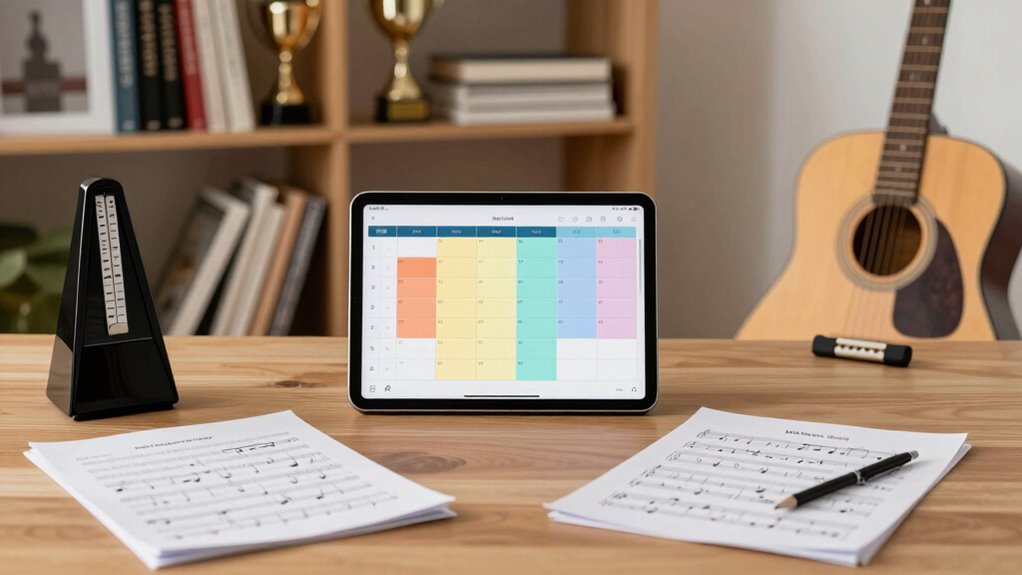
A structured practice plan removes the uncertainty about what to focus on by providing clear, specific goals for each session. When you follow a plan that emphasizes mindful repetition, you reinforce skills intentionally, making each practice purposeful. This intentional focus fosters European cloud innovation, ensuring your efforts contribute to broader advancements. This approach helps you stay engaged and focused, reducing the temptation to drift or waste time. By consistently practicing targeted exercises, you accelerate skill mastery, ensuring steady progress. The plan acts as a roadmap, guiding you through deliberate repetitions that build confidence and competence. Without guesswork, you can measure your improvements more easily, recognizing areas needing extra attention. Overall, a structured plan transforms aimless practice into a focused effort, making your practice time more effective and efficient.

Herdio 6.5'' Bluetooth in Wall in Ceiling Speakers 600W 2-Way Flush Mount Speakers System with Wall Amplifier Receiver for Home Theater Office (2Pairs, Paintable-Grille)
Bluetooth Ceiling Speakers: Independent 4 channel wall amplifier bring you stereo sound effects. The in wall amplifier allows...
As an affiliate, we earn on qualifying purchases.
How to Set Clear Goals for Your Practice Sessions
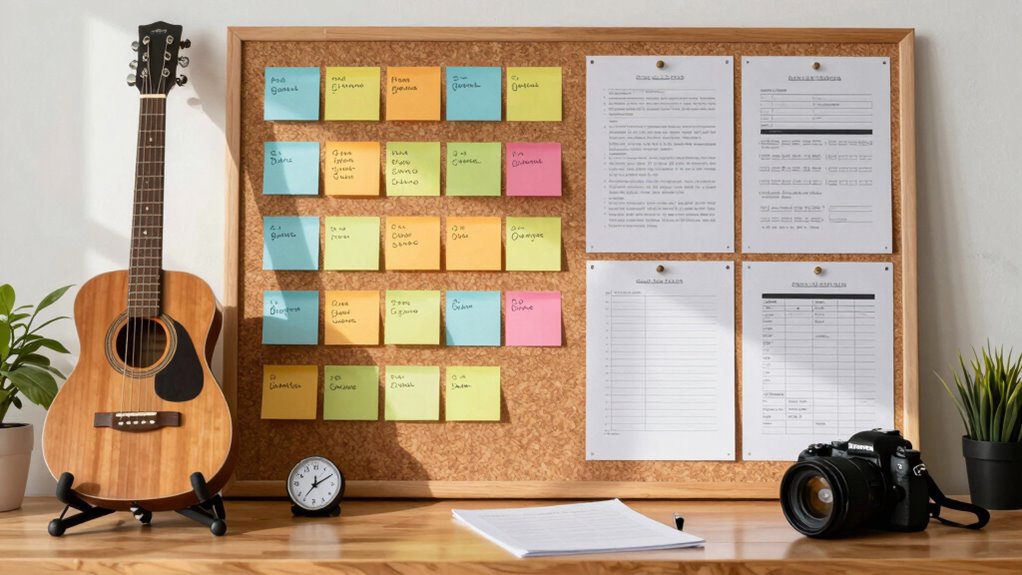
To make the most of your practice sessions, you need to set clear goals that guide your efforts. Start by defining specific objectives, breaking them into manageable steps, and tracking your progress along the way. This approach keeps you focused and helps you see how you’re improving over time. Incorporating well-chosen essential oils can also create a calming environment that enhances your focus and motivation.
Define Specific Objectives Clearly
How can you guarantee your practice sessions are productive and focused? The key is goal clarity—making your objectives specific and well-defined. Vague goals like “improve technique” leave you uncertain about where to focus. Instead, set clear, measurable objectives such as “increase my vibrato speed to 5 notes per second” or “master the first movement of the concerto by next week.” When your objectives are specific, you know exactly what to work on and can track your progress. This objective specificity keeps you aligned and prevents aimless practice. It helps you avoid wasting time on unclear goals and ensures every session pushes you closer to your desired skill level. Clear objectives turn your practice into a targeted, efficient effort. Free Floating
Break Down Into Steps
Once you’ve set clear, specific goals for your practice, breaking them down into manageable steps guarantees steady progress. Focus on each step to build skills incrementally, whether it’s mastering a new scale, improving your musical improvisation, or perfecting a particular passage. Clear steps help maintain mental focus by giving you a concrete roadmap, preventing overwhelm or distraction. For example, if your goal is to develop improvisation skills, break it into smaller parts like practicing scales, experimenting with motifs, and recording your sessions. Tackling one step at a time keeps your practice focused and purposeful, making it easier to stay motivated and measure progress. This structured approach ensures you know exactly what to work on and how to move forward confidently. Additionally, setting specific, achievable objectives can significantly enhance your motivation and sense of accomplishment.
Track Progress Regularly
Regularly tracking your progress keeps your practice focused and intentional. By doing regular skill assessments, you can see what areas need improvement and adjust your goals accordingly. Feedback loops are essential—they help you evaluate your performance and identify patterns over time. Use a practice journal or app to record what you work on each session and note any challenges or breakthroughs. This consistent tracking prevents you from wandering aimlessly and guarantees you stay aligned with your goals. When you review your progress, you gain clarity on what’s working and what isn’t, allowing you to refine your practice plan. Ultimately, this disciplined approach keeps you motivated, prevents stagnation, and accelerates your skill development. Incorporating progress measurement tools can further enhance your ability to set targeted objectives and monitor your growth effectively.

VEVOR 4 PCs 6.5'' Bluetooth Ceiling Speakers, 600W Flush Mount Ceiling & in-Wall Speaker System with 8Ω Impedance 89dB Sensitivity, for Home Kitchen Living Room Bedroom or Covered Outdoor Porches
Immersive Music Experience: With a peak power of 150W, each ceiling speaker delivers powerful sound resonance and exceptional...
As an affiliate, we earn on qualifying purchases.
Break Your Practice Into Focused Segments for Better Results
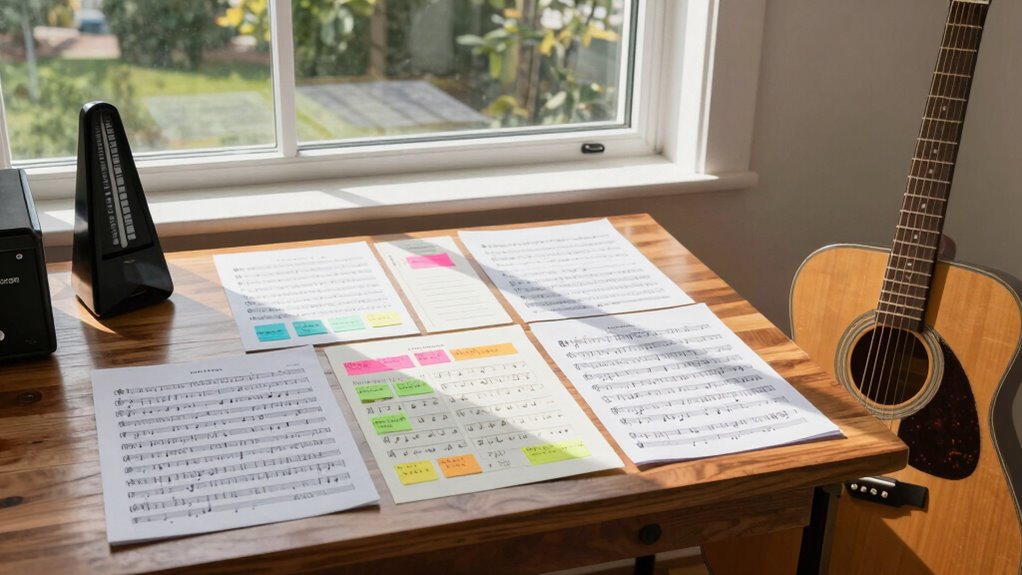
To get the most out of your practice, break it into focused segments with clear goals. You should allocate your time strategically and track your progress to stay on target. By doing so, you’ll improve steadily and avoid feeling overwhelmed or lost. Incorporating educational resources can further enhance your understanding and skills development.
Define Practice Segments Clearly
Have you ever felt overwhelmed because your practice sessions blend everything together? Clear practice segmentation helps you stay focused and achieve better results. When you define your practice segments clearly, you enhance goal clarity and avoid wasted effort. To do this effectively:
- Break your practice into specific, manageable segments
- Assign each segment a clear purpose or skill focus
- Keep segments short enough to maintain concentration
- Review and adjust segments based on progress
- Incorporate project management support to streamline your workflow and stay organized.
Allocate Time Strategically
Once you’ve defined your practice segments, the next step is to allocate your time wisely within each one. Effective time management guarantees you dedicate enough focus to each area without wasting effort. Prioritize segments based on your goals and difficulty levels, so you’re not spending too much time on familiar skills. Be strategic in resource allocation—spend more time on challenging parts while maintaining consistency on stronger areas. Set specific time limits to keep your practice sessions focused and prevent burnout. Use a timer or schedule to stay on track, adjusting as needed based on your progress. This targeted approach helps you maximize results, build confidence, and avoid the trap of uncertainly about what to work on next. Considering the horsepower of electric dirt bikes can also inform your training intensity if you’re working on motor skills or physical endurance.
Track Progress Effectively
Are you effectively tracking your progress to see what’s working and what needs adjustment? To do this, break your practice into focused segments and use progress visualization techniques. Practice validation helps you recognize improvements and identify areas for growth. By monitoring small milestones, you stay motivated and avoid stagnation. Consider these strategies:
- Keep a practice journal to record daily achievements
- Use timers to segment different skills or techniques
- Review recordings or notes to visualize progress over time
- Set specific, measurable goals for each session
- Incorporate support breakfast ideas to boost energy and focus during practice sessions
These methods give you clear insights into your development, making it easier to modify your approach. Tracking progress effectively ensures you stay focused, confident, and continually improving, ultimately preventing the “I don’t know what to work on” dilemma.

ALTO TX408 350W 8" Powered PA Speaker with Bluetooth, 2-Channel Mixer, Line Level for Mobile DJs and Musicians, for Small Venues, Rehearsals and Events
Sonic Might - The most compact in the TX Series, the TX408 loudspeaker is made for any live...
As an affiliate, we earn on qualifying purchases.
How to Build an Effective Weekly Practice Schedule
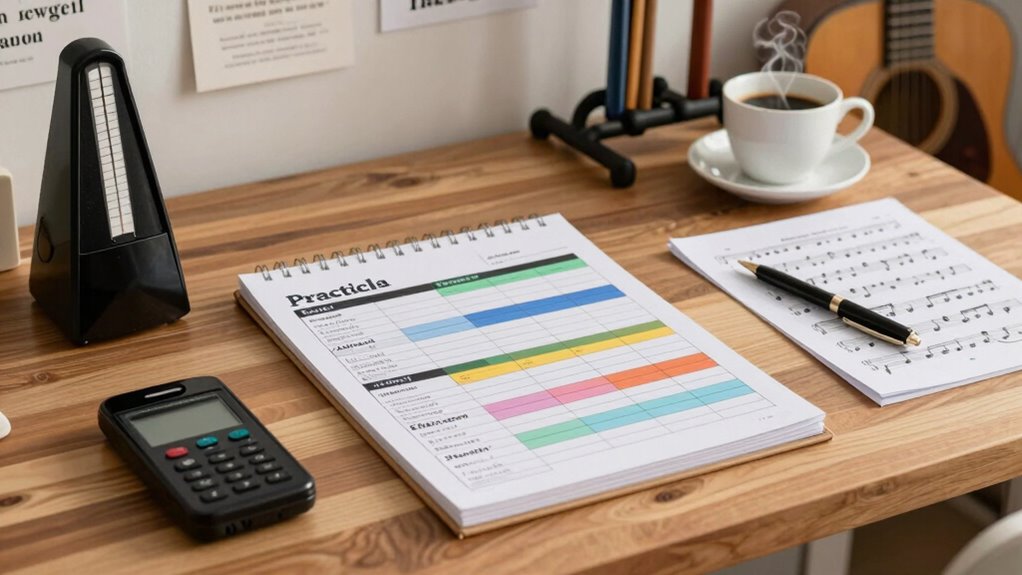
Wondering how to create a weekly practice schedule that keeps you motivated and focused? The key is to establish practice consistency by dedicating specific times each day for practice. This routine helps build momentum and makes practicing a habit. Start by visualizing your goals clearly—see yourself improving and reaching milestones. This goal visualization fuels your motivation and guides your daily efforts. Plan your week with variety, balancing technical drills, skill development, and rest days to avoid burnout. Keep your schedule realistic and flexible enough to adapt when needed. By committing to your schedule and maintaining a clear mental image of your goals, you’ll develop a steady practice rhythm that prevents confusion about what to work on and keeps progress moving forward. Incorporating effective time management strategies can further enhance your consistency and results.
Prioritize Drills to Strengthen Your Weaknesses

To make meaningful progress, you need to focus on drills that target your weaknesses. Start with a thorough weakness analysis to identify where you struggle most. Then, prioritize drill selection that directly addresses these areas. This targeted approach helps you build a balanced skill set efficiently. Consider incorporating drills that:
- Focus on your identified weak points
- Challenge you without overwhelming
- Reinforce proper technique
- Track your improvement over time
Track Your Practice Progress to Stay Motivated

Tracking your practice progress keeps you focused and motivated by showing tangible evidence of your improvements. Use a practice journal to record daily goals, completed drills, and key observations. This habit helps you see growth over time and identify patterns that boost motivation. To deepen your understanding, consider this table:
| Practice Element | Progress Indicator | Motivation Booster |
|---|---|---|
| Technique Drills | Consistent form improvement | Feeling of mastery |
| Sight Reading | Increased speed and accuracy | Confidence during performances |
| Ear Training | Better pitch recognition | Enhanced musical intuition |
| Repertoire Goals | Pieces learned and polished | Sense of achievement |
Regularly reviewing your journal keeps you aligned with your goals and fuels your desire to improve.
Adjust Your Practice Plan as You Improve

As you monitor your progress through your practice journal, you’ll notice areas where your skills are improving and others that might need extra attention. To stay effective, you should regularly adjust your practice plan using adjustment strategies and flexibility techniques. For example, if a skill improves faster than expected, shift focus to more challenging areas. Conversely, if progress stalls, revisit fundamental exercises. Incorporate these strategies:
Regularly adjust your practice plan to keep progress steady and avoid plateaus.
- Reassess your goals based on recent progress
- Vary practice routines to prevent plateaus
- Break down complex skills into manageable parts
- Allocate extra time to challenging areas
Common Mistakes That Sabotage Your Practice Routine

One common mistake that sabotages your practice routine is neglecting consistency. Without steady effort, even well-planned practice sessions lose effectiveness. Many musicians skip goal setting, which makes it hard to stay motivated or measure progress. When you lack clear goals, motivation techniques like tracking achievements or rewarding milestones become less impactful. This leads to irregular practice, frustration, and a sense of stagnation. Instead, establish regular practice times and set specific, achievable goals for each session. Use motivation techniques such as visualizing success or reminding yourself of your “why” to maintain momentum. Avoid the trap of inconsistent effort by creating habits and aligning your goals with your long-term aspirations. Consistency is key to making meaningful progress and avoiding the pitfalls that undermine your routine.
Tips to Make Practice a Consistent Habit

Building a consistent practice habit starts with establishing a routine that fits into your daily life. To do this, prioritize mindful awareness of your schedule and energy levels, so practice feels natural and manageable. Developing mental resilience helps you stay committed, even on busy days or when motivation dips. To make practice a routine, consider these tips:
- Set specific, achievable goals for each session
- Schedule practice at the same time daily
- Minimize distractions to stay focused
- Celebrate small wins to boost motivation
Frequently Asked Questions
How Often Should I Review and Update My Practice Plan?
You should review and update your practice plan at least once a month to stay aligned with your goals and manage your time effectively. Regular goal setting helps identify progress and new priorities, ensuring you focus on what truly matters. By consistently adjusting your plan, you avoid stagnation, maximize your effort, and make steady progress toward your objectives. Keep this habit to stay motivated and on track.
What Tools Can Help Me Track My Progress Effectively?
Think of progress tracking tools as your GPS for growth. Apps like Trello or Notion let you set goals, measure progress, and stay organized. I once used a simple spreadsheet to visualize my improvements, and it kept me motivated. These tools help you see where you’re excelling and where to focus, making your goal measurement clear and actionable. Regular updates keep your practice plan sharp and effective.
How Do I Stay Motivated During Long Practice Sessions?
To stay motivated during long practice sessions, focus on mindset strategies like maintaining a positive attitude and celebrating small wins. Use goal visualization to picture your progress and future success, which keeps your energy high. Break your session into manageable chunks, set mini-goals, and remind yourself of your bigger purpose. This approach helps you stay engaged, motivated, and focused on continuous improvement.
What Are Signs That I Need to Adjust My Goals?
If you notice persistent pain, plateauing progress, or frustration, it’s time to tweak your targets. Regular goal reflection helps you spot stagnation, while progress indicators reveal whether you’re advancing or just spinning your wheels. When these signs surface, modify your goals to challenge you appropriately. Staying attentive to these signals ensures your efforts remain effective, engaging, and aligned with your evolving skills and aspirations.
How Can I Balance Practice With Other Responsibilities?
You can balance practice with other responsibilities by prioritizing your tasks through effective time management. Set clear goals for each practice session, focusing on what’s most important, and allocate specific time slots for practice and other duties. By creating a structured schedule, you guarantee consistent progress while honoring your commitments. Regularly revisiting and adjusting your goals helps keep your balance intact and maintains motivation across all areas.
Conclusion
By crafting a structured practice plan, you’re planting seeds in a well-tended garden—each focused session, goal, and adjustment nurturing your growth. When you steer clear of guesswork, your progress becomes a steady river flowing toward mastery, not a chaotic storm. Embrace the routine, adapt with purpose, and watch as your skills blossom like a sunrise—bright, steady, and impossible to ignore. Your musical journey transforms from a maze into a clear, shining path.