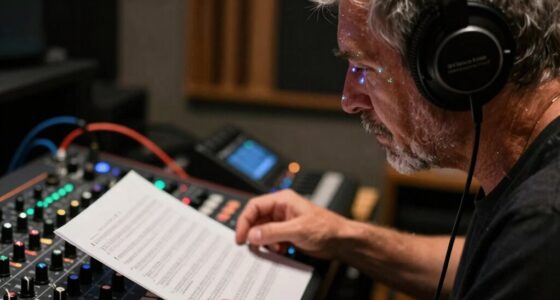


Weighted MIDI controllers mimic the feel of acoustic pianos, giving you expressive control over dynamics and tone. They feature keys with resistance and sensitivity that respond to touch, enabling nuanced playing. You can choose between analog models, which offer tactile feedback and durability, or digital ones, which often include customizable features. Material, construction, and extra functions influence how natural and versatile your experience feels. Keep exploring, and you’ll uncover how to choose the perfect controller for your needs.

Get audio and creator gear delivered free — and shop member deals
- Fast, free delivery on millions of items
- Access to Prime Big Deal Days deals on October 6–7
- Prime Video, Amazon Music and more included
Key Takeaways
- Weighted MIDI controllers mimic acoustic piano feel, offering resistance and responsiveness for expressive playing.
- Key material and construction influence resistance, durability, and natural feel during performance.
- Velocity sensitivity determines how well the controller captures dynamics and nuance in playing.
- Analog interfaces provide tactile feedback similar to traditional instruments, enhancing authenticity.
- Additional features like customizable resistance and aftertouch improve versatility and user control.
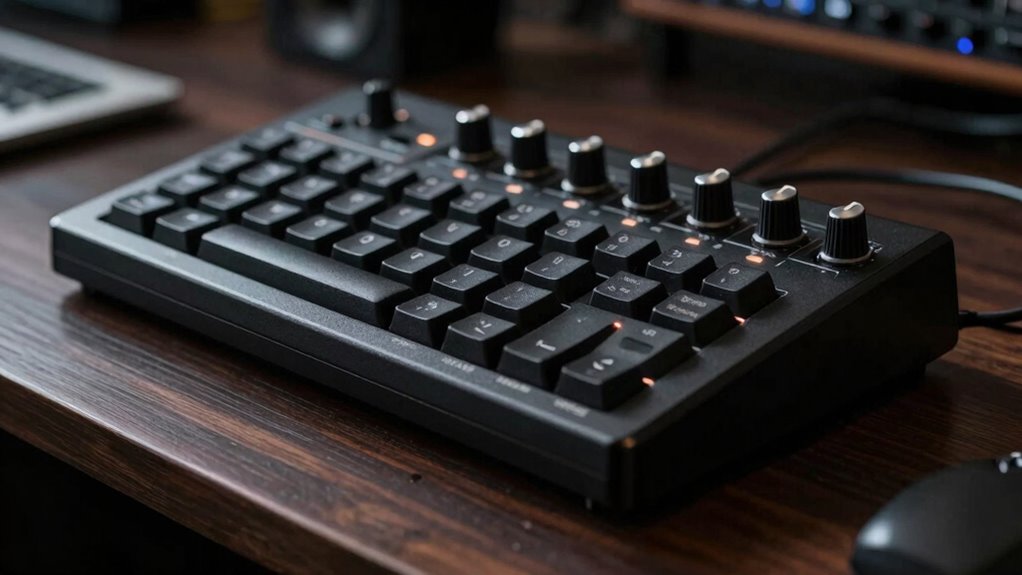
If you’re exploring MIDI controllers, understanding weighted keys is essential for capturing expressive performances. One of the key aspects to contemplate is how weighted keys differ from non-weighted ones, especially when it comes to playing dynamics and emotional expression. Weighted keys mimic the feel of acoustic pianos, offering resistance that responds to your touch, which is vital for nuanced playing. When comparing analog vs digital interfaces, the type of weighted keys can influence how authentic your performance feels. Analog controllers often have more tactile feedback, resembling traditional instruments more closely, while digital controllers might use sophisticated sensors to simulate the same experience. This distinction impacts how you perceive velocity sensitivity, an important feature that determines how the MIDI controller responds to your touch. Additionally, velocity sensitivity quality can vary significantly between models, affecting your ability to express subtle nuances in your performance. The material and construction of the keys also play a role in the overall key resistance and feel, influencing how natural your playing sensation is. Velocity sensitivity is the ability of your MIDI controller to detect how hard or soft you press each key. This feature allows you to inject dynamics into your playing, making performances more expressive. If your controller has high-quality weighted keys with precise velocity sensitivity, you’ll notice a more natural response, letting you control volume, tone, and intensity with greater nuance. Conversely, less sensitive keys might feel stiff or unresponsive, limiting your expressive capabilities. For producers, this means the difference between a robotic sound and a lively, human-like performance. For players, it means the difference between feeling disconnected from your instrument and being fully immersed in your music.
Weighted keys enhance expressiveness by mimicking acoustic pianos, with analog offering tactile feedback and digital providing sensor-based simulation.
When evaluating weighted MIDI controllers, you’ll find that some prioritize a more authentic piano feel, emphasizing the importance of key resistance and aftertouch, while others focus on versatility and portability. The choice between analog and digital interfaces also affects maintenance and durability, with analog models often built with more robust components that can withstand frequent use. Digital controllers, on the other hand, might incorporate additional features like customizable velocity curves or adjustable resistance settings, giving you more control over your playing experience. Understanding these design differences can help you select a controller that best matches your style and environment. Moreover, considering the user interface and how intuitive it is can significantly impact your workflow and overall satisfaction with the device.
In essence, understanding the nuances of weighted keys, especially how they relate to analog vs digital design and velocity sensitivity, helps you choose a MIDI controller that suits your style and needs. Whether you’re aiming for expressive piano performances or versatile studio work, selecting a controller with appropriate weighted keys will improve your playability and overall musicality. By paying attention to these details, you’ll find yourself more connected to your instrument, ultimately leading to more inspiring and authentic performances.
weighted MIDI controller with velocity sensitivity
As an affiliate, we earn on qualifying purchases.
As an affiliate, we earn on qualifying purchases.
Frequently Asked Questions
How Does Weight Affect MIDI Controller Sensitivity?
When you press a weighted MIDI controller key, the weight increases key resistance, which enhances your control over velocity response. Heavier keys require more force, making your playing feel more realistic and expressive. This sensitivity allows you to convey dynamics better, as the controller responds more precisely to your touch. So, weight directly influences how your velocity response feels, helping you achieve nuanced performances and a more authentic playing experience.
Can Weighted Keys Improve My Playing Accuracy?
Yes, weighted keys can improve your playing accuracy. They enhance finger strength by requiring more control and effort, which helps build muscle memory. Additionally, the key responsiveness mimics acoustic pianos, allowing you to develop better touch and dynamic control. As you practice with weighted keys, you’ll notice more precise finger movements and improved overall accuracy, making your playing more expressive and consistent.
Are Weighted MIDI Controllers Suitable for Beginners?
If you’re new to MIDI controllers, weighted keys might seem intimidating, but they can actually be suitable for beginners. The key responsiveness of weighted controllers helps you develop proper finger strength and technique early on, making shifts to acoustic or digital pianos smoother. Plus, familiarizing yourself with weighted keys builds a strong foundation, so you won’t have to relearn your touch later. So, if you’re enthusiastic to learn, weighted MIDI controllers can be a great choice.
What Materials Are Commonly Used in Weighted Keys?
Weighted keys typically use materials like plastic and metal for the key mechanism, ensuring durability and realistic feel. You’ll often find keys made with high-quality plastic for smooth action, reinforced with metal components for longevity. Some models even incorporate wooden elements for an authentic piano feel. These materials balance durability with a natural touch, helping you play comfortably and confidently, whether you’re practicing or performing.
How Do Weighted Controllers Compare to Non-Weighted Ones?
You might think weighted controllers are just fancy, but they actually offer a much more authentic key feel and touch response compared to non-weighted ones. Sure, non-weighted keys are lighter and easier for quick playing, but they lack the realistic resistance and dynamics that weighted keys provide. If you’re after a more expressive playing experience that mimics an acoustic piano, weighted controllers are definitely worth the extra effort.
As an affiliate, we earn on qualifying purchases.
Conclusion
Choosing a weighted MIDI controller feels like upgrading from a toy to a real instrument. While the extra weight might seem like a hassle, it offers a level of expressiveness and control that’s unmatched. Think of it as the difference between tapping a screen and playing a piano. Embrace the weight—because in music, the real connection comes from feeling every note. Your sound will thank you for it.
digital weighted MIDI keyboard with customizable resistance
As an affiliate, we earn on qualifying purchases.
As an affiliate, we earn on qualifying purchases.
piano-style MIDI controller for producers
As an affiliate, we earn on qualifying purchases.
As an affiliate, we earn on qualifying purchases.
Evergreen bestsellers Picks
bestsellers
As an affiliate, we earn on qualifying purchases.