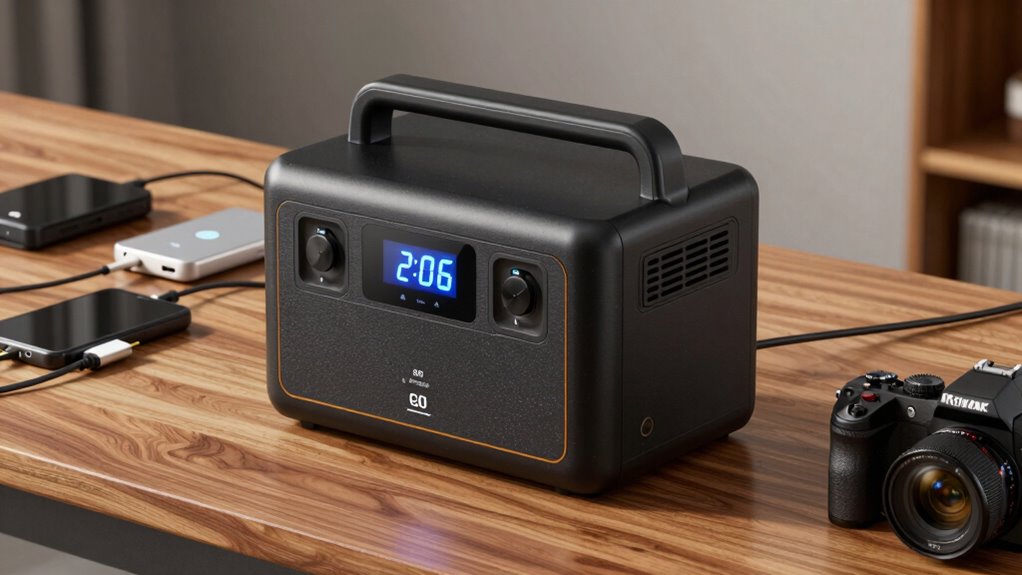
A 1000WH portable power station stores ample energy to run devices like small refrigerators or charge phones for hours. Understanding watts versus watt-hours helps you gauge how long devices will run; watts show current power, while watt-hours reveal total stored energy. Surge power indicates the maximum burst your system can handle during startup, and recharge time shows how fast it recovers. For smarter use, exploring these specs will give you better control over your power needs.
Key Takeaways
- Watt-hours (WH) measure total energy capacity, indicating how long devices can run; Watts show the real-time power output.
- Surge power reflects the maximum burst capacity needed to start high-demand appliances and should match device requirements.
- Recharging time determines how quickly the station can be replenished, impacting usability and cycle frequency.
- A 1000WH capacity allows extended operation, but fast charging enhances convenience and minimizes downtime.
- Understanding these specs helps select a power station aligned with specific energy needs and device demands.
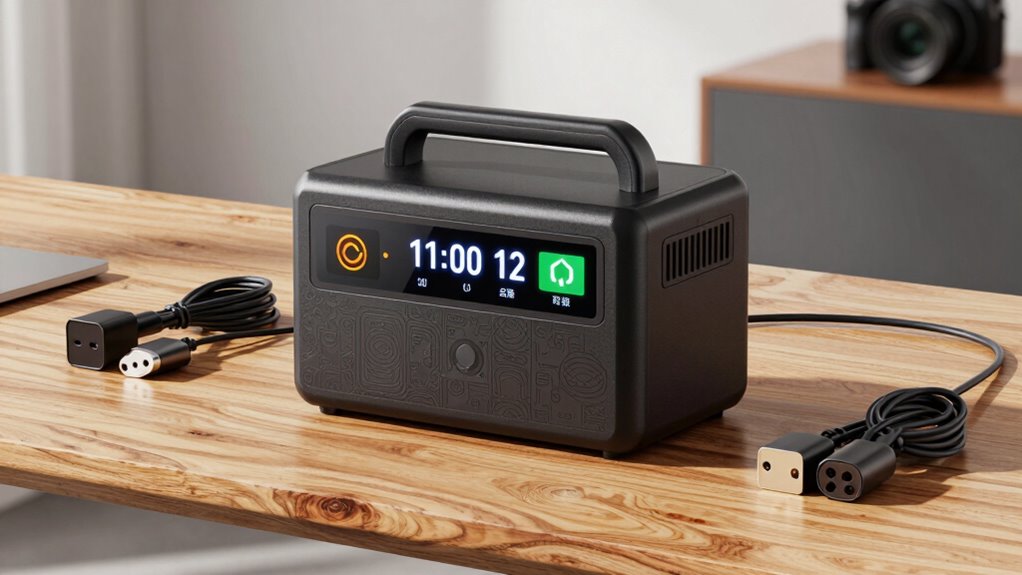
Are you curious about what makes a portable power station dependable? One of the key factors to consider is its battery capacity. When you see a specification like 1000WH, it indicates how much energy the battery can store. In practical terms, a higher battery capacity means you can power more devices for longer periods without needing to recharge. For example, with a 1000WH capacity, you might run a small refrigerator, charge multiple smartphones, or operate LED lights for several hours. But just knowing the capacity isn’t enough—you also need to understand how quickly the station can be recharged, which is where charging speed comes into play. Fast charging speeds mean less downtime and more convenience, especially if you’re on a tight schedule or in an emergency. A power station with a high charging speed can often be replenished in a few hours, allowing you to get back to using it quickly. This is especially valuable when you’re far from power outlets or on the move. Additionally, battery longevity determines how many charge cycles the station can endure before its capacity diminishes, impacting long-term reliability. Understanding the difference between watts and watt-hours is essential. Watts measure the power output at a specific moment, such as when you’re running a device, while watt-hours tell you the total energy the battery can supply over time. For example, if your device consumes 100 watts, a 1000WH power station could theoretically power it for about 10 hours, assuming no efficiency losses. This helps you gauge how long your devices will run on a single charge. Surge power is another critical aspect; it indicates the maximum power the station can deliver in a short burst, which is necessary when starting appliances with high initial power demands, like refrigerators or power tools. If a device requires a surge of 2000W to start, make sure your station can handle that spike without shutting down or risking damage. Recharge time is also indispensable when assessing a portable power station. It determines how long you’ll wait before you can use it again after depletion. A station with a quick recharge time—say, under five hours—lets you cycle through multiple uses in a single day, boosting its practicality. Conversely, a long recharge time could leave you waiting and potentially limit your devices’ uptime. When choosing a power station, consider both the battery capacity and charging speed to ensure it aligns with your energy needs. A larger capacity paired with fast charging capabilities guarantees you’ll have power when you need it most, without long interruptions. Ultimately, understanding these specs helps you select a reliable, efficient portable power station that meets your specific requirements.
Frequently Asked Questions
How Do I Choose the Right Power Station for My Needs?
To select the right power station, start by evaluating your battery capacity needs based on what devices you’ll power. Consider the watt-hours to guarantee it can handle your essential electronics and appliances. Also, check the charging options—solar, AC, or car—so you can recharge conveniently. Match these features to your usage habits and travel plans, ensuring the power station provides reliable, versatile power whenever you need it.
Are Portable Power Stations Safe to Use Indoors?
You might be surprised, but portable power stations are generally safe indoors if you follow proper precautions. They’re designed with safety features to minimize fire hazards and prevent electrical issues. Just make sure good ventilation, keep them away from flammable materials, and don’t overload outlets. When used correctly, these stations provide reliable, safe power during outages or indoor activities, giving you peace of mind without risking indoor safety or fire hazards.
Can I Connect Multiple Power Stations Together?
Yes, you can connect multiple power stations together using a parallel connection, but only if they’re designed for it. Make sure their battery capacities are similar, and use compatible cables and connectors. Connecting stations improperly can be dangerous or damage the units. Always follow the manufacturer’s instructions and safety guidelines to guarantee a safe and effective setup. Never force connections if the units aren’t meant for parallel use.
What Maintenance Is Required for a Portable Power Station?
Did you know a well-maintained portable power station can last over 10 years? To keep it in top shape, regularly check the battery life and keep it charged between 20% and 80%. Store it in a cool, dry place, and avoid extreme temperatures. Periodically run it to ensure all components stay active, and follow the manufacturer’s maintenance tips to maximize lifespan and performance.
How Do Temperature Extremes Affect Performance?
Extreme temperatures can greatly impact your power station’s thermal efficiency and overall performance. High heat may cause overheating, reducing battery lifespan and risking damage, while cold temperatures can lower efficiency and slow charging. To maintain temperature stability, store your station in a cool, dry place and avoid exposing it to extreme heat or cold. Proper temperature management ensures reliable power output and prolongs your device’s lifespan.
Conclusion
Understanding the specs of a 1000Wh portable power station is like holding the keys to your outdoor freedom. Watts, watt-hours, surge power, and recharge time are your map and compass, guiding you to reliable power when you need it most. By grasping these details, you empower yourself to choose the right station for your adventures, turning potential chaos into a well-orchestrated symphony of energy—your trusted partner in any journey.