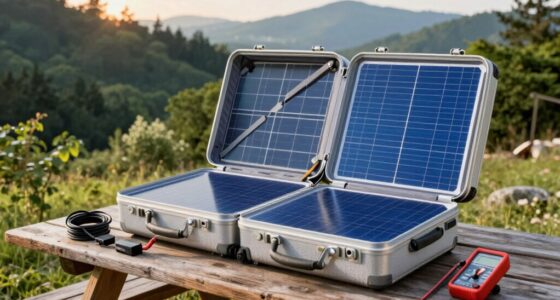
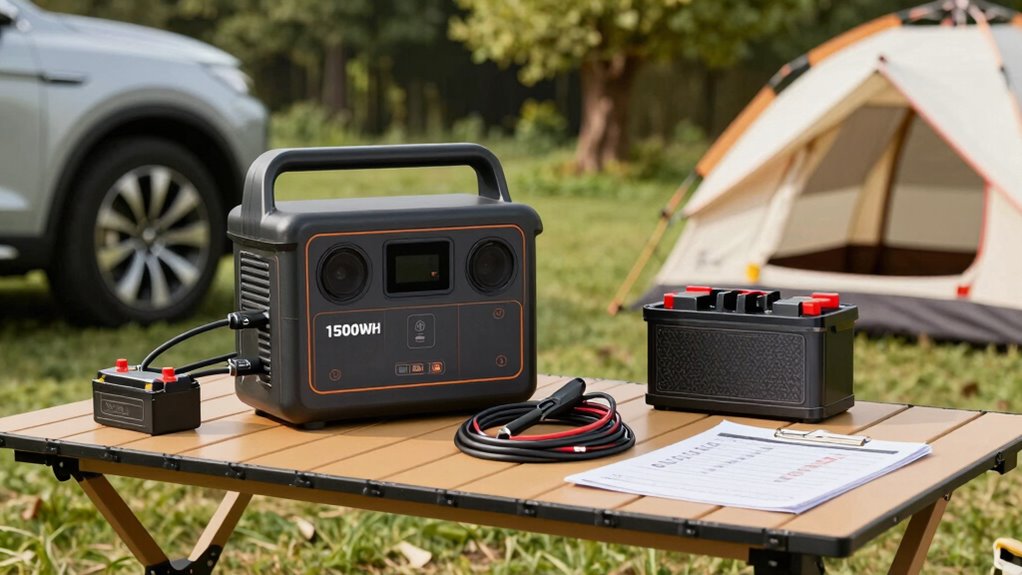

When setting up your 1500Wh portable power station for car camping, avoid common errors like using incompatible chargers, overcharging, or neglecting proper ventilation. Make sure connections are secure, inspect cords for damage, and store the unit with a partial charge. Protect it from extreme temperatures and damage, and keep it in a cool, dry place. Following these tips helps guarantee safety and longevity—keep going to discover even more expert setup advice.
Key Takeaways
- Ensure proper connection of the power station to your vehicle’s 12V socket or dedicated power outlet, avoiding loose or damaged cables.
- Verify the power station is placed in a cool, dry, and ventilated area away from direct sunlight to prevent overheating.
- Use only manufacturer-approved chargers and accessories to prevent overcharging, short circuits, or chemical leaks.
- Regularly inspect for physical damage, leaks, or corrosion, and address issues immediately before use.
- Follow manufacturer instructions for initial charging, storage, and maintenance to maximize safety and battery lifespan.

Setting up your portable power station correctly guarantees dependable power when you need it most. When you’re out car camping, having a trustworthy power source can make all the difference, but only if you handle it properly from the start. One of the most critical aspects is paying attention to battery safety. Always read the manufacturer’s instructions carefully before handling the unit. Keep the power station in a cool, dry place to prevent overheating, which can compromise the battery’s integrity and safety. Avoid exposing it to extreme temperatures or direct sunlight, as this can cause the battery to swell or even become hazardous. When it comes to battery safety, never attempt to open or modify the power station yourself, as this can lead to dangerous chemical leaks or short circuits. Also, ensure that any damage to the device, such as cracks or leaks, is addressed immediately—using a damaged battery can pose serious safety risks. Additionally, understanding the battery chemistry helps you better grasp how to handle and maintain the power station safely. Another key point is following proper charging tips to keep your power station functioning at its best. Before you start charging, verify that you’re using the correct charger provided by the manufacturer or an approved alternative. Using incompatible chargers can result in overcharging or undercharging, both of which degrade the battery and shorten its lifespan. Always charge in a well-ventilated area and avoid leaving the power station plugged in for extended periods after it reaches full capacity. Overcharging can lead to overheating and reduce the overall lifespan of the battery. When setting up for charging, check that connections are secure and that cords are not frayed or damaged, as faulty wiring can cause shorts or fires. If your power station has a display or indicator lights, monitor them during charging to ensure it’s operating within safe parameters. Additionally, avoid charging the device in excessively hot or cold environments, as temperature extremes can impair battery performance and safety. Proper storage after use is just as crucial. Store your power station with a partial charge—about 50-70%—to maintain battery health. This prevents the battery from going into a deep discharge state or becoming overly charged during periods of inactivity. Regularly inspect the device for any signs of damage or corrosion, and always follow the manufacturer’s recommendations for storage and maintenance. By paying attention to battery safety and adhering to proper charging tips, you’ll ensure your portable power station remains reliable and safe for all your car camping adventures. Taking these precautions helps prevent common mistakes that could otherwise lead to damage, safety hazards, or reduced performance when you rely on it most.
Frequently Asked Questions
How Long Does a Fully Charged 1500WH Power Station Last?
A fully charged 1500WH power station can last anywhere from several hours to multiple days, depending on your devices’ power consumption. If you’re running low-power devices like phones or small LEDs, it might last over a day. However, for higher power-consuming appliances, the battery capacity will deplete faster. To maximize usage, monitor your devices’ power consumption and avoid overloading the station, ensuring longer-lasting power during your trip.
Can I Use a Car Charger to Recharge the Power Station?
Yes, you can use a car charger to recharge your power station, but you need to verify its compatibility first. Not all charging methods work with every power station, so confirm that your car charger matches the power station’s input requirements. Make certain the voltage and current are appropriate to avoid damage. Using the correct car charger guarantees efficient, safe recharging and prolongs your power station’s lifespan during your outdoor adventures.
Is It Safe to Leave the Power Station Plugged in Overnight?
It’s generally safe to leave your power station plugged in overnight if you follow proper electrical safety guidelines. However, be aware of plugging hazards, such as overloading outlets or damaged cords, which can pose risks. Always make certain your power station has built-in protections like auto shut-off or overload prevention. Regularly check the device and cords for wear, and avoid leaving it unattended if you notice any issues that could compromise safety.
What Safety Precautions Should I Take During Setup?
During setup, you should check fire extinguisher checks and make sure all wiring is secure. Keep a fire extinguisher nearby in case of emergencies, and double-check that cables are properly connected and insulated to prevent sparks or shorts. Avoid overloading outlets, and always read the manufacturer’s instructions. Taking these precautions helps you stay safe and avoids potential hazards during your camping trip.
Can the Power Station Operate Sensitive Electronic Devices?
Yes, your power station can operate sensitive electronic devices, but you need to verify for device compatibility first. Look for features like pure sine wave output, which helps protect electronic sensitivity and prevents damage. Always confirm that your devices are compatible with the power station’s specifications, and avoid plugging in anything that may draw more power than the station can handle. This ensures safe operation and preserves your device’s lifespan.
Conclusion
Now that you’ve gone through this setup checklist, you’re ready to enjoy seamless power on your car camping trip. Imagine the freedom of charging your devices effortlessly, without worrying about running out of juice. Are you truly prepared to embrace the wild with confidence, knowing your power station is ready to support every adventure? Double-check your setup, stay safe, and let your journey be powered by reliable energy wherever the road takes you.