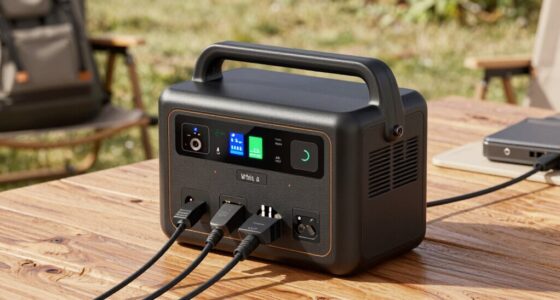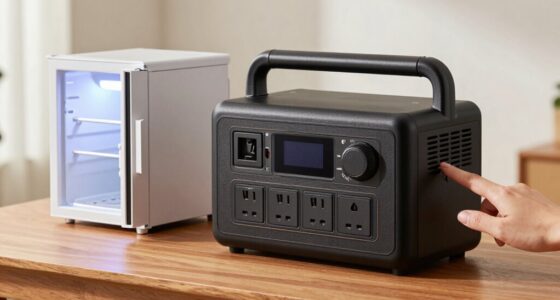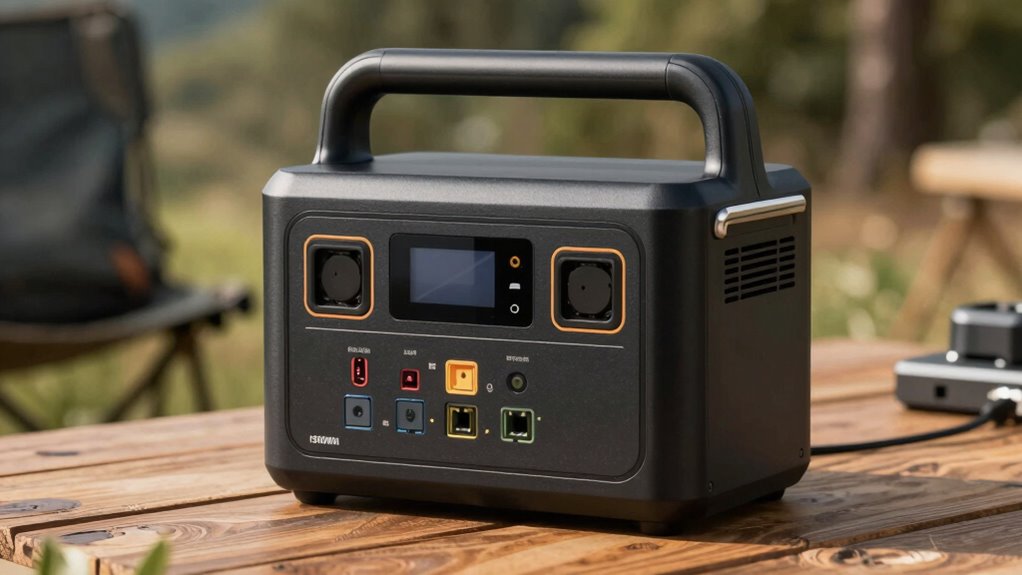

A 1500Wh portable power station shows your total stored energy, meaning it can run a 1000W device for 1.5 hours. Watts measure power at a specific moment, while surge power indicates the peak burst needed to start high-demand devices. Recharge time tells you how quickly it refills, often through AC, car, or solar sources. Understanding these specs helps you choose the right device—continue exploring to get detailed insights on maximizing performance.
Key Takeaways
- Watt-hours measure total energy capacity, indicating how long devices can run; watts show power output at a specific moment.
- Surge power reflects short bursts of high power needed for startup; ensure it meets device startup requirements.
- Recharge time indicates how quickly the power station can be replenished via AC, car, or solar sources.
- Solar compatibility allows harnessing renewable energy, extending off-grid use and supporting sustainability.
- Battery management systems ensure safety, prevent damage, and prolong the lifespan of the power station.

Are you wondering what specifications to look for in a portable power station? When you’re choosing a 1500WH model, understanding key features like watts versus watt-hours, surge power, and recharge time can make all the difference. First, it’s important to recognize that watt-hours measure the total energy capacity of the battery—so a 1500WH power station can theoretically provide 1500 watts for one hour, or 750 watts for two hours. This helps you gauge how long your devices will run before needing a recharge. Meanwhile, watts refer to the power output at a specific moment, which impacts how many devices and what type of equipment you can power simultaneously.
Next, consider surge power, which indicates the maximum power your station can deliver for short bursts. Many appliances, like refrigerators or power tools, require an initial surge of energy when starting up. If the surge power isn’t sufficient, those devices might not turn on or could be damaged. For instance, if a device needs 2000W to start but your power station’s surge power is only 1500W, it won’t be able to handle that load. So, always compare surge power ratings to the startup requirements of your essential gear to guarantee smooth operation.
Ensure your power station’s surge power meets your device’s startup energy needs for safe operation.
Recharge time is another essential factor. This refers to how long it takes to fully replenish the battery, whether via AC wall outlets, car chargers, or solar panels. A shorter recharge time means you can get back to powering your devices sooner, which is especially valuable during extended outdoor trips or emergencies. When evaluating recharge options, look for models that support fast charging technologies or multiple input methods. For example, some units have dedicated solar panel compatibility, allowing you to harness renewable energy during the day. Guaranteeing your power station has efficient solar panel compatibility not only extends your off-grid capabilities but also aligns with sustainable practices. Additionally, advancements in battery management systems ensure safer and more reliable operation, particularly when integrating renewable energy sources.
Equally important is battery management, which involves built-in systems that monitor and regulate the battery’s health and safety. Good battery management prevents overcharging, overheating, and deep discharges, thereby prolonging your power station’s lifespan. A well-designed system can also optimize energy flow, improving efficiency when you’re using solar panels or other renewable sources. This is indispensable if you plan to rely heavily on solar panel compatibility, as it ensures your energy input is managed properly, maximizing the utility of your renewable setup. Overall, paying attention to these specifications—capacity, surge power, recharge time, solar compatibility, and battery management—will help you select a portable power station that meets your needs reliably and safely.
Frequently Asked Questions
How Does Temperature Affect Power Station Performance?
Temperature critically influences your power station’s performance. When it’s too hot or cold, thermal efficiency drops, reducing output and possibly damaging internal components. Your device’s temperature tolerance determines how well it withstands extreme conditions. To keep your power station functioning at its best, avoid exposing it to high or low temperatures, and store it within recommended thermal ranges. Proper temperature management ensures reliable performance and extends your power station’s lifespan.
Can the Power Station Operate in Extreme Weather Conditions?
You can operate your power station in extreme weather, thanks to its thermal resilience and weatherproof design. Imagine a storm or scorching heat—your station stays reliable, built to withstand harsh conditions. Its sturdy construction protects internal components from temperature fluctuations, ensuring consistent performance. So, whether you’re camping in the snow or off-grid during a heatwave, your power station’s rugged design keeps power flowing smoothly.
What Safety Features Are Included in the Device?
You’ll find that this power station includes essential safety features like battery safety mechanisms and overload protection. These safeguards prevent overheating, short circuits, and overcharging, ensuring safe operation during use. You can rely on these features to protect both the device and your connected appliances, giving you peace of mind whether you’re camping or during a power outage. Safety is built into the design to keep you and your equipment secure.
Is There a Warranty or Service Plan Available?
Yes, a warranty or service plan is available for your portable power station. This helps guarantee your battery longevity and gives you peace of mind. If you encounter any issues, customer support is ready to assist you quickly, helping you keep your device running smoothly. Investing in a service plan can extend your device’s lifespan and ensure you get the most out of your power station.
How Compatible Is the Power Station With Solar Panels?
You’ll be amazed how well this power station pairs with solar panels, opening up exciting charging options. It’s highly compatible with various solar panel types, allowing you to harness renewable energy on the go. Just connect your panels, and watch your station recharge quietly and sustainably. This seamless solar panel compatibility means you can enjoy reliable power, making outdoor adventures or emergency backups more efficient and eco-friendly than ever before.
Conclusion
Understanding the specs of a 1500Wh portable power station helps you choose the right one for your needs. By knowing the difference between watts, watt-hours, surge power, and recharge time, you can guarantee your devices stay powered when you need them most. Isn’t it worth investing a little time to pick a reliable power source that keeps you connected during emergencies or outdoor adventures? Ultimately, the right station gives you peace of mind—are you ready to make the smart choice?