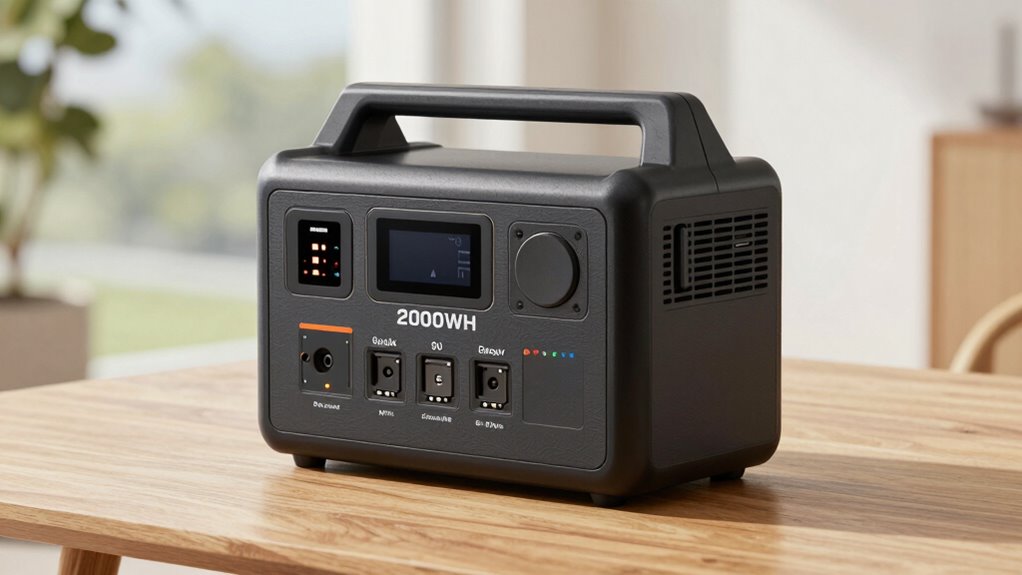

A 2000Wh portable power station offers a large energy capacity, meaning it can power devices for hours depending on their consumption. Watts measure how fast power is delivered at any moment, while watt-hours show the total stored energy. Surge power indicates the highest load it can handle temporarily, essential for starting high-demand appliances. Recharge time reveals how quickly it can be replenished. Keep exploring to understand how these specs help you choose the right station for your needs.
Key Takeaways
- Watt-hours indicate total energy capacity, showing how long devices can run, while watts measure real-time power delivery.
- Surge power is the maximum instant output, critical for starting high-demand appliances like refrigerators or power tools.
- A 2000Wh battery can power 2000W for 1 hour or 1000W for 2 hours, helping estimate device runtime.
- Charging cycles determine how many full charges the station can handle before capacity diminishes, affecting longevity.
- Recharge time varies; fast recharging and multiple power sources (AC, solar, car) ensure continuous, flexible energy supply.
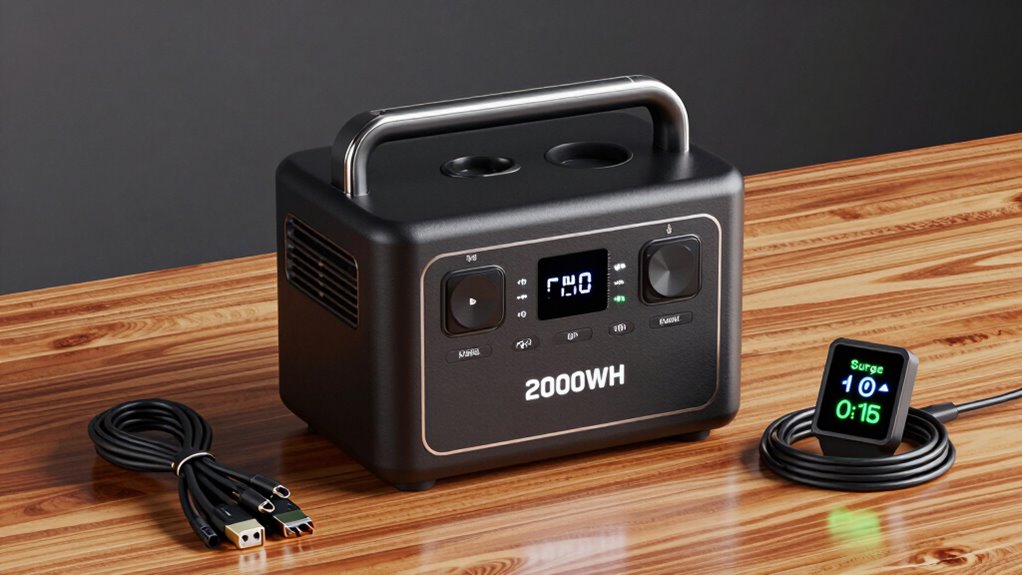
When choosing a portable power station, understanding its specifications is crucial to guarantee it meets your energy needs. One of the most important factors is battery capacity, often measured in watt-hours (Wh). This tells you how much energy the station can store and supply over time. A higher watt-hour rating means you can power more devices for longer periods. For example, a 2000Wh power station can run essential appliances like refrigerators, laptops, or small power tools for several hours. Equally important is how many charging cycles the battery can handle before its capacity diminishes significantly. Charging cycles refer to the number of complete charge and discharge cycles the battery can endure while still retaining a substantial portion of its original capacity. A battery with more charging cycles will last longer, providing reliable power over many years, which is essential if you plan to use the station frequently or for extended trips.
Understanding the relationship between watts and watt-hours is key to assessing a power station’s performance. Watts measure the rate of power delivery at any moment, such as powering a device that draws 100 watts. Watt-hours, on the other hand, indicate the total amount of energy stored in the battery. When you see a 2000Wh capacity, it means the station can theoretically supply 2000 watts for one hour or 1000 watts for two hours, depending on your device’s power draw. This distinction helps you calculate how long your devices can run based on their power consumption, giving you a clearer picture of the station’s practical use.
Surge power is another critical specification. It represents the maximum power the station can supply instantaneously, often necessary when starting appliances with high initial power requirements, like refrigerators or power tools. If the surge power rating is too low, these devices may not start properly or could cause the station to shut down. So, ensure the surge power matches the demands of your heaviest appliances.
Finally, recharge time plays a vital role. It indicates how long it takes to refill the battery from zero to full. Fast recharge times mean less downtime, especially if you’re relying on the station in remote locations or during emergencies. Some stations support multiple recharging options, such as AC outlets, solar panels, or car chargers, offering flexibility depending on your setup.
Frequently Asked Questions
How Durable Is the Power Station in Extreme Weather Conditions?
You’ll find that the power station offers good weather resistance and rugged durability, making it suitable for extreme weather conditions. Its sturdy construction helps it withstand harsh environments, though you should still avoid prolonged exposure to heavy rain or snow. Keep it protected when not in use, and you’ll enjoy reliable performance even in challenging weather. Overall, it’s designed to handle tough conditions, ensuring your power needs are met no matter where you go.
Can the Power Station Be Safely Used Indoors?
You can safely use the power station indoors, but guarantee proper ventilation for indoor safety. Keep it in a well-ventilated area to prevent overheating and maintain good air quality. Avoid placing it near combustible materials or in confined spaces. Using it correctly indoors minimizes risks and keeps air quality safe, so always follow manufacturer guidelines and ensure your environment is suitable for extended use.
What Are the Maintenance Requirements for the Device?
You should regularly check the battery lifespan and perform simple cleaning routines to keep your portable power station in top shape. Keep the device clean and dry, especially around vents and ports, to prevent dust buildup. Avoid overcharging or discharging the battery fully, and store it in a cool, dry place when not in use. Proper maintenance guarantees longer lifespan and reliable performance whenever you need power on the go.
Is There a Warranty or Customer Support Service?
Powerful protection promises peace of mind. Yes, your portable power station typically comes with a product warranty, ensuring your investment is safeguarded. Plus, customer service is always accessible, ready to resolve any issues or answer questions. You can count on dedicated support and reliable warranties to keep your device running smoothly. With dependable customer service availability and all-encompassing warranties, you’re well-covered for any concerns that come your way.
How Compatible Is the Station With Solar Panels?
You’ll find that your 2000WH portable power station is highly compatible with solar panels, making it ideal for off-grid use. Its design supports easy solar panel connection, enhancing recharge efficiency by harnessing renewable energy. To maximize performance, verify your solar panels match the station’s input specifications. This setup allows you to recharge quickly and sustainably, giving you reliable power wherever you go without relying on traditional outlets.
Conclusion
Think of your portable power station as a sturdy lighthouse, guiding your adventures through dark, uncertain nights. Its watts and watt-hours are the beams that illuminate your path, while surge power is the steady beam cutting through storms. Recharge time is the dawn, promising new energy and hope. With this knowledge, you hold the key to a reliable, shining beacon—ready to light up your journey, no matter where life takes you.