To cook at camp without making a mess, stay organized by designating specific spots for ingredients and utensils, and keep your cookware clean and ready. Use simple techniques like one-pot meals or foil packets to minimize cleanup. Pack pre-measured ingredients and wipe spills immediately with damp cloths. Maintain safety by building stable fires and avoiding overcrowding your cooking area. Keep things tidy, and you’ll find camp cooking becomes much easier—keep going to learn even more tips for mess-free outdoor cooking.
Key Takeaways
- Organize ingredients and utensils in designated areas to minimize clutter and streamline meal prep.
- Use foil packets and one-pot recipes to reduce dishwashing and cleanup time.
- Keep cookware clean and wipe spills immediately to prevent buildup and mess.
- Pack pre-measured ingredients for efficiency and to avoid excess leftovers.
- Maintain a tidy cooking area and dispose of used foil and debris promptly to keep the space clean.
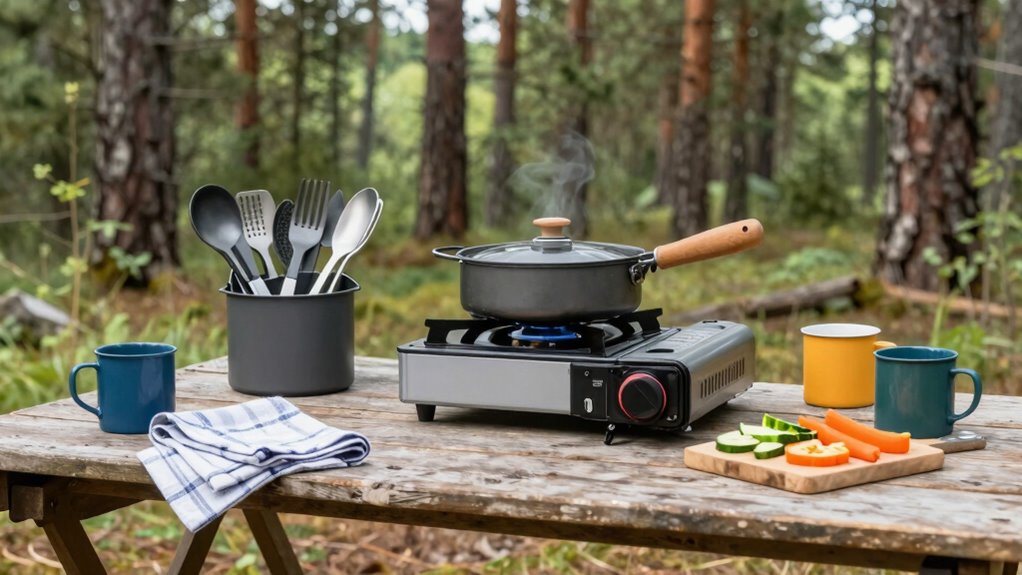
Cooking at camp can be a rewarding experience if you’re prepared and know the basics. It’s a chance to enjoy fresh air, good company, and delicious food—all without the mess and fuss of your kitchen at home. To start, packing the right gear makes all the difference. Invest in quality portable cookware that’s lightweight but durable, so you can easily carry it to your campsite. These compact pots, pans, and utensils are designed for outdoor use and help keep your cooking organized and efficient. When it comes to campfire snacks, simple recipes like foil packets, roasted marshmallows, or s’mores are perfect. They’re easy to prepare, require minimal cleanup, and bring a fun element to your outdoor meals.
Enjoy delicious campfire meals with easy, minimal-cleanup recipes like foil packets and s’mores.
Once you arrive and set up, organizing your cooking space is key. Keep your portable cookware clean and ready to go, and designate a specific spot for ingredients and utensils. This reduces clutter and prevents you from searching through everything mid-cook. When building your campfire, make sure to create a stable, controlled flame, so your cooking remains safe and effective. If you’re using a grill grate over the fire, ensure it’s clean before placing food on it to avoid sticking or contamination.
For cooking meals, opt for simple, one-pot dishes whenever possible. Using your portable cookware, you can make hearty stews, pasta, or even breakfast scrambles right over the fire. Pre-measured ingredients and prepped vegetables or meats save time and reduce mess. When preparing campfire snacks, foil packets are ideal—they’re easy to assemble, cook evenly, and contain any drips or spills. Just wrap your ingredients tightly and set them on hot coals or a grate. Cleanup is a breeze since you can simply toss the foil after eating.
Keep a damp cloth or paper towels nearby for quick cleanup of spills and utensils. Avoid letting grease or food residue build up on your cookware by wiping it down after use. This will prolong its lifespan and make your next cooking session smoother. Remember, patience is essential—wait for your fire to reach a steady glow before cooking, and monitor your food closely to prevent burning. Incorporating fire safety practices can help ensure a secure outdoor cooking experience.
Cooking at camp doesn’t have to be complicated or messy. With the right tools, organization, and a few simple techniques, you’ll create tasty meals and snacks without the chaos. Embrace the outdoor experience, and soon, you’ll be mastering campfire cooking, making memories, and enjoying every bite along the way.
Frequently Asked Questions
What Are the Best Portable Cooking Tools for Camping?
You should bring portable cookware like compact pots, pans, and a camping stove to make cooking easier. These tools are lightweight, durable, and perfect for campfire recipes. A cast-iron skillet is versatile, and a foldable spatula adds convenience. With these essentials, you can whip up delicious meals without hassle, keeping your campsite tidy and making your outdoor cooking experience enjoyable.
How Do I Store Perishable Ingredients at Camp?
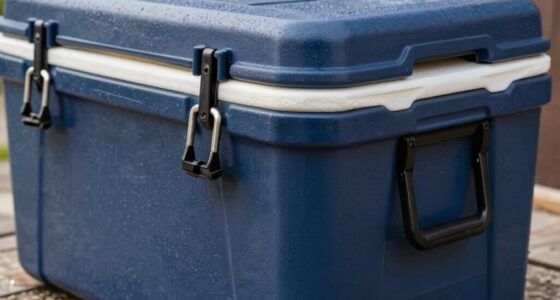
Ever find yourself reaching for that last piece of cheese and realizing it’s gone bad? To prevent that, use camping refrigeration like coolers with ice packs or portable fridge units for food preservation. Keep perishable ingredients cold and organized, and only take out what you’ll need. This way, your ingredients stay fresh longer, and you avoid spoilage—making your camping trip smoother and more enjoyable.
What Safety Precautions Should I Follow While Cooking Outdoors?
When cooking outdoors, prioritize fire safety by keeping a fire extinguisher nearby and never leaving flames unattended. Be aware of wildlife and avoid leaving food scraps or smells that attract animals. Use designated cooking areas, and always extinguish fires completely when done. Wear appropriate clothing to prevent burns, and wash your hands frequently. Staying vigilant guarantees a safe, enjoyable camping experience for you and protects the natural environment.
How Can I Cook for a Large Group Efficiently?
You want to cook for a large group efficiently, so plan simple campfire meal ideas like foil packet dinners or skillet dishes with cast iron cookware. Use multiple pots and pans to cook different components simultaneously, saving time. Prepare ingredients ahead of time and organize them for quick access. Cooking with cast iron is perfect for big groups—its durability and heat retention make it easier to serve hearty, delicious meals fast and mess-free.
What Are Some Eco-Friendly Cleanup Tips for Camp Cooking?
You can make camp cleanup eco-friendly by using biodegradable utensils, which break down naturally and reduce waste. After cooking, gather food scraps and dispose of them in designated composting areas, if available. Employ composting techniques for organic waste to minimize landfill impact. Always carry reusable containers and minimize single-use plastics. These habits help protect the environment while keeping your camping site clean and sustainable.
Conclusion
Cooking at camp might seem tricky, but with a little planning, it’s easy to avoid messes. Don’t worry if things get a bit chaotic—you can always clean as you go. Keep your tools organized, use simple recipes, and pack smart. Remember, the messiest moments often turn into the funniest stories around the campfire. So, relax, enjoy the process, and trust that a little mess is part of the adventure!