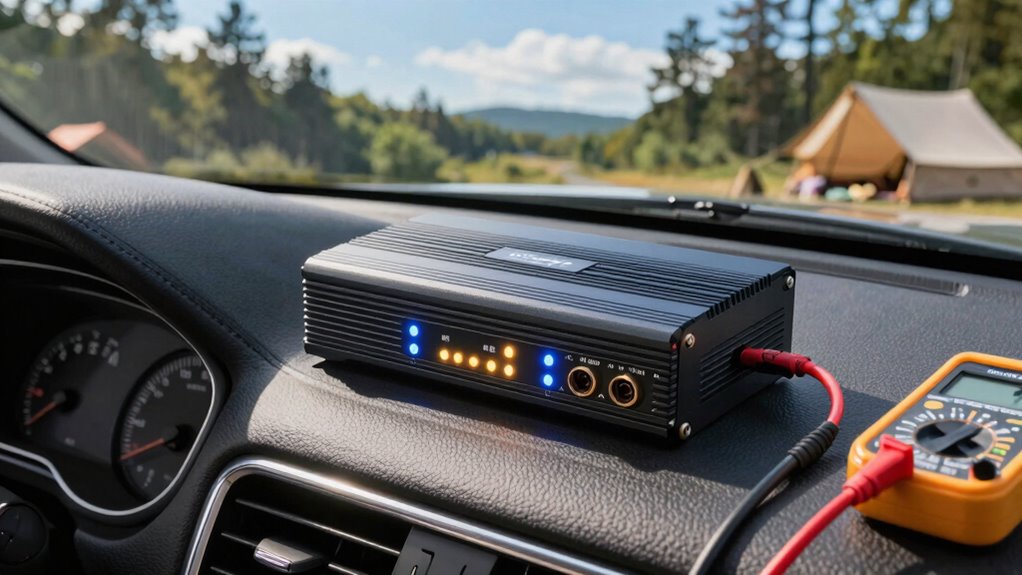
To choose the right pure sine wave inverter for car camping without overbuying, start by listing all your electronic devices and adding their wattages, then pick an inverter capacity slightly above this total plus surge demands. Focus on high efficiency ratings above 90%, and make certain it has safety features like overload protection and low-voltage cutoff. Consider build quality and ease of use to ensure durability. Keep these tips in mind to make a smart, budget-friendly choice as you discover more about selecting the perfect inverter.
Key Takeaways
- Calculate your total device wattage and select an inverter with slightly higher capacity to handle surges.
- Prioritize high efficiency (above 90%) to maximize energy use and extend your vehicle’s battery life.
- Ensure the inverter has essential safety features like overload protection and low-voltage cutoff.
- Choose a durable, well-built model with user-friendly features and multiple outlets for convenience.
- Avoid overbuying by matching the inverter’s capacity closely to your devices’ combined wattage needs.
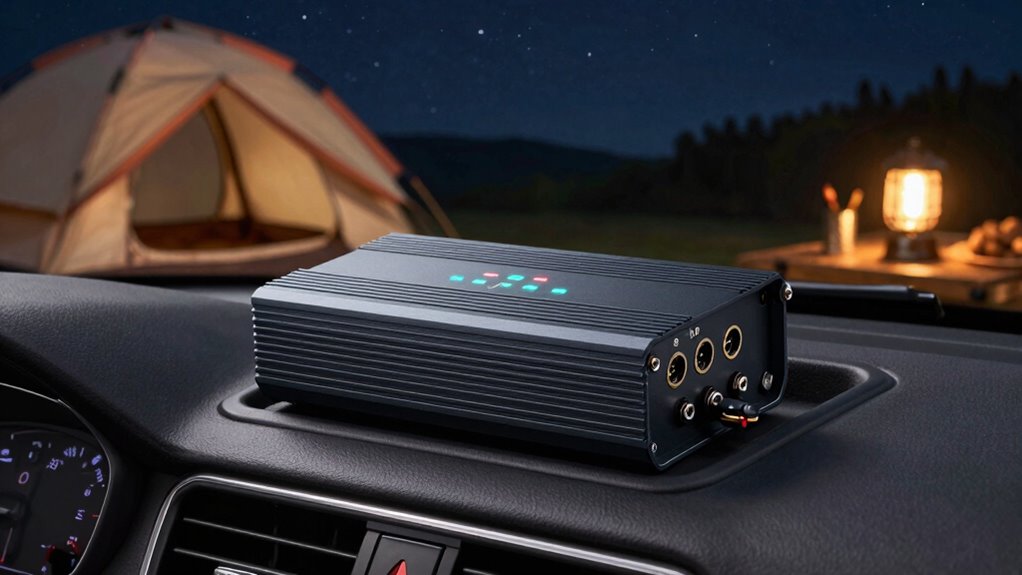
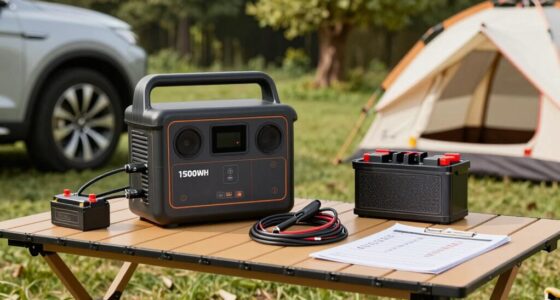
When selecting a pure sine wave inverter, understanding your power needs is essential to making the right choice. You want an inverter that provides enough power for your devices without wasting energy or risking safety. To do this, start by listing all the electronic gadgets you plan to use during your car camping trip. Add up their wattage requirements to determine the minimum continuous power you’ll need from the inverter. Keep in mind that some devices, like laptops or small appliances, may have startup surges that briefly demand more power than their running wattage. Choosing an inverter with a slightly higher capacity than your total calculation ensures you won’t overload it and can handle these surges smoothly.
Power efficiency is another critical factor. An inverter with high efficiency converts more of your vehicle’s battery power into usable AC power, reducing waste and prolonging your battery life. Look for models that advertise high efficiency ratings, ideally above 90%. This not only means less strain on your car’s electrical system but also fewer worries about running out of power during your trip. Remember, an inefficient inverter may seem cheaper upfront but could cost you more in the long run through increased fuel consumption or the need for more frequent battery replacements.
Safety features should never be overlooked. A good pure sine wave inverter will include essential safety measures like overload protection, thermal shutdown, and low-voltage cutoff. Overload protection prevents damage if you accidentally connect too many devices, while thermal shutdown keeps the inverter from overheating. The low-voltage cutoff protects your vehicle’s battery from excessive drain, which could leave you stranded. These safety features safeguard both your equipment and your vehicle’s electrical system, giving you peace of mind as you camp.
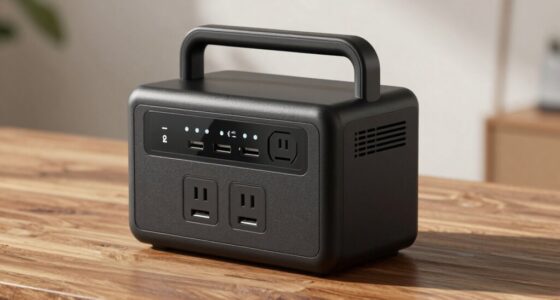
Additionally, consider the inverter’s build quality and ease of use. A sturdy casing and reliable connections mean your inverter can handle the vibrations and bumps typical of camping trips. Features like clear display panels, intuitive controls, and multiple outlets make operation straightforward, especially if you’re new to using inverters. Always check reviews to gauge real-world performance and reliability.
Frequently Asked Questions
Can I Use a Pure Sine Wave Inverter With My Vehicle’s Existing Battery?
Yes, you can use a pure sine wave inverter with your vehicle’s existing battery, but you need to take into account battery compatibility and inverter installation. Make certain your battery has enough capacity to handle the inverter’s power demands. Properly install the inverter according to safety guidelines, and if you’re unsure, consult a professional. This way, you’ll safely enjoy clean power for your camping gear without overloading your vehicle’s electrical system.
How Does Inverter Size Affect Fuel Consumption During Camping Trips?
Using a larger inverter capacity can increase your vehicle’s fuel consumption by up to 15%, as bigger units draw more energy. Smaller inverters are more energy-efficient, helping conserve fuel during camping trips. Keep in mind, choosing an inverter that matches your energy needs guarantees maximum energy efficiency without wasting fuel. So, selecting the right inverter size balances power demands and fuel efficiency, making your camping experience more sustainable and cost-effective.
Are There Specific Safety Features to Look for in a Car Inverter?
You should look for safety features like surge protection and thermal shutdown in a car inverter. Surge protection prevents damage from sudden power spikes, protecting your devices. Thermal shutdown automatically turns off the inverter if it overheats, avoiding potential fire hazards or damage. These features guarantee safe operation during your camping trip, giving you peace of mind while powering your devices without risking safety or equipment failure.
What Is the Typical Lifespan of a Pure Sine Wave Inverter?
Your pure sine wave inverter will likely last between 5 to 10 years, but proper battery maintenance can extend its lifespan even more. Think of it as a superhero with durability that withstands the toughest camping trips. Regularly check connections, keep it clean, and avoid overloading to prevent premature wear. With good care, your inverter becomes a trusty companion, ready to power your adventures for years to come.
Can I Run Multiple Devices Simultaneously Without Overload?
Yes, you can run multiple devices simultaneously without overload if your inverter’s power capacity matches your devices’ combined power needs. Check each device’s power consumption and guarantee the total stays within the inverter’s continuous wattage rating. Device compatibility is also vital; make sure your inverter supports the types of devices you want to run. Overloading can damage your inverter or devices, so always stay within the recommended limits.
Conclusion
Choosing the right pure sine wave inverter guarantees your car camping experience is smooth and hassle-free. Remember, selecting an inverter with the right wattage and features prevents overbuying and potential damage to your devices. Did you know that nearly 60% of portable inverter users report better device performance with pure sine wave models? By understanding your power needs, you’ll enjoy reliable, safe power on your adventures without overspending or risking equipment issues.