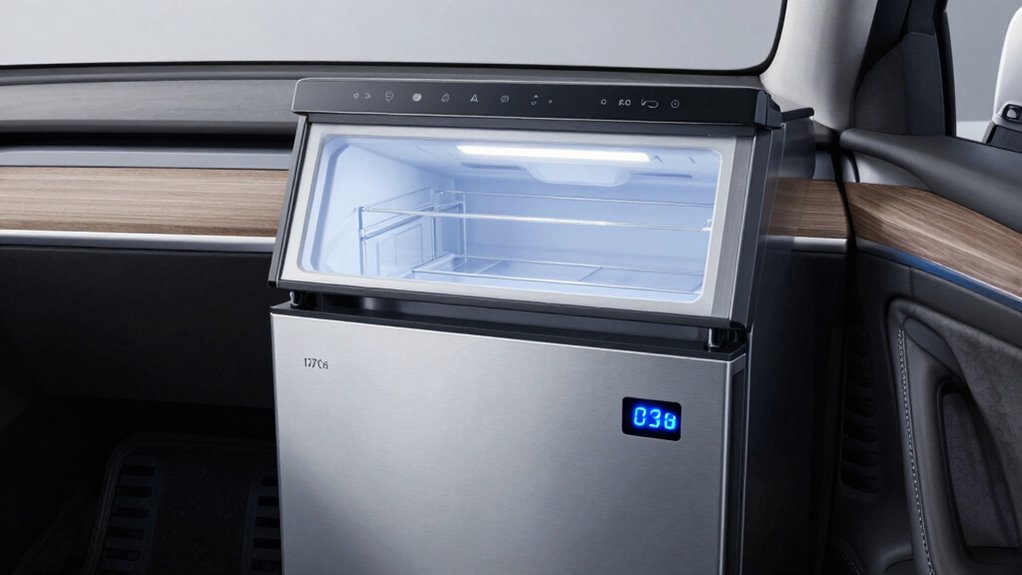

A dual-zone 12V fridge freezer offers separate compartments for fresh and frozen items, with capacities ranging from about 30 to over 100 liters depending on your needs. The power draw varies based on the size and features but can be managed with efficient compressors and proper installation. To keep temperatures stable, guarantee good ventilation, avoid frequent door openings, and maintain proper calibration. Continuing will help you understand how to optimize these specs for reliable performance.

Get audio and creator gear delivered free with Prime
- Fast, free delivery on millions of items
- Prime Video, Amazon Music and more included
- Member-only deals all year
Key Takeaways
- Capacity varies from ~30L to over 100L, affecting size, storage needs, and installation space.
- Power draw depends on compressor efficiency and insulation, impacting energy consumption and battery life.
- Dual-zone units often have separate compressors or insulation for independent temperature control.
- Proper installation, level positioning, and ventilation are crucial for temperature stability and efficient operation.
- Digital thermostats and sensors help maintain consistent temperatures by monitoring and adjusting cooling as needed.

If you’re looking for versatile cooling options, a dual-zone 12V fridge freezer offers the flexibility to store both fresh and frozen items simultaneously. This setup is ideal for outdoor adventures, RVs, or boats where space and convenience matter. When evaluating these units, understanding their capacity, power draw, and temperature stability is essential to making an informed choice. One of the primary benefits of a dual-zone system is energy efficiency. Many models feature separate compressors or advanced insulation that reduce power consumption by allowing each zone to operate independently. This means you can run the fridge section without unnecessarily cooling the freezer, saving energy and extending battery life, especially when off-grid. Installation considerations also play a key role in guaranteeing your unit performs at its best. You need a stable, level surface that can support the weight of the unit and withstand vibrations common in mobile environments. Ventilation is crucial; most models require adequate airflow around the unit to prevent overheating and maintain efficiency. Proper wiring is essential too—using the correct gauge of wire and a dedicated power source helps prevent voltage drops that could impair performance or damage the compressor. When choosing a unit, check the manufacturer’s specifications for recommended installation clearances and electrical requirements. Additionally, advancements in European cloud innovation have influenced manufacturing standards, ensuring these units meet high efficiency and sustainability criteria. Capacity is another important aspect. Dual-zone fridge freezers come in various sizes, from compact models with around 30 liters to larger units exceeding 100 liters. Your choice depends on your storage needs and available space. Be mindful that larger capacities often mean higher power consumption, so balancing capacity with energy efficiency is wise. Power draw varies considerably across models, with some designed for minimal energy use, while others may consume more, especially during startup or when operating at maximum capacity. Look for units with efficient compressors and insulation, which help keep power needs low. To keep temperatures stable, many units feature digital thermostats and temperature sensors that constantly monitor and adjust cooling performance. Properly setting and calibrating these controls guarantees your food stays fresh, whether in the fridge or freezer section. Additionally, avoiding frequent opening of the doors and keeping the unit out of direct sunlight can help maintain consistent temperatures and improve energy efficiency.
As an affiliate, we earn on qualifying purchases.
Frequently Asked Questions
How Long Does a Dual-Zone 12V Fridge Freezer Typically Last on Battery?
A dual-zone 12V fridge freezer typically lasts between 8 to 24 hours on a single battery charge, depending on its power consumption and the battery’s capacity. If you have a high-capacity battery and the fridge uses less power, it can run longer. To maximize battery lifespan, keep the temperature stable and minimize opening the fridge. Regularly check your battery’s health to guarantee reliable performance over time.
Can I Install a Dual-Zone Fridge Freezer in a RV or Boat?
Yes, you can install a dual-zone 12V fridge freezer in your RV or boat. Just consider installation requirements like secure mounting and proper ventilation. Check safety regulations to guarantee wiring and electrical connections meet standards. Also, verify your power source can handle the fridge’s draw. With careful planning, you’ll enjoy fresh food and beverages on your adventures without risking safety or equipment damage.
What Maintenance Is Required to Ensure Stable Temperatures?
To keep temperatures stable, you should regularly check and calibrate the temperature settings to guarantee accuracy. Inspect door seals for any damage or gaps, as these can cause temperature fluctuations. Keep vents unobstructed for proper airflow, and clean the condenser coils periodically. By maintaining proper calibration and seal integrity, you’ll help your dual-zone fridge freezer operate efficiently and maintain consistent temperatures, preventing spoilage and extending its lifespan.
Are Dual-Zone Fridge Freezers Energy-Efficient Compared to Single-Zone Models?
Dual-zone fridge freezers generally offer better energy efficiency than single-zone models because they allow you to control temperatures separately, reducing unnecessary power consumption. With targeted cooling, you use less energy to maintain ideal temps in each zone. While they might have a slightly higher initial power draw, their efficient design often leads to lower overall power consumption, saving you money and energy in the long run.
How Do Ambient Temperatures Affect Fridge Freezer Performance?
When ambient temperatures rise, your fridge freezer works harder to maintain stable temps. For example, in hot climates, poor insulation quality can cause temperature fluctuations, risking food spoilage. You’ll notice increased power draw and reduced efficiency. To keep temps steady, verify your unit has good insulation and place it away from direct sunlight or heat sources. Proper placement helps your fridge perform effectively despite changing ambient temperatures.
12V RV fridge freezer with digital thermostat
As an affiliate, we earn on qualifying purchases.
As an affiliate, we earn on qualifying purchases.
Conclusion
Now that you understand the specs—capacity, power draw, and temperature control—you’re better equipped to choose the perfect dual-zone 12V fridge freezer. But here’s the thing: the real test begins when you hit the road. Will it keep your food perfectly chilled, no matter the conditions? Stay tuned, because the true performance of your fridge freezer is about to be put to the ultimate test. Are you ready for what’s next?
compact dual-zone portable fridge freezer
As an affiliate, we earn on qualifying purchases.
As an affiliate, we earn on qualifying purchases.
12V fridge freezer with independent zones
As an affiliate, we earn on qualifying purchases.
As an affiliate, we earn on qualifying purchases.
Halloween Picks
halloween
As an affiliate, we earn on qualifying purchases.