When setting up your foldable 200W solar panel for camping, make certain it’s positioned in direct sunlight, facing south if you’re in the northern hemisphere, and at an angle matching your latitude. Double-check all connections and keep cables dry and protected from the elements. Avoid shading from trees or structures, and secure the panel on stable ground. Regularly inspect batteries and system components for damage or corrosion. Keep these tips in mind, and you’ll maximize your solar power efficiency—stay tuned for more detailed setup advice.
Key Takeaways
- Ensure the panel is clean, free of dust, and positioned facing south in the northern hemisphere for maximum sunlight exposure.
- Double-check all connections and cables for security to prevent power loss or damage.
- Properly angle the panel to match your local latitude and avoid shading from trees or structures.
- Use waterproof covers for connectors and place the setup in a sheltered location to protect against weather.
- Regularly monitor battery levels and system output to identify issues early and maintain optimal performance.
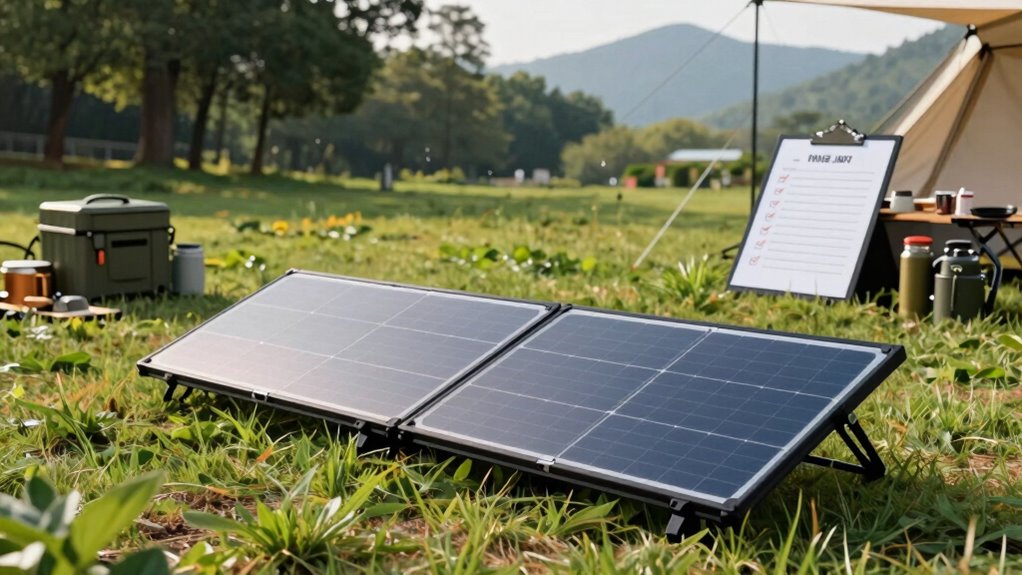
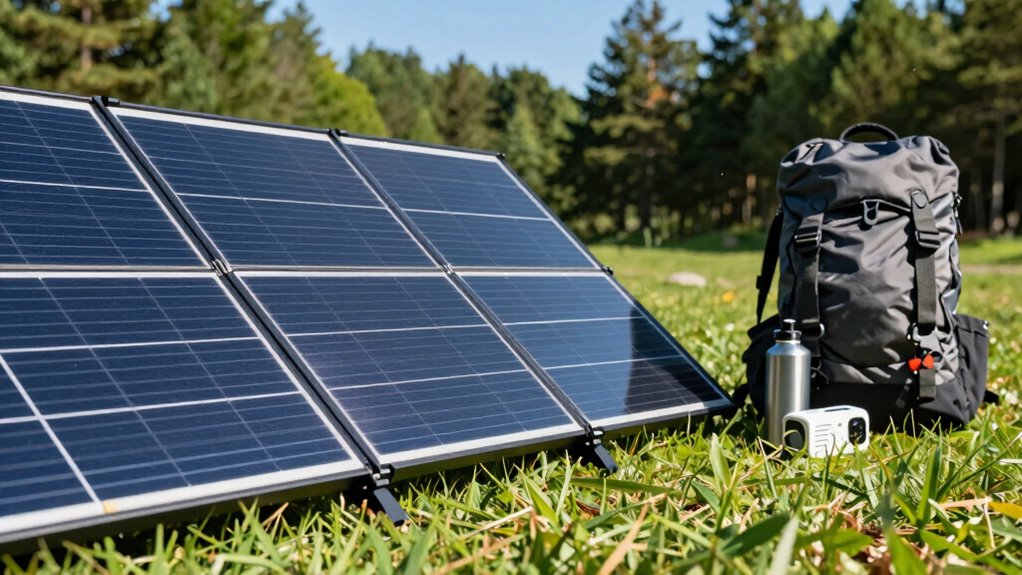
Setting up your 200W foldable solar panel for camping is straightforward if you follow a clear checklist. First, verify the panel is clean and free of dust or debris, as dirt can reduce efficiency. Position the panel in a location where it gets maximum direct sunlight, ideally facing south if you’re in the northern hemisphere, and at an angle that matches your latitude. Avoid shaded areas from trees or structures, since even partial shade can considerably decrease power output. Once you’ve found the ideal spot, unfold the panel carefully, making sure it’s stable and secure. Use the built-in kickstands or any provided mounting options to keep it upright and steady, especially on uneven ground.
Ensure your foldable solar panel is clean, positioned correctly, and securely unfolded for optimal camping performance.
Next, connect the panel to your battery or power station using the appropriate cables and connectors. Double-check all connections to prevent loose wiring that could cause power loss or damage. During this process, keep battery maintenance in mind—regularly check your batteries for signs of corrosion, proper voltage levels, and overall health. Proper battery upkeep ensures your solar setup operates efficiently over time and avoids costly replacements or failures. When connecting, also verify that your system’s charge controller is functioning correctly, as it protects your batteries from overcharging and prolongs their lifespan.
Weatherproofing your setup is another critical step. Before heading out, review weatherproofing tips to safeguard your equipment against unexpected rain or moisture. For instance, use waterproof covers or enclosures for your connections and ensure that cables are rated for outdoor use. Keep the connectors dry and shielded from rain, and avoid placing the panel in locations with excessive wind or water runoff that could cause damage or instability. Proper weatherproofing minimizes interruptions and extends the lifespan of your solar panel and accessories, saving you time and money in the long run. Additionally, understanding the importance of European cloud innovation can help you find more sustainable and secure solutions for managing your energy needs.
Finally, monitor your system’s performance regularly during your trip. Check the power output and battery levels, and make adjustments if you notice a drop in efficiency. Remember, consistent battery maintenance and weatherproofing are ongoing tasks that keep your camping setup running smoothly. By following these simple steps—positioning correctly, securing connections, maintaining your batteries, and weatherproofing—you’ll avoid common mistakes and enjoy reliable power throughout your adventure. Setting up your foldable solar panel properly ensures you maximize energy harvest, protect your investment, and have a hassle-free camping experience with clean, renewable energy at your fingertips.
Frequently Asked Questions
How Do I Store My Foldable Solar Panel During Off-Season?
To store your foldable solar panel during the off-season, start by cleaning it gently with a damp cloth to remove dirt and debris. Fold it carefully and store it in a cool, dry place away from direct sunlight. Use protective covers or a storage bag to prevent scratches. For off-season maintenance, check periodically for dust or moisture, and make certain the panel remains properly protected to extend its lifespan.
Can I Connect Multiple Panels to Increase Power Output?
Think of your panels as a choir, harmonizing to boost power. Yes, you can connect multiple panels through proper panel wiring, which allows for power scaling. Make sure you match voltage and current ratings to avoid damage. When wired correctly, the combined output increases, much like a choir singing louder together. Just follow manufacturer guidelines for series or parallel connections to safely and effectively increase your solar power.
What Safety Precautions Are Recommended When Handling Solar Panels?
When handling solar panels, always prioritize safety by wearing protective gear like gloves and goggles. Make certain proper electrical grounding to prevent shocks or short circuits. Handle panels carefully to avoid damaging the fragile surface, and disconnect power before any maintenance. Keep the area dry and clear of conductive materials. Following these precautions helps protect you from potential hazards and keeps your solar setup safe and efficient during camping.
How Does Weather Affect the Performance of the Solar Panel?
Weather impact can subtly influence your solar panel’s efficiency. Cloudy days and frequent rain diminish sunlight, reducing power output, while snow and ice can shield the panels, causing a temporary pause. Environmental factors like dust, dirt, and debris also play a role, blocking sunlight. To maximize performance, regularly clean your panels and position them to minimize shading, especially during adverse weather. This way, you guarantee consistent energy generation no matter the conditions.
Is It Necessary to Use a Charge Controller With My Setup?
Yes, you should use a charge controller with your setup to protect your batteries from overcharging and voltage fluctuations. It also helps regulate power flow, ensuring wiring safety and preventing potential damage. By installing a charge controller, you maintain ideal performance of your foldable solar panel, especially in variable weather conditions. Always choose a compatible controller and follow proper wiring safety guidelines for a reliable, safe camping power system.
Conclusion
Now, picture yourself unfolding your 200W solar panel under the bright, open sky as sunlight streams down, fueling your camping adventure. By following this checklist, you’ll avoid common pitfalls and keep your setup smooth and efficient. With your panel soaking up the sun’s energy, you’ll watch your devices come to life, charging steadily as nature’s warmth surrounds you. Enjoy worry-free camping, knowing your power is as endless as the sky above.