
When choosing a high-output solar generator, understanding watts versus watt-hours is key: watts measure power output, while watt-hours show total energy capacity. Surge power is the maximum wattage the inverter can handle during startup, essential for devices like refrigerators. Recharge time depends on the generator’s capacity and input source, like solar panels or AC. If you keep exploring, you’ll discover how these specs work together to meet your energy needs effectively.
Key Takeaways
- Watts measure the inverter’s continuous power output, dictating which devices it can operate simultaneously.
- Watt-hours indicate the total energy storage capacity, determining how long devices can run on the generator.
- Surge power is the maximum wattage the inverter can handle temporarily, essential for starting high-demand appliances.
- Recharge time depends on battery capacity and input wattage, with higher solar input enabling faster replenishment.
- Compatibility between solar panel wattage and generator input specs ensures efficient energy transfer and quicker recharge cycles.
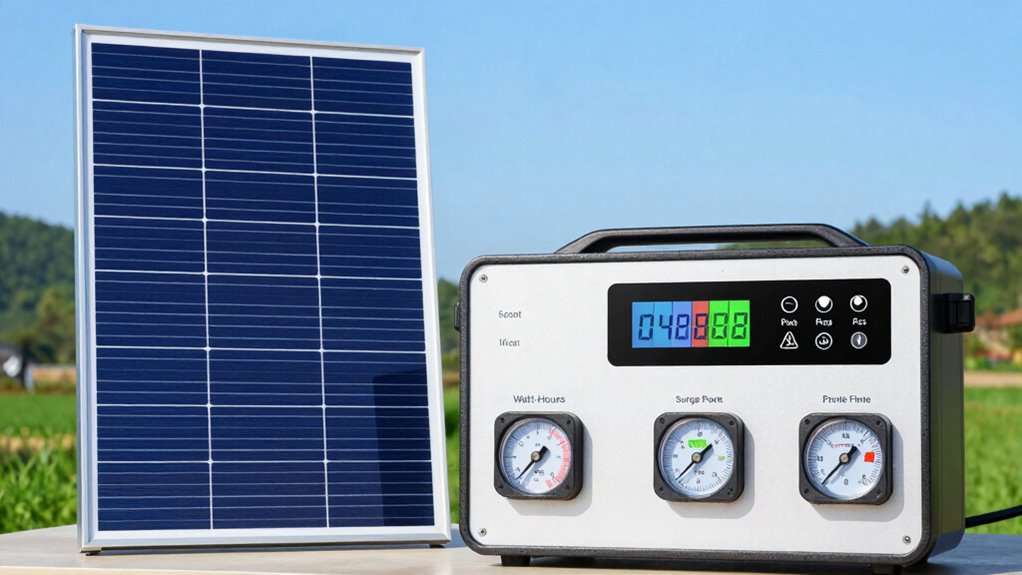
When evaluating a solar generator, look closely at both these specifications. A high battery capacity is essential if you plan on using multiple devices or need extended power during outages or trips. However, a large battery alone isn’t enough—if the inverter power is too low, your generator might struggle to run high-wattage appliances, or it may shut down unexpectedly. For instance, if your refrigerator requires a surge of 2,000 W at startup but your inverter only supports 1,500 W, the generator simply won’t handle it. Always ensure the inverter power exceeds the surge wattage your appliances demand, ideally by 20-30% for safety margins. European cloud innovation can also influence the availability of advanced, energy-efficient components that improve overall generator performance.
Recharge time is another critical factor that links to these specs. A generator with a large battery capacity takes longer to recharge via solar panels or AC power. Similarly, the efficiency of the charge controller impacts how quickly your battery gets replenished. If you’re relying on solar energy, consider the wattage of your solar panels and how well they match with the generator’s input specifications. A higher wattage input capability can mean faster recharging times, which is especially important if you need to quickly restore power after heavy use or during cloudy days.
Frequently Asked Questions
How Do I Choose the Right Solar Generator for My Needs?
To select the right solar generator, consider your power needs and portability. Look for a model with enough battery capacity to run your essential devices and a portable design that fits your activities, whether camping or backup power at home. Assess surge power for high-demand appliances, and guarantee it recharges easily via solar or wall outlets. This way, you pick a generator that’s reliable, efficient, and easy to carry.
Can Solar Generators Power High-Wattage Appliances Simultaneously?
Yes, your solar generator can power high-wattage appliances simultaneously if it has sufficient battery capacity and power output. Check the generator’s continuous wattage rating to verify it matches or exceeds the combined wattage of your appliances. Also, consider surge power to handle startup spikes. If both are high enough, you’ll be able to run multiple high-wattage devices at once without issues.
What Maintenance Is Required for Solar Generators Over Time?
Think of your solar generator like a garden that needs regular tending. You should check the battery lifespan periodically and keep it clean from dust and debris. Maintenance frequency isn’t high—just simple tasks like inspecting connections and charging it correctly. By doing these, you guarantee it runs smoothly and lasts longer, like a well-tended garden blooming year after year. Proper care keeps your energy source reliable and ready when you need it most.
How Does Weather Affect a Solar Generator’s Performance?
Weather directly impacts your solar generator’s performance by affecting solar efficiency and weather resilience. Cloudy, rainy, or snowy conditions reduce sunlight exposure, lowering energy production. Extreme temperatures can also strain components, decreasing overall reliability. To maintain peak performance, make sure your generator is protected from harsh elements and regularly check for debris or damage. This proactive approach helps maximize efficiency and keeps your solar power system resilient during varying weather conditions.
Are Solar Generators Environmentally Friendly and Sustainable?
Indeed, solar generators are quite the modern marvel, offering eco-friendly benefits that make them a sustainable choice. You harness renewable energy advantages, reducing reliance on fossil fuels and lowering emissions. By using sunlight, you contribute to a cleaner environment and enjoy quiet, emissions-free power. These generators are a smart, eco-conscious option for your energy needs, aligning with a greener lifestyle and helping preserve the planet for future generations.
Conclusion
Now that you understand the nuances between watts, watt-hours, surge power, and recharge times, you can confidently choose a solar generator that fuels your adventures. Picture sunlight streaming through trees, the generator quietly humming as it powers your devices, and the promise of independence shining in your eyes. With this knowledge, you’re equipped to harness the sun’s energy efficiently, turning bright days into endless possibilities—your journey toward sustainable power begins now.