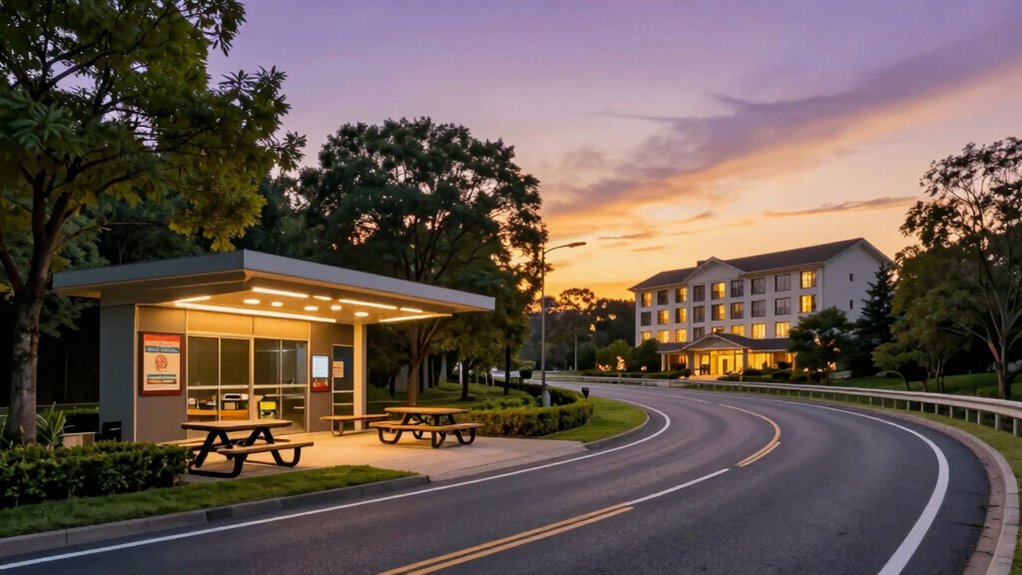

When deciding between rest stops and hotel stops, consider your travel goals and schedule. Rest stops are perfect for quick breaks, snacks, or stretching, especially if you’re focused on efficiency. Hotels offer comfort, safety, and a chance for proper rest during longer journeys. Think about your need for quick pauses versus a comfortable overnight stay. If you want to make the most of your trip, understanding your priorities will guide your choice—you’ll find more useful tips ahead.
Key Takeaways
- Consider trip duration: use rest stops for quick breaks; choose hotels for overnight or extended rest.
- Evaluate scenic vs. practical needs: scenic routes favor hotels for immersion; rest stops suit short refreshment breaks.
- Plan meal options: quick snacks at rest stops; sit-down meals at hotels or nearby restaurants.
- Assess safety and comfort: hotels provide secure, private rest; rest stops are suitable for daytime breaks only.
- Factor in budget and environmental impact: rest stops are cost-effective; hotels support longer, leisure-focused stays.
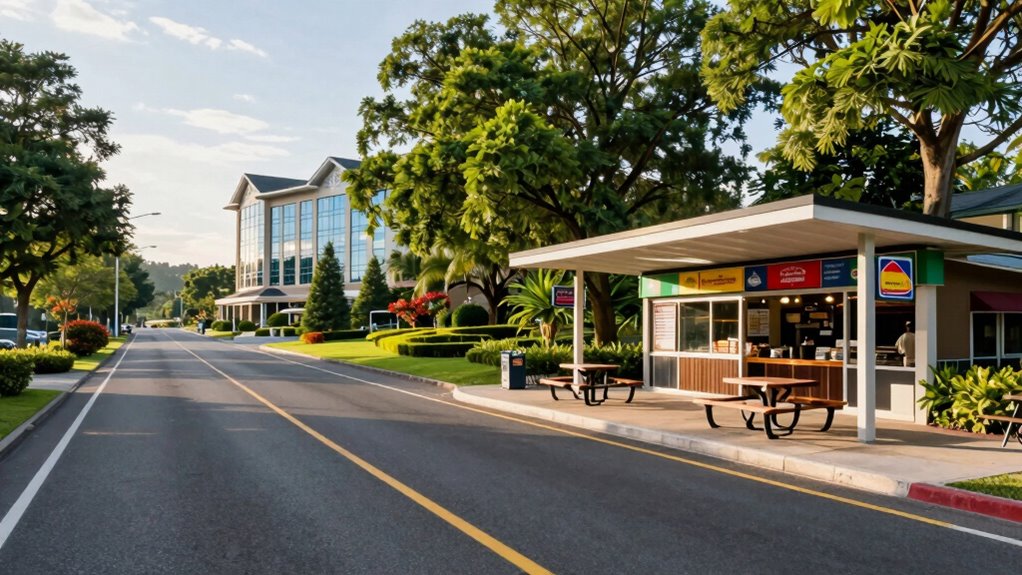
When planning a long road trip, you often have to decide between stopping at a rest stop or booking a hotel for the night. This choice hinges on factors like comfort, convenience, and how you want to experience your journey. Rest stops are quick and practical, offering a place to stretch, grab a snack, or use the restroom without deviating far from your route. Hotels, on the other hand, provide a comfortable bed, a hot shower, and a chance to rest properly. To make the right decision, consider your travel style and priorities.
Deciding between rest stops and hotels depends on comfort, convenience, and your travel priorities.
If you’re someone who enjoys scenic routes, you might want to plan your stops accordingly. Scenic routes give you the opportunity to enjoy beautiful landscapes and take memorable photos, but they can also add time to your trip. In this case, a rest stop might be enough if you’re just looking for a quick break. However, if the scenery is particularly mesmerizing and you want to soak it in, booking a hotel nearby allows you to extend your experience without rushing. This way, you can wake up refreshed and explore more of the area without feeling pressed for time.
Meal planning is another vital aspect to consider. Rest stops usually have vending machines, snack bars, or fast-food outlets, which might be sufficient for a quick bite. But if you prefer a sit-down meal or want to try local cuisine, a hotel with a restaurant or nearby eateries could be a better choice. Planning ahead helps you avoid unnecessary detours for food, saving time and reducing stress. Think about your dietary needs and whether you’re comfortable eating at rest stops or if you prefer the comfort and options a hotel restaurant offers.
Comfort and safety also play a role. If you’re traveling alone or with family, a hotel can provide peace of mind, especially if it’s late at night. It offers a secure place to rest, shower, and recharge. Rest stops are generally safe during the day, but they might not be suitable for overnight stays or late-night breaks. Consider how tired you are and whether you’ll need a proper sleep to stay alert on the road.
Additionally, understanding the importance of sustainable travel can influence your choice, as it encourages eco-friendly practices such as minimizing detours and choosing energy-efficient accommodations. Ultimately, your decision depends on your schedule, budget, and what you want from the trip. For quick, cost-effective breaks, rest stops work well. For longer stays and a more leisurely experience, booking a hotel is worth it. Weigh the scenic routes, meal options, comfort, and safety to choose what best fits your journey. When you make a thoughtful choice, you’ll enjoy your trip more and arrive feeling refreshed, without regret.
Frequently Asked Questions
What Are the Safety Considerations for Overnight Rest Stops?
When choosing overnight rest stops, prioritize safety by checking security protocols and ensuring the area is well-lit and monitored. Look for places with clear emergency procedures, such as accessible staff or security personnel. Avoid secluded or poorly maintained spots, and trust your instincts if something feels off. Keep valuables out of sight, lock your doors, and stay alert. Planning ahead helps you stay safe and comfortable during overnight stops.
How Do Costs Compare Between Extended Rest Stops and Hotels?
Back in the day, travelers relied on inns; now, your cost comparison shows that extended rest stops are cheaper than hotels, especially for budget travel. Rest stops often cost nothing, while hotels can range from $50 to $150 per night. If you’re trying to save, opting for rest stops saves money, but hotels offer comfort and convenience. Weigh your budget versus comfort needs to make the best choice.
Are There Legal Restrictions on Overnight Parking at Rest Stops?
You should be aware that legal restrictions on overnight parking at rest stops vary by location. Many rest stops prohibit overnight parking to prevent long-term stays, so check posted signs or local regulations before parking overnight. Some areas may allow it for a limited time, but others strictly enforce bans. To avoid fines or being asked to move, always verify overnight parking rules at each rest stop you visit.
How Do Amenities at Rest Stops Differ From Hotel Services?
Imagine discovering that rest stop amenities include clean bathrooms, picnic areas, and vending machines, but lack the personalized service hotels offer. You’ll find hotel service differences in daily housekeeping, room service, and 24/7 front desk support. While rest stops provide quick conveniences for travelers, hotels deliver comfort, privacy, and extensive amenities. Your choice depends on whether you need a brief stop or a cozy overnight stay, each offering distinct benefits.
What Are the Best Apps to Find Safe Rest Stops?
You’ll want to use apps like iExit, Roadside America, or AllStays to find safe rest stops. These apps offer reliable navigation tools and detailed info on rest stop amenities, including cleanliness, security, and available facilities. By checking reviews and maps beforehand, you can choose stops that meet your safety and comfort needs, making your trip smoother and more enjoyable without any regrets.
Conclusion
Ultimately, choosing between rest stops and hotel stops depends on your comfort and schedule. If you’re worried about losing sleep, remember that a quick rest at a well-equipped rest stop can refresh you without the hassle of packing and unpacking. Imagine pulling into a peaceful rest area, stretching your legs, and feeling recharged in minutes. With a little planning, you can arrive refreshed and ready to enjoy your journey, no regret needed.