
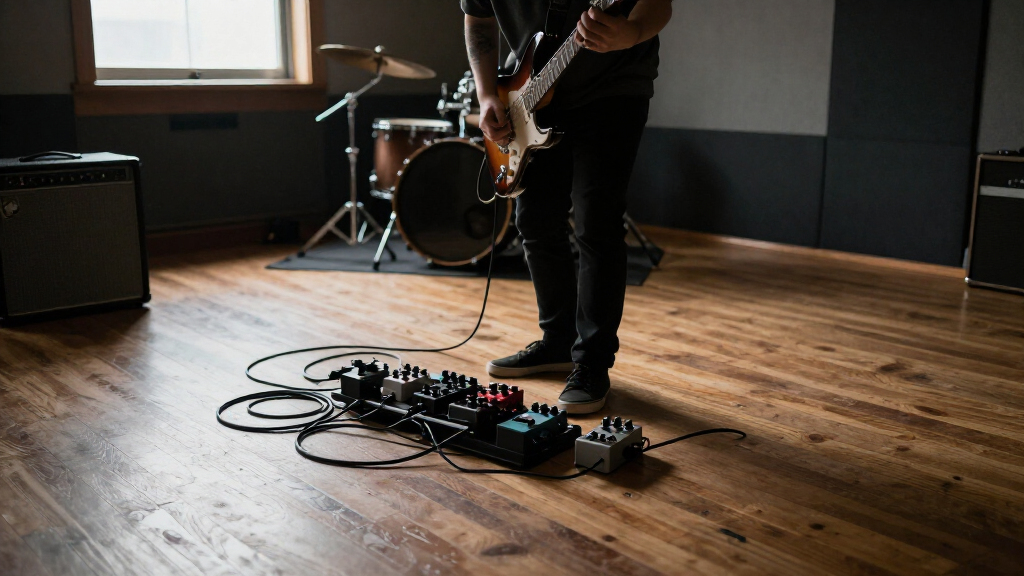

For guitar effect pedals for spooky sounds, my best overall pick is the EarthQuaker Devices Ghost Echo V3, which centers its character on eerie, vintage-voiced reverb. The Keeley Dark Side is a stronger fit if you want fuzz, delay, and modulation together, while the Caline Ghost Rain offers a focused route to unsettling echoes. The main choice is between a distinctive effect that shapes a clear mood and a multi-effects unit that covers more sounds but may take more setup. Fuzz, synth tones, and modulation can also sound strange without automatically sounding atmospheric, so the right choice depends on how you plan to use them. Read on for the full comparison, ranking logic, and advice for choosing a pedal that fits your rig.

Get audio and creator gear delivered free with Prime
- Fast, free delivery on millions of items
- Prime Video, Amazon Music and more included
- Member-only deals all year
Complete the kit


Key Takeaways
- Atmospheric reverb leads the spooky brief: The EarthQuaker Devices Ghost Echo V3 earns the best-overall role because its vintage-voiced reverb is directly suited to eerie space, rather than relying on a general-purpose effect.
- The Keeley Dark Side trades focus for range: Its combination of fuzz, delay, and modulation can cover several unsettling textures in one pedal, while the Ghost Echo is the clearer pick for a reverb-led sound.
- Dedicated delay can be more useful than a large effects menu: The Caline CP-41 Ghost Rain is aimed at echo, making it a more direct choice for repeated, spectral trails than broad multi-effects units.
- Modulation pedals offer color, not a complete atmosphere: The FLAMMA FC05 and Donner Mod Square II provide multiple modulation effects, but players seeking haunted depth may need to pair them with reverb or delay.
- Multi-effects and synth options suit different kinds of experimentation: The MOOER GE100 and SORAN units prioritize wider sound coverage, while the South Zoo Voice Synth and Caline Fuzzy Face offer more specialized tones; broader range can mean more setup or a less conventional guitar sound.
| FLAMMA FC05 Modulation Guitar Pedal |  | Best Compact Modulation Pick | Effects: 11 modulation effects | Effect types listed: Chorus, flanger, tremolo, phaser, vibrato, rotary, auto wah, ring modulation | Power requirement: 9V, 150mA | VIEW LATEST PRICE | See Our Full Breakdown |
| Keeley Dark Side Fuzz, Delay, and Modulation Workstation Pedal |  | Best All-in-One Haunted Texture | Effects: Fuzz, delay, flanger, rotary speaker, U-Vibe, phaser | Delay settings: 12 multi-head tape-style settings | Power: 9V DC, center-negative | VIEW LATEST PRICE | See Our Full Breakdown |
| SORAN Dual Stomp Rechargeable Multi-Effects Guitar Pedal with Expression Pedal |  | Best for Preset Variety and Practice | Presets: 99 | Effects: 125 | Simultaneous effect modules: 11 | VIEW LATEST PRICE | See Our Full Breakdown |
| Caline CP-41 Ghost Rain Echo Delay Guitar Effects Pedal |  | Best Dedicated Vintage Echo | Effect: Analog delay | Delay time: 25–600 ms | Bypass: True bypass | VIEW LATEST PRICE | See Our Full Breakdown |
| South Zoo Voice Synth Pedal – Triple Voice Polyphonic Synthesizer |  | Best for Experimental Creature Sounds | Synth voices: Three-voice polyphonic | Listed sound features: Invert Pitch Follow, Freeze, lo-fi glitch modes | Power requirement: 9V, 150mA | VIEW LATEST PRICE | See Our Full Breakdown |
| Donner Mod Square II Modulation Pedal for Electric Guitar – 16 Effects |  | Best for Spooky Modulation Variety | Effects: 16 modulation effects, including chorus, phaser, tremolo, flanger, rotary vibrato, wah, and lo-fi detune | Signal format: Digital | Controls: Knobs for rate, depth, and level | VIEW LATEST PRICE | See Our Full Breakdown |
| EarthQuaker Devices Ghost Echo V3 Vintage-Voiced Reverb Guitar Effects Pedal |  | Best for Haunted Spring Reverb | Effect: Vintage-voiced reverb | Pre-delay: 30–150 ms | Controls: Attack and Dwell | VIEW LATEST PRICE | See Our Full Breakdown |
| SORAN Go Rig I Multi-Effects Pedal for Electric Guitar |  | Best Rechargeable All-in-One | Effect selection: 9 drive tones, 3 delay types, and 3 reverb types | Delay: Analog, tape, and digital with tap tempo | Reverb: Studio, spring, and concert with Freeze function | VIEW LATEST PRICE | See Our Full Breakdown |
| MOOER GE100 Multi-Effects Guitar Pedal |  | Best for Preset-Based Experimenting | Effect modules: 8 | Effect types: 66 | Preset patches: 80 | VIEW LATEST PRICE | See Our Full Breakdown |
| Caline CP-53 Fuzzy Face Voodoo Octave Guitar Effects Pedal |  | Best for Aggressive Octave-Fuzz | Effect types: Fuzz and octave up | Controls: Fuzz, tone, and volume | Tone switch: Mid-cut toggle | VIEW LATEST PRICE | See Our Full Breakdown |
| guitar effect pedals for spooky sound | Dimensions | Weight |
|---|---|---|
| FLAMMA FC05 Modulation Guitar | 3.27 x 1.85 x 2.05 inches | 0.19 kg |
| Keeley Dark Side Fuzz | 4.72 x 3.9 x 2.09 inches | — |
| SORAN Dual Stomp Rechargeable | — | — |
| Caline CP-41 Ghost Rain Echo D | 3.74 × 1.38 × 4.72 inches | 312 g |
| South Zoo Voice Synth Pedal | 3.6 x 1.5 x 2 inches | 358 g |
| Donner Mod Square II Modulatio | 3.7 × 1.7 × 2 in | 0.25 kg |
| EarthQuaker Devices Ghost Echo | 4.75 × 2.5 × 2.25 in | 12.8 oz |
| SORAN Go Rig I Multi-Effects P | — | — |
| MOOER GE100 Multi-Effects Guit | — | — |
| Caline CP-53 Fuzzy Face Voodoo | — | — |
More Details on Our Top Picks
FLAMMA FC05 Modulation Guitar Pedal
For eerie movement without filling a pedalboard, I’d choose the FLAMMA FC05. Its 11 modulation effects include vibrato, ring modulation, phaser, and flanger, giving a player several routes to woozy pitch shifts and unsettling rhythmic textures in one small unit. Compared with the Donner Mod Square II, which offers more effect types, the FC05’s appeal is its compact footprint and straightforward single-knob control. That simplicity makes it easier to add a quick swirl or wobble, though it offers less room for detailed sound shaping than a larger multi-effect pedal. The metal shell suits a working board, but the required 9V, 150mA supply is not included. I’d pick it for modulation-driven hauntings, not for long echoes or sustained reverb.
Pros:- Eleven modulation effects include vibrato and ring modulation for disorienting textures.
- Compact dimensions make it easy to fit on a crowded pedalboard.
- Full-metal shell provides a sturdy enclosure.
- Single-knob control keeps effect selection approachable.
Cons:- 9V, 150mA power supply is not included.
- A single-knob control scheme limits detailed adjustment.
- Modulation alone cannot provide the long echoes or reverberant tails some spooky sounds need.
Best for: Guitarists with limited pedalboard space who want several eerie modulation effects without managing a large processor.
Not ideal for: Players seeking deep parameter control, built-in delay or reverb, or a pedal that includes its power supply.
- Effects:11 modulation effects
- Effect types listed:Chorus, flanger, tremolo, phaser, vibrato, rotary, auto wah, ring modulation
- Power requirement:9V, 150mA
- Power supply:Not included
- Signal format:Digital
- Audio connection:1/4-inch
- Dimensions:3.27 x 1.85 x 2.05 inches
- Weight:0.19 kg
Our verdict“Choose the FC05 if compact, varied modulation matters more than extensive editing or built-in ambience.”
Keeley Dark Side Fuzz, Delay, and Modulation Workstation Pedal
The Keeley Dark Side earns this spot by combining the three ingredients that can make a guitar part feel ominous: fuzz, tape-style delay, and modulation. Its 12 multi-head delay settings can build repeating, worn-sounding trails, while flanger, rotary, U-Vibe, and phaser add motion that a dedicated echo like the Caline CP-41 Ghost Rain cannot provide. The effect order switch and expression-pedal port give this workstation more performance flexibility than the compact FLAMMA FC05, which focuses on modulation. That breadth comes with a learning curve: it takes more setup to shape a specific sound, and players seeking a simple, one-effect pedal may find it excessive. It also requires a separate 9V DC center-negative supply.
Pros:- Combines fuzz, delay, and multiple modulation effects in one pedal.
- Twelve tape-style delay settings support varied, repeat-rich textures.
- Effect order switch offers flexibility in how the effects interact.
- Expression-pedal port allows hands-on control during performance.
Cons:- A broad effect set and control layout can take time to configure.
- Requires a separate 9V DC center-negative power supply.
- Larger footprint than compact options such as the FLAMMA FC05.
Best for: Players who want fuzz, shifting modulation, and tape-like repeats together for layered horror tones and live sound changes.
Not ideal for: Guitarists who want a simple dedicated delay or modulation pedal, or who prefer minimal controls and setup.
- Effects:Fuzz, delay, flanger, rotary speaker, U-Vibe, phaser
- Delay settings:12 multi-head tape-style settings
- Power:9V DC, center-negative
- Current draw:75 mA
- Connections:1/4-inch audio; TRS expression-pedal port
- Dimensions:4.72 x 3.9 x 2.09 inches
- Warranty:Two years parts and labor
Our verdict“Pick the Dark Side if you want one flexible pedal for fuzz, moving modulation, and tape-like echoes rather than a simpler single-effect unit.”
SORAN Dual Stomp Rechargeable Multi-Effects Guitar Pedal with Expression Pedal
The SORAN Dual Stomp is the broadest sound-design option here: its 125 effects, 99 presets, and 11 simultaneous modules give players room to combine unfamiliar textures instead of relying on one signature effect. For spooky parts, that flexibility can pair modulation, amp or cabinet models, and other processing; the 40-second stereo looper and 100 drum patterns also make it useful for building arrangements alone. Compared with the Keeley Dark Side, it offers a much wider processor-and-practice setup, while the Keeley gives a more focused fuzz, tape-delay, and modulation identity. The tradeoff is complexity: a large menu of effects is less immediate than the FLAMMA FC05. Its rechargeable battery runs for up to six hours, so long sessions may call for a power plan.
Pros:- Large selection of presets and effects supports varied spooky sound combinations.
- Eleven simultaneous effect modules allow layered processing.
- Built-in wah and volume expression pedal add hands-on control.
- Looper, drum patterns, and USB audio support practice and recording.
Cons:- The many effects and presets can take longer to navigate than a dedicated pedal.
- Battery runtime is limited to up to six hours.
- Its larger, heavier format is less compact than the FLAMMA FC05.
Best for: Home recordists and practice-focused players who want many effects, a looper, drum patterns, and an expression pedal in one rechargeable unit.
Not ideal for: Gigging players who need very long battery runtime or musicians who prefer a small pedal with a few direct controls.
- Presets:99
- Effects:125
- Simultaneous effect modules:11
- Amp and cabinet models:80 total
- Looper:40-second stereo
- Drum patterns:100
- USB audio:48 kHz/24-bit interface with ASIO support
- Battery life:Up to 6 hours
- Display:2-inch color screen
Our verdict“Choose the Dual Stomp if variety, practice tools, and recording features matter more than quick access to a small set of effects.”
Caline CP-41 Ghost Rain Echo Delay Guitar Effects Pedal
For spooky sounds built around a repeating guitar line, the Caline CP-41 Ghost Rain keeps the job focused: its analog-style echo covers 25–600 ms, from tight doubling to more pronounced repeats. The warm vintage character suits worn, shadowy phrases, and true bypass helps keep the unaffected signal intact when the effect is off. Unlike the Keeley Dark Side, the CP-41 does not add fuzz or modulation, so it is less versatile for building a complete haunted effect chain. That narrow focus can be an advantage if the goal is a straightforward echo rather than a workstation. It also cannot produce the shifting pitch and motion of the FLAMMA FC05. The 9V center-negative supply is not included, so factor that into a pedalboard setup.
Pros:- 25–600 ms delay range supports both short echoes and more separated repeats.
- Warm vintage-style character fits worn, shadowy guitar parts.
- True bypass helps preserve the dry signal when the effect is off.
- Dedicated delay function is simpler to approach than a multi-effect workstation.
Cons:- Provides echo only, unlike the Keeley Dark Side’s fuzz and modulation combination.
- 9V center-negative power supply is not included.
- No modulation or expression-pedal features are listed.
Best for: Players who want a dedicated warm echo for eerie guitar phrases and already have other pedals for modulation or fuzz.
Not ideal for: Musicians looking for multi-effect sound design, long ambient features beyond the stated delay range, or a bundled power supply.
- Effect:Analog delay
- Delay time:25–600 ms
- Bypass:True bypass
- Power requirement:9V DC, center-negative
- Current draw:40 mA
- Audio connection:1/4-inch mono jack
- Dimensions:3.74 × 1.38 × 4.72 inches
- Weight:312 g
Our verdict“Choose the Ghost Rain if you want a focused vintage echo and do not need modulation or fuzz in the same pedal.”
South Zoo Voice Synth Pedal – Triple Voice Polyphonic Synthesizer
The South Zoo Voice Synth takes the most unconventional route to spooky guitar: its three-voice, polyphonic animal-inspired synth responds to playing dynamics, turning notes into textures associated with cats, frogs, and horses. That distinctive palette is more characterful than the FLAMMA FC05’s familiar modulation effects, while Freeze, Invert Pitch Follow, and lo-fi glitch functions open up stranger sustained and pitch-shifted sounds. The specialization is also the main limitation. Players after classic haunted echoes may be better served by the Caline CP-41 Ghost Rain, and the South Zoo’s pitch-follow and glitch controls may take time to learn. Its compact enclosure, USB-C firmware updates, and choice of true or buffered bypass add practical flexibility, but this is a color-effect choice, not an all-purpose processor.
Pros:- Three-voice polyphonic synth creates an unusual, distinctive sound palette.
- Responds to playing dynamics for expressive control.
- Freeze and pitch-follow features support sustained and shifting textures.
- Compact format includes USB-C firmware updates and selectable true or buffered bypass.
Cons:- Animal-inspired tones are specialized and may not suit many musical styles.
- Pitch-follow and glitch features can require time to learn.
- Does not replace a conventional echo pedal such as the Caline CP-41.
Best for: Experimental guitarists and sound designers who want expressive, animal-like synth voices, glitch textures, and sustained sounds.
Not ideal for: Players seeking conventional delay, reverb, or broadly usable effects for standard guitar tones.
- Synth voices:Three-voice polyphonic
- Listed sound features:Invert Pitch Follow, Freeze, lo-fi glitch modes
- Power requirement:9V, 150mA
- Power source:Corded electric
- Signal format:Digital
- Bypass options:Selectable true or buffered bypass
- USB connector:USB-C for firmware updates
- Dimensions:3.6 x 1.5 x 2 inches
- Weight:358 g
Our verdict“Pick the South Zoo if you want unusual creature-like synth textures and accept a specialized sound palette over conventional ambience.”
Donner Mod Square II Modulation Pedal for Electric Guitar – 16 Effects
The Mod Square II is the pick for players who want to color a clean part with shifting, uneasy movement rather than build a whole dark rig around one effect. Its 16 modulation options include phaser, rotary vibrato, tremolo, and lo-fi detune, so a player can move from wavering, haunted tones to choppier, more unsettling pulses. Rate and depth knobs keep the main adjustments direct, while tap tempo helps sync rhythmic movement to a song. Compared with the EarthQuaker Devices Ghost Echo V3, this pedal changes the character of the signal instead of adding vintage spring-style space; it can be a more flexible source of unease, but it does not provide the same reverberant depth. Its compact size and buffer bypass suit a crowded board, though the effect menu may be more than a player needs for one signature sound. It also requires external 9V power.
Pros:- Sixteen modulation effects offer several ways to create wavering, pulsing, or detuned textures.
- Tap tempo helps match rhythmic modulation to a song.
- Rate, depth, and level knobs provide straightforward sound shaping.
- Buffer bypass helps preserve the signal when the pedal is off.
Cons:- Needs an external 9V DC power source and has no built-in battery.
- Does not provide the reverb depth available from the Ghost Echo V3.
Best for: Guitarists building eerie clean textures who want multiple modulation flavors and tap-tempo control in one compact pedal.
Not ideal for: Players seeking long, cavernous reverb or a single simple effect; this is a modulation-focused pedal with a broad selection to choose from.
- Effects:16 modulation effects, including chorus, phaser, tremolo, flanger, rotary vibrato, wah, and lo-fi detune
- Signal format:Digital
- Controls:Knobs for rate, depth, and level
- Additional controls:Tap tempo and buffer bypass
- Power:9V, 300 mA; corded electric
- Dimensions:3.7 × 1.7 × 2 in
- Weight:0.25 kg
- Style:Compact
Our verdict“Choose the Mod Square II if you want one compact pedal for varied spooky modulation, but pick the Ghost Echo V3 for spring-like atmospheric space.”
EarthQuaker Devices Ghost Echo V3 Vintage-Voiced Reverb Guitar Effects Pedal
For a ghostly guitar sound built on space and decay, the Ghost Echo V3 is the most focused choice in this group. Its vintage spring-reverb inspiration gives notes an old, slightly uncanny ambience, while the adjustable 30–150 ms pre-delay can separate the initial pick attack from the wash that follows. That makes it easier to keep a riff readable even as the reverb grows behind it. The Dwell control reaches self-oscillation, which can push a texture toward unruly feedback rather than subtle atmosphere. Compared with the Donner Mod Square II, the Ghost Echo offers less variety but a more direct route to haunted room and spring-like sounds; it cannot supply that pedal’s range of modulation colors. Its two controls keep the setup focused, yet players wanting precise multi-effect presets or rhythmic delay may find it too specialized. It also needs a 9V power source.
Pros:- Vintage spring-inspired reverb gives notes an aged, eerie sense of space.
- Adjustable pre-delay supports both slapback-like separation and longer reverberant tails.
- Dwell can be pushed into self-oscillation for more unstable textures.
- Upgraded op-amps are specified for lower noise.
Cons:- Its reverb-focused design is less versatile than the Donner Mod Square II’s modulation range.
- High Dwell settings can produce self-oscillation that may overwhelm a controlled part.
- Requires a 9V power source.
Best for: Players who want vintage spring-style ambience, adjustable pre-delay, and the option to push reverb into unstable, self-oscillating territory.
Not ideal for: Players who need multiple effect types, preset-based switching, or reliably restrained reverb at high Dwell settings.
- Effect:Vintage-voiced reverb
- Pre-delay:30–150 ms
- Controls:Attack and Dwell
- Power:9V, 80 mA; corded electric
- Audio connection:1/4-inch
- Dimensions:4.75 × 2.5 × 2.25 in
- Weight:12.8 oz
- Warranty:Limited lifetime
Our verdict“Choose the Ghost Echo V3 for distinctive spring-like haunted space, but look to the Mod Square II for a broader range of movement effects.”
SORAN Go Rig I Multi-Effects Pedal for Electric Guitar
The Go Rig I suits players who want an all-in-one route to eerie sounds without assembling separate drive, delay, and reverb pedals. Its three reverb types include spring, and the Freeze function can hold a texture while notes or effects shift around it; three tap-tempo delay types add another way to make a part feel restless. Nine drive tones broaden the palette, while a built-in noise gate can help tame excess hiss from more aggressive settings. Compared with the Ghost Echo V3, it offers more effect categories and rechargeable operation, but the Ghost Echo is the more dedicated choice for vintage spring ambience and self-oscillating reverb character. The Go Rig I’s knob-driven interface keeps operation direct, although a multi-effect layout means it may not offer the same focused control as a dedicated pedal. Stereo outputs and a metal chassis add practical flexibility; its compact size does not replace a carefully chosen specialty effect for players with a specific sound in mind.
Pros:- Combines drive, delay, and reverb options in one pedal.
- Freeze reverb and tap-tempo delays support sustained and rhythmic textures.
- Rechargeable USB-C battery is rated for over five hours of operation.
- Noise gate, stereo outputs, and metal chassis add useful performance features.
Cons:- Its broad multi-effect layout is less focused on spring reverb than the Ghost Echo V3.
- The listed amperage of 12 A is unusual alongside the stated 9V power details, so power compatibility should be confirmed before use.
Best for: Players who want a portable, rechargeable pedal with delay, reverb, drive, and Freeze for building layered spooky sounds.
Not ideal for: Players seeking a dedicated vintage spring-reverb sound or detailed specialist control over one effect.
- Effect selection:9 drive tones, 3 delay types, and 3 reverb types
- Delay:Analog, tape, and digital with tap tempo
- Reverb:Studio, spring, and concert with Freeze function
- Additional effect:Built-in noise gate
- Outputs:Dual 1/4-inch TS mono/stereo outputs
- Battery:Built-in 500 mAh lithium battery; rated for over 5 hours
- Charging:USB-C, 5V DC
- Construction and controls:Full metal chassis with knob-driven interface
Our verdict“Choose the Go Rig I if portable, rechargeable access to several spooky effect types matters more than a dedicated reverb’s specialized character.”
MOOER GE100 Multi-Effects Guitar Pedal
The GE100 is the broadest option here for players who want to save and revisit different spooky setups. Its 66 effect types across eight modules and 80 user patches let a guitarist store contrasting tones instead of rebuilding settings for each song. The assignable expression pedal can shape one of six parameters, useful for sweeping a sound into a more dramatic texture, while the 180-second looper supports layering parts without an amp through line-out mode. A drum machine and scale and chord learning functions extend its use beyond atmospheric effects. Compared with the SORAN Go Rig I, the GE100 emphasizes patch storage, expression control, and practice tools; the SORAN instead has a specified rechargeable battery and dedicated Freeze reverb feature. The GE100’s large feature set gives it flexibility, but it may be less immediate than a focused pedal such as the Ghost Echo V3, and the product data does not specify its power requirements or individual effect list.
Pros:- 66 effect types across eight modules support a wide range of tone combinations.
- 80 user patches allow custom sounds to be saved and recalled.
- Assignable expression pedal can control six parameters.
- 180-second looper, drum machine, and line-out mode support practice and layered playing.
Cons:- Its many functions may be less immediate than the Ghost Echo V3’s focused reverb controls.
- The supplied product details do not identify power requirements or specify which effects are included.
Best for: Players who like saving multiple experimental sounds, controlling parameters with an expression pedal, and layering ideas with a looper.
Not ideal for: Players who want a simple, clearly specified dedicated reverb or a rechargeable pedal with stated battery operation.
- Effect modules:8
- Effect types:66
- Preset patches:80
- User patches:80
- Expression pedal:6 assignable parameters
- Looper:180 seconds
- Additional features:Drum machine; scale and chord learning functions
- Line output:Amp-free line-out mode
Our verdict“Choose the GE100 if patch storage and expression-controlled experimentation matter more than a clearly defined, dedicated spooky effect.”
Caline CP-53 Fuzzy Face Voodoo Octave Guitar Effects Pedal
The CP-53 takes a more abrasive path to spooky sounds: fuzz and octave-up combine for a sharper, more unruly voice than the atmospheric modulation or reverb in this roundup. Its mid-cut switch, alongside fuzz, tone, and volume controls, lets players shape how prominent that bite feels rather than relying on one fixed setting. The analog signal path and true bypass make it a straightforward dedicated effect, and its aluminum alloy casing keeps the format compact. Compared with the Donner Mod Square II, the CP-53 trades a broad menu of movement effects for a distinct, aggressive fuzz character; compared with the Ghost Echo V3, it adds no reverberant space. That focus is useful for discordant leads and unsettling accents, but it can be too forceful for subtle, clean ambience. The 9V center-negative adapter is not included, so power needs to be planned separately.
Pros:- Combines fuzz and octave-up effects for an aggressive, uncanny sound.
- Mid-cut toggle and fuzz, tone, and volume controls give several shaping options.
- True bypass avoids routing the signal through the effect when switched off.
- Analog format and aluminum alloy casing provide a dedicated, compact setup.
Cons:- Can produce tones too aggressive for restrained ambient parts.
- Does not offer the modulation variety of the Donner Mod Square II or the reverb space of the Ghost Echo V3.
- 9V DC center-negative power supply is required and not included.
Best for: Guitarists who want abrasive octave-up fuzz for dissonant leads, unnerving accents, or sharply contrasting sections.
Not ideal for: Players looking for subtle modulation or spacious reverb; its fuzz character can be aggressive and it does not create ambient decay.
- Effect types:Fuzz and octave up
- Controls:Fuzz, tone, and volume
- Tone switch:Mid-cut toggle
- Bypass:True bypass
- Signal format:Analog
- Power:9V DC, center negative; adapter not included
- Current consumption:80 mA
- Casing and dimensions:Aluminum alloy; 11.9 × 9.4 × 3.8 cm
- Weight and connector:0.40 kg; 1/4-inch audio jack
Our verdict“Choose the CP-53 for raw, octave-lifted fuzz that cuts through a spooky arrangement, not for soft atmospheric texture.”

How We Picked
I ranked these pedals by how directly their effects support eerie, unsettling guitar sounds, then compared their versatility, ease of shaping a usable tone, and likely fit within a pedalboard. Reverb and delay scored well for creating space and lingering trails; modulation, fuzz, octave, and synth effects were judged by whether they add a distinctive spooky character or serve better as supporting colors. I also weighed whether a pedal’s role is focused or broad, since more effects can expand options but may add menu work and make a quick, repeatable sound harder to dial in.
The order favors options with a clear connection to the sound goal, not simply the longest feature list. That puts the Ghost Echo V3 first for reverb-led atmosphere and the Keeley Dark Side high for players who want several effects in one unit. Dedicated effects and modulation pedals follow where their narrower scope is useful, while multi-effects and specialized synth or octave options are better matches for players who value experimentation over an immediately recognizable haunted ambience. The listed names and effect types guide this comparison; I do not claim hands-on testing or infer unlisted features.
Factors to Consider When Choosing Guitar Effect Pedals For Spooky Sounds
Choosing a pedal for spooky sounds is less about finding the strangest effect and more about building a tone that stays musical and controllable. These factors can help you decide whether to start with atmosphere, add movement, or make a more radical change to your guitar sound.
Choose the Main Source of the Eerie Character
Start by deciding what you want listeners to notice: a lingering space, repeated notes, shifting pitch or texture, or a distorted edge. Reverb and delay tend to shape the environment around a guitar part, while modulation changes the motion or color of the note itself. Fuzz and octave effects can push a riff toward something more aggressive or uncanny, but they may obscure delicate playing. A common mistake is buying several dramatic effects before identifying which one is missing from the sound you already make. Pick one primary effect first, then add a second only if it fills a distinct role.
Think About How Effects Combine
A pedal that sounds eerie alone may behave differently beside other effects. Reverb after fuzz can soften the edges of a distorted sound, while fuzz after a spacious effect can make the result denser and less clear. The order of pedals can change the feel as much as the effect settings, so leave room to experiment before deciding that a pedal is the wrong fit. Avoid building a chain where every effect has long trails or strong modulation; overlapping textures can bury the notes. If you want both a recognizable riff and an unsettling background, keep one effect restrained and let the other carry the atmosphere.
Decide Between a Focused Pedal and a Multi-Effects Unit
A dedicated pedal is often simpler when you want one dependable sound at a glance, while multi-effects can cover more roles without requiring a separate box for every effect. That range can be helpful for players writing several kinds of music, but it can also mean more time spent choosing and adjusting sounds. Before buying a broad unit, ask whether you will use its extra effects or mainly want one specific reverb, delay, or modulation tone. If you perform, consider whether you can recall the sounds you need quickly; if you record at home, menu-based editing may be less of a concern. The best tradeoff depends on whether variety or immediate control matters more in your setup.
Match the Effect to Your Playing Style
Slow sustained notes leave more room for reverb and echo, while fast parts can become blurred when trails overlap. A spooky sound does not have to mean maximum effect intensity: subtle modulation or a short repeat can keep the guitar part clear while adding unease. Players who rely on defined rhythm should listen for whether an effect softens attacks or crowds the beat. Guitarists seeking unusual textures may welcome synth or octave processing, though these sounds can move farther from a conventional guitar tone. Think about the parts you actually play, not just the most extreme sound a pedal might make.
Check Practical Fit Before Buying
Confirm that the pedal suits your available board space, power arrangement, and connection needs rather than assuming every unit will fit your setup. Multi-effects and expression-ready designs may ask for more space or a different playing workflow than a compact single-effect pedal. Rechargeable operation can be appealing, but check how charging and power use fit your routine before relying on it for regular playing. Also think about whether you need a pedal to stay set between songs or want to adjust it as you play. A little planning can prevent a creatively useful effect from becoming awkward to use.
Frequently Asked Questions
Should I buy reverb or delay first for a spooky guitar sound?
Choose reverb first if you want notes to feel as though they hang in an eerie space, and choose delay first if you want distinct repeats to create a ghostly pattern. Reverb can blend into the tone, while delay often makes the rhythmic repetition more obvious. Consider whether your parts need to remain sharply defined: long trails from either effect can blur fast playing. If you are unsure, begin with the effect that addresses the main sound you hear in your head, then add the other only when you can name what it contributes.
Can a modulation pedal create spooky sounds without reverb?
Yes, modulation can make notes wobble, pulse, or shift in character, which can feel unsettling even without a large ambient tail. It usually changes the note’s motion or tone rather than creating the sense of a room or distant echo. That makes modulation useful for eerie movement, but it may not deliver the full atmospheric effect some players expect. Pair it with reverb or delay when you want both strange motion and a sense of space. Keep the modulation moderate if the guitar part still needs to sound clear.
Is a multi-effects pedal a better first purchase than separate pedals?
A multi-effects unit can be a sensible first choice if you want to explore several kinds of eerie sounds before committing to one effect type. Separate pedals can be easier to understand and adjust when you already know that reverb, delay, or fuzz is the main need. The tradeoff is range versus focus: a broad unit may offer more possibilities but ask for more time to set up. Consider how often you will change sounds and whether you prefer direct controls or a wider set of options. Buy for the way you expect to work, not just the number of effects listed.
Will fuzz or octave effects make my guitar sound spooky on their own?
They can create an unusual or aggressive tone, but that does not always read as atmospheric or ghostly. Fuzz changes the texture and sustain of the guitar, while octave processing can make a part sound larger or less familiar. These effects tend to work best when the arrangement gives their character space, rather than stacking them on top of an already crowded sound. For a more spectral mood, try using them with restrained delay or reverb if your signal chain allows it. Choose them first when you want the guitar’s core voice transformed, not just placed in an eerie space.
How can I keep spooky effects from obscuring my guitar part?
Use fewer effects at once and make one of them the clear source of the mood. Long reverb tails, dense repeats, strong modulation, and heavy fuzz can each reduce note definition, especially when combined. Try dialing back the effect level or shortening the trails before changing the rest of your tone. Slower playing and more space between phrases can also make an atmospheric sound feel intentional rather than muddy. If clarity matters, judge the sound with the full band or backing track, not only while playing alone.
Conclusion
For a clear starting point, I recommend the EarthQuaker Devices Ghost Echo V3 as best overall for players who want reverb-led atmosphere. The Caline CP-41 Ghost Rain is my best value-style focused pick for someone prioritizing dedicated echo, while the Keeley Dark Side is the best premium-style choice for broader creative range across fuzz, delay, and modulation. Beginners who want to try several textures may prefer a multi-effects option such as the MOOER GE100, while players after more unusual tones should look at the South Zoo Voice Synth or Caline Fuzzy Face Voodoo Octave. Choose the Ghost Echo for atmosphere, a multi-effects unit for variety, or a specialized effect when one distinctive sound matters most.
Halloween Picks

8.5 Foot Halloween Inflatable Haunted House Castle with Skeleton, Ghost & Skulls

10.5 ft Lighted Pumpkin and Ghost Halloween Inflatable Archway

Kalolary 11 ft Halloween Inflatable Archway Ghost House Tunnel
As an affiliate, we earn on qualifying purchases.





![Nancy 10/13/26 [Nancy]](https://deadsetlive.com/wp-content/uploads/2026/10/nancy-10-13-26-nancy-featured-260x140.jpg)