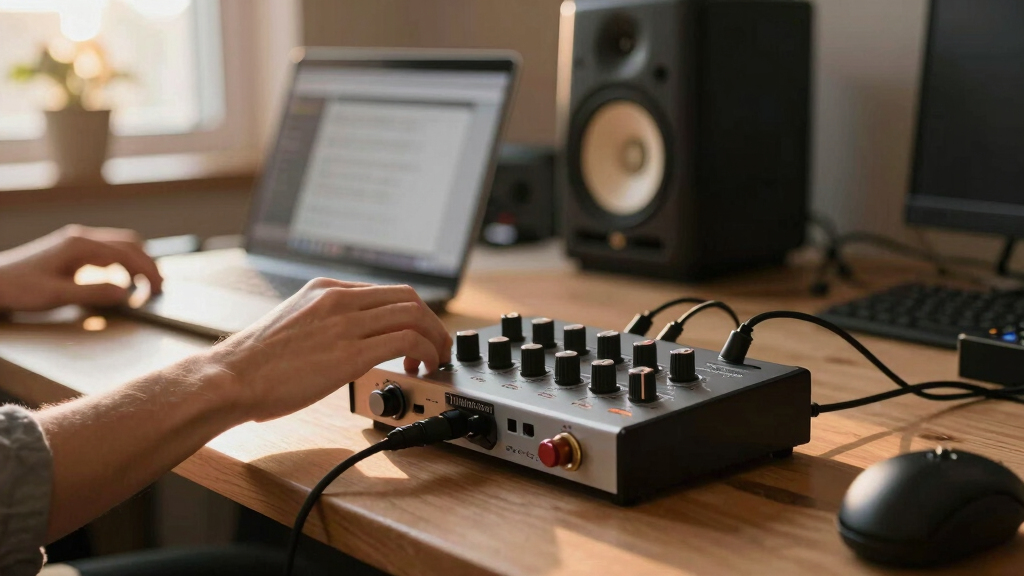
Finding the best Thunderbolt audio interface for producers involves balancing high-performance connectivity, sound quality, and versatile I/O options. The Universal Audio Apollo x16 stands out as the top overall choice thanks to its exceptional preamps and DSP processing. For those seeking a more affordable yet powerful option, the MOTU 16A offers impressive connectivity and flexibility. Tradeoffs in this category often involve balancing latency, build quality, and price—more expensive models typically deliver better sound and features but may be overkill for smaller setups. Keep reading for a detailed breakdown of the top picks to help you find the right fit for your studio needs.

Get audio and creator gear delivered free with Prime
- Fast, free delivery on millions of items
- Prime Video, Amazon Music and more included
- Member-only deals all year
Complete the kit


Key Takeaways
- The top picks balance high-quality audio performance with robust Thunderbolt connectivity for seamless workflow.
- Models with DSP processing, like Universal Audio interfaces, are better suited for producers needing real-time effects without latency issues.
- Build quality and future-proofing vary significantly; more expensive units tend to offer better durability and expandability.
- Some interfaces prioritize maximum I/O for large sessions, while others focus on compact design for mobile or smaller setups.
- Price often correlates with features like onboard DSP, high-quality preamps, and extensive I/O, but there are strong value options for budget-conscious producers.
| MOTU 16A Thunderbolt 4 / USB4 Audio Interface for Mac, Windows, and iOS |  | Best Overall for Versatile Professional Studio Setup | Channels: 66 (32 inputs, 34 outputs) | Sample Rate Support: up to 192 kHz | Latency: as low as 1.8 ms at 96kHz | VIEW LATEST PRICE | See Our Full Breakdown |
| Universal Audio UAD 2 Satellite OCTO Core Thunderbolt 3 DSP Interface for Mac and PC |  | Best for Heavy DSP Processing and Professional Mixing | Processor Count: 8 (OCTO) | Connectivity: Thunderbolt 3 | Compatibility: Mac and Windows 10 | VIEW LATEST PRICE | See Our Full Breakdown |
| Universal Audio Apollo x16 Gen 2 Thunderbolt 3 Audio Interface |  | Best for High-End Recording and Classic Preamps | Connectivity: Thunderbolt 3 | Number of Preamps: Unison preamps | Plug-in Library: 200+ UAD DSP and Native plugins | VIEW LATEST PRICE | See Our Full Breakdown |
| MOTU 828es Thunderbolt 4/USB4 Audio Interface for Mac, Windows, and iOS |  | Best for Versatile Studio and Live Applications | Input Channels: 28 | Output Channels: 32 | Sample Rate Support: up to 192 kHz | VIEW LATEST PRICE | See Our Full Breakdown |
| Universal Audio Apollo Solo Heritage Edition |  | Best for Portability with Premium Sound | Included plug-ins: 5 titles from Teletronix, Pultec, UA | Processing: UAD SOLO Core | Preamp emulations: Neve, API, Avalon, Manley, Marshall, Fender | VIEW LATEST PRICE | See Our Full Breakdown |
| MOTU 10pre 26×28 Thunderbolt 4/USB4 Audio Interface for Mac, Windows, and iOS |  | Best Overall for High-Channel Professional Work | Inputs: 10 mic/line/instrument | Outputs: 8 TRS analog, 2 banks of optical I/O | Sample Rate Support: up to 192 kHz | VIEW LATEST PRICE | See Our Full Breakdown |
| Universal Audio Apollo x4 Gen 2 with UAD Analog Classics Pro Thunderbolt 3 Audio Interface |  | Best for Versatile Analog Emulation and Plugin Power | Connectivity: Thunderbolt 3 | Number of Preamps: 4 | Included Plug-ins: 200+ UAD DSP and Native | VIEW LATEST PRICE | See Our Full Breakdown |
| Universal Audio Apollo Twin X DUO Gen 2 with UAD Analog Classics Thunderbolt 3 Audio Interface |  | Best for Compact Professional Recording and Monitoring | Preamps: Unison | Plug-ins: 200+ UAD DSP and Native | Connectivity: Thunderbolt 3 | VIEW LATEST PRICE | See Our Full Breakdown |
| Universal Audio Apollo Twin X QUAD Gen 2 with UAD Analog Classics Thunderbolt 3 Audio Interface |  | Best for High-Performance Recording with Extensive DSP | Model: Apollo Twin X QUAD Gen 2 | Connectivity: Thunderbolt 3 | Preamps: Unison | VIEW LATEST PRICE | See Our Full Breakdown |
| Universal Audio Apollo Twin X Quad Gen 2 Studio + Sphere LX Microphone Bundle |  | Best for All-in-One Recording and Microphone Modeling | Audio Interface Model: Apollo Twin X Quad Gen 2 | Connectivity: Thunderbolt 3 | Microphone: Sphere LX Modeling Microphone | VIEW LATEST PRICE | See Our Full Breakdown |
| Thunderbolt audio interface for producer | Connectivity |
|---|---|
| MOTU 16A Thunderbolt 4 / USB4 | Thunderbolt 4 / USB4 / USB-C |
| Universal Audio UAD 2 Satellit | Thunderbolt 3 |
| Universal Audio Apollo x16 Gen | Thunderbolt 3 |
| MOTU 828es Thunderbolt 4/USB4 | Thunderbolt 4, USB4, AVB Ethernet |
| Universal Audio Apollo Solo He | Bus-powered USB |
| MOTU 10pre 26×28 Thunderbolt 4 | Thunderbolt 4 / USB4, USB-C, AVB network |
| Universal Audio Apollo x4 Gen | Thunderbolt 3 |
| Universal Audio Apollo Twin X | Thunderbolt 3 |
| Universal Audio Apollo Twin X | Thunderbolt 3 |
| Universal Audio Apollo Twin X | Thunderbolt 3 |
More Details on Our Top Picks
MOTU 16A Thunderbolt 4 / USB4 Audio Interface for Mac, Windows, and iOS
The MOTU 16A stands out for its extensive I/O capacity, making it ideal for large studios or producers needing to connect numerous instruments and outboard gear. Compared to the Universal Audio Apollo x16, it offers more channels and flexible networking options like AVB, but its setup complexity can challenge newcomers. Its superb ESS Sabre32 DAC technology ensures high-fidelity analog sound, while the virtual patchbay allows intricate routing—perfect for complex sessions. However, its advanced features, such as onboard effects and AVB networking, might be unnecessary for those who just need straightforward recording. The 66 channels and low latency make it a reliable centerpiece for multi-track recording, mixing, and collaboration in varied environments.
Pros:- Extensive 66-channel I/O for large setups
- High-quality ESS Sabre32 DAC for superior analog sound
- Integrated AVB networking supports multi-device configurations
- Flexible routing with virtual patch cords
Cons:- Setup can be complex and intimidating for beginners
- Requires compatible Thunderbolt/USB4 cable (included) for optimal use
- Advanced features may be superfluous for casual users
Best for: Producers running large, complex sessions with extensive routing needs and multi-device setups
Not ideal for: Solo artists or home producers with simple needs who may find its complexity overwhelming
- Channels:66 (32 inputs, 34 outputs)
- Sample Rate Support:up to 192 kHz
- Latency:as low as 1.8 ms at 96kHz
- Connectivity:Thunderbolt 4 / USB4 / USB-C
- Analog I/O:16 TRS line-level in/out
- Networking:AVB Ethernet
Our verdict“This interface is ideal for large-scale, professional studios needing maximum I/O flexibility and network integration.”
Universal Audio UAD 2 Satellite OCTO Core Thunderbolt 3 DSP Interface for Mac and PC
The UAD 2 Satellite OCTO Core excels in providing massive DSP power with its 8 Shark processors, making it a top choice for producers who rely heavily on UAD plug-ins. Unlike the Universal Audio Apollo x16, which offers high-quality inputs and conversion, the Satellite focuses solely on processing, offering a dedicated DSP resource that can significantly speed up mixing workflows. Its compatibility with major DAWs and daisy-chaining capacity enable complex setups, but it demands a Thunderbolt 3 port, limiting compatibility with older systems. For producers who need to run extensive UAD plugin chains, this device is a powerhouse, though its premium price and overkill for casual use are notable tradeoffs.
Pros:- Massive 8-shark DSP processing power for complex mixes
- Supports over 100 industry-standard UAD plug-ins
- Daisy-chain capability for expanding your system
- Compatible with major DAWs like Pro Tools and Logic
Cons:- Limited to systems with Thunderbolt 3 ports, excluding older computers
- High price point may be prohibitive for many users
- Overkill for those with minimal DSP needs
Best for: Professional producers needing extensive real-time DSP processing and large plugin libraries
Not ideal for: Entry-level or hobbyist musicians who don’t require heavy DSP power or have limited budgets
- Processor Count:8 (OCTO)
- Connectivity:Thunderbolt 3
- Compatibility:Mac and Windows 10
- Includes:Analog Classics Plus bundle
Our verdict“This interface is best suited for producers who need substantial DSP resources for large, plugin-heavy projects.”
Universal Audio Apollo x16 Gen 2 Thunderbolt 3 Audio Interface
The Apollo x16 Gen 2 delivers pristine audio conversion and authentic analog emulation through its Unison preamps, making it ideal for those prioritizing studio-quality sound. Compared to the MOTU 16A, it offers a more refined preamp experience and access to over 200 UAD plug-ins for mixing and mastering. Its premium build and superior dynamic range justify the high price, but non-Thunderbolt 3 ports can limit compatibility with some newer systems. This interface makes the most sense for producers who seek authentic vintage tones and top-tier audio quality, though beginners or those on a tight budget might find it hard to justify the cost.
Pros:- Exceptional audio quality with wide dynamic range
- Authentic Unison preamp emulations of classic analog gear
- Access to over 200 UAD plug-ins for mixing and mastering
- Robust build and studio-grade components
Cons:- Requires Thunderbolt 3 port, limiting compatibility with some devices
- Premium price point may be high for entry-level users
- No built-in DSP beyond UAD plug-in processing
Best for: Professional recording engineers and producers focused on studio-quality sound and vintage preamp emulations
Not ideal for: Beginners or hobbyists who need a budget-friendly, straightforward interface
- Connectivity:Thunderbolt 3
- Number of Preamps:Unison preamps
- Plug-in Library:200+ UAD DSP and Native plugins
- Features:High dynamic range, low distortion
Our verdict“This is the ideal choice for high-end studios needing authentic analog tones and extensive plugin options.”
MOTU 828es Thunderbolt 4/USB4 Audio Interface for Mac, Windows, and iOS
The MOTU 828es balances high-quality conversion with extensive I/O, making it a versatile choice for both studio recording and live sound. Its 28 analog inputs and 32 outputs, combined with a 3.9-inch high-res display, provide detailed control and monitoring, setting it apart from more streamlined interfaces like the Universal Audio Apollo Solo. While the setup can be intricate for newcomers, its array of connectivity options—Thunderbolt, USB4, AVB networking—makes it adaptable to various configurations. The onboard DSP effects and ultra-low latency are beneficial for real-time processing, but its size and weight could be drawbacks for those seeking portability. Overall, this interface excels in complex environments demanding high I/O and flexible routing.
Pros:- High-quality analog-to-digital conversion with low distortion
- Versatile I/O including optical, network, and multiple analog connections
- Powerful 64-channel mixing with onboard effects
- High-resolution display for precise control
Cons:- Setup complexity may challenge beginners
- Bulky design might be less portable
- Some features require additional accessories (e.g., Lightning adapter)
Best for: Producers and engineers managing complex studio setups or live sound with multiple sources
Not ideal for: Mobile musicians or those with minimal I/O needs who prefer a compact device
- Input Channels:28
- Output Channels:32
- Sample Rate Support:up to 192 kHz
- Display:3.9-inch TFT LCD
- Connectivity:Thunderbolt 4, USB4, AVB Ethernet
Our verdict“This interface is best suited for producers needing extensive I/O, flexible routing, and detailed control in demanding environments.”
Universal Audio Apollo Solo Heritage Edition
The Apollo Solo Heritage Edition offers a compact yet powerful solution for producers seeking high-quality sound and vintage emulation on the go. Its premium plug-ins, including Teletronix and Pultec emulations, bring classic tones to small studios or mobile setups. Compared to larger interfaces like the Apollo x16, it sacrifices I/O count for portability and ease of use, making it ideal for musicians and producers who need excellent sound without bulk. However, its limited I/O and lack of built-in DSP processing beyond UAD plug-ins can be restrictive for complex setups. This device makes the most sense for those prioritizing high-quality preamps and portability over extensive connectivity.
Pros:- High-quality Unison preamp emulations
- Includes 5 award-winning UAD plug-ins
- Portable and bus-powered for easy mobility
- Excellent for tracking and monitoring with near-zero latency
Cons:- Limited I/O for large sessions
- No built-in DSP processing beyond UAD plugins
- Mac-only support for LUNA Recording System
Best for: Mobile producers and solo artists needing high-quality preamps and plug-ins in a compact form
Not ideal for: Producers requiring large I/O or extensive outboard connectivity
- Included plug-ins:5 titles from Teletronix, Pultec, UA
- Processing:UAD SOLO Core
- Preamp emulations:Neve, API, Avalon, Manley, Marshall, Fender
- Connectivity:Bus-powered USB
Our verdict“This interface is ideal for mobile producers wanting high-quality sound and vintage effects in a portable package.”
MOTU 10pre 26×28 Thunderbolt 4/USB4 Audio Interface for Mac, Windows, and iOS
The MOTU 10pre stands out for its extensive I/O options, offering a remarkable 54 channels, making it ideal for complex studio setups. Its high-quality analog audio, driven by ESS Sabre32 DAC technology, surpasses many competitors like the Universal Audio Apollo Twin X DUO, especially in channel capacity. While its advanced features—such as onboard effects, AVB networking, and remote control—are a boon for professional environments, they also introduce a steep learning curve and a premium price. Compared to smaller interfaces, this model is more suitable for established studios or producers handling large sessions. Tradeoffs include complex setup and higher cost, which might be daunting for less experienced users.
Pros:- Exceptional analog audio quality with ESS Sabre32 DAC
- Flexible connectivity including Thunderbolt 4, USB4, and AVB networking
- Low latency performance suitable for professional tracking and mixing
- Onboard effects and remote control capabilities
Cons:- Complex setup may challenge beginners
- Premium price point limits accessibility for budget-conscious users
Best for: Producers and recording engineers needing extensive I/O and advanced connectivity for large projects
Not ideal for: Home studio owners with limited space or smaller recording needs, due to its size and complexity
- Inputs:10 mic/line/instrument
- Outputs:8 TRS analog, 2 banks of optical I/O
- Sample Rate Support:up to 192 kHz
- Latency:as low as 1.8 ms at 96kHz
- Connectivity:Thunderbolt 4 / USB4, USB-C, AVB network
- Display:3.9-inch TFT high-resolution RGB LCD
Our verdict“This interface suits those with large-scale recording needs who prioritize extensive I/O and advanced features over simplicity.”
Universal Audio Apollo x4 Gen 2 with UAD Analog Classics Pro Thunderbolt 3 Audio Interface
The Universal Audio Apollo x4 Gen 2 offers exceptional audio clarity with wide dynamic range, making it a top choice for producers who rely heavily on UAD’s renowned plugin emulations. Its Unison preamps deliver authentic analog tones that rival the MOTU 10pre, but with a focus on plugin integration rather than sheer I/O capacity. The user-friendly Auto-Gain and comprehensive control make it easier to operate than the more complex MOTU model, but it’s limited to Thunderbolt 3, which reduces compatibility with newer Macs and PCs. This interface is best suited for producers who prioritize high-quality audio and plugin versatility over sheer number of channels. Tradeoffs include limited I/O and higher cost, especially for those not deeply invested in UAD plugins.
Pros:- Excellent audio conversion with wide dynamic range
- Unison preamps for authentic tube and console emulations
- Access to over 200 UAD plug-ins for studio-quality processing
- User-friendly features like Auto-Gain
Cons:- Limited to Thunderbolt 3, restricting newer device compatibility
- Fewer inputs/outputs compared to MOTU 10pre
Best for: Producers focused on high-fidelity recordings with extensive plugin use and authentic tone emulation
Not ideal for: Users needing large multichannel setups or on a tight budget, as it’s more specialized and costly
- Connectivity:Thunderbolt 3
- Number of Preamps:4
- Included Plug-ins:200+ UAD DSP and Native
- Features:Unison preamps, Auto-Gain, Apollo Monitor Correction
Our verdict“Ideal for producers seeking premium plugin integration and superior analog modeling, at the expense of channel count.”
Universal Audio Apollo Twin X DUO Gen 2 with UAD Analog Classics Thunderbolt 3 Audio Interface
The Apollo Twin X DUO Gen 2 excels at providing high-quality audio in a compact form, making it perfect for space-limited studios or mobile setups. Its Unison preamps emulate classic analog circuits, comparable to the MOTU 10pre, but with fewer inputs—just four. Its extensive library of UAD plugins and real-time monitoring with Sonarworks correction makes it a favorite among mixing engineers. However, its smaller I/O array means it’s less suited for large multi-mic recordings. Compared with the MOTU 10pre, it trades channel capacity for portability and integrated plugin power. Tradeoffs involve fewer inputs and higher price per channel, which might not appeal to producers needing many simultaneous sources.
Pros:- High-quality Unison preamps with authentic emulations
- Access to over 200 UAD plug-ins
- Compact design ideal for mobile or desktop use
- Advanced monitoring correction features
Cons:- Limited I/O capacity for multi-mic setups
- Higher cost relative to channel count
Best for: Producers and engineers who prioritize high-quality sound and plugin access in a portable, space-efficient device
Not ideal for: Large session producers or those needing extensive I/O, as it handles only four inputs
- Preamps:Unison
- Plug-ins:200+ UAD DSP and Native
- Connectivity:Thunderbolt 3
- Features:Auto-Gain, Monitor Correction
Our verdict“Best suited for space-conscious professionals who need premium audio quality and plugin access over channel quantity.”
Universal Audio Apollo Twin X QUAD Gen 2 with UAD Analog Classics Thunderbolt 3 Audio Interface
The Apollo Twin X QUAD Gen 2 offers a significant boost in processing power with its QUAD DSP cores, enabling real-time plugin processing that most smaller interfaces can’t match. Its Unison preamps emulate classic tones faithfully, making it a favorite for detailed recording and mixing. While it shares the same core features as the DUO version, the quad-core DSP allows for more simultaneous plugin use, which is essential for complex mixes. Compared to the MOTU 10pre, it provides less I/O but excels in plugin power and real-time processing. This makes it ideal for producers focused on detailed sound design and processing, rather than large multi-mic setups. Tradeoffs include higher cost and limited inputs for those needing many channels.
Pros:- Quad-core DSP for extensive real-time plugin processing
- High-quality Unison preamps
- Authentic analog tone emulation
- Extensive plugin library and correction features
Cons:- Higher price point for fewer inputs
- Limited I/O for large multi-mic setups
Best for: Producers and mixers requiring powerful real-time processing and authentic tone emulation
Not ideal for: Large-scale recording sessions with numerous simultaneous sources, due to limited inputs
- Model:Apollo Twin X QUAD Gen 2
- Connectivity:Thunderbolt 3
- Preamps:Unison
- Plug-ins:200+ UAD DSP and Native
- Features:Auto-Gain, Monitor Correction
Our verdict“Ideal for producers needing powerful DSP and high-fidelity emulation in a compact form, with less focus on channel count.”
Universal Audio Apollo Twin X Quad Gen 2 Studio + Sphere LX Microphone Bundle
This bundle combines the Apollo Twin X Quad Gen 2 with the Sphere LX modeling microphone, offering a complete professional recording setup in one package. The Quad DSP cores provide ample real-time plugin power, comparable to the standalone Quad version, making it ideal for producers who want studio-quality sound with versatile mic modeling. The included Sphere LX microphone adds a creative edge, emulating classic mics through software. Compared to the MOTU 10pre, this kit emphasizes plugin processing and mic versatility over extensive I/O, making it less suitable for large multi-mic sessions. The main tradeoff involves cost—it’s a premium package designed for high-quality, flexible recording rather than large-scale multichannel work.
Pros:- High-quality audio with detailed sound reproduction
- Powerful QUAD Core DSP for real-time plugin processing
- Versatile Sphere LX microphone with modeling software
- Compatibility with major DAWs and expandability
Cons:- Expensive for beginners or those with simple needs
- Requires Thunderbolt 3 for optimal operation
- Mic modeling software may have a learning curve
Best for: Producers seeking a portable high-fidelity interface combined with versatile mic modeling for diverse recording applications
Not ideal for: Producers needing many simultaneous inputs or large multi-mic setups, due to limited I/O and high price
- Audio Interface Model:Apollo Twin X Quad Gen 2
- Connectivity:Thunderbolt 3
- Microphone:Sphere LX Modeling Microphone
- Diaphragm:Large-diaphragm condenser
- Processing Power:QUAD Core DSP
- Compatible Software:LUNA, Logic Pro, Pro Tools, Cubase, Ableton Live
Our verdict“Best suited for professional producers who want a compact, versatile recording setup with advanced mic modeling and processing power.”

How We Picked
These products were selected based on a combination of performance metrics, build quality, connectivity reliability, and user feedback from professional producers. Priority was given to interfaces that fully utilize Thunderbolt’s high bandwidth for low latency and high-resolution audio. We also considered expandability, software compatibility, and overall value, ensuring that each option offers a clear advantage for different types of producers. The ranking reflects how well each interface balances these factors to meet the demands of professional studio work while considering cost and ease of use.| Thunderbolt audio interface for producer | Connectivity |
|---|---|
| MOTU 16A Thunderbolt 4 / USB4 | Thunderbolt 4 / USB4 / USB-C |
| Universal Audio UAD 2 Satellit | Thunderbolt 3 |
| Universal Audio Apollo x16 Gen | Thunderbolt 3 |
| MOTU 828es Thunderbolt 4/USB4 | Thunderbolt 4, USB4, AVB Ethernet |
| Universal Audio Apollo Solo He | Bus-powered USB |
| MOTU 10pre 26×28 Thunderbolt 4 | Thunderbolt 4 / USB4, USB-C, AVB network |
| Universal Audio Apollo x4 Gen | Thunderbolt 3 |
| Universal Audio Apollo Twin X | Thunderbolt 3 |
| Universal Audio Apollo Twin X | Thunderbolt 3 |
| Universal Audio Apollo Twin X | Thunderbolt 3 |
Factors to Consider When Choosing Best Thunderbolt Audio Interface For Producers
Choosing the best Thunderbolt audio interface for producers requires understanding several key factors. Each studio setup has unique needs, from connectivity and I/O to processing power and portability. By considering these factors carefully, you can avoid common pitfalls like overpaying for features you don’t need or selecting an interface that doesn’t scale with your workflow. Here are the most important considerations for making an informed choice.Performance and Latency
High-performance interfaces minimize latency, which is crucial for real-time monitoring and recording. Thunderbolt’s bandwidth allows for very low latency, but not all interfaces leverage this fully. Look for models with optimized drivers and DSP support if you need to record and monitor simultaneously without noticeable delays. Investing in a faster, more reliable connection reduces frustration and improves workflow efficiency, especially during complex sessions.
Number and Type of I/O
The quantity and variety of inputs and outputs directly impact your ability to connect multiple instruments, microphones, and outboard gear. Larger sessions demand more I/O, but excessive options can complicate setup and increase cost. Consider your typical session size and future expansion plans to select an interface that offers a balanced mix of analog, digital, and headphone outputs without overwhelming your workflow.
Build Quality and Reliability
Producers working in varied environments need durable, well-built hardware that can withstand regular transport and use. Pay attention to the chassis material, fan noise, and overall robustness. A reliable interface minimizes downtime caused by hardware failures, which is especially critical during critical recording sessions. Though premium models generally offer better durability, some budget options also provide solid construction for mobile setups.
Software Compatibility and Included Features
Compatibility with your DAW and operating system is non-negotiable. Many interfaces come with bundled software, plugins, or DSP processing that can enhance your production capabilities. Ensure that the interface supports your host software and offers driver stability. Additional features like onboard effects or control software can streamline your workflow but may add to the cost or complexity.
Price and Value
While premium models provide advanced features and robust build quality, many producers find excellent value in mid-range options that meet their core needs without unnecessary extras. Set a budget based on your current setup and future ambitions, then prioritize features that directly impact your work. Remember, spending more often yields better longevity and performance, but some budget-friendly interfaces deliver impressive performance for smaller studios or mobile producers.
Frequently Asked Questions
Is Thunderbolt worth it over USB for audio interfaces?
Thunderbolt generally offers lower latency and higher bandwidth compared to USB, making it ideal for professional recording and mixing environments. It allows for more simultaneous channels and reduces delays during monitoring or tracking. While USB interfaces can be more affordable and widely compatible, Thunderbolt’s performance benefits become evident when working with large projects or real-time effects processing. If your system supports Thunderbolt and you need high performance, investing in a Thunderbolt interface can significantly improve your workflow.
Can I use a Thunderbolt audio interface with a Windows PC?
Yes, many Thunderbolt audio interfaces are compatible with Windows PCs, though driver support and compatibility depend on the specific model. It’s important to check whether the manufacturer provides Windows drivers that are stable and up to date. Some interfaces may require Thunderbolt expansion cards or adapters, which can add complexity. Overall, if you plan to use a Thunderbolt interface with Windows, ensure your system supports Thunderbolt 3 or 4 and that driver support is solid for your intended use.
How many inputs and outputs should I look for as a producer?
The ideal number of I/O depends on your typical session size and workflow. Solo producers or small home studios might get by with 2-4 inputs and outputs, while larger setups or those recording multiple instruments simultaneously may need 8 or more. Consider future expansion—if you plan to grow your studio, choosing an interface with extra I/O ports can save money and hassle later. Balance your current needs with potential growth, avoiding overpaying for unused ports.
Are DSP-equipped interfaces worth the extra cost?
Interfaces with onboard DSP processing, like Universal Audio models, provide real-time effects and processing with minimal latency, which is a significant advantage during tracking and mixing. They reduce the need for external hardware or plugins that consume CPU resources. However, DSP-equipped interfaces tend to be more expensive and may lock you into specific ecosystems or software. For professional producers who rely heavily on real-time effects, the investment is often justified, but smaller setups might find limited value in paying extra for DSP.
Should I prioritize build quality or features when choosing an interface?
Both are important, but your choice depends on your workflow. If you frequently move your setup or perform live sessions, durability and portability should take precedence. For fixed studio environments, focus on features like I/O, preamp quality, and software integration. The best approach is to find a balance—select a robust, well-built interface that also offers the features essential to your production style, ensuring longevity and performance without unnecessary expense.
Conclusion
For most producers, the Universal Audio Apollo x16 offers the best combination of professional sound quality, extensive I/O, and DSP processing, making it the top overall choice. Budget-conscious creators will appreciate the MOTU 16A for its solid performance and flexibility at a more accessible price point. Beginners or mobile producers might prefer the Universal Audio Apollo Twin X Duo or MOTU 10pre for their compact size and user-friendly features. Ultimately, understanding your specific needs—whether that’s maximum I/O, portability, or professional-grade processing—will guide you to the right pick among these top options in 2026.
As an affiliate, we earn on qualifying purchases.Fall Picks
fall essentials





![Iron Maiden Legend Nicko McBrain Turned Down Trump Golf Invite: “[He] Should Be Put In Jail”](https://deadsetlive.com/wp-content/uploads/2026/10/iron-maiden-legend-nicko-mcbrain-turned-down-trump-golf-invite-he-should-be-put-featured-260x140.jpg)