
Complete the kit


Get audio and creator gear delivered free with Prime
- Fast, free delivery on millions of items
- Prime Video, Amazon Music and more included
- Member-only deals all year
Key Takeaways
- UHF systems dominate the multi-channel market for large venues due to better coexistence management compared to 2.4GHz digital systems, which often suffer from Wi-Fi interference in crowded environments.
- Fixed-frequency systems like the Phenyx Pro PTU-5000-4H offer significant savings for users who do not require automatic frequency scanning, provided the local RF environment is relatively clean.
- Modular systems such as the TONOR TW388 provide exceptional versatility by allowing users to swap between handheld, headset, and lavalier capsules, though this flexibility comes with more complex battery management.
- The Shure BLX24 remains the benchmark for reliability in professional live sound, with build quality and RF stability that justify its premium price point over generic Chinese-manufactured alternatives.
- For small-scale streaming or karaoke, 2.4GHz systems like the JOYO MW-2 offer the fastest setup time and lowest learning curve, despite having shorter effective range than UHF counterparts.
| TONOR Wireless Microphone System, Handheld Microphone, Gray | 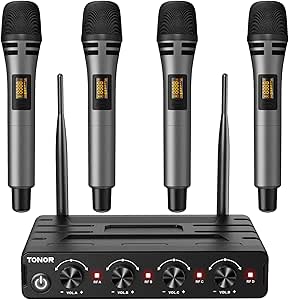 | Best Simple Single-Mic Pick | Wireless technology: UHF | Connector: 6.35 mm jack | Microphone format: Handheld | VIEW LATEST PRICE | See Our Full Breakdown |
| Phenyx Pro PTU-71-2H Dual UHF Wireless Microphone System |  | Best for Two-Speaker Events | Model: PTU-71-2H | Microphones: 2 handheld dynamic microphones | Wireless technology: UHF | VIEW LATEST PRICE | See Our Full Breakdown |
| JOYO MW-2 2.4GHz Wireless XLR Microphone System |  | Best for Making a Wired Mic Wireless | Wireless frequency: 2.4 GHz | Range: Up to 100 ft in open spaces | Channels: 4 | VIEW LATEST PRICE | See Our Full Breakdown |
| MELONARE 4-Channel Wireless Microphone System, MWM-41F |  | Best for Four-Mic Setups | Wireless technology: UHF digital | Microphones: 4 handheld microphones | Channels: 4 | VIEW LATEST PRICE | See Our Full Breakdown |
| JBL Wireless Two-Microphone System with Dual-Channel Receiver |  | Best for JBL PartyBox Owners | Microphones: 2 wireless microphones | Receiver: Rechargeable dual-channel UHF | Compatible devices: Selected JBL PartyBox speakers | VIEW LATEST PRICE | See Our Full Breakdown |
| Phenyx Pro PTU-52-2H Dual UHF Wireless Microphone System |  | Best Dual-Handheld Value | Wireless band: UHF, 500–590 MHz | Microphones: 2 handheld wireless microphones | Tunable frequency groups: 30 | VIEW LATEST PRICE | See Our Full Breakdown |
| TONOR UHF Wireless Microphone System with Handheld, Headset, and Lavalier Mics |  | Best for Mixed Mic Setups | Wireless type: UHF | Included microphones: 2 handheld microphones, 2 headset microphones, and 2 lavalier microphones | Operating range: Up to 200 ft (60 m) | VIEW LATEST PRICE | See Our Full Breakdown |
| Phenyx Pro 4-Channel UHF Fixed Frequency Wireless Microphone System PTU-5000-4H |  | Best for Rugged Four-Mic Setups | Channels: 4 | Frequency range: 541.9–568.65 MHz, fixed | Maximum operating distance: Up to 260 ft | VIEW LATEST PRICE | See Our Full Breakdown |
| Shure BLX24/PG58 Wireless Vocal Microphone System – H9 Band | 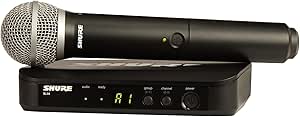 | Best Single-Mic Vocal Pick | Frequency band: H9 UHF, 512–542 MHz | Channels: 1 | Transmission range: Approximately 300 ft (100 m) line of sight | VIEW LATEST PRICE | See Our Full Breakdown |
| MELONARE 4-Channel UHF Wireless Handheld Microphone System |  | Best for Expandable Handheld Groups | Wireless type: UHF | Channels: 4 | Frequency range: 530–580 MHz | VIEW LATEST PRICE | See Our Full Breakdown |
| TONOR TW388 8-Channel UHF Wireless Microphone System |  | Best for Group Instruction | Channels: 8 | Microphone Types: Headset and Lavalier | Transmission Technology: UHF Wireless | VIEW LATEST PRICE | See Our Full Breakdown |
| Phenyx Pro PTU-7000-4H 4-Channel UHF Wireless Microphone System |  | Best for Band Vocals | Channels: 4 | Microphone Type: Handheld Dynamic | Frequency Range: 530–580 MHz | VIEW LATEST PRICE | See Our Full Breakdown |
| wireless microphone system | Channels | Power |
|---|---|---|
| TONOR Wireless Microphone Syst | 4 listed in specs; description also cites up to 40 | Battery powered; batteries not included |
| Phenyx Pro PTU-71-2H Dual UHF | — | — |
| JOYO MW-2 2.4GHz Wireless XLR | 4 | — |
| MELONARE 4-Channel Wireless Mi | 4 | 8 AA batteries included |
| JBL Wireless Two-Microphone Sy | — | — |
| Phenyx Pro PTU-52-2H Dual UHF | 60 | 4 AA batteries |
| TONOR UHF Wireless Microphone | 10 per microphone or bodypack; 20 listed in product specifications | 2 AA batteries per microphone or bodypack; batteries not included |
| Phenyx Pro 4-Channel UHF Fixed | 4 | 8 AA batteries included |
| Shure BLX24/PG58 Wireless Voca | 1 | — |
| MELONARE 4-Channel UHF Wireles | 4 | 8 AA batteries included |
| TONOR TW388 8-Channel UHF Wire | 8 | — |
| Phenyx Pro PTU-7000-4H 4-Chann | 4 | — |
More Details on Our Top Picks
TONOR Wireless Microphone System, Handheld Microphone, Gray
For a straightforward handheld setup, the TONOR Gray pairs a stated 200-foot range with automatic syncing, keeping setup manageable for karaoke, presentations, and small events. Its unidirectional handheld design suits speakers who want to move around without adding headset or lavalier gear. Compared with the Phenyx Pro PTU-71-2H, this TONOR is the simpler fit for one person, while the Phenyx includes two microphones and receiver-side scanning for frequency selection. The TONOR description mentions adjustable frequencies and multiple channels, but interference may still call for manual channel changes. It also requires separately supplied batteries, and its handheld-only format is less adaptable than systems that include wearable microphones. I’d choose it for uncomplicated solo use, not for a multi-speaker setup.
Pros:- Stated 200-foot range supports movement around a room or event space.
- Automatic sync helps simplify initial setup.
- Works with mixers, karaoke machines, amplifiers, and speakers.
- Adjustable frequencies and multiple channels offer some flexibility when choosing a clear channel.
Cons:- Batteries are not included.
- Handheld-only format does not support headset or lavalier use.
- Manual channel switching may be needed if interference occurs.
Best for: Solo presenters and karaoke users who need a handheld microphone, broad stated range, and compatibility with mixers, amplifiers, or speakers.
Not ideal for: Hosts who need two microphones or hands-free headset and lavalier options, or users who want included batteries.
- Wireless technology:UHF
- Connector:6.35 mm jack
- Microphone format:Handheld
- Polar pattern:Unidirectional
- Channels:4 listed in specs; description also cites up to 40
- Power:Battery powered; batteries not included
- Compatible devices:Mixers, karaoke machines, amplifiers, and speakers
- Color:Gray
Our verdict“Choose this TONOR for a simple, single-handheld setup with a long stated range, but pick the Phenyx Pro PTU-71-2H if you need two microphones and automatic frequency scanning.”
Phenyx Pro PTU-71-2H Dual UHF Wireless Microphone System
The Phenyx Pro PTU-71-2H is the strongest match here for events where two people need wireless handhelds at once. Its receiver has auto scanning to find a lower-interference frequency, while IR synchronization helps pair the microphones. That gives it a practical advantage over the single-handheld TONOR Gray for duets, interviews, and co-hosted presentations. The system offers 100 selectable frequencies per channel and a stated line-of-sight range of 290–328 feet, useful for larger open spaces, though walls and obstructions can reduce that reach. Metal construction and replaceable microphone heads support longer-term upkeep, but the microphones still need AA batteries. I’d favor this over the JBL dual-microphone system when broad device connections matter more than PartyBox-specific simplicity.
Pros:- Two handheld dynamic microphones allow simultaneous use.
- Auto scan and IR synchronization simplify frequency selection and pairing.
- 100 selectable frequencies per channel support frequency coordination.
- Metal construction and replaceable microphone heads aid maintenance.
Cons:- The stated 290–328-foot range is line-of-sight and may shorten around obstructions.
- Handheld microphones require AA batteries.
- The receiver and accessories add more setup bulk than a compact plug-in system.
Best for: Event hosts, karaoke duos, and presenters who need two handheld microphones, frequency scanning, and connections for common audio equipment.
Not ideal for: Buyers seeking a compact lightweight system, rechargeable microphone batteries, or a range guarantee that applies through walls and obstacles.
- Model:PTU-71-2H
- Microphones:2 handheld dynamic microphones
- Wireless technology:UHF
- Selectable frequencies:100 per channel
- Wireless range:290–328 ft line of sight
- Polar pattern:Cardioid (unidirectional)
- Battery life:Up to 16 hours
- Connections:XLR and 6.35 mm jack
- Weight:2.7 kg
Our verdict“Pick the PTU-71-2H for two-person events that benefit from frequency scanning and broad connectivity, but choose the JBL system for straightforward use with compatible PartyBox speakers.”
JOYO MW-2 2.4GHz Wireless XLR Microphone System
Unlike the handheld sets in this roundup, the JOYO MW-2 turns a compatible wired XLR microphone into a wireless one. That makes it a useful choice for performers or presenters who already have a preferred mic, rather than buyers starting with a complete microphone-and-receiver kit. Its 24-bit/48kHz audio, auto-pairing, and frequency hopping give it a modern, compact workflow; it can also support up to four systems at once. Compared with the TONOR Gray, JOYO provides no microphone of its own and has a shorter stated open-space range of 100 feet, but it works with mixers, PA systems, audio interfaces, and DSLR cameras. The tradeoffs are a 6–8-hour battery life, non-metal ABS housing, and possible noise with some condenser mics. Muting the mixer before power changes helps avoid loud pops.
Pros:- Makes a compatible wired XLR microphone wireless without replacing it.
- Auto-pairing and frequency hopping reduce setup steps.
- 24-bit/48kHz audio and battery indicators are provided on both units.
- Supports up to four systems simultaneously.
Cons:- No microphone is included, so buyers need a compatible XLR mic.
- Battery life is 6–8 hours, shorter than the stated runtime of the Phenyx Pro PTU-71-2H.
- Some condenser microphones may produce noise, and mixer muting is advised before power changes.
Best for: Performers and presenters who already own a compatible XLR dynamic microphone and want a rechargeable wireless link for a mixer, PA, interface, or camera.
Not ideal for: Buyers who need microphones included, longer operating time, or dependable performance with condenser mics that exceed the stated phantom-power support.
- Wireless frequency:2.4 GHz
- Range:Up to 100 ft in open spaces
- Channels:4
- Audio sampling:24-bit/48kHz
- Battery life:6–8 hours
- Charging time:2 hours
- Microphone compatibility:Dynamic microphones; some condenser microphones requiring up to 24V phantom power
- Interfaces:USB Type-C and XLR
- Enclosure material:ABS
Our verdict“Choose the JOYO MW-2 if keeping your existing XLR microphone matters more than getting an all-in-one handheld system.”
MELONARE 4-Channel Wireless Microphone System, MWM-41F
For a group that needs several handheld microphones on one receiver, the MELONARE MWM-41F offers a four-mic configuration, rack-mount ears, and a stated 260-foot range. Its receiver display and color-coded microphone controls help users identify channels during an event, while the supplied eight AA batteries mean the set is ready for battery-powered operation without a separate battery purchase. Compared with the Phenyx Pro PTU-71-2H, MELONARE serves larger groups with four microphones rather than two; the Phenyx, by contrast, specifically describes auto scanning and a larger selectable-frequency count per channel. MELONARE lists four groups of ten frequencies and frequency hopping, but buyers should verify coordination needs for their venue and other nearby systems. This is a bulkier, more involved choice than the single-mic TONOR, and it makes most sense when four handhelds and rack integration will actually be used.
Pros:- Includes four handheld microphones for multi-speaker events.
- Rack ears allow receiver integration with other audio equipment.
- Color-coded controls and a receiver display help identify and monitor channels.
- Includes eight AA batteries and states a 260-foot range.
Cons:- Four handhelds and a rack receiver are excessive for most solo users.
- Only handheld microphones are included, limiting hands-free use.
- Frequency coordination details are less specific than the Phenyx PTU-71-2H’s 100 selectable frequencies per channel.
Best for: Churches, DJs, and event organizers who need four handheld microphones, a rack-mountable receiver, and channel identification for group use.
Not ideal for: Solo presenters or buyers seeking a small, simple system; also skip it if you need headset or lavalier transmitters rather than handheld microphones.
- Wireless technology:UHF digital
- Microphones:4 handheld microphones
- Channels:4
- Frequency groups:4 groups of 10 frequencies
- Stated range:260 ft
- Audio sampling:24-bit/48kHz
- Receiver mounting:Rack-mountable; rack ears included
- Power:8 AA batteries included
- Connections:XLR; 6.3 mm TS audio cable included
Our verdict“Choose the MELONARE MWM-41F when four handheld channels and rack mounting are useful, not for a basic one-person setup.”
JBL Wireless Two-Microphone System with Dual-Channel Receiver
The JBL Wireless Two-Microphone System is an uncomplicated pairing for owners of compatible JBL PartyBox speakers: its dual-channel receiver mixes both microphone signals through the speaker, and setup is plug and play. That makes it easier to get two voices into a compatible PartyBox than adapting a general-purpose system such as the Phenyx Pro PTU-71-2H, which offers broader connection options but more frequency and receiver setup. The JBL receiver is rechargeable, while the microphones use replaceable AA batteries and run for up to six hours. Its main limitation is compatibility: this is not the flexible choice for arbitrary mixers, PA systems, or speakers. The plastic construction and listed 60 dB signal-to-noise ratio also make it less compelling as a general-purpose event system than the Phenyx. I’d pick it for convenience within the JBL PartyBox ecosystem, not for a venue-wide microphone upgrade.
Pros:- Dual-channel receiver supports two microphones at once.
- Plug-and-play operation suits casual karaoke and announcements.
- Rechargeable receiver avoids needing disposable batteries for the receiver.
- Microphones use replaceable AA batteries.
Cons:- Compatibility is limited to selected JBL PartyBox speakers.
- Microphone playback is stated at up to six hours.
- Plastic construction and a 60 dB signal-to-noise ratio are less suited to buyers seeking a more robust general-purpose setup.
Best for: JBL PartyBox owners who want two wireless microphones for karaoke or announcements with minimal setup.
Not ideal for: Buyers using non-JBL speakers, mixers, or PA systems, or event hosts who need longer microphone battery life and detailed frequency coordination.
- Microphones:2 wireless microphones
- Receiver:Rechargeable dual-channel UHF
- Compatible devices:Selected JBL PartyBox speakers
- Microphone polar pattern:Unidirectional
- Frequency range:65–15,000 Hz
- Frequency response:15 kHz
- Signal-to-noise ratio:60 dB
- Microphone power:Replaceable AA batteries; up to 6 hours
- Enclosure material:Plastic
Our verdict“Choose the JBL system for simple two-mic use with a compatible PartyBox, but pick the Phenyx Pro PTU-71-2H for broader equipment compatibility and frequency options.”
Phenyx Pro PTU-52-2H Dual UHF Wireless Microphone System
The PTU-52-2H suits small events that need two handheld vocal mics without moving up to a four-mic receiver. Its 30 tunable frequency groups and automatic pairing make setup more flexible than a fixed-frequency system such as the Phenyx Pro PTU-5000-4H, while dual XLR outputs let an operator route each mic separately to a mixer. The receiver also provides a mixed 1/4-inch output for simpler setups.
Its metal construction and cardioid capsules are practical for regular hosting, karaoke, or small performance use. The tradeoffs are a 200-foot line-of-sight range that can shrink around obstructions and four AA batteries to manage. Unlike the Shure BLX24/PG58, this system includes two transmitters, but it does not offer the Shure’s stated longer range or single-mic simplicity.
Pros:- Two handheld microphones support a pair of speakers or performers.
- Thirty tunable frequency groups and automatic pairing simplify channel setup.
- Dual XLR outputs allow separate routing to a mixer.
- Metal construction and cardioid capsules suit frequent vocal use.
Cons:- The stated 200-foot range applies to line-of-sight conditions.
- Four AA batteries are required, adding ongoing battery management.
Best for: Small venues, karaoke hosts, and community groups that need two handheld mics with separate mixer outputs.
Not ideal for: Performers needing more than two microphones, rechargeable transmitters, or reliable coverage through walls and other obstructions.
- Wireless band:UHF, 500–590 MHz
- Microphones:2 handheld wireless microphones
- Tunable frequency groups:30
- Channels:60
- Operating range:Up to 200 ft line of sight
- Outputs:2 XLR and 1 mixed 1/4-inch
- Signal-to-noise ratio:98 dB
- Power:4 AA batteries
Our verdict“Choose the PTU-52-2H for two-mic events where separate XLR outputs matter more than extended range or additional channels.”
TONOR UHF Wireless Microphone System with Handheld, Headset, and Lavalier Mics
For groups that need presenters and performers to use different mic styles, the TONOR TW362 offers more flexibility than the all-handheld Phenyx Pro PTU-52-2H. Its two handheld microphones cover singers or hosts, while two bodypacks work with the included headset and lavalier microphones—useful when someone needs hands-free movement. Automatic pairing is intended to keep setup straightforward, and the stated 200-foot range fits many small halls and outdoor gatherings.
The connection is less mixer-friendly than the PTU-52-2H: TONOR provides a single 1/4-inch receiver output, rather than separate XLR outputs for individual channels. Its listed signal-to-noise ratio is also 60 dB, so buyers prioritizing the higher listed figure of the Phenyx system may prefer that option. The microphones and bodypacks require AA batteries, which are not included.
Pros:- Includes two handheld microphones and two bodypacks with headset and lavalier options.
- Multiple mic styles accommodate singers, presenters, and mobile speakers.
- Automatic pairing is intended to simplify setup.
- Compatible with mixers, karaoke machines, amplifiers, and powered speakers through 1/4-inch audio.
Cons:- The receiver has a single 1/4-inch audio connection rather than separate XLR outputs.
- AA batteries are required for the microphones and bodypacks and are not included.
- The listed signal-to-noise ratio is 60 dB.
Best for: Churches, classes, and event hosts who need a mix of handheld and hands-free microphones for multiple speakers.
Not ideal for: Audio operators who need separate XLR outputs, buyers seeking included batteries, or groups that only need two handheld microphones.
- Wireless type:UHF
- Included microphones:2 handheld microphones, 2 headset microphones, and 2 lavalier microphones
- Operating range:Up to 200 ft (60 m)
- Channels:10 per microphone or bodypack; 20 listed in product specifications
- Polar pattern:Unidirectional
- Signal-to-noise ratio:60 dB
- Audio connector:1/4 in (6.35 mm)
- Power:2 AA batteries per microphone or bodypack; batteries not included
Our verdict“Pick the TONOR when hands-free and handheld mic choices matter more than individual XLR routing or batteries in the box.”
Phenyx Pro 4-Channel UHF Fixed Frequency Wireless Microphone System PTU-5000-4H
The PTU-5000-4H is built around four handheld microphones and a metal receiver, making it a practical match for venues that need several vocal channels in one system. Its fixed UHF frequencies favor a straightforward setup, while individual receiver volume controls let an operator adjust each mic without changing the others. Compared with the MELONARE 4-Channel UHF Wireless Handheld Microphone System, this Phenyx model lists a longer range and a higher signal-to-noise ratio; MELONARE instead advertises frequency hopping and support for multiple systems at once.
The stated 260-foot range, cardioid capsules, and included AA batteries suit church services, weddings, and small stages. Fixed frequencies are less flexible when local radio conditions or other wireless systems create conflicts, so this is not the pick for frequent venue changes. It also needs an external amplifier or powered speaker—the receiver does not produce sound on its own.
Pros:- Four handheld microphones cover multi-speaker events.
- Individual volume controls allow quick level adjustments for each mic.
- Metal receiver and snap-on BNC antennas are suited to regular setup and transport.
- Includes eight AA batteries and the core accessories for setup.
Cons:- Fixed frequencies offer less flexibility when interference or other wireless systems are present.
- An external amplifier or powered speaker is required.
- Four microphones and a receiver demand more storage and setup space than a two-mic system.
Best for: Churches, event operators, and small stages that need four handheld mics, individual level controls, and a durable metal receiver.
Not ideal for: Mobile operators who need to retune flexibly around changing RF conditions, or buyers without an amplifier or powered speaker.
- Channels:4
- Frequency range:541.9–568.65 MHz, fixed
- Maximum operating distance:Up to 260 ft
- Microphones:4 handheld microphones
- Polar pattern:Unidirectional cardioid
- Signal-to-noise ratio:105 dB
- Frequency response:50 Hz–18 kHz
- Power:8 AA batteries included
Our verdict“Choose this Phenyx system for a durable four-handheld setup with individual controls, provided fixed frequencies suit your venues.”
Shure BLX24/PG58 Wireless Vocal Microphone System – H9 Band
The Shure BLX24/PG58 is the focused option for a singer or presenter who needs one handheld mic rather than a multi-microphone package. Its integrated PG58 dynamic cardioid capsule is designed to favor the speaker’s voice over surrounding sound, and QuickScan helps find an available frequency without the tuning process found on the Phenyx Pro PTU-52-2H. Shure also lists up to 14 hours of operation from two included AA batteries, reducing battery changes during long events.
Its stated 300-foot line-of-sight range exceeds the 200-foot figures listed for the TONOR and dual-Phenyx systems, but walls and venue layout can reduce practical coverage. This is a single-channel system, so adding a second performer means buying another compatible setup. The H9 band is limited to 512–542 MHz; buyers need to check local frequency rules and conditions before choosing it.
Pros:- Integrated PG58 dynamic cardioid microphone is tailored to vocal use.
- QuickScan simplifies frequency selection.
- Up to 14 hours of stated operation from two AA batteries.
- Stated 300-foot line-of-sight range exceeds the 200-foot figures of several systems here.
Cons:- Single-channel receiver does not serve multi-performer setups by itself.
- H9 band is limited to 512–542 MHz, so local frequency use needs verification.
- The stated range is line of sight and may be reduced by venue conditions.
Best for: Solo singers, presenters, and speakers who want a single handheld system with QuickScan setup and long stated battery life.
Not ideal for: Groups needing several microphones from one receiver, or buyers who cannot use the H9 frequency band in their location.
- Frequency band:H9 UHF, 512–542 MHz
- Channels:1
- Transmission range:Approximately 300 ft (100 m) line of sight
- Microphone:Handheld transmitter with integrated PG58 dynamic capsule
- Polar pattern:Cardioid
- Battery life:Up to 14 hours on 2 AA batteries
- Signal-to-noise ratio:78 dB
- Enclosure material:Metal
Our verdict“Choose the Shure for one singer or presenter who values quick frequency selection and long battery life over multi-mic capacity.”
MELONARE 4-Channel UHF Wireless Handheld Microphone System
The MELONARE system combines four handheld microphones with frequency hopping and stated support for up to eight systems at once. That makes it a more flexible choice for venues expecting to add wireless setups than the fixed-frequency Phenyx Pro PTU-5000-4H, which instead offers a longer stated range and a higher listed signal-to-noise ratio. Color-coded controls help users keep track of four transmitters, while anti-roll grilles reduce the chance of a mic rolling off a table between speakers.
The compact half-rack receiver has built-in antennas, so it takes less setup hardware than systems with external antennas. Its 200-foot coverage is shorter than the Phenyx model’s listed 260 feet, and the receiver’s 1/4-inch jack may call for an adapter or suitable mixer input. Eight AA batteries are included, but they still need replacing or managing for all four mics.
Pros:- Four handheld transmitters support multi-speaker and group vocal use.
- Frequency hopping and stated support for up to eight systems suit expandable setups.
- Color-coded controls help distinguish microphones during events.
- Compact half-rack receiver has built-in antennas, and eight AA batteries are included.
Cons:- The stated coverage is up to 200 feet, below the Phenyx PTU-5000-4H’s listed 260 feet.
- Receiver output uses a 1/4-inch jack, which may require an adapter for some equipment.
- Four transmitters require eight AA batteries.
Best for: Karaoke hosts, event teams, and small venues using four handheld mics that may later need to coordinate multiple systems.
Not ideal for: Buyers who need separate XLR outputs, a longer stated range, or a system with fewer batteries to maintain.
- Wireless type:UHF
- Channels:4
- Frequency range:530–580 MHz
- Coverage:Up to 200 ft
- Audio format:24-bit, 48 kHz sampling
- Pickup pattern:Unidirectional cardioid
- Connector:6.35 mm jack
- Power:8 AA batteries included
Our verdict“Pick MELONARE for a color-coded four-handheld setup with multi-system support, not for maximum range or XLR routing.”
TONOR TW388 8-Channel UHF Wireless Microphone System
This system is designed for scenarios requiring simultaneous audio capture from multiple individuals, such as classrooms or tour groups. While most wireless kits offer two or four channels, the eight-channel capacity makes it unique in this lineup. It includes both headset and lavalier options, providing flexibility for different speaking styles. Compared to the Phenyx Pro PTU-7000-4H, which focuses on handheld vocal performance, the TONOR prioritizes hands-free utility. However, the sheer number of bodypacks means managing sixteen AA batteries can become a logistical burden. The UHF transmission offers solid range, but interference can be a challenge with so many active transmitters. This is not for solo performers or small bands; it is a niche tool for educators and guides who need to amplify many voices at once.
Pros:- Eight channels allow simultaneous use by multiple speakers
- Includes both headset and lavalier microphones for versatility
- Automatic pairing simplifies the initial setup process
- Bodypacks feature individual mute and volume controls
Cons:- Requires sixteen AA batteries for full operation
- Managing eight transmitters can be complex in crowded RF environments
Best for: Educators, tour guides, or large group instructors who need hands-free audio for multiple speakers simultaneously.
Not ideal for: Solo musicians or small bands who need fewer channels and prefer handheld dynamics over bodypacks.
- Channels:8
- Microphone Types:Headset and Lavalier
- Transmission Technology:UHF Wireless
- Range:Up to 295 ft (90 m)
- Battery Requirement:2 AA per transmitter (16 total)
- Outputs:6.35 mm jack, XLR
- Enclosure Material:ABS bodypacks, metal receiver
Our verdict“Choose this system if you need to amplify a large group simultaneously, not for standard vocal performances.”
Phenyx Pro PTU-7000-4H 4-Channel UHF Wireless Microphone System
This four-channel system stands out for its individual XLR outputs, allowing sound engineers to process each microphone separately on a mixer. Unlike the TONOR TW388, which mixes signals or offers limited channel control, the PTU-7000-4H provides granular control over four handheld vocalists. The metal receiver is robust and includes rack ears, making it suitable for permanent installations or touring racks. The auto-scan and IR sync features reduce the frustration of frequency conflicts, a common issue with UHF systems. However, it is limited to handheld dynamic mics, so it lacks the hands-free flexibility of lavalier systems. It is a strong choice for choirs or four-piece bands, but less ideal for presenters who need to move hands-free.
Pros:- Four individual XLR outputs for separate channel processing
- Auto-scan and IR sync simplify frequency coordination
- Rack-mountable metal receiver suits professional setups
- 40 selectable frequencies per channel offer flexibility
Cons:- Limited to handheld microphones, no hands-free options
- Range claims are line-of-sight and may drop in obstructed venues
Best for: Choirs, small bands, or worship teams requiring separate channel control for four handheld vocalists.
Not ideal for: Presenters or teachers who require hands-free headsets or lavaliers for mobility.
- Channels:4
- Microphone Type:Handheld Dynamic
- Frequency Range:530–580 MHz
- Operating Range:Up to 328 ft line of sight
- Outputs:4 individual XLR; 1/4-inch mixed
- Battery Requirement:8 AA batteries (included)
- Receiver Features:Rack ears, auto-scan, IR sync
Our verdict“Ideal for groups needing four handheld mics with the ability to mix each voice independently.”

How We Picked
I evaluated these twelve systems based on three core pillars: RF reliability, channel scalability, and operational simplicity. For RF reliability, I looked at whether the systems use UHF or 2.4GHz bands and how they handle frequency coordination. UHF systems were scored higher for their ability to operate in noisy RF environments, provided they offer adjustable frequencies. 2.4GHz systems were evaluated on their latency and resistance to Wi-Fi interference, which is critical for modern venues.
Channel scalability determined the ranking for multi-user scenarios. Systems offering four or more channels were scrutinized for their antenna placement and receiver design to ensure no signal dropout during simultaneous use. Operational simplicity favored systems with intuitive menus, automatic frequency scanning, and standardized battery options. Products that required external software for basic setup were penalized, as this adds unnecessary friction for non-technical users like church volunteers or school staff.