
Portable vocal effects processors range from simple harmony pedals to versatile multi-effects units for stage, streaming, and recording. My best overall pick is the BOSS VE-22 for its broad vocal toolkit and practical performance controls; the TC Helicon VoiceLive Play stands out for singers who want arranged vocal effects, while the Roland VT-4 suits creative voice transformation. The main tradeoffs are hands-on control versus portability, straightforward operation versus deeper editing, and built-in pitch correction versus more natural-sounding effects. This roundup also compares several versions and bundles of the Zoom V3, which can differ in included accessories rather than core processing. Read on for the full breakdown and help matching a processor to your setup.

Get audio and creator gear delivered free with Prime
- Fast, free delivery on millions of items
- Prime Video, Amazon Music and more included
- Member-only deals all year
Complete the kit


Key Takeaways
- The BOSS VE-22 is the strongest all-around fit for performers who want varied vocal effects and direct control in one pedal, while compact options make more sense when a smaller footprint matters most.
- VoiceLive Play and VE-2 serve different harmony needs: VoiceLive Play leans toward a broader performance toolkit, while the VE-2 prioritizes accessible harmony and vocal effects.
- The Zoom V3 family is aimed at streaming and recording workflows; bundle listings may add useful accessories, but buyers should distinguish those extras from changes to the processor itself.
- Creative transformation is a separate priority from polished live vocals: the Roland VT-4 is a better match for altered voices and sound design than a singer seeking a conventional harmony-first pedal.
- Pitch correction and automatic harmony are not interchangeable: products such as HeadRush VX5, FLAMMA FV01, and the Audota options appeal to buyers focused on pitch or harmony tools, while control layout and intended setup still matter.
| TC Helicon VoiceLive Play Vocal Effects Processor |  | Best for Preset Variety | Presets: 200+ | Input: AUX | Key detection: Room Sense | VIEW LATEST PRICE | See Our Full Breakdown |
| Zoom V3 Vocal Effects Processor For Streaming and Recording + Zoom Handy Recorder Mount + AC Adapter + Cleaning Cloth – Deluxe Bundle |  | Best for Streaming Setup Value | Audio effects: Reverb, delay, compression | Microphone input: XLR with switchable 48V phantom power | Headphone output: 3.5 mm stereo with dedicated volume control | VIEW LATEST PRICE | See Our Full Breakdown |
| BOSS VE-2 Vocal Harmonist Effects Processor |  | Best for Simple Live Harmonies | Model: VE-2 | Harmony capacity: Up to 24 harmonies | Effects: Reverb and delay | VIEW LATEST PRICE | See Our Full Breakdown |
| Zoom V3 Vocal Effects Processor – 16 Studio-Grade Effects Bundle |  | Best for Recording and Streaming Flexibility | Effects: 16, including pitch correction, harmonies, vocoder, talk box, and modulation | Harmony capability: Up to three-part harmonies | Microphone input: XLR with switchable 48V phantom power | VIEW LATEST PRICE | See Our Full Breakdown |
| Roland VT-4 Vocal Transformer, Black |  | Best for Real-Time Voice Transformation | Effects: Delay, reverb, formant, vocoding, harmonizing, pitch shifting, hard tuning | Controls: Push buttons and knobs | Effect operation: Effects can be layered or chained | VIEW LATEST PRICE | See Our Full Breakdown |
| HeadRush VX5 Vocal Effects Pedal with Auto-Tune |  | Best for Hands-On Pitch Control | Microphone input: Balanced XLR with switchable +48 V phantom power | Main output: Balanced XLR with ground lift | Effects: Compression, reverb, delay, chorus, and lo-fi | VIEW LATEST PRICE | See Our Full Breakdown |
| Zoom V3 Vocal Processor for Streaming and Live Performance |  | Best Battery-Powered Streaming Pick | Vocal effects: 16 | Harmony: Up to three parts | Microphone support: 48 V phantom power for condenser microphones | VIEW LATEST PRICE | See Our Full Breakdown |
| BOSS VE-22 Vocal Performer Multi-Effects Processor for Singers |  | Best for Broad Vocal Sound Design | Processor type: Vocal multi-effects processor | Pitch correction: Automatic, from soft fine-tuning to aggressive tones | Harmony functions: Real-time harmonies and doubling | VIEW LATEST PRICE | See Our Full Breakdown |
| BOSS VE-5 Compact Vocal Performer for Vocalists |  | Best for Simple Looped Performances | Effects: Reverb, delay, double/harmony, dynamics, pitch correction, and tone/SFX | Operation: One-touch | Looper: Built-in phrase looper | VIEW LATEST PRICE | See Our Full Breakdown |
| Zoom V3 Vocal Processor |  | Best for Compact USB Vocal Setups | Effects listed: Reverb, delay, and compression | Microphone input: XLR with switchable 48 V phantom power | Headphone output: 3.5 mm stereo with volume control | VIEW LATEST PRICE | See Our Full Breakdown |
| Audota AVE-100 Multi-Effect Vocal Processor |  | Best for Broad Microphone Compatibility | Microphone input: 6.35 mm/XLR combo jack | Phantom power: 48V | Microphone compatibility: Dynamic, condenser, and ribbon | VIEW LATEST PRICE | See Our Full Breakdown |
| MOOER VE200 Vocal Multi-Effects Processor with AI StemLab and Touchscreen |  | Best Feature-Rich Portable Pick | Effects: Pitch correction, harmony, vocoder, character voices, modulation, delay, and reverb | Controls: Color touchscreen and footswitches | Recording interface: USB-C OTG | VIEW LATEST PRICE | See Our Full Breakdown |
| Audota AVE-100 Vocal Effects Processor with Pitch Correction and Harmony |  | Best Lightweight Key-Learning Pick | Microphone input: XLR with 48V phantom power | Effects: Harmony, loop recording, pitch correction, reverb, and delay | Harmony modes: Unison, +3rd, and +6th | VIEW LATEST PRICE | See Our Full Breakdown |
| FLAMMA FV01 Vocal Effects Processor with Pitch Correction |  | Best for Simple Guitar-and-Vocal Rigs | Effects: Pitch correction, delay, and reverb | Tone modes: Warm, Bright, and Normal | Phantom power: Optional 48V | VIEW LATEST PRICE | See Our Full Breakdown |
| portable vocal effects processor | Effects | Weight | Dimensions |
|---|---|---|---|
| TC Helicon VoiceLive Play Voca | — | — | — |
| Zoom V3 Vocal Effects Processo | — | — | 5.91 x 7.48 x 1.97 inches |
| BOSS VE-2 Vocal Harmonist Effe | Reverb and delay | 16 ounces | 8.9 x 6.6 x 4.55 inches |
| Zoom V3 Vocal Effects Processo | 16, including pitch correction, harmonies, vocoder, talk box, and modulation | 3.2 pounds | 6.5 x 8 x 2.25 inches |
| Roland VT-4 Vocal Transformer | Delay, reverb, formant, vocoding, harmonizing, pitch shifting, hard tuning | 16 ounces | 5.24 x 6.85 x 2.28 inches |
| HeadRush VX5 Vocal Effects Ped | Compression, reverb, delay, chorus, and lo-fi | — | — |
| Zoom V3 Vocal Processor for St | — | 590 g | 5.91 × 7.48 × 1.97 in |
| BOSS VE-22 Vocal Performer Mul | — | — | — |
| BOSS VE-5 Compact Vocal Perfor | Reverb, delay, double/harmony, dynamics, pitch correction, and tone/SFX | — | — |
| Zoom V3 Vocal Processor | — | — | — |
| Audota AVE-100 Multi-Effect Vo | Echo, reverb, harmony, auto-tune, and pitch correction | 0.51 kg | 5.59 × 4.45 × 2.01 inches |
| MOOER VE200 Vocal Multi-Effect | Pitch correction, harmony, vocoder, character voices, modulation, delay, and reverb | 0.41 kg | — |
| Audota AVE-100 Vocal Effects P | Harmony, loop recording, pitch correction, reverb, and delay | 320 g | — |
| FLAMMA FV01 Vocal Effects Proc | Pitch correction, delay, and reverb | 0.37 kg | 4.9 × 3.4 × 2.4 inches |
More Details on Our Top Picks
TC Helicon VoiceLive Play Vocal Effects Processor
The VoiceLive Play is the preset-led choice here: its library of 200+ song- and artist-inspired sounds gives singers many starting points without requiring them to build each effect from scratch. Room Sense can detect key for harmonies, while the AUX input and Vocal Cancel make it useful for practicing or singing along with playback. Compared with the BOSS VE-2, which centers on straightforward harmonies and basic ambience, this model puts more emphasis on browsing a broad range of vocal treatments. The tradeoff is that the supplied details do not spell out its full I/O or power options, so buyers planning a specific live or recording setup should verify compatibility. It also needs an external MP3 player for playback; the AUX connection is not a built-in music source.
Pros:- More than 200 presets offer a broad range of song- and artist-inspired vocal sounds
- Room Sense provides automatic key detection for harmony generation
- Vocal Cancel supports sing-along practice with compatible playback
- AUX input accepts audio from an external player
Cons:- An external MP3 player is required for playback
- Available product details provide limited information about connections and other setup requirements
Best for: Singers who want a wide preset selection for rehearsals, karaoke-style practice, or varied vocal sounds without programming effects from scratch
Not ideal for: Performers who need clearly documented connections and power options, or who want playback built into the processor
- Presets:200+
- Input:AUX
- Key detection:Room Sense
- Harmony feature:Automatic key for harmonies
- Playback feature:Vocal Cancel
- Intended use:Vocal effects and sing-along practice
Our verdict“Choose the VoiceLive Play if preset variety and sing-along practice matter more than a fully documented, hands-on setup.”
Zoom V3 Vocal Effects Processor For Streaming and Recording + Zoom Handy Recorder Mount + AC Adapter + Cleaning Cloth – Deluxe Bundle
This Zoom V3 bundle suits singers who want a compact processor that can also serve as a USB audio interface for streaming or recording. Its dedicated knobs for reverb, delay, and compression keep common adjustments accessible, while the Enhance function is designed to improve mic clarity without menu-diving. Compared with the BOSS VE-2, the V3 gives more emphasis to computer-based workflows and practical mic connections, including XLR input with switchable 48V phantom power for condenser microphones. The tradeoff is that the described effect set is narrower than the 16-effect V3 bundle listed separately, and this package does not specify that version’s pitch correction or harmony capabilities. The included adapter and recorder mount add setup flexibility, but the tabletop enclosure still needs headphones or another monitoring path rather than functioning as a self-contained vocal rig.
Pros:- USB 2.0 interface supports two inputs and two outputs for recording or streaming
- XLR input with switchable 48V phantom power accommodates condenser microphones
- Dedicated reverb, delay, and compression knobs allow direct adjustments
- Bundle includes an AC adapter and a mount for compatible Zoom Handy Recorders
Cons:- The listed effect set is limited to reverb, delay, and compression, with no harmony or pitch correction specified
- Tabletop design is less suited to foot-operated changes during a live performance
- Playback and monitoring require connected equipment rather than a built-in speaker
Best for: Home streamers and recording singers who need mic processing, USB audio, phantom power, and a compact tabletop setup
Not ideal for: Performers seeking a clearly specified harmony or pitch-correction tool, or a pedal-style unit for foot-controlled stage use
- Audio effects:Reverb, delay, compression
- Microphone input:XLR with switchable 48V phantom power
- Headphone output:3.5 mm stereo with dedicated volume control
- USB interface:2-in / 2-out USB 2.0
- Sample rate:44.1 kHz
- USB bit depth:16-, 24-, or 32-bit
- Power:9V, 500 mA AC adapter or four AA batteries
- Dimensions:5.91 x 7.48 x 1.97 inches
Our verdict“Pick this bundle for a compact streaming or recording station, but choose another option if you need documented harmonies or pitch effects.”
BOSS VE-2 Vocal Harmonist Effects Processor
The BOSS VE-2 earns its place by keeping the job focused: it can create up to 24 harmonies with or without a guitar, adding vocal depth without asking singers to build a complicated effects chain. Reverb and delay cover the basic space and ambience many performers need, while four AA batteries make it usable away from a fixed power outlet. Compared with the TC Helicon VoiceLive Play, the VE-2 offers a more direct harmony-centered approach rather than a large bank of 200-plus presets; that simplicity may be preferable for singers who want a clear task-specific tool. The tradeoff is less documented breadth for sound shaping, and battery operation means carrying spare cells or arranging another power source for extended sessions. Its USB connection is useful for studio connectivity, but the supplied details do not specify its exact USB audio functions.
Pros:- Creates up to 24 harmonies with or without a connected guitar
- Reverb and delay provide useful core vocal ambience
- Four-AA battery operation supports portable sessions
- USB connectivity is available for studio use
Cons:- Battery-powered operation requires four AA cells
- The described effects are more focused than the wider preset and effect options of the VoiceLive Play and Zoom V3
- USB audio capabilities are not detailed in the supplied product information
Best for: Solo singers who want straightforward harmony generation with guitar or automatic accompaniment-style use, plus basic reverb and delay
Not ideal for: Singers who want a large preset library, a broad menu of effects, or a clearly specified USB recording workflow
- Model:VE-2
- Harmony capacity:Up to 24 harmonies
- Effects:Reverb and delay
- Harmony operation:With or without a connected guitar
- Power source:Four AA batteries
- Connectivity:USB
- Weight:16 ounces
- Dimensions:8.9 x 6.6 x 4.55 inches
Our verdict“Choose the VE-2 when easy harmony support is the priority and a focused feature set suits your performance better than a large preset library.”
Zoom V3 Vocal Effects Processor – 16 Studio-Grade Effects Bundle
This Zoom V3 bundle is the more feature-rich fit for singers who move between live vocal shaping and computer recording. Its 16 effects include pitch correction, harmonies, vocoder, talk box, and modulation, while dedicated illuminated controls help make adjustments without relying on menu navigation. The XLR input accepts condenser mics with 48V phantom power, and the 2-in / 2-out USB interface supports recording and livestreaming. Compared with the other Zoom V3 bundle in this list, this listing explicitly identifies a broader effect set and up to three-part harmonies, so it makes more sense when creative options matter. The tradeoffs are limited battery endurance—about 3.5 hours on AA batteries—and no built-in speaker. Its feature set is also less edit-focused than larger rack processors, so detailed sound design may call for other equipment.
Pros:- Sixteen effects include pitch correction, harmonies, vocoder, talk box, and modulation
- Illuminated buttons and dedicated knobs make core controls easy to reach
- XLR input with switchable 48V phantom power supports condenser microphones
- Two-input, two-output USB interface supports recording and livestreaming
Cons:- AA battery life is about 3.5 hours, limiting untethered sessions
- No built-in speaker, so monitoring requires headphones or external equipment
- Provides less advanced editing than larger rack-mount vocal processors
Best for: Singers, streamers, and home recordists who want a broad vocal effect palette, mic preamp support, and USB audio in one compact unit
Not ideal for: Performers who need long battery sessions, built-in monitoring, or advanced effect editing beyond direct controls
- Effects:16, including pitch correction, harmonies, vocoder, talk box, and modulation
- Harmony capability:Up to three-part harmonies
- Microphone input:XLR with switchable 48V phantom power
- USB interface:2-in / 2-out
- Power sources:Battery, USB, or AC adapter
- Battery life:About 3.5 hours on AA batteries
- Dimensions:6.5 x 8 x 2.25 inches
- Weight:3.2 pounds
Our verdict“Choose this V3 bundle if you want a wide effect selection and USB workflow, and can provide external monitoring or steady power.”
Roland VT-4 Vocal Transformer, Black
The Roland VT-4 is the creative-effects pick for performers who want to reshape a voice in real time, not just add conventional vocal polish. Its mix of formant shifting, vocoding, hard tuning, pitch shifting, harmonizing, delay, and reverb opens sounds that the harmony-focused BOSS VE-2 does not target. Hands-on buttons and knobs make live adjustments part of the performance, and the compact unit runs on batteries for up to five hours. Compared with the Zoom V3, which combines a larger stated effect count with USB recording and streaming functions, the VT-4 places more emphasis on direct voice transformation and effect layering. Its tradeoff is a shorter documented battery window than some performers may want for a full day away from power, and the supplied connectivity details list USB without clarifying the complete audio routing.
Pros:- Combines vocoding, formant effects, pitch shifting, hard tuning, and harmonizing
- Hands-on controls support real-time changes during performance
- Effects can be layered or chained
- Compact design and battery operation support portable use
Cons:- Battery life is limited to up to five hours
- Supplied connectivity details list USB but do not clarify complete audio routing
- Creative transformation effects may be less useful than the VE-2’s focused harmony approach for singers seeking simple backing vocals
Best for: Electronic vocalists, beatboxers, and performers who want hands-on vocoder, formant, and pitch effects in a portable unit
Not ideal for: Singers whose main need is natural-sounding harmony support, extensive preset browsing, or a fully documented recording interface
- Effects:Delay, reverb, formant, vocoding, harmonizing, pitch shifting, hard tuning
- Controls:Push buttons and knobs
- Effect operation:Effects can be layered or chained
- Power source:Battery powered
- Battery life:Up to 5 hours
- Connectivity:USB
- Weight:16 ounces
- Dimensions:5.24 x 6.85 x 2.28 inches
Our verdict“Pick the VT-4 for hands-on electronic voice transformation, rather than as a first choice for straightforward harmonies or preset-led singing.”
HeadRush VX5 Vocal Effects Pedal with Auto-Tune
The HeadRush VX5 is the pick for singers who want pitch correction they can adjust quickly onstage, without digging through menus: dedicated Retune Speed and Humanize knobs make it easier to move between a natural polish and a more obvious effect. Its vocal harmony, compression, reverb, delay, chorus, and lo-fi processing give it a broader performance toolkit than the simpler BOSS VE-5. It also stores up to 250 presets and supports USB audio and MIDI, making it useful beyond a standalone live rig. The tradeoff is power: unlike the battery-capable Zoom V3, the VX5 needs a corded supply, so remote or street performances require access to power. Its guitar connections are mono, too, which limits instrument routing flexibility.
Pros:- Dedicated Retune Speed and Humanize controls allow quick pitch-correction changes.
- Combines harmony with compression, reverb, delay, chorus, and lo-fi effects.
- Stores up to 250 presets for repeatable live setups.
- USB audio and MIDI support recording and external control.
Cons:- Requires a corded power source, unlike the battery-powered Zoom V3.
- Guitar input and thru connections are mono.
Best for: Performing singers who want immediate control over Auto-Tune intensity, multiple vocal effects, and saved presets in a stage-ready pedal.
Not ideal for: Street performers or mobile creators who need battery operation, or musicians seeking stereo guitar routing.
- Microphone input:Balanced XLR with switchable +48 V phantom power
- Main output:Balanced XLR with ground lift
- Effects:Compression, reverb, delay, chorus, and lo-fi
- Pitch control:Antares Auto-Tune with Retune Speed and Humanize controls
- Preset storage:99 factory presets; stores up to 250
- USB audio:Stereo, 24-bit/48 kHz
- Power:9 V, 1 A corded electric; adapter included
- Dimensions and weight:5.9 × 6.5 × 2.7 in; 1.2 kg
Our verdict“Choose the VX5 if hands-on Auto-Tune control and extensive preset storage matter more than battery-powered portability.”
Zoom V3 Vocal Processor for Streaming and Live Performance
For creators who may sing away from a fixed power outlet, the Zoom V3 stands out because it can run on four AA batteries and connect to a computer or mobile device over USB. Its 16 vocal effects, pitch correction, and up-to-three-part harmonies offer more range than the basic effects set described for the other Zoom V3 listing, while dedicated compression, reverb, and delay controls keep common adjustments accessible. That combination suits streaming and small live setups without requiring a separate interface for basic USB recording. Battery runtime is only up to 3.5 hours, so longer sessions call for a backup power plan. Its 44.1 kHz maximum sample rate is also a more modest recording ceiling than the HeadRush VX5’s 48 kHz USB audio.
Pros:- Offers 16 effects, pitch correction, and up to three-part harmonies.
- Dedicated controls cover compression, reverb, and delay.
- USB supports recording and streaming to a computer or mobile device.
- Can run on four AA batteries when mains power is unavailable.
Cons:- Battery life is limited to up to 3.5 hours.
- USB sample rate tops out at 44.1 kHz, below the HeadRush VX5’s 48 kHz capability.
Best for: Streamers, buskers, and mobile singers who want harmonies and vocal effects with USB connectivity and the option to run on AA batteries.
Not ideal for: Long-session performers who cannot change batteries or creators who need USB audio above 44.1 kHz.
- Vocal effects:16
- Harmony:Up to three parts
- Microphone support:48 V phantom power for condenser microphones
- USB connectivity:USB connection for recording and streaming
- Maximum sample rate:44.1 kHz
- Battery operation:Four AA batteries; up to 3.5 hours
- Dimensions:5.91 × 7.48 × 1.97 in
- Weight:590 g
Our verdict“Pick this V3 for battery-capable streaming and harmony features, provided its short stated battery runtime fits your sessions.”
BOSS VE-22 Vocal Performer Multi-Effects Processor for Singers
The BOSS VE-22 suits singers who want to shape a vocal beyond standard reverb and pitch correction. Its range spans EQ, compression, echo, doubling, real-time harmony, and more stylized options such as lo-fi, distortion, radio, and ring modulation. That gives it a wider sound-design palette than the more direct BOSS VE-5, whose six effects and phrase looper favor quick, simple performance moves. The VE-22 also offers automatic pitch correction from subtle tuning to conspicuous electronic tones, so it can serve both as a cleanup tool and a deliberate effect. The compromise is accessibility: its broader set of options may take more learning than the VE-5’s one-touch operation. The listed data also gives less detail about connections and preset handling than the HeadRush VX5.
Pros:- Combines core vocal processing with distinctive effects such as radio, ring modulation, and lo-fi.
- Automatic pitch correction can be subtle or deliberately pronounced.
- Real-time harmony and doubling add vocal layers during performance.
- Compact, battery-powered design supports portable use.
Cons:- The broad feature set can take longer to learn than the BOSS VE-5’s one-touch approach.
- Available product details do not specify USB or MIDI connectivity.
Best for: Singers and livestreamers who want to move between subtle vocal polish, harmony, and more experimental effects in a compact processor.
Not ideal for: Beginners who want a minimal, one-touch setup or buyers who need clearly specified USB and MIDI connectivity.
- Processor type:Vocal multi-effects processor
- Pitch correction:Automatic, from soft fine-tuning to aggressive tones
- Harmony functions:Real-time harmonies and doubling
- Essential effects:Compressor, EQ, delay, echo, and reverb
- Specialty effects:Lo-fi, distortion, radio, and ring modulation
- Portability:Compact, battery-powered design
Our verdict“Choose the VE-22 if a wide range of vocal textures and live harmony matter more than the simplest possible controls.”
BOSS VE-5 Compact Vocal Performer for Vocalists
The BOSS VE-5 is aimed at performers who want a portable vocal effect and looping tool without the broader control set of the BOSS VE-22. Its one-touch operation makes it easier to call up effects, while the phrase looper can build short vocal layers for solo sets, beatboxing, or street performance. A mic-stand mount and internal microphone also make quick setup more straightforward than a processor that depends entirely on a separate mic and mounting arrangement. Its six effect categories cover useful basics, including pitch correction and double/harmony, but offer less sound-design variety than the VE-22 or the 16-effect Zoom V3. The tradeoff is a deliberately narrow focus: it processes vocals rather than instruments, and the available specs do not state battery runtime.
Pros:- Phrase looper supports layered solo performances.
- One-touch operation keeps effect changes approachable.
- Mic-stand mount and internal microphone can simplify portable setup.
- Battery operation supports use away from a fixed outlet.
Cons:- Six effect categories offer less variety than the BOSS VE-22 or Zoom V3.
- Designed for vocals only, with no instrument processing.
- Battery runtime is not specified in the provided product data.
Best for: Solo singers, rappers, and beatboxers who want quick vocal effects and phrase looping in a compact, mic-stand-mounted unit.
Not ideal for: Performers who need instrument processing, a large effects palette, or a specified long battery runtime.
- Effects:Reverb, delay, double/harmony, dynamics, pitch correction, and tone/SFX
- Operation:One-touch
- Looper:Built-in phrase looper
- Power:Battery operated
- Microphone:Internal microphone included
- Mounting:Mic-stand mount included
Our verdict“Pick the VE-5 if simple vocal effects and looping matter more than a broad effects library or instrument inputs.”
Zoom V3 Vocal Processor
This Zoom V3 listing is a practical fit for singers who want a compact tabletop processor that can feed headphones and a computer without a separate USB interface. Switchable 48 V phantom power supports condenser microphones, while the 2-in/2-out USB connection handles basic recording or streaming. Compared with the other Zoom V3 in this roundup, this product data highlights the I/O, headphone output, and rear mounting thread rather than a 16-effect count, three-part harmonies, or battery runtime. That makes it easier to judge as a small connection hub, but leaves less information about its vocal-effect range. The listed USB format supports 44.1 kHz at several bit depths, so it is suited to everyday capture rather than higher-rate workflows. It also requires an external microphone.
Pros:- Switchable 48 V phantom power supports condenser microphones.
- 2-in/2-out USB interface supports basic recording and streaming.
- Dedicated headphone output includes volume control.
- Rear 1/4-inch-20 thread offers a mounting option for compact setups.
Cons:- An external microphone is required.
- USB is limited to 2-in/2-out and 44.1 kHz.
- The provided product data does not specify effect count or harmony capability.
Best for: Home streamers and singers building a compact USB vocal setup who need phantom power, headphone monitoring, and straightforward I/O.
Not ideal for: Mobile performers seeking confirmed battery operation or buyers who want documented harmony and effect counts.
- Effects listed:Reverb, delay, and compression
- Microphone input:XLR with switchable 48 V phantom power
- Headphone output:3.5 mm stereo with volume control
- USB interface:2-in/2-out
- USB format:44.1 kHz at 16-, 24-, or 32-bit
- Enclosure:Compact, tabletop-friendly
- Mounting:Rear 1/4-inch-20 thread
Our verdict“Choose this V3 listing for compact USB connectivity and headphone monitoring, not for a fully documented effects feature set.”
Audota AVE-100 Multi-Effect Vocal Processor
The Audota AVE-100 is a flexible choice for singers who want one compact unit to work with several microphone types. Its combo XLR/6.35 mm input and 48V phantom power support dynamic, condenser, and ribbon mics, while auto-tune, pitch correction, harmony, echo, and reverb cover common live and karaoke needs. Compared with the simpler FLAMMA FV01, it adds looping, feedback reduction, vocal cancellation, and OTG recording, giving it more ways to serve a performance or practice setup. The tradeoff is that the product details do not explain which phones or computers are compatible with OTG recording, and the listed current draw of 500 A needs clarification before choosing a power supply. At about 0.51 kg, it is portable, though not the lightest option here.
Pros:- Combo input supports XLR and 6.35 mm microphone connections.
- 48V phantom power supports condenser microphones, alongside dynamic and ribbon mics.
- Combines pitch effects, harmony, echo, and reverb with feedback reduction and looping.
- Includes OTG recording and a headphone jack in a compact unit.
Cons:- The listed 500 A current specification is unusually high and needs verification.
- OTG recording compatibility requirements are not specified.
- Its 0.51 kg weight is higher than the 320 g Audota AVE-100 model in this roundup.
Best for: Singers who switch among dynamic, condenser, or ribbon microphones and want vocal effects plus basic looping and recording features.
Not ideal for: Buyers who need clearly documented phone and computer recording compatibility or a confirmed power specification before setup.
- Microphone input:6.35 mm/XLR combo jack
- Phantom power:48V
- Microphone compatibility:Dynamic, condenser, and ribbon
- Effects:Echo, reverb, harmony, auto-tune, and pitch correction
- Auto-tune and harmony modes:2 auto-tune modes; 3 harmony modes
- Recording and monitoring:OTG recording and headphone jack
- Dimensions:5.59 × 4.45 × 2.01 inches
- Weight:0.51 kg
Our verdict“Choose this AVE-100 if microphone flexibility and a broad feature set matter more than fully documented OTG and power details.”
MOOER VE200 Vocal Multi-Effects Processor with AI StemLab and Touchscreen
The MOOER VE200 packs the widest creative toolkit of these four into a battery-powered format. Pitch correction, harmony, vocoder, character voices, modulation, delay, reverb, and a looper make it better suited to performers who want to reshape a vocal, not just polish it. Its USB-C OTG connection can route audio to a phone or computer without a separate interface, while Bluetooth audio and Smart Key Learning add useful options for mobile practice and performance. Against the Audota AVE-100 models, the VE200 offers a touchscreen and more sound-design choices, but its stated battery life is about five hours, so long sessions may call for access to power. The 40–2500 ms delay range also sets a defined lower limit that may not suit every timing preference.
Pros:- Offers a broad set of vocal effects, including vocoder and character voices.
- USB-C OTG supports direct recording to smartphones or computers without an external interface.
- Smart Key Learning can detect key information from vocals, guitar, or Bluetooth audio.
- Combines a touchscreen, footswitches, looper, and rechargeable battery.
Cons:- Approximately five hours of battery life may be limiting for extended sessions away from power.
- The delay range starts at 40 ms, which may not fit every desired delay setting.
- Its larger feature set may be unnecessary for singers seeking only basic vocal enhancement.
Best for: Mobile performers and vocal creators who want multiple voice effects, a looper, and direct USB-C recording without carrying an audio interface.
Not ideal for: Singers who need all-day battery operation or a very simple processor focused on basic pitch correction and reverb.
- Effects:Pitch correction, harmony, vocoder, character voices, modulation, delay, and reverb
- Controls:Color touchscreen and footswitches
- Recording interface:USB-C OTG
- Outputs:Balanced XLR
- Connectivity:Bluetooth
- Battery life:Approximately 5 hours
- Delay range:40–2500 ms
- Weight:0.41 kg
Our verdict“Pick the VE200 if you want the broadest creative effects and mobile recording tools, and can work around its five-hour battery life.”
Audota AVE-100 Vocal Effects Processor with Pitch Correction and Harmony
At 320 g, this white AVE-100 is the lightest choice in this group, making it a practical fit for singers who carry their own compact rig. Its KeyLearn feature detects the backing track’s key for pitch correction and harmony, reducing the need to set those effects by ear. Dedicated effect pads and a knob offer a more direct control layout than the touchscreen-and-footswitch approach of the MOOER VE200, though the MOOER supplies a broader palette of effects and Bluetooth connectivity. This Audota focuses on harmony, pitch correction, reverb, delay, and loop recording rather than character voices or modulation. It also lists a battery-powered supply, so buyers should check expected run time for their use; the available specifications do not state battery life.
Pros:- At 320 g, it is lighter than the other three processors in this group.
- KeyLearn detects the backing track’s key for pitch correction and harmony.
- Dedicated effect pads and a knob provide direct access to controls.
- XLR input with 48V phantom power supports condenser microphones.
Cons:- Battery life is not specified, making session planning harder.
- Its effect selection is narrower than the MOOER VE200’s, without listed vocoder or character voices.
- The 9V power requirement should be checked against the buyer’s existing setup.
Best for: Singers who want a lightweight processor with key detection, harmony, and looping for rehearsals, small live setups, or mobile recording.
Not ideal for: Performers looking for a wide variety of voice transformations, documented battery runtime, or the MOOER VE200’s touchscreen and Bluetooth features.
- Microphone input:XLR with 48V phantom power
- Effects:Harmony, loop recording, pitch correction, reverb, and delay
- Harmony modes:Unison, +3rd, and +6th
- Key detection:KeyLearn
- Other connections:1/4-inch, 3.5mm, and USB Type-C
- Controls:Knob and dedicated effect pads
- Power:9V; battery powered
- Weight:320 g
Our verdict“Choose this AVE-100 for a lightweight key-learning and harmony setup, but look elsewhere if you need extensive sound design or a stated battery runtime.”
FLAMMA FV01 Vocal Effects Processor with Pitch Correction
The FLAMMA FV01 is the straightforward pedal option here for performers who want pitch correction and a few familiar vocal effects without the larger feature set of the MOOER VE200. Its Warm, Bright, and Normal tone modes provide a quick way to shape the vocal, while mixed or separate guitar and microphone outputs make it adaptable to different signal-routing needs. Delay and reverb round out the core effects, and optional 48V phantom power lets it serve condenser microphones when that feature is enabled. Compared with either Audota AVE-100, the FV01 offers fewer listed creative tools—there is no harmony, looper, or OTG recording—so it suits players who value a simple pedal workflow over an all-in-one vocal workstation. It also requires corded 9V power, which limits use away from a powered setup.
Pros:- Pitch correction, delay, and reverb cover core vocal-enhancement needs.
- Warm, Bright, and Normal modes offer simple tone-shaping choices.
- Can send mixed signals or separate guitar and microphone signals.
- Optional 48V phantom power supports condenser microphones.
Cons:- Requires a corded 9V, 500 mA power source rather than battery operation.
- Phantom power is optional rather than standard.
- Does not list harmony, looping, or OTG recording features found on the Audota AVE-100 models.
Best for: Guitar-playing singers who want a compact pedal for pitch correction, basic vocal ambience, and flexible guitar-and-mic output routing.
Not ideal for: Mobile performers who need battery operation, looping, direct phone recording, or built-in harmony effects.
- Effects:Pitch correction, delay, and reverb
- Tone modes:Warm, Bright, and Normal
- Phantom power:Optional 48V
- Output modes:Mixed signal or separate guitar and microphone signals
- Power:Corded 9V, 500 mA
- Controls:Knob and footswitch
- Dimensions:4.9 × 3.4 × 2.4 inches
- Weight:0.37 kg
Our verdict“Pick the FV01 for a powered guitar-and-vocal pedal setup with simple effects, but skip it if portability means operating without a power outlet.”
How We Picked
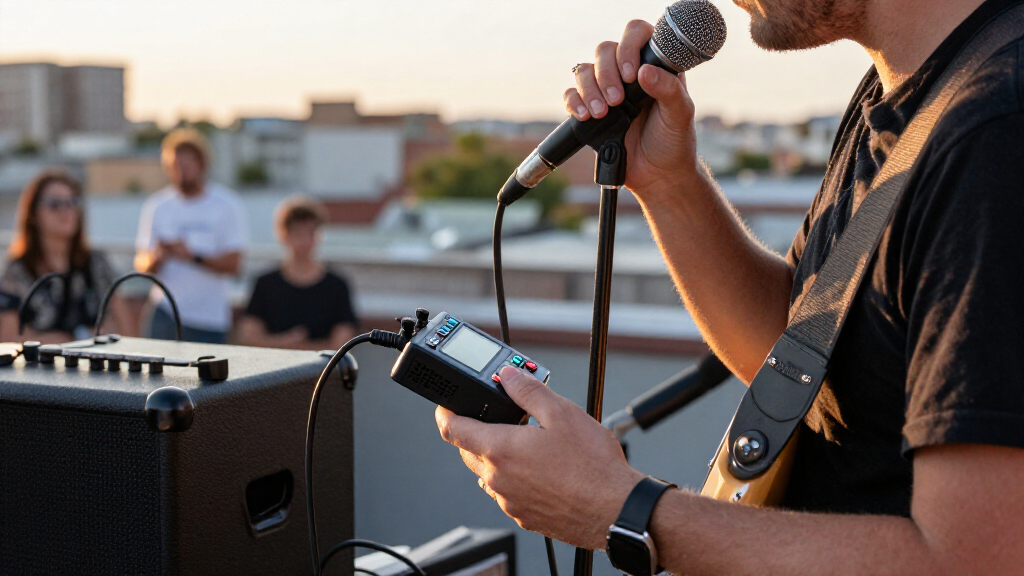
I compared these processors by how well they fit real portable vocal setups: live performance, streaming, recording, and creative voice work. The main criteria were the usefulness and range of vocal effects, access to controls during a performance, setup demands, portability, and whether the product’s stated features fit a clear buyer need. I also treated bundles and similarly named models carefully, since added accessories do not automatically make the core processor more capable.
The order gives priority to products with a strong balance of vocal tools, usability, and versatility, then places more specialized or less clearly differentiated options lower. That does not make the lower-ranked models poor choices: a compact unit, a pitch-focused pedal, or a processor with a particular workflow may suit one singer better than the broadest feature set. I would check current manufacturer specifications and included accessories before buying, especially across repeated Zoom V3 listings and the two Audota AVE-100 entries.
Factors to Consider When Choosing Portable Vocal Effects Processors
The right processor depends less on the number of effects listed and more on how you sing, connect, and make changes while performing. I would settle the practical setup questions first, then compare sound-shaping options.
Match the Processor to Your Signal Chain
Start by mapping your microphone, mixer or interface, speakers, and any instrument input before choosing a processor. A pedal that fits neatly between a microphone and a PA may be less useful if your main workflow runs through a computer or a streaming interface. Check the connection types and routing supported by the exact model rather than assuming every vocal unit works the same way. A common mistake is buying around effects alone and discovering the unit complicates monitoring or requires adapters. For a portable rig, fewer connection changes can matter more than an extra effect category. Choose the unit that fits your existing path with the least friction.
Decide How Much Control You Need Mid-Song
Live singers should think about what they need to change without stopping: switching presets, muting an effect, adjusting harmony, or moving between song sections. A device with extensive editing may offer more options but can take longer to set up and operate on stage. A simpler control surface can be the better performance tool if it keeps attention on singing. Before buying, imagine making one adjustment under dim lights while holding a microphone. Also check whether the controls you need are available directly or require menu navigation. Prioritize dependable access to a small set of useful sounds over a long list you rarely change.
Separate Pitch Correction, Harmony, and Voice Transformation
These effects solve different problems, so I would not treat a pitch-correction feature as a substitute for harmony or vocal character effects. Pitch correction targets note accuracy; harmony creates additional vocal lines; transformation changes the voice’s perceived tone or identity. A processor may offer one area strongly and only basic tools in another. Think about the sound you actually want in a typical song, not the most dramatic demo effect. For natural-sounding results, subtle settings and a suitable musical key may matter more than aggressive correction. If creative, synthetic voices are the goal, a transformation-oriented unit deserves a different shortlist than a harmony pedal.
Budget for the Whole Portable Setup
A small processor is only portable if the rest of the rig is manageable too. Account for a microphone, cables, power supply or batteries where supported, stand, and any mounting or interface accessories you need. Bundles can be useful when their included items match your setup, but an accessory pack should not distract from the processor’s actual capabilities. Confirm which power options and accessories are included in the exact listing, since package contents can vary. A lighter unit may save space but offer fewer hands-on controls, while a larger pedal may be easier to operate in a fixed live rig. Choose portability based on the full load you carry, not the device alone.
Choose Complexity You Will Actually Use
More presets, effect types, and editing features only help when you have time to learn and maintain them. A beginner may get better results from a clear interface and a few dependable sounds than from a processor with a deep editing workflow. Experienced performers may value broader customization if they build effects around a set list or recording project. Before paying for added capability, identify the two or three jobs the processor must handle. Check whether setup involves saving presets, choosing keys, or coordinating with other equipment. Buying for a realistic routine helps avoid a feature-rich unit that stays on one setting.
Check Exact Model Names and Package Contents
This roundup includes multiple Zoom V3 listings and two Audota AVE-100 entries, so model names alone may not tell the whole story. Compare the manufacturer’s product details and the seller’s included-items list before ordering. A bundle may add a mount, power adapter, or cleaning cloth without changing the processor’s effects or controls. Similarly, similar product names do not prove that two listings have identical revisions or accessories. Keep a short checklist of the functions and connections you require, then verify each one against the exact listing. This step prevents paying attention to packaging differences while overlooking a feature you actually need.
Frequently Asked Questions
Can one vocal effects processor work for both live gigs and streaming?
Often, but the best fit depends on how you route audio in each setup. A live pedal may connect simply to a microphone and PA, while streaming can involve an interface, computer, or mixer that changes where effects should sit in the signal chain. Check supported connections and routing for the specific unit before expecting it to serve both jobs. If you switch often, make sure changing settings between a gig and a stream is manageable. A processor that suits one workflow exceptionally well may still need extra equipment for the other.
Do I need pitch correction if I mainly want harmony effects?
No; harmony and pitch correction address different goals. Harmony adds one or more vocal parts, while pitch correction adjusts the lead vocal’s note accuracy. Some products combine these functions, but a combined feature set is not automatically better if you only need harmony. Consider whether your harmony sound will depend on a guitar or other musical reference, since tracking and setup can affect results. If you want a natural lead and occasional backing parts, prioritize harmony control and musical fit over correction features you may not use.
Is a larger feature set worth learning for a first vocal processor?
It can be, if you expect to build different sounds for songs and are comfortable setting up presets. For a first unit, the more useful question is whether you can reach the settings you need quickly and understand how effects interact. A smaller selection of controls may reduce setup time and make live use less distracting. If you mostly want one harmony sound or a few reverb and delay options, a simpler unit may serve you better. Choose extra complexity only when you can name the tasks it will help you do.
How should I compare different Zoom V3 listings?
Compare the exact product name, included accessories, power arrangements, and any stated differences in the processor itself. The listings in this roundup include a standalone-style V3 entry as well as versions presented with bundles or effect-related packaging. Do not assume that a bundle title means the unit has additional onboard processing. Check the manufacturer’s details for the processor and the seller’s package list for accessories. If the core unit is the same, decide whether the added items solve a real need in your setup.
What should I prioritize if I want a processor for creative voice effects rather than polished singing?
Start with voice transformation and sound-design controls, not just harmony or pitch correction. Think about whether you want effects that change vocal character in real time, and whether you need to adjust those sounds during a performance. A processor built around conventional vocal enhancement may produce a cleaner singer-focused result but offer less of the altered-voice character you want. Also consider how the effect will sit in a mix and whether you need repeatable presets. Testing the intended effect through your own monitoring setup, where possible, can help set realistic expectations.
Conclusion
For the best overall balance, I recommend the BOSS VE-22 to singers who want a flexible performance processor with accessible control. For best value, I would shortlist the Zoom V3 when its streaming and recording focus matches your setup, checking bundle contents rather than assuming each listing changes the core unit. For a premium, broad vocal toolkit, consider the TC Helicon VoiceLive Play; for beginners who want a more direct harmony-focused path, the BOSS VE-2 is a sensible place to start. Choose the Roland VT-4 for creative voice transformation, or look at the HeadRush VX5, FLAMMA FV01, and Audota AVE-100 options when pitch correction or harmony features lead your requirements. The best choice is the one that fits your microphone chain and the controls you will actually use.