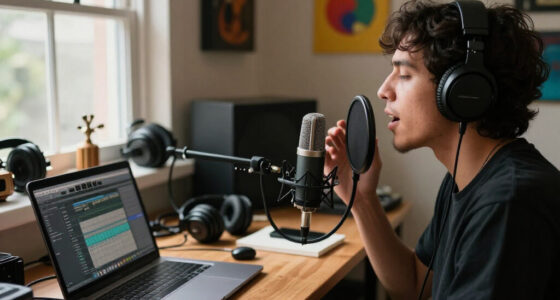
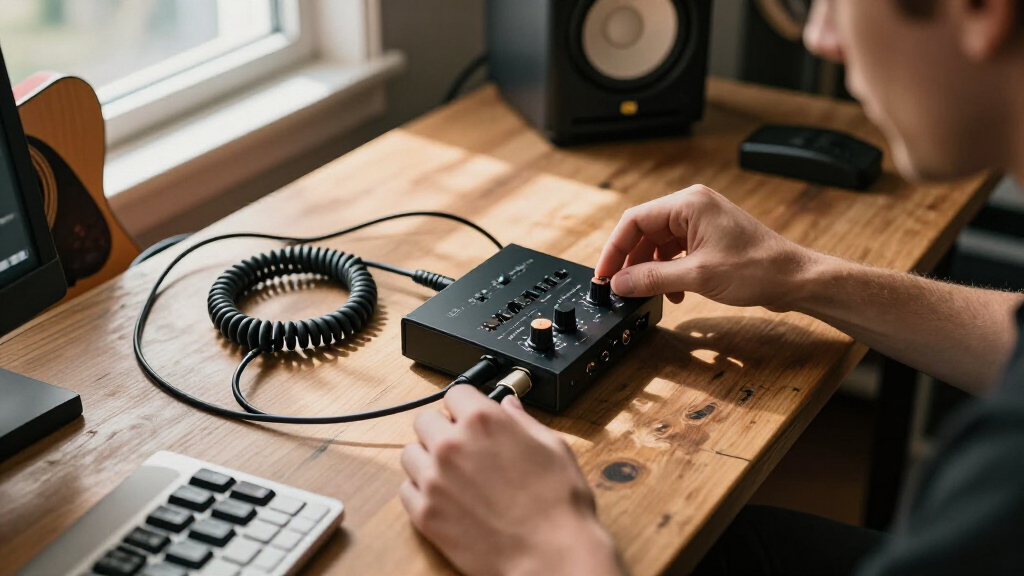
For most home recordists, I’d start with the Focusrite Scarlett 2i2 4th Gen: its two inputs make it easier to record a microphone and instrument together or capture two sources at once. The Universal Audio Volt 2 is a strong alternative for buyers drawn to its onboard vintage-style preamp mode, while the Focusrite Scarlett Solo Studio 4th Gen bundle suits someone who needs a microphone and headphones as well as an interface. The main tradeoffs are input count, included recording gear, and workflow features such as loopback—not headline sample-rate figures alone. Smaller two-input models can be a better fit than a bundle if you already own a mic, while budget options may involve fewer conveniences or less-established software support. Read on for the full breakdown of all 15 USB audio interfaces for home recording and the kind of setup each one suits.

Get audio and creator gear delivered free — and shop member deals
- Fast, free delivery on millions of items
- Access to Prime Big Deal Days deals on October 6–7
- Prime Video, Amazon Music and more included
Complete the kit


Key Takeaways
- The Scarlett 2i2 4th Gen is the most flexible starting point in this lineup: two inputs accommodate common solo recording setups that can outgrow a single-input interface.
- The Volt 2 and Scarlett 2i2 serve different priorities: the Volt 2 offers a vintage-style preamp mode, while the Scarlett makes a stronger case for a general-purpose two-input setup.
- Bundles change the value calculation: the Scarlett Solo Studio and 2i2 Studio include recording essentials, but buyers who already own a suitable microphone and headphones may prefer the standalone interfaces.
- Not every two-input interface fits the same workflow: models such as the PIYONE and Synido list loopback or streaming-oriented features, so those features matter more to streamers than to straightforward mic-and-instrument recording.
- Budget models have a higher compatibility and support question: options from BOMGE, XTUGA, Kmise, and others may suit basic setups, but I’d check host compatibility, controls, and included software before choosing one over established Focusrite or M-Audio models.
| BOMGE 22M 2-Channel USB Audio Interface with XLR Inputs and 48V Phantom Power |  | Best for Two-Mic Budget Setups | Channels: 2 in / 2 out | Maximum sample rate: 48 kHz | Inputs: 2 combo XLR/TRS | VIEW LATEST PRICE | See Our Full Breakdown |
| M-Audio M-Track Solo USB Audio Interface |  | Best for Solo Beginners | Audio resolution: Up to 48 kHz | Inputs: 1 combo XLR/line input with phantom power; 1 switchable line/instrument input | Outputs: 1/8-inch headphone output; stereo RCA outputs | VIEW LATEST PRICE | See Our Full Breakdown |
| PIYONE 2×2 USB-C Audio Interface – 24-bit/192 kHz, XLR/TRS Combo Inputs, Monitor Mix & Loopback, Alloy Red |  | Best for High-Resolution Compact Recording | Channels: 2 | Resolution: 24-bit | Maximum sample rate: 192 kHz | VIEW LATEST PRICE | See Our Full Breakdown |
| XTUGA Q-12 USB Audio Interface for PC |  | Best for Basic PC Voice Recording | Channels: 2 | Audio resolution: 16-bit/48 kHz | Maximum sample rate: 48 kHz | VIEW LATEST PRICE | See Our Full Breakdown |
| Focusrite Scarlett Solo 3rd Gen USB-C Audio Interface |  | Best for Polished Solo Tracking | Channels: 2 | Maximum sample rate: 192 kHz | Connectivity: USB-C | VIEW LATEST PRICE | See Our Full Breakdown |
| M-Audio M-Track Duo USB Audio Interface |  | Best Budget Pick for Two Inputs | Audio resolution: Up to 48 kHz | Inputs: 2 combo XLR/Line/Instrument inputs | Preamps: Crystal preamps with phantom power | VIEW LATEST PRICE | See Our Full Breakdown |
| Universal Audio Volt 2 USB Audio Interface |  | Best for Vintage-Inspired Recording | Inputs/outputs: 2-in/2-out | Connectivity: USB | Maximum sample rate: 192 kHz | VIEW LATEST PRICE | See Our Full Breakdown |
| MAONO P2 Hybrid USB Audio Interface with Dual XLR Inputs |  | Best for Recording and Streaming | Connectivity: USB-C | Channels: 2 | Microphone gain: 56 dB | VIEW LATEST PRICE | See Our Full Breakdown |
| Focusrite Scarlett 2i2 Studio 4th Gen USB-C Audio Interface Bundle |  | Best Complete Starter Bundle | Connectivity: USB | Channels: 2 | Maximum sample rate: 192 kHz | VIEW LATEST PRICE | See Our Full Breakdown |
| Synido 2×2 USB-C Audio Interface for Recording and Streaming |  | Best for Simple 48 kHz Setups | Channels: 2 | Audio resolution: 24-bit/48 kHz | Maximum sample rate: 48 kHz | VIEW LATEST PRICE | See Our Full Breakdown |
| Focusrite Scarlett Solo Studio 4th Gen USB-C Audio Interface Bundle |  | Best Complete Starter Bundle | Inputs: 1 XLR microphone preamp; 1 Hi-Z instrument input | Channels: 2 | Maximum sample rate: 192 kHz | VIEW LATEST PRICE | See Our Full Breakdown |
| Kmise USB Audio Interface with 48V Phantom Power |  | Best Basic Budget-Style Option | Channels: 2 | Connectivity: USB | Inputs: Microphone and instrument inputs | VIEW LATEST PRICE | See Our Full Breakdown |
| MAONO PS22 Lite USB Audio Interface for PC, Mac, and iPad |  | Best for Streaming and Cross-Device Setups | Channels: 2 | Recording resolution: 24-bit/192 kHz | Dynamic range: 106 dB | VIEW LATEST PRICE | See Our Full Breakdown |
| Focusrite Scarlett Solo 4th Gen USB-C Audio Interface |  | Best Compact Solo Interface | Inputs: 1 XLR microphone input; 1 Hi-Z instrument input | Channels: 2 | Maximum sample rate: 192 kHz | VIEW LATEST PRICE | See Our Full Breakdown |
| Focusrite Scarlett 2i2 4th Gen USB-C Audio Interface |  | Best for Two-Mic Home Recording | Microphone preamps: 2 | Audio inputs: 2 | Maximum sample rate: 192 kHz | VIEW LATEST PRICE | See Our Full Breakdown |
| USB audio interfaces for home recording | Channels | Maximum sample rate | Inputs | Connectivity |
|---|---|---|---|---|
| BOMGE 22M 2-Channel USB Audio | 2 in / 2 out | 48 kHz | 2 combo XLR/TRS | USB |
| M-Audio M-Track Solo USB Audio | — | — | 1 combo XLR/line input with phantom power; 1 switchable line/instrument input | — |
| PIYONE 2×2 USB-C Audio Interfa | 2 | 192 kHz | XLR/TRS combo inputs with 48V phantom power; Hi-Z instrument input | — |
| XTUGA Q-12 USB Audio Interface | 2 | 48 kHz | XLR; 3.5 mm microphone jack | USB |
| Focusrite Scarlett Solo 3rd Ge | 2 | 192 kHz | — | USB-C |
| M-Audio M-Track Duo USB Audio | — | — | 2 combo XLR/Line/Instrument inputs | — |
| Universal Audio Volt 2 USB Aud | — | 192 kHz | — | USB |
| MAONO P2 Hybrid USB Audio Inte | 2 | 192 kHz | — | USB-C |
| Focusrite Scarlett 2i2 Studio | 2 | 192 kHz | — | USB |
| Synido 2×2 USB-C Audio Interfa | 2 | 48 kHz | XLR and 6.35 mm | USB, AUX |
| Focusrite Scarlett Solo Studio | 2 | 192 kHz | 1 XLR microphone preamp; 1 Hi-Z instrument input | — |
| Kmise USB Audio Interface with | 2 | — | Microphone and instrument inputs | USB |
| MAONO PS22 Lite USB Audio Inte | 2 | — | — | — |
| Focusrite Scarlett Solo 4th Ge | 2 | 192 kHz | 1 XLR microphone input; 1 Hi-Z instrument input | — |
| Focusrite Scarlett 2i2 4th Gen | — | 192 kHz | — | USB |
More Details on Our Top Picks
BOMGE 22M 2-Channel USB Audio Interface with XLR Inputs and 48V Phantom Power
The BOMGE 22M suits a home recorder who needs two microphone-capable inputs without a complex setup. Its combo XLR/TRS sockets and 48V phantom power accommodate condenser mics as well as line-level sources, while direct monitoring lets you hear input signals without the distracting delay of software monitoring. Compared with the M-Audio M-Track Solo, the BOMGE gives you two combo inputs rather than one combo input plus a switchable instrument/line input, making it more practical for recording two vocalists at once. Its RCA stereo outputs also favor straightforward connections to consumer playback gear. The tradeoff is a 48 kHz ceiling and only two channels, so it is less suited to higher-resolution workflows or larger ensembles than the PIYONE 2×2. Its lightweight build and plug-and-play design keep a simple recording rig easy to move.
Pros:- Two combo XLR/TRS inputs support recording two microphones or other compatible sources at once.
- 48V phantom power supports condenser microphones.
- Direct monitoring helps avoid software-monitoring delay while recording.
- Lightweight, driver-free setup works well for a portable home-recording rig.
Cons:- The 48 kHz maximum sample rate is lower than the PIYONE 2×2 and Scarlett Solo 3rd Gen.
- Two input channels limit simultaneous recording as a setup grows.
- RCA stereo outputs are less suited to balanced studio-monitor connections.
Best for: Home podcasters and singer-songwriters who need to record two microphones at once and want a lightweight interface with direct monitoring.
Not ideal for: Producers seeking 24-bit/192 kHz recording, expanded inputs for a band, or balanced monitor connections; the BOMGE is limited to 48 kHz and lists RCA stereo outputs.
- Channels:2 in / 2 out
- Maximum sample rate:48 kHz
- Inputs:2 combo XLR/TRS
- Phantom power:48V
- Outputs:2 RCA stereo, 1 headphone output, 2 TRS outputs
- Connectivity:USB
- Compatibility:Mac OS, Windows XP or later
- Weight:0.32 kg
Our verdict“Choose the BOMGE 22M if recording two mic sources simply and portably matters more than higher sample rates or balanced outputs.”
M-Audio M-Track Solo USB Audio Interface
The M-Track Solo is aimed at a first home setup built around one microphone and one instrument or line source. Its combo input has phantom power, while the separate input switches between line and instrument levels; that arrangement is more flexible for a solo singer-guitarist than the XTUGA Q-12’s listed XLR and 3.5 mm microphone inputs. USB power and zero-latency direct monitoring also keep the recording chain uncomplicated, and the included MPC Beats software gives a new producer a place to start. Compared with the BOMGE 22M, though, it does not offer two combo mic inputs, so it is a weaker fit for two-mic podcasts or duets. Its 48 kHz recording ceiling is shared with the BOMGE, while the 1/8-inch headphone jack may call for an adapter if your headphones use a 1/4-inch plug.
Pros:- Combo input with phantom power supports a condenser microphone.
- Switchable second input accommodates line-level or instrument sources.
- USB-powered operation avoids a separate power supply.
- Zero-latency monitoring and included MPC Beats software suit a starter recording setup.
Cons:- Only one combo microphone input, unlike the two-input BOMGE 22M.
- The 48 kHz maximum sample rate limits higher-resolution recording workflows.
- The 1/8-inch headphone output may require an adapter for common 1/4-inch studio headphones.
Best for: New solo musicians and podcasters who want to record one microphone alongside a guitar, keyboard, or other line-level source.
Not ideal for: Two-mic podcast hosts or musicians recording multiple microphones at once; it has one combo mic input and a 48 kHz maximum sample rate.
- Audio resolution:Up to 48 kHz
- Inputs:1 combo XLR/line input with phantom power; 1 switchable line/instrument input
- Outputs:1/8-inch headphone output; stereo RCA outputs
- Monitoring:Zero-latency direct monitoring with USB/Direct balance switch
- Power:USB-powered
- Compatible devices:Guitar, headphones, keyboard, laptop, microphone, computer, smartphone, speaker, tablet
- Supported software:Ableton Live Lite, MPC Beats
Our verdict“Pick the M-Track Solo for an affordable, compact first interface when your sessions involve one mic and one instrument rather than two microphones.”
PIYONE 2×2 USB-C Audio Interface – 24-bit/192 kHz, XLR/TRS Combo Inputs, Monitor Mix & Loopback, Alloy Red
Among these compact two-input options, the PIYONE 2×2 offers the clearest step up for buyers who want 24-bit/192 kHz recording and USB-C connectivity. Two combo inputs with 48V phantom power make it suitable for a pair of microphones or a mic-and-instrument arrangement, while zero-latency direct monitoring helps keep performances comfortable to track. Its bus-powered, class-compliant design is appealing for a desk shared between a computer and compatible iOS gear, though the product information gives limited operating-system detail beyond Windows compatibility. Compared with the BOMGE 22M, the PIYONE supports a much higher sample rate and resolution; compared with the Scarlett Solo 3rd Gen, it provides two combo inputs rather than a more specialized one-mic/one-instrument layout. The tradeoffs are a 3.5 mm headphone jack and no listed software bundle for added routing or processing.
Pros:- 24-bit/192 kHz recording specification exceeds the 48 kHz limits of the BOMGE 22M and M-Track Solo.
- Two XLR/TRS combo inputs with 48V phantom power handle varied mic and instrument setups.
- USB-C, class-compliant bus power supports a compact, cable-light setup.
- Illuminated gain controls provide visible level adjustment in dim recording spaces.
Cons:- The listed operating-system information is limited, making compatibility less clear than for the named Mac and Windows models.
- The 3.5 mm headphone output may not suit users with 1/4-inch studio headphones.
- No advanced routing or DSP software bundle is listed.
Best for: Home recordists who want two combo inputs, USB-C bus power, and high-resolution capture in a compact interface.
Not ideal for: Buyers who need clearly documented compatibility across their full device lineup, a 1/4-inch headphone connection, or bundled software and DSP tools.
- Channels:2
- Resolution:24-bit
- Maximum sample rate:192 kHz
- USB type:USB-C, class compliant and bus powered
- Inputs:XLR/TRS combo inputs with 48V phantom power; Hi-Z instrument input
- Direct monitoring:Zero-latency
- Headphone output:3.5 mm
- Weight:0.74 kg
Our verdict“Choose the PIYONE 2×2 if high-resolution recording and two combo inputs matter more than a familiar software bundle or a 1/4-inch headphone jack.”
XTUGA Q-12 USB Audio Interface for PC
The XTUGA Q-12 is a pared-back choice for a PC-based home setup where basic voice recording matters more than detailed routing or high-resolution capture. It offers an XLR input, a 3.5 mm microphone jack, and switchable 48V phantom power, with USB connection to a computer and compatibility with familiar programs such as Audacity and Ableton Live. That input mix differs from the BOMGE 22M’s pair of combo sockets: the XTUGA may suit a simple mic-plus-small-mic arrangement, but its listed 16-bit/48 kHz resolution is less capable on paper than the 24-bit/192 kHz PIYONE 2×2 or Scarlett Solo 3rd Gen. The two-channel limit also rules it out for expanding multi-mic sessions. I’d place it below the more flexible options for music production, but its simple format can suit straightforward narration or a basic recording desk.
Pros:- XLR and 3.5 mm microphone inputs support a basic two-source setup.
- Switchable 48V phantom power accommodates condenser microphones.
- USB connection draws power from the computer, avoiding an external adapter.
- Works with listed recording programs including Audacity, Ableton Live, FL Studio, and Pro Tools.
Cons:- 16-bit/48 kHz specification is lower than the 24-bit/192 kHz PIYONE 2×2 and Scarlett Solo 3rd Gen.
- Two channels limit room to record additional sources simultaneously.
- The product is described for PC use, with less compatibility detail than the Mac-compatible options.
Best for: PC users recording narration, lessons, or simple voice content with an XLR mic and a second microphone connection.
Not ideal for: Musicians seeking high-resolution tracking, two combo XLR inputs, or a larger recording setup; the Q-12 is limited to 16-bit/48 kHz and two channels.
- Channels:2
- Audio resolution:16-bit/48 kHz
- Maximum sample rate:48 kHz
- Inputs:XLR; 3.5 mm microphone jack
- Phantom power:Switchable 48V
- Connectivity:USB
- Dimensions:5.98 × 4.92 × 1.97 in
- Weight:0.31 kg
Our verdict“The Q-12 makes sense for basic PC voice work if its simple inputs fit your setup, but music producers should favor a higher-resolution interface.”
Focusrite Scarlett Solo 3rd Gen USB-C Audio Interface
The Scarlett Solo 3rd Gen is the strongest fit here for a solo performer who wants a polished mic-and-instrument recording chain. Its low-noise mic preamp and switchable Air mode are aimed at adding vocal presence, while the high-headroom instrument input gives guitar and bass a dedicated path. The 24-bit/192 kHz converters and bundled recording software also make it a more ready-to-create package than the M-Audio M-Track Solo, whose listed resolution tops out at 48 kHz and whose headphone connection is 1/8-inch. The Scarlett’s compact, bus-powered design suits a home desk, and balanced outputs support monitor playback. Its central limitation is the layout: there is only one mic preamp, so it cannot record two microphones at once like the BOMGE 22M or PIYONE 2×2. It also lacks MIDI I/O for direct keyboard connections.
Pros:- 24-bit/192 kHz converters support high-resolution recording.
- Low-noise mic preamp with switchable Air mode suits detailed vocal capture.
- Dedicated high-headroom instrument input accommodates guitar or bass.
- Bundled software and USB bus power provide a ready-to-record solo setup.
Cons:- One mic preamp prevents simultaneous recording of two microphones, unlike the BOMGE 22M or PIYONE 2×2.
- No built-in MIDI I/O for direct connection of keyboards or controllers.
- Its solo-focused input layout offers less flexibility for multi-source sessions than a two-combo-input interface.
Best for: Solo singers, guitarists, and bassists who want a quality mic preamp, dedicated instrument input, and bundled software for home recording.
Not ideal for: Duos, multi-mic podcasters, or keyboard players who need MIDI connections; it has one mic preamp and no built-in MIDI I/O.
- Channels:2
- Maximum sample rate:192 kHz
- Connectivity:USB-C
- Audio inputs:XLR microphone; instrument
- Preamplifier:Low-noise mic preamp with switchable Air mode
- Operating systems:Mac OS, Windows OS, iOS
- Dimensions:1.71 × 5.65 × 3.77 in
- Weight:12.32 oz
Our verdict“Choose the Scarlett Solo 3rd Gen for a solo vocal-and-instrument setup with a strong software starting point, not for two-mic recording.”
M-Audio M-Track Duo USB Audio Interface
The M-Track Duo suits home recordists who need two microphone or instrument inputs without extra routing features. Its two combo jacks and Crystal preamps with phantom power let you record a pair of mics, or combine a mic and instrument, while USB power keeps the setup simple. The direct-monitor switch sends input audio to your headphones without the delay of listening through a computer, a practical aid for tracking vocals. Compared with the Universal Audio Volt 2, it records at a lower maximum rate and lacks a vintage preamp mode, but its straightforward controls make it a no-frills alternative for basic sessions. The tradeoff is a 48 kHz ceiling and limited mobile convenience: iOS use requires an Apple Lightning to USB 3 Camera Adapter.
Pros:- Two combo inputs accommodate microphones, instruments, and line-level sources
- Crystal preamps provide phantom power for compatible condenser microphones
- Direct monitoring avoids computer-processing delay while tracking
- USB-powered design and MPC Beats software support a compact starter setup
Cons:- Maximum recording resolution is 48 kHz
- iOS use requires an Apple Lightning to USB 3 Camera Adapter
- Lacks the high-resolution recording and vintage preamp feature of the Volt 2
Best for: Home recordists who need two mic or instrument inputs for simple vocal, guitar, or small podcast sessions.
Not ideal for: Producers who want high-resolution recording, mobile-first connectivity, or built-in loopback and routing tools.
- Audio resolution:Up to 48 kHz
- Inputs:2 combo XLR/Line/Instrument inputs
- Preamps:Crystal preamps with phantom power
- Outputs:Stereo 1/4-inch outputs and 1/4-inch headphone output
- Monitoring:Zero-latency direct monitoring with USB/Direct switch
- Power:USB-powered
- Included software:MPC Beats
Our verdict“Choose the M-Track Duo for an uncomplicated, two-input home setup if 48 kHz recording meets your needs.”
Universal Audio Volt 2 USB Audio Interface
The Volt 2 is the stronger fit for home recordists who want a two-input interface with a character-shaping option, rather than only basic capture. Its 610-inspired Vintage Mic Preamp mode offers a different tonal choice for vocals and instruments, while support for up to 24-bit/192 kHz recording gives more headroom for flexible project settings than the M-Audio M-Track Duo’s 48 kHz limit. It also works with Mac, Windows, iPad, and iPhone, so it can move between a desk and mobile sessions. Compared with the Scarlett 2i2 Studio bundle, the Volt 2 does not include a microphone or headphones, so it is less of a one-box start. Lightning iPhone and iPad setups also need extra power and an adapter.
Pros:- Two inputs and two outputs suit common home-recording sessions
- Vintage Preamp mode adds a 610-inspired tonal option
- Supports up to 24-bit/192 kHz recording
- Compatible with Windows, macOS, and iOS
Cons:- Does not include a microphone or headphones
- Lightning iPhone and iPad use requires an external Volt power supply and Apple Camera Adapter
- Costs less in convenience for newcomers than an interface bundle such as the Scarlett 2i2 Studio
Best for: Home musicians who already own a mic and headphones and want two inputs, mobile compatibility, and a vintage-style preamp option.
Not ideal for: First-time recordists who need a microphone and headphones in the box, or Lightning-device users seeking a cable-free mobile setup.
- Inputs/outputs:2-in/2-out
- Connectivity:USB
- Maximum sample rate:192 kHz
- Audio resolution:Up to 24-bit
- Vintage preamp:610 tube preamp emulation
- Compatible operating systems:Windows, macOS, iOS
- Dimensions:5.12 × 6.85 × 2.09 in
- Weight:650 g
Our verdict“Pick the Volt 2 if you have your recording essentials and value its vintage preamp mode and high-resolution, cross-device support.”
MAONO P2 Hybrid USB Audio Interface with Dual XLR Inputs
The MAONO P2 stands apart from the M-Audio M-Track Duo by combining recording inputs with stream-focused tools: loopback, mute controls, and routing software. That makes it a more natural fit for a home creator who needs to send computer audio and mic audio into a stream or call, not just capture a vocal or instrument in a DAW. Its USB-C connection and listed Android, iOS, and computer compatibility also give it broader device flexibility than a basic desktop interface. The interface supports 24-bit/192 kHz audio and direct monitoring, though those headline capabilities require software setup for advanced routing and effects. Unlike the Volt 2, it has no stated vintage preamp mode, so buyers seeking that particular recording character may prefer the UA option.
Pros:- Loopback and routing tools suit streaming and computer-audio capture
- Direct monitoring supports low-latency listening while recording
- USB-C and listed compatibility cover computers and mobile devices
- Aluminum-alloy housing provides a compact, durable enclosure
Cons:- Advanced routing and effects require software setup
- Listed frequency response is 20 kHz, which offers limited specification detail
- Does not provide the Volt 2’s stated 610-inspired Vintage Preamp mode
Best for: Home streamers and creators who record with a microphone and need loopback, mute controls, and routing across computer or mobile devices.
Not ideal for: Musicians who want the simplest plug-in-and-record interface or a clearly specified frequency range beyond the listed 20 kHz.
- Connectivity:USB-C
- Channels:2
- Microphone gain:56 dB
- Maximum sample rate:192 kHz
- Audio quality:24-bit
- Frequency response:20 kHz
- Compatible operating systems:Android, ChromeOS, Windows, iOS, macOS
- Housing:Aluminum alloy
Our verdict“Choose the MAONO P2 if streaming and loopback matter as much as recording, and you are comfortable configuring its routing software.”
Focusrite Scarlett 2i2 Studio 4th Gen USB-C Audio Interface Bundle
The Scarlett 2i2 Studio bundle is the most complete starting point here: it pairs a two-channel interface with the CM25 MkIII condenser microphone, SH-450 headphones, and recording software. For a first home vocal or instrument setup, that removes the need to source core recording gear separately. Auto Gain and Clip Safe help manage input levels, while Air mode offers a presence-focused option for vocals and guitars. The interface also reaches 192 kHz and lists a 120 dB dynamic range, giving it a more feature-rich recording foundation than the M-Audio M-Track Duo. Its tradeoff is that the bundled mic and headphones may be redundant for anyone who already owns suitable gear. The Volt 2 offers a vintage preamp mode, but not this ready-to-record bundle.
Pros:- Includes the CM25 MkIII condenser microphone and SH-450 headphones
- Auto Gain and Clip Safe help manage recording levels
- Air mode offers an added tonal option for vocals and guitars
- Supports up to 192 kHz and lists a 120 dB dynamic range
Cons:- Bundled microphone and headphones add little value for buyers who already own suitable equipment
- The package is less tailored to mobile recording than the Volt 2’s listed iOS compatibility
- The supplied gear may not suit every performer’s preferred microphone or headphone setup
Best for: New home vocalists or guitarists who need an interface, condenser microphone, headphones, and starter software in one package.
Not ideal for: Recordists who already own a microphone and headphones, or buyers who prefer a smaller, simpler interface without bundled accessories.
- Connectivity:USB
- Channels:2
- Maximum sample rate:192 kHz
- Audio inputs:2
- Dynamic range:120 dB
- Included microphone:CM25 MkIII condenser microphone
- Included headphones:SH-450
- Included software:Pro Tools Intro+, Ableton Live Lite, Cubase LE, Hitmaker Expansion
- Warranty:Three years
Our verdict“Choose this bundle if you are starting from scratch and want the interface, mic, headphones, and software together.”
Synido 2×2 USB-C Audio Interface for Recording and Streaming
The Synido 2×2 is a compact choice for home recordists who need two channels, phantom power, and flexible monitoring without pursuing high sample rates. Its Stereo, Mix, and USB monitoring modes give more listening-path choices than the M-Audio M-Track Duo’s listed USB/Direct switch, while XLR and 6.35 mm connections cover microphone and instrument sources. At 24-bit/48 kHz, it matches the M-Track Duo’s sample-rate ceiling rather than the 192 kHz support of the Volt 2 or Scarlett 2i2 Studio. That can be a sensible fit for straightforward home projects, but makes it a less flexible pick for producers who specifically want higher-rate recording. It is listed as plug-and-play, though recommended DAW use on PC requires a third-party ASIO driver.
Pros:- Three monitoring modes offer stereo, mix, and USB listening options
- XLR and 6.35 mm inputs support microphones and instruments
- 48V phantom power accommodates compatible condenser microphones
- Compact form includes a USB-C to USB-A cable and 3.5 mm to 6.35 mm adapter
Cons:- Maximum sample rate is 48 kHz, below the Volt 2 and Scarlett 2i2 Studio
- Recommended DAW compatibility on PC requires a third-party ASIO driver
- Product data does not specify a warranty duration
Best for: Home musicians who want a compact two-channel interface with 48V phantom power and switchable monitoring for straightforward sessions.
Not ideal for: Producers who need recording above 48 kHz, or PC users who want recommended DAW compatibility without installing a third-party ASIO driver.
- Channels:2
- Audio resolution:24-bit/48 kHz
- Maximum sample rate:48 kHz
- Inputs:XLR and 6.35 mm
- Monitoring modes:Stereo, Mix, USB
- Phantom power:48V
- Connectivity:USB, AUX
- Dimensions:4.53 × 5.51 × 1.77 in
- Weight:0.41 kg
Our verdict“Pick the Synido for compact, basic recording with monitoring choices if 48 kHz is enough and you can handle the driver setup.”
Focusrite Scarlett Solo Studio 4th Gen USB-C Audio Interface Bundle
For a first home-recording setup, this bundle removes the guesswork of matching an interface with a microphone and headphones. The Scarlett Solo supplies one XLR mic preamp and one Hi-Z instrument input, while the included CM25 MkIII microphone and SH-450 headphones let a vocalist or guitarist start recording without buying those pieces separately. Its 24-bit/192 kHz recording and 120 dB dynamic range match the standalone Scarlett Solo 4th Gen, and Air mode offers an optional presence lift. Compared with that standalone model, the bundle is easier to start with but leaves less freedom to choose your own mic and headphones. The two-input layout also suits one performer at a time, not a band or a two-mic interview.
Pros:- Includes the interface, CM25 MkIII condenser microphone, SH-450 headphones, and recording software
- Records at up to 24-bit/192 kHz with a stated 120 dB dynamic range
- Air mode can add presence and harmonic character to vocals or guitars
- Includes a three-year warranty
Cons:- Only one XLR microphone preamp, limiting simultaneous mic recording
- The bundled microphone and headphones may not suit buyers with established preferences
- The bundle costs the user space for components they may not need
Best for: New solo vocalists or singer-songwriters who need an interface, microphone, and headphones in one recording setup.
Not ideal for: Buyers who already own recording headphones or a preferred microphone, or who need two mic preamps for simultaneous recording.
- Inputs:1 XLR microphone preamp; 1 Hi-Z instrument input
- Channels:2
- Maximum sample rate:192 kHz
- Bit depth:24-bit
- Dynamic range:120 dB
- Included microphone:CM25 MkIII condenser microphone
- Included headphones:SH-450
- Warranty:3 years
Our verdict“Choose this bundle if you want a ready-to-record solo setup; pick the standalone Scarlett Solo if you already have a microphone and headphones.”
Kmise USB Audio Interface with 48V Phantom Power
The Kmise covers the essentials for a simple vocal-and-instrument home setup: a microphone input, an instrument input, headphone and speaker outputs, and 48V phantom power for a condenser mic. Plug-and-play connectivity and low-latency monitoring are aimed at buyers who want to get a basic recording path running without a large control set. Compared with the MAONO PS22 Lite, the Kmise has fewer documented extras; the MAONO specifies routing software, broader operating-system support, and a clear 24-bit/192 kHz rate. There is also a specification mismatch here: the description claims 24-bit/192 kHz recording, while the listed maximum sample rate is 48 kHz. That uncertainty, plus a six-month warranty, makes this a cautious pick rather than a strong choice for a long-term main interface.
Pros:- Provides microphone and instrument inputs for basic solo recording
- 48V phantom power supports condenser microphones
- Includes headphone and speaker outputs
- Low-latency monitoring and plug-and-play operation are listed
Cons:- The listed 48 kHz maximum conflicts with the description’s 192 kHz claim
- Six-month warranty is shorter than the three-year coverage listed for the Focusrite models
- Operating-system information is limited and lists iOS only
Best for: First-time home recordists who need basic mic-and-instrument inputs and are comfortable with limited documentation and support.
Not ideal for: Buyers who need a clearly confirmed high sample rate, dependable long-term warranty coverage, or detailed compatibility information beyond the listed iOS support.
- Channels:2
- Connectivity:USB
- Inputs:Microphone and instrument inputs
- Phantom power:48V
- Listed maximum sample rate:48 kHz
- Claimed recording resolution:24-bit/192 kHz
- Operating system:iOS
- Warranty:6 months
Our verdict“Choose the Kmise only for a basic, low-complexity setup if its sample-rate limits and short warranty fit your needs.”
MAONO PS22 Lite USB Audio Interface for PC, Mac, and iPad
The PS22 Lite is a flexible choice for a home creator who records music and also routes audio for streams, podcasts, or calls. Its ProStudio Routing Software adds loopback and routing options that the Focusrite Scarlett Solo 4th Gen does not list, making it better suited to combining a microphone with computer audio. It also supports Windows, macOS, iOS, Android, and ChromeOS, a wider platform list than the Focusrite Solo. For music recording, its stated 24-bit/192 kHz resolution, 48V phantom power, and dedicated instrument input cover common solo needs. The limits are its two-channel design and the need to select the specific MAONO ASIO driver in some software for best performance. Its stated 106 dB dynamic range is also below the Scarlett Solo’s 120 dB figure.
Pros:- ProStudio Routing Software includes loopback and routing capabilities
- Supports Windows, macOS, iOS, Android, and ChromeOS
- Records at up to 24-bit/192 kHz and provides 48V phantom power
- Compact, lightweight design suits a desk or portable setup
Cons:- Two-channel design restricts larger multi-microphone recording sessions
- Some software may require selecting the MAONO ASIO driver for best performance
- Its stated 106 dB dynamic range is lower than the 120 dB specified for the Focusrite Scarlett Solo
Best for: Home creators who switch between a computer, tablet, or phone and need loopback routing for streaming alongside basic music recording.
Not ideal for: Musicians recording multiple performers at once, or users who want a simple setup without software-driver selection.
- Channels:2
- Recording resolution:24-bit/192 kHz
- Dynamic range:106 dB
- Preamp gain:Up to 56 dB
- Phantom power:48V
- Compatible operating systems:Windows, macOS, iOS, Android, ChromeOS
- Included software:ProStudio Routing Software
- Weight:Approximately 0.95 lb
Our verdict“Pick the PS22 Lite if streaming routes and broad device compatibility matter more than extra inputs or the Scarlett Solo’s higher stated dynamic range.”
Focusrite Scarlett Solo 4th Gen USB-C Audio Interface
The standalone Scarlett Solo is the most focused pick here for a vocalist or guitarist who already owns headphones and a microphone. One XLR preamp handles a mic, while the separate Hi-Z input accepts guitar or bass; the 120 dB dynamic range and 24-bit/192 kHz recording match the Scarlett Solo Studio bundle. Unlike that bundle, this model does not add a microphone or headphones, so buyers can choose their own gear and avoid duplicating equipment. The Air modes offer a tone option for vocals and instruments, and bundled software and plugins provide a starting point for recording. Its compact footprint is useful on a crowded desk, but one mic input rules out recording two vocalists or a stereo mic pair directly. The 2i2 is the better fit when two mic preamps matter.
Pros:- One XLR microphone input and one Hi-Z instrument input suit common solo recording
- 24-bit/192 kHz recording and a stated 120 dB dynamic range
- Air modes provide an optional tonal character for vocals and instruments
- Includes recording software and plugins
Cons:- Only one microphone preamp, unlike the Scarlett 2i2
- Does not include a microphone or headphones, unlike the Scarlett Solo Studio bundle
- Requires compatible recording software and a computer or iOS device
Best for: Solo home vocalists and guitarists who already own recording headphones and want a compact interface with one mic input.
Not ideal for: Two-person podcast hosts, duos, or musicians who need two microphone preamps at the same time.
- Inputs:1 XLR microphone input; 1 Hi-Z instrument input
- Channels:2
- Maximum sample rate:192 kHz
- Bit depth:24-bit
- Dynamic range:120 dB
- Analogue gain:Not specified
- Compatible operating systems:Mac OS, Windows OS, iOS
- Warranty:3 years
Our verdict“Choose the standalone Solo for compact one-person recording with your existing gear; move up to the 2i2 if you need two mic inputs.”
Focusrite Scarlett 2i2 4th Gen USB-C Audio Interface
Among these picks, the Scarlett 2i2 is the clearest choice when a home session needs two microphones at once. Its two mic preamps make it more suitable than either Scarlett Solo for duets, interviews, or recording vocals alongside a mic’d instrument, while two instrument inputs also serve guitar and bass setups. Auto Gain and Clip Safe help manage input levels, reducing the chance that a take is too quiet or clips during a performance. The stated 120 dB dynamic range and Air mode align with the Solo models, so the main reason to choose the 2i2 is its added input flexibility, not a stated jump in recording resolution. It takes more desk space than the Solo and weighs more; buyers recording one source at a time may find the simpler Solo a better fit.
Pros:- Two microphone preamps support simultaneous two-mic recording
- Two instrument inputs accommodate guitar and bass sources
- Auto Gain and Clip Safe help manage levels and reduce clipping risk
- Includes Air mode, recording software, and plugins
Cons:- Larger and heavier than the Scarlett Solo models
- Extra inputs offer little benefit to buyers who record only one source at a time
- No included microphone or headphones, unlike the Scarlett Solo Studio bundle
Best for: Home musicians, interviewers, and vocal duos who need to record two microphone sources simultaneously.
Not ideal for: Solo recordists with no plans to record a second mic or instrument at once, especially if a smaller interface is a priority.
- Microphone preamps:2
- Audio inputs:2
- Maximum sample rate:192 kHz
- Dynamic range:120 dB
- Analogue gain:69 dB
- Connectivity:USB
- Compatible operating systems:Mac OS, Windows OS, iOS
- Warranty:3 years
Our verdict“Choose the Scarlett 2i2 if you regularly record two microphones or instruments together; otherwise, the Scarlett Solo is the more focused choice.”
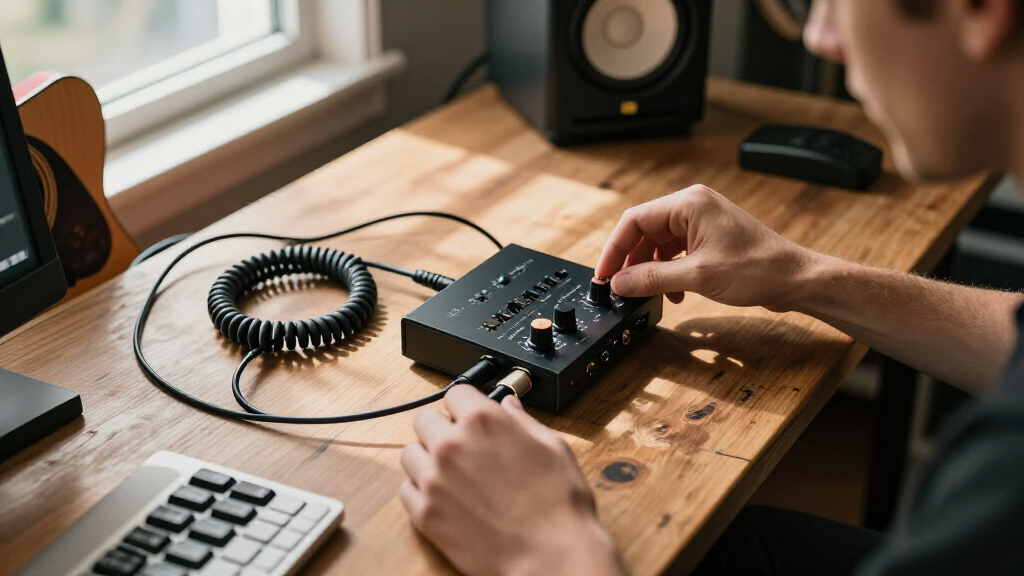
How We Picked
I ranked these interfaces around the needs of a home recording setup: usable input and output options, practical monitoring controls, compatibility across common computers and tablets, and whether the product includes gear a new recordist would otherwise need. I also looked at how well each model suits a clear task, such as recording one voice, tracking two sources, or adding streaming features. Published format specifications matter, but they do not outweigh a useful input layout or a workflow that fits the buyer.
The ranking favors versatility and a clearer path to a working setup over feature lists alone. Established standalone interfaces and bundles rank highly when their input count and intended use are easy to match to common recording needs. More specialized or less-established options can still make sense for a particular budget or streaming workflow, but they rank lower when a buyer needs to verify compatibility, support, or what is included. Each pick has a tradeoff; a higher position means broader usefulness for home recording, not that every buyer should choose it.
Factors to Consider When Choosing USB Audio Interfaces For Home Recording
Choosing an interface is less about chasing the biggest specification and more about avoiding a mismatch with your room, recording habits, and existing gear. I’d settle the recording workflow first, then compare connectivity and extras.
How Many Sources Will You Record at Once?
Count the sources you need to capture simultaneously, not the number of instruments you own. A solo singer who overdubs guitar can work with one mic input, while a singer-guitarist recording both at once needs two suitable inputs. Two inputs also leave room for a guest mic or a stereo source, but check whether the interface offers two mic preamps or a mix of mic and instrument connections. A common mistake is assuming that two input sockets always mean two microphones can be connected in the same way. If you expect to record a drum kit or several people together, this roundup’s small desktop interfaces may be limiting; plan around a larger input count instead.
Choose a Bundle Only If You Need Its Contents
A studio bundle can simplify a first setup by combining the interface with a microphone and headphones, but the bundle is useful only if those pieces fit your work. Compare the included gear with what you already own and with what you would want to replace later. If you have a microphone you trust, a standalone interface may put more of the purchase toward the connection and monitoring features you need. If you are starting from nothing, a bundle can reduce the number of separate choices, though you should check whether it includes the cables and accessories required for your setup. Avoid paying for duplicate gear just because the package sounds more complete.
Match Monitoring Features to Your Recording Routine
Direct monitoring lets you hear an input without relying entirely on the computer’s software path, which can make live performance easier to monitor. A mix control is helpful when you want to balance your live voice or instrument against playback from a session. Loopback is a different feature: it can route computer audio alongside a microphone for streaming, lessons, or screen recording. Buyers focused on making music may not benefit much from loopback, while a streamer may find it more useful than another specification upgrade. Before buying, map the audio you want to hear and send to the controls on the interface; this catches workflow gaps that a feature list can hide.
Check Compatibility Before Choosing USB-C or USB
A USB-C connector describes the physical connection, not a guarantee that every computer, tablet, cable, or power arrangement will work without an extra accessory. Check the manufacturer’s supported operating systems and the connection requirements for your exact device. Tablet users should confirm whether the interface needs external power or a particular adapter, especially if they plan to connect a microphone requiring phantom power. Also confirm that the recording software you intend to use recognizes the interface and supports its routing features. A little compatibility checking can prevent a compact interface from becoming awkward to use in the room where you record.
Treat Mic Preamps, Phantom Power, and Instrument Inputs as Separate Needs
Phantom power is needed for many condenser microphones, but its presence alone does not tell you how well an interface fits your microphone setup. Check whether phantom power is available for the input you plan to use and whether the mic requires it. For guitar or bass, look for an instrument input designed for a direct connection rather than assuming any line input will behave the same way. If you record a dynamic mic quietly or work with a low-output source, gain range and noise performance can matter more than a high sample-rate figure. Match the interface to the actual mic and instrument chain you own, including any external preamp or processor you plan to add.
Spend More for the Limitation You Actually Need to Remove
Paying more makes sense when it solves a recurring constraint: too few inputs, a bundle that saves you from sourcing core gear, or a workflow feature you will use regularly. It is harder to justify an upgrade based only on a larger number printed in the format specifications if your recording software and sessions do not benefit from it. Think about future expansion, too: a small interface can be ideal for a bedroom setup, but changing your recording habits may make extra inputs necessary. Budget models may cover basic recording, yet you should account for the time spent checking support and setup details. Prioritize the interface that removes your most likely bottleneck, not the one with the longest feature list.
Frequently Asked Questions
Should I choose a one-input interface or a two-input model for home recording?
Choose based on how many sources you need to record at the same time. One input can be enough if you record vocals and instruments in separate passes and do not expect to host another performer. Two inputs let you record a voice and guitar together, connect two microphones when the inputs support them, or capture a stereo source. The extra input can also postpone an upgrade if your recording plans change. If you are uncertain and the cost and desk space are acceptable, two inputs usually leave more room to adapt.
Is a studio bundle a better choice than buying an interface on its own?
A bundle is a practical choice when you need an interface, microphone, and headphones and want a coordinated starting point. It is less appealing if you already have recording gear you are happy with or plan to select each component yourself. Check the bundle contents carefully, including whether the microphone type suits your voice and whether cables are supplied. A standalone interface may be the cleaner purchase for someone upgrading an existing setup. Think of a bundle as a way to fill equipment gaps, not automatic proof of better value.
Do I need loopback for recording music at home?
Most music recording sessions do not require loopback; the feature is more relevant when you want to combine computer audio with a microphone for a stream, online lesson, or screen recording. If you mainly record instruments into a digital audio workstation, input count and monitoring controls are likely to matter more. Loopback can simplify routing, but it does not replace the interface’s normal recording inputs. Consider how you share audio with an audience before paying extra attention to it. If streaming is part of your regular setup, compare the routing options and controls rather than treating the label alone as sufficient.
Can I use these interfaces with an iPad or a laptop that only has USB-C?
Possibly, but check the specific interface’s supported devices, operating systems, and power requirements before buying. A USB-C port does not by itself confirm that an interface is compatible with every tablet or computer, and some setups may need an adapter or external power. Phantom-powered microphones can add to a tablet’s power demands. Verify that your recording app can use the interface and that you have the right cable for the device. For a mobile setup, favor a simple connection path over features you will rarely use.
Is 24-bit/192 kHz a reason to choose one interface over another?
Those figures describe supported recording formats, but they are rarely the main difference a home recordist should use to choose between these models. Input layout, monitoring, compatibility, and the quality of the full recording chain are more likely to affect everyday use. Higher session settings can also use more storage and processing, while your recording software and project needs determine whether they offer a practical benefit. Choose a format your workflow can support rather than assuming the largest number guarantees better recordings. If two options otherwise fit equally well, treat format support as a secondary point of comparison.
Conclusion
For a flexible everyday setup, my best overall pick is the Focusrite Scarlett 2i2 4th Gen, with two inputs that suit common home recording needs. The best premium alternative is the Universal Audio Volt 2 for buyers who value its vintage-style preamp mode, while the best beginner choice is the Scarlett Solo Studio 4th Gen bundle if you still need a mic and headphones. For a buyer seeking a value-focused basic setup, compare the M-Audio M-Track Solo and Duo against the number of sources you need to record and the gear you already own. For streaming features, look closely at the PIYONE or Synido and confirm their routing fits your setup; if you record two sources regularly, favor a two-input interface over a single-input model. My final advice is to buy for your recording routine, not just the feature list.
Halloween Picks
halloween
As an affiliate, we earn on qualifying purchases.