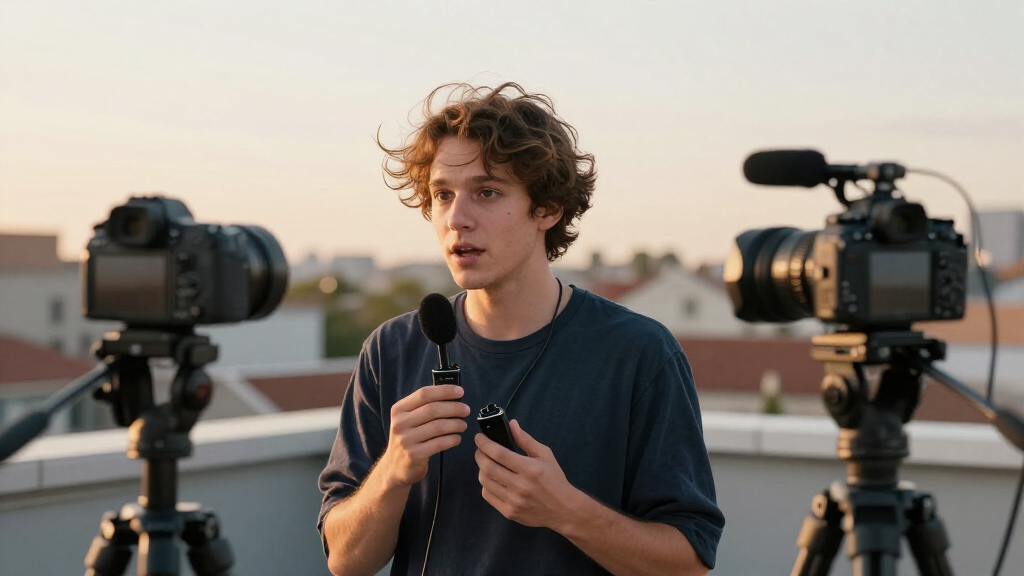

For most creators, I’d start with the DJI Mic Mini: its two transmitters and receiver make it a flexible fit for solo videos and two-person shoots. The RØDE Wireless GO (Gen 3) stands out for creators who want a more production-focused system, while the RØDE Wireless Micro keeps phone recording simple with its charging case. The main tradeoffs are how many people you record, which devices you need to connect, and whether you want a compact plug-in kit or a system with more recording controls. Lower-cost mini microphones can cover basic phone clips, but may offer fewer connection options and less room to grow. Read on for the full breakdown of how these 15 systems compare.

Get audio and creator gear delivered free with Prime
- Fast, free delivery on millions of items
- Prime Video, Amazon Music and more included
- Member-only deals all year
Complete the kit

Key Takeaways
- The DJI Mic Mini is the most flexible starting point in this lineup: its two transmitters and receiver support both solo recording and two-person content.
- RØDE Wireless GO (Gen 3) is the production-minded pick: it suits creators who value a more capable dual-channel setup over the simplest phone-first workflow.
- Phone-first kits prioritize convenience: the RØDE Wireless Micro and several compact lavalier options are easier to carry, but may not match a dedicated receiver system’s versatility.
- Group size changes the shortlist: the FULAIM four-microphone kit is aimed at larger conversations, while most two-transmitter systems are built around one or two speakers.
- Connector compatibility matters as much as microphone count: USB-C, Lightning, camera, and PC support vary across these products, so buyers should match the kit to their actual recording devices.
| RØDE Wireless Microphone System with 2 Mics and Charging Case, USB-C |  | Best for USB-C Phone Creators | Connectivity: USB Type-C | Compatible devices: iPhone 15 and later; Android USB-C devices | Microphones: 2 | VIEW LATEST PRICE | See Our Full Breakdown |
| FULAIM 4-Pack Wireless Lavalier Microphone System |  | Best for Four-Person Recordings | Transmitters: 4 | Receivers: 1 | Audio resolution: 48 kHz/24-bit | VIEW LATEST PRICE | See Our Full Breakdown |
| NPTCL Wireless Lavalier Microphone for iPhone, iPad, and Android |  | Best for Simple Cross-Phone Setup | Connectivity: Wireless | Connector: USB Type-C; Lightning adapter included | Microphone type: Lavalier | VIEW LATEST PRICE | See Our Full Breakdown |
| SONEVOX AirMic Mini Wireless Lavalier Microphone for iPhone and Android |  | Best for Long Shooting Days | Connectivity: 2.4 GHz wireless, Lightning, USB, USB-C | Microphone type: Omnidirectional lavalier | Audio resolution: 48 kHz/24-bit | VIEW LATEST PRICE | See Our Full Breakdown |
| Mini Mic Pro Wireless Lavalier Microphone for iPhone and Android |  | Best Compact Solo Mic | Connectivity: USB-C and Lightning adapters | Compatibility: iPhone, Android, tablets, and laptops | Microphone type: Wireless lavalier | VIEW LATEST PRICE | See Our Full Breakdown |
| Hollyland Lark M2 Wireless Microphone System with Charging Case |  | Best Multi-Device Versatility | Audio format: 48 kHz/24-bit | Transmission range: Up to 300 m (1,000 ft) line of sight | Transmitter weight: 9 g | VIEW LATEST PRICE | See Our Full Breakdown |
| Wireless Lavalier Microphone for iPhone, Android, and PC |  | Best Budget Starter Kit | Transmission: 2.4 GHz digital | Wireless range: Up to 20 m | Battery life: Up to 6 hours per microphone | VIEW LATEST PRICE | See Our Full Breakdown |
| Amazpro Wireless Dual Lavalier Microphone for iPhone and Android |  | Best for Ultra-Light Wearability | Connectivity: 2.4G private protocol | Connectors: Lightning, USB Type-C | Microphone weight: 5 g | VIEW LATEST PRICE | See Our Full Breakdown |
| DJI Mic Mini Wireless Microphone (2 Transmitters + 1 Receiver) |  | Best for DJI Ecosystem Shooters | Transmitter weight: 10 g | Maximum transmission range: 400 m | Operating time: Up to 10 hours per transmitter and receiver | VIEW LATEST PRICE | See Our Full Breakdown |
| DJI Mic 2 Wireless Microphone System with 2 Transmitters, 1 Receiver, and Charging Case |  | Best Premium Safety Net | Included components: 2 transmitters, 1 receiver, charging case | Internal recording: 32-bit float; up to 14 hours per transmitter at 48 kHz/24-bit | Internal storage: 8 GB per transmitter | VIEW LATEST PRICE | See Our Full Breakdown |
| PQRQP 3-in-1 Wireless Mini Microphone for iPhone, Android, and Cameras, Soot Black |  | Best for Flexible Device Switching | Wireless connection: 2.4 GHz | Compatibility: iPhone, Android devices, iPads, laptops, and cameras | Audio: 48 kHz/24-bit | VIEW LATEST PRICE | See Our Full Breakdown |
| RØDE Wireless GO (Gen 3) Dual-Channel Wireless Microphone System with 2 Transmitters, Receiver, and Charging Case |  | Best for Recording Backup | Included components: 2 transmitters, 1 receiver, and charging case | Recording: 32-bit float onboard recording | Internal storage: 32 GB | VIEW LATEST PRICE | See Our Full Breakdown |
| 2-Pack Wireless Mini Lavalier Microphones with USB-C and Lightning Receiver |  | Best for Phone Interviews | Microphones: 2 | Receiver connectors: USB-C and Lightning | Compatibility: iPhone and Android devices | VIEW LATEST PRICE | See Our Full Breakdown |
| Hollyland Lark M2 Duo 2-Person Wireless Microphone System with Charging Case |  | Best for Long-Range Two-Person Shoots | Microphone configuration: 2 transmitters | Wireless range: Up to 1,000 feet | Audio format: 24-bit, 48 kHz | VIEW LATEST PRICE | See Our Full Breakdown |
| Hollyland Lark A1 Wireless Microphone, 2 Transmitters and USB-C Receiver |  | Best for USB-C Phone Creators | Wireless connection: 2.4 GHz | Connector: USB-C | Transmitters: 2 | VIEW LATEST PRICE | See Our Full Breakdown |
| wireless microphone systems for content creator | Wireless range | Battery life |
|---|---|---|
| RØDE Wireless Microphone Syste | — | — |
| FULAIM 4-Pack Wireless Lavalie | Up to 300 m (approximately 1,000 ft), line of sight | Up to 7 hours per charge; up to 21 hours with charging case |
| NPTCL Wireless Lavalier Microp | Up to 70 feet | Up to 6 hours per mic; up to 24 hours with charging case |
| SONEVOX AirMic Mini Wireless L | Up to 200 m (656 ft) in open environments | — |
| Mini Mic Pro Wireless Lavalier | — | Up to 6 hours per charge |
| Hollyland Lark M2 Wireless Mic | — | Up to 10 hours per charge; up to 40 hours with charging case |
| Wireless Lavalier Microphone f | Up to 20 m | Up to 6 hours per microphone |
| Amazpro Wireless Dual Lavalier | — | — |
| DJI Mic Mini Wireless Micropho | — | — |
| DJI Mic 2 Wireless Microphone | Up to 250 m (FCC); 160 m (CE) | — |
| PQRQP 3-in-1 Wireless Mini Mic | Up to 328 ft | Up to 10 hours per charge; up to 20 hours combined with two microphones |
| RØDE Wireless GO | — | — |
| 2-Pack Wireless Mini Lavalier | Up to 65 ft (20 m) | Up to 6 hours per microphone |
| Hollyland Lark M2 Duo 2-Person | Up to 1,000 feet | — |
| Hollyland Lark A1 Wireless Mic | Up to 200 m (650 ft) | Up to 9 hours per transmitter; up to 18 hours with two transmitters alternating |
More Details on Our Top Picks
RØDE Wireless Microphone System with 2 Mics and Charging Case, USB-C
The direct USB-C receiver makes this RØDE a tidy choice for creators who record on a compatible phone and want two voices without a separate cable run. Its pre-paired microphones and GainAssist reduce setup and level-balancing work, while the charging case keeps the kit together between shoots. Compared with the NPTCL set, this model is a better fit for USB-C-only workflows, but NPTCL includes a Lightning adapter for older iPhones. The main limitation is that the RØDE receiver connects directly through USB-C, so it is less flexible across camera setups than kits with multiple receiver types. Battery claims also vary: the description says up to 21 hours combined, while another section lists 18 hours. Choose it for simple phone recording; skip it if you need Lightning support.
Pros:- Connects directly to compatible USB-C phones without a cable
- Two pre-paired microphones simplify two-person setup
- GainAssist helps keep recording levels balanced
- Charging case stores the kit and provides extended combined use
Cons:- Does not support Lightning iPhones
- Battery-life information is inconsistent, listing up to 18 or 21 hours combined
Best for: USB-C iPhone 15-or-later and Android creators who often record interviews or two-person clips on a phone.
Not ideal for: Creators using a Lightning iPhone or switching often between phones and cameras who need broader connection options.
- Connectivity:USB Type-C
- Compatible devices:iPhone 15 and later; Android USB-C devices
- Microphones:2
- Channels:2
- Polar pattern:Omnidirectional
- Frequency response:20 Hz–20 kHz
- Signal-to-noise ratio:73 dB
- Included accessories:USB-C receiver, charging case, windshields
Our verdict“Choose this RØDE for straightforward two-person recording on a compatible USB-C phone, especially if quick setup matters more than broad device support.”
FULAIM 4-Pack Wireless Lavalier Microphone System
When a creator regularly records a group, the four transmitters give this FULAIM a clear advantage over two-mic kits such as the RØDE Wireless Microphone System. Its receiver offers Mono, Stereo, and Safety Track modes, plus a display and 3.5 mm monitoring jack, giving the operator more control over how a conversation is captured. The listed 48 kHz/24-bit audio and noise cancellation add useful tools for interviews and panel clips. That added capacity comes with more gear to manage, and each transmitter and receiver is rated for up to seven hours per charge. The advertised 300-meter range applies to line of sight, so walls and crowded spaces can reduce that freedom. This is a group-production pick, not the simplest option for solo phone videos.
Pros:- Four transmitters support simultaneous recording of up to four people
- Mono, Stereo, and Safety Track modes suit different editing needs
- Receiver display and 3.5 mm jack support monitoring
- Charging case provides up to 21 hours of total operation
Cons:- Each transmitter and receiver lasts up to seven hours per charge
- The stated 300-meter range requires line of sight
- Four transmitters make the kit more involved than a two-mic setup
Best for: Creators recording panels, group interviews, or collaborative videos with as many as four people speaking at once.
Not ideal for: Solo creators or casual phone users who want a minimal kit with little setup and do not need four microphones.
- Transmitters:4
- Receivers:1
- Audio resolution:48 kHz/24-bit
- Signal-to-noise ratio:Over 70 dB
- Maximum sound pressure level:120 dB SPL
- Battery life:Up to 7 hours per charge; up to 21 hours with charging case
- Wireless range:Up to 300 m (approximately 1,000 ft), line of sight
- Monitoring:3.5 mm jack and receiver display
Our verdict“Pick the FULAIM when four voices and flexible recording modes matter more than keeping a phone recording kit small and simple.”
NPTCL Wireless Lavalier Microphone for iPhone, iPad, and Android
The NPTCL set suits creators who want two-person phone audio without pairing through an app: connect the receiver, clip on the mics, and record. Its USB-C connection and included Lightning adapter make it more adaptable across phone generations than the USB-C-only RØDE system. A charging case is listed for up to 24 hours of total use, though each microphone runs for up to six hours at a time. The noise reduction, mute function, and battery indicator cover practical recording needs, while the stated 70-foot range offers room to move around a small set. Compared with the Mini Mic Pro, NPTCL is the more natural choice for recording two people; it is less compelling if you need a single ultra-light mic for solo clips.
Pros:- Two microphones support simultaneous two-person pickup
- USB-C and included Lightning adapter extend phone compatibility
- Plug-and-play operation requires no app or Bluetooth pairing
- Charging case is listed for up to 24 hours of total use
Cons:- Each microphone runs for up to six hours per charge
- Older iPhones may require the included Lightning adapter
- The 70-foot range may be limiting for larger locations
Best for: Phone and tablet creators who record two-person conversations and use a mix of USB-C and Lightning devices.
Not ideal for: Creators needing all-day continuous recording without recharging, or those who mainly record solo and want the smallest kit.
- Connectivity:Wireless
- Connector:USB Type-C; Lightning adapter included
- Microphone type:Lavalier
- Microphone count:2
- Pickup pattern:Omnidirectional
- Battery life:Up to 6 hours per mic; up to 24 hours with charging case
- Wireless range:Up to 70 feet
- Signal-to-noise ratio:80 dB
Our verdict“Choose NPTCL for uncomplicated two-person recording across compatible USB-C and Lightning phones and tablets.”
SONEVOX AirMic Mini Wireless Lavalier Microphone for iPhone and Android
The AirMic Mini stands out for its long listed case-supported runtime: up to 60 hours of total use, with each transmitter rated for up to 10 hours when noise cancellation is off. That makes it better suited to extended creator schedules than the NPTCL set, whose microphones are listed for up to six hours per charge. SONEVOX also includes AI noise cancellation, automatic peak control, and a safety track, giving creators tools for both noisy locations and sudden volume spikes. Its two receivers and USB-C and Lightning connectivity add flexibility across devices. There are tradeoffs: enabling noise cancellation cuts transmitter runtime to 6.5 hours, and the 200-meter range applies in open environments. It makes sense for creators who value backups and long sessions over a minimal kit.
Pros:- Two transmitters and two receivers support a flexible two-person setup
- AI noise cancellation, automatic peak control, and a safety track add recording safeguards
- USB-C and Lightning connectivity work across compatible devices
- Charging case is listed for up to 60 hours of total use
Cons:- Transmitter runtime drops to 6.5 hours with noise cancellation enabled
- The stated 200-meter range applies to open, unobstructed environments
- Two receivers and the case add more components to manage
Best for: Creators filming long interview or event days who need two transmitters, backup recording features, and USB-C or Lightning connections.
Not ideal for: Creators who record in tight spaces, need dependable range through obstructions, or want the fewest components to carry.
- Connectivity:2.4 GHz wireless, Lightning, USB, USB-C
- Microphone type:Omnidirectional lavalier
- Audio resolution:48 kHz/24-bit
- Wireless range:Up to 200 m (656 ft) in open environments
- Transmitter battery life:Up to 10 hours with noise cancellation off; 6.5 hours on
- Total use with charging case:Up to 60 hours
- Signal-to-noise ratio:90 dB
- Included components:2 transmitters, 2 receivers, charging case
Our verdict“Pick the AirMic Mini for longer two-person shoots where its backup features and broad connector options justify carrying a larger kit.”
Mini Mic Pro Wireless Lavalier Microphone for iPhone and Android
For a creator who records alone, the Mini Mic Pro keeps the kit focused: it weighs under one ounce and includes USB-C and Lightning adapters for compatible phones, tablets, and laptops. The included foam and dead cat wind covers are useful when recording outdoors, where wind can distract from speech. Unlike the two-microphone NPTCL set, this is aimed at a single speaker rather than interviews; that simpler setup can be easier to carry, but it offers less flexibility when another person needs a mic. Its stated runtime is up to six hours per charge, with no charging case listed in the supplied details. Choose it for lightweight solo clips, and look to the RØDE system if two voices and case-supported charging matter more.
Pros:- Weighs under one ounce for easy carrying
- USB-C and Lightning adapters support a range of compatible devices
- Foam and dead cat covers help with wind during outdoor recording
- Supports charging the connected device while recording
Cons:- Battery life is listed as up to six hours per charge
- Supplied product details do not list a second microphone or charging case
Best for: Solo creators making short phone, tablet, or laptop videos who want a lightweight mic with wind protection.
Not ideal for: Interviewers who need two microphones or creators who need more than six hours of operation between charges.
- Connectivity:USB-C and Lightning adapters
- Compatibility:iPhone, Android, tablets, and laptops
- Microphone type:Wireless lavalier
- Battery life:Up to 6 hours per charge
- Weight:Under 1 ounce
- Wind protection:High-density foam and dead cat cover
- Device charging:Supports charging the connected device while recording
Our verdict“Choose the Mini Mic Pro for lightweight solo recording with included wind covers, but choose a two-mic kit for interviews.”
Hollyland Lark M2 Wireless Microphone System with Charging Case
Most budget wireless kits lock you into one connector, but the Lark M2 ships with two transmitters and three receivers, covering iPhone, Android, camera, and computer in a single purchase. That alone separates it from simpler kits like the Amazpro dual lavalier, which is phone-first and camera-never. At 9 g per transmitter, it is light enough to forget you are wearing it, and the 48 kHz/24-bit recording gives audio that holds up in edits rather than sounding like a phone call. The 300 m line-of-sight range matters more than it seems: interview setups where the camera sits far from the subject stop being a source of dropped audio. The tradeoff is fiddly — mono/stereo switching only works through the camera receiver’s 3.5 mm connection — and the headline 40-hour battery figure includes case recharges, not 40 hours of continuous rolling.
Pros:- Three receivers included for phone, camera, and PC use
- 9 g transmitters stay comfortable all day
- 48 kHz/24-bit audio quality suitable for edited content
- Noise cancellation plus up to 40 hours of battery with the case
Cons:- Mono/stereo switching limited to the camera receiver’s 3.5 mm connection
- Advertised 40-hour battery life depends on charging case recharges
Best for: Creators who shoot across phone, camera, and computer and want one system that plugs into all three
Not ideal for: Solo smartphone vloggers on a tight budget — you are paying for receivers and range you may never touch
- Audio format:48 kHz/24-bit
- Transmission range:Up to 300 m (1,000 ft) line of sight
- Transmitter weight:9 g
- Battery life:Up to 10 hours per charge; up to 40 hours with charging case
- Signal-to-noise ratio:70 dB
- Maximum SPL:115 dB SPL
- Included configuration:2 transmitters, 3 receivers, charging case
- Connectivity:iPhone, camera, Android, PC; UAC support
Our verdict“Buy this if you bounce between cameras and phones and want a single kit that covers every platform without adapters.”
Wireless Lavalier Microphone for iPhone, Android, and PC
This is the pick for someone recording their first videos who does not want to think about audio at all. Automatic pairing means you plug in the receiver, clip on a mic, and talk — no app, no menu diving. Compared with the Hollyland Lark M2, the differences are immediate: range drops from 300 m to 20 m, which is fine for a tripod-and-desk setup but risky outdoors, and there is no charging case, so you are capped at 6 hours per microphone. The accessory bundle is generous for the category, with Lightning and USB-C connectivity plus windshields and foam covers that genuinely help outdoors. One quirk to know: some USB-C phones require enabling OTG in settings before the receiver is recognized, which can send first-time users to the manual. The ability to charge your phone while recording is a small but practical touch for long streams.
Pros:- Automatic pairing with no setup friction
- Works across iPhone, Android, iPad, Windows, and Mac
- Two microphones plus windshields and foam covers included
- Can charge the phone while recording
Cons:- Short 20 m wireless range limits outdoor or roving use
- USB-C devices may need OTG mode enabled to work
Best for: New YouTubers, teachers, and casual vloggers who want plug-in-and-talk simplicity at low cost
Not ideal for: Run-and-gun or outdoor creators — the 20 m range and 6-hour ceiling will interrupt real shoots
- Transmission:2.4 GHz digital
- Wireless range:Up to 20 m
- Battery life:Up to 6 hours per microphone
- Connectors:Lightning and USB-C
- Compatibility:iPhone, Android, iPad, Windows and Mac computers
- Included accessories:Receiver, USB-C charging cable, Lightning adapter, USB-A adapter, two windshields, four foam covers
Our verdict“A low-commitment entry point that gets two people mic’d with zero fuss, as long as you stay close to the camera.”
Amazpro Wireless Dual Lavalier Microphone for iPhone and Android
At 5 g per microphone, this is the lightest clip-on in this batch — half the weight of the DJI Mic Mini’s 10 g transmitters — and on camera that difference shows: no sagging collar, no visible tug on fabric. Setup matches the plug-and-play philosophy of the generic iPhone/Android kit above it, with no app or Bluetooth pairing required, and it adds one-click noise cancellation plus a charging case with an LED readout, which that cheaper rival lacks. The pass-through charging on the receiver is the feature interviewers will appreciate most, since phone batteries drain fast during long sessions. Where it falls behind is transparency: published specs claim up to 30 hours of total battery but never clarify microphone or case capacity, and with no stated audio resolution it cannot compete with the Hollyland or DJI systems on recording quality. Treat it as a dependable convenience pick, not an audiophile one.
Pros:- 5 g microphones are nearly invisible on camera
- Plug-and-play with no app or Bluetooth setup
- Charging case with LED battery display
- Receiver supports pass-through phone charging
Cons:- Battery capacity details are vague and unverified in product documentation
- No published audio quality specs to compare against premium kits
Best for: Mobile interviewers and presenters who prioritize invisible, weightless mics and all-day case recharges
Not ideal for: Detail-focused creators who need published audio specs and known battery capacities before buying
- Connectivity:2.4G private protocol
- Connectors:Lightning, USB Type-C
- Microphone weight:5 g
- Transmission range:Up to 30 m
- Total battery life:Up to 30 hours with charging case
- Special features:One-click noise cancellation, battery indicator, clip
- Compatible devices:Laptop, smartphone, tablet
Our verdict“Choose this when comfort and convenience outrank audio pedigree — skip it if you need hard specs you can trust.”
DJI Mic Mini Wireless Microphone (2 Transmitters + 1 Receiver)
The Mic Mini earns its slot through integration: if you shoot on a compatible Osmo device with OsmoAudio, the transmitters connect directly with no receiver at all, cutting clutter from your rig in a way no Hollyland or generic kit can match. Its 400 m maximum range beats everything else in this batch, including the DJI Mic 2’s 250 m, which matters for action, drone-adjacent, and wide outdoor setups. The two-level noise cancellation (Basic and Strong) gives you a choice the Amazpro’s single toggle doesn’t — light processing for natural indoor tone, aggressive filtering for wind and street noise. Built-in limiting that prevents clipping saves takes that would otherwise be ruined by sudden volume spikes. It is not flawless: there is no waterproofing, so rain or beach shoots carry real risk, and battery life drops in cold conditions — exactly the environments action creators often work in.
Pros:- Direct connection to select DJI Osmo devices without the receiver
- 400 m maximum transmission range
- Two selectable noise-cancellation levels
- Automatic limiting protects against audio clipping
Cons:- Not waterproof, limiting outdoor reliability
- Battery performance degrades in cold temperatures
Best for: DJI Osmo shooters and outdoor/action creators who want direct connection and maximum range
Not ideal for: Creators working in rain, snow, or freezing conditions — no waterproofing and cold-weather battery drain are real limits
- Transmitter weight:10 g
- Maximum transmission range:400 m
- Operating time:Up to 10 hours per transmitter and receiver
- Noise cancellation:2 levels: Basic and Strong
- Included:2 transmitters and 1 receiver
- Compatibility:Direct connection to select DJI devices with OsmoAudio
Our verdict“The natural companion for a DJI-centric kit — everyone else should weigh it against the Mic 2’s internal recording.”
DJI Mic 2 Wireless Microphone System with 2 Transmitters, 1 Receiver, and Charging Case
The Mic 2 sits at the top of this batch because it solves the problem that ruins most location audio: 32-bit float internal recording. When a guest shouts or a level spikes, float recording recovers the detail instead of clipping it into distortion — the Hollyland Lark M2 records at 24-bit fixed depth and simply cannot rescue a blown take the same way. Each transmitter also carries 8 GB of internal storage for up to 14 hours of backup audio, so if wireless drops or a cable fails, your recording survives. The charging case extends operation to 18 hours, and the bundled USB-C and Lightning adapters cover the major devices. Two caveats temper the premium: connecting to a smartphone over Bluetooth disables both noise cancelling and internal recording, gutting its best features, and lavalier accessories cost extra where cheaper kits bundle windshields in the box.
Pros:- 32-bit float recording recovers audio from level spikes
- 8 GB internal storage per transmitter for up to 14 hours of backup
- Two transmitters for multi-speaker recording
- Charging case extends operation to 18 hours
Cons:- Noise cancelling and internal recording unavailable over Bluetooth smartphone connection
- Lavalier microphones and accessories sold separately
Best for: Professional videographers and interview crews who cannot afford a single clipped or lost take
Not ideal for: Smartphone-only creators — Bluetooth mode strips out the noise cancelling and internal recording that justify the price
- Included components:2 transmitters, 1 receiver, charging case
- Internal recording:32-bit float; up to 14 hours per transmitter at 48 kHz/24-bit
- Internal storage:8 GB per transmitter
- Wireless range:Up to 250 m (FCC); 160 m (CE)
- Operation time:Up to 18 hours with charging case
- Connections:USB-C and Lightning adapters
- Direct connection compatibility:Selected DJI Osmo devices
Our verdict“The insurance policy of this lineup — worth the spend when a lost take costs you more than the mic does.”
PQRQP 3-in-1 Wireless Mini Microphone for iPhone, Android, and Cameras, Soot Black
The PQRQP’s main advantage for a creator is its broad device compatibility: the receiver is described for phones, tablets, laptops, and cameras, so it can follow a workflow that moves between mobile clips and camera recording. Its 48 kHz/24-bit audio and two-microphone setup suit interviews, while noise cancellation and a windproof cover address common location-recording problems. Compared with the Hollyland Lark M2 Duo, its stated range is much shorter, and the receiver package is less specifically detailed; the PQRQP instead adds reverb and one-touch mute for casual streaming or karaoke. The claimed 328-foot range depends on conditions, and each mic runs for up to 10 hours per charge, so longer sessions may need a charging break. This is a flexible kit, though its range claim should not drive a purchase.
Pros:- Compatibility spans phones, tablets, laptops, and cameras.
- Two-microphone setup supports interviews and two-person clips.
- Noise cancellation and a windproof cover help with noisy or breezy locations.
- One-touch mute and reverb add controls for streams and casual performance.
Cons:- Each microphone is rated for up to 10 hours per charge.
- The stated 328-foot range may vary with recording conditions.
Best for: Creators who alternate between compatible phones, tablets, laptops, and cameras and want two microphones for interviews.
Not ideal for: Field creators who need a long, dependable wireless link or recording sessions beyond a microphone’s 10-hour charge.
- Wireless connection:2.4 GHz
- Compatibility:iPhone, Android devices, iPads, laptops, and cameras
- Audio:48 kHz/24-bit
- Wireless range:Up to 328 ft
- Battery life:Up to 10 hours per charge; up to 20 hours combined with two microphones
- Features:Noise cancellation, windproof cotton cover, reverb, and one-touch mute
- Color:Soot Black
Our verdict“Choose the PQRQP if you need a two-mic kit that can move among several device types and can work within its per-mic runtime and range limits.”
RØDE Wireless GO (Gen 3) Dual-Channel Wireless Microphone System with 2 Transmitters, Receiver, and Charging Case
The Wireless GO Gen 3 earns a distinct place for creators who want a safety net when a take cannot easily be repeated. Its 32-bit float onboard recording and 32 GB storage per the supplied product data provide over 40 hours of local recording, giving it a stronger backup story than the phone-focused 2-Pack Wireless Mini Lavalier Microphones, which lists real-time monitoring but no onboard recording. GainAssist helps manage levels, while encrypted 2.4 GHz transmission and USB-C plus locking 3.5 mm outputs support a camera, phone, or computer setup. The tradeoff is a more involved kit: it runs on battery power, and the listed specs leave some details incomplete. For creators already working across cameras and computers, those safeguards can matter more than the simpler plug-in convenience offered by the Hollyland Lark A1.
Pros:- 32-bit float onboard recording can help preserve usable audio across changing levels.
- 32 GB internal storage is listed for over 40 hours of recording.
- USB-C and locking 3.5 mm outputs suit phones, computers, and camera rigs.
- Two transmitters and supplied charging case support a dual-person setup.
Cons:- Battery power is required for operation.
- Some specification details are incomplete in the supplied product data.
Best for: Video creators recording interviews or client work who want onboard backup audio and connections for both cameras and computers.
Not ideal for: Phone-only creators seeking the simplest compact plug-in setup, especially if they do not need onboard backup recording.
- Included components:2 transmitters, 1 receiver, and charging case
- Recording:32-bit float onboard recording
- Internal storage:32 GB
- Recording time:Over 40 hours
- Wireless transmission:2.4 GHz digital, 128-bit encryption
- Connectivity:USB-C and locking 3.5 mm outputs
- Channels:2
- Signal-to-noise ratio:72 dB
Our verdict“Pick the Wireless GO Gen 3 if backup recording and flexible camera or computer connections matter more than a minimal phone-only setup.”
2-Pack Wireless Mini Lavalier Microphones with USB-C and Lightning Receiver
This two-mic set is shaped around a straightforward mobile interview workflow: its USB-C and Lightning receiver connectors cover many iPhone and Android setups, while the 10 g clip-on mics are easy to wear for short shoots. Unlike the RØDE Wireless GO (Gen 3), it does not list onboard recording or camera outputs; it counters with real-time audio monitoring and recording-while-charging support, both useful when framing a phone interview. Noise cancellation, mute, and echo modes offer simple adjustments, though echo is less useful for clean spoken content. A 65-foot stated range and up to six hours of battery life per mic make this better suited to nearby, planned recordings than long field days. It is a practical phone kit when monitoring matters more than extended runtime or camera flexibility.
Pros:- Receiver includes USB-C and Lightning connectors for compatible phones.
- Two microphones allow two-person interviews.
- Real-time monitoring helps catch audio issues during recording.
- Supports recording while charging and includes a storage pouch.
Cons:- Up to six hours of battery life per microphone is limited for extended shoots.
- The listed wireless range is up to 65 ft and may vary by conditions.
- No onboard recording or camera output is listed.
Best for: Mobile interviewers who record two people on USB-C or Lightning phones and want to monitor audio while filming.
Not ideal for: Creators needing long shoots, camera connections, or a wireless link beyond the listed 65-foot range.
- Microphones:2
- Receiver connectors:USB-C and Lightning
- Compatibility:iPhone and Android devices
- Microphone weight:10 g each
- Battery life:Up to 6 hours per microphone
- Charging time:Less than 1 hour
- Wireless range:Up to 65 ft (20 m)
- Latency:0.0009 seconds
- Recording modes:Mute, noise cancellation, and echo
Our verdict“Choose this set for nearby two-person phone recordings where live monitoring and connector flexibility outweigh longer battery life.”
Hollyland Lark M2 Duo 2-Person Wireless Microphone System with Charging Case
The Lark M2 Duo is the strongest fit here for creators who need to move subjects farther from a camera or phone. Its stated 1,000-foot wireless range exceeds the PQRQP’s 328 feet and the Lark A1’s 650 feet, while the kit includes camera-mount, Lightning, and USB-C receivers for switching between production setups. The charging case offers up to 40 hours of total battery life, which makes it better suited to repeated shoots than the 6-hour-per-mic phone lavalier set. Environmental noise cancellation aims to keep voices clearer, but mobile receivers draw power from the connected device, a tradeoff for their direct plug-in convenience. Range figures depend on transmission conditions, so this is most compelling when its connector variety and long-link potential match the way you actually shoot.
Pros:- Includes camera-mount, Lightning, and USB-C receivers.
- Listed wireless range reaches up to 1,000 feet.
- Charging case provides up to 40 hours of total battery life.
- Environmental noise cancellation supports clearer vocal capture.
Cons:- Mobile receivers draw power from the connected device.
- The stated range may vary with transmission conditions.
Best for: Two-person creators moving between cameras and Lightning or USB-C phones, especially when subjects may be far from the recording device.
Not ideal for: Phone users who want to avoid drawing power from their device or who record only short, close-range clips.
- Microphone configuration:2 transmitters
- Wireless range:Up to 1,000 feet
- Audio format:24-bit, 48 kHz
- Signal-to-noise ratio:70 dB
- Maximum SPL:115 dB
- Included receivers:Camera-mount, Lightning, and USB-C
- Charging case capacity:1950 mAh
- Total battery life:Up to 40 hours
- Compatibility:iPhone, camera, Android, and PC
Our verdict“Pick the Lark M2 Duo for a two-person kit with broad receiver options and long-range potential, provided phone power draw suits your workflow.”
Hollyland Lark A1 Wireless Microphone, 2 Transmitters and USB-C Receiver
The Lark A1 keeps the mobile setup simple: its USB-C receiver plugs directly into compatible phones, and the two transmitters make interviews possible without adding a camera-mount receiver to the workflow. Three noise-cancellation levels let creators choose how much surrounding sound to reduce, while gain adjustment and clip protection help manage changing voice levels. Compared with the Hollyland Lark M2 Duo, the A1 has a lower stated maximum range and a USB-C-only receiver, so it is less adaptable across Lightning phones and camera rigs. Its up-to-200 m range and up-to-nine-hour per-transmitter runtime still suit many mobile shoots, but the receiver draws power from the phone. That makes the A1 a focused phone-first choice rather than a kit for every device in a creator’s bag.
Pros:- Direct USB-C connection supports plug-and-play use with compatible phones.
- Three noise-cancellation levels allow adjustment for different surroundings.
- Gain adjustment and clip protection help manage variable audio levels.
- Two transmitters support two-person recording.
Cons:- USB-C receiver may not fit phones that require a Lightning connector.
- Receiver draws power from the connected phone.
- Its stated range is shorter than the Lark M2 Duo’s.
Best for: USB-C phone creators who record interviews or solo clips and want adjustable noise reduction and clip protection.
Not ideal for: Creators using Lightning phones or regularly switching between phones and cameras, since only a USB-C receiver is listed.
- Wireless connection:2.4 GHz
- Connector:USB-C
- Transmitters:2
- Audio resolution:48 kHz/24-bit
- Maximum sound pressure level:120 dB SPL
- Wireless range:Up to 200 m (650 ft)
- Battery life:Up to 9 hours per transmitter; up to 18 hours with two transmitters alternating
- Noise cancellation:3 levels
- Frequency response:20 Hz–48 kHz
Our verdict“Choose the Lark A1 for a focused USB-C phone workflow with adjustable audio controls, and skip it if you need Lightning or camera receivers.”

How We Picked
I ranked these systems for the work content creators actually do: recording phone videos, interviews, social clips, and camera-based productions. I weighed device compatibility, number of transmitters, ease of setup, portability, charging arrangements, and how well each system can serve more than one recording scenario. A two-person kit earns an advantage for interview creators, while a small phone-first set can rank well for solo creators who value quick setup.
The order reflects the balance of versatility and usability across creator workflows, with simpler or more specialized systems placed where their limitations matter to more buyers. Established dual-channel systems rank ahead when they offer a clearer path from phone recording to more involved production. Compact generic kits remain relevant for basic use, but limited connection details or a narrower role make them harder to recommend as an only microphone system. I treat product names and listed kit contents as the basis for comparison, so buyers should confirm connector and device support for the exact listing they plan to purchase.
Factors to Consider When Choosing Wireless Microphone Systems For Content Creators
I’d choose a microphone system by mapping it to the shoot, the speakers, and the devices involved. That prevents a common mismatch: buying a small phone-only kit for camera work, or carrying a complex receiver setup for quick solo clips.
Match the receiver to your recording device
Start with the device that will capture the audio, then check the receiver connection and any required adapters. USB-C and Lightning receivers can make phone recording direct, but a phone connector does not automatically mean the system is ready for a camera or computer. If you switch between a phone and a camera, favor a kit that lists support for both instead of assuming an adapter will solve every connection issue. Also check whether your phone case blocks the port or whether the receiver needs room to sit securely. Creators who publish from one phone can usually prioritize a smaller, simpler kit. A multi-device workflow makes compatibility more valuable than shaving a little bulk.
Buy for the number of voices you record
Count the speakers you need to capture at the same time, not just the number of transmitters included in a bundle. Solo creators may prefer one small transmitter, while interviews and co-hosted videos benefit from two independent microphones. A four-microphone kit serves a different job: group conversations, panels, or family content where several voices need their own mic. More transmitters can add setup and charging work, so extra channels are useful only if they match a recurring format. For occasional guests, a dual system often gives a practical margin without the complexity of a larger kit. Think about where each person will stand and whether the receiver can capture all channels the way your editing workflow expects.
Choose convenience or production flexibility
Compact plug-in systems reduce the steps between taking a microphone out and recording a clip. That can matter more than advanced controls when filming short videos alone or moving between locations. Receiver-based systems take more handling, but can fit camera rigs and two-person shoots more naturally. Before paying for a feature-rich setup, list the situations where you will use its extra options. A creator who only records direct-to-phone may gain little from a system built for broader production workflows. On the other hand, replacing a phone-only kit after adding a camera can cost more effort than choosing a flexible receiver setup from the start.
Plan around batteries and charging
Battery claims are only useful when they match the length and pace of your shoots. A charging case can make it easier to top up between clips, but it also adds another item to pack and keep charged. For long sessions, consider whether you can recharge during breaks and whether the transmitter and receiver have separate charging needs. Check what the listed kit includes rather than assuming a case, cable, or spare accessory comes in the box. If you record several short sessions a day, fast pack-up may matter more than a long single-charge runtime. For a planned interview or event, reliable charging habits and a backup recording plan matter more than convenience alone.
Think about clothing, placement, and the shooting environment
A wireless microphone can only capture a clean voice if it is placed well and stays in place. Clothing clips and small lavalier designs suit hands-free recording, but fabric movement can rub against the mic and become distracting. Visible transmitters may be acceptable for social video and interviews, while a discreet look may matter for tutorials or formal pieces. Wind, room echo, and distance from the speaker can affect results even when the wireless connection is stable. Consider where you film most often and whether you can control the room or need to move around. A good placement routine can improve usable audio more than adding another transmitter you rarely need.
Pay for the workflow you expect to keep
A low-complexity kit can be a sensible first step when you are learning to record voiceovers or short phone clips. Spending more makes sense when it solves a clear recurring need, such as recording two speakers, moving between phone and camera, or supporting longer shoots. Avoid buying based on a long feature list if you will not use those controls in your normal workflow. At the same time, a very narrow kit can become limiting when your format expands from solo clips to interviews. Check how the system fits your editing habits too: separate channels can make balancing speakers easier, while a one-step phone setup may keep quick publishing simpler. The right level of capability is the one that removes friction from the shoots you actually make.
Frequently Asked Questions
Should I choose a two-transmitter system if I mostly record alone?
A second transmitter is useful if you expect to add interviews, co-hosts, or occasional guest clips, but it may be unnecessary for a solo-only workflow. Two-mic kits can add pieces to charge, pack, and manage between shoots. If solo recording is your regular format, a compact phone-first system may be quicker to set up. If your content is likely to expand, a dual system such as the DJI Mic Mini or RØDE Wireless GO (Gen 3) gives you more room to adapt. Decide based on formats you plan to publish regularly, rather than a one-off possibility.
Can I use the same wireless microphone system with my phone and camera?
Some kits are designed around phone connectors, while others include a receiver intended for broader production use. Check the exact kit contents and supported connections for your phone model and camera before buying. A USB-C or Lightning plug-in receiver may not connect directly to a camera, and an adapter does not guarantee every feature will work. If you switch devices often, prioritize a system whose listing clearly covers both workflows. If you record on just one phone, a direct phone connection can keep setup simpler.
Is a four-microphone kit better for interviews than a dual system?
It is better suited to conversations with several participants, but it is not automatically the better interview choice. A two-person interview usually needs only two transmitters, making a dual system easier to pack and manage. A four-mic kit can help with panels or group videos where each speaker needs an individual microphone. Before choosing it, confirm that the receiver and recording workflow support the number of simultaneous channels you need. For recurring two-person shoots, the smaller dual setup is often the more practical fit.
What should a beginner prioritize in a first wireless microphone?
Prioritize a receiver that matches your phone or camera, a straightforward setup, and a transmitter count suited to your usual videos. A beginner recording solo phone clips may benefit more from a compact, direct connection than from controls for a larger production. If you regularly record guests, a two-transmitter kit can avoid the need to replace your first system soon. Confirm what accessories are included and how the microphones charge before relying on them for a shoot. A simple placement routine and a quiet recording space will also help you get more from the system.
When is a more production-focused system worth choosing over a compact phone kit?
Choose a more production-focused system when you record with cameras, interview another person often, or want a setup that can follow your content as it grows. A dedicated receiver system can provide a more adaptable workflow, though it may take longer to configure and pack. A compact phone kit is a better match for quick clips and creators who rarely change devices. Compare the time saved by a simpler setup with the flexibility you would gain from a broader one. Paying for extra capability makes sense when it solves a repeated limitation in your current shoots.
Conclusion
For the broadest creator use, I’d choose the DJI Mic Mini as best overall, especially for solo work that sometimes becomes a two-person shoot. The RØDE Wireless Micro is my best value-style fit for creators who mainly record on a compatible phone and want a simple kit, while the RØDE Wireless GO (Gen 3) is the best premium direction for a more involved dual-channel workflow. Beginners who film short phone clips should favor the easiest compatible plug-in setup; creators recording panels or group conversations should look at the FULAIM four-microphone kit. Before choosing, match the included receiver to your devices and the number of voices you actually record.
Fall Picks
fall essentials
As an affiliate, we earn on qualifying purchases.




![Iron Maiden Legend Nicko McBrain Turned Down Trump Golf Invite: “[He] Should Be Put In Jail”](https://deadsetlive.com/wp-content/uploads/2026/10/iron-maiden-legend-nicko-mcbrain-turned-down-trump-golf-invite-he-should-be-put-featured-260x140.jpg)