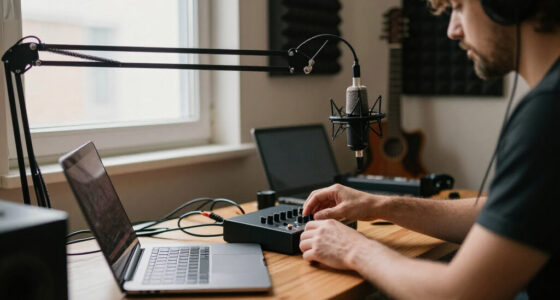


For most small live setups and home studios, I’d start with the Yamaha MG10XU: it pairs built-in SPX effects with a practical 10-input layout and USB connectivity. The Mackie ProFX10v3+ stands out for buyers who want more recording and connectivity options, while the Yamaha MG06X is a simpler compact choice when a few inputs are enough. The main tradeoff is between channel capacity and portability, with USB features and effects control also varying by model. Some mixers offer effects without USB, while others add recording or streaming tools but take up more space. Read on for the full comparison and a guide to choosing the right mixer for your setup.

Get audio and creator gear delivered free with Prime
- Fast, free delivery on millions of items
- Prime Video, Amazon Music and more included
- Member-only deals all year
Complete the kit


Key Takeaways
- The Yamaha MG10XU is the strongest all-around match for buyers who want built-in effects, useful input capacity, and USB connectivity without moving to a large-format mixer.
- The Mackie ProFX10v3+ and ProFX10v3 fill different roles: the ProFX10v3+ adds a more feature-rich connectivity package, while the standard ProFX10v3 is a more straightforward 10-channel option.
- Compact mixers require a real input-count compromise. The Yamaha MG06X and Mackie ProFX6v3+ are easier to fit into small rigs, but leave less room for multiple microphones and instruments.
- More channels can matter more than extra effects. The Mackie ProFX16v3 and ProFX22v3 suit expanding live setups, though their size and complexity are harder to justify for a minimal rig.
- Effects and USB are separate buying decisions. The Yamaha MG06 has no built-in effects, and the Behringer XENYX 802S focuses on USB streaming rather than onboard effects, so neither directly matches the full brief.
| Yamaha MG06X 6-Input Compact Stereo Mixer with Effects |  | Best Compact Pick | Channels: 6 | Microphone preamps: 2 | Stereo line channels: 4 | VIEW ON AMAZON | See Our Full Breakdown |
| Mackie ProFX10v3+ 10-Channel Analog Mixer Bundle with USB Recording, Bluetooth, Padded Bag, and Stereo Breakout Cable |  | Best Connectivity Bundle | Channels: 10 listed; supplied description also contains conflicting 6-channel details | USB interface: USB-C, 2-in/4-out | Connectivity: Bluetooth | VIEW ON AMAZON | See Our Full Breakdown |
| YAMAHA MG10XU 10-Input Stereo Mixer with Effects |  | Best for Compact Recording Rigs | Channels: 10 | Connectivity: USB | Effects: SPX digital effects | VIEW ON AMAZON | See Our Full Breakdown |
| Mackie ProFX16v3 16-Channel USB Mixer with GigFX Effects |  | Best for Larger Live Setups | Channels: 16 | Mixer type: Analog | Microphone preamps: Onyx, up to 60 dB gain | VIEW ON AMAZON | See Our Full Breakdown |
| Mackie ProFX12v3 12-channel Mixer with USB and Effects |  | Best Mid-Size Mackie Pick | Channels: 12 listed | Microphone preamps: Onyx, up to 60 dB headroom | Effects: 24 GigFX | VIEW ON AMAZON | See Our Full Breakdown |
| Mackie Mix Series Mix12FX 12-Channel Compact Mixer with Effects, Black |  | Best for Straightforward Analog Mixing | Channels: 12 | Mic/line inputs: 4 | Stereo line inputs: 4 | VIEW ON AMAZON | See Our Full Breakdown |
| Mackie ProFX6v3+ 6-Channel Analog Mixer with USB-C |  | Best for Compact Recording and Streaming | Channels: 6 | Recording resolution: 24-bit / 192 kHz | USB recording modes: Standard mix, loopback with computer audio, dry channels | VIEW ON AMAZON | See Our Full Breakdown |
| Mackie ProFX22v3 22-Channel Professional Analog Mixer with USB |  | Best for Larger Live Setups | Channels: 22 | Connectivity: USB | Mic preamps: Onyx | VIEW ON AMAZON | See Our Full Breakdown |
| Mackie ProFX10v3 10-Channel Mixer, USB Recording, GigFX Effects |  | Best Value for Small Gigs and Home Studios | Channels: 10 | Connectivity: USB | USB connector: USB Type B | VIEW ON AMAZON | See Our Full Breakdown |
| Yamaha MG06 6-Input Compact Stereo Mixer |  | Best for Buyers Who Do Not Need Built-In Effects | Inputs: 6 | Preamp type: Discrete Class A D-PRE | EQ: 3-band | VIEW ON AMAZON | See Our Full Breakdown |
| Behringer XENYX 802S Premium Analog 8-Input Mixer with USB Streaming Interface |  | Best for USB Streaming Without Built-In Effects | Number of channels: 8 | Connectivity: USB | Output connectors: XLR, TRS, RCA | VIEW ON AMAZON | See Our Full Breakdown |
| analog mixer with built in effect | Channels | Connectivity | Dimensions | Weight |
|---|---|---|---|---|
| Yamaha MG06X 6-Input Compact S | 6 | USB listed in supplied specifications | 5.9 x 7.9 x 2.4 in | 900 g |
| Mackie ProFX10v3+ 10-Channel A | 10 listed; supplied description also contains conflicting 6-channel details | Bluetooth | — | — |
| YAMAHA MG10XU 10-Input Stereo | 10 | USB | 9.6 x 2.8 x 11.6 in | 7.7 lb |
| Mackie ProFX16v3 16-Channel US | 16 | — | 17.1 x 17.7 x 4.41 in | 19.7 lb |
| Mackie ProFX12v3 12-channel Mi | 12 listed | — | — | — |
| Mackie Mix Series Mix12FX 12-C | 12 | — | 9.6 x 11.7 x 2.1 inches | 3.7 pounds |
| Mackie ProFX6v3+ 6-Channel Ana | 6 | 1/4-inch, USB-C, XLR, Bluetooth | 7.5 x 2.9 x 8.4 inches | 2.6 pounds |
| Mackie ProFX22v3 22-Channel Pr | 22 | USB | — | — |
| Mackie ProFX10v3 10-Channel Mi | 10 | USB | 10.7 x 11.9 x 3.2 inches | 454 g |
| Yamaha MG06 6-Input Compact St | — | — | — | — |
| Behringer XENYX 802S Premium A | — | USB | — | — |
More Details on Our Top Picks
Yamaha MG06X 6-Input Compact Stereo Mixer with Effects
The Yamaha MG06X is the space-saving choice here for small setups that still need onboard effects. Its two microphone preamps and four stereo line channels make it a practical fit for a duo, a compact keyboard rig, or a simple installed sound system, while its digital effects and EQ let you shape a vocal without adding a separate processor. Compared with the Yamaha MG10XU, it gives up channel capacity and USB recording, but takes up far less room. That tradeoff is the point: it keeps controls straightforward for basic mixing rather than serving as a recording hub. Its cord-powered design also ties placement to an outlet, and six channels leave little room to grow if the setup expands.
Pros:- Compact six-channel format suits cramped desks and small performance rigs.
- Two microphone preamps handle a basic vocal setup.
- Built-in digital effects and EQ reduce the need for external processing.
- Rugged construction suits installed and portable-use setups.
Cons:- Six channels can become restrictive when adding performers or sources.
- No USB recording is listed in the supplied product data.
- Corded power limits use away from an outlet.
Best for: Solo performers, duos, and small venues needing a compact mixer for a couple of microphones and stereo sources with built-in effects.
Not ideal for: Home recordists who need USB audio capture or bands that need more than two microphone inputs; the MG10XU and larger Mackie models offer more room to expand.
- Channels:6
- Microphone preamps:2
- Stereo line channels:4
- Effects:Digital
- Connectivity:USB listed in supplied specifications
- Power:Corded electric
- Dimensions:5.9 x 7.9 x 2.4 in
- Weight:900 g
Our verdict“Choose the MG06X when a small footprint and onboard effects matter more than USB recording or extra input capacity.”
Mackie ProFX10v3+ 10-Channel Analog Mixer Bundle with USB Recording, Bluetooth, Padded Bag, and Stereo Breakout Cable
The Mackie ProFX10v3+ suits a home creator or small live setup that needs effects alongside several ways to bring audio in and out. Its USB-C 2-in/4-out interface supports computer recording, while Bluetooth adds a convenient route for playing audio from a compatible device. Against the Yamaha MG10XU, the stated bundle leans harder into wireless playback and portability, with a padded bag and breakout cable included. Those extras are useful, but the supplied listing also contains conflicting six-channel model details, so buyers should confirm the exact mixer configuration before relying on the ten-channel claim. The corded power requirement remains a limitation for mobile setups, and this model’s appeal depends on wanting its particular connectivity and bundle rather than simply the most straightforward analog-effects mixer.
Pros:- USB-C interface is specified as 2-in/4-out for computer audio workflows.
- Bluetooth provides a wireless playback option.
- Built-in effects support vocal and instrument processing without an external unit.
- Padded bag and 10-foot stereo breakout cable are included.
Cons:- Supplied product information conflicts on the channel count and model details.
- Corded electric power restricts placement where no outlet is available.
- The bundle’s extra connectivity may be unnecessary for buyers seeking a simpler mixer.
Best for: Home streamers and small-band performers who want USB-C recording, Bluetooth playback, and a carrying bag in one package, after verifying the exact model configuration.
Not ideal for: Buyers who need unambiguous channel specifications or a mixer for battery-powered use; the listing has conflicting channel details and specifies corded power.
- Channels:10 listed; supplied description also contains conflicting 6-channel details
- USB interface:USB-C, 2-in/4-out
- Connectivity:Bluetooth
- Effects:Built-in
- Bag:Padded nylon
- Included cable:10 ft stereo breakout cable
Our verdict“Pick this bundle for USB-C, Bluetooth, and included carry gear, but verify its channel configuration before purchase.”
YAMAHA MG10XU 10-Input Stereo Mixer with Effects
The Yamaha MG10XU is a strong middle ground for buyers who want onboard effects without stepping up to a larger live-sound desk. It combines 10 channels, USB connectivity, and SPX digital effects, giving a small recording setup a path to a computer while keeping basic mixing hands-on. Compared with the compact MG06X, it offers more inputs and a USB workflow; compared with the Mackie ProFX10v3+, its stated strengths center on Yamaha’s D-PRE preamps, EQ, high-pass filters, and one-knob compression rather than Bluetooth or bundled carry gear. The tradeoff is a larger, heavier unit than a minimal desktop mixer, and its ten channels may still fall short for bigger ensembles. It makes the most sense when straightforward controls and recording connectivity matter more than extensive routing.
Pros:- Ten-channel layout gives a small recording or performance setup room for multiple sources.
- USB connectivity supports integration with a computer-based workflow.
- SPX digital effects, three-band EQ, and high-pass filters provide useful onboard shaping.
- One-knob compressors simplify dynamics control for vocals and instruments.
Cons:- Ten channels may not cover larger ensembles or complex live setups.
- The unit is less compact and portable than the MG06X.
- The supplied specifications do not state the USB I/O channel count.
Best for: Home musicians and small ensembles that need several inputs, simple vocal and instrument processing, and USB connectivity to a DAW.
Not ideal for: Large bands needing extensive channel capacity or buyers who prioritize Bluetooth playback and bundled transport accessories.
- Channels:10
- Connectivity:USB
- Effects:SPX digital effects
- Microphone preamps:D-PRE discrete Class-A
- Processing:Three-band EQ, high-pass filters, and one-knob compressors
- Dimensions:9.6 x 2.8 x 11.6 in
- Weight:7.7 lb
- Power:Corded electric
Our verdict“Choose the MG10XU for a compact recording rig that needs more inputs and onboard effects than the MG06X can provide.”
Mackie ProFX16v3 16-Channel USB Mixer with GigFX Effects
For a band or small venue that has outgrown ten inputs, the Mackie ProFX16v3 puts channel capacity ahead of compactness. Its 16-channel analog format pairs 24 built-in effects with Onyx preamps and USB recording, so vocal processing and computer-based capture can share one mixer. Compared with the Yamaha MG10XU, it has more room for microphones and instruments and specifies 2×4 USB I/O with recording up to 24-bit/192 kHz. That extra capability comes with a real transport penalty: at 19.7 lb and over 17 inches across, it is less appealing for a frequent one-person carry. Its USB configuration is also aimed at practical recording and monitoring rather than extensive multitrack capture. Choose it for a growing live rig, not for a cramped desk.
Pros:- Sixteen channels provide more room for a band than the MG10XU or MG06X.
- Twenty-four built-in effects cover common live vocal and instrument processing needs.
- Onyx preamps offer up to 60 dB of gain.
- 2×4 USB I/O supports recording and zero-latency hardware monitoring.
Cons:- Large dimensions and 19.7 lb weight make frequent transport cumbersome.
- Corded power requires access to an outlet.
- The 2×4 USB I/O is more limited than a multitrack interface with a separate USB channel for every input.
Best for: Small bands, rehearsal rooms, and venues that need 16 channels, onboard effects, and USB recording from one mixer.
Not ideal for: Solo creators with limited desk space or performers who need a lightweight mixer for frequent transport; the unit is bulky and weighs 19.7 lb.
- Channels:16
- Mixer type:Analog
- Microphone preamps:Onyx, up to 60 dB gain
- Built-in effects:24
- USB I/O:2×4
- Recording resolution:Up to 24-bit/192 kHz
- Dimensions:17.1 x 17.7 x 4.41 in
- Weight:19.7 lb
Our verdict“Choose the ProFX16v3 when a growing live setup needs 16 channels and onboard effects, and portability is secondary.”
Mackie ProFX12v3 12-channel Mixer with USB and Effects
The Mackie ProFX12v3 lands between compact ten-channel mixers and the larger ProFX16v3, making it a sensible fit for creators or performers who need extra inputs without moving to a heavier 16-channel format. Its 24 GigFX effects, Onyx preamps, single-knob compression, and 2×4 USB I/O support both live mixing and a straightforward computer-recording workflow. Compared with the Yamaha MG10XU, it provides two more channels and a larger stated effects selection; compared with the ProFX16v3, it gives up four channels for a smaller listed footprint. The data supplied for this listing has inconsistencies, including a model number that names the ProFX16v3 and a reported weight that appears unusually low. I would confirm the exact version and physical specifications before choosing it for a fixed installation or frequent transport.
Pros:- Twelve channels offer more input capacity than the MG10XU without reaching the ProFX16v3’s size.
- Twenty-four GigFX effects provide a broad range of onboard processing options.
- Onyx preamps and single-knob compression support practical vocal and instrument setup.
- 2×4 USB I/O and zero-latency hardware monitoring support recording and overdubs.
Cons:- Supplied listing data conflicts on the model number, identifying ProFX16v3 in one field.
- The reported 454 g weight appears inconsistent with the listed mixer class, so transport planning needs verification.
- Corded power limits use where an outlet is unavailable.
Best for: Content creators and small ensembles who want a mid-size mixer with onboard effects, USB recording, and uncomplicated compression controls.
Not ideal for: Buyers who need verified physical dimensions, a clearly documented model configuration, or more than 12 channels; the supplied listing includes inconsistent details.
- Channels:12 listed
- Microphone preamps:Onyx, up to 60 dB headroom
- Effects:24 GigFX
- USB I/O:2×4
- Recording resolution:Up to 24-bit/192 kHz
- Monitoring:Zero-latency hardware monitoring
- Listed dimensions:13 x 14.8 x 3.9 in
- Listed weight:454 g; verify because the supplied listing data is inconsistent
Our verdict“Choose the ProFX12v3 for a 12-channel Mackie effects-and-recording setup, but confirm the listing’s model and dimensions first.”
Mackie Mix Series Mix12FX 12-Channel Compact Mixer with Effects, Black
The Mix12FX suits buyers who want more input capacity than a small desktop mixer but do not need USB recording or a screen-based effects workflow. Its 12 built-in effects, including reverbs, choruses, and delays, add basic ambience without external gear, while four mic/line inputs and four stereo line inputs cover a modest band or rehearsal setup. Compared with the Mackie ProFX10v3, it offers more channels but gives up the USB recording interface, Onyx preamps, and broader effects control. The three-band EQ and 75 Hz low-cut filter help shape mic signals, and phantom power supports condenser mics. The tradeoff is a simpler feature set: choose it for analog routing and practical input count, not computer-based production or advanced effect editing.
Pros:- 12 channels accommodate more sources than compact six-channel mixers.
- 12 onboard reverbs, choruses, and delays provide basic effects without outboard processors.
- Four mic/line inputs include phantom power, three-band EQ, and a 75 Hz low-cut filter.
- Dedicated stereo RCA inputs and outputs support simple playback and recording connections.
Cons:- No USB audio interface is listed, limiting direct computer recording and streaming workflows.
- Effects are less configurable than the editable GigFX+ system on the Mackie ProFX6v3+.
- Only four mic/line inputs may restrict setups with several microphones.
Best for: Small bands, rehearsal rooms, and community venues that need several mic and stereo line inputs with basic onboard effects.
Not ideal for: Streamers and home recordists who want USB multitrack capture, or users who need editable effects and more detailed channel processing.
- Channels:12
- Mic/line inputs:4
- Stereo line inputs:4
- Built-in effects:12
- Channel EQ:3-band
- Low-cut filter:75 Hz
- Phantom power:Yes
- Dimensions:9.6 x 11.7 x 2.1 inches
- Weight:3.7 pounds
Our verdict“Pick the Mix12FX for an uncomplicated analog setup with plenty of line-level connections and onboard effects, but choose the ProFX10v3 if USB recording matters.”
Mackie ProFX6v3+ 6-Channel Analog Mixer with USB-C
The ProFX6v3+ is the strongest fit here for a solo creator who wants analog controls, onboard effects, and a direct computer connection in one small unit. Its USB-C interface records at 24-bit/192 kHz and offers standard mix, loopback, and dry-channel modes, so the same mixer can support a podcast, stream, or simple recording session. The 24 editable GigFX+ effects are more adjustable than the fixed-style effects on the Mix12FX, and the color LCD makes selections easier to follow. Bluetooth with Mix Minus also helps with remote calls. The compromise is capacity: six channels are a tight fit for a band, and this is not a digital mixer with scene recall. Its effects display also starts on Delay at power-up, a minor workflow quirk.
Pros:- USB-C supports 24-bit/192 kHz recording with standard, loopback, and dry-channel modes.
- 24 editable GigFX+ effects and a color LCD offer more control than the Mix12FX effects section.
- Bidirectional Bluetooth with Mix Minus supports audio playback and call-in workflows.
- Onyx preamps, Hi-Z inputs, one-button compression, and a 100 Hz low-cut filter cover common creator needs.
Cons:- Six channels limit its usefulness for full-band or multi-microphone productions.
- It does not provide digital mixer scene recall.
- The effects display starts on Delay each time the mixer powers up.
Best for: Solo podcasters, streamers, and musicians who need a small analog mixer with USB-C recording, loopback, Bluetooth, and editable effects.
Not ideal for: Bands or event crews needing numerous simultaneous inputs, or operators who rely on recalling complete digital mixer scenes.
- Channels:6
- Recording resolution:24-bit / 192 kHz
- USB recording modes:Standard mix, loopback with computer audio, dry channels
- Effects:24 GigFX+ effects; 12 editable presets
- Connectivity:1/4-inch, USB-C, XLR, Bluetooth
- Inputs:XLR and Hi-Z
- Controls and processing:One-button compression, EQ, 100 Hz low-cut
- Dimensions:7.5 x 2.9 x 8.4 inches
- Weight:2.6 pounds
Our verdict“Choose the ProFX6v3+ for a compact creator setup that needs USB-C, loopback, and adjustable effects, but not a large input count.”
Mackie ProFX22v3 22-Channel Professional Analog Mixer with USB
When a small mixer cannot handle the source count, the ProFX22v3 provides 22 channels alongside onboard effects and USB recording. That capacity makes it a better match than the ProFX10v3 for a larger band, venue, or production that needs room for multiple microphones and playback sources. Its Onyx preamps, 24-bit/192 kHz USB I/O, and 24-effect engine connect live mixing with a computer-based workflow, while single-knob compression offers quick control without a complicated setup. The cost of that flexibility is physical footprint and a busier learning curve; it is less suited to a small desk or a first mixer than the ProFX6v3+. The supplied data does not specify detailed dimensions or the exact input breakdown, so buyers should confirm the connection layout against their rig.
Pros:- 22 channels offer substantially more capacity than the ProFX10v3 for larger source lists.
- Onyx mic preamps are specified with up to 60 dB of gain and low-noise operation.
- USB I/O records at 24-bit/192 kHz for integration with computer-based workflows.
- A 24-effect engine and single-knob compression provide quick processing during live mixing.
Cons:- Its larger channel count comes with a bigger physical footprint than compact options such as the ProFX6v3+.
- The setup and controls may be challenging for buyers new to analog mixers.
- No wireless connectivity is listed.
Best for: Working bands, houses of worship, and small venues that need a higher channel count, built-in effects, and USB recording.
Not ideal for: Solo creators with limited desk space, beginners seeking a simple compact mixer, or buyers who need Bluetooth connectivity.
- Channels:22
- Connectivity:USB
- Mic preamps:Onyx
- Maximum preamp gain:60 dB
- Recording resolution:24-bit / 192 kHz
- Built-in effects:24
- Compression:Single-knob
- Power source:Corded electric
Our verdict“Choose the ProFX22v3 when your live setup needs far more channels than the compact ProFX10v3 can provide and you can accommodate a larger, more involved mixer.”
Mackie ProFX10v3 10-Channel Mixer, USB Recording, GigFX Effects
The ProFX10v3 balances a useful input count with recording features, making it a practical step up from a bare-bones effects mixer. Its 10 channels, 24 GigFX effects, and USB 2×4 interface cover small gigs, rehearsals, streaming, and overdubs without requiring a separate interface. The 24-bit/192 kHz recording and zero-latency monitoring are a clear advantage over the analog-only Mix12FX, while the Mix12FX has two more channels and dedicated RCA playback/record connections. Onyx preamps, single-knob compression, and included Waveform OEM software make the ProFX10v3 especially useful when the mixer also needs to serve as a home recording hub. Its limits are clear: it has no listed Bluetooth or Wi-Fi, and ten channels may fall short for larger ensembles.
Pros:- 24 GigFX effects provide a broad onboard palette for rehearsal, live sound, and content production.
- USB 2×4 recording supports 24-bit/192 kHz capture and zero-latency monitoring.
- Onyx preamps, 60 dB of gain, and single-knob compression support clean, straightforward mic control.
- Waveform OEM software is included for computer-based recording and mixing.
Cons:- Ten channels may not cover larger bands or complex live setups.
- No Wi-Fi or Bluetooth connectivity is listed.
- The USB connection is Type B rather than the USB-C connection on the ProFX6v3+.
Best for: Home-studio musicians, small gigging groups, and streamers who want onboard effects plus USB recording in a manageable mixer.
Not ideal for: Larger bands needing more than ten channels, or creators who want wireless audio connections such as Bluetooth.
- Channels:10
- Connectivity:USB
- USB connector:USB Type B
- Recording resolution:Up to 24-bit / 192 kHz
- USB interface:2 x 4
- Built-in effects:24 GigFX effects
- Mic preamps:Onyx, up to 60 dB gain
- Dimensions:10.7 x 11.9 x 3.2 inches
- Weight:454 g
Our verdict“Pick the ProFX10v3 for a small studio or gig rig that needs built-in effects and USB recording without moving up to the larger ProFX22v3.”
Yamaha MG06 6-Input Compact Stereo Mixer
The Yamaha MG06 is the outlier in an effects-focused roundup: it has no built-in effects listed, so it makes sense only for buyers who value straightforward analog mixing over onboard ambience. Its six inputs, D-PRE preamps, three-band EQ, high-pass filters, and one-knob compressors offer useful hands-on control for a small stereo setup. Compared with the Mackie ProFX6v3+, the MG06 gives up USB recording, Bluetooth, and effects, but its powder-coated metal chassis is a practical choice for a simple live rig. This is not the right pick if the title’s built-in-effects promise is your main requirement; the Yamaha MG06X or an effects-equipped Mackie better fits that brief. Choose the MG06 when you already have external effects or do not need them.
Pros:- Discrete Class A D-PRE preamps provide a dedicated mic-preamp design.
- Three-band EQ and high-pass filters support hands-on tone shaping.
- One-knob compressors offer quick dynamics control.
- Impact-resistant powder-coated metal chassis suits regular transport and live use.
Cons:- No built-in effects are listed, making it a poor match for buyers who require onboard reverb or delay.
- No USB connectivity is listed for direct computer recording.
- Six inputs limit expansion compared with the Mix12FX or ProFX10v3.
Best for: Musicians and small live setups that want a durable six-input analog mixer with basic tone controls and already have effects elsewhere.
Not ideal for: Buyers specifically seeking an analog mixer with built-in effects, or anyone who needs USB recording or more than six inputs.
- Inputs:6
- Preamp type:Discrete Class A D-PRE
- EQ:3-band
- High-pass filters:Yes
- Compressor:One-knob
- Chassis material:Impact-resistant powder-coated metal
Our verdict“Choose the MG06 only if you want a durable, simple analog mixer and will use external effects or do not need effects at all.”
Behringer XENYX 802S Premium Analog 8-Input Mixer with USB Streaming Interface
The XENYX 802S suits buyers who want an analog mixer with direct USB connectivity for streaming, podcasting, or recording, but its place in this roundup comes with a key caveat: the supplied details do not list built-in effects. That makes it less aligned with the effects-focused brief than the Yamaha MG06X or Yamaha MG10XU, both of which are explicitly described as having effects. Its appeal is instead the straightforward route from a compact analog setup to a computer or mobile device, plus eight input channels for sources beyond a simple two-mic setup. The tradeoff is that buyers seeking onboard reverb or other processing should choose an effects-equipped alternative. I’d shortlist the 802S only when USB streaming matters more than built-in effects.
Pros:- USB connectivity supports direct connection to a PC or mobile device for streaming and recording.
- Eight input channels provide more source capacity than the six-input Yamaha MG06X.
- XLR, TRS, and RCA output connectors offer several options for connecting downstream equipment.
- Compact, versatile design suits streaming and recording setups.
Cons:- Built-in effects are not listed in the supplied product details, putting it behind effects-equipped alternatives for this roundup.
- Software update support is not specified.
- Warranty information is not provided in the supplied data.
Best for: Podcasters and streamers who want an eight-channel analog mixer with USB connection and plan to handle effects in software or other gear.
Not ideal for: Performers and small recording setups that need onboard reverb or other built-in effects without relying on a computer or external processor.
- Number of channels:8
- Connectivity:USB
- Output connectors:XLR, TRS, RCA
- Power source:Corded electric
- Item weight:1610 g
- Listed dimensions:19.69 × 19.69 × 11.02 in (D × W × H)
Our verdict“Choose the XENYX 802S for USB-connected analog mixing with eight channels, but pick the Yamaha MG06X or MG10XU if built-in effects are a requirement.”
How We Picked
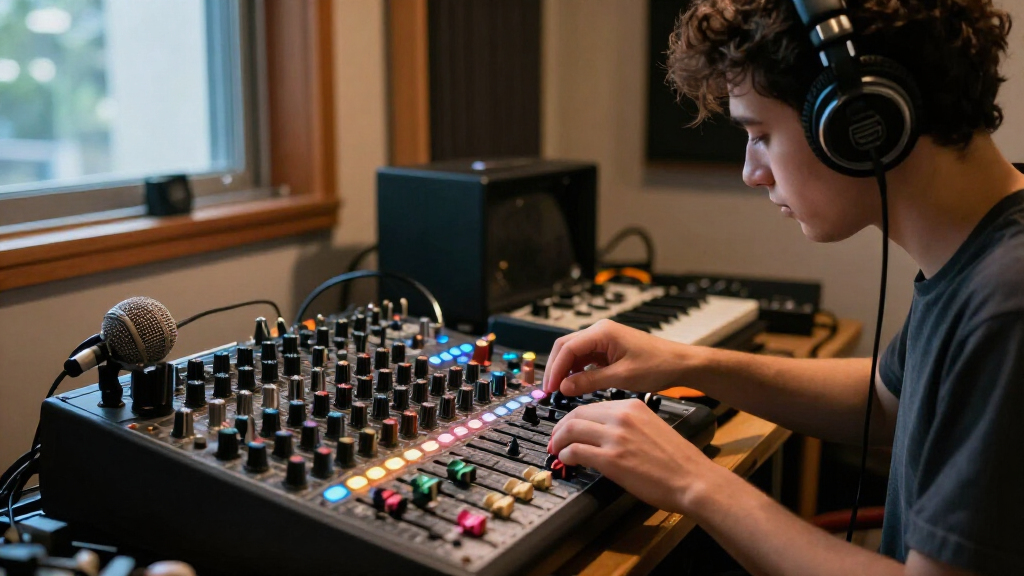
I ranked these mixers by how well they match the specific request for an analog mixer with built-in effects, then weighed channel count, effects access, connection options, and likely ease of use. A mixer with effects earned more relevance than one that only offers USB, while USB connectivity helped when it added a practical recording or streaming path. I also considered whether the control layout and size made sense for the intended setup, from a compact personal rig to a larger live system.
The order reflects fit, not a claim that one mixer is best for every buyer. Models with a balanced mix of effects, usable inputs, and flexible connections rank ahead of products that specialize in only one area. I placed larger mixers lower when their extra capacity may be unnecessary for many buyers, and I call out the MG06 and XENYX 802S as useful adjacent options rather than direct matches because they do not provide onboard effects.
Factors to Consider When Choosing Analog Mixer With Built In Effects
Before choosing, I’d match the mixer to the way your setup will grow, not just the number of sources you connect today. These broader factors help separate a genuinely useful effects mixer from one that has features you may not need.
Count Inputs for Real-World Setups
Count every source that needs its own channel: microphones, instruments, playback devices, and any guest or backup input. Then allow room for a source you might add later, since replacing a mixer because it is short one channel is an avoidable expense. Be careful not to treat the headline channel count as a count of microphone preamps; stereo line inputs and mono mic inputs serve different jobs. A compact six-input mixer can suit a solo performer yet feel limiting for a small band with multiple vocal microphones. Extra channels bring a larger footprint and more controls, so buy headroom that matches a plausible setup rather than an imaginary one.
Check How the Effects Fit Your Workflow
Built-in effects can reduce the need for an external processor, but the presence of effects alone does not tell you how useful they will be. Look for the kinds of processing you expect to use, how quickly you can select and adjust them, and whether effects can be sent to the channels that need them. A simple reverb choice may be enough for spoken word or a small performance, while a more varied set can help when several sources need different treatments. One common mistake is assuming onboard effects replace every studio plug-in or dedicated processor; they are usually best viewed as convenient live or basic recording tools. If detailed editing matters, check the control method and signal routing before choosing.
Decide Whether USB Is Part of the Job
USB can make a mixer more useful for recording or streaming, but the label does not tell you how audio is routed or how many channels reach a computer. Decide whether you need a simple stereo feed or separate tracks for editing, then check the model’s stated USB capabilities. A stereo feed is often enough for a webcast or rehearsal capture, while multitrack recording gives more control after the session. Do not assume that every analog mixer with USB works like a full recording interface. If your workflow depends on direct monitoring, computer playback, or simultaneous recording and streaming, verify those details before buying.
Balance Portability Against Growth
A small mixer is easier to carry, place on a desk, and fit into a compact performance setup. A larger unit can offer more inputs and controls, but adds bulk and may be harder to operate when space is tight. Think about where the mixer will live, how often it will travel, and whether it needs to be set up by someone unfamiliar with the controls. Buyers often focus on channel count and overlook the space needed for cables, power, and access to knobs. If portability matters, compare the full setup footprint rather than the mixer alone.
Pay for Features You Will Actually Use
More inputs, USB options, and effects can make a mixer more versatile, but they also add controls and decisions. For a basic vocal-and-instrument rig, straightforward operation may be more valuable than a long feature list. A larger mixer makes sense when several sources need independent level and tone control, or when your recording setup needs more routing options. The reverse mistake is buying too little capacity and relying on repeated cable swaps or an external mixer later. I’d prioritize reliable core controls and enough genuine inputs before paying extra for features that do not fit your regular use.
Treat Adjacent Options as Deliberate Exceptions
Not every compact analog mixer with USB meets the built-in-effects requirement. The Yamaha MG06 and Behringer XENYX 802S can make sense if a buyer values their compact layout or USB function more than onboard processing, but they are not direct substitutes for an effects-equipped model. If you choose a mixer without effects, budget space and connections for an external processor or use software effects where appropriate. That choice may provide a different workflow, but it adds another device and more routing decisions. Confirm the effects requirement before comparing models so a lower channel count or USB feature does not distract from the missing function.
Frequently Asked Questions
Should I choose the Yamaha MG10XU or a Mackie ProFX10 model?
I’d choose the Yamaha MG10XU if built-in effects, a straightforward 10-input layout, and USB are the main priorities. The Mackie ProFX10v3 is another direct fit for buyers who want a 10-channel mixer with USB and GigFX effects, while the ProFX10v3+ is the more feature-focused option in that family. Compare the exact connection and recording functions you need rather than relying on the shared channel count. If a simpler setup is your goal, favor the model whose controls and routing best match your routine.
Can a compact six-channel mixer handle a small band?
It can work for a small lineup if the number of independent sources is genuinely limited. Count microphones and instruments separately, and check which inputs are mono mic channels versus stereo line inputs. If every performer needs an individual microphone or instrument channel, a six-input mixer may run out of space quickly. The Yamaha MG06X is the effects-equipped compact choice here, while the Mackie ProFX6v3+ adds USB-C and effects in a similarly compact class. For a band that may expand, moving up to a 10-input model can avoid a quick replacement.
Do I still need external effects if my mixer has built-in effects?
Not necessarily: built-in effects can cover common live needs without adding another device to your setup. Whether they are enough depends on the types of processing available, how much control you need, and whether each source can be routed as you expect. For basic vocal ambience or quick performance effects, onboard processing may be convenient. If you need detailed editing, specialized processing, or a different effect on several sources, a dedicated processor or software may offer more flexibility. Check the mixer’s effects controls and routing before assuming its effects will suit every use.
Is USB required for recording or streaming with an analog mixer?
No; USB is convenient, but it is not the only way to get audio from a mixer into a computer. You can use an external audio interface, though that adds equipment and may require more setup. A mixer’s USB connection may provide only a stereo mix, so buyers who want separate tracks should check the supported routing and recording channels. USB streaming features can also differ from multitrack recording features. Decide what the computer must receive before choosing between a mixer with USB and one that relies on an external interface.
Is the Behringer XENYX 802S a good choice if I need built-in effects?
It is not the closest match for that requirement because the XENYX 802S is presented as a USB streaming mixer, not an effects-equipped model. It may suit a buyer who values a compact analog layout and USB connection and is comfortable adding effects elsewhere. If onboard processing is a must, compare it with the Yamaha MG06X or an effects-equipped Mackie ProFX model instead. This distinction matters because an external effects device adds cabling, setup, and another control point. Choose the XENYX only if those tradeoffs are acceptable for your workflow.
Conclusion
For the best overall balance of effects, inputs, and USB, I’d choose the Yamaha MG10XU. The best value-style fit for a straightforward compact effects mixer is the Mackie Mix12FX, while the best premium choice for a larger live setup is the Mackie ProFX22v3, provided you need its added capacity. For beginners with a small rig, the Yamaha MG06X keeps the setup compact and includes effects; choose the Mackie ProFX6v3+ if USB-C matters more. For specific needs, pick the ProFX10v3+ for its expanded connectivity package, the ProFX16v3 for a mid-sized setup, or the ProFX10v3 for a direct 10-channel USB-and-effects option. I’d skip the Yamaha MG06 and XENYX 802S if built-in effects are non-negotiable, since their strengths lie elsewhere.