
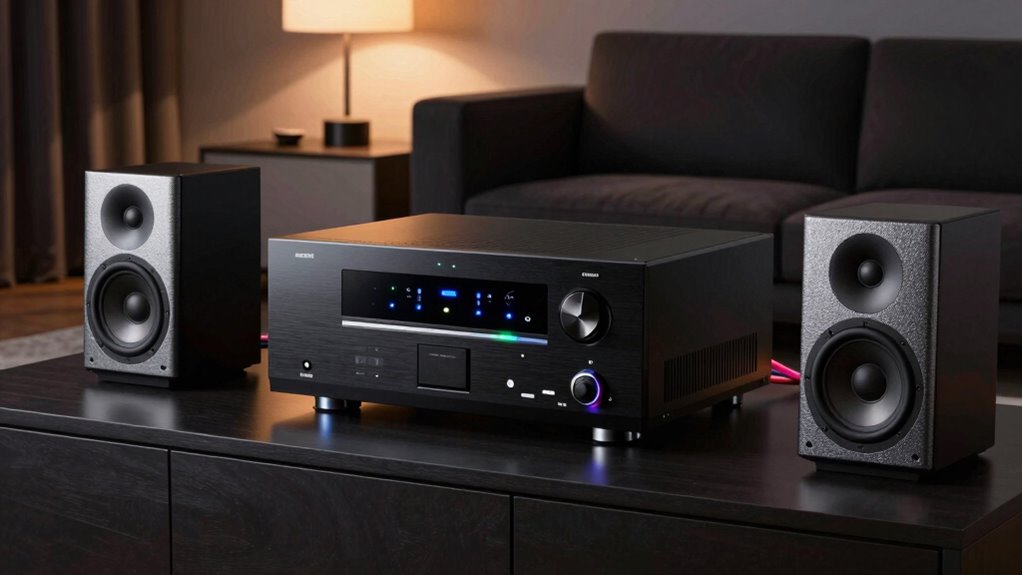

Finding the ideal AV receiver for music lovers who want a true stereo surround experience involves balancing sound quality, features, and ease of use. The Yamaha RX-A8A AVENTAGE stands out as the best overall pick thanks to its immersive audio support and premium build. For a solid budget option, the Yamaha RX-V385 offers reliable performance with Bluetooth streaming, making it perfect for casual listening. The main tradeoffs in this category revolve around balancing power, compatibility, and future-proofing—more features often mean higher costs, while simpler models may miss out on critical audio enhancements. Keep reading for a detailed breakdown of these options and how to choose the right one for your music experience.

Get audio and creator gear delivered free with Prime
- Fast, free delivery on millions of items
- Prime Video, Amazon Music and more included
- Member-only deals all year
Complete the kit


Key Takeaways
- Top-tier models like the Yamaha RX-A8A deliver immersive sound with support for Dolby Atmos, DTS:X, and Auro-3D, justifying their premium price for serious audiophiles.
- Budget-friendly options such as the Yamaha RX-V385 and Sony STRDH590 provide good stereo surround sound without overwhelming complexity or cost, ideal for entry-level setups.
- Power output and channel count vary significantly; higher wattage and more channels generally translate to better sound for larger rooms, but may come with increased price and complexity.
- Features like Wi-Fi, Bluetooth, and multi-room support are common, but their implementation and quality differ; choose models that integrate seamlessly with your existing ecosystem.
- Build quality and future-proofing (like 8K support) are key for long-term satisfaction, especially if you plan to upgrade your home theater or music system later.
| Pyle 9.1 Channel AV Receiver with HDMI 2.1, Bluetooth, and Surround Sound |  | Best for Versatile Home Theater with Advanced Connectivity | Channels: 9.1 | HDMI: 2.1 | Video Support: 8K/4K pass-through | VIEW ON AMAZON | See Our Full Breakdown |
| Yamaha RX-V385 5.1-Channel 4K Ultra HD AV Receiver with Bluetooth |  | Best for Budget-Conscious 4K Video and Basic Surround Sound | Channels: 5.1 | Video Support: 4K Ultra HD, HDR10, Dolby Vision | Bluetooth: Yes | VIEW ON AMAZON | See Our Full Breakdown |
| Denon AVR-X1700H 7.2 Channel AV Receiver – 80W/Channel, Built-in HEOS |  | Best for Advanced Features and Multi-Room Streaming | Channels: 7.2 | Power per Channel: 80W | HDMI Inputs: 3 dedicated 8K inputs | VIEW ON AMAZON | See Our Full Breakdown |
| Yamaha RX-A8A AVENTAGE 11.2-Channel AV Receiver with 8K/4K Support, Dolby Atmos, DTS:X, Auro-3D, Wi-Fi, Bluetooth, MusicCast |  | Best for Premium Immersive Audio and High-Performance Home Theater | Channels: 11.2 | HDMI Inputs: 7-in/3-out | Video Support: 8K60, 4K120, HDR10+, Dolby Vision | VIEW ON AMAZON | See Our Full Breakdown |
| Sony STRDH590 5.2 Channel Surround Sound Home Theater Receiver |  | Best for Budget-Friendly Virtual Surround with 4K Support | Channels: 5.2 | Power Output: 725W | Supported Video: 4K HDR, HDCP 2.2 | VIEW ON AMAZON | See Our Full Breakdown |
| Yamaha RX300A 5.2-Channel Home Theater AV Receiver with Dolby Atmos, 4K HDMI, Bluetooth |  | Best for Immersive Dolby Atmos on a Budget | Channels: 5.2 | Power: 70W per channel | HDMI Support: 4K120/8K60, HDMI eARC/ARC | VIEW ON AMAZON | See Our Full Breakdown |
| Onkyo TX-NR6100 7.2 Channel THX Certified Network AV Receiver – Black |  | Best for Future-Proof 8K and Gaming Integration | Power Output: 210W per channel | Channels: 7.2 | HDMI Ports: 8 | VIEW ON AMAZON | See Our Full Breakdown |
| Yamaha RX-V6A 7.2-Channel AV Receiver with MusicCast |  | Best for Streaming and Multi-Room Audio | Channels: 7.2 | HDMI Inputs: 7 | HDMI Version: 2.1 | VIEW ON AMAZON | See Our Full Breakdown |
| Denon AVR-S670H 5.2 Channel Home Theater Receiver, 8K UHD HDMI, 75W x 5 |  | Best for Compact 8K Support with Multi-Room Streaming | Channels: 5.2 | Power Output: 75W x 5 | Video Support: 8K/60Hz, 4K/120Hz, HDR10+, Dolby Vision | VIEW ON AMAZON | See Our Full Breakdown |
| Yamaha RX-A2A AVENTAGE 7.2-Channel AV Receiver | 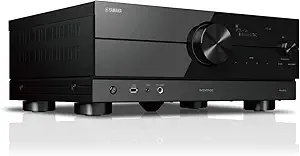 | Best for Premium Sound and Advanced Calibration | Channels: 7.2 | HDMI Inputs: 7-in/1-out | HDMI Support: 8K60, 4K120, HDCP 2.3, eARC | VIEW ON AMAZON | See Our Full Breakdown |
| Denon AVR-X2800H 7.2 Channel Home Theater AV Receiver (95W x 7) – 8K UHD |  | Best Overall for Versatile Music and Home Theater Balance | Channels: 7.2 | Power per channel: 95W | Video support: 8K/60Hz pass-through, HDR10+, HLG, Dolby Vision, Dynamic HDR | VIEW ON AMAZON | See Our Full Breakdown |
| Yamaha YHT-4950U 4K Ultra HD 5.1-Channel Home Theater System with Bluetooth |  | Best Budget Complete Home Theater System for Music and Movies | AV Receiver Dimensions: 17” W x 6” H x 12” D | Speaker Dimensions: 4” W x 6” H x 4” D (each) | Center Speaker Dimensions: 10” W x 4” H x 4” D | VIEW ON AMAZON | See Our Full Breakdown |
| av receiver for music lovers stereo surround | Channels | Video Support |
|---|---|---|
| Pyle 9.1 Channel AV Receiver w | 9.1 | 8K/4K pass-through |
| Yamaha RX-V385 5.1-Channel 4K | 5.1 | 4K Ultra HD, HDR10, Dolby Vision |
| Denon AVR-X1700H 7.2 Channel A | 7.2 | — |
| Yamaha RX-A8A AVENTAGE 11.2-Ch | 11.2 | 8K60, 4K120, HDR10+, Dolby Vision |
| Sony STRDH590 5.2 Channel Surr | 5.2 | — |
| Yamaha RX300A 5.2-Channel Home | 5.2 | — |
| Onkyo TX-NR6100 7.2 Channel TH | 7.2 | — |
| Yamaha RX-V6A 7.2-Channel AV R | 7.2 | 4K60, 4K120, 8K60, Dolby Vision |
| Denon AVR-S670H 5.2 Channel Ho | 5.2 | 8K/60Hz, 4K/120Hz, HDR10+, Dolby Vision |
| Yamaha RX-A2A AVENTAGE 7.2-Cha | 7.2 | — |
| Denon AVR-X2800H 7.2 Channel H | 7.2 | 8K/60Hz pass-through, HDR10+, HLG, Dolby Vision, Dynamic HDR |
| Yamaha YHT-4950U 4K Ultra HD 5 | — | — |
More Details on Our Top Picks
Pyle 9.1 Channel AV Receiver with HDMI 2.1, Bluetooth, and Surround Sound
This Pyle 9.1 channel receiver stands out for its immersive surround sound capabilities and support for 8K HDMI 2.1, offering a significant upgrade over more modest options like the Sony STRDH590. Its 9.1 channels provide richer, more enveloping sound, ideal for serious music lovers who want full-range clarity and deep bass. The inclusion of Bluetooth and multiple input options makes it flexible for various devices, but the setup can be daunting for beginners due to its complexity. Compared with the Yamaha RX-V385, it excels in surround sound power, though it lacks built-in Wi-Fi, which might limit streaming options for some users. This pick makes the most sense for those who value sound quality and connectivity versatility over simplicity or compact size.
Pros:- Powerful 9.1 channel surround sound for immersive listening
- Supports 8K HDMI 2.1 for high-quality video and future-proofing
- Built-in Bluetooth for seamless wireless streaming
- Multiple inputs including optical, coaxial, and USB for versatile connectivity
Cons:- No specific price information available, making cost assessment difficult
- Setup complexity may challenge beginners unfamiliar with advanced AV receivers
Best for: Music enthusiasts who want a powerful, feature-rich home theater system with multiple device connectivity options
Not ideal for: Beginners or users seeking a simple, plug-and-play solution, as its setup complexity can be overwhelming
- Channels:9.1
- HDMI:2.1
- Video Support:8K/4K pass-through
- Connectivity:Bluetooth, optical, coaxial, USB, analog
- Amplification:Class D
Our verdict“This receiver is ideal for audiophiles seeking a versatile, high-power surround sound experience with advanced video support.”
Yamaha RX-V385 5.1-Channel 4K Ultra HD AV Receiver with Bluetooth
The Yamaha RX-V385 offers solid performance for those who prioritize 4K Ultra HD, HDR10, and Dolby Vision, making it a good choice for casual music lovers who also want crisp video quality. Its 5.1 channels are sufficient for moderate surround sound, but it falls short compared to the 7.2 model like the Denon AVR-X1700H, which supports more speakers and multi-room features. Auto-calibration with YPAO simplifies setup, yet the lack of Wi-Fi might limit streaming options, pushing users toward Bluetooth instead. Compared with the Sony STRDH590, it provides better video support but offers less in terms of audio channels and power. This receiver makes the most sense for those with smaller spaces or simpler needs, seeking reliable 4K support and wireless streaming without the complexity of high-end models.
Pros:- Supports 4K Ultra HD, HDR10, and Dolby Vision for high-quality video
- Bluetooth connectivity offers easy wireless streaming
- Auto-calibration simplifies setup for non-technical users
Cons:- Limited to 5.1 channels, restricting surround sound depth
- No built-in Wi-Fi, reducing streaming versatility
Best for: Casual music lovers who want straightforward 4K video support and Bluetooth streaming in a simple setup
Not ideal for: Audiophiles seeking multi-channel surround sound or premium multi-room features, as it’s limited to 5.1 channels
- Channels:5.1
- Video Support:4K Ultra HD, HDR10, Dolby Vision
- Bluetooth:Yes
- HDMI:4-in/1-out HDMI 2.1 with HDCP 2.2
- Auto-calibration:YPAO
Our verdict“This model suits users seeking reliable 4K video and basic surround sound on a budget with minimal setup complexity.”
Denon AVR-X1700H 7.2 Channel AV Receiver – 80W/Channel, Built-in HEOS
The Denon AVR-X1700H provides a significant upgrade for those who want a 7.2 setup with cutting-edge 8K HDMI support, Dolby Atmos, and DTS:X. Its 80W per channel delivers ample power for most home environments, and built-in HEOS offers seamless multi-room streaming, surpassing the basic Bluetooth of many competitors like the Yamaha RX-V385. The inclusion of Alexa, Siri, and Google Assistant compatibility adds smart home convenience, but the multitude of features can be daunting for newcomers. Compared to the Yamaha RX-A8A, it offers fewer channels but at a more approachable price point and with simpler setup. This receiver is best for users who want a balance of powerful audio, future-proof video, and smart features without the premium size and cost of high-end models.
Pros:- Supports 8K HDMI and advanced HDR formats for premium visuals
- Built-in HEOS for multi-room streaming
- Voice control compatibility with Alexa, Siri, and Google Assistant
- Easy setup with on-screen guide and clear connections
Cons:- Features may be overwhelming for users new to AV receivers
- Requires compatible smart home systems for full automation
Best for: Tech-savvy music lovers who desire a versatile, multi-room capable receiver with advanced connectivity
Not ideal for: Beginners or those with small spaces, due to its feature complexity and size
- Channels:7.2
- Power per Channel:80W
- HDMI Inputs:3 dedicated 8K inputs
- Supports:8K/60Hz, Dolby Atmos, DTS:X
- Connectivity:Wi-Fi, AirPlay 2, Bluetooth
Our verdict“This receiver offers a compelling mix of high-quality audio, future-ready video, and smart home integration for experienced users.”
Yamaha RX-A8A AVENTAGE 11.2-Channel AV Receiver with 8K/4K Support, Dolby Atmos, DTS:X, Auro-3D, Wi-Fi, Bluetooth, MusicCast
The Yamaha RX-A8A stands out as a flagship model with 11.2 channels and support for the latest 8K/4K standards, making it ideal for those who prioritize immersive audio like Dolby Atmos, DTS:X, and Auro-3D. Its advanced room calibration with YPAO R.S.C. ensures optimal sound even in challenging spaces, outperforming the 7.2 Denon AVR-X1700H in sheer surround sound capacity. While its size and price are significant considerations, it offers comprehensive connectivity, including multiple HDMI inputs, smart home compatibility, and MusicCast for multi-room audio. Compared with the Denon, it delivers more channels and higher-end audio formats, though setup can be complex for less experienced users. This model is best suited for audiophiles and home theater enthusiasts who want a premium, future-proof experience.
Pros:- Supports 8K/60Hz and 4K/120Hz for cutting-edge video quality
- Immersive Dolby Atmos, DTS:X, and Auro-3D formats for premium sound
- Advanced room calibration with multi-point measurement
- Multiple wireless streaming options including MusicCast
Cons:- High price and large size may be prohibitive for some buyers
- Setup complexity requires some technical familiarity
Best for: High-end home theater fans who demand immersive multi-channel audio and future-ready video support
Not ideal for: Casual users or those with limited space and a tighter budget, due to its size and cost
- Channels:11.2
- HDMI Inputs:7-in/3-out
- Video Support:8K60, 4K120, HDR10+, Dolby Vision
- Audio Formats:Dolby Atmos, DTS:X, Auro-3D
- Wireless Connectivity:Wi-Fi, Bluetooth, MusicCast
Our verdict“This receiver is best for audiophiles seeking the most immersive multi-channel surround sound with top-tier video and audio features.”
Sony STRDH590 5.2 Channel Surround Sound Home Theater Receiver
The Sony STRDH590 offers a straightforward approach to surround sound with 5.2 channels and virtual surround technology like S Force PRO, making it suitable for those who want decent sound without extensive setup. Its 4K HDR compatibility, including HDCP 2.2, matches the basic requirements of many home theater setups but doesn’t support the multi-channel richness of higher-end models like the Denon AVR-X1700H or Yamaha RX-A8A. Its Bluetooth streaming is convenient, but the lack of built-in Wi-Fi limits streaming options and integration with smart home systems. Compared with the Yamaha RX-V385, it provides similar video support but with fewer channels and sound options. This model is best for casual users who want a simple, affordable way to enjoy 4K content and virtual surround sound.
Pros:- Supports 4K HDR and HDCP 2.2 for high-quality video playback
- Virtual surround with S Force PRO for an immersive experience
- Multiple HDMI inputs for versatile device connection
Cons:- No built-in Wi-Fi, limiting streaming options
- Limited speaker channels, restricting true surround sound
Best for: Budget-conscious consumers seeking virtual surround sound and 4K HDR support in a simple package
Not ideal for: Music lovers wanting true multi-channel surround sound or deep integration with smart home devices, as it offers limited connectivity options
- Channels:5.2
- Power Output:725W
- Supported Video:4K HDR, HDCP 2.2
- HDMI Ports:4 in / 1 out
- Supported Audio Formats:WAV, High-Resolution Audio
Our verdict“This receiver is suited for casual users wanting a straightforward, budget-friendly home theater experience with virtual surround sound.”
Yamaha RX300A 5.2-Channel Home Theater AV Receiver with Dolby Atmos, 4K HDMI, Bluetooth
This Yamaha RX300A stands out for delivering immersive Dolby Atmos and DTS Virtual:X sound, making it a compelling choice for music lovers who want surround sound without overpaying. Compared with the Yamaha RX-V6A, it offers a more straightforward setup and solid room correction, but its power output of 70W per channel may fall short for larger spaces. The support for 4K and 8K video with advanced HDMI features ensures future-proofing, yet it lacks built-in Wi-Fi, which could limit seamless streaming options. Its Bluetooth Multipoint simplifies wireless playback, enhancing convenience for casual listening. This model is ideal for those prioritizing an easy-to-configure system that emphasizes sound immersion while balancing a lower price.
Pros:- Immersive Dolby Atmos and DTS Virtual:X sound quality
- Supports high-resolution 4K and 8K video with advanced HDMI features
- Easy setup with automatic room correction and on-screen menu
- Wireless streaming with Bluetooth Multipoint
Cons:- Power output may be limited for large home theater setups
- Complex features might be overwhelming for beginners
- No mention of built-in Wi-Fi for streaming
Best for: Music lovers seeking a cost-effective way to enjoy immersive surround sound and Dolby Atmos without complex features.
Not ideal for: Large home theaters requiring high power output or built-in Wi-Fi for multiple streaming sources.
- Channels:5.2
- Power:70W per channel
- HDMI Support:4K120/8K60, HDMI eARC/ARC
- Dolby Atmos:Yes
- DTS Virtual:X:Yes
- Bluetooth:Multipoint
Our verdict“This receiver suits those wanting an easy-to-use, immersive sound experience at a more accessible price point.”
Onkyo TX-NR6100 7.2 Channel THX Certified Network AV Receiver – Black
The Onkyo TX-NR6100 makes a strong case for users who want cutting-edge video support alongside premium audio, thanks to its 8K HDMI 2.1 support and THX certification. It surpasses the Yamaha RX-V6A in raw power with 210W per channel, suitable for large rooms seeking robust sound. While its many features—like VRR, ALLM, and multiple HDMI outputs—can be overwhelming for newcomers, they provide a level of control and future-proofing that serious enthusiasts will appreciate. The high price reflects its high-end capabilities, and its bulkier size demands ample space. Compared to the Denon AVR-S670H, it offers more power and gaming features but at the cost of increased complexity and a higher price.
Pros:- Supports 8K video at 60Hz with HDMI 2.1 for future-proofing
- THX Certified for high-quality sound and image clarity
- Powerful 210W per channel for large rooms or demanding audio
- Advanced gaming features like VRR and ALLM
Cons:- Complex setup with many features may be overwhelming for beginners
- Relatively high price point
- Bulkier size may require significant space
Best for: Home theater enthusiasts who prioritize future-proofing, gaming features, and high-power output.
Not ideal for: Beginners or users with limited space who prefer straightforward setups over feature-rich systems.
- Power Output:210W per channel
- Channels:7.2
- HDMI Ports:8
- Supported Resolutions:8K at 60Hz, 4K at 120Hz
- Connectivity:Bluetooth, Wi-Fi
- Supported Services:Amazon Music, Deezer, Pandora, Spotify, TIDAL, TuneIn
Our verdict“This receiver is best suited for dedicated home theater users who want maximum future-proofing and power, accepting a steeper learning curve.”
Yamaha RX-V6A 7.2-Channel AV Receiver with MusicCast
The Yamaha RX-V6A caters well to those who want versatile streaming combined with immersive surround sound, especially with its support for Dolby Atmos and DTS:X. Compared to the Denon AVR-S670H, it offers more advanced multi-room capabilities via MusicCast and broader wireless options like AirPlay 2 and voice control. Its HDMI 2.1 support for 4K/8K video ensures future compatibility, but setup can be daunting due to its many features. The lack of specific pricing info limits immediate evaluation, though its array of streaming services and voice options make it appealing for integrated home systems. It’s best for users who want a flexible, multi-room experience without sacrificing surround sound quality.
Pros:- Supports latest HDMI 2.1 features for high-quality video
- Multiple streaming options including AirPlay 2 and Spotify Connect
- Immersive Dolby Atmos and DTS:X surround sound
- Supports voice control with Alexa, Google Assistant, and Siri
Cons:- Complex setup may challenge beginners
- No specific price info available
- Requires compatible speakers for full surround experience
Best for: Music lovers who desire multi-room capabilities and extensive streaming options with surround sound.
Not ideal for: Users new to home theater tech who prefer simpler, plug-and-play setups without many features.
- Channels:7.2
- HDMI Inputs:7
- HDMI Version:2.1
- Video Support:4K60, 4K120, 8K60, Dolby Vision
- Wireless Connectivity:Wi-Fi, Bluetooth, AirPlay 2
- Streaming Services:Spotify Connect, Pandora, Napster, SiriusXM, TIDAL, Deezer, Qobuz, Amazon Music HD
Our verdict“Ideal for users wanting a flexible, multi-room system with robust streaming and surround sound capabilities.”
Denon AVR-S670H 5.2 Channel Home Theater Receiver, 8K UHD HDMI, 75W x 5
The Denon AVR-S670H offers a compelling balance of 8K video support and multi-room streaming in a relatively compact package, making it suitable for those who want high-quality video and audio without an oversized unit. It falls slightly behind the Yamaha RX-A2A in raw feature set but compensates with its affordability and support for Dolby TrueHD and DTS Neo:6 Upmixer, enhancing surround sound. Its 75W per channel might limit its performance in large spaces, and the absence of Dolby Atmos or DTS:X limits immersive sound options. Compared to the Yamaha RX-V6A, it’s more budget-friendly but less feature-rich, making it a good choice for more straightforward setups.
Pros:- Supports latest 8K video formats for future-proofing
- Seamless HDMI ARC/eARC connectivity for TV integration
- Multi-room audio streaming via HEOS, Wi-Fi, and Bluetooth
- Affordable compared to higher-end models like the Yamaha RX-A2A
Cons:- Limited to 75W per channel, not ideal for large rooms
- No Dolby Atmos or DTS:X support
- Setup can be complex for less experienced users
Best for: Users seeking 8K video support and multi-room audio in a smaller form factor for moderate-sized rooms.
Not ideal for: Audio purists seeking Dolby Atmos and DTS:X surround sound for full immersion.
- Channels:5.2
- Power Output:75W x 5
- Video Support:8K/60Hz, 4K/120Hz, HDR10+, Dolby Vision
- Connectivity:HDMI ARC/eARC, Wi-Fi, Bluetooth
- Voice Control:Alexa, other major voice agents
- Multi-room Audio:Yes
Our verdict“A practical pick for those who want 8K support and multi-room streaming in a smaller, budget-friendly receiver.”
Yamaha RX-A2A AVENTAGE 7.2-Channel AV Receiver
The Yamaha RX-A2A AVENTAGE is tailored for audiophiles who want premium surround sound paired with advanced calibration, including Yamaha’s YPAO R.S.C. technology. It surpasses many in the lineup with support for 8K and 4K/120 HDMI, Dolby Atmos, and DTS:X, ideal for dedicated home theater setups. Its integration with Sonos via the Sonos Port expands its versatility for multi-room listening, but its setup can be intricate, especially for newcomers. The high price may be a barrier, yet those who value precise calibration and high-end audio will find its performance well worth it. Compared with the Yamaha RX-V6A, it offers superior calibration and build quality, though at a higher cost.
Pros:- Supports 8K and 4K/120 HDMI for future-proof video
- Premium audio calibration with YPAO R.S.C.
- Dolby Atmos and DTS:X for immersive surround sound
- Works with Sonos for multi-room streaming
Cons:- Complex setup may challenge beginners
- Premium price point limits accessibility
- Requires multiple inputs for full feature utilization
Best for: Audiophiles seeking a high-end, customizable surround sound experience with future-proof video support.
Not ideal for: Casual users or those with limited space who prefer simple plug-and-play systems.
- Channels:7.2
- HDMI Inputs:7-in/1-out
- HDMI Support:8K60, 4K120, HDCP 2.3, eARC
- Video Compatibility:Dolby Vision, HDR10+, HLG
- Audio Features:Dolby Atmos, DTS:X, YPAO R.S.C.
- Connectivity:Wi-Fi, Bluetooth, AirPlay 2
Our verdict“This receiver is best for serious home theater enthusiasts who want premium audio calibration and future-ready connectivity.”
Denon AVR-X2800H 7.2 Channel Home Theater AV Receiver (95W x 7) – 8K UHD
The Denon AVR-X2800H stands out for its support of 8K/60Hz pass-through and advanced HDR formats, making it ideal for users who want both top-tier video quality and immersive audio. Compared with the Yamaha YHT-4950U, which simplifies setup but limits support to 4K, the Denon offers greater future-proofing but at the cost of increased complexity. Its Dolby Atmos and DTS:X support deliver a rich, three-dimensional soundstage perfect for music lovers who appreciate detailed audio. However, its setup can be daunting for beginners, and it lacks built-in voice assistant support, which could be inconvenient for smart home integration. The multiple HDMI inputs and multi-room streaming via HEOS elevate its flexibility for diverse entertainment setups. This model is best suited for those wanting a high-performance, expandable system and who are comfortable with a more involved setup process.
Pros:- Supports 8K/60Hz video and advanced HDR formats for future-proof visuals
- Immersive 3D audio with Dolby Atmos and DTS:X
- Multiple HDMI inputs and multi-room streaming via HEOS
Cons:- Complex setup may be challenging for beginners
- No built-in voice assistant support, limiting smart home integration
Best for: Music enthusiasts who value immersive multi-channel sound and high-quality video passthrough, and are willing to handle a more complex setup.
Not ideal for: Casual users seeking quick, simple installation or those on a tight budget, as this model is more expensive and complex than entry-level options.
- Channels:7.2
- Power per channel:95W
- Video support:8K/60Hz pass-through, HDR10+, HLG, Dolby Vision, Dynamic HDR
- HDMI ports:8 (6 In/2 Out)
- Inputs:Analog, digital, phono, USB
- Outputs:Dual subwoofer outputs
- Streaming:Bluetooth, Wi-Fi, HEOS
Our verdict“This receiver makes the most sense for music lovers who want a flexible, high-quality home theater experience with room to grow.”
Yamaha YHT-4950U 4K Ultra HD 5.1-Channel Home Theater System with Bluetooth
The Yamaha YHT-4950U offers a comprehensive 5.1-channel setup that’s ideal for users who want a plug-and-play solution without sacrificing sound quality. Compared with the Denon AVR-X2800H, which supports higher resolutions and advanced video formats, the Yamaha emphasizes ease of use, with Yamaha’s YPAO room calibration making setup straightforward for non-technical users. It supports 4K Ultra HD, providing excellent picture quality, while the included speakers create a balanced, immersive soundstage suitable for music and movies alike. However, this system lacks Wi-Fi connectivity, relying solely on Bluetooth, which limits streaming flexibility. Its smaller footprint and all-in-one design make it a good fit for smaller rooms but less ideal for those seeking the latest video features or multi-room audio. This makes it a strong choice for beginners or those on a budget seeking reliable, straightforward stereo surround sound.
Pros:- Complete 5.1 system with included speakers for easy setup
- Supports 4K Ultra HD for high-quality video playback
- Yamaha YPAO room calibration simplifies setup
Cons:- Limited wireless functionality (Bluetooth only, no Wi-Fi)
- No waterproof or weatherproof features, limiting placement options
Best for: Budget-conscious music lovers and newcomers seeking a simple, all-in-one home theater setup that emphasizes ease of use.
Not ideal for: Audiophiles or tech-savvy users wanting the latest video support or multi-room streaming, as this system offers limited wireless options and fewer features.
- AV Receiver Dimensions:17” W x 6” H x 12” D
- Speaker Dimensions:4” W x 6” H x 4” D (each)
- Center Speaker Dimensions:10” W x 4” H x 4” D
- Subwoofer Dimensions:11” W x 11” H x 13” D
- HDMI Ports:4
- Standby Power Consumption:≤ 0.2 W
- Frequency Response:28Hz/25kHz
- Wireless Functionality:Bluetooth
Our verdict“This system suits those seeking a straightforward, budget-friendly surround sound experience with minimal fuss.”
How We Picked
The products in this roundup were evaluated based on performance, usability, build quality, and value for music lovers seeking stereo surround sound. Priority was given to models that excel in audio clarity, channel separation, and support for high-resolution formats. Compatibility with streaming services and ease of setup also influenced the rankings, as these factors directly impact daily use. The selection balances budget options with premium choices to cater to different levels of investment and technical expertise, ensuring a comprehensive overview of the best options available in 2026.Factors to Consider When Choosing Av Receiver For Music Lovers Stereo Surround
Choosing the right AV receiver for music lovers involves more than just wattage. Understanding key factors like sound quality, connectivity, and future-proofing helps ensure your investment enhances your listening experience over time. Carefully balancing these considerations can prevent buyer’s remorse and make your stereo surround setup truly enjoyable.Sound Quality and Channel Configuration
For music lovers, the clarity and separation of sound are paramount. Look for models with at least 7 channels and support for immersive formats like Dolby Atmos or DTS:X, which add dimension to stereo sound. Consider wattage as well, especially if your speakers are power-hungry; higher wattage typically yields better volume and dynamics, but it’s not the only factor—speaker quality matters too. Avoid models with overly complex setups if you prefer straightforward operation, but don’t sacrifice sound fidelity for simplicity.
Connectivity and Streaming Capabilities
Modern AV receivers should integrate seamlessly with streaming services, Bluetooth, and Wi-Fi, allowing easy access to your favorite music sources. Multi-room support, such as MusicCast or HEOS, adds versatility, letting you play different music in different zones. Be cautious of models that have limited or outdated connectivity options; these can hinder your experience as streaming technology evolves. Compatibility with voice assistants and smart home systems can also enhance daily convenience but check their implementation quality.
Future-Proofing and Compatibility
Investing in an AV receiver with 8K support and HDMI 2.1 ensures compatibility with upcoming video and audio standards, protecting your setup from obsolescence. Consider whether the receiver supports essential formats like Dolby Atmos and DTS:X, which are increasingly standard in new content. Also, assess the availability of firmware updates and the manufacturer’s reputation for ongoing support. While future-proofing can mean higher initial costs, it can save money and hassle down the line by reducing the need for upgrades.
Build Quality and Ease of Use
Durability and intuitive controls are important for long-term satisfaction. Look for models with solid construction, quality heat dissipation, and straightforward interfaces. Many modern receivers offer mobile apps for setup and control, which can simplify operation. Avoid overly complex interfaces if you prefer quick setup and everyday use; however, some advanced features require a learning curve. Consider how much you value aesthetics and physical design, as this affects integration into your living space.
Price and Value
Higher-priced models tend to offer better sound quality, more features, and longer support, but they are not always necessary for every listener. Balance your budget against the features that genuinely improve your listening experience. Sometimes, a mid-range receiver with good audio support and streaming capabilities provides the best value. Watch out for models that add features you don’t need, as they can inflate the price without proportional benefit. Focus on the core aspects—sound quality, connectivity, and future-proofing—that align with your listening priorities.
Frequently Asked Questions
Is it better to get an AV receiver with more channels for stereo music?
While more channels generally mean better support for surround sound, they are not essential for pure stereo music. A 5.2 or 7.2 setup can provide excellent stereo clarity and depth. Higher channel counts are more beneficial if you want a true surround experience with multiple speakers or plan to expand your home theater. For primarily stereo listening, focus on models that prioritize sound quality and digital processing rather than sheer channel count.
How important is 8K support for a music-focused AV receiver?
For music enthusiasts, 8K support is less critical unless you also use the receiver for video or plan to upgrade your display soon. 8K mainly benefits video quality and future compatibility with new TVs and content. If your priority is high-fidelity audio, look for Dolby Atmos, DTS:X, and high-resolution audio format support instead. Prioritizing audio features over 8K support typically offers better value for music lovers.
Should I choose a receiver with built-in streaming services?
Having integrated streaming services like Spotify, Tidal, or Apple Music can significantly enhance convenience, especially if you prefer controlling music directly from your receiver or app. However, some models rely on external devices or apps, which can be less seamless. Ensure the receiver’s streaming platform is reliable and frequently updated. For dedicated music listening, prioritize compatibility with your favorite services over other features.
Is a higher wattage receiver always better for stereo sound?
Higher wattage can improve volume and dynamics, but it’s not the sole indicator of sound quality. The quality of your speakers, room acoustics, and the receiver’s digital processing matter just as much. An overpowered receiver in a small room can lead to distortion, while a lower-wattage model can sound excellent if paired with efficient speakers. Focus on matching wattage with your speaker setup rather than assuming more power automatically equals better sound.
What features should I prioritize if I mainly listen to music?
If music is your main focus, prioritize a receiver with high-resolution audio support, quality DACs, and immersive stereo processing. Features like Dolby Atmos and DTS:X are less critical unless you want surround sound for movies. Connectivity options such as Bluetooth, Wi-Fi, and streaming app compatibility are also important for convenient access. Durability and ease of use should not be overlooked, ensuring your setup remains enjoyable over time.
Conclusion
For those seeking the best overall experience, the Yamaha RX-A8A offers immersive sound and future-proof features, making it ideal for serious music lovers. Budget-conscious buyers will appreciate the Yamaha RX-V385 for its reliable performance and simplicity. If you want a premium, feature-rich system, the Denon AVR-X1700H balances power and versatility. Beginners should consider models like the Sony STRDH590 for straightforward setup and solid sound, while audiophiles aiming for ultimate fidelity might lean toward high-end options like the Yamaha RX-A8A or Denon AVR-X2800H. Ultimately, your choice depends on your room size, listening habits, and willingness to invest in future-proofing your stereo setup.
Halloween Picks
halloween
As an affiliate, we earn on qualifying purchases.