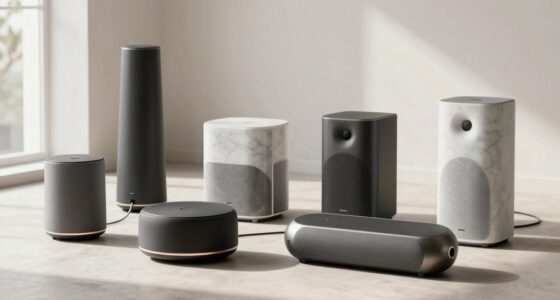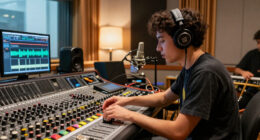


Desktop speaker isolation stands can raise tweeters toward ear level, angle speakers toward your listening position, and reduce direct contact with a desk. My best overall pick is the Kanto SP6HD for its fixed six-inch lift and support for larger speakers; the Vondynote clamp stands suit desks where clear surface space matters, while the Audioengine DS1 offers a simple angled option. The main tradeoffs are between a stable, fixed platform and adjustable clamp designs, and between firm elevation and a compact foam wedge. Match stand dimensions and load capacity to your speakers before choosing. Read on for the full breakdown and a guide to the differences that matter most.

Get audio and creator gear delivered free with Prime
- Fast, free delivery on millions of items
- Prime Video, Amazon Music and more included
- Member-only deals all year
Complete the kit


Key Takeaways
- The Kanto SP6HD stands out for larger speakers: its six-inch fixed lift offers a distinct alternative to low-profile wedges, but buyers need enough desk depth and room for a taller setup.
- Clamp models solve a different problem than pads and platforms: Vondynote‘s clamp options can free up desktop surface area, while requiring a desk edge that fits the clamp and a setup that can handle attached supports.
- Tilt is not the same as isolation: angled stands such as the Audioengine DS1 and Monoprice tilted models focus on directing sound upward; padded designs place more emphasis on limiting hard contact with the desk.
- Speaker size separates the pad options: Liquid Stands offers models intended for different speaker sizes, so checking the speaker footprint matters more than choosing by product name alone.
- The lineup favors fit over feature count: compact pads and wedges suit small speakers and tight desks, while adjustable-height or clamp stands make more sense when positioning and desk space are the main constraints.


| desktop speaker isolation stand | Material | Color | Quantity |
|---|---|---|---|
| Kanto SP6HD Desktop Speaker St | Heavy steel with closed-cell foam padding | Black | — |
| Vondynote Studio Monitor Stand | — | — | 2 stands |
| Audioengine DS1 Angled Desktop | Silicone rubber | Black | 2 stands |
| Desktop Speaker Stands | All steel | Black | — |
| Vondynote Set of 2 Adjustable | Alloy steel | Black | 2 stands |
| Monoprice Tilted Wedge Desktop | Thermoplastic rubber | Black | 2 stands |
| Monoprice Tilted Desktop Speak | Thermoplastic rubber (TPR) | — | 2 stands |
| Liquid Stands Studio Monitor S | High-quality foam | — | — |
| Desk Speaker Stands for Booksh | Not specified | — | 2 stands |
| Kanto S4 Tilted Desktop Speake | Metal | Black | 2 stands |
| Liquid Stands Studio Monitor S | Polyurethane foam | — | — |
| VIVO Medium 5 x 8 inch Desktop | TPR | Black | — |
More Details on Our Top Picks
Kanto SP6HD Desktop Speaker Stands for Medium/Large Bookshelf Speakers & Studio Monitors, 6 Inches Tall, Black, Pair
The Kanto SP6HD suits desktop listeners who want to adjust speaker direction as well as reduce vibration. Its 15-degree rotation and two included top plates give more positioning flexibility than the fixed-tilt Audioengine DS1, while the six-inch height can bring medium or large speakers closer to ear level. Heavy steel and closed-cell foam padding provide a stable, damped platform, and the hollow column offers a route for tidier cabling. The tradeoff is size: these stands are intended for 4- to 7-inch speakers, so they are a poor fit for the small models the DS1 is designed around. The supplied details also do not state a weight limit, which leaves less certainty for heavier monitors. Choose them when adjustability matters more than a compact footprint.
Pros:- Rotating top plates allow up to 15 degrees of positioning adjustment.
- Steel construction and foam padding help reduce vibration transferred to the desk.
- Hollow support column provides a cable-management path.
- Two top-plate sizes and a 1/4-inch-20 screw support varied speaker mounting needs.
Cons:- Fit is aimed at 4- to 7-inch speakers, excluding many compact desktop models.
- No weight capacity is specified in the supplied product details.
- The six-inch stands occupy more desk space than small silicone options such as the Audioengine DS1.
Best for: Desktop monitor owners with 4- to 7-inch speakers who want to angle or rotate their setup and route cables through the stand.
Not ideal for: Owners of compact 2- to 3-inch speakers, or anyone who needs a clearly stated load limit before mounting heavy monitors.
- Height:6 inches
- Material:Heavy steel with closed-cell foam padding
- Top plates:Two included
- Mounting:Mounting hole and 1/4-inch-20 screw
- Adjustment:Up to 15 degrees of rotation
- Speaker fit:4- to 7-inch speakers and studio monitors
- Color:Black
Our verdict“Choose the SP6HD if your medium or large monitors need adjustable direction and cable routing, but skip it for compact speakers or when you need a published load limit.”
Vondynote Studio Monitor Stands with Clamp and Isolation Pads
For a crowded workspace, the Vondynote clamp stands move speakers off the desktop instead of claiming more of its surface. Their 9- to 14-inch height range offers a bigger lift than the Kanto SP6HD, which stands six inches tall, and the clamp-on format can also work in a wall-adjacent setup. EVA pads help protect the desk and cushion the speaker platform. This design depends on a compatible desk edge, though: the clamp fits surfaces up to 2.6 inches thick, and installation may take tools and some effort. The stated 24-pound isolation-pad capacity also makes these a less reassuring choice for heavier speakers than Vondynote’s 50-pound clamp model. I’d pick this set for space savings and adjustable elevation, not for oversized monitors or quick setup.
Pros:- Clamp mounting frees up desktop space beneath the speakers.
- Height adjusts from 9 to 14 inches for varied listening positions.
- EVA pads help cushion speakers and protect the desk surface.
- Wall-adjacent installation offers another placement option.
Cons:- The 24-pound isolation-pad capacity may rule out larger or heavier monitors.
- Clamps do not fit desk edges thicker than 2.6 inches.
- Installation can require tools and more effort than freestanding stands.
Best for: People with shallow or cluttered desks who use speakers within the stated pad capacity and want adjustable height without using the desktop as a base.
Not ideal for: Owners of heavy monitors above the 24-pound pad capacity, desks thicker than 2.6 inches, or buyers seeking a tool-free installation.
- Quantity:2 stands
- Height range:9–14 inches
- Isolation-pad capacity:24 pounds
- Pad dimensions:7.5 × 9.5 × 1.6 inches
- Clamp thickness range:0–2.6 inches
- Pad material:EVA
Our verdict“Choose this set for adjustable, space-saving placement on a compatible desk, but favor the other Vondynote clamp model if you need its stated 50-pound capacity.”
Audioengine DS1 Angled Desktop Speaker Stands, Pair
The Audioengine DS1 is the compact choice here: its silicone-rubber pair is designed for most 2- to 3-inch speakers, tilting them upward by 15 degrees to aim sound toward a seated listener. That fixed angle and small footprint make it simpler than the adjustable Kanto SP6HD, but the DS1 cannot raise a speaker several inches or change its orientation. Silicone helps damp vibration, though the specified 8-pound maximum load per pair limits this option to lightweight speakers. Larger studio monitors are better matched to the steel desktop stands elsewhere in this roundup, including the SP6HD. For a small desktop setup, the DS1’s focused fit is a strength; for growing or heavier speakers, that same narrow capacity is the reason to skip it.
Pros:- 15-degree fixed tilt directs sound upward toward the listener.
- Silicone-rubber construction helps damp vibration.
- Small dimensions suit compact desktop setups.
- Pair format supports left-and-right speaker placement.
Cons:- Designed for most 2- to 3-inch speakers, limiting compatibility with larger monitors.
- Maximum load is 8 pounds per pair.
- Fixed angle and low profile offer less positioning flexibility than the Kanto SP6HD.
Best for: Listeners with lightweight 2- to 3-inch desktop speakers who want a small, angled platform rather than a tall adjustable stand.
Not ideal for: Owners of medium or large monitors, speakers exceeding 8 pounds per pair, or anyone needing adjustable height or tilt.
- Quantity:2 stands
- Material:Silicone rubber
- Tilt angle:15 degrees
- Maximum load:8 pounds per pair
- Speaker fit:Most 2- to 3-inch speakers
- Dimensions:3.75 × 6.25 × 1.75 inches
- Weight:9.6 ounces
- Color:Black
- Warranty:3 years
Our verdict“Choose the DS1 for lightweight compact speakers that need upward aiming, but select a larger stand if you need more height or load capacity.”
Desktop Speaker Stands, Metal with Vibration Pads, 30 lbs, Black
These all-steel C-shaped stands offer a straightforward middle ground: they lift speakers by 4.12 inches, angle them upward by five degrees, and support up to 30 pounds. That makes them a sturdier choice for many desktop monitors than the Audioengine DS1, whose pair is rated for eight pounds, without taking the taller clamp-on approach of either Vondynote set. Anti-slip and vibration-absorbing pads help keep speakers settled and limit contact vibration, while the C-shaped design is intended to save desk space. The tradeoff is limited adjustment: unlike the rotating Kanto SP6HD, the angle is fixed. A six-inch top plate may also be too small for especially large cabinets. I’d shortlist these when a modest lift and substantial stated capacity matter more than custom positioning.
Pros:- All-steel construction provides a sturdy platform.
- Supports up to 30 pounds according to the product specifications.
- Five-degree upward tilt helps direct sound toward the listener.
- Anti-slip and vibration pads add grip and cushioning.
Cons:- Fixed five-degree tilt offers less adjustment than the Kanto SP6HD.
- The six-inch top plate may not fit very large speaker cabinets.
- Four-and-a-half? No; the stated height increase is only 4.12 inches, which may not reach some listening positions.
Best for: Desktop users with speakers under 30 pounds who want a sturdy freestanding steel stand with a modest upward tilt.
Not ideal for: Owners of very large speakers that exceed the six-inch top plate, or listeners who need adjustable tilt, rotation, or greater height.
- Material:All steel
- Weight capacity:30 pounds
- Top plate diameter:6 inches
- Design:C-shaped
- Tilt:5 degrees upward
- Height increase:4.12 inches
- Color:Black
Our verdict“Choose these freestanding stands for a sturdy, modestly elevated setup with a stated 30-pound capacity, but look elsewhere if you need adjustable positioning or a larger platform.”
Vondynote Set of 2 Adjustable Desktop Clamp Speaker Stands
When speaker weight is the main concern, this Vondynote clamp-on pair has the clearest stated advantage in this group: each stand is described as supporting equipment up to 50 pounds. Its 9 × 9-inch padded plate gives speakers a broader resting area than the 7.5 × 9.5-inch pads on Vondynote’s other clamp set, while the 9- to 14-inch height range lifts them well above the desk. Compared with the freestanding steel stands rated for 30 pounds, this model provides more stated capacity and adjustable height, but it also requires a suitable desk edge. Clamps only fit surfaces up to 2.6 inches thick, and the 14-inch maximum may not put speakers high enough for every setup. Its space-saving benefit depends on secure, compatible mounting.
Pros:- Stated load capacity of up to 50 pounds per stand.
- Height adjusts from 9 to 14 inches.
- Large 9 × 9-inch padded top plates support a broad range of equipment.
- Clamp pads and top-plate pads help protect surfaces and reduce speaker vibration.
Cons:- Clamps fit desk edges only up to 2.6 inches thick.
- Maximum height is 14 inches, which may be insufficient for some listening positions.
- Clamp-on placement requires a suitable desk edge and is less flexible than freestanding stands.
Best for: Monitor owners who need a large padded platform, adjustable elevation, and a stated capacity up to 50 pounds per stand, with a compatible desk edge.
Not ideal for: People with desks thicker than 2.6 inches, those who need speakers higher than 14 inches, or buyers who prefer freestanding placement.
- Quantity:2 stands
- Height range:9–14 inches
- Desktop clamp range:0–2.6 inches
- Top plate dimensions:9 × 9 inches
- Load capacity:Up to 50 pounds per stand
- Material:Alloy steel
- Item weight:2.94 kg
- Color:Black
- Warranty:Lifetime
Our verdict“Choose this Vondynote set for heavy speakers and adjustable height when your desk fits the clamps, but pick a freestanding stand if you cannot secure it to an edge.”
Monoprice Tilted Wedge Desktop Speaker Stands (Pair) for Medium-Sized Speakers
The Monoprice Tilted Wedge is a straightforward choice when medium-sized bookshelf speakers need a fixed upward angle rather than added height. Its 15-degree tilt points the drivers toward a seated listener, while the thermoplastic rubber construction is intended to limit vibration and help keep the speakers from sliding. Compared with the smaller Monoprice Tilted Desktop Speaker Stands, this model is aimed at medium-sized speakers, though the supplied details do not give dimensions or a weight limit to confirm fit. It also skips the height and depth adjustments offered by the adjustable desk stands in this roundup. Choose it for a simple, low-profile setup; pass if your speakers are large or you need to fine-tune their position.
Pros:- Fixed 15-degree angle aims speakers toward a seated listening position
- Thermoplastic rubber construction is designed to reduce unwanted vibration
- Non-slip base helps keep speakers stable on a desk
- Low-profile wedge design avoids adding bulky supports
Cons:- No height or angle adjustment beyond the fixed tilt
- No dimensions or maximum speaker weight are provided to verify fit
- Black is the only listed color
Best for: Desktop listeners with medium-sized bookshelf speakers or monitors who want a simple fixed tilt and a non-slip base.
Not ideal for: Owners of large or unusually heavy speakers, or anyone who needs adjustable height, because fit limits and a weight capacity are not specified.
- Brand:Monoprice
- Quantity:2 stands
- Material:Thermoplastic rubber
- Tilt angle:15 degrees
- Suitable speakers:Medium-sized speakers, bookshelf speakers, and studio monitors
- Color:Black
- Warranty:1 year
Our verdict“Pick this pair for medium-sized desktop speakers that need a stable fixed tilt, but skip it if you need measurable fit limits or adjustable height.”
Monoprice Tilted Desktop Speaker Stands, Pair, 15° Tilt
When desk space is tight and the speakers are small, this compact Monoprice pair offers a clear, simple benefit: a fixed 15-degree tilt in a footprint with a listed 3.75-inch base width. The TPR construction and non-slip base support stable placement while helping limit vibration, and the stands rise no more than 2 inches. That modest height is a tradeoff, not a substitute for an elevated platform. Compared with the medium-speaker Monoprice wedge, this model has more specific compact dimensions but is explicitly intended for small speakers. The adjustable desk stands in this roundup offer more positioning flexibility, though they take a different approach and involve mechanisms. Choose these if a small monitor needs aiming, not if it needs significant lift.
Pros:- 15-degree tilt directs small speakers toward the listener
- 3.75-inch base width suits space-constrained desktops
- TPR construction and non-slip base support stable placement
- Lightweight pair is easy to reposition
Cons:- Maximum height of 2 inches offers little elevation
- Small-speaker fit limits use with larger bookshelf models
- Fixed angle does not allow placement adjustments
Best for: Owners of small bookshelf speakers or compact monitors working on narrow desks who want a fixed listening angle.
Not ideal for: Buyers with medium or large speakers, or those who need substantial elevation, since the stands are intended for small speakers and reach only 2 inches high.
- Brand:Monoprice
- Quantity:2 stands
- Material:Thermoplastic rubber (TPR)
- Tilt angle:15 degrees
- Base width:3.75 inches
- Maximum height:2 inches
- Item weight:0.27 kg
- Warranty:1 year
Our verdict“Choose this pair for compact speakers on a crowded desk when a fixed tilt matters more than added height or adjustability.”
Liquid Stands Studio Monitor Sound Isolation Pads for 6-8 inch Speakers
The main appeal here is angle choice: the foam pads list five positions, from -10 degrees through 10 degrees, so a buyer can adjust the monitor’s aim instead of settling for the fixed tilt of either Monoprice wedge. Their 50 kg/m³ foam is intended to isolate and stabilize monitors, while the 14-by-11-inch footprint gives them a broad support area. That footprint may occupy more desk space than a compact wedge, and the listing contains a fit conflict: the title says 6–8-inch speakers, while the compatibility spec says 3–4.5 inches. I would verify the supported size before buying. Compared with the Kanto S4’s rigid metal platform, these pads prioritize angle flexibility and cushioning over a hard stand structure.
Pros:- Five listed angle settings allow more aiming choices than fixed-tilt wedges
- High-density foam is designed to reduce vibration transfer
- Broad 14-by-11-inch support area can accommodate compatible monitors
- Non-slip surface helps keep monitors in place
Cons:- Compatibility information conflicts between the title and specifications
- Foam may wear over time and may not suit very heavy speakers
- Large listed footprint can consume substantial desk space
Best for: Monitor owners who want several tilt choices and can confirm that their speaker dimensions match the pads’ actual compatibility.
Not ideal for: Buyers who need clearly documented support for 6–8-inch monitors, heavy speakers, or a compact desktop footprint.
- Material:High-quality foam
- Foam density:50 kg/m³
- Dimensions:14 x 11 x 2 inches
- Adjustable angles:0°, -5°, 10°, -10°, 5°
- Compatible monitor sizes:3 to 4.5 inches (specification; product title says 6–8 inches)
- Use:Desktop or floor placement
Our verdict“Consider these pads if angle flexibility is your priority, but verify speaker fit first because the listed size guidance is inconsistent.”
Desk Speaker Stands for Bookshelf Speakers, Adjustable Height, Pair
For buyers who need more than a fixed wedge can offer, these stands combine a 6-degree tilt with adjustable depth from 5.5 to 7.5 inches. That lets you match the support to a range of speaker footprints, while the open space underneath can free up some desktop area. Their stated 12-pound capacity per stand gives buyers a concrete limit, unlike the Monoprice medium-speaker wedge, which lists no weight capacity. The tradeoff is added setup complexity: the description notes that some users may find the adjustment mechanisms cumbersome, and the construction material is not specified. Compared with the compact Monoprice wedge, this pair offers more placement flexibility but requires more room and careful attention to speaker weight and fit.
Pros:- Adjustable depth from 5.5 to 7.5 inches adapts to different speaker footprints
- 6-degree tilt offers a defined listening angle
- 12-pound capacity per stand provides a clear weight limit
- Open space beneath the stands can free up desk surface
Cons:- Adjustment mechanisms may be cumbersome to set up
- Material is not specified, making construction harder to evaluate
- Weight limit and fit may exclude larger or heavier speakers
Best for: Desktop users with small or medium bookshelf speakers who need adjustable support depth and a modest tilt to fit a particular setup.
Not ideal for: Owners of speakers over 12 pounds per stand or buyers seeking a simple, low-profile rubber wedge with clearly stated materials.
- Quantity:2 stands
- Maximum weight capacity:12 lbs per stand
- Adjustable depth:5.5–7.5 inches (140–190 mm)
- Tilt angle:6 degrees
- Material:Not specified
- Warranty:2 years
Our verdict“Choose these when adjustable depth matters more than a simple wedge design, provided your speakers fit the stated capacity and footprint range.”
Kanto S4 Tilted Desktop Speaker Stands for Medium Bookshelf Speakers & Mid-Size 3-4 Inch Studio Monitors
The Kanto S4 suits buyers who prefer a rigid support over the all-rubber Monoprice wedges. Its metal construction is paired with damping foam padding, and the listed 8-pound capacity gives a firm boundary for speaker choice. The tilted design aims compatible speakers toward the listener, while a 1/4-inch-20 mounting hole offers a way to secure speakers that have a matching threaded point. That mount is useful only for compatible models, so it is not a universal fit advantage. Compared with the adjustable desk stands, the S4 gives up depth adjustment and a higher listed capacity, but its metal build makes its support style more explicit. It is a focused option for compact monitors, not a solution for large or heavy bookshelf speakers.
Pros:- Solid metal construction provides a rigid support platform
- Damping foam padding helps limit vibration transfer
- Tilted design directs compatible speakers toward the listener
- 1/4-inch-20 mounting hole supports secure attachment for compatible speakers
Cons:- 8-pound support limit rules out heavier speakers
- Listed compatibility is limited to 3–4-inch monitors and medium bookshelf speakers
- Mounting feature depends on a matching threaded point
Best for: Owners of 3–4-inch monitors or medium bookshelf speakers weighing no more than 8 pounds who want a metal stand with damping padding.
Not ideal for: Buyers with heavier or larger speakers, or those whose speakers lack a compatible 1/4-inch-20 mounting point and need secure attachment.
- Brand:Kanto
- Quantity:2 stands
- Material:Metal
- Padding:Damping foam
- Maximum supported weight:8 lbs
- Speaker size compatibility:3–4-inch studio monitors and medium bookshelf speakers
- Mounting hole:1/4-inch-20
- Color:Black
Our verdict“Pick the Kanto S4 for compact, lightweight monitors when you want rigid metal support and can use its mounting feature if needed.”
Liquid Stands Studio Monitor Sound Isolation Pads (Medium)
The Liquid Stands Medium Isolation Pads suit desktop users who want to fine-tune monitor aim as well as reduce vibration transfer. Their five angle settings let you choose a level position or tilt the speakers toward your listening position, unlike the fixed 15-degree angle on the VIVO Medium Desktop Speaker Stands. High-density polyurethane foam and a non-slip surface support a stable setup while the compact footprint leaves more desk area free than taller, separate stands.
The tradeoff is fit: these pads are specified for 3- to 4.5-inch monitors, so they are a poor match for larger cabinets. Although the listed load capacity is high, the lightweight foam construction may feel less reassuring under heavy equipment. Choose them for small studio monitors and flexible positioning; pick a broader stand option if your speakers fall outside that size range.
Pros:- Five angle settings allow more positioning flexibility than fixed-tilt stands.
- High-density polyurethane foam helps limit vibration transfer to the desk.
- Non-slip surface helps keep compatible monitors in place.
- Compact format preserves desk space.
Cons:- Compatibility is limited to 3- to 4.5-inch studio monitors.
- Lightweight foam may not feel reassuring under very heavy equipment.
- The pads elevate speakers by less than a dedicated tall stand.
Best for: Home-studio owners with 3- to 4.5-inch monitors who want several tilt choices and vibration isolation without using much desk space.
Not ideal for: Users with larger or unusually heavy speakers, since the stated compatibility is limited to 3- to 4.5-inch monitors and the pads are lightweight foam.
- Brand:Liquid Stands
- Model:JB-MIP-06H
- Dimensions:12 x 8 x 5 inches
- Material:Polyurethane foam
- Density:50 kg/m³
- Load capacity:50 kg
- Angle settings:0°, ±5°, ±10°
- Compatible monitor sizes:3, 3.5, 4, and 4.5 inches
Our verdict“Choose these pads for compact studio monitors when adjustable aiming matters more than substantial height elevation.”
VIVO Medium 5 x 8 inch Desktop Speaker Stands, Set of Two, Black
The VIVO Medium Desktop Speaker Stands are a straightforward choice for buyers who want a pair of low-profile bases with built-in isolation. Their 15-degree tilt angles sound toward the listener without requiring separate wedges or adjustment, while the TPR material is intended to reduce resonance between speakers and desk. Compared with the Liquid Stands Medium Isolation Pads, VIVO offers a simpler fixed position and a stated capacity of up to 22 pounds per set, but gives up the Liquid Stands’ multiple angle options.
That fixed angle is the main limitation: listeners who need level placement or a different tilt cannot tune it. The stands also have a lower stated weight limit than some heavier-duty options in this roundup. They make sense for compatible bookshelf, desktop, or gaming speakers when a tidy, paired setup matters more than adjustability or substantial elevation.
Pros:- Fixed 15-degree tilt aims speakers toward the listening position.
- TPR construction is designed to reduce vibration and resonance.
- Set of two provides a matched pair for a stereo setup.
- Compact dimensions help keep the desktop uncluttered.
Cons:- Tilt angle cannot be adjusted.
- Limited to speakers up to 22 pounds.
- Available only in black.
Best for: Desktop and gaming users with speakers weighing no more than 22 pounds who want a compact pair of stands with a ready-made listening tilt.
Not ideal for: Listeners who need adjustable or level placement, or owners of speakers heavier than the stated 22-pound capacity.
- Brand:VIVO
- Dimensions:4.8 x 7.8 x 2.1 inches
- Number of stands:2
- Material:TPR
- Maximum supported weight:22 lbs
- Tilt angle:15°
- Color:Black
Our verdict“Pick the VIVO pair for compact speakers when a fixed 15-degree tilt and simple vibration-reducing base are all you need.”

How We Picked
I ranked these desktop speaker isolation stands by the problems they solve at a desk: supporting the speaker securely, improving its angle or height, limiting direct vibration transfer, and fitting within real desktop constraints. I gave weight to stated support capacity, speaker-size guidance, platform dimensions, adjustability, clamp compatibility, and whether a design is a pad, wedge, or raised stand. I also considered setup demands: a fixed platform is easy to place, while clamps and adjustable stands ask buyers to check desk construction and fit.
The order reflects useful positioning and fit flexibility first, then simplicity and value for more specific setups. The Kanto SP6HD leads for buyers needing a substantial fixed lift; the Vondynote clamp options rank well for desk-space management, though they are less universal. Compact tilted models and foam pads rank higher for buyers whose speaker size and listening angle match their format, not as one-size-fits-all solutions. Product details supplied for this roundup do not establish equal isolation performance across materials, so I avoid treating tilt, padding, and vibration control as interchangeable.
Factors to Consider When Choosing Desktop Speaker Isolation Stands
Before choosing a stand, I would start with the speaker and desk rather than the stand’s feature list. Fit, listening height, and the way the stand attaches determine whether a design helps your setup or creates a new compromise.
Match the Platform to the Speaker Footprint
Measure the speaker’s base, including any feet, and compare it with the stand’s usable top surface. A stand can carry the stated weight yet still be a poor fit if the speaker overhangs or sits unevenly. Leave room for cables and rear ports, especially if the speaker must sit close to a wall. Smaller pads and wedges are easy to place but may not suit larger cabinets; a wide stand can solve that fit issue while taking up more desk area. I would favor a stable, centered footprint over a platform that barely accommodates the speaker.
Choose Height by Listening Position
The goal is to place the tweeter near ear level from your usual seated position, not simply to raise speakers as high as possible. A fixed lift, such as the six-inch Kanto SP6HD, is straightforward when that height matches your desk and chair. A tilted wedge can aim sound upward without adding much elevation, which may work better on a shallow desk. Measure from the desktop to your ears before buying, and account for the speaker’s own height. A stand that raises the cabinet too far can make the setup awkward even if the angle looks right.
Separate Angling from Vibration Control
Angled supports point the speaker toward the listener; damping material or isolation pads aim to reduce direct contact and vibration transfer. Some products combine these ideas, but a tilt feature alone does not tell you how much vibration the desk will receive. If desk resonance is your main complaint, prioritize the contact material and how securely the speaker sits on it. If the issue is that sound seems aimed past you, a tilted design may address the more relevant problem. Avoid assuming that every product labeled an isolation stand provides the same kind of isolation.
Check Desk Compatibility Before Choosing Clamps
Clamp stands can reclaim the area beneath a speaker, but they shift the fit question from the desktop surface to the desk edge. Check the clamp’s opening, the thickness and shape of the edge, and whether an apron, cable tray, or monitor arm blocks installation. A clamp attached to a flexible or fragile surface may wobble or put unwanted pressure on the desk. These models can be a practical choice for crowded workstations, while a freestanding platform is easier to reposition. If you change desk layouts often, that portability may matter more than the space saved.
Treat Load Capacity and Stability as Separate Checks
Weight capacity is only one part of safe support; the stand also needs a base that stays steady when you adjust cables or bump the desk. Compare the speaker’s weight with the stated capacity and avoid treating a close match as extra room for error. Consider the full setup too: a heavy speaker on a narrow platform can be less reassuring than its weight rating suggests. For adjustable stands, inspect how the height is locked and whether the support can shift under load. If a speaker is large or costly, prioritize a secure fit over compactness.
Decide How Much Adjustability You Will Actually Use
Adjustable height is useful when you share a desk, change seating positions, or are still dialing in speaker placement. It also adds parts and setup checks that fixed wedges and pads avoid. If your listening position is settled, a fixed stand can be simpler and less intrusive. Think about whether you need repeated changes or only one initial adjustment; paying for movement you will not use may add complexity without improving the setup. Beginners often do well by measuring first, then choosing the simplest design that reaches the needed height and angle.
Frequently Asked Questions
Should I choose an angled stand or a stand that raises the speakers?
Choose based on where your tweeters sit relative to your ears. A tilted stand changes the speaker’s aim, while a raised stand changes its height; some setups need one more than the other. Measure your seated ear height and the speaker’s tweeter position before deciding. If the tweeters already sit near ear level but point above you, tilt may be enough. If they sit well below your listening position, elevation is the more direct fix.
Are clamp speaker stands a good choice for a desk with a thin or rounded edge?
They may not be, because clamp fit depends on the desk edge’s thickness, shape, and strength. Compare those measurements with the clamp’s adjustment range and check for lips, aprons, cable trays, or other obstructions. A rounded edge can leave less secure contact than a flat one, and a thin surface may flex under the speaker’s weight. When fit is uncertain, a freestanding platform avoids putting clamping force on the desk. Do not rely on a clamp design until you have confirmed compatibility with your particular desk.
Do isolation pads reduce desk vibration as well as improve speaker angle?
Pads can provide a softer contact point between the speaker and desk, while an angled wedge mainly changes the direction the speaker faces. A product may offer both properties, but the shape alone does not show how much vibration it will reduce. The speaker’s weight, the pad material, and how firmly the assembly sits on the desk all affect the result. If vibration is your main concern, check the product’s isolation materials and speaker-size fit rather than choosing by tilt angle alone. If your main issue is aim, prioritize the angle that points the tweeters toward your listening position.
How do I know whether a stand will fit my speakers if its capacity is high enough?
Check the support surface dimensions as well as the speaker’s weight. Capacity addresses load, not whether the speaker base will sit securely without overhang or rocking. Measure the cabinet’s footprint and include feet that extend beyond its base. Also check for clearance around the stand, cables, and any rear-facing ports. When dimensions are not listed clearly, a stand with a larger platform may be safer than assuming a high weight limit means a good fit.
Is a fixed stand a better first purchase than an adjustable one?
A fixed stand is often the simpler choice if your desk, chair, and listening position stay in one place. It reduces setup steps and avoids adjustment joints that need checking. An adjustable model makes more sense when multiple people use the desk or you are still finding a comfortable speaker height. Before paying for adjustability, measure your current setup and identify how much change you actually need. If a fixed height solves the problem, the simpler format can be easier to place and maintain.
Conclusion
For the broadest fit among these picks, I would start with the Kanto SP6HD as best overall when a six-inch fixed lift suits the speakers and desk. The Monoprice tilted stands make a sensible value direction for buyers who need a simple upward aim, while the Vondynote clamp stands are the better fit when keeping the desktop clear matters more than easy repositioning. Beginners who want a straightforward angled setup can look at the Audioengine DS1; for a premium-style choice focused on stable elevation, the Kanto SP6HD is the standout in this lineup. For specific needs, choose Liquid Stands pads when speaker-size matching and a compact support are priorities, or an adjustable clamp model when positioning flexibility is the deciding factor. I would skip any option whose platform, height, or mounting method does not match the actual speaker and desk, even if its feature list looks appealing.