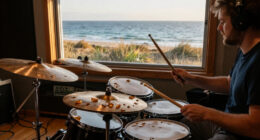


Finding the right drum machine for live jamming requires balancing portability, ease of use, and sound quality. My top recommendation is the BeatBuddy MINI 2 for guitarists who need a hands-free, pedal-format rhythm section that integrates seamlessly with existing pedalboards. For producers and electronic musicians seeking deeper sound design and sequencing flexibility, the Roland TR-8S offers unmatched stage presence and performance features. The primary tradeoff lies between simplicity and depth: pedal-style units like the MOOER Drum Machine prioritize instant access and minimal setup, while standalone units like the Elektron Syntakt demand more attention but reward you with complex, evolving patterns. Continue reading to see how these and twelve other options stack up for different performance scenarios.

Get audio and creator gear delivered free with Prime
- Fast, free delivery on millions of items
- Prime Video, Amazon Music and more included
- Member-only deals all year
Complete the kit


Key Takeaways
- Pedal-format machines like the BeatBuddy MINI 2 and MOOER are the only viable options for guitarists who need to keep both hands on the instrument, whereas standalone units require a dedicated table or stand.
- The Roland TR-8S and Elektron Syntakt dominate the premium tier by offering real-time parameter manipulation and pattern chaining, which are critical for creating dynamic, non-repetitive live sets.
- Budget options like the Medeli MR101S and Behringer LM often lack robust MIDI implementation or reliable footswitch integration, making them risky for complex live rig integration despite their low cost.
- Hybrid machines like the Korg Drumlogue provide a middle ground by combining analog warmth with digital flexibility, allowing performers to tweak sounds on the fly without losing the punch needed for live venues.
- Screen size and interface visibility are major differentiators in the Korg Volca Drum versus Akai MPC Sample comparison, with the latter offering superior visual feedback for complex sequencing under stage lights.
| BeatBuddy MINI 2: Hands-Free Drum Machine Guitar Effect Pedal |  | Best for Hands-Free Guitar Jamming | Songs: 200 controllable songs | Controls: Knob and oversized footswitch | Power: 9V DC power supply | VIEW ON AMAZON | See Our Full Breakdown |
| Akai Professional MPC Sample Portable Sampler |  | Best for Sample-Based Jamming | Display: 2.4-inch full-color display | Pads: 16 MPC pads | Power: Rechargeable lithium-ion battery | VIEW ON AMAZON | See Our Full Breakdown |
| Behringer LM Hybrid Drum Machine |  | Best for Hybrid Sampling on a Budget | Brand: Behringer | Model: LM | Model number: 0704-AAC | VIEW ON AMAZON | See Our Full Breakdown |
| Korg Volca Drum Digital Percussion Synthesizer with 16-step Sequencer and Active Step |  | Best Compact Percussion Synth | Sound engine: Six-part DSP engine with waveguide resonator | Sequencer: 16-step sequencer | Dimensions: 7.6 × 4.53 × 1.54 inches | VIEW ON AMAZON | See Our Full Breakdown |
| MOOER Drum Machine Guitar Pedal with 121 Drum Grooves, 11 Music Styles, 7 Rhythm Slots, Fill Function, Tap Tempo, Knob for Electric Guitar and Bass |  | Best for Groove Variety in a Guitar Rig | Drum grooves: 121 | Music styles: 11 | Rhythm slots: 7 | VIEW ON AMAZON | See Our Full Breakdown |
| Singular Sound BeatBuddy 10th Anniversary Edition Drum Machine Pedal |  | Best for Hands-Free Live Accompaniment | Brand: Singular Sound | Model: BeatBuddy 10th Anniversary Edition | Songs: 200+ | VIEW ON AMAZON | See Our Full Breakdown |
| Arturia DrumBrute Impact Analog Drum Machine |  | Best for Hands-On Analog Jamming | Brand: Arturia | Model: DrumBrute Impact | Sound generation: Analog | VIEW ON AMAZON | See Our Full Breakdown |
| Roland TR-8S Rhythm Performer Advanced Drum Machine |  | Best for Flexible Live Set Building | Model: TR-8S | Manufacturer: Roland | Included sounds: Built-in drum kits and sounds | VIEW ON AMAZON | See Our Full Breakdown |
| Medeli MR101S Portable Drum Machine, White |  | Best Portable Pad-Based Option | Model: MR101S | Color: White | Touch pads: 16 | VIEW ON AMAZON | See Our Full Breakdown |
| Elektron Syntakt 12 Track Drum Computer & Synthesizer |  | Best for Advanced Sound Design | Tracks: 12 total: 4 analog and 8 digital | Sound engines: 35 | Display: 128 x 64 OLED | VIEW ON AMAZON | See Our Full Breakdown |
| Roland AIRA Compact T-8 Beat Machine |  | Best Compact Roland Groovebox | Sequencer: 16-step | Sound profile: Warm, punchy, and versatile | Effects: Digital onboard effects | VIEW ON AMAZON | See Our Full Breakdown |
| Ableton Move Standalone Instrument with Live 12 Intro |  | Best for Sampling and Standalone Jams | Pads: 32 velocity-sensitive pads | Controls: 9 touch encoders | Sequencer: 16-step | VIEW ON AMAZON | See Our Full Breakdown |
| Korg Drumlogue Hybrid Drum Machine |  | Best for Deep Live Sequencing | Sound engines: Analog, digital, and multi-engine synthesis | Parts: 11 | Sequencer length: 64 steps | VIEW ON AMAZON | See Our Full Breakdown |
| Roland TR-1000 Rhythm Creator |  | Best Premium Performance Workstation | Sound engines: Analog, TR-808/TR-909, ACB modeling, FM, VA, PCM | Onboard sounds: Over 2,000 | User sample memory: 46 GB | VIEW ON AMAZON | See Our Full Breakdown |
| drum machine for live jamming | Dimensions | Weight | Connectivity |
|---|---|---|---|
| BeatBuddy MINI 2: Hands-Free D | 4.5 × 2.5 × 2.7 inches | 10.6 ounces | — |
| Akai Professional MPC Sample P | — | — | USB-C, stereo 1/4-inch TRS line in/out, 1/8-inch headphone output, MIDI in/out via adapter, sync out |
| Behringer LM Hybrid Drum Machi | 18.86 × 10.39 × 2.87 inches | 3,240 g | — |
| Korg Volca Drum Digital Percus | 7.6 × 4.53 × 1.54 inches | 0.37 kg | — |
| MOOER Drum Machine Guitar Peda | — | — | USB 2.0 Type B; external footswitch support |
| Singular Sound BeatBuddy 10th | 5.1 x 3.5 x 2.5 inches | 1.2 pounds | — |
| Arturia DrumBrute Impact Analo | 12.6 x 11.42 x 0.35 inches | 2.4 kg | — |
| Roland TR-8S Rhythm Performer | — | — | — |
| Medeli MR101S Portable Drum Ma | 10.55 x 6.3 x 3.54 inches | 1.87 pounds | USB-C and MIDI |
| Elektron Syntakt 12 Track Drum | 11.42 x 11.42 x 4.72 inches | 2.17 kg | MIDI In/Out/Thru, DIN Sync out |
| Roland AIRA Compact T-8 Beat M | 10 × 7 × 3 in | 1.3 lb | USB |
| Ableton Move Standalone Instru | — | — | USB, USB-C audio interface, Wi-Fi, Ableton Link |
| Korg Drumlogue Hybrid Drum Mac | — | — | MIDI, USB-C, and audio inputs |
| Roland TR-1000 Rhythm Creator | — | — | — |
More Details on Our Top Picks
BeatBuddy MINI 2: Hands-Free Drum Machine Guitar Effect Pedal
The BeatBuddy MINI 2 is the most performance-ready choice here for guitarists who want to keep both hands on their instrument. Its footswitch-controlled songs, fills, and intros/outros make it easier to shape a practice session or song without reaching for a tabletop sequencer. The visual metronome also gives players a clear timing reference. Compared with the MOOER Drum Machine Guitar Pedal, BeatBuddy offers more listed songs, while MOOER provides tap tempo, stereo outputs, and more direct rhythm-slot controls. The MINI 2’s compact pedal format suits a crowded pedalboard, but it is less flexible than the Korg Volca Drum for building original percussion sounds. Its guitar-focused approach and 9V power requirement narrow its fit, and the control scheme may take practice to learn.
Pros:- Oversized footswitch supports hands-free control while playing guitar
- 200 controllable songs include fills, transitions, and intros/outros
- Compact, lightweight format fits on a pedalboard
- Visual metronome helps players follow the beat
Cons:- Focused on guitar-oriented drum accompaniment rather than open-ended drum programming
- Requires a 9V DC power supply
- Its interface may take time to learn
Best for: Guitarists who want foot-controlled drum accompaniment, fills, and song sections during practice or live playing
Not ideal for: Players seeking a programmable percussion synthesizer, broad sound design, or a battery-powered standalone setup
- Songs:200 controllable songs
- Controls:Knob and oversized footswitch
- Power:9V DC power supply
- Audio interface:1/4-inch audio; 1/4-inch TRS connector
- Sound profile:Diverse, organic, high-fidelity drum sounds
- Dimensions:4.5 × 2.5 × 2.7 inches
- Weight:10.6 ounces
Our verdict“Choose the BeatBuddy MINI 2 if you want foot-operated song-based drum backing, and pick the Korg Volca Drum instead if creating your own percussion sounds matters more.”
Akai Professional MPC Sample Portable Sampler
The Akai Professional MPC Sample is the most adaptable pick in this group for players who want to trigger samples and build patterns rather than rely on preset drum grooves. Its 16 MPC pads, onboard effects, and battery power support a hands-on setup that can move from a desk to a jam space without a computer. Stereo line connections and sync out give it useful options for fitting into a live rig. Compared with the Korg Volca Drum, the Akai is geared toward sampling and kit-based sequencing; the Volca focuses on shaping synthesized percussion. The tradeoff is a smaller screen that can make detailed edits less comfortable, plus MIDI connections require an adapter. Add a microSD card for expanded storage, since onboard capacity is limited.
Pros:- Rechargeable battery supports portable, computer-free use
- Sixteen pads provide direct control for triggering samples
- Four internal FX processors offer 60 effect types
- Stereo line input and output plus sync out support live connections
Cons:- MIDI in and out require an adapter that is not included
- Limited onboard storage makes a microSD card useful
- Small display can hinder detailed editing
Best for: Jammers who want a portable, pad-based sampler for triggering kits, shaping patterns, and connecting external gear
Not ideal for: Players who want a simple preset-groove pedal or prefer editing on a large display
- Display:2.4-inch full-color display
- Pads:16 MPC pads
- Power:Rechargeable lithium-ion battery
- Storage:microSD card
- Connectivity:USB-C, stereo 1/4-inch TRS line in/out, 1/8-inch headphone output, MIDI in/out via adapter, sync out
- Effects:4 internal FX processors with 60 effect types
- Included lessons:60 interactive lessons from Melodics
Our verdict“Pick the MPC Sample for portable sample-based jams and hands-on pad performance, but choose the Volca Drum for a more percussion-synthesis-focused instrument.”
Behringer LM Hybrid Drum Machine
The Behringer LM Hybrid Drum Machine earns a place for players drawn to a sampling-based drum machine in a live-and-studio-sized format. Its stated hybrid sampling system points toward a different approach from the Volca Drum’s synthesized percussion: it may better suit jammers who want sampled drum material in their setup. The available product details, however, provide little information about its controls, sequencing workflow, connections, or performance features. That makes it harder to judge how quickly patterns can be changed during a live session. Compared with the feature-rich Akai Professional MPC Sample, the LM has far less documented detail about pads, effects, and connectivity; the Akai is the clearer choice for a defined portable workflow. The LM’s listed footprint is also larger than the Volca’s, so I’d treat it as a less certain pick until its live controls and connections are confirmed.
Pros:- Hybrid sampling approach offers an alternative to the Volca Drum’s percussion-synthesis focus
- Described as suitable for both studio and live performance
- Listed weight is 3,240 g
- Black glossy finish gives it a distinct visual presentation
Cons:- Product details do not specify sequencing controls or live pattern-management features
- Connections and power requirements are not provided in the listed specifications
- Listed dimensions make it less compact than the Korg Volca Drum
Best for: Jammers interested in a hybrid sampling drum machine who can confirm the control layout and connections suit their rig
Not ideal for: Players who need clearly documented live controls, sequencer functions, and connectivity before choosing an instrument
- Brand:Behringer
- Model:LM
- Model number:0704-AAC
- Sampling approach:Hybrid sampling system
- Material:Bass wood
- Dimensions:18.86 × 10.39 × 2.87 inches
- Weight:3,240 g
- Finish and color:Glossy black
Our verdict“Consider the LM if hybrid sampling is your priority and you can verify its live workflow first; choose the MPC Sample for better-documented controls and connections.”
Korg Volca Drum Digital Percussion Synthesizer with 16-step Sequencer and Active Step
The Korg Volca Drum is the most compact choice here for jammers who want to make percussion sounds rather than simply call up backing grooves. Its six-part DSP engine, waveguide resonator, and 16-step sequencer give patterns a sound-design focus that distinguishes it from the BeatBuddy MINI 2 and MOOER pedals, which center on ready-made accompaniment. A built-in speaker supports quick playback when setting up or practicing, and its small footprint is easy to fit into a portable rig. The tradeoff is a narrower role: it is built for percussion, not melodic parts or guitar-style song backing. Compared with the battery-powered MPC Sample, the Volca’s listed specs do not include built-in battery power, so a power source is needed. Beginners may also need time to learn its programming approach.
Pros:- Six-part DSP engine and waveguide resonator support varied percussion sounds
- 16-step sequencer allows hands-on pattern creation
- Compact 7.6-inch-wide body weighs 0.37 kg
- Built-in speaker supports quick playback
Cons:- Focused on percussion rather than melodic instruments or song-based guitar backing
- Requires a power source; built-in battery power is not specified
- Programming may present a learning curve for beginners
Best for: Electronic musicians and percussion-focused jammers who want a small instrument for shaping and sequencing original drum sounds
Not ideal for: Guitarists seeking ready-made song grooves, or players who need melodic sequencing and battery-powered operation
- Sound engine:Six-part DSP engine with waveguide resonator
- Sequencer:16-step sequencer
- Dimensions:7.6 × 4.53 × 1.54 inches
- Weight:0.37 kg
- Playback:Built-in speaker
- Connector:Auxiliary
- Warranty:1-year manufacturer warranty
Our verdict“Choose the Volca Drum for compact, sound-design-led percussion jamming, and choose the BeatBuddy MINI 2 if you want ready-made backing controlled by footswitch.”
MOOER Drum Machine Guitar Pedal with 121 Drum Grooves, 11 Music Styles, 7 Rhythm Slots, Fill Function, Tap Tempo, Knob for Electric Guitar and Bass
The MOOER Drum Machine Guitar Pedal is the groove-choice pick for guitarists and bassists who want styles and tempo control close at hand. Its 121 grooves across 11 styles, seven rhythm slots, tap tempo, and fill function provide more direct variety for changing accompaniment than the BeatBuddy MINI 2’s listed song-based approach. Stereo outputs and external footswitch support also give it practical options for a live pedalboard. It is less suited to players who want to synthesize or deeply reshape drum sounds: compared with the Korg Volca Drum, MOOER offers prepared grooves rather than a percussion-synthesis workflow. The control set gives players access to useful adjustments, but may feel busy at first. Its 9V supply requirement and larger, heavier body than the BeatBuddy MINI 2 are further rig-planning tradeoffs.
Pros:- 121 drum grooves span 11 music styles
- Tap tempo and fill function support live changes
- Seven rhythm slots provide options for organizing patterns
- Stereo 1/4-inch TRS connectivity and external footswitch support
Cons:- Offers groove selection rather than the sound-design approach of the Volca Drum
- Requires a 9V DC adapter and draws 300 mA
- Larger and heavier than the BeatBuddy MINI 2
Best for: Electric guitarists and bassists who want varied preset grooves, tap tempo, and fills in a pedalboard-friendly live setup
Not ideal for: Players who want to design percussion sounds from scratch, or need a battery-powered and especially small pedal
- Drum grooves:121
- Music styles:11
- Rhythm slots:7
- Controls:Speed, genre, level, pattern, and EQ knobs; tap tempo and fill functions
- Power:9V DC adapter; 300 mA
- Input/output:Stereo 1/4-inch TRS
- Connectivity:USB 2.0 Type B; external footswitch support
- Dimensions and weight:5.43 × 4.8 × 2.95 inches; 16 ounces
Our verdict“Choose the MOOER for broad, tempo-adjustable groove options in a guitar or bass rig, and choose the Volca Drum if creating original percussion sounds is the priority.”
Singular Sound BeatBuddy 10th Anniversary Edition Drum Machine Pedal
The BeatBuddy is the most direct fit here for a guitarist or bassist who wants playable drum backing without taking their hands off an instrument. Its footswitch control lets a performer manage beats, fills, and song changes during a set, while the visual metronome helps keep timing clear onstage. The library of 200+ songs across 24 genres makes it more ready to use than the pattern-focused Arturia DrumBrute Impact, which asks for more hands-on sequencing. That convenience comes with a narrower role: this is a pedal-style accompaniment machine, not a deep sound-design workstation like the Elektron Syntakt. Advanced features may take time to learn, and the supplied 9V power setup can mean extra planning for a pedalboard. Choose it for responsive backing, not elaborate beat construction.
Pros:- Foot control supports real-time beat, fill, and song changes
- Large library of more than 200 songs across 24 genres
- Visual metronome aids timing during practice and performance
- Compact pedal format fits more naturally into an instrument rig than a tabletop machine
Cons:- Advanced functions may take practice to operate confidently
- Uses a 9V power supply, which may require pedalboard power planning or extra accessories
- Its accompaniment-first design is less suited to deep sequencing and sound design
Best for: Guitarists and bassists who want to trigger fills and song sections hands-free while playing live.
Not ideal for: Electronic performers who want to build detailed original patterns or shape drum sounds extensively from the unit.
- Brand:Singular Sound
- Model:BeatBuddy 10th Anniversary Edition
- Songs:200+
- Drum kits:10
- Connectors:USB Mini-B, 1/4-inch TS
- Power:9V DC; 100 mA
- Dimensions:5.1 x 3.5 x 2.5 inches
- Weight:1.2 pounds
Our verdict“Choose the BeatBuddy if you need foot-controlled drum backing while playing guitar or bass, rather than a full beat-programming workstation.”
Arturia DrumBrute Impact Analog Drum Machine
The DrumBrute Impact suits players who want to shape a groove directly from physical controls instead of relying on preset backing tracks. Its analog drum sounds, per-drum accent controls, and optional color shaping make pattern changes feel immediate in a live jam. Song mode can chain patterns into a longer sequence, giving it more set-flow flexibility than a single-pattern instrument. Compared with the Roland TR-8S, though, it offers a more focused sound palette and lacks the same sample-import flexibility; unlike the BeatBuddy, it is not designed for foot-controlled accompaniment while both hands play another instrument. The tradeoff is a relatively straightforward, tactile performance approach, but the lack of a display and advanced sequencing features can limit detailed editing. Its metal construction also comes in a larger footprint than a compact pedal.
Pros:- Analog drum sounds provide a distinct character for live grooves
- Per-drum accent controls support expressive changes while playing
- Song mode can chain patterns for longer performance passages
- Color sound-shaping offers quick tonal variation on most instruments
Cons:- Color shaping is not available on the Cowbell
- No built-in display or advanced sequencing features
- Larger tabletop footprint is less convenient than a pedal such as the BeatBuddy
Best for: Electronic musicians and bands seeking a tactile analog groovebox for shaping and chaining patterns live.
Not ideal for: Players who need extensive sample playback, screen-led editing, or hands-free drum accompaniment while playing another instrument.
- Brand:Arturia
- Model:DrumBrute Impact
- Sound generation:Analog
- Performance features:Song mode, per-drum accent controls, optional color shaping
- Connector:1/4-inch TRS
- Dimensions:12.6 x 11.42 x 0.35 inches
- Weight:2.4 kg
- Warranty:2 years
Our verdict“Pick the DrumBrute Impact for direct, analog pattern performance if tactile controls matter more than sample depth or compact pedalboard use.”
Roland TR-8S Rhythm Performer Advanced Drum Machine
The TR-8S is the strongest fit in this group for performers who want classic drum-machine sounds alongside room to build and reshape their own kits. Its TR-808, 909, 707, 727, 606, and CR-78 sounds give a set familiar rhythmic foundations, while sample import and sound manipulation open up options beyond the preset-style backing of the BeatBuddy. Performance-ready kit storage helps make those choices usable onstage rather than only in a studio. Compared with the Arturia DrumBrute Impact, the Roland offers a wider sound palette and sample flexibility; compared with the Elektron Syntakt, it foregrounds recognizable TR sounds and sample use rather than a broad selection of synth engines. That range brings complexity, so beginners may find programming less immediate, and the supplied product data gives limited detail about effects customization.
Pros:- Includes classic sounds associated with several iconic Roland TR machines
- Sample import supports more personalized live kits
- Performance-ready kit storage helps organize sounds for a set
- Offers a broader sound palette than the analog-focused DrumBrute Impact
Cons:- Advanced programming can be challenging for newcomers
- The product data provides limited detail on built-in effects customization
- Its feature set may be more than casual players need
Best for: Gigging electronic musicians who want classic TR-style sounds, imported samples, and multiple prepared kits for live sets.
Not ideal for: Newcomers seeking a simple plug-in-and-play groove source or casual players who do not need extensive kit-building options.
- Model:TR-8S
- Manufacturer:Roland
- Included sounds:Built-in drum kits and sounds
- Sound sources:Classic TR sounds and sample import
- Performance use:Live performance and studio use
- Kit preparation:Performance-ready kit storage
- Part number:TR-8S
- Warranty:See manufacturer’s website for details
Our verdict“Choose the TR-8S if your live jams need a broad mix of classic TR sounds and custom samples, and you are ready to learn a deeper instrument.”
Medeli MR101S Portable Drum Machine, White
The MR101S is the most approachable choice here for players who want to tap rhythms on pads and carry a compact instrument between rehearsal spaces. Its 16 touch-sensitive pads, 48 kits, and 100 preset patterns provide a broad starting point for spontaneous jams without demanding the deeper sound programming associated with the TR-8S or Syntakt. USB-C connectivity, recording, and MIDI support also make it easier to connect the unit to a wider setup. Battery or USB power adds flexibility that the 9V-powered BeatBuddy does not share, though the BeatBuddy remains better for foot-controlled accompaniment while playing another instrument. The MR101S is limited to 16 pads, has no built-in display for detailed editing, and its battery-life information is unspecified, so it is better for portable groove sessions than elaborate, screen-led set preparation.
Pros:- Lightweight form makes it easy to carry to rehearsals
- 48 drum kits and 100 preset patterns give players varied starting material
- USB-C and MIDI support allow integration with other gear
- Battery or USB power offers more placement flexibility than a fixed power setup
Cons:- Sixteen pads may constrain more complex performances
- No built-in display for detailed pattern editing
- Battery-life details are not specified
Best for: Mobile musicians and beginners who want a lightweight pad instrument for rehearsals, casual live jams, and basic MIDI-connected setups.
Not ideal for: Performers who need detailed on-device pattern editing, long sessions with known battery endurance, or foot control while their hands are occupied.
- Model:MR101S
- Color:White
- Touch pads:16
- Drum kits:48
- Preset patterns:100
- Connectivity:USB-C and MIDI
- Power options:USB-C or battery
- Dimensions:10.55 x 6.3 x 3.54 inches
- Weight:1.87 pounds
Our verdict“Choose the MR101S for portable, pad-based jamming with broad preset variety, but skip it if detailed editing or hands-free control is central to your set.”
Elektron Syntakt 12 Track Drum Computer & Synthesizer
The Syntakt is the most synthesis-focused pick in this set, pairing four analog tracks and eight digital tracks with 35 sound engines for players who want to build a groove from scratch and reshape it as a jam develops. Its OLED display, MIDI In/Out/Thru, and DIN Sync out make it better suited to a connected hardware setup than the BeatBuddy, whose strength is hands-free backing. Compared with the Roland TR-8S, the Syntakt leans more toward synthesis across its tracks, while the Roland centers on classic TR sounds and sample import. That creative range makes the Syntakt rewarding for sound exploration, but also brings a steeper learning curve. Its 12 tracks may feel limiting for arrangements that need many simultaneous parts, and it is a tabletop instrument rather than a compact pedal.
Pros:- Combines four analog and eight digital tracks for varied sound creation
- Thirty-five sound engines support extensive rhythmic and tonal exploration
- OLED display and multiple sync connections suit a connected hardware rig
- Compact dimensions and USB integration support portable studio or performance setups
Cons:- Advanced sound shaping has a learning curve
- Twelve tracks may restrict heavily layered arrangements
- More involved to set up and operate than the BeatBuddy’s accompaniment-focused pedal format
Best for: Experienced electronic musicians who want a hardware-centered live rig with multiple synthesis engines and MIDI or DIN Sync integration.
Not ideal for: Beginners seeking instant preset accompaniment, or performers who need more than 12 tracks for layered live arrangements.
- Tracks:12 total: 4 analog and 8 digital
- Sound engines:35
- Display:128 x 64 OLED
- Connectivity:MIDI In/Out/Thru, DIN Sync out
- Audio conversion:48 kHz, 24-bit
- Dimensions:11.42 x 11.42 x 4.72 inches
- Weight:2.17 kg
- Power supply:PSU-3c
- Warranty:3-year limited
Our verdict“Choose the Syntakt if live jamming means creating and shaping electronic sounds across connected hardware, not simply triggering ready-made drum backing.”
Roland AIRA Compact T-8 Beat Machine
The Roland AIRA Compact T-8 suits live jammers who want recognizable drum-machine character in a small, direct setup. Its 16-step sequencer, onboard effects, and drum sounds with bass make it quicker to shape into a working groove than the broader production environment of the Ableton Move. That compact focus is useful when I want to adjust patterns and sounds without making a laptop the center of the session. It also has USB-C connectivity for linking with other gear. The tradeoff is limited depth for elaborate sequencing and studio-level sound design: the Korg Drumlogue offers more parts and a longer sequence, while the T-8 is the easier grab-and-go choice. The supplied details don’t clarify battery life or power options, so I wouldn’t assume a particular unplugged runtime.
Pros:- Portable, lightweight design is convenient for mobile jams and small setups.
- Roland TR drum sounds and bass provide a distinctive, familiar palette.
- The 16-step sequencer supports quick pattern creation.
- Onboard digital effects add sound-shaping options without extra gear.
Cons:- Limited advanced sequencing and sound-design depth compared with the Korg Drumlogue.
- Available power options and battery life are not specified in the supplied product details.
Best for: Live jammers who want a lightweight, straightforward Roland drum-and-bass groovebox for compact hardware setups.
Not ideal for: Performers building intricate, long-form arrangements or buyers who need confirmed battery runtime and detailed power information.
- Sequencer:16-step
- Sound profile:Warm, punchy, and versatile
- Effects:Digital onboard effects
- Connectivity:USB
- Connector:USB Type-C
- Weight:1.3 lb
- Dimensions:10 × 7 × 3 in
Our verdict“Choose the T-8 for portable, quick-to-program Roland grooves; pick the Drumlogue if your live sets need more sequencing depth.”
Ableton Move Standalone Instrument with Live 12 Intro
The Ableton Move is the most self-contained creation setup in this group: its rechargeable battery, speaker, microphone, and onboard sampling let me start making and shaping material without a computer. For live jamming, 32 velocity-sensitive pads and nine touch encoders give more hands-on control than the compact, 16-step-focused Roland AIRA Compact T-8. Sampling, resampling, and time-stretching also make it a stronger fit for turning found sounds into playable parts, while included Live 12 Intro supports a later move to computer-based production. That flexibility brings a steeper learning curve, and the bundled Intro version has limits on tracks and instruments. Compared with the Korg Drumlogue, Move emphasizes sampling and production workflow over a dedicated hybrid drum-engine setup.
Pros:- Built-in rechargeable battery and speaker support sessions away from a computer.
- Velocity-sensitive pads offer expressive hands-on playing.
- Microphone, sampling, resampling, and time-stretching support sound creation on the unit.
- Includes Live 12 Intro and 5+ GB of sounds for continuing work on a computer.
Cons:- Live 12 Intro has limits on tracks and instruments compared with a fuller production setup.
- Its range of production features can take longer to learn than the T-8’s focused workflow.
- The supplied information does not specify detailed performance limits for live set playback.
Best for: Performers who want battery-powered, computer-free sessions with pad playing, microphone sampling, and a path into Ableton Live.
Not ideal for: Jammers who want a simple, dedicated drum machine with minimal setup or who need the full capacity of a larger software production system.
- Pads:32 velocity-sensitive pads
- Controls:9 touch encoders
- Sequencer:16-step
- Onboard storage:64 GB
- Sounds included:5+ GB
- Effects:12 effects
- Connectivity:USB, USB-C audio interface, Wi-Fi, Ableton Link
- Connectors:USB Type-C, 3.5 mm jack
Our verdict“Choose Move if sampling and a standalone, battery-powered workflow matter more than a simple drum-machine interface.”
Korg Drumlogue Hybrid Drum Machine
For a hardware-centered live rig, the Korg Drumlogue stands out for combining analog, digital, and multi-engine sounds with a 11-part, 64-step sequencer. That longer sequence and larger part count give a jammer more room to build evolving patterns than the Roland AIRA Compact T-8, whose shorter 16-step approach favors fast, compact ideas. Per-part effects such as reverb and delay can help distinguish elements without relying on external processing, and the listed MIDI, USB-C, and audio-input connections suit a setup with other equipment. The tradeoff is a more involved instrument: it asks for more programming attention than the T-8, and the supplied product information gives little detail on included accessories beyond cables. I’d favor it when sequencing flexibility matters more than pocketability or instant simplicity.
Pros:- Analog, digital, and multi-engine synthesis offer varied drum timbres.
- Eleven parts and a 64-step sequencer allow more elaborate patterns than the T-8.
- Per-part reverb and delay support sound separation within a live mix.
- MIDI, USB-C, and audio inputs support integration with other gear.
Cons:- Its broader sequencing and synthesis options can be more involved than the T-8’s streamlined workflow.
- The supplied details provide limited information about the full accessory set and live-performance controls.
Best for: Hardware jammers who want multiple sound engines, longer patterns, per-part effects, and connections for a more developed live rig.
Not ideal for: Beginners seeking a small, simple groovebox or performers whose priority is the lightest, quickest-to-operate setup.
- Sound engines:Analog, digital, and multi-engine synthesis
- Parts:11
- Sequencer length:64 steps
- Effects:Customizable effects, including reverb and delay for each part
- Connectivity:MIDI, USB-C, and audio inputs
- Included components:Stereo output cables, USB-C cable, drum machine
- Warranty:1-year manufacturer warranty
Our verdict“Pick the Drumlogue for a hardware rig that benefits from long, multi-part patterns; choose the T-8 for a simpler portable groovebox.”
Roland TR-1000 Rhythm Creator
The Roland TR-1000 is the most expansive live-performance choice here, pairing analog circuitry and TR-808/TR-909 sounds with ACB modeling, FM, VA, PCM, and extensive sampling. Its four-layer tracks, off-grid control, and large user sample memory offer a much broader palette for building and reshaping a set than the compact T-8. Stereo analog effects, individual instrument outputs, MIDI, trigger I/O, DIN sync, and Filter CV make it better suited to a complex hardware rig than the Ableton Move’s production-oriented portable workflow. That breadth comes with a real cost in simplicity: a newcomer may face more to learn, and its extensive feature set can be excessive for casual jams. I’d choose it when performance flexibility and integration matter more than compact size and a quick start.
Pros:- Combines analog sounds with TR-808/TR-909, ACB, FM, VA, and PCM engines.
- More than 2,000 onboard sounds and 46 GB of user sample memory support varied set material.
- Off-grid sequencing and four-layer tracks allow detailed rhythmic arrangements.
- Individual outputs, MIDI, trigger I/O, DIN sync, and Filter CV suit complex live rigs.
Cons:- The depth of its engines and sequencing creates a steeper learning curve than the T-8.
- Its feature set may be excessive for casual jamming or performers who need a compact setup.
- The supplied product details do not specify dimensions, weight, or a portability setup.
Best for: Experienced performers building a feature-rich hardware rig who want analog drum character, deep sampling, and extensive synchronization options.
Not ideal for: Beginners, casual jammers, or players looking for a compact, uncomplicated unit like the T-8.
- Sound engines:Analog, TR-808/TR-909, ACB modeling, FM, VA, PCM
- Onboard sounds:Over 2,000
- User sample memory:46 GB
- Sequencer:TR-REC with off-grid control and 4 layer tracks
- Effects:Stereo analog effects, State-Variable Filter, analog drive
- Audio outputs:Stereo mix and individual instrument outputs
- Synchronization and control:MIDI, trigger I/O, DIN sync, Filter CV
- USB:USB-C audio/MIDI
- Build:Rugged metal chassis
Our verdict“Choose the TR-1000 for a demanding live rig that needs extensive sound design and connections, not for simple portable jams.”

How We Picked
I evaluated these fourteen drum machines based on their suitability for live performance rather than just studio production. The primary criteria included interface immediacy—how quickly can you change patterns or adjust volume during a song?—and integration flexibility, such as MIDI sync capabilities, audio output quality, and form factor. I also weighed the sound engine versatility, looking for machines that offer distinct character rather than generic samples, and durability for touring or gigging environments.
The ranking logic prioritizes ease of use for solo performers, which is why pedal-style units rank high for general ‘jamming’ queries. However, standalone units like the Roland TR-1000 and Elektron Syntakt are ranked higher for electronic or band contexts where sequencing complexity and sound manipulation are valued over simplicity. I excluded units that rely heavily on external control or lack direct audio outputs suitable for live mixing.
Factors to Consider When Choosing Drum Machine For Live Jamming
Choosing a drum machine for live use is different from choosing one for studio production. You need to consider physical interaction, visibility, and reliability under pressure. Here are the key factors that should drive your decision.
Form Factor and Stage Footprint
The physical size and orientation of the unit dictate how you perform with it. Pedal-format machines like the BeatBuddy MINI 2 and MOOER Drum Machine are designed to sit on the floor, allowing you to switch patterns with your feet while keeping your hands free for your main instrument. This is non-negotiable for solo guitarists or vocalists. In contrast, standalone tabletop units like the Roland TR-8S or Korg Drumlogue require a table or keyboard stand, which adds setup time and restricts movement. If you play in a band with multiple musicians, a tabletop unit might be fine, but if you are a one-person show, a pedal unit is almost always the better choice to maintain stage presence.
Pattern Switching and Live Arrangement
Static loops kill live energy. Look for machines that allow pattern chaining and real-time variation. The Roland TR-8S excels here with its ‘Kit Chain’ and ‘Pattern Chain’ features, letting you build song structures on the fly. Pedal units like the Singular Sound BeatBuddy 10th Anniversary Edition handle this differently, using footswitches to trigger fills and transitions. Avoid machines that require navigating deep menus to change a beat, as this breaks the flow of a live performance. The ability to adjust volume, tempo, or swing without stopping the music is a key differentiator between a toy and a professional tool.
Sound Engine Character and Flexibility
Not all drum sounds cut through a live mix equally. Analog engines found in the Arturia DrumBrute Impact and Behringer LM offer punchy, organic transients that sit well in acoustic or rock mixes. Digital and hybrid engines like the Korg Drumlogue or Elektron Syntakt provide vast sonic palettes, including FM synthesis and sample playback, which are ideal for electronic or experimental genres. Consider what genres you play: if you need realistic acoustic drums, look for high-quality sample sets. If you want electronic textures, prioritize synthesis capabilities over sample libraries. The Akai MPC Sample stands out for its ability to import and manipulate custom samples, offering ultimate sonic control.
Connectivity and Integration
How does the drum machine talk to the rest of your rig? MIDI sync is essential if you use other electronic instruments or a DAW. The Roland TR-1000 and Elektron Syntakt offer robust MIDI implementations, allowing you to sync tempo with a laptop or other hardware. For pedal units, check if they have MIDI Out to control other pedals or synths. Audio output quality also matters; balanced outputs (XLR or TRS) are preferred for long cable runs to the PA system, reducing noise. The MOOER Drum Machine and BeatBuddy units often rely on 1/4-inch jacks, which are fine for short distances but may introduce hum in larger venues if not managed carefully.
Battery Life and Power Options
Live gigs often lack convenient power outlets. Battery-powered options like the Roland AIRA Compact T-8 and Akai MPC Sample offer freedom from cable clutter and allow you to set up anywhere. However, check the estimated battery life; some units drain quickly when using backlit screens or effects. The Korg Volca Drum is known for efficient power usage but may require an AC adapter for longer sessions. If you rely on mains power, ensure the unit has a locking power connector to prevent accidental disconnection during a performance. This small feature can save a gig from disaster.
Frequently Asked Questions
Can I use a drum machine pedal with any instrument?
Yes, drum machine pedals like the BeatBuddy MINI 2 and MOOER Drum Machine are instrument-agnostic because they output standard audio signals. You can plug them into any amplifier, PA system, or audio interface. However, they are particularly popular with guitarists and bassists because they allow hands-free operation. If you play keyboards or synths, a tabletop unit like the Roland TR-8S might be more ergonomic since you are already using your hands for playing, making footswitches less critical for pattern changes.Do I need to program the beats myself, or are presets enough?
For most live jamming scenarios, presets are sufficient to start, especially with units like the BeatBuddy which come with hundreds of professionally arranged songs. The MOOER Drum Machine also offers a wide library of grooves. However, if you want your performance to be unique, programming custom patterns or modifying existing ones adds a personal touch. Machines like the Elektron Syntakt and Roland TR-8S are built for programming, offering step sequencers and parameter locks that let you create evolving rhythms that sound nothing like factory presets.How do I sync a drum machine with other gear?
Syncing usually happens via MIDI or USB. Standalone units like the Akai MPC Sample and Korg Drumlogue support MIDI clock, which keeps tempo consistent across all connected devices. Pedal units often have limited MIDI capabilities; check the manual for MIDI Out functionality if you need to control other synths. Some units, like the Roland AIRA Compact T-8, use Bluetooth or USB for sync with mobile apps or laptops. If you are playing with a live drummer, you cannot sync directly unless they use electronic drums with MIDI output.Is analog sound better for live performances?
Analog drum machines like the Arturia DrumBrute Impact and Behringer LM often produce warmer, more organic sounds that cut through acoustic instruments well. They lack the clinical precision of digital units but offer a ‘human’ feel that many musicians prefer in rock, blues, or funk contexts. Digital units like the Korg Volca Drum or Roland TR-1000 offer cleaner, sharper transients and more variety. The ‘better’ choice depends on your genre: analog for warmth and punch, digital for clarity and electronic textures.What is the biggest mistake beginners make with live drum machines?
The most common mistake is ignoring the volume balance between the drum machine and the main instrument. Drum machines can easily overpower vocals or guitars if the output level is not set correctly. Beginners often leave the master volume too high, resulting in a muddy mix. Another error is relying on a single loop for an entire song, which bores the audience. Use features like fills, breaks, and pattern variations available on units like the Singular Sound BeatBuddy 10th Anniversary Edition to keep the performance dynamic and engaging.Conclusion
Choosing the right drum machine for live jamming depends entirely on your performance style and instrument. For guitarists and solo performers, the BeatBuddy MINI 2 remains the best overall pick due to its intuitive pedal format and hands-free operation. If you are on a tight budget but still need a pedal solution, the MOOER Drum Machine offers impressive value with a wide variety of grooves. For electronic musicians and producers who prioritize sound design and complex sequencing, the Roland TR-8S is the best premium choice, offering unmatched stage performance features. Beginners looking for a portable, low-commitment entry point should consider the Roland AIRA Compact T-8, which is simple, battery-powered, and easy to use. Finally, for those seeking a hybrid analog-digital experience that bridges the gap between punchy acoustic sounds and electronic flexibility, the Korg Drumlogue is the ideal middle ground. Match the form factor to your hands, and the sound engine to your genre, and you will find the perfect rhythm partner for your live sets.
Halloween Picks

HOPOCO Halloween Pumpkin Fog Machine with 12 LED Colors and 4 Light Modes

Pumpkin Halloween Fog Machine with 12-Color LED Lights, Bluetooth Speaker, and Remote

Kalolary 12ft Halloween Witch Haunted House Inflatable Archway
As an affiliate, we earn on qualifying purchases.