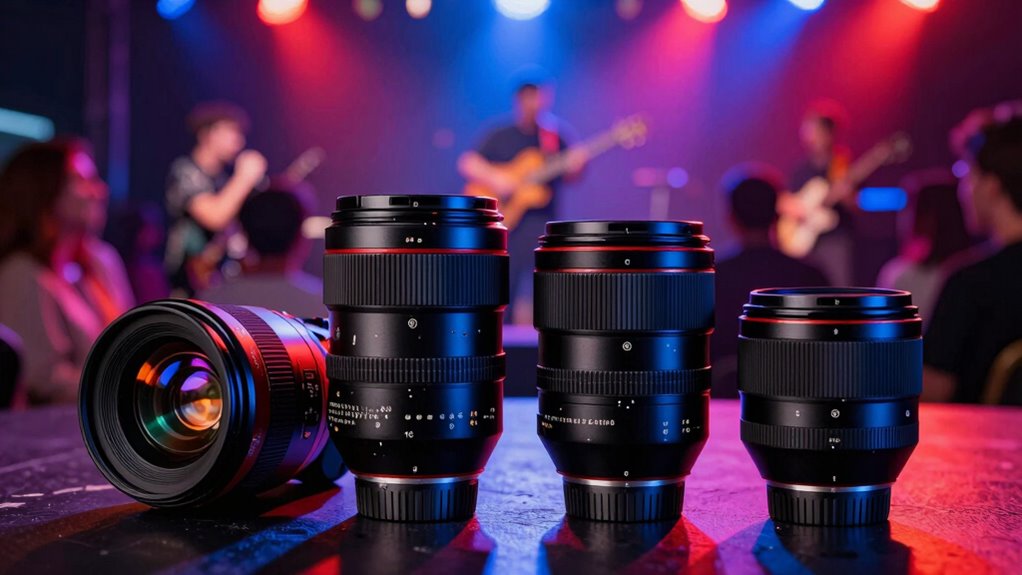

For low-light concerts in 2026, I recommend four fast prime lenses that excel in darkness and action. The Sony FE 35mm F1.4 GM offers exceptional sharpness, beautiful bokeh, and quick autofocus, perfect for vibrant stage moments. The Sony FE 35mm F1.8 is a more compact option with excellent optical quality. The YONGNUO 42.5mm F1.7M II suits Micro Four Thirds cameras with great low-light performance. Finally, the Sony FE 20mm F1.8 G provides wide-angle coverage with fast aperture. Keep going to see how each lens can elevate your concert shots.
Key Takeaways
- Look for lenses with large apertures (F1.4 or F1.8) for optimal light gathering and better low-light performance.
- Prioritize models with fast, accurate autofocus systems to capture fleeting concert moments sharply.
- Choose lightweight, compact lenses for easier handling and portability during dynamic live performances.
- Opt for lenses featuring advanced optical elements like XA or ED for sharp images and minimal aberrations.
- Ensure compatibility with your camera system and consider stabilization features to maximize image clarity in low light.
| Sony FE 35mm F1.4 GM Full-Frame Large-Aperture Wide Angle G Master Lens | 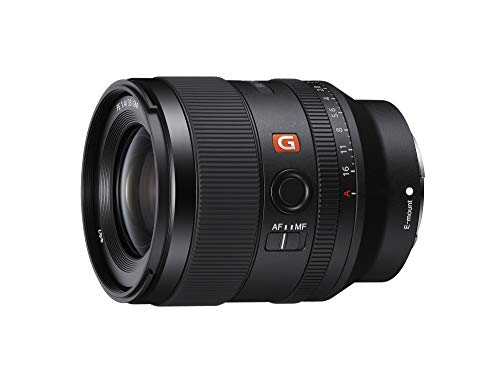 | Professional Highlight | Aperture Size: F1.4 | Focus Mechanism: XD Linear Focus Drive | Compatibility: Full-frame | VIEW LATEST PRICE | See Our Full Breakdown |
| Sony FE 35mm F1.8 Large Aperture Prime Lens (SEL35F18F) | 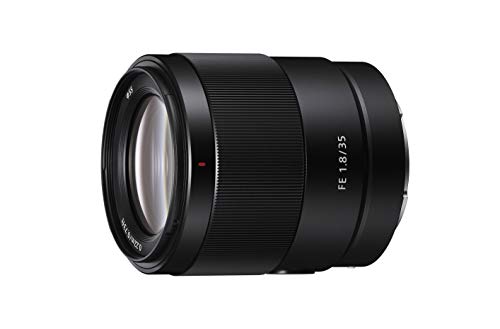 | Compact Performer | Aperture Size: F1.8 | Focus Mechanism: Linear-Motor Autofocus | Compatibility: Full-frame and APS-C | VIEW LATEST PRICE | See Our Full Breakdown |
| YONGNUO 42.5mm F1.7M II Micro Four Thirds Lens |  | Budget Portrait | Aperture Size: F1.7 | Focus Mechanism: Autofocus | Compatibility: Micro Four Thirds | VIEW LATEST PRICE | See Our Full Breakdown |
| Sony FE 20mm F1.8 G Ultra-Wide Prime Lens | 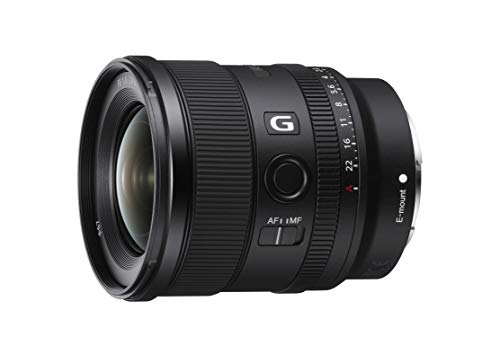 | Wide-Angle Essential | Aperture Size: F1.8 | Focus Mechanism: XD Extreme Dynamic Linear motors | Compatibility: Full-frame | VIEW LATEST PRICE | See Our Full Breakdown |
More Details on Our Top Picks
Sony FE 35mm F1.4 GM Full-Frame Large-Aperture Wide Angle G Master Lens
If you’re shooting low-light concerts in 2026 and need a lens that delivers exceptional brightness and sharpness, the Sony FE 35mm F1.4 GM is an excellent choice. Its large F1.4 aperture captures more light, helping you shoot indoors without a flash. The lens’s advanced optical design, including XA and ED elements, ensures sharp images from corner to corner, even wide open. Its compact, lightweight build makes it easy to handle during dynamic performances. Plus, features like Nano AR Coating reduce flare and ghosting, giving you clearer, high-contrast shots. It’s a versatile, durable lens ideal for capturing vibrant concert moments in challenging lighting.
- Aperture Size:F1.4
- Focus Mechanism:XD Linear Focus Drive
- Compatibility:Full-frame
- Size/Weight:Compact, 1.16 lbs
- Focusing Distance:Not specified
- Optical Elements:XA and ED elements
- Additional Feature:Nano AR Coating II
- Additional Feature:Dust/moisture resistant design
- Additional Feature:Compact, lightweight build
Sony FE 35mm F1.8 Large Aperture Prime Lens (SEL35F18F)
The Sony FE 35mm F1.8 Large Aperture Prime Lens stands out as an excellent choice for photographers capturing low-light concerts, thanks to its bright F1.8 aperture that allows more light into the camera. Its compact, lightweight design makes it easy to carry and quick to handle during live shoots. The 9-blade circular aperture creates beautiful bokeh, perfect for isolating subjects in dark settings. With a high-quality aspherical element, it minimizes aberrations and ensures sharp images. The fast, quiet autofocus system helps capture fleeting moments without disturbance. Overall, this lens offers a fantastic blend of performance, portability, and affordability for concert photography.
- Aperture Size:F1.8
- Focus Mechanism:Linear-Motor Autofocus
- Compatibility:Full-frame and APS-C
- Size/Weight:Compact, 9.9 oz
- Focusing Distance:8.66 inches
- Optical Elements:Aspherical element
- Additional Feature:Supports teleconverter options
- Additional Feature:9-blade circular aperture
- Additional Feature:Ultra-portable size
YONGNUO 42.5mm F1.7M II Micro Four Thirds Lens
Photographers looking for a lightweight, high-quality lens that performs well in low-light conditions will appreciate the YONGNUO 42.5mm F1.7M II Micro Four Thirds. This prime lens offers a sharp f/1.7 aperture, perfect for capturing concerts with limited light. Its compact size and weight—around 5.3 ounces—make it easy to carry and handle during shoots. Compatible with most Micro Four Thirds cameras from Panasonic and Olympus, it’s versatile for portraits, close-ups, and video work. Users praise its image quality and affordability, making it a solid choice for those seeking a fast, portable lens that excels in challenging lighting.
- Aperture Size:F1.7
- Focus Mechanism:Autofocus
- Compatibility:Micro Four Thirds
- Size/Weight:Very compact, 5.3 oz
- Focusing Distance:0.30 meters (~11.8 inches)
- Optical Elements:Not specified
- Additional Feature:Auto focus compatibility
- Additional Feature:Includes 12-month warranty
- Additional Feature:Compact travel-friendly size
Sony FE 20mm F1.8 G Ultra-Wide Prime Lens
For capturing stunning wide-angle shots in low-light concert environments, the Sony FE 20mm F1.8 G Ultra-Wide Prime Lens stands out with its bright F1.8 aperture. This lens offers exceptional exposure control and a shallow depth of field, making it perfect for dramatic, high-quality images. Its advanced aspheric elements deliver natural, high-resolution images with excellent sharpness. Compact and lightweight, it’s easy to carry around during energetic performances. Equipped with dual XD Linear motors, autofocus is fast and precise, even with moving subjects. Overall, this lens combines wide-angle versatility with superb low-light performance, making it a top choice for concert photography in 2026.
- Aperture Size:F1.8
- Focus Mechanism:XD Extreme Dynamic Linear motors
- Compatibility:Full-frame
- Size/Weight:Compact, size not specified but lightweight
- Focusing Distance:Not specified
- Optical Elements:Aspheric elements
- Additional Feature:Advanced aspheric elements
- Additional Feature:Extreme Dynamic Linear motors
- Additional Feature:High resolution across frame
Factors to Consider When Choosing a Fast Prime Lens for Low Light Concerts
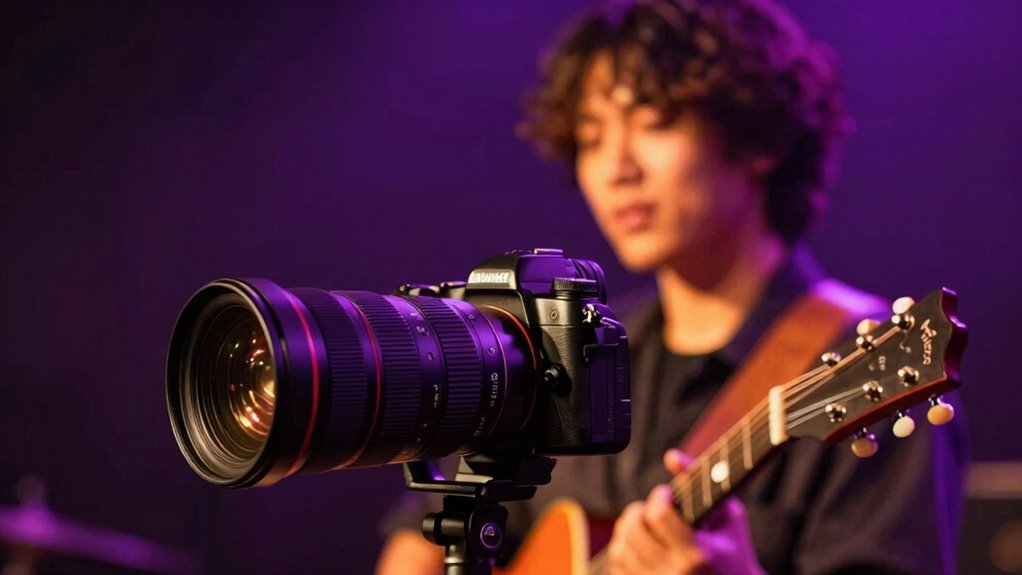
When selecting a fast prime lens for low light concerts, I focus on several key factors to guarantee top performance. The aperture size, autofocus speed, lens size, and image stabilization all play essential roles in capturing sharp, well-lit shots. Considering these points helps me choose a lens that balances quality, ease of use, and portability.
Aperture Size Importance
Aperture size plays a essential role in choosing the right fast prime lens for low-light concerts because it determines how much light the lens can gather. A larger aperture, like F1.4 or F1.8, allows more light to reach the sensor, which is critical in dim environments. This enables me to shoot with faster shutter speeds, freezing motion and reducing blur. Wider apertures also create a shallow depth of field, helping subjects stand out against blurred backgrounds. Additionally, they enhance image clarity by minimizing noise, so I don’t need to rely heavily on high ISO settings that can introduce grain. Overall, an aperture of F1.4 or F1.8 strikes a great balance between brightness and image quality, making it ideal for capturing sharp, well-exposed shots in challenging lighting.
Low Light Performance
Choosing the right fast prime lens for low-light concerts hinges on several key factors that directly impact image quality. Lenses with wide apertures like F1.4 or F1.8 allow more light to hit the sensor, which is essential in dark environments. This increased brightness lets me shoot with faster shutter speeds, reducing motion blur from lively performers. Additionally, larger apertures create a shallow depth of field, helping me isolate my subject and blur distracting backgrounds. High-quality optical elements and coatings are indispensable—they cut down on flare and internal reflections, ensuring sharp, clear images even in dim conditions. Plus, the extra light from fast lenses lets me shoot at higher ISO settings without excessive noise, resulting in cleaner, more detailed photos under challenging lighting.
Autofocus Speed and Accuracy
Autofocus speed and accuracy are essential considerations in low-light concert settings because capturing fleeting moments requires rapid and precise focusing. Fast prime lenses with wide apertures like f/1.4 gather enough light to help autofocus respond quickly. The type of focusing motor matters too—linear and XD motors deliver faster, more accurate focus, especially in challenging conditions. High-quality lenses with advanced optical designs reduce focus hunting and improve autofocus precision. Additionally, a lens’s internal algorithms influence responsiveness; models with optimized AF systems adapt swiftly to changing scenes. To consistently capture sharp images in low light, you need a lens that combines a fast aperture with a responsive autofocus system capable of making rapid, accurate adjustments. That combination ensures you won’t miss those critical concert moments.
Lens Size and Portability
When photographing or filming in low-light concert environments, the size and weight of your lens can make a significant difference. Smaller lenses are more portable and easier to carry, allowing me to move quickly between different angles without hassle. Lightweight lenses reduce fatigue during long shoots, helping me stay focused and steady. Compact designs are less noticeable, making it easier to be discreet in crowded settings. Their portability also speeds up setup time and enables swift adjustments or changes in shooting positions. Additionally, smaller lenses work better with handheld stabilization gear, which is essential in low-light conditions. Overall, choosing a compact, lightweight lens not only enhances mobility but also improves my ability to capture spontaneous moments effortlessly.
Image Stabilization Features
Since camera shake can ruin sharpness in low-light concert shots, image stabilization features are essential to contemplate. Many fast prime lenses come with optical stabilization (OIS) or in-body stabilization (IBIS), which helps keep shots sharp when shooting handheld. Effective stabilization can compensate for small movements during long exposures, a common scenario in dim environments. This not only improves image clarity but also extends the usable shutter speed, allowing you to capture brighter, clearer photos without sacrificing quality. Keep in mind, though, not all prime lenses include stabilization. Choosing a lens with this feature can make a significant difference in low-light concert photography, helping you achieve crisp, professional-looking images even in challenging lighting conditions.
Bokeh and Aesthetic Quality
Opting for a fast prime lens with a wide maximum aperture not only improves your low-light performance but also allows you to create stunning bokeh that elevates your concert photos. A larger aperture like F1.4 or F1.8 produces a shallow depth of field, making your subject stand out against a beautifully blurred background. The quality of this bokeh depends on the lens’s aperture blade design; rounded blades create smoother, more pleasing out-of-focus areas. Lenses with larger apertures also generate softer, more pronounced bokeh effects, adding an artistic touch. Advanced optical elements, such as aspherical or XA elements, help maintain consistent bokeh quality across the frame without distracting artifacts. Ultimately, good bokeh enhances subject isolation, mood, and intimacy, making your low-light concert shots truly mesmerizing.
Compatibility With Camera Systems
Choosing the right fast prime lens begins with guaranteeing compatibility with your camera system. First, check that the lens mount matches your camera, whether it’s Sony E-mount, Micro Four Thirds, or another format. Next, verify if the lens supports your sensor type—full-frame or APS-C—to maximize image quality. Autofocus is vital in low light, so confirm that the lens offers autofocus and that it’s compatible with your camera’s system for quick, reliable focusing. Also, consider whether the lens’s aperture range aligns with your camera’s metering and exposure settings to avoid issues. Finally, assess the lens’s size and weight to guarantee it’s suitable for your camera body and shooting style. Compatibility guarantees seamless operation and peak performance during concerts.
Frequently Asked Questions
How Do Fast Prime Lenses Impact Camera Battery Life During Concerts?
Fast prime lenses can drain my camera’s battery faster during concerts because they require more power to operate, especially if I’m shooting at wide apertures or using continuous autofocus. I’ve noticed that shooting with these lenses means I need to carry extra batteries and manage my settings carefully. However, the improved low-light performance makes up for the extra power consumption, helping me capture sharp images even in challenging lighting.
Are There Any Specific Maintenance Tips for Fast Prime Lenses?
Think of your lens as a trusted musical instrument that needs care to perform its best. I always keep my fast prime lenses clean with a soft brush and microfiber cloth to remove dust and fingerprints. I avoid changing lenses in dusty environments and store them in padded cases. Regularly check for firmware updates and handle them gently. Proper maintenance guarantees my lenses deliver sharp images night after night.
Can Fast Prime Lenses Be Effectively Used With Smartphone Adapters?
Yes, I find fast prime lenses can be effectively used with smartphone adapters. They greatly improve low-light performance, giving my photos better clarity and depth. I make sure I use high-quality adapters that securely fit my phone and lens. While it takes a bit of practice to stabilize the setup, once I get the hang of it, I love capturing sharp, professional-looking shots even in dim concert environments.
What Are the Common Challenges When Shooting With Fast Prime Lenses?
Sure, shooting with fast prime lenses sounds like a breeze, but it’s not all roses. The biggest challenge I face is the super shallow depth of field, which makes focusing a nerve-wracking game of chance. Plus, their fixed focal length means I can’t zoom in or out, forcing me to physically move around—sometimes awkwardly—just to get the shot I want. And let’s not forget, their compact size can make them tricky to stabilize.
How Do Fast Prime Lenses Perform in Extremely Low-Light Scenarios Like Indoor Venues?
Fast prime lenses excel in extremely low-light indoor venues. I love how their wide apertures let in more light, making it easier to capture sharp, well-exposed images without a flash. They perform beautifully, even in dim conditions, by allowing higher ISO settings and faster shutter speeds. This means I can freeze motion and capture atmospheres with clarity, all while maintaining minimal noise for stunning concert shots.
Conclusion
Choosing the right fast prime lens can truly elevate your concert photography. Did you know that lenses with wider apertures can let in up to 4 times more light? This means sharper shots and less noise, even in dim environments. Whether you prefer a versatile 35mm or a wide 20mm, investing in a fast lens makes capturing those electrifying concert moments easier and more stunning. Happy shooting—your best shots are just a lens away!