
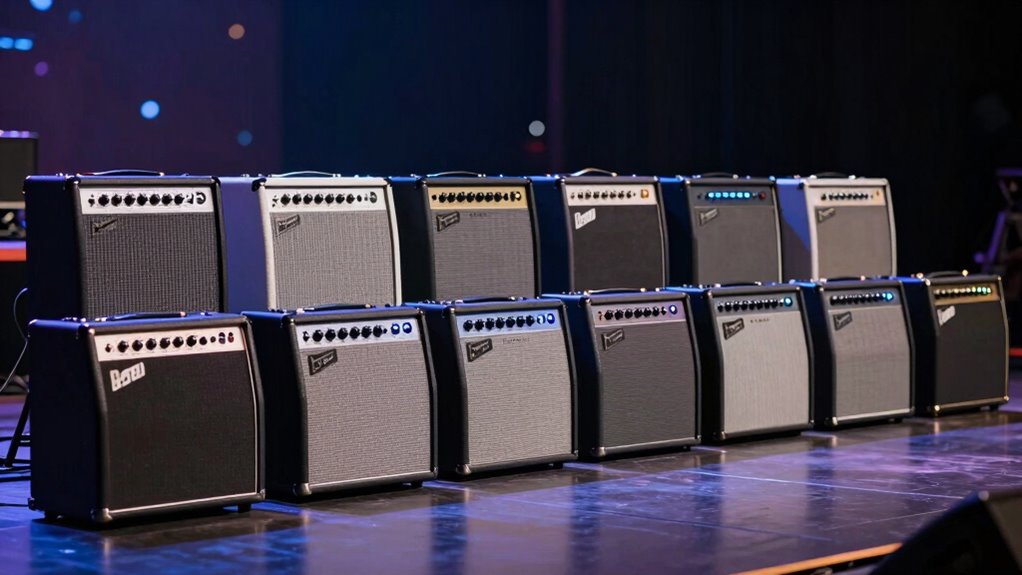

When searching for a keyboard amp for stage use, the goal is to find a reliable, powerful, and versatile solution that can handle live performances. The Vox VX50KB stands out as the best overall choice thanks to its balanced power and portability, while the Roland KC-220 offers excellent battery-powered performance for gigs on the go. A key challenge in this category is balancing power, size, and sound quality without overspending or sacrificing portability. Keep reading to see how these options compare across critical features and which one fits your stage setup best.

Get audio and creator gear delivered free with Prime
- Fast, free delivery on millions of items
- Prime Video, Amazon Music and more included
- Member-only deals all year
Complete the kit

Key Takeaways
- Power output varies significantly, from compact 20W models to high-wattage 1000W setups, influencing volume and headroom.
- Portability is crucial for stage use; battery-powered options like Roland KC-220 excel in mobility but may trade off some power or features.
- Built-in mixing channels differ, with some amps offering multiple inputs suitable for combining keyboards and microphones.
- Sound quality and clarity are consistent across brands at similar wattages, but larger speakers and stereo options provide richer, more immersive sound.
- Budget constraints often lead to choosing smaller or less powerful amps, but investing in a slightly larger model can yield better performance and future-proofing.
| Donner DKA-20 20-Watt Keyboard Amplifier with Two Channels and Microphone Input |  | Best Compact & Versatile Practice Amp | Power: 20 Watts | Speakers: 8-inch woofer, 2-inch tweeter | Impedance: 4 ohms | VIEW ON AMAZON | See Our Full Breakdown |
| Vox VX50KB 50-Watt Keyboard Amplifier |  | Best for Small to Medium Gigs with Rich Low-End | Power Output: 50 watts | Preamp: NuTube-equipped | Speaker Size: 8 inches | VIEW ON AMAZON | See Our Full Breakdown |
| Roland KC-220 Battery-Powered Stereo Keyboard Amplifier, 30 Watt |  | Best Portable Battery-Powered Stage Option | Power Output: 30 watts | Speaker Size: 5 inches | Power Source: Battery or AC | VIEW ON AMAZON | See Our Full Breakdown |
| Roland 3-Channel Mixing Keyboard Amplifier, 50 watt (KC-80) |  | Best for Stage Versatility and Better Bass | Power: 50 watts | Speaker: 10-inch woofer | Inputs: 3 line, XLR, auxiliary | VIEW ON AMAZON | See Our Full Breakdown |
| Coolmusic 30W Electric Drum and Keyboard Amplifier with 3-Year Warranty |  | Best for Versatile Instrument Compatibility & Outdoor Use | Power: 30W | Frequency Response: 20Hz – 20kHz | Channels: 2 | VIEW ON AMAZON | See Our Full Breakdown |
| Peavey KB 2 50-Watt 1×10 Keyboard Amplifier |  | Best for Versatile Live Performances | Power: 50 watts | Channels: 4 | Speaker Size: 10 inches | VIEW ON AMAZON | See Our Full Breakdown |
| KP-612SX 500-1000W 2 x 12-inch Stereo Keyboard Amplifier |  | Best for Large Venues and Powerful Sound Projection | Power: 500-1000W | Channels: 2 | Speaker Size: 12 inches | VIEW ON AMAZON | See Our Full Breakdown |
| keyboard amp for stage use | Power | Inputs | Speaker Size |
|---|---|---|---|
| Donner DKA-20 20-Watt Keyboard | 20 Watts | Two 1/4" instrument, 1/8" auxiliary | — |
| Vox VX50KB 50-Watt Keyboard Am | — | — | 8 inches |
| Roland KC-220 Battery-Powered | — | — | 5 inches |
| Roland 3-Channel Mixing Keyboa | 50 watts | 3 line, XLR, auxiliary | — |
| Coolmusic 30W Electric Drum an | 30W | 2 with gain, AUX | — |
| Peavey KB 2 50-Watt 1×10 Keybo | 50 watts | Channels 1 & 2: 1/4"; Channel 3: XLR and 1/4" | 10 inches |
| KP-612SX 500-1000W 2 x 12-inch | 500-1000W | — | 12 inches |
More Details on Our Top Picks
Donner DKA-20 20-Watt Keyboard Amplifier with Two Channels and Microphone Input
The Donner DKA-20 stands out for its affordability and versatility, making it ideal for musicians needing a portable option for practice and small gigs. Compared to the Vox VX50KB, it offers fewer watts, but its dual inputs and microphone support make it more adaptable for diverse setups. However, its limited power means it won’t suffice for larger performances, and the basic EQ lacks effects, which could restrict sound shaping. The compact size and lightweight design make it easy to carry, but the speakers may lack deep bass, especially at higher volumes.
Pros:- Powerful 20-watt output for small spaces
- Multiple inputs including microphone, aux, and instrument channels
- Compact, portable design for easy transport
Cons:- Limited to 20 watts, not suitable for large venues
- Basic features without effects or advanced sound options
Best for: Beginners and gigging musicians who need a lightweight, all-in-one practice amp for small venues or rehearsals
Not ideal for: Performers at larger venues or those seeking advanced sound effects, as its 20-watt output and basic features limit scalability
- Power:20 Watts
- Speakers:8-inch woofer, 2-inch tweeter
- Impedance:4 ohms
- Frequency Response:50 to 20,000 Hz
- Inputs:Two 1/4″ instrument, 1/8″ auxiliary
- Outputs:Headphone, DI
Our verdict“This amp is a practical choice for beginners and small-scale performers needing portability and basic sound control.”
Vox VX50KB 50-Watt Keyboard Amplifier
The Vox VX50KB offers a significant power boost over smaller practice amps, making it suitable for small to medium gigs. Its NuTube preamp provides warm, tube-like distortion, which adds richness compared to the Donner DKA-20’s basic tone. The bass reflex structure enhances low-end response, making it better suited for performances where bass presence matters. However, its size and weight may be less ideal for frequent transport, and its 50-watt output still limits use at larger venues. Compared to the Roland KC-220, it provides more character but less onboard effects and simple connectivity.
Pros:- 50-watt power suitable for rehearsals and small gigs
- Rich tone from NuTube preamp adds warmth
- Bass reflex design enhances low-end response
Cons:- Relatively bulky and heavier for portable use
- Limited onboard effects and advanced features
Best for: Musicians needing a powerful, versatile amp for rehearsals and small gigs with a richer sound profile
Not ideal for: Travelers or street performers who prioritize portability over power, as it can be bulky to carry around
- Power Output:50 watts
- Preamp:NuTube-equipped
- Speaker Size:8 inches
- Design:Three-channel
- Features:Aux In, Headphones Out, Line Out
Our verdict“This amp is well-suited for stage performers needing a powerful, warm-sounding amp with multiple controls for small venues.”
Roland KC-220 Battery-Powered Stereo Keyboard Amplifier, 30 Watt
The Roland KC-220 excels in portability, with battery operation and a durable build, making it ideal for street musicians and outdoor performers. Its 30-watt stereo output with a 5-inch speaker provides clear, full-range sound suitable for rehearsals or small gigs. Unlike the Vox VX50KB, its battery feature offers true mobility, but the smaller speaker size and lower wattage limit its suitability for larger crowds. The onboard mixing and DSP effects add flexibility, yet the 30 watts may fall short in louder environments, and battery life varies with usage.
Pros:- Battery-powered for maximum portability
- Multiple input options including XLR and AUX
- Built-in DSP effects for versatile sound
Cons:- Limited to 30 watts, not ideal for large audiences
- Small 5-inch speaker may lack depth at higher volumes
Best for: Performers needing an easy-to-transport amp for street gigs, outdoor rehearsals, or busking
Not ideal for: Large venue performers or those requiring extensive sound shaping, as its limited power and small speaker size restrict output
- Power Output:30 watts
- Speaker Size:5 inches
- Power Source:Battery or AC
- Input Channels:3/4
- Battery Life:7-8 hours
Our verdict“This amp is perfect for performers prioritizing mobility and quick setup over high volume output.”
Roland 3-Channel Mixing Keyboard Amplifier, 50 watt (KC-80)
The Roland KC-80 offers a step up in stage-ready features with its upgraded 10-inch woofer and three input channels, making it more capable than the smaller KC-220. Its enhanced bass reproduction and multiple input options—including XLR mic input—make it a flexible choice for keyboardists who also sing or need auxiliary inputs. Compared with the Vox VX50KB, it provides better bass and more inputs, but its 50-watt power still limits use in larger venues. The absence of built-in effects might be a downside for performers seeking more sound-shaping options.
Pros:- Powerful 50-watt output with an upgraded 10-inch woofer
- Multiple input options including XLR and auxiliary
- Compact yet stage-robust design with durable construction
Cons:- Limited to 50 watts, may not cover large stages
- No onboard effects or extensive sound processing
Best for: Keyboard players and vocalists performing in small to medium venues who need multiple inputs and better bass response
Not ideal for: Performers at large festivals or requiring onboard effects, as it lacks advanced processing and higher wattage
- Power:50 watts
- Speaker:10-inch woofer
- Inputs:3 line, XLR, auxiliary
- Outputs:Line, headphones, sub
- Features:Onboard mixing, master EQ
Our verdict“This amp is a solid choice for stage musicians needing multiple inputs and improved bass without excess size or weight.”
Coolmusic 30W Electric Drum and Keyboard Amplifier with 3-Year Warranty
The Coolmusic 30W amplifier offers a versatile, portable solution for keyboardists, drummers, and outdoor performers. Its two-channel design with dedicated gain controls makes it flexible for different instruments, and the inclusion of EQ controls allows some sound shaping. Unlike the Roland KC-220 or Vox VX50KB, it lacks advanced features like onboard effects or Bluetooth, but its rugged build and USB interface for music storage add convenience. The 30-watt power limits its use at larger venues, yet its portability and warranty make it appealing for outdoor or band practice scenarios.
Pros:- Versatile for drums, keyboards, and outdoor use
- Portable and lightweight design
- Includes headphone and DI outputs for flexible practice
Cons:- Limited power for large venues
- No Bluetooth or advanced effects options
Best for: Musicians who perform outdoors or in band settings requiring a multi-instrument compatible, portable amp
Not ideal for: Performers needing high volume or extensive sound effects, as its 30-watt power and basic EQ might fall short
- Power:30W
- Frequency Response:20Hz – 20kHz
- Channels:2
- Inputs:2 with gain, AUX
- Outputs:Headphone, DI
- Connectivity:USB, Bluetooth (implied)
Our verdict“This amp is suited for outdoor, rehearsal, or band practice scenarios where portability outweighs high volume capacity.”
Peavey KB 2 50-Watt 1×10 Keyboard Amplifier
The Peavey KB 2 stands out for its four-channel setup, making it ideal for performers who need multiple inputs in a single amp. Compared to the Vox VX50KB, which offers a simpler design with fewer channels, the KB 2 provides greater flexibility for live settings involving multiple instruments or mics. Its 50-watt power output ensures decent volume for small to medium venues, but the lack of detailed features like built-in effects or EQ may leave some users wanting more control. The amp’s design leans toward durability and stability, though it could be less portable due to its size. This model is best suited for keyboardists or performers who require multiple input sources and are willing to accept a bulkier unit for versatility.
Pros:- Powerful 50-watt output suitable for small to medium venues
- Four channels with varied input options including XLR and 1/4″
- Biamped design delivers clear, balanced sound
Cons:- Limited detailed specifications and features like effects or onboard EQ
- Bulky and less portable, which can hinder quick setup
Best for: Keyboard players or multi-instrument performers who need flexible input options for live gigs.
Not ideal for: Musicians seeking a lightweight, portable amp with advanced onboard effects or tone shaping features.
- Power:50 watts
- Channels:4
- Speaker Size:10 inches
- Inputs:Channels 1 & 2: 1/4″; Channel 3: XLR and 1/4″
- Headphone Output:Yes
- Design:Bulky, durable
Our verdict“This amp is a solid choice for performers who value multiple inputs and robust power over portability or onboard effects.”
KP-612SX 500-1000W 2 x 12-inch Stereo Keyboard Amplifier
The KP-612SX is tailored for those needing substantial stage volume and clear stereo sound, thanks to its 500-1000W power range and Faital speakers. Unlike the Peavey KB 2, which offers multiple channels but less raw power, the KP-612SX emphasizes high-volume output suitable for larger venues. Its V-shaped cabinet design enhances sound dispersion, making it ideal for audiences that require wide sound coverage. The included volume and bass controls allow for quick adjustments to tailor the sound, although the amp’s size and weight could be an obstacle for performers who frequently move gear. This pick makes the most sense for keyboardists or bands playing at bigger venues where sheer power and sound clarity are priorities.
Pros:- Extremely powerful with 500-1000W output for large stages
- High-quality Faital speakers ensure clear, detailed sound
- V-shaped cabinet design enhances sound projection and coverage
- Includes volume and bass controls for customization
Cons:- Heavy and bulky, making transportation and setup more difficult
- Limited detail on additional features like effects or onboard tone shaping
Best for: Keyboardists performing in larger venues or bands needing high-volume, stereo sound projection.
Not ideal for: Musicians with limited space or those who prioritize portability over raw power and sound quality.
- Power:500-1000W
- Channels:2
- Speaker Size:12 inches
- Cabinet Design:V-shaped
- Speakers:Faital
- Controls:Volume, Bass
Our verdict“This amp is ideal for performers requiring high output and wide coverage at large venues, accepting the tradeoff of portability.”
How We Picked
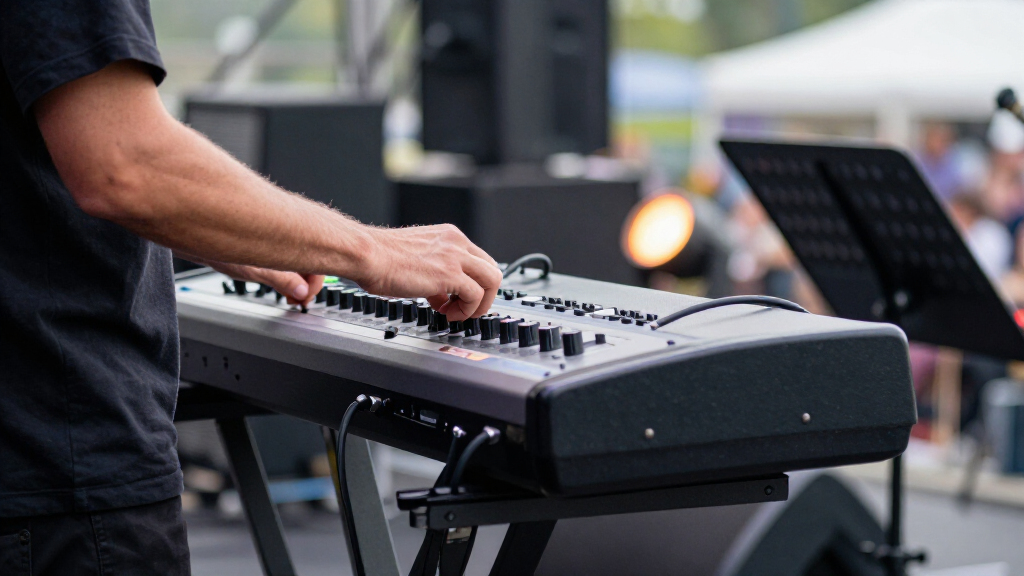
Products were selected based on their power output, portability, input flexibility, build quality, and overall value for stage use. We prioritized amps that can handle live environments with sufficient volume, clear sound, and durability. The ranking reflects a balance between performance and practicality, ensuring each option appeals to different types of performers—from beginners to seasoned professionals. Features like battery operation, multiple channels, and speaker size were key considerations, along with user reviews and brand reputation to gauge reliability and real-world performance.Factors to Consider When Choosing Keyboard Amp For Stage Use
Choosing the right keyboard amp for stage use involves understanding several key factors. The ideal amp should deliver enough power to fill your performance space without distortion, be portable enough to transport easily, and offer versatile inputs for your keyboard and microphone. It’s also important to consider build quality and additional features like EQ controls and mixing options. Making the right choice depends on your specific gig requirements and budget, so weighing these factors carefully can help you find a stage-ready solution.Power and Volume Capacity
The primary consideration for stage amps is how much power they deliver. Higher wattage generally means greater volume and headroom, which is essential in larger venues or outdoor settings. However, more power often means bigger size and weight, so balancing your needs is key. For smaller gigs, 20-30W might suffice, but for larger stages, 50W or more provides the volume and clarity needed to be heard clearly without distortion.
Portability and Size
Portability becomes critical if you frequently move your gear between gigs. Battery-powered amps like the Roland KC-220 add flexibility for outdoor or mobile performances. Compact designs save space on stage and during transport but may limit sound projection or features. Consider a balance—if you perform at a single venue regularly, size might be less important than sound quality, but for gigging around town, lighter models are advantageous.
Input Flexibility and Connectivity
Most stage setups involve multiple sources, so look for amps with multiple inputs, including microphone and instrument channels. Some models also include line-level inputs, aux connections, and EQ controls, which help tailor the sound on the fly. A versatile input setup ensures you can connect all your gear without additional mixers, simplifying your live performance setup.
Sound Quality and Speaker Configuration
Sound clarity and richness are vital for live performances. Larger speakers and stereo configurations tend to produce fuller sound, which is especially noticeable with keyboard frequencies. An amp with good dispersion and balanced EQ controls allows you to adapt to different venue acoustics. Avoid models that sound thin or muddy at higher volumes, as they can detract from your performance.
Build Quality and Durability
Stage amps endure frequent transport and handling, so durability matters. Look for sturdy cabinets, reliable connectors, and quality components that resist wear and tear. Investing in a well-built amp reduces the risk of breakdowns during a performance and extends the lifespan of your gear, especially if you gig regularly.
Frequently Asked Questions
How much power do I really need for stage use?
The required power depends on your performance environment. For small clubs or indoor venues, 20-50W can be enough if the amp has quality speakers and good dispersion. Larger venues or outdoor gigs typically demand 100W or more to reach the audience clearly without distortion. Consider also the size of your stage and the volume of other instruments playing alongside your keyboard to determine the right wattage for your needs.
Should I get a battery-powered keyboard amp for stage use?
Battery-powered amps like the Roland KC-220 offer excellent mobility and quick setup for outdoor or mobile performances. However, they may not provide as much power as larger wired models, which could limit their effectiveness in bigger venues. If your gigs are mostly outdoor or involve frequent transport, a battery-powered option adds convenience. For larger or louder settings, a wired, higher-wattage amp may be preferable.
Is a stereo speaker setup worth it for stage use?
Yes, stereo configurations typically deliver a richer, more immersive sound that enhances the clarity of your keyboard’s tone. Stereo amps can better disperse sound across a stage, reducing dead spots and providing a fuller listening experience for the audience. If sound quality and stage coverage are priorities, investing in a stereo amp will generally pay off.
What features should I look for in a stage keyboard amp?
Beyond power and size, look for multiple input channels, EQ controls, and a sturdy build. Some amps include built-in mixers or effects, which can simplify your setup. Consider if you need microphone inputs or auxiliary outputs for connecting other gear. These features allow more flexibility and better control over your sound during live performances.
How important is build quality for a stage amp?
Build quality directly impacts durability and reliability during gigs. A well-constructed amp with sturdy materials and solid connectors reduces the risk of failures mid-performance. Investing in a rugged model also means your gear withstands frequent transport and handling, ultimately saving money and hassle over time.
Conclusion
For most stage performers, the Vox VX50KB offers a balanced mix of power, portability, and sound quality, making it the best overall choice. Beginners or those with smaller venues will benefit from the Roland KC-220, thanks to its simplicity and mobility. For those seeking a premium, high-wattage setup, the KP-612SX delivers unmatched volume and stereo sound, ideal for large stages or professional use. Budget-conscious players should consider the Donner DKA-20, which provides decent power at an affordable price. Ultimately, your pick depends on your venue size, mobility needs, and budget constraints.
As an affiliate, we earn on qualifying purchases.Halloween Picks
halloween






![Iron Maiden Legend Nicko McBrain Turned Down Trump Golf Invite: “[He] Should Be Put In Jail”](https://deadsetlive.com/wp-content/uploads/2026/10/iron-maiden-legend-nicko-mcbrain-turned-down-trump-golf-invite-he-should-be-put-featured-260x140.jpg)