If you’re looking for the best on-camera microphones for concerts in 2026, I recommend models like the Shure VP83 LensHopper, Rode VideoMic NTG, and RØDE VideoMic Pro+ because they handle high SPLs well and diminish unwanted noise. The BOYA BY-MM1 AI and COMICA CVM-V30 LITE also offer solid performance with good durability and noise cancellation. Keep watching to discover which mic fits your needs perfectly and ensures clean, reliable sound during loud live performances.
Key Takeaways
- Microphones should handle at least 130 dB SPL with wide frequency response for clear, natural sound in loud concert environments.
- Look for supercardioid or lobar patterns to focus on desired sources while rejecting crowd and stage noise.
- Ensure reliable power options like long-lasting batteries or phantom power compatibility for uninterrupted recordings.
- Choose durable, wind-resistant microphones with shock mounts to minimize handling noise and environmental interference outdoors.
- Prioritize high SPL capacity, low self-noise, and seamless connectivity to capture high-energy performances without distortion.
| Shure VP83 LensHopper Shotgun Microphone for DSLR |  | Professional Precision | Compatibility: DSLR, camera, smartphone (via 3.5mm) | Power Source: 1 AA battery | Polar Pattern: Supercardioid/lobar | VIEW LATEST PRICE | See Our Full Breakdown |
| BOYA BY-MM1 AI Shotgun Mic with Noise Cancellation |  | Versatile Noise Reduction | Compatibility: Cameras, smartphones (iPhone, Android), computers (USB-C, 3.5mm) | Power Source: Built-in AI chip, rechargeable/USB power | Polar Pattern: Supercardioid | VIEW LATEST PRICE | See Our Full Breakdown |
| COMICA CVM-V30 LITE Microphone for Cameras & Smartphones |  | Easy Compatibility | Compatibility: iPhone, Android, cameras, audio recorders (3.5mm mic jack) | Power Source: Powered via device (no battery) | Polar Pattern: Supercardioid | VIEW LATEST PRICE | See Our Full Breakdown |
| Rode VideoMic NTG Camera-mount Shotgun Microphone,Black | 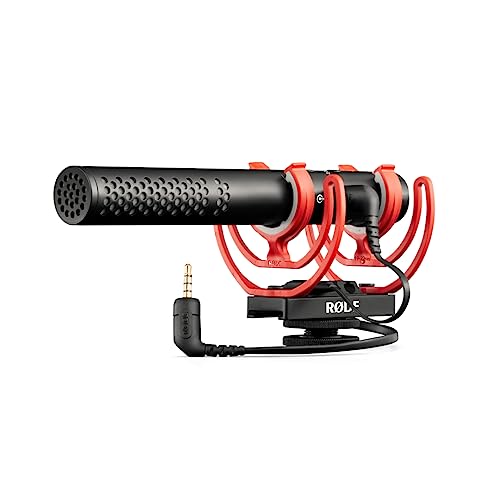 | Broadcast-Quality Flexibility | Compatibility: Cameras, smartphones, tablets, computers (3.5mm, USB) | Power Source: 2 AA or USB power | Polar Pattern: Multi-pattern (high-pass, pad, boost) | VIEW LATEST PRICE | See Our Full Breakdown |
| RØDE VideoMic Pro+ On-Camera Shotgun Microphone |  | High-End Reliability | Compatibility: Cameras, smartphones, tablets, computers (3.5mm jack, USB, Lightning) | Power Source: Rechargeable lithium-ion or 2 AA batteries | Polar Pattern: Supercardioid | VIEW LATEST PRICE | See Our Full Breakdown |
More Details on Our Top Picks
Shure VP83 LensHopper Shotgun Microphone for DSLR
If you’re looking for a reliable on-camera microphone that delivers professional-quality audio for your DSLR recordings, the Shure VP83 LensHopper is an excellent choice. It captures detailed, high-definition sound with a full low-end response, thanks to its wide frequency range from 50 Hz to 20,000 Hz. The super cardioid polar pattern focuses on your subject while rejecting unwanted noise from the sides and rear. Its integrated Rycote Lyre shock mount isolates vibrations and mechanical noise, ensuring clean audio. Plus, with strong RF immunity and a long-lasting battery, it’s built for demanding environments like concerts, helping you record clear, focused sound even in high SPL situations.
- Compatibility:DSLR, camera, smartphone (via 3.5mm)
- Power Source:1 AA battery
- Polar Pattern:Supercardioid/lobar
- Digital Features/Controls:No digital controls
- Connectivity:0.125-inch unbalanced
- Design & Mounting:Compact, shock mount
- Additional Feature:Integrated shock mounting system
- Additional Feature:RF interference rejection
- Additional Feature:Long battery life
BOYA BY-MM1 AI Shotgun Mic with Noise Cancellation
The BOYA BY-MM1 AI Shotgun Microphone stands out as an excellent choice for content creators and videographers who need clear, professional audio even in noisy environments. Its advanced AI-powered noise cancellation reduces background noise by -40 dB, ensuring crisp voice pickup. Designed for versatile use, it works seamlessly with cameras, smartphones, and computers, offering dual 3.5mm and USB-C outputs for recording on multiple devices simultaneously. The large-diaphragm capsule delivers high sensitivity and studio-quality sound with a supercardioid pattern that isolates vocals. Plus, the intuitive app controls, long battery life, and durable build make it a reliable, all-in-one solution for high SPL concert environments.
- Compatibility:Cameras, smartphones (iPhone, Android), computers (USB-C, 3.5mm)
- Power Source:Built-in AI chip, rechargeable/USB power
- Polar Pattern:Supercardioid
- Digital Features/Controls:App control, noise reduction, gain, EQ
- Connectivity:3.5mm, USB-C outputs
- Design & Mounting:Compact, app-controlled, durable
- Additional Feature:AI-powered noise reduction
- Additional Feature:Dual output ports
- Additional Feature:Real-time app control
COMICA CVM-V30 LITE Microphone for Cameras & Smartphones
The COMICA CVM-V30 LITE Microphone stands out as an ideal choice for content creators who need a versatile, contactless solution for capturing clear audio on cameras and smartphones. Its universal compatibility means you can easily switch between iPhones, Android devices, DSLRs, and camcorders without extra adapters—just select the mode on the microphone. Powered through device connectivity, it eliminates the need for batteries, making long recording sessions hassle-free. The super-cardioid pattern and shock mount minimize background noise and handling noise, ensuring professional-quality sound. Its compact, red design with cold-shoe and 1/4-inch thread makes it perfect for on-the-go filming and live concert recordings.
- Compatibility:iPhone, Android, cameras, audio recorders (3.5mm mic jack)
- Power Source:Powered via device (no battery)
- Polar Pattern:Supercardioid
- Digital Features/Controls:No digital controls
- Connectivity:3.5mm mic jack
- Design & Mounting:Small, shock mount, versatile
- Additional Feature:No battery required
- Additional Feature:Compact, lightweight design
- Additional Feature:Shock-absorption mount
Rode VideoMic NTG Camera-mount Shotgun Microphone,Black
Designed for on-camera use, the Rode VideoMic NTG stands out with its broadcast-grade sound quality and versatile features, making it an ideal choice for concert recordings. Its shotgun design, shared with the award-winning NTG5, delivers natural, uncolored sound with unmatched clarity. The microphone offers digital switching options like high-pass filter, -20dB pad, and high-frequency boost, giving me precise control over audio output. Its auto-sensing 3.5mm output detects whether I connect it to a camera or mobile device, eliminating extra cables. Plus, it functions as a USB microphone for computers and tablets, making it highly adaptable for various professional and amateur recording scenarios.
- Compatibility:Cameras, smartphones, tablets, computers (3.5mm, USB)
- Power Source:2 AA or USB power
- Polar Pattern:Multi-pattern (high-pass, pad, boost)
- Digital Features/Controls:Digital switching, filters, gain control
- Connectivity:3.5mm, USB, mobile interface
- Design & Mounting:Mountable, flexible features
- Additional Feature:Digital high-pass filter
- Additional Feature:Auto device detection
- Additional Feature:USB and mobile interface
RØDE VideoMic Pro+ On-Camera Shotgun Microphone
If you’re capturing live concert footage and need reliable on-camera audio, the RØDE VideoMic Pro+ stands out with its advanced digital switching and superior shock absorption. It features a top-tier Rycote Lyre suspension system, ensuring stability and minimizing handling noise. The microphone offers flexible power options, including a rechargeable RØDE LB-1 battery, 2 AA batteries, or Micro USB for continuous use. Its digital controls include a high-pass filter, high-frequency boost, pad, and safety channel, giving you precise sound management. Designed for fast-paced environments, it’s perfect for run-and-gun shooting, delivering high-quality audio that reduces post-production time.
- Compatibility:Cameras, smartphones, tablets, computers (3.5mm jack, USB, Lightning)
- Power Source:Rechargeable lithium-ion or 2 AA batteries
- Polar Pattern:Supercardioid
- Digital Features/Controls:Digital switching, high-pass, pad, safety, gain
- Connectivity:3.5mm, USB, Lightning
- Design & Mounting:Compact, shock mount, robust
- Additional Feature:Rechargeable lithium battery
- Additional Feature:Windshield included
- Additional Feature:High-pass filter and pad
Factors to Consider When Choosing an On-Camera Microphone for Concerts (High SPL)
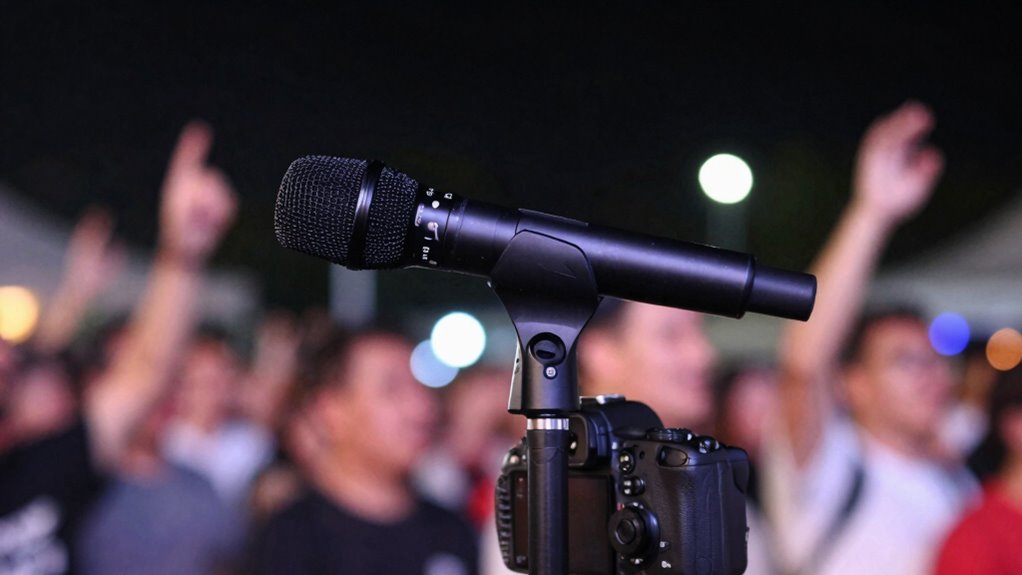
When selecting an on-camera microphone for concerts, high SPL handling is essential to prevent distortion. I look at factors like pickup patterns, noise isolation, and device compatibility to get the best sound quality. Understanding these points helps me choose a microphone that performs reliably in loud environments.
Sound Pressure Level Handling
Handling high sound pressure levels (SPLs) is essential when selecting an on-camera microphone for concerts, as these events often feature loud performances that can easily overload standard mics. To avoid distortion, look for microphones rated with a maximum SPL of at least 130 dB, ensuring they can safely handle the loudest sounds without clipping or damage. Microphones with insufficient SPL headroom will distort during dynamic, high-volume parts, compromising audio quality. Choosing a mic with high SPL capacity provides flexibility and reliability across various loud environments. It’s crucial to match the microphone’s SPL handling capabilities to the concert’s volume levels, so you capture clear, natural audio without risking overload or equipment damage. Proper SPL handling guarantees professional results in high-volume settings.
Directional Pickup Pattern
Choosing the right directional pickup pattern is vital for capturing clear audio during concerts, especially in high SPL environments. Supercardioid or lobar patterns are ideal because they focus on sound sources directly in front of the microphone, reducing unwanted noise. This focused pickup helps reject crowd sounds, ambient music, and stage noise, enhancing clarity. The narrow angle of these patterns also minimizes the capture of loud, background sounds, preventing distortion caused by high SPLs. By limiting the sound reaching the capsule, they guarantee that the microphone records the desired instrument or vocal performance without interference. This precise directionality is essential for achieving professional-quality audio in noisy concert settings. Choosing a microphone with the appropriate polar pattern makes a noticeable difference in clarity and overall sound quality.
Noise and Vibration Isolation
To guarantee clear audio during high SPL concert environments, effective noise and vibration isolation is essential. Integrated shock mounting systems, like Rycote Lyre mounts, help minimize handling and mechanical noise that can interfere with sound quality. Using microphones with supercardioid or lobar polar patterns also helps reject off-axis sounds, reducing background noise from the concert environment. Proper placement and stabilization are vital—incorrect positioning can pick up unwanted vibrations or ambient sounds. External shock mounts or suspension systems designed for high SPL settings further enhance isolation. These tools prevent physical vibrations from reaching the capsule, ensuring cleaner recordings. When selecting a microphone, prioritize those with built-in shock absorbers and mounting options that suit the dynamic, loud environment of concerts for maximum sound clarity.
Battery Life and Power
When capturing live concerts, ensuring your microphone has enough power to last through the entire performance is essential, especially in high SPL environments. Longer battery life means you won’t need to change batteries or recharge during critical moments, keeping your recording seamless. Microphones with USB charging or rechargeable batteries support extended use and reduce downtime. Power consumption ratings, like hours per charge or recharge cycles, are important for planning longer performances. Some mics automatically shut off when not in use, conserving battery life during pauses. Choosing models with efficient power management helps prevent unexpected shutdowns during intense sections, ensuring you capture every high-energy moment without interruption. Reliable power is vital for maintaining consistent audio quality throughout demanding live concerts.
Compatibility With Devices
Matching your microphone’s connection type with your recording device is essential for seamless operation during concerts. I always double-check that the microphone’s connector—be it 3.5mm, XLR, or USB-C—fits my device’s input. Ensuring compatibility avoids frustrating setup issues. I also verify whether my device supplies phantom power or if the microphone runs on batteries, so I don’t encounter power problems mid-performance. The polar pattern matters too; supercardioid or hypercardioid options help reject off-axis noise, which is critical in loud concert settings. Finally, I confirm that the microphone’s output—digital or analog—matches my camera, smartphone, or recorder’s input interface. Taking these steps guarantees smooth connectivity and reliable sound capture, keeping me focused on the performance rather than technical hiccups.
Wind and Mechanical Resistance
Choosing an on-camera microphone for concerts means considering how well it withstands wind, handling noise, and environmental challenges. A good microphone features robust windshields or foam covers to reduce wind noise and plosive sounds, especially in outdoor settings. Mechanical resistance is equally important; shock mounts or suspension systems help isolate the mic from handling noise and vibrations caused by movement or impacts. To handle high SPLs without distortion, look for microphones with high SPL capacity, preventing overload or damage. Durable construction materials like metal or reinforced plastics boost resistance against physical shocks, dust, and moisture. Additionally, internal damping and vibration isolation minimize mechanical noise transmitted through the camera or recording device, ensuring cleaner audio even in challenging environments. These features are essential for capturing clear sound during high-energy concerts.
Audio Quality and Clarity
To capture the full energy and detail of live concerts, your on-camera microphone must deliver exceptional audio quality and clarity. A high SPL capacity is essential, allowing the mic to handle loud sounds without distortion. A wide frequency response ensures you pick up the full spectrum of music—from deep bass to shimmering treble—preserving the richness of the performance. Clear audio reproduction with minimal distortion is fundamental for capturing subtle nuances. Proper handling and off-axis rejection help eliminate unwanted noise and feedback, maintaining sound purity. Additionally, low self-noise and high sensitivity are critical in high-volume settings, ensuring consistent, high-quality audio output. Choosing a microphone that balances these factors guarantees your recordings will be both powerful and true to the live experience.
Frequently Asked Questions
How Do Microphones Handle Sudden Loud Sound Spikes at Concerts?
Microphones handle sudden loud sound spikes at concerts through built-in features like pads and high SPL handling capabilities. I look for mics with pad switches that attenuate excessive volume and have high maximum SPL ratings, so I can capture loud sounds without distortion. Proper placement also helps, but choosing a microphone designed for high SPL guarantees I get clear recordings even during the loudest moments.
What Is the Best Microphone Directionality for Capturing High SPLS?
I recommend using supercardioid or hypercardioid microphones for capturing high SPLs. These directions focus on sound directly in front of the mic while rejecting side noise, which is perfect for concerts with loud crowds and stage noise. They help isolate the main sound source and minimize feedback, ensuring clean, clear recordings. If you need maximum rejection of ambient noise, hypercardioids are especially effective.
How Does Wind Noise Affect On-Camera Microphones at Outdoor Concerts?
Wind noise can really mess up your audio at outdoor concerts, making it tough to hear the music clearly. I’ve found that using windscreens or dead cats on my microphones greatly reduces this unwanted noise. It’s essential to shield the mic from direct wind, especially during high SPL performances. Without proper protection, wind noise can overpower the sound you’re trying to capture, so don’t skip those accessories!
Are There Specific Microphone Features That Improve Durability During Festivals?
Absolutely, there are key features that boost durability during festivals. I look for rugged construction with sturdy metal bodies, weather-resistant coatings, and reinforced mounts to withstand rough handling. Shock mounts help protect against vibrations, while weatherproofing ensures the mic survives rain or dust. These features give me confidence that my equipment can handle the demanding outdoor environment, so I can focus on capturing great sound without worries.
Can On-Camera Microphones Be Used Effectively With Live Sound Mixing?
I’ve used on-camera microphones with live sound mixing, and they can work well when chosen correctly. It’s all about ensuring compatibility with your mixer and using proper gain settings. I’ve found that directional microphones help reduce background noise, making the mix clearer. When I keep an eye on levels and use quality cables, I get a solid, reliable connection that captures the live energy without distortion.
Conclusion
Choosing the right on-camera microphone for high SPL concerts is like finding the perfect lens for a masterpiece—important and transformative. Remember, it’s not just about capturing sound but preserving the energy and passion of the moment. With the right mic in hand, you’ll turn fleeting notes into lasting memories. So, trust your instincts, and let your equipment amplify your vision—because in the end, it’s your passion that truly makes the sound shine.