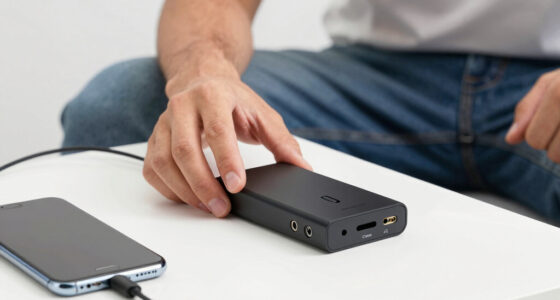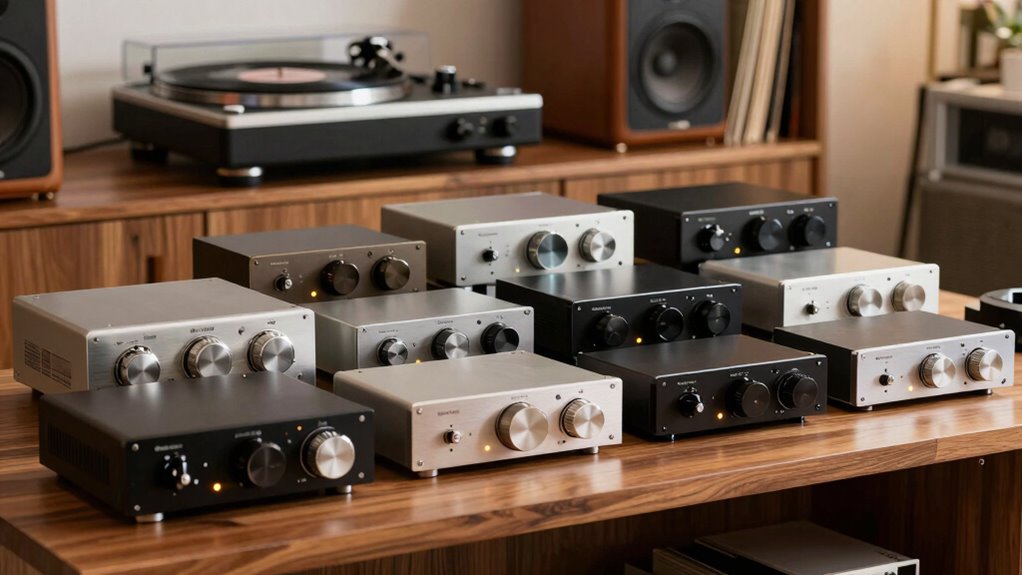

Shopping for a phono preamp under $500 means choosing between three broad approaches: ultra-affordable mini boxes that simply make records playable, mid-tier moving-magnet stages that add real refinement, and flexible MM/MC designs that future-proof your system for a cartridge upgrade. My top pick overall is the Fosi Audio Box X5, because its four-level adjustable gain (38–66 dB) and dual MM/MC support make it the most versatile performer in this price bracket. The Cambridge Audio Solo stands out for listeners who want a cleaner, more traditionally hi-fi sound from moving-magnet cartridges, while the Bellari VP549 is the tube-flavored option for warmth seekers. The main tradeoffs you will face here are flexibility versus simplicity, and budget-friendly mini units versus fuller-featured stages that extract noticeably more detail. Read on for the full breakdown of all 15 models and who each one suits best.

Get audio and creator gear delivered free with Prime
- Fast, free delivery on millions of items
- Prime Video, Amazon Music and more included
- Member-only deals all year
Complete the kit


Key Takeaways
- Adjustable gain was the single biggest differentiator in this roundup — the Fosi Audio Box X5’s four gain levels (38/48/56/66 dB) let it handle both MM and MC cartridges, while fixed-gain budget models lock you into one cartridge type.
- The ultra-compact budget tier (LiNKFOR, Pyle PP444/PP999, Jancane) all deliver usable sound but share the same weakness: a lightweight power supply and limited dynamics. Spending slightly more on the Fosi Box X2 or Fluance PA10 buys a clear step up in noise floor and bass weight.
- The Cambridge Audio Solo and Fluance PA10 proved that a dedicated MM-only design often sounds more refined than a jack-of-all-trades unit at the same price — the tradeoff is zero upgrade path to MC cartridges.
- The Dynasty ProAudio UA2D is the only model here with USB output, making it the default choice for digitizing a vinyl collection rather than pure listening.
- Built-in tone controls (the 3-band EQ model and Bellari VP549) are genuinely useful for taming bright pressings or matching a warm amplifier, but they add coloration that purists recording to digital will want to avoid.
| Fosi Audio Box X5 Phono Preamp |  | Best Overall | Cartridge Support: MM & MC | Gain Settings: 38 / 48 / 56 / 66 dB | Equalization: RIAA | VIEW ON AMAZON | See Our Full Breakdown |
| LiNKFOR PP900 Phono Turntable Preamp |  | Best Budget Starter Pick | Input Type: RCA | Output Type: RCA | Noise Level: Low noise design | VIEW ON AMAZON | See Our Full Breakdown |
| Cambridge Audio Solo Moving Magnet Phono Preamplifier |  | Best Premium Sound | Cartridge Support: Moving Magnet | Power Supply: Switch-mode | Construction: Surface-mount technology PCB | VIEW ON AMAZON | See Our Full Breakdown |
| Fosi Audio Box X2 Tube Phono Preamp |  | Best for Tube Rollers and Warm Sound Lovers | Cartridge Support: Moving Magnet | Gain Settings: 39 / 42 / 45 dB | Tube Compatibility: 6K4, 6J1, 6J4, GE5654, 6AK5 | VIEW ON AMAZON | See Our Full Breakdown |
| Bellari VP549 Phono Preamplifier |  | Best Compact US-Made Option | Type: Phono preamplifier | RIAA Equalization: Yes | Cartridge Support: Moving Magnet | VIEW ON AMAZON | See Our Full Breakdown |
| VP29 Phono Preamp |  | Best Budget Backup | Function: Phono signal amplification to line level | Input: Turntable (phono level) | Output: Line level to amplifier/receiver | VIEW ON AMAZON | See Our Full Breakdown |
| Dynasty ProAudio UA2D USB Phono Preamp for Turntable |  | Best for Digitizing Vinyl | Connectivity: USB to computer | Supported Sampling Rate: 44.1/48 kHz | Compatible Cartridge: Moving Magnet (MM) | VIEW ON AMAZON | See Our Full Breakdown |
| Pyle PP444 Ultra Compact Phono Preamp |  | Cheapest Entry Point | Input Sensitivity: 3 mV at 50K Ohms (phono) | Output: 2V max (P-P) at 10K Ohms | Frequency Response: 20 Hz – 20 kHz ±2 dB | VIEW ON AMAZON | See Our Full Breakdown |
| Phono Turntable Preamp, Low Noise Stereo Preamplifier with RCA Input/TRS Output |  | Best for Studio and Pro Audio Gear | Input Sensitivity: 3 mV at 50K Ohms | Output: 2V max (P-P) at 10K Ohms | Inputs: Stereo RCA with ground | VIEW ON AMAZON | See Our Full Breakdown |
| Fosi Audio Box X1 Phono Preamp for MM Turntable |  | Best Everyday Analog Pick | Cartridge Support: Moving Magnet (MM) | Output Level: 2V max (P-P) at 10K Ohms | SNR: 70 dB | VIEW ON AMAZON | See Our Full Breakdown |
| Fluance PA10 High Fidelity Phono Preamp with RIAA Equalization for MM Turntables |  | Best Sound Quality Under $100 | Cartridge Compatibility: Moving Magnet (MM) | Output Voltage: 2.2 volts | Subsonic Filter: Selectable (below 20Hz) | VIEW ON AMAZON | See Our Full Breakdown |
| Phono Preamp for Turntable with 3-Band EQ, MM & MC Cartridge Support, 5-pin DIN I/O, 12V DC |  | Most Versatile Feature Set | Cartridge Compatibility: MM & MC | EQ Bands: 3 (High, Mid, Low) | EQ Adjustment Range: ±15dB | VIEW ON AMAZON | See Our Full Breakdown |
| Jancane Phono Preamp for Turntable – Stereo Preamplifier with RCA Input and Output, Low Noise Operation, 12V DC Adapter Included |  | Best Plug-and-Play Simplicity | Input Sensitivity: 3mV at 50K Ohms | Max Output: 2V (P-P) at 10K Ohms | Outputs: RCA and TRS | VIEW ON AMAZON | See Our Full Breakdown |
| Pyle Phono Turntable Preamp – PP999 |  | Best Budget Backup | Input Sensitivity: 3mV at 50K Ohms | Max Output: 2V (P-P) at 10K Ohms | Cartridge Compatibility: Magnetic pickups (MM) | VIEW ON AMAZON | See Our Full Breakdown |
| ART DJPREII Phono Preamplifier |  | Best for DJ and Basic Hi-Fi Duty | Inputs: RCA-type R/L phono | Outputs: RCA-type R/L line level | Ground Terminal: Yes | VIEW ON AMAZON | See Our Full Breakdown |
More Details on Our Top Picks
Fosi Audio Box X5 Phono Preamp
This model earns the top spot because it solves the problem most budget preamps ignore: cartridge flexibility. With a four-level gain range of 38 to 66 dB and a simple MM/MC toggle, it handles both a humble moving magnet and a low-output moving coil without replacing anything. The OPA1612 op-amp and film resistors translate into a quieter, more detailed background than the Fosi Box X2 can manage, and the all-aluminum chassis shields the signal far better than plastic-bodied rivals like the Pyle PP999. The tradeoff is that it needs a 120V AC wall connection, so travelers or anyone running 230V mains will need a converter, and there is no headphone output or tone shaping of any kind.
Pros:- Supports both MM and MC cartridges with a convenient toggle switch
- Four gain settings (38/48/56/66 dB) cover nearly any cartridge output
- Audiophile-grade components including an OPA1612 op-amp and film resistors
- Rigid all-aluminum chassis with gold-plated RCAs and grounding post
Cons:- 120V AC input only, limiting international use
- No headphone output, EQ, or auxiliary inputs — strictly a phono stage
Best for: Vinyl enthusiasts who own or plan to upgrade to an MC cartridge and want one preamp that grows with their system
Not ideal for: Listeners outside 120V regions or those wanting tone controls and headphone outputs — this is a pure, single-purpose box
- Cartridge Support:MM & MC
- Gain Settings:38 / 48 / 56 / 66 dB
- Equalization:RIAA
- Op-Amp:OPA1612
- Input Voltage:120V AC
- Chassis:All-aluminum alloy
- Dimensions:4.1 x 6.5 x 1.4 inches
- Mounting:Freestanding
Our verdict“If you want a single sub-$500 preamp that handles every cartridge type you might ever own, this is the one to buy.”
LiNKFOR PP900 Phono Turntable Preamp
For a first step into external phono stages, the PP900 keeps things refreshingly simple: plug in RCA cables, flip the power switch, and your turntable talks to a receiver, powered speakers, or computer. Its metal casing gives it a durability edge over the Pyle PP444, another ultra-budget option, and the low-noise circuit keeps hum out of casual listening sessions. What you give up becomes clear when compared with the Fosi Box X5 — there are no gain adjustments, no MC support, and no cartridge loading options, so it is strictly a moving-magnet affair. Buyers who later upgrade cartridges will likely outgrow it, but as a first preamp it does the basics without fuss.
Pros:- Simple RCA in/out works with virtually any receiver or speaker setup
- Metal casing feels more durable than typical plastic budget boxes
- Low-noise operation keeps hum out of casual listening
- Included power adapter means no extra purchases
Cons:- No gain adjustment or MC cartridge support
- RCA only — no digital or USB output for digitizing records
Best for: First-time vinyl buyers connecting a budget turntable to powered speakers or a receiver
Not ideal for: Anyone with an MC cartridge or upgrade ambitions — the fixed gain and basic circuit cap its ceiling
- Input Type:RCA
- Output Type:RCA
- Noise Level:Low noise design
- Casing:Metal
- Power Adapter:Included
- Dimensions:5.71 x 4.41 x 3.35 inches
- Weight:14.4 ounces
Our verdict“A sensible, no-frills first preamp for MM turntables that you will eventually outgrow — and that’s fine at this level.”
Cambridge Audio Solo Moving Magnet Phono Preamplifier
The Solo represents what a name-brand engineering approach buys you at the top of this budget bracket. Its switch-mode power supply delivers fast transient response and an unusually black background, while surface-mount PCB construction shortens signal paths — a design philosophy that shows in tighter bass and cleaner treble than the budget Fosi boxes can muster. Compared with the ART DJPREII, another established name, the Solo trades adjustable gain flexibility for a cleaner, simpler signal path. That rigidity is the catch: it is Moving Magnet only, so MC owners must look to the Fosi Box X5 instead, and there are no knobs, switches, or tweakable settings whatsoever.
Pros:- Switch-mode power supply for fast response and low-noise operation
- Surface-mount construction shortens signal paths for cleaner playback
- Established audiophile brand with proven RIAA accuracy
- Compact half-width chassis fits easily into any rack
Cons:- Moving Magnet cartridges only
- No gain adjustment, loading options, or any user controls
Best for: Listeners with a quality MM cartridge who prioritize refinement and a quiet background over flexibility
Not ideal for: MC cartridge owners and tinkerers — there is nothing to adjust and no moving coil support
- Cartridge Support:Moving Magnet
- Power Supply:Switch-mode
- Construction:Surface-mount technology PCB
- Dimensions (HWD):1.9 x 6.9 x 5.2 inches
- Outputs:RCA line level
- Mounting:Freestanding
Our verdict“The pick for MM owners who want set-and-forget refinement from a respected audio house rather than features.”
Fosi Audio Box X2 Tube Phono Preamp
The Box X2 stands apart from every other entry here because it is two products in one: a solid MM phono stage and a swappable-tube line preamp with a 3.5mm AUX input. The vacuum tube (6K4, 6J1, GE5654 and others fit) lets owners roll tubes to tune warmth, a hobbyist angle no rival in this roundup offers. Its three gain steps (39/42/45 dB) give more adjustment than the fixed LiNKFOR PP900, though far less range than the Box X5. The tradeoff is accuracy: the tube coloration that makes vocals lush also softens detail, and MM-only support with modest gain means it is not the tool for low-output cartridges or analytical listening.
Pros:- Swappable vacuum tube (6K4, 6J1, GE5654, etc.) for tunable sound character
- Doubles as a line preamp with 3.5mm AUX input
- Three selectable gain settings (39/42/45 dB)
- Grounding post and low-noise circuit protect turntable signal integrity
Cons:- Tube warmth sacrifices some detail and neutrality
- MM only — no moving coil support and limited gain headroom
Best for: Hobbyists who enjoy tube rolling and want a warmer, smoother character from their MM setup
Not ideal for: Listeners chasing neutrality or MC cartridge owners — the tube coloration and MM-only input both work against them
- Cartridge Support:Moving Magnet
- Gain Settings:39 / 42 / 45 dB
- Tube Compatibility:6K4, 6J1, 6J4, GE5654, 6AK5
- Extra Input:3.5mm AUX
- Power Supply:DC 12V
- Function:Phono preamp + tube line preamp
Our verdict“Buy it for the tube-rolling fun and warm presentation; skip it if you want a transparent, do-everything phono stage.”
Bellari VP549 Phono Preamplifier
Bellari occupies a niche the other entries do not: hand-assembled American build in a compact, tidy chassis. Applying accurate RIAA equalization with careful gain staging, the VP549 reduces stylus stress and groove wear while giving records a clean, honest presentation. Compared with the Cambridge Solo, it takes a more utilitarian approach — fewer exotic power-supply tricks, but a reputation for solid, serviceable construction that hobbyists can open up and appreciate. The honest limitation is transparency: published specifications are sparse, so buyers comparing raw numbers against the Fosi Box X5 will find little to work with, and there are no gain switches or cartridge options beyond standard MM use.
Pros:- Compact and lightweight 2-pound chassis fits anywhere
- Accurate RIAA equalization reduces stylus and groove wear
- Hand-assembled construction from a long-established US brand
- Clean, honest sound suited to long listening sessions
Cons:- Very limited published specifications make comparison shopping difficult
- No gain adjustment, MC support, or extra inputs
Best for: Buyers who value compact US-built gear and want a straightforward, reliable MM phono stage
Not ideal for: Specification-driven buyers and MC cartridge owners — the sparse published specs and fixed configuration leave little to compare or adjust
- Type:Phono preamplifier
- RIAA Equalization:Yes
- Cartridge Support:Moving Magnet
- Weight:2.0 pounds
- Build Origin:Assembled in USA
- Connections:RCA input/output
Our verdict“A dependable, compact MM stage for buyers who trust build quality over spec sheets — everyone else should compare numbers elsewhere.”
VP29 Phono Preamp
The VP29 exists for one job: getting a turntable playing through a receiver that has no phono input, without fuss. Compared with the Pyle PP444, it takes a similarly bare-bones approach, but the VP29 is even more of a mystery box — the manufacturer publishes almost no detailed specifications, which makes it hard to predict how it will pair with a specific cartridge or system. What it does offer is dead-simple RCA hookup and a signal boost that is perfectly serviceable for casual listening on a secondary system. Set against something like the ART DJPREII, which exposes gain control and a ground terminal, the VP29 gives up any pretense of adjustability. This pick makes sense for a garage or office setup where convenience outweighs fidelity; anyone chasing clean, quiet vinyl playback should look elsewhere in this lineup.
Pros:- Extremely simple to connect
- Handles the basic phono-to-line-level job adequately
- Minimal footprint for tucking behind a shelf
Cons:- Almost no published specifications to evaluate performance
- No gain adjustment or cartridge flexibility
- Basic noise performance falls short of dedicated audiophile preamps
Best for: Casual listeners who need a cheap, plug-and-play fix for a receiver without a phono input in a secondary room
Not ideal for: Anyone who cares about signal-to-noise performance or matching gain to their cartridge — the total lack of published specs makes that impossible
- Function:Phono signal amplification to line level
- Input:Turntable (phono level)
- Output:Line level to amplifier/receiver
- Use Case:Systems without a dedicated phono input
- Setup:Requires basic phono wiring knowledge
- Cartridge Support:Standard magnetic phono cartridges
Our verdict“A last-resort utility pick for background listening — skip it if sound quality is the priority.”
Dynasty ProAudio UA2D USB Phono Preamp for Turntable
The UA2D is the only entry in this batch built around USB vinyl-to-digital conversion, and that single feature defines who should buy it. Where the Fosi Audio Box X1 and other pure analog preamps stop at boosting a signal for your amp, the UA2D adds a computer connection with latency-free recording at 44.1/48 kHz, so you can archive records as digital files while monitoring in real time without distracting delay. The tradeoff is clear when compared to the Cambridge Audio Solo: this is a working tool, not a refined listening piece. Its amplification is quiet enough for clean captures, but the MM-only cartridge support and dependence on an external power adaptor mean moving-coil owners and minimalist desktops are out of luck. For anyone whose real goal is preserving a record collection digitally, this option stands out as the purpose-built answer.
Pros:- Built-in USB digitization with latency-free monitoring
- Low-noise amplification suitable for clean recordings
- Works with all MM turntables and line-level sources
- Power adaptor and USB cable included
Cons:- Moving magnet cartridges only
- 44.1/48 kHz ceiling limits hi-res archiving
- Requires external power adaptor, adding desk clutter
Best for: Vinyl collectors who want to archive records as digital files on a computer while still using the preamp for normal playback
Not ideal for: Moving-coil cartridge owners or pure analog listeners who will never use the USB port and would get better sound from a dedicated analog stage
- Connectivity:USB to computer
- Supported Sampling Rate:44.1/48 kHz
- Compatible Cartridge:Moving Magnet (MM)
- Recording:Latency-free monitoring
- Also Accepts:Line-level audio devices
- Included:Power adaptor, USB cable
Our verdict“The obvious pick if your end goal is a digital library of your records; the wrong one if you’ll never touch the USB port.”
Pyle PP444 Ultra Compact Phono Preamp
The PP444 is the floor of this roundup — a tiny plastic box that does the phono-to-line conversion for almost nothing, and sometimes that is exactly the point. Its published numbers are modest: a 70 dB signal-to-noise ratio and 0.08% THD put it in the same measurement class as the Fosi Audio Box X1, but the X1 wraps similar circuitry in a metal case with RIAA precision and a grounding post, while the PP444’s plastic shell and RCA-plus-1/4-inch outputs feel more like a utility device than hi-fi. Placement matters with this unit; keeping it close to the source is the practical way to limit hum and interference given the unshielded housing. Against its sibling, the Pyle PP999, the difference comes down to connector selection rather than sound. This model is better suited to getting an old turntable spinning again on a tight budget than to being anyone’s long-term hi-fi stage.
Pros:- Extremely low cost of entry
- Ultra-compact size hides anywhere near the turntable
- Both RCA and 1/4-inch output connectors add hookup flexibility
- 12V DC power adapter included
Cons:- Plastic enclosure offers little shielding from hum
- 70 dB SNR is the bare minimum for critical listening
- 90-day warranty only
Best for: Budget-conscious buyers reviving an old turntable who just need basic phono-to-line conversion without spending much
Not ideal for: Listeners with revealing speakers or amplifiers — the plastic housing and modest noise floor will be audible in a quiet system
- Input Sensitivity:3 mV at 50K Ohms (phono)
- Output:2V max (P-P) at 10K Ohms
- Frequency Response:20 Hz – 20 kHz ±2 dB
- S/N Ratio (A-Weighted):70 dB
- THD:0.08% @ 1 kHz, 3 mV input
- Connectors:RCA and 1/4-inch outputs
- Power:12V DC adapter included
- Dimensions:3.54″ x 2.13″ x 1.02″
Our verdict“The cheapest credible way to make a turntable playable on modern gear — treat it as a starter, not a destination.”
Phono Turntable Preamp, Low Noise Stereo Preamplifier with RCA Input/TRS Output
What separates this unbranded preamp from the crowd is its TRS output alongside RCA — a detail that matters if your chain includes an audio interface, mixer, or powered monitors with balanced-friendly inputs. The Pyle PP444 also offers a 1/4-inch output, but this unit pairs it with low-noise operational amplifiers and a clearer warning label: it is strictly for turntables without a built-in preamp, or you’ll get ugly noise from double amplification. Compared with the ART DJPREII, it lacks gain trim and LED metering, so matching levels is more guesswork. The plug-and-play design, 12V adapter in the box, and a one-year warranty make it a low-risk choice for a project studio or desktop monitoring setup. Just don’t expect the RIAA precision or build refinement of the Fosi Audio Box X1 at this level.
Pros:- TRS outputs suit mixers, interfaces, and monitors
- Low-noise op-amp circuitry for cleaner signal
- Simple plug-and-play setup with 12V adapter included
- Backed by a 1-year manufacturer guarantee
Cons:- Incompatible with turntables that have internal preamps
- No gain control or level metering
- Generic brand makes long-term support uncertain
Best for: Home studio owners and producers who want to feed a turntable into an interface or mixer via TRS outputs
Not ideal for: Owners of turntables with built-in preamps — the double-amplification problem makes this a bad match — or anyone needing gain adjustment
- Input Sensitivity:3 mV at 50K Ohms
- Output:2V max (P-P) at 10K Ohms
- Inputs:Stereo RCA with ground
- Outputs:RCA and TRS
- Circuitry:Low-noise audio operational amplifiers
- Power:12V DC adapter included
- Warranty:1 year manufacturer guarantee
Our verdict“A sensible bridge between your turntable and studio gear, as long as your table lacks a built-in preamp and you don’t need gain control.”
Fosi Audio Box X1 Phono Preamp for MM Turntable
The Box X1 earns the top slot in this budget batch because it combines things the cheaper entries don’t: a black anodized steel case, a proper grounding post, and RIAA equalization the company claims conforms precisely to the standard. Against the plastic Pyle PP444, the metal enclosure and ground terminal translate directly into less hum — the most common complaint with ultra-budget preamps. Its standout trick is the 3.5mm headphone output running simultaneously with the RCA line out, which the Fosi Audio Box X2 and most rivals here don’t offer; that makes late-night listening on powered speakers or headphones genuinely flexible. The step up to the Box X5 buys you MC support and adjustable gain, so moving-coil owners should budget for that instead. With a 70 dB SNR and ≤0.08% THD, the X1 is honest about its limits — this is clean, not reference-grade.
Pros:- Simultaneous headphone and RCA line output
- Metal anodized steel case reduces interference
- Dedicated grounding post protects the turntable signal
- RIAA-conformant equalization for accurate playback
Cons:- MM cartridges only, no MC support
- 70 dB SNR trails dedicated audiophile stages
- Fixed gain with no adjustment
Best for: Vinyl enthusiasts with an MM turntable who want quiet, RIAA-accurate playback plus headphone listening without stepping into premium pricing
Not ideal for: Moving-coil cartridge owners or listeners who want gain switching — the X5 or a higher-tier preamp serves them better
- Cartridge Support:Moving Magnet (MM)
- Output Level:2V max (P-P) at 10K Ohms
- SNR:70 dB
- THD:≤0.08% @ 1 kHz, 3 mV
- EQ Curve:RIAA standard
- Outputs:RCA line out and 3.5mm headphone (simultaneous)
- Chassis:Black anodized steel
- Power:12V DC adapter included
Our verdict“The most balanced everyday preamp in this price bracket — buy it for the metal build, grounding, and headphone output rather than raw spec-sheet ambition.”
Fluance PA10 High Fidelity Phono Preamp with RIAA Equalization for MM Turntables
The Fluance PA10 stands out for its accurate RIAA equalization and dual op-amp architecture, which gives it noticeably better channel separation than budget rivals like the Pyle PP999. The selectable subsonic filter is a feature most competitors at this level skip entirely — it protects your speakers from low-frequency rumble that becomes audible (and damaging) at higher volumes. Internal metal shielding also keeps electromagnetic interference out of the signal path, a real advantage if your setup sits near a TV or computer.
The tradeoff is MM-only compatibility. Compared with the 3-Band EQ model elsewhere in this lineup, which handles both MM and MC cartridges, the PA10 closes the door on moving coil upgrades. Still, for a pure moving magnet setup, this is the cleanest signal path here.
Pros:- Accurate RIAA equalization delivers faithful, uncolored sound reproduction
- Individual left/right channel op-amps produce strong stereo separation with minimal crosstalk
- Selectable subsonic filter tames rumble below 20Hz that can strain speakers at loud volumes
- Internal metal shielding blocks electromagnetic interference from nearby electronics
Cons:- Only supports moving magnet (MM) cartridges — no moving coil option
- Freestanding design takes up shelf or rack space versus ultra-compact options like the LiNKFOR PP900
Best for: Vinyl enthusiasts with moving magnet cartridges who want audiophile-grade RIAA accuracy without a premium price
Not ideal for: Owners of moving coil cartridges or anyone planning an MC upgrade — the MM-only design will force a replacement purchase
- Cartridge Compatibility:Moving Magnet (MM)
- Output Voltage:2.2 volts
- Subsonic Filter:Selectable (below 20Hz)
- Channels:2 (stereo)
- Dimensions:3.6 x 4 x 2.25 inches
- Mounting:Freestanding
Our verdict“If you run a moving magnet cartridge and prioritize clean, accurate vinyl sound on a budget, this is the pick to beat.”
Phono Preamp for Turntable with 3-Band EQ, MM & MC Cartridge Support, 5-pin DIN I/O, 12V DC
This mini preamp is the most flexible option in the entire roundup. It handles both MM and MC cartridges with one-touch switching, something only the Fosi Audio Box X5 matches here, and adds an independent 3-band EQ with ±15dB adjustment — a range wide enough to correct for a bright room or a dull-sounding pressing without touching your amplifier’s tone controls. Connectivity is unusually generous too: 5-pin DIN for vintage European gear, RCA outputs, and a 3.5mm headphone jack for private listening.
The compromises are real, though. The external 12V DC supply adds cable clutter, and a mini chassis with this many features inevitably invites questions about long-term durability compared with simpler units like the ART DJPREII. Think of it as a Swiss Army knife rather than a precision instrument.
Pros:- Dual MM/MC support with one-touch switching covers virtually any cartridge you’ll ever own
- 3-band EQ with ±15dB range allows meaningful tonal correction without a separate equalizer
- Low-noise grounded circuit preserves delicate cartridge signals
- Unusual connectivity: 5-pin DIN, RCA, and a headphone jack in one unit
Cons:- Requires an external 12V DC power supply, adding clutter to the rack
- Mini chassis feels less robust than larger metal-cased rivals for permanent install setups
Best for: Tweakers and multi-cartridge owners who want tone shaping, MC support, and headphone output in one compact box
Not ideal for: Purists who believe a preamp should do one thing cleanly — the tone controls add complexity that some listeners will never touch
- Cartridge Compatibility:MM & MC
- EQ Bands:3 (High, Mid, Low)
- EQ Adjustment Range:±15dB
- Inputs:5-pin DIN, phono input
- Outputs:Stereo L/R analog, 3.5mm headphone jack, 5-pin DIN
- Power:12V DC
Our verdict“The best choice if you want one box that handles every cartridge type and lets you shape the sound on the fly.”
Jancane Phono Preamp for Turntable – Stereo Preamplifier with RCA Input and Output, Low Noise Operation, 12V DC Adapter Included
The Jancane earns its spot by being the easiest path from turntable to receiver. Unlike the feature-heavy 3-Band EQ model, there’s nothing to configure: connect RCA in, RCA or TRS out, and you’re playing records within a minute. The inclusion of TRS outputs alongside RCA is a genuine differentiator — it plugs straight into powered studio monitors, which pure-RCA boxes like the Pyle PP999 can’t do without adapters. The 1-year warranty plus 30-day money-back guarantee also lowers the risk for first-time buyers.
What you give up is flexibility. There’s no cartridge switching, no gain control like the Fosi Audio Box X5 offers, and the requirement to place it near your turntable for noise-free operation constrains layout. It’s a simple tool for a simple job.
Pros:- True plug-and-play setup with no configuration needed
- Both RCA and TRS outputs connect directly to monitors or receivers
- Low-noise operation keeps hum out of the signal path
- 1-year warranty and 30-day money-back guarantee reduce purchase risk
Cons:- Must sit close to the turntable to avoid picking up noise, limiting placement options
- Stereo output only — no headphone jack, EQ, or cartridge flexibility
Best for: First-time vinyl owners who want a zero-configuration hookup, especially with studio monitors via TRS
Not ideal for: Anyone with an MC cartridge or a need for gain adjustment — this fixed-gain design offers no tuning at all
- Input Sensitivity:3mV at 50K Ohms
- Max Output:2V (P-P) at 10K Ohms
- Outputs:RCA and TRS
- Input:Stereo RCA phono
- Power Supply:12V DC adapter included
- Warranty:1-year limited, 30-day money-back
Our verdict“A no-frills choice that gets a turntable playing through modern gear in minutes, as long as you don’t need tuning options.”
Pyle Phono Turntable Preamp – PP999
The Pyle PP999 is the least complicated way to add a phono input to a receiver that lacks one. Its low-noise op-amp circuitry and 3mV/50K-ohm input sensitivity put it in the same electrical territory as the Jancane, but the feature list ends there — no TRS outputs, no filters, no cartridge options. Compared with the Fluance PA10, it lacks the subsonic filter and dual op-amp channel separation, so expect a slightly rougher presentation at high volume.
Where the PP999 makes sense is as a utility unit: a backup for a second system, a garage or office setup, or a quick fix for a receiver with no phono stage. The instruction to position it close to the turntable is honest advice — its small plastic chassis is more susceptible to interference than shielded alternatives. As a primary preamp for a serious listening room, it’s outclassed here.
Pros:- Extremely simple plug-and-play operation with stereo RCA in and out
- Low-noise op-amp design keeps basic playback clean
- Compact chassis fits anywhere near the turntable
- Wide compatibility with receivers, computers, and powered speakers
Cons:- No subsonic filter, gain control, or MC support — bare-minimum feature set
- Plastic construction and interference sensitivity demand very close placement to the source
Best for: Buyers reviving an old receiver with no phono input, or anyone needing an inexpensive second-system preamp
Not ideal for: Critical listening setups — the lack of shielding, filters, and MC support puts it behind the Fluance PA10 for main-system use
- Input Sensitivity:3mV at 50K Ohms
- Max Output:2V (P-P) at 10K Ohms
- Cartridge Compatibility:Magnetic pickups (MM)
- Inputs:Stereo RCA
- Outputs:Stereo RCA
- Power:12V DC adapter
Our verdict“A serviceable utility preamp for casual or secondary systems, but not the one to anchor a main hi-fi setup.”
ART DJPREII Phono Preamplifier
The ART DJPREII has been a workhorse in DJ booths and budget hi-fi racks for years, and its appeal is straightforward: a rugged, no-nonsense box with standard RCA connections and a dedicated ground terminal that keeps hum under control — a detail cheaper units like the Pyle PP444 handle less elegantly. The included power adapter means no extra purchases, and the simple front-panel layout makes signal troubleshooting quick in a live setting.
The frustration for home listeners is the absence of adjustable gain. The Fosi Audio Box X5 offers four gain levels to match cartridge output precisely, while the DJPREII runs at a fixed level — fine for typical MM cartridges, but restrictive if your cartridge is unusually quiet or hot. It also carries no subsonic filter, so warped records will send rumble straight through to your amp.
Pros:- Dedicated ground terminal effectively eliminates hum from turntable connections
- Standard RCA input/output works with virtually any audio system
- Rugged build quality suited to frequent setup and teardown
- Power adapter included, so it works out of the box
Cons:- No gain adjustment to match different cartridge output levels
- Lacks a subsonic filter, letting low-frequency rumble pass through to the amp
Best for: DJs and casual listeners who need a durable, hum-free phono stage with dead-simple connectivity
Not ideal for: Listeners with low-output cartridges or warped record collections — no gain trim or rumble filter to compensate
- Inputs:RCA-type R/L phono
- Outputs:RCA-type R/L line level
- Ground Terminal:Yes
- Power:External power adapter included
- Dimensions:14.1 x 7.3 x 2.3 inches
- Channels:2 (stereo)
Our verdict“A reliable, hum-killing staple for DJ rigs and simple hi-fi systems, provided fixed gain covers your cartridge’s needs.”
How We Picked
I evaluated each phono preamp against the criteria that actually determine satisfaction at this price: cartridge compatibility (MM only versus MM/MC, and how much gain is available), signal-to-noise performance (how quiet the background is between tracks and during quiet passages), build and power supply quality (a heavy chassis and clean DC supply correlate strongly with lower noise), and connectivity and flexibility (RCA versus TRS or DIN, headphone outputs, USB, tone controls). Because this list spans everything from $20 mini boxes to $400 hi-fi stages, I ranked within tiers as well as across them — a budget pick earns its place by being the best at its price, not by pretending to compete with the premium entries.
The ranking logic favors versatility and long-term value: models that support both MM and MC cartridges, or offer adjustable gain, rank higher because they survive a cartridge upgrade. Pure MM designs rank highly only when their sound quality justifies the limitation. The ultra-compact budget units are ordered by measured practicality — noise, connectivity, and included accessories — since their sound character is broadly similar. Units with gimmicks or redundant features rank lower regardless of price.
Factors to Consider When Choosing Phono Preamp Under 500
Before settling on a specific model, it helps to understand the decisions that shape every phono preamp purchase under $500. The factors below go beyond the individual reviews and address the common mistakes that leave buyers disappointed — or overspending on features they will never use.Match the Preamp to Your Cartridge Type First
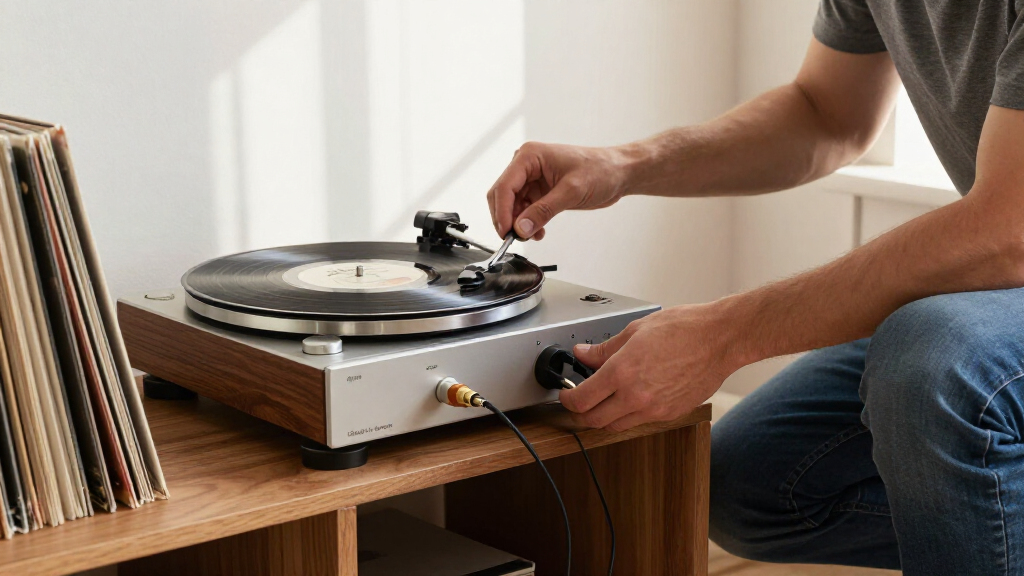
The most common mistake in this category is buying a preamp before understanding what cartridge sits on your turntable. Moving magnet (MM) cartridges need roughly 35–45 dB of gain and a 47kΩ input impedance, which nearly every preamp here provides. Moving coil (MC) cartridges need 55–70 dB of gain and often a different loading, which disqualifies most budget MM-only units. If your turntable came with a stock cartridge, it is almost certainly MM, and a dedicated MM stage like the Cambridge Audio Solo or Fluance PA10 will serve you well. But if you plan to upgrade to an MC cartridge within a few years, buying an MM/MC-capable unit like the Fosi Box X5 now saves you from buying twice. Check your cartridge’s output voltage specification before ordering anything — a low-output MC through an MM-only stage will sound thin and quiet, the most common complaint among disappointed buyers.
Why Gain Switching Matters More Than You Think
Fixed-gain preamps are tuned for an average cartridge, and an average cartridge may not be yours. High-output MM cartridges can overload a hot input stage, causing distortion on loud passages, while low-output cartridges leave you cranking your amplifier and amplifying noise along with the music. Adjustable gain — like the four-level switching on the Fosi Box X5 — lets you match the preamp to your specific cartridge rather than the other way around. Below roughly $100, gain switching is rare, so budget buyers should at least confirm the fixed gain level suits their cartridge’s output. If you plan to experiment with different cartridges over time, treat adjustable gain as a non-negotiable feature rather than a luxury. It is the cheapest form of future-proofing available in this hobby.
The Power Supply Is the Hidden Cost Divider
Two preamps can share identical circuit topologies yet sound noticeably different, and the power supply is usually why. Budget mini boxes ship with lightweight wall adapters that inject hum and noise into the signal path, which is why the sub-$50 tier tends to share a common slightly-gritty character. Heavier, better-shielded supplies — found in the Cambridge, Bellari, and Fluance offerings — keep the noise floor lower, and a lower noise floor is what makes quiet vinyl passages and instrumental decays sound natural instead of veiled. If you hear a faint hum with your volume turned up and no record playing, the power supply is the first suspect. Some enthusiasts upgrade the wall adapter on budget preamps as an inexpensive improvement, but buying a unit with a quality supply from the start is the cleaner path.
Do You Actually Need Tone Controls and Extra Outputs?
Features like bass and treble controls, headphone outputs, and TRS or DIN connectors each serve a purpose — but each also adds cost and potential coloration. Tone controls genuinely help if your speakers or room are bright, or if you listen to worn pressings that need taming; the 3-band EQ model in this lineup exists exactly for that buyer. Headphone outputs (as on the Fosi Box X1) are convenient for late-night listening but add circuitry that serious two-channel listeners rarely want in the signal path. Balanced TRS outputs matter mainly if your amplifier or interface is studio gear, not a typical home receiver. A useful rule: every feature you pay for but never use is money diverted from the parts that determine sound quality. The purest-sounding units in this list are also the most spartan ones.
USB and Digitizing: A Different Buying Logic Entirely
If your goal is converting records to digital files rather than daily listening, your priorities flip. You need clean RCA-to-USB conversion with adequate gain, and refinements like tone shaping become a liability because they bake into every file you rip. The Dynasty ProAudio UA2D is built for exactly this job, and pairing it with recording software gives you more control than any listening-focused preamp in this list. A common mistake is buying a listening preamp plus a separate analog-to-digital converter — usually more expensive and more error-prone than a single USB-equipped unit. One caution: budget USB turntable solutions often use cheap converters, so a dedicated USB preamp paired with a decent turntable produces audibly better rips. Decide early whether you are a listener or an archiver, because the best product for each role is a different product.
Where the Money Stops Mattering
Under $500, sound quality improves in meaningful steps from the mini-box tier to dedicated hi-fi stages, but the returns are not linear. The jump from a $25 Pyle to a $100 Fosi Box X2 is dramatic; the jump from the Box X2 to a $250 Cambridge Solo is real but subtler. Past that point, the rest of your system becomes the bottleneck — a modest turntable, stock cartridge, or desktop speakers will mask the differences between a good $200 preamp and a great $400 one. Before spending at the top of this range, ask whether that money would do more good as a cartridge or speaker upgrade. The best buyers match the preamp tier to the rest of the chain rather than putting the most expensive link at the front. This is also why my overall pick is a mid-priced versatile unit rather than the most expensive model on the list.
Frequently Asked Questions
Can a phono preamp under $500 handle a moving coil cartridge?
Yes, but only specific models in this roundup can. Moving coil cartridges need 55–70 dB of gain, roughly double what a moving magnet cartridge requires, so most budget MM-only units like the Pyle PP444 or Fluance PA10 will leave an MC cartridge sounding quiet and thin. The Fosi Audio Box X5 is the standout MC-capable option here, with gain selectable up to 66 dB, and the 3-band EQ model also lists MM and MC support. If you already own an MC cartridge, verify the preamp’s maximum gain against your cartridge’s output voltage before buying — a low-output MC (around 0.3 mV) may still need a step-up transformer beyond what any of these units offer. If you are still on the stock MM cartridge that came with your turntable, MC support is a future-proofing feature rather than a present need.
Is there an audible difference between a $30 preamp and a $150 one?
Yes, and the difference is larger in this price range than anywhere else in the audio chain. The jump from a $30 mini box to a $150 dedicated stage typically brings a lower noise floor, firmer bass, and cleaner high frequencies that stop sounding grainy on cymbals and vocals. What it does not bring is a dramatic change in tonal balance — a budget preamp will not make a bright system warm or vice versa. The improvement is easiest to hear during quiet passages and record surface noise between tracks, where cheap power supplies reveal themselves as hum and hiss. Whether that improvement justifies five times the price depends on the rest of your system; through desktop speakers you may barely notice, while through a proper amplifier and speakers the gap is obvious. My general advice is to match the preamp tier to your speaker tier.
Do I need a separate phono preamp if my turntable or receiver has one built in?
Sometimes, and it depends on the quality of what is already built in. Built-in phono stages on turntables under $300 and the phono inputs on older receivers are usually serviceable but basic — often comparable to the cheapest standalone units in this roundup. A dedicated preamp like the Cambridge Solo or Fluance PA10 will typically better them in noise floor and detail retrieval. The honest test is simple: if you are happy with your current sound, do not upgrade for upgrade’s sake; if your records sound flat, dull, or noisy compared to streaming the same albums, a better phono stage is one of the most cost-effective fixes. One caution — if you add an external preamp, make sure you connect it to a line-level input, not the receiver’s phono input, or you will double-equalize the signal and get bloated, distorted bass.
What is the best option here for converting vinyl records to digital files?
The Dynasty ProAudio UA2D is purpose-built for this job, with a built-in analog-to-digital converter and USB output that connects straight to your computer. You will also want free recording software like Audacity to capture and split tracks, plus a USB turntable-free setup: a conventional turntable feeding the UA2D works better than all-in-one USB turntables because the conversion quality is higher. For archiving, avoid preamps with tone controls engaged, since any bass or treble boost becomes permanent in your files. Record at 24-bit depth even if you ultimately store files as CD-quality, because the extra headroom protects against clipping during loud passages. And clean each record thoroughly before ripping — the preamp will faithfully capture dust and crackle along with the music.
Are tone controls on a phono preamp a good feature or a sign of a compromised design?
Neither answer is universally true, which is why this question trips buyers up. Tone controls are genuinely useful when your system has a fixed flaw — bright speakers, a thin-sounding room, or a box of old pressings that all sound harsh — and models like the 3-band EQ unit in this lineup exist for exactly that situation. The Bellari VP549’s tube character works similarly, adding warmth as a deliberate design choice rather than an accident. The downside is that tone circuitry adds components to the signal path, and at lower price points that can mean a slightly higher noise floor or softening of detail compared with a purist design like the Cambridge Solo. If you value accuracy and plan to record vinyl to digital, skip the EQ and fix tonal problems at the speaker or cartridge level. If you listen for enjoyment and your records occasionally sound edgy, tone controls are a practical tool, not a gimmick.
Conclusion
After comparing all fifteen models, the right choice comes down to your cartridge, your system, and how you listen. For the best overall pick, the Fosi Audio Box X5 earns the top spot: MM and MC support plus four gain levels make it the one preamp here that adapts to whatever your system becomes next. For best value, the Fosi Audio Box X2 delivers the biggest single jump in sound quality per dollar over the budget tier, and the Pyle PP444 is the floor for beginners who just need their turntable to work with a receiver at minimal cost. The Cambridge Audio Solo is the premium listening choice for MM owners who prioritize a refined, low-noise presentation over flexibility, with the Bellari VP549 as the alternative for listeners who want warmth and character instead of neutrality. For specific needs: the Dynasty ProAudio UA2D for digitizing a record collection, the 3-band EQ model for taming a bright system, and the Fosi Box X1 for headphone listeners. Whatever you choose, match the preamp’s tier to the rest of your chain — that alignment, more than any single model, is what makes records sound right.
Halloween Picks
halloween
As an affiliate, we earn on qualifying purchases.