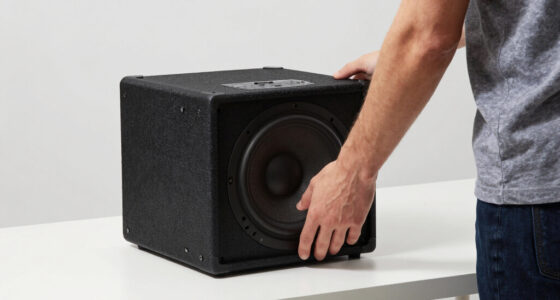
For most bands seeking a portable line array system, I’d start with the Electro-Voice EVOLVE 30M for its useful onboard mixing and gig-friendly design. The Bose L1 Pro16 is a strong alternative for players who value wide coverage and app control, while the JBL IRX ONE suits simpler setups where quick assembly matters. The main tradeoff is between compact transport and the low-frequency output, channel capacity, and coverage a full band may need. Larger systems with 15- or 18-inch subs can bring more headroom, but add bulk and setup demands. Read on for how all 11 options compare and which one fits your venues, lineup, and workflow.

Get audio and creator gear delivered free with Prime
- Fast, free delivery on millions of items
- Prime Video, Amazon Music and more included
- Member-only deals all year
Complete the kit


Key Takeaways
- The EVOLVE 30M stands out for band-ready mixing: its integrated mixer can reduce the need to carry a separate small-format mixer for straightforward gigs.
- Bose’s L1 models serve different stages: the Pro8 favors compact portability, the Pro16 offers a broader middle ground, and the Pro32 is the premium choice for buyers prioritizing a larger column system.
- Big subwoofers change the portability equation: the EXOTON and RECK systems pair line-array tops with larger subs, a fit for bass-heavy sets but a heavier load than compact column PAs.
- Convenience features are not a substitute for channel planning: Bluetooth, wireless microphones, and simple controls help some performers, but bands should check inputs and mixer routing for every source they use.
- The roundup spans distinct buying priorities: JBL and Bose compact systems favor streamlined transport, while LD Systems Maui 28 G3 and the larger EXOTON options suit buyers with different coverage and output demands.
| EXOTON LVP-18 8000W P.M.P.O Active Line Array PA System |  | Best for Large, Bass-Heavy Band Sets | Stated power: 8000W P.M.P.O. | Maximum SPL: 128 dB | Subwoofers: Dual 18-inch | VIEW ON AMAZON | See Our Full Breakdown |
| EXOTON S-1503 Column Array PA System with 15-Inch Powered Subwoofer |  | Best Value for Full-Band Flexibility | Maximum power: 2000 W | RMS power: 1000 W | Maximum SPL: 125 dB | VIEW ON AMAZON | See Our Full Breakdown |
| MUSYSIC Active Powered Portable Column Line Array PA System with 12-Inch Bass, Bluetooth, and Dual Wireless Microphones |  | Best for Bands That Need Wireless Mics Included | Model: MU-U12CPA | Output wattage: 2000 watts | Bass unit: 12 inches | VIEW ON AMAZON | See Our Full Breakdown |
| Bose L1 Pro8 Portable PA System with Bluetooth and Built-In Mixer |  | Best Compact Choice for Small Venues | Line array drivers: Eight articulated 2-inch neodymium drivers | Horizontal coverage: 180 degrees | Subwoofer driver: 7 × 13-inch RaceTrack | VIEW ON AMAZON | See Our Full Breakdown |
| Bose L1 Pro16 Portable PA System with Bluetooth and App Control |  | Best Premium Pick for Small-to-Medium Venues | Line array drivers: 16 articulated 2-inch neodymium drivers | Horizontal coverage: 180 degrees | Woofer: 10 × 18-inch high-excursion neodymium RaceTrack | VIEW ON AMAZON | See Our Full Breakdown |
| RECK 4000W P.M.P.O Line Array and 18 inch Active Subwoofer Powered PA System |  | Best for Bass-Heavy Events | Power: 4000W peak; 1000W RMS | Subwoofer: 18-inch active | Line array speakers: 4 | VIEW ON AMAZON | See Our Full Breakdown |
| JBL Professional IRX ONE Powered Column PA Speaker System |  | Best for Quick, Compact Setup | Power: 1300 W | Speaker configuration: Six 2-inch high-frequency drivers and one 8-inch woofer | Frequency response: Down to 40 Hz | VIEW ON AMAZON | See Our Full Breakdown |
| LD Systems Maui 28 G3 Compact Cardioid Column PA System |  | Best for Space-Conscious Cardioid Coverage | System type: Compact cardioid column PA | Intended use: Live performances and events | Portability: Described as portable | VIEW ON AMAZON | See Our Full Breakdown |
| Electro-Voice EVOLVE 30M 1000W Portable Powered Column Speaker System |  | Best for Bands That Mix Onboard | Power output: 1000 watts | Mixer: 8 channels | Inputs: XLR, ¼-inch TRS, RCA, 3.5 mm, Bluetooth, footswitch | VIEW ON AMAZON | See Our Full Breakdown |
| EXOTON LVP-15 15-inch Active Line Array PA System |  | Best for Large, High-Energy Events | System type: Active three-way line array PA | Woofers: Dual 15-inch | Midrange drivers: 8 x 4-inch neodymium | VIEW ON AMAZON | See Our Full Breakdown |
| Bose L1 Pro32 Column Array PA System |  | Best for Wide Room Coverage | System type: Portable line array PA system | Drivers: 32 articulated 2-inch neodymium drivers | Horizontal coverage: 180 degrees | VIEW ON AMAZON | See Our Full Breakdown |
| portable line array system for band | Connectivity |
|---|---|
| EXOTON LVP-18 8000W P.M.P.O Ac | Bluetooth, USB, wired; USB, RCA, and XLR inputs |
| EXOTON S-1503 Column Array PA | Bluetooth, USB, XLR, RCA |
| MUSYSIC Active Powered Portabl | AUX, Bluetooth, RCA, XLR |
| Bose L1 Pro8 Portable PA Syste | Bluetooth |
| Bose L1 Pro16 Portable PA Syst | Bluetooth |
| RECK 4000W P.M.P.O Line Array | Bluetooth, USB, SD, XLR/¼-inch combo, RCA/AUX |
| JBL Professional IRX ONE Power | — |
| LD Systems Maui 28 G3 Compact | — |
| Electro-Voice EVOLVE 30M 1000W | — |
| EXOTON LVP-15 15-inch Active L | — |
| Bose L1 Pro32 Column Array PA | — |
More Details on Our Top Picks
EXOTON LVP-18 8000W P.M.P.O Active Line Array PA System
For a band that needs dual 18-inch subs and a six-module array, the EXOTON LVP-18 is the largest-scale option in this group. Its stated 128 dB maximum SPL and adjustable array height suit bigger stages and events better than the more compact Bose L1 Pro16, which is aimed at small to medium venues. The plywood enclosure and multiple wired input types also make it a more substantial rig for a full live setup. The tradeoff is handling: at 163 pounds, this is not an easy one-person load-in, and its size can overwhelm small rooms. The 8000W P.M.P.O. figure is not directly comparable to RMS ratings, so I would choose it for its physical scale and configuration rather than that headline number alone.
Pros:- Dual 18-inch subwoofers provide a substantial bass setup for full-band material.
- Six line array modules and adjustable height offer flexibility in audience coverage.
- Multi-layer plywood construction is suited to demanding live-event use.
- Bluetooth, USB, RCA, and XLR connections accommodate varied sources and equipment.
Cons:- At 163 pounds, the system calls for substantial transport capacity and likely more than one person to move.
- Its size and bass capability are excessive for many small venues.
- The stated 8000W P.M.P.O. figure does not provide an RMS power rating for straightforward comparison.
Best for: Bands playing larger venues or outdoor events that need substantial low-frequency output and have help for transport and setup.
Not ideal for: Solo performers, small-room bands, and groups that need a lightweight system they can carry and assemble alone.
- Stated power:8000W P.M.P.O.
- Maximum SPL:128 dB
- Subwoofers:Dual 18-inch
- Line array modules:6
- Weight:163 pounds
- Enclosure:Multi-layer plywood
- Connectivity:Bluetooth, USB, wired; USB, RCA, and XLR inputs
- Channels:4
Our verdict“Choose the LVP-18 for larger band setups that can accommodate a heavy, full-scale system, not for quick solo load-ins or compact rooms.”
EXOTON S-1503 Column Array PA System with 15-Inch Powered Subwoofer
The S-1503 offers a useful middle ground for bands that want a dedicated subwoofer and column array without stepping up to the bulky EXOTON LVP-18. Its 15-inch powered sub gives it a more substantial low-frequency foundation than the compact Bose L1 Pro8, while eight 3.5-inch drivers and five DSP presets let a group tailor the system for vocals, live music, or DJ playback. Short and long extension poles help adjust the array to different rooms, and the included travel bag adds practical convenience. The compromise is still physical size: the sub is a sizeable piece to load, and TWS linking is limited to a second compatible S-1503. I would shortlist it for bands needing flexible inputs and a fuller rig, rather than the lightest possible carry.
Pros:- 15-inch powered subwoofer provides a fuller low-frequency setup than compact column systems.
- Five DSP presets suit different band, DJ, and speech applications.
- Bluetooth, USB, XLR, and RCA connections support a broad mix of sources.
- Two pole lengths and an included travel bag help adapt the setup to different venues.
Cons:- The large powered subwoofer takes more room and effort to transport than compact systems.
- TWS linking is specified for two compatible S-1503 systems only.
Best for: Working bands and small event groups that want a 15-inch sub, multiple input options, and presets for changing between music and speech.
Not ideal for: Musicians prioritizing a compact one-piece load-in or wanting wireless stereo linking with equipment beyond another compatible S-1503.
- Maximum power:2000 W
- RMS power:1000 W
- Maximum SPL:125 dB
- Subwoofer:15-inch powered
- Full-range drivers:Eight 3.5-inch
- DSP presets:NORMAL, DJ, VOICE, LIVE, FLAT
- Connectivity:Bluetooth, USB, XLR, RCA
- Included setup accessories:Long and short extension poles, travel bag
Our verdict“Pick the S-1503 if your band wants a flexible column rig with a substantial sub and can manage the larger load.”
MUSYSIC Active Powered Portable Column Line Array PA System with 12-Inch Bass, Bluetooth, and Dual Wireless Microphones
The MUSYSIC MU-U12CPA is the most ready-to-present package here: alongside its 12-inch bass unit and three columns, it includes two UHF handheld microphones and a bodypack transmitter. That makes it a practical fit for bands that also handle announcements, guest vocals, or events with presenters. Compared with the EXOTON S-1503, it trades the larger 15-inch sub and DSP presets for a lighter stated system weight and bundled wireless microphone hardware. Its Bluetooth, AUX, RCA, and XLR connections give the group useful source options. The stated 40-pound weight is still a meaningful carry, and the system needs AC power; it is not a battery-powered solution for off-grid gigs. I would choose this for an all-in-one performance package, not for maximum bass scale.
Pros:- Includes two UHF handheld microphones and a bodypack transmitter for vocals and announcements.
- 12-inch bass unit offers a more substantial low end than the compact Bose L1 Pro8 setup.
- Bluetooth, AUX, RCA, and XLR connections accommodate common audio sources.
- Three-column configuration comes as a complete system with a remote and power cord.
Cons:- Requires corded AC power, limiting use at venues without a suitable power source.
- At 40 pounds, it may be cumbersome for frequent solo transport.
- The included 12-inch bass unit is smaller than the subs in the EXOTON S-1503 and LVP-18.
Best for: Small bands, duos, and event performers who need a portable column PA with wireless handheld microphones and a bodypack transmitter included.
Not ideal for: Bands seeking the larger low-frequency foundation of a 15- or 18-inch subwoofer, or performers needing battery operation.
- Model:MU-U12CPA
- Output wattage:2000 watts
- Bass unit:12 inches
- System weight:40 pounds
- Connectivity:AUX, Bluetooth, RCA, XLR
- Included microphones:Two UHF handheld microphones and one bodypack transmitter
- Included array:Three columns
- Power source:Corded electric
Our verdict“Choose the MUSYSIC when included wireless microphones matter more than having the largest subwoofer or a battery-ready rig.”
Bose L1 Pro8 Portable PA System with Bluetooth and Built-In Mixer
For a duo or small band playing intimate rooms, the L1 Pro8 prioritizes wide 180-degree coverage and a compact footprint over the deeper bass and higher-scale setup of the EXOTON systems. Its eight articulated drivers spread sound across a broad area, while the built-in mixer provides EQ, reverb, and phantom power without requiring a separate mixer for a simple rig. Bluetooth streaming and L1 Mix app control also reduce cable and setup demands. The limitation is scale: the compact RaceTrack sub is not a substitute for the dual 18-inch subs in the EXOTON LVP-18 when a full band needs forceful low end in a large venue. It also requires AC power. I would favor it for easy transport and small-room coverage, not for bass-heavy or high-volume band sets.
Pros:- Eight articulated drivers provide 180-degree horizontal coverage for a broad audience area.
- Compact RaceTrack subwoofer keeps the system footprint smaller than the EXOTON subwoofer rigs.
- Built-in mixer includes EQ, reverb, and phantom power for a streamlined setup.
- Bluetooth streaming and L1 Mix app control support convenient source and mixer operation.
Cons:- Designed for small venues, so it is a limited fit for larger band performances.
- Its compact subwoofer offers less scale for bass-heavy music than systems with 15- or 18-inch subs.
- Requires AC power and is not waterproof.
Best for: Duos, singer-songwriters, and small bands playing intimate indoor venues that want broad coverage and an integrated mixer.
Not ideal for: Larger bands, bass-heavy acts, or groups playing venues where a compact integrated sub cannot meet their low-frequency needs.
- Line array drivers:Eight articulated 2-inch neodymium drivers
- Horizontal coverage:180 degrees
- Subwoofer driver:7 × 13-inch RaceTrack
- Mixer:Built-in mixer with EQ, reverb, and phantom power
- Connectivity:Bluetooth
- Wireless control:L1 Mix app
- Power source:AC power
- Waterproof:No
Our verdict“Choose the L1 Pro8 for a small-room band setup where compact transport and wide coverage matter more than big-system bass.”
Bose L1 Pro16 Portable PA System with Bluetooth and App Control
The L1 Pro16 suits bands that want a self-contained rig with more array coverage and woofer capacity than the Bose L1 Pro8, without moving to the heavy, dual-sub scale of the EXOTON LVP-18. Its 16-driver J-shaped array delivers stated 180-degree horizontal coverage, while the 10 × 18-inch RaceTrack woofer adds a stronger low-frequency foundation in a compact footprint. A three-channel mixer with EQ, reverb, and phantom power can simplify a small band’s setup, and Bluetooth plus app control supports convenient adjustments. Its intended range is still small to medium venues; it is not a replacement for a larger multi-sub system when the room or music demands more output. The lack of water resistance also calls for care at outdoor gigs.
Pros:- Sixteen-driver J-shaped array provides 180-degree horizontal coverage.
- 10 × 18-inch RaceTrack woofer offers more bass capacity than the L1 Pro8’s compact subwoofer.
- Three-channel mixer includes EQ, reverb, and phantom power for a streamlined live setup.
- Bluetooth streaming and L1 Mix app control reduce dependence on separate controls and sources.
Cons:- Its intended small-to-medium venue use may not suit large stages or high-output band sets.
- Not water resistant, so outdoor use requires protection from wet conditions.
- Bluetooth connectivity is specified, but the listed connection details do not include a broader set of wired input types.
Best for: Small-to-medium venue bands and mobile performers seeking an integrated mixer, broad coverage, and more bass capacity than a compact column system.
Not ideal for: Bands playing large venues or outdoor events where they need weather protection or the scale of a larger subwoofer system.
- Line array drivers:16 articulated 2-inch neodymium drivers
- Horizontal coverage:180 degrees
- Woofer:10 × 18-inch high-excursion neodymium RaceTrack
- Mixer:Built-in three-channel mixer with EQ, reverb, and phantom power
- Connectivity:Bluetooth
- Wireless control:L1 Mix app
- Frequency response:45 Hz
- Water resistance:Not water resistant
Our verdict“Choose the L1 Pro16 for a polished, self-contained small-to-medium venue rig, but move to a larger system for big rooms or demanding bass levels.”
RECK 4000W P.M.P.O Line Array and 18 inch Active Subwoofer Powered PA System
The RECK pairs four line array speakers with an 18-inch active subwoofer, making it a better fit for bands that need substantial low-end weight than compact column systems such as the JBL IRX ONE. Its listed 1000W RMS rating gives buyers a more useful power reference than the 4000W peak headline, while Bluetooth, USB, SD, and XLR/¼-inch combo inputs let a band handle several playback and microphone sources. The included tripods and cables simplify putting a complete rig together, though the system still means moving two heavy pieces: the subwoofer is listed at 86 lb and the other component at 34 lb. That makes it less convenient for solo load-ins and tight venues than the EVOLVE 30M. I’d choose it for bigger, bass-forward shows, not frequent one-person transport.
Pros:- 18-inch active subwoofer gives bass-heavy music more low-frequency support than compact column systems.
- Four line array speakers provide a dedicated array configuration for event sound.
- Bluetooth, USB, SD, XLR/¼-inch combo, and RCA/AUX connections accommodate varied sources.
- Includes two tripods, cables, and a remote for a ready-to-assemble setup.
Cons:- The 86 lb and 34 lb component weights can make load-in difficult without help.
- The large subwoofer footprint is a poor match for small stages and cramped venues.
- More pieces and connections mean a less straightforward setup than the JBL IRX ONE.
Best for: Bands and DJs playing larger events who want an included subwoofer, strong bass presence, and several playback connection options.
Not ideal for: Solo performers with frequent stairs, compact cars, or small rooms; the two-piece system is bulky and its listed component weights make transport demanding.
- Power:4000W peak; 1000W RMS
- Subwoofer:18-inch active
- Line array speakers:4
- Connectivity:Bluetooth, USB, SD, XLR/¼-inch combo, RCA/AUX
- Remote range:20 feet
- Component weights:86 lb + 34 lb
- Included accessories:2 tripods, cables, remote, user manual
Our verdict“Choose the RECK for bass-forward band and DJ events where the included 18-inch subwoofer matters more than easy solo transport.”
JBL Professional IRX ONE Powered Column PA Speaker System
The JBL IRX ONE is the most straightforward choice here for a band that values fast setup and simple on-speaker mixing over a separate, large subwoofer. Its C-shaped array of six 2-inch drivers is designed for broad coverage, while the 3-channel mixer, phantom power, and XLR/¼-inch inputs cover common vocal and instrument needs. Automatic feedback suppression can help when microphones are used in reflective rooms, and Bluetooth 5.0 adds convenient playback. Compared with the RECK 4000W system, the JBL is much less oriented around a large bass cabinet and a sprawling set of connections; compared with the EVOLVE 30M, it offers fewer mixer channels and no listed onboard effects. Its plastic enclosure and lack of waterproofing also call for careful handling. This is a practical compact rig, not a rough-weather or heavy-duty touring cabinet.
Pros:- C-shaped six-driver array is designed to spread sound across a room.
- Three-channel mixer, XLR and ¼-inch inputs, and 48 V phantom power support common live sources.
- Automatic feedback suppression and five EQ presets help with practical sound adjustments.
- Carry handle and stowable spacers support a simpler transport and setup routine.
Cons:- Its 8-inch woofer is less suited to bass-heavy shows than the RECK’s 18-inch subwoofer.
- Three mixer channels offer less room for multiple band inputs than the EVOLVE 30M’s eight channels.
- Plastic enclosure is not waterproof and may be less suited to rough handling.
Best for: Small bands, duos, and solo performers who need quick setup, a few mic or instrument inputs, and convenient Bluetooth playback for indoor gigs.
Not ideal for: Bands needing a large subwoofer, extensive channel mixing, onboard effects, or equipment suitable for wet conditions and rough handling.
- Power:1300 W
- Speaker configuration:Six 2-inch high-frequency drivers and one 8-inch woofer
- Frequency response:Down to 40 Hz
- Mixer:3-channel
- Inputs:XLR and ¼-inch
- Phantom power:48 V
- Bluetooth:Version 5.0; 10-meter range
- Feedback and EQ:dbx automatic feedback suppression; 5 EQ presets
Our verdict“Pick the JBL IRX ONE for compact gigs where quick setup and basic live mixing matter more than deep, high-output bass.”
LD Systems Maui 28 G3 Compact Cardioid Column PA System
The Maui 28 G3 earns a place for bands prioritizing a compact column format and the product’s stated cardioid design. That directional approach can appeal to performers who want a column system tailored to live sound coverage, rather than the more conventional multi-box setup of the RECK 4000W system. The product information also describes it as portable and easy to set up, a useful contrast with the RECK’s heavy subwoofer and the larger-format EXOTON LVP-15. But the supplied data is unusually sparse: it does not list power, driver configuration, weight, inputs, or mixer features. I can’t make a meaningful spec-based judgment about how it handles a full band, bass-heavy material, or varied stage connections. Buyers should verify those details before choosing it over the better-documented JBL IRX ONE or EVOLVE 30M.
Pros:- Compact column PA format suits buyers aiming to keep equipment footprint manageable.
- Cardioid design is a distinguishing feature for live-performance coverage.
- Described as portable and easy to set up.
- Black finish offers a restrained stage appearance.
Cons:- Provided product data does not specify power output, frequency response, or driver configuration.
- No listed weight or dimensions make transport planning difficult.
- Inputs and mixer details are absent, so band connectivity cannot be verified from the supplied information.
Best for: Bands seeking a compact cardioid column PA for live performances and willing to confirm system specifications and input needs before purchase.
Not ideal for: Buyers who need confirmed power, weight, driver, mixer, or connection details to plan a full-band setup or compare technical capabilities.
- System type:Compact cardioid column PA
- Intended use:Live performances and events
- Portability:Described as portable
- Setup:Described as easy to set up
- Color:Black
- Power output:Not specified in supplied product data
Our verdict“Consider the Maui 28 G3 for a compact cardioid setup only after confirming its missing power, connection, and transport specifications.”
Electro-Voice EVOLVE 30M 1000W Portable Powered Column Speaker System
The EVOLVE 30M stands apart from simpler column systems by giving a band an eight-channel digital mixer and onboard effects in the PA itself. That makes it more adaptable for acts with several microphones and instruments than the JBL IRX ONE, whose listed mixer has three channels. Bluetooth and app-based remote control add flexibility for playback and mix adjustments, while the included backpack carry case and pole connector help organize the array components. It is a stronger fit for bands wanting a more self-contained live rig than the LD Systems Maui 28 G3, whose supplied information leaves mixer and input details unclear. The tradeoff is a larger system built around a powered subwoofer, and it still needs corded electric power. The listed weight and dimensions also deserve verification before planning a solo load-in, as they may not describe every component separately.
Pros:- Eight-channel digital mixer supports more band sources than the JBL IRX ONE’s three-channel mixer.
- Onboard effects and app-based audio and mix control add useful live performance flexibility.
- Broad input selection includes XLR, ¼-inch TRS, RCA, 3.5 mm, Bluetooth, and footswitch.
- Backpack carry case and two-piece pole connector help keep array components together for transport.
Cons:- Requires corded electric power, limiting use where mains power is unavailable.
- Powered subwoofer and array components may be less convenient to move than a simpler compact column PA.
- The supplied weight and dimensions may not clarify the transport burden of each individual component.
Best for: Small bands and performers who want several live inputs, onboard effects, Bluetooth, and app-based mix control in one column PA system.
Not ideal for: Acts seeking a battery-powered rig or the simplest possible setup; buyers should also confirm component-by-component weight and dimensions before frequent solo transport.
- Power output:1000 watts
- Mixer:8 channels
- Inputs:XLR, ¼-inch TRS, RCA, 3.5 mm, Bluetooth, footswitch
- Outputs:XLR, RCA, IEC power
- Wireless control:Bluetooth and QuickSmart Mobile app
- Power source:Corded electric
- Dimensions:19.69 x 15.35 x 19.69 inches
- Included components:Speaker array, two-piece pole connector, backpack carry case, powered subwoofer
Our verdict“Choose the EVOLVE 30M when your band needs integrated multi-channel mixing and effects more than battery operation or the lightest possible rig.”
EXOTON LVP-15 15-inch Active Line Array PA System
The EXOTON LVP-15 targets bands that need a large-format, high-energy system, not a compact one-person column PA. Its three-way configuration combines dual 15-inch woofers with eight 4-inch midrange and eight 1-inch high-frequency drivers, a layout aimed at carrying both vocal detail and substantial low end. The stated 125 dB maximum SPL and 55 Hz–20 kHz range give buyers more sound-output context than the sparsely specified LD Systems Maui 28 G3. Compared with the RECK 4000W system, the EXOTON emphasizes a three-way cabinet design and plywood construction, while the RECK clearly lists accessories and multiple playback connections. The LVP-15’s 6000W P.M.P.O. figure is a peak-style rating, so it should not be treated as a direct RMS comparison. No weight is given, and setup may call for a technically confident crew.
Pros:- Three-way driver configuration combines dual 15-inch woofers with dedicated midrange and high-frequency drivers.
- Listed 125 dB maximum SPL and 55 Hz–20 kHz frequency range provide useful output and response references.
- Plywood cabinet is a more substantial construction choice than the JBL IRX ONE’s plastic enclosure.
- Built-in LCD display is listed for system management.
Cons:- Weight is not specified, making transport and vehicle planning uncertain.
- Large-format components and complex setup may require additional crew or technical experience.
- The 6000W P.M.P.O. figure is not directly comparable to RMS power ratings such as the RECK’s.
Best for: Bands, DJs, and event crews seeking a large-format three-way PA for high-energy gatherings and prepared to manage a more involved setup.
Not ideal for: Solo musicians, small-room performers, and buyers who need confirmed system weight or a simple grab-and-go column rig.
- System type:Active three-way line array PA
- Woofers:Dual 15-inch
- Midrange drivers:8 x 4-inch neodymium
- High-frequency drivers:8 x 1-inch
- Maximum SPL:125 dB
- Frequency range:55 Hz–20 kHz
- Cabinet material:Plywood
Our verdict“Choose the EXOTON LVP-15 for high-energy events where its large three-way configuration suits the job and transport logistics are manageable.”
Bose L1 Pro32 Column Array PA System
The Bose L1 Pro32 suits bands that need broad audience coverage from a modular column system. Its 180-degree horizontal coverage can help spread sound across wide rooms, while 32 articulated drivers form a taller array than the compact Bose L1 Pro8. The built-in mixer adds two phantom-powered combo inputs, EQ, reverb, and ToneMatch presets, giving a small band useful control without requiring a separate mixer for basic setups.
The tradeoff is that the Pro32 is not a complete low-end solution on its own: a Bose Sub1 or Sub2 is sold separately, and either connects by wire. Compared with the Bose L1 Pro16, this system puts more emphasis on wide coverage than on an all-in-one purchase. Bluetooth and app control are handy for playback and adjustments, but the system is not water resistant, so outdoor use calls for weather protection.
Pros:- 180-degree horizontal coverage helps reach audiences spread across a wide room.
- Two phantom-powered combo inputs accommodate microphones and other sources.
- Built-in EQ, reverb, and ToneMatch presets provide useful sound shaping without a separate mixer.
- Bluetooth streaming and L1 Mix app control support convenient playback and adjustments.
Cons:- A Bose Sub1 or Sub2 is sold separately, adding a separate purchase for stronger low-frequency output.
- The subwoofer connection is wired, limiting placement flexibility compared with a wireless link.
- Not water resistant, so it needs protection at outdoor performances.
Best for: Bands playing wide indoor rooms that want broad horizontal coverage, onboard mixing, and the flexibility to pair the array with a Bose Sub1 or Sub2.
Not ideal for: Bands seeking a ready-to-play system with included subwoofer, or performers who need equipment rated for uncovered outdoor use.
- System type:Portable line array PA system
- Drivers:32 articulated 2-inch neodymium drivers
- Horizontal coverage:180 degrees
- Inputs:Two combo XLR-1/4-inch phantom-powered inputs; 1/4-inch and 3.5 mm auxiliary inputs
- Wireless connectivity:Bluetooth; stated range up to 100 meters
- Mixer features:EQ, reverb, phantom power, and ToneMatch presets
- Compatible subwoofers:Bose Sub1 or Sub2, sold separately
- Subwoofer connection:Wired
- Water resistance:Not water resistant
Our verdict“Choose the L1 Pro32 if wide indoor coverage and onboard mixing matter more than getting a subwoofer in the same system.”

How We Picked
I compared these systems as complete band PA choices, not just as speakers. The main criteria were practical portability, low-frequency support, coverage potential, input and mixer flexibility, setup complexity, and whether the system’s features match common live-band workflows. A compact unit can be the better fit for a duo or small venue, while a separate powered subwoofer and line-array top may suit a louder set if the buyer can handle the extra transport and setup.
The ranking favors systems with a clear use case and a useful balance of performance, control, and portability for working bands. Models with integrated mixing or straightforward setup earn credit for reducing extra gear; larger systems are judged on whether their added output and bass support justify their bulk. I treat headline wattage claims cautiously, since the listed figures are not directly comparable across brands and do not alone predict usable coverage or sound quality. Where product details are limited, I avoid assuming capabilities beyond the stated configuration.
| portable line array system for band | Connectivity |
|---|---|
| EXOTON LVP-18 8000W P.M.P.O Ac | Bluetooth, USB, wired; USB, RCA, and XLR inputs |
| EXOTON S-1503 Column Array PA | Bluetooth, USB, XLR, RCA |
| MUSYSIC Active Powered Portabl | AUX, Bluetooth, RCA, XLR |
| Bose L1 Pro8 Portable PA Syste | Bluetooth |
| Bose L1 Pro16 Portable PA Syst | Bluetooth |
| RECK 4000W P.M.P.O Line Array | Bluetooth, USB, SD, XLR/¼-inch combo, RCA/AUX |
| JBL Professional IRX ONE Power | — |
| LD Systems Maui 28 G3 Compact | — |
| Electro-Voice EVOLVE 30M 1000W | — |
| EXOTON LVP-15 15-inch Active L | — |
| Bose L1 Pro32 Column Array PA | — |
Factors to Consider When Choosing Portable Line Array System For Bands
Choosing a band PA is less about finding the biggest number on a spec sheet and more about matching the system to your set, venues, and crew. These factors can help you avoid paying for capacity you will not use—or buying a compact rig that leaves your band short on inputs or bass.
Match the System to Your Band’s Input List
Write down every source that needs to reach the PA: vocals, keys, acoustic instruments, playback, and any microphones used for announcements. Then check how many inputs can be connected and controlled at the same time, rather than assuming a built-in mixer will cover the whole band. A small column system may be fine for a duo while a full group may need an external mixer or a model with more onboard channels. Also check whether the controls offer the routing and monitoring your setup needs. A common mistake is counting only vocal microphones and discovering at rehearsal that instruments and playback have nowhere to go. Leave some input capacity for guest performers or last-minute changes if your set varies.
Think About Bass as Part of the Whole Rig
A line array column can spread vocals and midrange across a room, but that does not automatically mean it can deliver the low end a kick drum, bass guitar, or electronic tracks require. The size and design of the subwoofer matter, as does the room and the volume at which the band plays. Larger subs can add weight, packing space, and setup time, so their value depends on how often your material needs that extra low-frequency support. If a venue supplies subwoofers, a lighter system may make more sense than carrying your own. Ask whether your bass-heavy sources will run through the PA or through backline, since that changes the system’s workload. Avoid choosing by subwoofer diameter alone; the full system design and your real use case matter more.
Plan for Transport, Setup, and Storage
Portability is a whole-trip question: include the speaker, subwoofer, poles or column sections, covers, cables, and any mixer you still need. A system that assembles quickly may save valuable time at shared bills, while a larger multi-piece rig may need more vehicle space and another person to move it safely. Measure your car or van’s cargo area before buying, and check the weight of the heaviest component rather than only the total system weight. Think about stairs, narrow stages, and how far gear must travel from parking. Bands often focus on how easily a system breaks down but overlook where its separate pieces will live between gigs. When portability is the deciding factor, fewer components can matter more than a compact-looking speaker column.
Match Coverage to the Room, Not Just the Audience Count
Room shape, audience placement, and stage position affect coverage just as much as the number of people attending. A wide column can help distribute sound across a listening area, but it cannot compensate for poor placement or blocked sightlines. For long, narrow rooms, consider how far the system needs to project; for small rooms, excess output can make the mix hard to control. Check the manufacturer’s coverage information and, where possible, compare it with the venues you play most often. Two systems with similar power claims may behave differently in a real room. Bands should also account for stage volume: loud amplifiers can mask the PA and make a compact system seem inadequate.
Decide Which Features Replace Other Gear
Bluetooth is useful for breaks and walk-in music, but it rarely replaces the wired connections and control a live band needs. Wireless microphones can simplify a small event setup, yet performers should check how many are included and whether they meet the band’s reliability and channel needs. An integrated mixer may remove a piece of gear, but only if it provides enough inputs, equalization, effects, and control for the set. App control can help with adjustments from the audience area, though it adds dependence on a phone and wireless connection. Make a list of gear a feature would genuinely let you leave at home. This keeps convenience claims from distracting from the basics of mixing and connectivity.
Choose Headroom for Your Loudest Typical Gig
Buy for the loudest room you play regularly, not an imagined festival stage you may visit once. A system that runs near its limits can leave little room for dynamic peaks, while extra capacity may be wasted if most shows are quiet and close-up. Consider the full band’s stage volume, musical style, and whether the PA must carry kick drum and bass as well as vocals. Headroom also depends on speaker design and system processing, so published wattage figures should not be treated as a direct ranking. If you often play larger rooms, a system that can be expanded or paired with additional subs may be more useful than a one-piece solution. For small venues and compact lineups, easier setup and clear mixing can matter more than maximum output.
Frequently Asked Questions
Can one portable line array system handle a full band without an external mixer?
Sometimes, but the answer depends on the band’s complete input list and the system’s onboard mixer. Count vocals, instruments, playback, and any extra microphones, then check the available inputs and controls rather than relying on a general “band-ready” label. The EVOLVE 30M is notable in this lineup for its integrated mixing, while other systems may suit a simpler setup or work best with a separate mixer. Even if the inputs fit, you may prefer an external mixer for more detailed routing or control. Confirm that the setup supports your monitoring plan as well as the audience mix.
Should I choose a compact column PA or a system with a large subwoofer?
Choose based on what the PA must reproduce and how much equipment your band can transport. Compact systems such as the Bose L1 Pro8 or JBL IRX ONE suit buyers who value a streamlined rig, especially for smaller lineups and venues. A larger subwoofer-based setup is more relevant when the PA needs to carry substantial low-frequency content or support louder performances. The tradeoff is extra weight, space, and setup work. If venues regularly provide subs, carrying a large one yourself may add little value.
Are published wattage figures a reliable way to compare these systems?
Not on their own. The products in this roundup use different specifications and marketing conventions, so a higher stated wattage does not automatically mean louder or clearer sound in your venue. Look for practical details such as system configuration, coverage information, available inputs, and the role of the subwoofer. Also consider whether the band plays through the PA at full level or mainly needs vocal support. When possible, compare systems in a similar room or ask a dealer how they perform for a lineup like yours.
Is Bluetooth enough for playing backing tracks at a gig?
Bluetooth can be convenient for break music or a simple playback setup, but a band should not assume it is the best connection for every performance. Check whether the system also accepts the wired outputs from your playback device, since those can better suit a fixed live rig. Consider how playback is mixed with vocals and instruments, and whether it needs its own level control. Wireless playback also depends on a reliable connection and a suitable device. For critical backing tracks, make sure your full signal path—not just the speaker’s Bluetooth feature—fits your workflow.
Which system should I choose if my band plays both small bars and larger rooms?
Prioritize a system that is easy to scale or that has enough capacity for your common larger-room gigs without becoming a burden at every smaller show. The Bose L1 Pro16 offers a middle-ground format in this lineup, while the EVOLVE 30M makes a strong case when onboard mixing is a priority. If your larger rooms demand stronger low end, a setup with a substantial subwoofer may suit better, though it will be less convenient for small stages. Ask venues what PA support they provide before buying for occasional large shows. Your regular gigs should guide the choice, with a plan for renting or supplementing gear when a rare event exceeds the system’s role.
Conclusion
For the best overall band-focused balance, I’d choose the Electro-Voice EVOLVE 30M, especially when onboard mixing can simplify a working rig. The best value in practical features is the JBL IRX ONE for bands that want a straightforward portable setup, while the best premium pick is the Bose L1 Pro32 for buyers prioritizing a larger column system. Beginners and compact duos should look first at the Bose L1 Pro8 for its portable format; players wanting more room to grow can compare it with the Pro16. For bass-heavy sets and buyers prepared to move larger components, consider the EXOTON LVP-18 or RECK 4000W system; for a different column-and-sub approach, the LD Systems Maui 28 G3 is also worth a closer look. Match the final choice to your input list, transport limits, and typical venues rather than headline power claims.