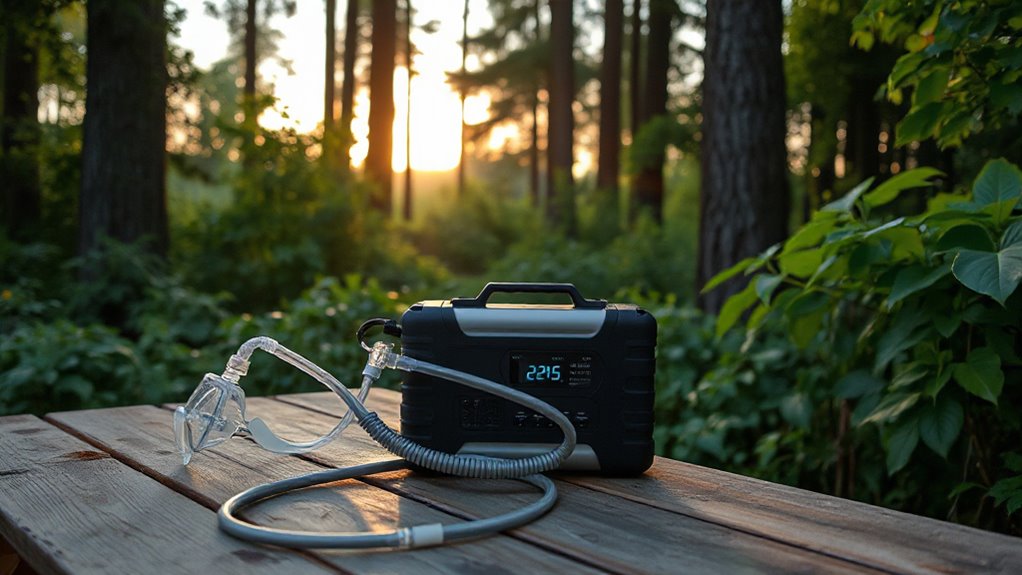
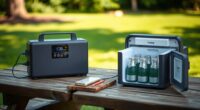
For most CPAP campers, I’d start with the EASYLONGER ES960: its 297.6Wh LiFePO4 battery offers a strong balance of capacity and a CPAP-focused design. The BLUETTI Elite 30 V2 is a versatile alternative, while the Jackery Explorer 1000 v2 suits longer trips where extra capacity matters more than pack weight. The main tradeoff is between a compact, CPAP-specific battery and a general-purpose station with more ports or expansion potential. Runtime varies widely with pressure settings, heated humidification, heated tubing, and connection method, so capacity alone cannot promise a fixed number of nights. Read on for the full breakdown and guidance on matching a station to your actual setup.

Get audio and creator gear delivered free with Prime
- Fast, free delivery on millions of items
- Prime Video, Amazon Music and more included
- Member-only deals all year
Complete the kit


Key Takeaways
- CPAP-focused design matters: EASYLONGER’s ES960, ES960 PRO, ES720, and ES400 AIR are purpose-built options, but buyers still need to check compatibility and cable requirements for their machine.
- Battery chemistry separates similar-sized picks: The Dyness and ALLWEI 256Wh models use LiFePO4 chemistry, while capacity figures alone do not reveal battery lifespan or usable output.
- About 288–297.6Wh is a recurring capacity tier: The BLUETTI Elite 30 V2, Jackery Explorer 300, EnginStar, Anker SOLIX C300 DC, and EASYLONGER ES960 models cluster near this range, but differ in outlet choices and intended use.
- Small packs trade runtime for portability: The 99.9Wh EASYLONGER ES270 is the travel-oriented choice in this lineup, while the 1070Wh Jackery Explorer 1000 v2 is a much larger option for extended power needs.
- Wattage and watt-hours answer different questions: Output rating helps determine whether a device can run, while watt-hours help estimate duration; neither alone tells you how many nights your CPAP will last.


| portable power station for cpap camping | Weight | Dimensions | Capacity | Battery type |
|---|---|---|---|---|
| EASYLONGER CPAP Battery Backup | 2.05 lb | 7.28 x 4.76 x 1.57 in | 148Wh | Lithium-ion |
| Portable Power Station 300W | 8.8 lb | 5.9 x 9.4 x 7.3 in | 192Wh | LiFePO4 |
| Jackery Explorer 300 Portable | 7.1 lb (listed in product information) | — | 292Wh | LiFePO4 (as listed) |
| BLUETTI Elite 30 V2 Portable P | 9.4 lb | 9.8 x 7 x 6.6 in | 288Wh | — |
| Portable Power Station 300W MA | 4.6 lb | 8.15 x 3.9 x 5.83 in | 237Wh | Lithium-ion |
| Dyness Portable Power Station | — | — | — | — |
| EASYLONGER ES720 CPAP Battery | — | — | — | — |
| EASYLONGER ES270 CPAP Battery | 1.3 pounds | 5.1 × 2.9 × 1.9 inches | — | — |
| ALLWEI Portable Power Station | 6.4 pounds | 9.25 × 5 × 6.8 inches | — | — |
| Daran Portable Power Station 1 | 8.86 pounds | 10.0 × 6.6 × 8.2 inches | — | — |
| EASYLONGER CPAP Battery Backup | — | — | 297.6Wh | LiFePO4 |
| EnginStar Portable Power Stati | 6.5 pounds | 9.1 × 5 × 7 inches | 296Wh | — |
| EASYLONGER ES960 PRO CPAP Batt | 6.6 pounds | 2.9 × 6.2 × 8.8 inches | 297.6Wh | LiFePO4 |
| Anker SOLIX C300 DC Portable P | — | — | — | LiFePO4 |
| Jackery Explorer 1000 v2 Porta | 23.8 pounds | 12.9 × 8.8 × 9.7 inches | — | LiFePO4 |
More Details on Our Top Picks
EASYLONGER CPAP Battery Backup ES400 AIR, 148Wh Lithium-Ion Battery Pack
The EASYLONGER ES400 AIR is the most CPAP-focused option here: its listed compatibility spans several ResMed, Luna, and Philips machines, and the included cables can save you from sorting out adapters at camp. At 2.05 pounds, it is far easier to pack than the 8.8-pound 192Wh power station, though that larger unit provides more stored energy. The ES400 AIR’s 148Wh capacity is aimed at a night of therapy, but actual runtime depends on your machine, pressure settings, and whether humidification is running; larger machines or heated accessories can use the battery faster. Pass-through charging adds flexibility when power is available, while the car socket and USB ports can serve other small devices. Its main tradeoff is less reserve capacity than the Jackery Explorer 300 or MARBERO 237Wh model.
Pros:- Listed compatibility covers several common ResMed, Luna, and Philips CPAP families
- Very low 2.05-pound weight makes it easier to pack than the larger power stations
- Multiple included cables reduce accessory guesswork for supported machines
- Pass-through charging and built-in electrical protections add flexibility
Cons:- 148Wh provides less energy reserve than the 237Wh MARBERO or 292Wh Jackery
- CPAP runtime can drop when using humidifiers or other heated features
- Car charger and solar panel are not included, and recharge time depends on the source
Best for: CPAP users with a listed compatible machine who want a very light, dedicated battery for a single night away from outlets.
Not ideal for: Campers running humidification or heated tubing who need dependable multi-night capacity, or buyers who want an included car charger or solar panel.
- Capacity:148Wh
- Battery type:Lithium-ion
- Weight:2.05 lb
- Dimensions:7.28 x 4.76 x 1.57 in
- CPAP compatibility:Selected ResMed AirSense, AirCurve, AirMini, S9; Luna G3; Philips DreamStation 1 and 2
- Charging options:AC adapter, car charger, solar panel (not included)
- Output ports:160W car socket, 30W USB-C, 18W USB-A
Our verdict“Choose the ES400 AIR for a lightweight, CPAP-oriented overnight setup, but pick a higher-capacity station if your therapy uses heated accessories or needs a larger reserve.”
Portable Power Station 300W, 600W Surge Solar Generator 192Wh
This 192Wh LiFePO4 station suits campers who can recharge between outings or during the day: the listed AC recharge time reaches 80% in about an hour, reducing downtime compared with the Jackery Explorer 300’s stated four-hour charge. Its built-in UPS also gives it a useful backup role at home, beyond powering a CPAP at camp. For overnight therapy, the 192Wh capacity sits above the CPAP-specific EASYLONGER ES400 AIR’s 148Wh, but below the Jackery’s 292Wh and the BLUETTI Elite 30 V2’s 288Wh. That middle capacity can be a sensible compromise, though real CPAP runtime depends on the machine and heated features. At 8.8 pounds, it is not as easy to carry as the MARBERO, and its AC outlets may be less efficient for CPAP use than a compatible DC connection.
Pros:- Listed AC recharge reaches 80% in about one hour
- LiFePO4 battery is rated for more than 4,000 charge cycles
- UPS function adds a home-backup use beyond camping
- Two AC outlets and USB ports support several small devices
Cons:- At 8.8 pounds, it is heavier than the 4.6-pound MARBERO
- 192Wh is less capacity than the Jackery Explorer 300 and BLUETTI Elite 30 V2
- Solar panel is separate, and high-wattage appliances exceed its intended use
Best for: Campers who can recharge during the day and want one compact LiFePO4 unit for CPAP backup, small electronics, and home outage coverage.
Not ideal for: Backpackers prioritizing low carry weight or CPAP users needing several nights of reserve without recharging.
- Capacity:192Wh
- Surge output:600W
- Battery type:LiFePO4
- Charge cycles:4000+
- AC recharge:About 1 hour to 80%
- Weight:8.8 lb
- Dimensions:5.9 x 9.4 x 7.3 in
- Output ports:2 AC outlets, 1 USB-C PD, 2 USB-A, 1 car outlet
Our verdict“Pick this station if quick recharging and UPS backup matter more than the lighter carry or larger CPAP reserve offered by other models.”
Jackery Explorer 300 Portable Power Station, 292Wh
The Jackery Explorer 300 pairs a 292Wh capacity with a listed weight of 7.1 pounds in the product details, making it a stronger capacity-to-carry choice than the 8.8-pound, 192Wh station. That extra stored energy gives CPAP campers more reserve, although it does not guarantee a particular number of nights: machine draw, pressure, and humidification all affect runtime. Its 300W output and AC outlets offer broad device compatibility, while the 100W USB-C port can charge compatible electronics without taking an AC outlet. Compared with the CPAP-specific EASYLONGER ES400 AIR, the Jackery holds nearly twice the energy but lacks the same stated CPAP compatibility list and included machine-focused cables. The listing describes LiFePO4 cells and solar charging options, but the solar panel is separate.
Pros:- 292Wh capacity exceeds the ES400 AIR and 192Wh station in this group
- Listed 7.1-pound weight is manageable for car camping
- 100W USB-C PD and two AC outlets support mixed device charging
- LiFePO4 chemistry and listed 4,000-plus charge cycles support repeated use
Cons:- Solar panel is not included
- No CPAP-specific compatibility list or machine cables are stated in the supplied details
- AC-powered CPAP use may consume more energy than a compatible DC setup
Best for: Car campers who want a relatively light general-purpose station with more CPAP energy reserve than the 148Wh dedicated battery.
Not ideal for: Buyers who need a CPAP-specific cable bundle, a highly certain stated runtime, or a very small overnight battery.
- Capacity:292Wh
- Peak surge:600W
- Battery type:LiFePO4 (as listed)
- Weight:7.1 lb (listed in product information)
- AC charge time:About 4 hours
- Solar charging:About 2.8 hours to 80% with a 100W panel; panel not included
- Output ports:2 AC outlets, 100W USB-C PD, 2 USB-A, 120W car port
Our verdict“Choose the Explorer 300 for a portable general-purpose station with a substantial capacity advantage over the lighter dedicated CPAP battery.”
BLUETTI Elite 30 V2 Portable Power Station 288Wh 600W LFP Solar Generator
The BLUETTI Elite 30 V2 stands apart from the other sub-300Wh choices with 600W continuous output and a 1500W surge rating, giving it more headroom for compatible gear alongside a CPAP. Its 288Wh capacity is close to the Jackery Explorer 300’s 292Wh, so the Jackery edges it slightly on stored energy, while BLUETTI offers the higher stated output. That extra wattage does not create extra overnight CPAP runtime; the battery capacity and the machine’s draw still set that limit. A listed 45-minute charge to 80% is useful when a campsite stop or home outlet is brief, and UPS backup adds outage utility. At 9.4 pounds, it is heavier than the Jackery and far heavier than the MARBERO, so I’d favor it for car camping over trips where every pound matters.
Pros:- 600W continuous and 1500W surge output provide more power headroom than the 300W models
- 288Wh capacity is close to the Jackery Explorer 300
- Listed fast wall charging reaches 80% in 45 minutes
- UPS backup and 140W PD charging broaden its use beyond camping
Cons:- At 9.4 pounds, it is the heaviest option in this five-product group
- Capacity remains limited for extended CPAP use or high-draw devices over long periods
- Solar charging requires a compatible panel
Best for: Car campers who want one station for CPAP therapy plus higher-draw compatible devices, with rapid wall charging and UPS backup.
Not ideal for: Backpackers or CPAP-only buyers seeking the lightest setup, or anyone expecting its 600W output to mean longer runtime.
- Capacity:288Wh
- Continuous output:600W
- Surge output:1500W
- Battery technology:LFP
- Weight:9.4 lb
- Dimensions:9.8 x 7 x 6.6 in
- Fast wall charging:45 minutes to 80%; 70 minutes to 100%
- Additional features:UPS backup, 140W PD charging, 8 charging modes
Our verdict“Choose the Elite 30 V2 when output headroom and fast recharging matter more than saving weight or gaining a small amount of capacity.”
Portable Power Station 300W MARBERO 237Wh Camping Solar Generator Backup Lithium Battery
At a listed 4.6 pounds, the MARBERO is the easiest general-purpose station here to carry, while its 237Wh capacity gives it more stored energy than the 192Wh model and the CPAP-specific ES400 AIR. That combination favors car campers who want to move the station between a tent, vehicle, and picnic setup without hauling the 9.4-pound BLUETTI. It provides a 300W output and several AC, USB, and DC options, but the supplied information does not list CPAP-specific compatibility or a runtime estimate. Compared with the Jackery Explorer 300, it is lighter but has less capacity; compared with the ES400 AIR, it offers more energy but less CPAP-focused cable guidance. Its 237Wh battery can be limiting for repeated nights, especially with humidification, and solar panels are sold separately.
Pros:- At 4.6 pounds, it is lighter than every other general-purpose station in this group
- 237Wh capacity exceeds the 192Wh station and 148Wh ES400 AIR
- Multiple AC, USB, and DC outputs can serve mixed camping devices
- Supports wall, car, and solar recharging
Cons:- 237Wh is below the Jackery Explorer 300 and BLUETTI Elite 30 V2 capacities
- Solar panel is not included
- Supplied product details do not specify CPAP compatibility or machine-specific cables
Best for: Car campers who value low carry weight and want a flexible station for one-night CPAP use plus phones and other small electronics.
Not ideal for: Multi-night CPAP users who cannot recharge, or buyers who need confirmed machine compatibility and included CPAP cables.
- Capacity:237Wh
- Weight:4.6 lb
- Dimensions:8.15 x 3.9 x 5.83 in
- Battery type:Lithium-ion
- Voltage:110V AC
- Charging methods:Wall, car, solar (panel not included)
- Outlets:8
Our verdict“Pick the MARBERO for a lightweight, versatile camping station, but choose the Jackery for more capacity or the EASYLONGER for clearer CPAP-specific support.”
Dyness Portable Power Station 300W, 256Wh Solar Generator with 110V Pure Sine Wave AC Outlet, LiFePO4 Battery for Camping, Home Backup, RV, Outdoor Emergency
The Dyness suits campers who want a straightforward power station rather than a CPAP-specific battery: its 256Wh LiFePO4 capacity and 300W continuous output can run a compatible CPAP, while AC, car, and solar recharging give you options at camp. Compared with the EASYLONGER ES720, it offers less capacity but a more general-purpose setup for other small devices. Its battery chemistry is a plus for repeated use, though capacity alone does not predict a full night of runtime: humidification, heated tubing, device settings, and conversion losses all affect consumption. I would confirm your machine’s power requirements and test the intended configuration before relying on it overnight. The tradeoff is modest reserve capacity, and the solar panel is not included, so extended off-grid trips call for careful power planning.
Pros:- 256Wh LiFePO4 battery is suited to regular camping use.
- AC, solar, and car recharging support different campsite setups.
- 300W continuous output and multiple port types cover small devices alongside a CPAP.
- Digital display helps monitor the station while in use.
Cons:- 256Wh may not stretch across long trips or high-draw CPAP settings.
- Solar panel is not included.
- Only one AC outlet limits simultaneous AC-powered devices.
Best for: Campers with a modest-power CPAP who also want a compact station for phones and small electronics, and who can recharge by car or bring a separate solar panel.
Not ideal for: CPAP users who need several nights of operation without recharging or who plan to run a humidifier and heated tube without first checking their power draw.
- Battery capacity:256Wh
- Battery chemistry:LiFePO4
- Continuous output:300W
- Surge output:600W
- AC output:110V pure sine wave
- Recharging options:AC, solar, and car
- Outlets:1 AC outlet
- Warranty:2 years
Our verdict“Choose the Dyness for a portable, general-purpose camping station if your CPAP’s actual overnight draw fits its modest capacity.”
EASYLONGER ES720 CPAP Battery Backup, 266.4Wh Portable Power Supply for Camping
The ES720 is the more CPAP-oriented choice here: its 266.4Wh capacity, multiple DC voltage options, and included DC cables make it easier to build a setup around a compatible machine than with a general-purpose station such as the Dyness 300W. Four USB ports also leave room to charge personal devices, while pass-through charging can suit a campsite or backup arrangement where the battery is being replenished as it supplies power. The broad voltage range is useful, but compatibility is not automatic; check your exact CPAP model and whether its required cable or converter is supplied. This unit is not a fix for heated-tube power demands—the description says heated tube support is unavailable. At 180W output it is also less suited to higher-draw appliances than the Daran 1200W Surge, and its size and weight may be a burden for hikers.
Pros:- 266.4Wh capacity offers more reserve than the Dyness 256Wh station.
- 12V, 16.5V, 20V, and 24V DC outputs serve a range of compatible CPAP setups.
- Includes AC adapter, DC cables, and USB cables.
- Supports AC, USB-C PD, solar, and car charging, plus pass-through charging.
Cons:- Heated tube support is not available.
- Some devices may require a voltage converter when connected through the cigarette lighter port.
- Battery size and weight can make it less convenient for walk-in campsites.
Best for: Campers who want a battery package designed around CPAP connections, need several DC voltage choices, and expect to recharge from a car or solar panel.
Not ideal for: Users who rely on a heated tube, need substantial power for other appliances, or want the lightest setup for carrying on foot.
- Battery capacity:266.4Wh
- Output power:180W
- DC output voltages:12V, 16.5V, 20V, and 24V
- USB ports:4
- Charging options:AC adapter, USB-C PD, solar panel, and car outlet
- Pass-through charging:Supported
- Battery management system:Yes
- Included accessories:AC adapter, DC cables, USB cables, and user manual
Our verdict“Pick the ES720 over a general-purpose station if your CPAP is compatible with its DC outputs and you do not need heated-tube support.”
EASYLONGER ES270 CPAP Battery for Air Travel, 99.9Wh, TSA Approved
The ES270 takes a different approach from the larger camping stations: at 99.9Wh and 1.3 pounds, it prioritizes a small, airline-approved battery over multi-night camping reserve. That makes it a better match for travelers using compatible machines such as the ResMed AirMini or Luna TravelPAP than for campers seeking the capacity of the EASYLONGER ES720. The supplied cables and 65W USB-C adapter help make it a self-contained travel kit, and the stated two-hour charging time can be convenient between outings. The limitation is the small battery: runtime depends heavily on the CPAP and settings, and higher-power configurations may require disabling humidification. Check the cable and machine compatibility before departure; some setups need additional cables. Its compactness is the point, but it also means less breathing room for long nights away from a charger.
Pros:- 99.9Wh capacity is described as airline-approved and TSA compliant.
- At 1.3 pounds, it is much easier to pack than the ES720.
- Includes a 65W USB-C adapter and four cables.
- Supports pass-through power and has a stated two-hour charging time.
Cons:- Small capacity limits its suitability for extended camping without a recharge.
- Higher-power CPAP use may require turning off the humidifier.
- Some CPAP setups require additional cables, and battery lifespan details are limited.
Best for: Air travelers and minimalist campers using a compatible travel CPAP who value a light, sub-100Wh battery more than extended off-grid runtime.
Not ideal for: Campers needing several nights of power, users with higher-draw CPAP settings, or anyone relying on humidification without confirming runtime.
- Battery capacity:99.9Wh
- Dimensions:5.1 × 2.9 × 1.9 inches
- Weight:1.3 pounds
- Stated charging time:2 hours
- Input power:PD 100W
- Compatibility:ResMed AirMini, AirSense 11/10, AirCurve 11/10, Luna TravelPAP, Philips DreamStation and DreamStation 2
- Included accessories:4 cables, 65W USB-C adapter, USB-C cable, and user guide
- Pass-through power:Supported
Our verdict“Choose the ES270 for air travel or short outings with a compatible low-power CPAP, not as a high-capacity camping power source.”
ALLWEI Portable Power Station 300W, 256Wh Solar Generator LiFePO4 Battery
At 6.4 pounds, the ALLWEI is the easiest of these general-purpose stations to carry to a campsite, and its 256Wh LiFePO4 battery gives it the same basic capacity class as the Dyness. Its six output ports, including 60W USB-C PD and a pure sine wave AC outlet, make it more flexible for charging a CPAP alongside a phone or laptop. The EASYLONGER ES720 is the more CPAP-focused option, with multiple specified DC voltages and included CPAP cables; the ALLWEI instead favors everyday device variety and portability. Its 300W continuous output still does not guarantee a full night for every CPAP configuration, so check power draw and account for conversion losses. Solar and dual charging can help replenish it, but panels are sold separately, and the 256Wh reserve is limited for prolonged off-grid use.
Pros:- 6.4-pound weight and compact dimensions are convenient for campsite transport.
- Six output ports support several small devices at once.
- LiFePO4 battery is specified for 3,000 charge-discharge cycles.
- AC, car, solar, and AC-plus-solar charging provide flexible replenishment.
Cons:- 256Wh capacity can be restrictive for multiple nights or higher-draw CPAP use.
- Solar panel is sold separately.
- 300W continuous output rules out higher-power appliances.
Best for: Car campers and solo travelers who want a light, multi-device station for a modest-power CPAP, phones, and a laptop.
Not ideal for: Users who need a CPAP-specific cable setup, extended runtime without recharging, or a station for appliances above 300W continuous.
- Battery capacity:256Wh
- Battery chemistry:LiFePO4
- Continuous output:300W
- Surge output:600W
- Weight:6.4 pounds
- Dimensions:9.25 × 5 × 6.8 inches
- Ports:1 AC, 2 DC5521, 1 car socket, 1 USB-A, and 1 USB-C PD
- USB-C output:60W PD
- Warranty:5 years
Our verdict“Choose the ALLWEI if portability and charging several small devices matter more than CPAP-specific cables or a larger overnight reserve.”
Daran Portable Power Station 1200W Surge, 288Wh LiFePO4 Solar Generator with 100W PD & AC Outlets, Fast Charging Battery for Camping, RV, Emergency, CPAP
The Daran is the strongest fit here for campers who want their power station to do more than run a CPAP. Its 600W continuous output and 1200W surge rating give it substantially more appliance headroom than the 300W Dyness and ALLWEI, while its 288Wh LiFePO4 battery remains portable at 8.86 pounds. That output rating is about what devices it can support, not how long it will run them: its battery capacity is only modestly larger than the 256Wh options, so extended CPAP use still depends on the machine and settings. Two AC outlets and USB ports help accommodate other camp gear, but the EASYLONGER ES720 may be a better fit for buyers who need CPAP-oriented DC options. Solar and car cables are not included, and the 600W limit still excludes larger appliances.
Pros:- 600W continuous and 1200W surge output offer more appliance headroom than the 300W Dyness and ALLWEI.
- 288Wh LiFePO4 battery balances portability with a little more capacity than 256Wh stations.
- Two AC outlets and several USB and car outputs support a mixed-device campsite.
- AC charging is stated to reach 80% in two hours, and the built-in light adds emergency utility.
Cons:- 288Wh may not provide extended CPAP runtime, especially with heated accessories.
- Solar panel, solar cable, and car cable are not included.
- At 8.86 pounds, it weighs more than the ALLWEI 300W station.
Best for: Car campers or RV users who need one station for a compatible CPAP plus small appliances and electronics, and can recharge during the trip.
Not ideal for: Hikers prioritizing low carry weight, CPAP users seeking a dedicated DC battery kit, or campers expecting several nights of operation without recharging.
- Battery capacity:288Wh
- Battery chemistry:LiFePO4
- Continuous output:600W
- Surge output:1200W
- AC outlets:2
- Other outputs:1 car socket, 1 USB-C, and 2 USB-A
- Weight:8.86 pounds
- Dimensions:10.0 × 6.6 × 8.2 inches
- AC charge time:2 hours to 80%
Our verdict“Pick the Daran when higher appliance output matters alongside CPAP use, but do not mistake its 600W rating for longer battery runtime.”
EASYLONGER CPAP Battery Backup ES960, 297.6Wh LiFePO4 Battery Pack
The ES960’s 297.6Wh capacity and CPAP-focused design make it a strong choice for campers who want more than a single night of backup. Its LiFePO4 battery is rated for 3,000+ cycles, a longevity advantage over the EnginStar’s stated 1,000+ cycles. Six output ports also leave room to charge personal devices alongside a compatible CPAP. The tradeoff is that the ES960 is a battery pack rather than a do-everything camping station: it does not support a heated tube, and some machines need extra adapters. Its capacity also exceeds TSA limits, so it suits car camping better than flights. Compared with the ES960 PRO, this version lists more ports but offers less detail about runtime and charging performance.
Pros:- 297.6Wh capacity is suited to multi-night use, depending on CPAP settings and accessories
- LiFePO4 chemistry rated for 3,000+ cycles
- Six output ports support charging other devices
- Recharge options include AC, USB-C PD, and a compatible solar panel
Cons:- Capacity exceeds the stated TSA limit for air travel
- Does not support a heated tube
- Some CPAP models require additional adapters
Best for: Car campers with a compatible CPAP who want a high-cycle battery and enough capacity for multiple nights away from an outlet
Not ideal for: Air travelers, heated-tube users, or owners of CPAP models that need adapters they do not have
- Capacity:297.6Wh
- Battery type:LiFePO4
- Cycle lifespan:3,000+ cycles
- Output ports:6
- Compatible devices:CPAP machines, laptops, tablets, phones, drones, handheld gaming consoles, car refrigerators, and air pumps
- Recharge time:5–6 hours via AC; 6–8 hours via USB-C PD
- Solar charging:Compatible solar panel rated at 100W or more; panel not included
Our verdict“Choose the ES960 for multi-night car camping with a compatible CPAP, but skip it if you need air-travel portability or heated-tube support.”
EnginStar Portable Power Station 300W 296Wh Solar Generator
At 6.5 pounds, the EnginStar is easier to carry from car to campsite than the 23.8-pound Jackery Explorer 1000 v2, while its 296Wh capacity is in the same general range as several smaller stations here. The 300W pure-sine-wave AC output gives campers a conventional outlet for compatible CPAP equipment, and eight output ports let it serve as a shared charging hub. That versatility comes with a CPAP-specific limitation: the supplied details do not give a CPAP runtime estimate, so I would not assume it will last multiple nights without checking your machine’s draw and settings. Its battery is rated for 1,000+ cycles, below the ES960’s stated 3,000+ cycles. Recharging tops out at 65W, so its portability does not mean quick recovery from a depleted battery.
Pros:- 6.5-pound weight is practical for moving between a vehicle and campsite
- 296Wh capacity with 300W pure-sine-wave AC output
- Eight output ports support several devices at once
- Can recharge from AC, a car socket, or a compatible solar panel
Cons:- No CPAP-specific runtime estimate is provided
- Maximum charging speed is 65W, making recharge slower than the Jackery Explorer 1000 v2’s stated fast-charge option
- Battery is rated for 1,000+ cycles, fewer than the ES960’s stated 3,000+
Best for: Car campers who want a light, general-purpose station for one compatible CPAP plus phones or a laptop, and can verify expected runtime
Not ideal for: Campers who need a stated multi-night CPAP runtime, faster recharging, or a battery rated for more than 1,000 cycles
- Capacity:296Wh
- AC output:300W
- AC outlets:2 pure-sine-wave outlets
- Output ports:8
- Weight:6.5 pounds
- Dimensions:9.1 × 5 × 7 inches
- Battery cycle life:More than 1,000 charge cycles
- Charging:AC, 12V car socket, or compatible 12–25V solar panel; maximum charging speed 65W
Our verdict“Pick the EnginStar if low carry weight and broad device charging matter more than a documented multi-night CPAP runtime.”
EASYLONGER ES960 PRO CPAP Battery Pack 297.6Wh for Camping
The ES960 PRO is the more CPAP-centered choice compared with the general-purpose EnginStar: its listing gives a specific claim of 3–4 nights for CPAP use and includes pass-through charging for operation while charging. That can help at a campsite with a suitable power source or during an outage, though actual runtime will vary with machine settings and accessories. The 297.6Wh LiFePO4 battery offers substantial capacity in a 6.6-pound package, but the unit’s 100W output and model-specific cable needs narrow its appeal. The Anker SOLIX C300 DC offers a broader portable-power format, while this EASYLONGER makes more sense for buyers prioritizing its stated CPAP runtime. It still takes 4–5 hours to recharge, so short stops are not enough to refill it.
Pros:- 297.6Wh LiFePO4 capacity with a stated CPAP runtime of 3–4 nights
- Pass-through charging supports use while connected to a charging source
- Digital display provides battery information
- Multiple recharge methods include solar and car adapters
Cons:- 6.6-pound weight is relatively substantial for a CPAP-focused portable battery
- Some CPAP models need additional cables for compatibility
- Full recharge takes a stated 4–5 hours
Best for: CPAP users car camping for several nights who value a stated runtime, battery monitoring, and pass-through operation
Not ideal for: People who want a universal station for high-draw appliances, need a very quick recharge, or lack the cables required by their CPAP model
- Capacity:297.6Wh
- Battery type:LiFePO4
- Weight:6.6 pounds
- Dimensions:2.9 × 6.2 × 8.8 inches
- Output wattage:100W
- Stated CPAP runtime:Up to 3–4 nights; actual runtime depends on equipment and settings
- Charging time:4–5 hours
- Additional feature:Pass-through charging and digital display
Our verdict“Choose the ES960 PRO if its stated multi-night CPAP focus and pass-through charging fit your setup, and confirm cable compatibility before camping.”
Anker SOLIX C300 DC Portable Power Station, 288Wh, 300W, Outdoor Camping
The SOLIX C300 DC suits campers who can power their CPAP from a compatible DC connection and want a compact 288Wh LiFePO4 station for other campsite electronics. Its seven ports and 300W output make it more flexible than a CPAP-only battery pack, while its stated 1.5-hour charging time is a notable advantage over the ES960 PRO’s 4–5 hours. That speed is only useful if you have the required charging equipment: the listing says a wall charger is not included. This is the DC model, so buyers should verify the exact output types and CPAP cable requirements rather than assume it has the AC outlet they need. Compared with the larger Jackery Explorer 1000 v2, it is far more focused on compact, lower-capacity camping power.
Pros:- 288Wh LiFePO4 battery in a compact camping-oriented station
- Seven ports support a mix of connected devices
- Stated 1.5-hour charging time is faster than the ES960 PRO’s listed recharge time
- 300W output and solar charging support broader campsite use
Cons:- Wall charger is not included
- DC-only configuration may not suit CPAP machines that require AC power
- Solar panel compatibility is limited, and a shoulder strap is sold separately
Best for: Campers with a CPAP that supports compatible DC power who want a compact station for overnight equipment and small electronics
Not ideal for: CPAP owners who require AC power, need multi-night capacity beyond what 288Wh can provide, or expect a wall charger in the box
- Battery capacity:288Wh
- Battery type:LiFePO4
- Power output:300W
- Ports:7
- Voltage:120V
- Charging time:1.5 hours
- Color:Dark gray
- Included charging equipment:Wall charger not included
Our verdict“Choose the SOLIX C300 DC for compact camping power if your CPAP accepts its DC outputs and you have a compatible charger.”
Jackery Explorer 1000 v2 Portable Power Station, 1070Wh, 1500W (Dune White)
The Explorer 1000 v2 is the clear capacity step-up in this group: its 1,070Wh battery is several times larger than the roughly 288–298Wh options, giving CPAP campers more reserve for extended trips and other gear. Its 1,500W AC output also makes it less narrowly focused than the EASYLONGER ES960 PRO, which lists 100W output. That extra capability comes at a real portability cost: at 23.8 pounds, it is better suited to vehicle-based camping than hikes to a remote site. The listing claims a one-hour fast charge and supports app control, but solar charging is limited to compatible Jackery panels. For a single night and a low-draw CPAP, the EnginStar or Anker is easier to carry; this model makes more sense when capacity and household-style AC power take priority.
Pros:- 1,070Wh capacity provides far more reserve than the sub-300Wh stations in this group
- 1,500W continuous AC output supports a wider range of equipment
- LiFePO4 battery chemistry
- Fast charging is listed at one hour, with app control and multiple ports
Cons:- 23.8-pound weight is burdensome for carrying far from a vehicle
- Solar input is limited to compatible Jackery panels
- Its capacity and output may be more than needed for a single low-draw CPAP overnight
Best for: Car campers and road trippers who need substantial CPAP reserve for extended stays and want power for several other devices
Not ideal for: Backpackers, weight-conscious campers, or people who only need a small station for a low-draw CPAP overnight
- Battery capacity:1,070Wh
- Battery type:LiFePO4
- Continuous AC output:1,500W
- Surge peak:3,000W
- Weight:23.8 pounds
- Dimensions:12.9 × 8.8 × 9.7 inches
- Listed fast-charge time:1 hour
- Solar compatibility:Compatible Jackery solar panels
Our verdict“Choose the Explorer 1000 v2 for extended car camping and substantial power reserve, but not when low carry weight is the priority.”

How We Picked
I ranked these stations for overnight CPAP camping first, not as general-purpose power banks. My main criteria were stated capacity, battery chemistry where specified, CPAP-oriented design or connection support, output options, portability cues, and how useful the station could be beyond the CPAP. I also weighed whether a model’s specifications make its intended role clear: a compact travel battery serves a different need from a large station meant to cover longer trips or several devices.
The ranking favors options that appear to balance usable capacity and CPAP suitability, then separates them by flexibility and trip length. A product’s watt-hour figure does not establish real runtime, since CPAP settings, humidification, temperature, battery condition, and conversion losses all affect consumption. I did not treat similarly sized stations as interchangeable, and I avoided presenting unverified runtime claims as guarantees. Before buying, I’d confirm the CPAP model’s power requirements, the manufacturer’s compatibility guidance, and the exact cable or adapter needed.
| portable power station for cpap camping | Battery type |
|---|---|
| EASYLONGER CPAP Battery Backup | Lithium-ion |
| Portable Power Station 300W | LiFePO4 |
| Jackery Explorer 300 Portable | LiFePO4 (as listed) |
| BLUETTI Elite 30 V2 Portable P | — |
| Portable Power Station 300W MA | Lithium-ion |
| Dyness Portable Power Station | — |
| EASYLONGER ES720 CPAP Battery | — |
| EASYLONGER ES270 CPAP Battery | — |
| ALLWEI Portable Power Station | — |
| Daran Portable Power Station 1 | — |
| EASYLONGER CPAP Battery Backup | LiFePO4 |
| EnginStar Portable Power Stati | — |
| EASYLONGER ES960 PRO CPAP Batt | LiFePO4 |
| Anker SOLIX C300 DC Portable P | LiFePO4 |
| Jackery Explorer 1000 v2 Porta | LiFePO4 |
Factors to Consider When Choosing Portable Power Station For Cpap Camping
Choosing a portable power station for CPAP camping starts with your sleep setup, not the biggest capacity number. These factors help narrow the field before you compare individual models.
Estimate Nights From Your Own CPAP Setup
Start with your machine’s power draw and how many nights you need to cover, then treat any runtime estimate as a range rather than a guarantee. Heated humidifiers and heated tubing can use far more power than a basic setup, so a capacity claim that sounds ample may shrink quickly in cold weather or at higher settings. If you can sleep without those features, check whether your clinician and device guidance support that choice; do not change prescribed settings just to stretch a battery. A practical approach is to test your intended configuration at home and record the station’s remaining capacity after a full night. Add a reserve for a delayed return, colder conditions, or charging a phone. This helps prevent the common mistake of buying to the best-case runtime instead of planning for your normal use.
Check the Connection Before Comparing Capacity
CPAPs may accept power through a dedicated DC input, a compatible manufacturer cable, or an AC adapter, and those paths can affect both compatibility and efficiency. A station having a standard AC outlet does not by itself confirm that it will work with every CPAP. Verify the machine’s input voltage, connector, power requirements, and any adapter guidance from the CPAP maker. DC operation can avoid some losses from converting battery power to AC and back, but only when the voltage and cable are correct. Do not improvise a cable based on connector appearance alone. The right match is the one that powers the machine safely and reliably, not simply the station with the most outlet types.
Choose Capacity and Battery Chemistry for Trip Length
For a single night near a campsite, a smaller, lighter unit may be easier to pack; several nights without charging call for more capacity or a dependable recharge plan. LiFePO4 models in this roundup include the BLUETTI Elite 30 V2, Dyness 300W, ALLWEI 300W, Daran 1200W Surge, EASYLONGER ES960, and ES960 PRO, among others. Battery chemistry can inform expected cycle life, but it does not replace checking the maker’s stated operating limits or warranty terms. Larger watt-hour capacity adds weight and bulk, so the biggest station is not automatically the best camping choice. If your campsite has reliable vehicle or solar charging, you may need less stored energy than a camper staying off-grid without charging access. Match the capacity to the longest stretch between realistic recharge opportunities.
Treat Solar and Vehicle Charging as a Plan, Not a Promise
Solar charging can extend a trip, but panel output depends on sunlight, angle, shade, weather, and the station’s input limits. A panel’s advertised wattage does not mean the battery will refill at that rate throughout the day. Check whether the station accepts the panel type you own, which connector it needs, and its supported solar input range. Vehicle charging can also be slower than expected, especially during short drives, so confirm the charging method and time rather than assuming a commute will restore a night’s power. For CPAP use, keep enough reserve to cover the next sleep period if clouds or a charging issue interrupt your plan. I’d treat alternate charging as added flexibility, not a substitute for sizing the battery to your expected use.
Balance Output, Ports, Weight, and Other Camp Loads
Watt-hours indicate stored energy, while output wattage describes how much power the station can deliver at once; the figures answer different questions. Check the CPAP’s draw against the station’s continuous output, and do not rely on a surge rating as though it were continuous capacity. Count the outlets and ports you will actually use, including whether the CPAP can run while a phone or light charges. A general-purpose unit may be more useful around camp, but extra ports and higher output can bring added size or weight. The Anker SOLIX C300 DC, for example, is presented as a DC-focused option, while models with AC outlets may suit machines or accessories that require AC. Decide whether multi-device flexibility is worth carrying more equipment.
Plan for Temperature, Storage, and Backup
Camping conditions can affect both battery performance and safe charging, so read the station’s operating and storage temperature limits before taking it outdoors. Keep the power station dry, protected from impact, and ventilated according to its instructions; a tent floor is not automatically a suitable charging location. For critical sleep equipment, consider what happens if the unit runs low, a cable fails, or the weather blocks solar charging. A compatible vehicle charging method, spare approved cable, or second power source may matter more than another small increase in rated capacity. Store the battery at the maker’s recommended charge level and check it before a trip. These habits reduce avoidable failures without relying on an uncertain runtime estimate.
Frequently Asked Questions
How can I estimate how many nights a power station will run my CPAP?
Use your CPAP’s measured energy use with your usual pressure, humidifier, and heated-tube settings, then compare that with the station’s watt-hour capacity. The calculation is only an estimate because AC conversion, temperature, battery condition, and device cycling affect delivered energy. A home trial using the exact cable and settings you plan to take is more useful than a generic runtime chart. Leave a reserve rather than planning to use every stated watt-hour. If you cannot test beforehand, choose capacity conservatively and arrange a backup charging option.
Should I switch off CPAP humidification to save battery while camping?
Humidification can raise power use substantially, but whether you can turn it off or change its setting depends on your comfort and medical guidance. Check your CPAP manual and speak with your sleep-care provider before changing prescribed settings or using the machine differently. Some users may find a lower setting workable, while others may need humidification for comfortable therapy. Do not assume a battery limitation is a reason to compromise prescribed treatment. Instead, test any approved setup change at home and size the power source around the configuration you can use reliably.
Is a 99.9Wh battery enough for CPAP camping?
It may suit a short trip or a carefully matched low-power setup, but the capacity figure alone cannot confirm a full night for your machine. The EASYLONGER ES270 is the smallest and travel-oriented option in this lineup, while the roughly 288–297.6Wh group offers more stored energy for campers needing a larger reserve. Your actual result depends on settings, humidification, connection method, and conversion losses. Confirm the CPAP maker’s compatibility guidance and test the full setup before relying on a small pack overnight. If you need several nights without recharging, a larger station is the safer direction.
Do I need an AC outlet, or is DC power better for a CPAP?
Neither connection is universally better: the correct choice depends on your CPAP’s input and the manufacturer-approved cable options. A suitable DC connection may reduce conversion losses, but only when voltage, connector, and cable specifications match. AC can be convenient when your machine uses its standard power supply, though the conversion can use additional energy. Verify compatibility with the CPAP maker rather than relying on a station’s outlet list. Compare likely runtime using the connection you will actually use, not an idealized setup.
Can I rely on a solar panel to recharge my CPAP power station during a camping trip?
Solar can help replenish a station, but weather, shade, panel position, daylight hours, and input limits make daily recharge uncertain. Check the station’s supported solar input and connector before buying a panel, and remember that stated panel wattage is not a guarantee of actual charging speed. For overnight therapy, keep enough stored power for the next sleep period even if solar production falls short. Vehicle charging or a second battery can add backup, but confirm those methods work with your model. A solar panel is best treated as a useful supplement rather than the only plan for essential overnight power.
Conclusion
For most campers, my best overall pick is the EASYLONGER ES960, whose CPAP-focused design and 297.6Wh LiFePO4 capacity make it a balanced starting point; compare the ES960 PRO if its specific configuration better matches your needs. For best value in practical capability, I’d look at the Dyness 300W or ALLWEI 300W: both offer 256Wh and LiFePO4 chemistry, so choose by ports, charging support, and verified compatibility rather than capacity alone. The BLUETTI Elite 30 V2 is my versatile pick for campers who want a general-purpose station near the same capacity tier. For beginners, the EASYLONGER ES720 is a CPAP-specific option to investigate, with compatibility and connection details worth confirming before purchase. For specific needs, the ES270 is the compact, travel-oriented choice, while the Jackery Explorer 1000 v2 suits longer trips or broader camp loads when its extra size is acceptable. Whichever model you choose, match it to your CPAP’s approved power method and test your actual setup before heading out.
Halloween Picks

Gemmy 6-Foot Leatherface Animatronic Halloween Decoration

HOPOCO Halloween Pumpkin Fog Machine with 12 LED Colors and 4 Light Modes

9 ft Halloween Inflatable Haunted Castle with Dragon and Ghost
As an affiliate, we earn on qualifying purchases.