


Choosing the right portable tent air conditioner for camping depends heavily on your power source and tent size, as most units require a standard AC outlet or a robust generator. The 5100 BTU Portable Camping Air Conditioner 4-in-1 stands out as the best overall pick for its balanced cooling performance and versatile design. For those prioritizing quiet operation in smaller spaces, the 4095 BTU Portable Air Conditioner with App Control offers precise temperature management without excessive noise. The main tradeoff in this category is between cooling capacity and power consumption; higher BTU units cool faster but demand more electricity, which can drain battery banks quickly. Read on to see how these fifteen models compare in efficiency, portability, and ease of setup.

Get audio and creator gear delivered free with Prime
- Fast, free delivery on millions of items
- Prime Video, Amazon Music and more included
- Member-only deals all year
Complete the kit


Key Takeaways
- Most 5000+ BTU units require a dedicated 20-amp circuit or a generator, making them unsuitable for small battery-only setups.
- Dual-hose designs, like the 6800 BTU model, cool faster than single-hose units but are often heavier and harder to pack.
- Units with integrated heating capabilities add significant weight but provide year-round utility in variable climates.
- Noise levels vary widely; compact units under 45 dB are ideal for light sleepers, while high-power models often exceed 55 dB.
- App-controlled models offer convenience but rely on stable Wi-Fi, which is rarely available at remote camp sites.


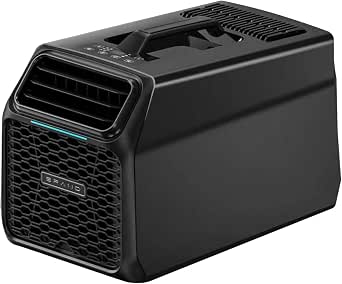


| portable tent air conditioner for camping | Weight | Dimensions | Noise level | Cooling power |
|---|---|---|---|---|
| 5100 BTU Portable Camping Air | 35 lbs | 20.31 × 12.01 × 13.23 in. | 46 dB | 5100 BTU |
| OUTOHOME 5200 BTU Portable Ten | 31.9 lbs | 22.4 × 11.2 × 14.6 in. | 46 dB | 5200 BTU |
| BAYKUL Portable Camping Air Co | 28 lbs | 22 × 11.6 × 13.6 in. | 49 dB | 6800 BTU |
| Portable Tent Air Conditioner | 32.6 lbs | 22.9 × 11.25 × 13.7 in. | 46 dB | 5200 BTU |
| 7000 BTU Portable Camping Air | 36 lbs | 21.38 × 12.4 × 14.29 in. | 58 dB | 7000 BTU |
| 5200 BTU Portable Camping Air | 30 lbs | 23"D x 11.3"W x 13.7"H | — | 5,200 BTU |
| Portable Air Conditioner Campi | 30.8 lbs | 21.3"D x 11.4"W x 13"H | — | 5,000 BTU |
| 4095 BTU Portable Air Conditio | 29 lbs | — | — | 4,095 BTU |
| Portable Tent Air Conditioner | 35.8 lbs | 10.2"D x 12.8"W x 23.4"H | 60 dB listed; description states 45 dB | 5,200 BTU |
| Dual Hose 6800 BTU Portable Ca | 35 lbs | 22"D x 13"W x 12"H | — | 6,800 BTU |
| 4095 BTU Portable Air Conditio | 29 lbs | — | 45 dB | — |
| OUTOHOME Tent Air Conditioner | 35 lbs | — | 46 dB | — |
| 5200 BTU Portable Camping Air | 35 lbs | 12.8 x 10.6 x 22.8 in | 45 dB | — |
| Cybertake S2 Pro Portable Camp | 25.6 lbs | 18.62 x 10.23 x 14.02 in | 40 dB | — |
| Portable Camping Air Condition | — | 21.1 x 11.2 x 11.8 in | 46 dB | — |
More Details on Our Top Picks
5100 BTU Portable Camping Air Conditioner 4-in-1 Tent AC Unit
For campers prioritizing a quieter night, this 46 dB unit pairs cooling with sleep, fan, and dehumidifying modes. Its stated coverage of up to 200 sq. ft. gives it a broader claimed reach than the 5200 BTU Portable Tent Air Conditioner for Camping, which is listed for 108 sq. ft.; actual tent results will depend on insulation, sun exposure, and ventilation. The 24-hour timer can reduce the need to adjust settings overnight, while auto-evaporation may simplify moisture handling. The tradeoff is power: it needs a 110V outlet, so it is better suited to powered campsites or RV use than remote trips. At 35 pounds, it is portable between a vehicle and campsite, but not a lightweight backpacking choice.
Pros:- 46 dB noise rating and a sleep mode suit overnight use.
- Listed coverage reaches 200 sq. ft., more than the 108 sq. ft. stated for the 5200 BTU Portable Tent Air Conditioner for Camping.
- Cooling, dehumidifying, fan, and sleep modes cover more than temperature control.
- Auto-evaporation and a 24-hour timer may reduce routine attention.
Cons:- Requires a 110V power source, limiting use away from powered campsites.
- At 35 pounds, it is cumbersome for long carries.
- Its 200 sq. ft. coverage is a stated limit, and real-world tent cooling depends on conditions.
Best for: Car campers and RV users at powered sites who want quiet overnight cooling and a unit that also dehumidifies.
Not ideal for: Backpackers or campers without access to 110V power; its 35-pound weight and outlet requirement make it a poor fit for off-grid travel.
- Cooling power:5100 BTU
- Listed coverage:Up to 200 sq. ft.
- Noise level:46 dB
- Power:110V, 650W
- Weight:35 lbs
- Dimensions:20.31 × 12.01 × 13.23 in.
- Modes and features:Cooling, dehumidifying, fan, sleep, auto-evaporation, 24-hour timer
- Installation:Freestanding
Our verdict“Choose this for quieter nights at powered campsites, but skip it if you need an off-grid or easy-to-carry cooling solution.”
OUTOHOME 5200 BTU Portable Tent Air Conditioner for Camping and Indoor Use, 400W Quiet Cooling for Truck, RV, Van, Garage, and Pet Spaces
The OUTOHOME stands out for pairing 5200 BTU cooling with a listed 400W power draw, making it a practical pick for campers watching their available electrical capacity. It is also the lightest of these five at 31.9 pounds, though still more appropriate for car camping than carrying far from a vehicle. Like the 5100 BTU Portable Camping Air Conditioner, it runs at 46 dB and includes sleep and dehumidifying modes; its remote control makes adjustments easier from a bed or tent cot. The compromise is modest cooling capacity for larger spaces, and it still needs access to power. Its broader indoor-use positioning may make it more versatile at home or in a garage, but buyers should not mistake that versatility for off-grid operation.
Pros:- Listed 400W consumption is lower than the 650W stated for the 5100 BTU Portable Camping Air Conditioner.
- At 31.9 pounds, it is lighter than the other products in this batch.
- 46 dB noise rating with sleep, fan, and dehumidifying modes.
- Remote control and a 24-hour timer allow adjustments without walking to the unit.
Cons:- Requires access to electrical power, so it is not a standalone off-grid solution.
- Cooling may be insufficient for larger tents or open spaces.
- The 400W draw is a stated operating figure, not a guarantee of compatibility with every power station.
Best for: Car campers, van owners, or garage users who want a 5200 BTU unit with a stated 400W draw and remote control.
Not ideal for: Off-grid campers or anyone cooling a large tent, since it requires an outlet and its cooling capacity may not cover spacious setups.
- Cooling power:5200 BTU
- Power consumption:400W
- Noise level:46 dB
- Dimensions:22.4 × 11.2 × 14.6 in.
- Weight:31.9 lbs
- Refrigerant:R-134A
- Controls:Remote control
- Modes and timer:Cooling, dehumidifying, sleep, fan; 24-hour timer
- Warranty:1 year
Our verdict“Pick the OUTOHOME for powered camping where a lower stated wattage and remote operation matter more than cooling a large space.”
BAYKUL Portable Camping Air Conditioner & Heater, 6-in-1 Dual Cool Heat
Unlike the cooling-only options here, the BAYKUL adds 7500 BTU heating to 6800 BTU cooling, giving campers one appliance for changing temperatures across a season. That makes it a stronger fit for shoulder-season RV trips than the OUTOHOME 5200 BTU model, which offers cooling and air-treatment modes but no heat. At 28 pounds, it is also the lightest of the five, and the listed carry bag supports vehicle-based travel. The extra versatility comes with compromises: it still needs 110V power, and its 49 dB noise rating is higher than the 46 dB ratings on the 5100 BTU and OUTOHOME units. The supplied data mentions car-inverter use, but campers should confirm their inverter can support the unit before relying on it away from an outlet.
Pros:- Provides both 6800 BTU cooling and 7500 BTU heating.
- Six functions include cooling, heating, fan, dehumidifying, sleep, and timer modes.
- At 28 pounds, it is lighter than the other units in this batch.
- Remote control and app or push-button controls offer flexible operation.
Cons:- Requires 110V power; car-inverter use depends on having a compatible inverter.
- At 49 dB, it is louder on paper than the 46 dB options from OUTOHOME and the 5100 BTU unit.
- Its cooling capacity may not suit very large spaces.
Best for: RV travelers and car campers who take trips in both warm and cool weather and can provide suitable electrical power.
Not ideal for: Off-grid campers without a compatible power source, or buyers who only need simple cooling and would not use a heating mode.
- Cooling power:6800 BTU
- Heating power:7500 BTU
- Noise level:49 dB
- Power:110V, 550W
- Weight:28 lbs
- Dimensions:22 × 11.6 × 13.6 in.
- Controls:App, push buttons, remote control
- Modes:Cooling, heating, fan, dehumidifier, sleep, timer
Our verdict“Choose the BAYKUL if heating as well as cooling will extend your camping season and you can supply adequate power.”
Portable Tent Air Conditioner for Camping, 5200BTU, Quiet, Compact, Low Power for RV, Truck, Van
This 5200 BTU model is the clearest match for a small tent, truck cab, or compact RV: its listed coverage is just 108 sq. ft., which gives buyers a more specific boundary than the 200 sq. ft. claim for the 5100 BTU Portable Camping Air Conditioner. Its 400W draw and 46 dB noise rating also align with people seeking modest power use and quieter operation. Remote and push-button controls, plus dry, sleep, and fan modes, add flexibility for overnight setups. The tradeoff is that its narrow coverage limits its usefulness in larger tents, and the product data says drainage may be needed when humidity exceeds 70%. It is not an inverter model, so campers should check their power setup rather than assume it will suit every battery system.
Pros:- 108 sq. ft. coverage gives a clear fit for compact spaces.
- Listed 400W draw is lower than the 650W figure for the 5100 BTU Portable Camping Air Conditioner.
- 46 dB noise rating and sleep mode support overnight use.
- Remote and push-button controls accompany cooling, dry, sleep, and fan modes.
Cons:- Coverage is limited to 108 sq. ft., less than the 200 sq. ft. stated for the 5100 BTU option.
- Drainage may be needed when humidity exceeds 70%.
- No inverter technology is listed, which may limit compatibility with some camping power setups.
Best for: Campers cooling a compact, enclosed space of up to 108 sq. ft., such as a small tent, truck, or van at a powered site.
Not ideal for: Families in large tents or campers relying on inverter-based power, given its limited stated coverage and lack of inverter technology.
- Cooling power:5200 BTU
- Listed room area:108 sq. ft.
- Power:110V, 400W
- Noise level:46 dB
- Weight:32.6 lbs
- Dimensions:22.9 × 11.25 × 13.7 in.
- Refrigerant:R-290
- Controls and modes:Push button, remote; cooling, dry, sleep, fan
- Warranty:1 year
Our verdict“Choose this for a small enclosed camping space and a 400W listed draw, but look elsewhere for larger tents or inverter-ready operation.”
7000 BTU Portable Camping Air Conditioner 4-in-1 Tent AC Unit with Remote
With 7000 BTU cooling, this unit has the highest listed cooling capacity among these five, making it the stronger candidate when a small camping space needs more cooling headroom than the 5200 BTU OUTOHOME or compact-space model can offer. It also combines cool, dry, sleep, fan, and timer functions with a remote control, so routine adjustments do not require reaching the unit. Its limitations are substantial for tent use: the supplied specs do not state a coverage area, it weighs 36 pounds, and its 58 dB noise rating is markedly higher than the 46 dB alternatives. The 550W draw and 110V requirement also make powered-site use the sensible setting. Auto-drain is described only below 70% humidity, with a drain hose needed above that threshold.
Pros:- At 7000 BTU, it has the highest listed cooling capacity among these five products.
- Remote control and multiple modes allow convenient adjustments.
- Includes dehumidifying and auto-drain operation below 70% humidity.
- 550W power rating is lower than the 650W figure listed for the 5100 BTU unit.
Cons:- 58 dB is louder than the 46 dB ratings on the OUTOHOME and 5100 BTU options.
- At 36 pounds, it is the heaviest unit in this batch.
- No coverage-area figure is provided, and drainage may be needed above 70% humidity.
Best for: Powered-site campers cooling a small or narrow tent, RV, or indoor space who want the highest stated BTU capacity in this group.
Not ideal for: Light sleepers, off-grid campers, or anyone needing a clearly specified coverage area; its 58 dB rating, 36-pound weight, and 110V requirement may be limiting.
- Cooling power:7000 BTU
- Power:110V, 550W
- Noise level:58 dB
- Weight:36 lbs
- Dimensions:21.38 × 12.4 × 14.29 in.
- Controls:Remote control
- Modes:Cool, dry, sleep, fan, timer
- Drainage:Auto-drain below 70% humidity; drain hose needed above 70%
Our verdict“Pick this for higher stated cooling capacity at a powered site, but avoid it if low noise, lighter carrying weight, or a specified coverage area is a priority.”
5200 BTU Portable Camping Air Conditioner for Tent, Low Power Portable AC
This is a sensible middle ground for campers who want 5,200 BTU cooling without moving up to the larger dual-hose 6800 BTU model. Its stated 400W draw is modest for this group, and the dehumidify, fan, and sleep modes give it more flexibility than a cooling-only unit. The 30-pound carry weight and remote make it easier to manage at a fixed campsite, though it is still substantial luggage rather than a casual backpacking accessory.
The tradeoff is power setup: the compressor may need a source rated for at least 1,500W at startup, so the 400W running figure alone does not tell the whole story for generator or power-station planning. At 45 dB, it may also be audible in a quiet tent, and outdoor use calls for correct hose installation. Compared with the smaller 4095 BTU model, it offers more listed cooling capacity but asks for more care around setup and startup power.
Pros:- 5,200 BTU capacity is suited to small camping spaces
- 400W listed power consumption is relatively modest while running
- Cooling, dehumidifying, fan, and sleep modes cover several campsite needs
- Remote control and carry handle support easier operation and transport
Cons:- Compressor startup requires a power source rated for at least 1,500W
- 45 dB can be noticeable when trying to sleep in a quiet tent
- Outdoor setup requires proper hose installation
Best for: Car campers with a small tent or RV and access to a suitable 110V source who want cooling plus dehumidifying and sleep modes.
Not ideal for: Backpackers or campers relying on a small power station, since its 30-pound weight and stated compressor startup requirement complicate portable use.
- Cooling power:5,200 BTU
- Power consumption:400W
- Voltage:110V
- Noise:45 dB
- Weight:30 lbs
- Dimensions:23″D x 11.3″W x 13.7″H
- Controls:Push buttons and remote
- Modes:Cooling, dehumidifying, fan, sleep
Our verdict“Choose this for small-space camping when you can meet its startup-power needs and want a balanced mix of cooling modes.”
Portable Air Conditioner Camping 5000BTU Fast Cooling Portable AC Unit with Remote Control
This 5,000 BTU unit keeps the focus on the basics: cooling for a small tent or RV, with fan and dehumidifier modes for changing conditions. Its 21.3-inch depth is shorter than the 5200 BTU low-power model’s listed depth, which may make it easier to fit into a crowded vehicle or campsite layout. Remote control and a carry handle add convenience, although its 30.8-pound weight still points to car camping rather than long carries.
The figures do not establish a major efficiency advantage: this model lists 450W, compared with 400W for the 5200 BTU option, while offering slightly less cooling capacity. It is also limited to 110V power, so campers should plan around a compatible outlet or power source. For buyers who want heat as well as cooling, the dual-hose 6800 BTU model is the more versatile alternative, but it is a larger step up in complexity and power use.
Pros:- 5,000 BTU cooling is aimed at small spaces
- Fan and dehumidifier modes offer options beyond cooling
- Remote control and carry handle ease campsite operation
- Shorter listed depth than the 5200 BTU low-power model
Cons:- 450W listed consumption is higher than the 400W 5200 BTU alternative
- 110V power requirement limits source compatibility
- 30.8-pound weight is cumbersome for campers who need to carry gear far
Best for: Car campers with a small tent, truck, or RV who want a remote-controlled cooling unit with fan and dehumidifier modes.
Not ideal for: Campers prioritizing low running wattage or heating, since this lists 450W and provides cooling rather than a heating mode.
- Cooling power:5,000 BTU
- Wattage:450W
- Voltage:110V
- Noise:46 dB listed
- Weight:30.8 lbs
- Dimensions:21.3″D x 11.4″W x 13″H
- Controls:Push buttons and remote
- Modes:Cooling, dehumidifier, fan
Our verdict“Pick this for simple, remote-controlled cooling in a small campsite space if 110V power is available.”
4095 BTU Portable Air Conditioner for Camping, Compact Tent AC Unit, Remote Control, Modes, 24H Timer, Quiet 46 dB for RV, Truck, Small Room
At 29 pounds, this is the lightest option in this five-product group, making it a more manageable choice for car campers who need to move gear between vehicle and tent. Its 4095 BTU rating and stated coverage of 86 square feet suit a smaller sleeping area better than a roomy family tent. Cool, dry, fan, and sleep modes, plus a 24-hour timer and remote, give it useful control without stepping up to the 5,200 BTU units.
That compactness comes with a clear capacity tradeoff: the 5200 BTU low-power model is a better fit for campers wanting more listed cooling headroom. This unit also may need a drain hose in humid conditions, which adds campsite setup and maintenance. Its 110V requirement can rule it out for trips without a compatible source, so its lighter weight does not make it a self-contained off-grid solution.
Pros:- 29-pound weight is the lightest among these five options
- Stated 86-square-foot coverage helps set expectations for small spaces
- Cool, dry, fan, and sleep modes add flexibility
- Remote control and 24-hour timer simplify operation
Cons:- 4095 BTU capacity is below the 5,000–5,200 BTU alternatives
- A drain hose may be needed in humid conditions
- 110V power requirement calls for a compatible campsite source
Best for: Car campers with a compact tent, truck cabin, or small RV space who value a lighter unit and timer-based controls.
Not ideal for: Groups cooling a larger tent or camping in very humid conditions, where its 4095 BTU capacity and possible drain-hose need are limiting.
- Cooling power:4,095 BTU
- Listed floor area:86 sq ft
- Wattage:400W
- Voltage:110V
- Noise:45 dB listed
- Weight:29 lbs
- Refrigerant:R-290
- Modes and timer:Cool, dry, fan, sleep; 24-hour timer
Our verdict“Choose this compact model for a small tent or vehicle space when lower weight matters more than maximum cooling capacity.”
Portable Tent Air Conditioner 5200BTU 400W No Hot Air Discharge Drain-Free for Camping, RVs, Yachts, Trucks, Bedrooms
This model pairs 5,200 BTU cooling with stated compatibility for 110V AC, power stations, and EV V2L, giving mobile campers more possible ways to supply power than the 110V-only 5000 BTU unit. Its listed 400W draw, remote, and cooling, dry, sleep, and fan modes make it appealing for small tents and vehicle-based trips. The claimed drain-free operation below 70% humidity could also reduce water-handling chores in suitable conditions.
There is a specification conflict to weigh: the description calls it quiet at 45 dB, while the listed noise spec says 60 dB. I would not choose it on a promise of quiet sleeping without clarification. At 35.8 pounds, it is heavier than the 5200 BTU low-power model, and some power sources may need separate adapters. Its listed 130-square-foot coverage is for small spaces, not a large tent.
Pros:- 5,200 BTU cooling with listed coverage up to 130 sq ft
- Power compatibility includes 110V AC, power stations, and EV V2L
- Drain-free operation is claimed below 70% humidity
- Cooling, dry, sleep, and fan modes with remote control
Cons:- Noise specifications conflict: 45 dB in the description versus 60 dB in the listed spec
- At 35.8 pounds, it is heavier than the other 5200 BTU option here
- Separate adapters may be required for some power sources
Best for: Vehicle-based campers with a power station or EV V2L setup who want 5,200 BTU cooling and may benefit from drainage-free use in lower humidity.
Not ideal for: Light sleepers who need a dependable noise figure, or campers without adapters for their intended power source.
- Cooling power:5,200 BTU
- Wattage:400W
- Voltage:110V
- Noise level:60 dB listed; description states 45 dB
- Weight:35.8 lbs
- Dimensions:10.2″D x 12.8″W x 23.4″H
- Room size:Up to 130 sq ft
- Power compatibility:110V AC, power stations, EV V2L
- Drainage:Drain-free below 70% humidity, per listing
Our verdict“Consider this for a mobile campsite with varied power options, but verify the noise rating and adapter needs before choosing it for overnight tent use.”
Dual Hose 6800 BTU Portable Camping Tent Air Conditioner & Heating
Among these five, this is the only option that clearly adds heating as well as cooling, with 6,800 BTU cooling and 7,500 BTU heating. That makes it the most versatile pick for campers facing chilly nights as well as warm afternoons, while the dual-hose design distinguishes it from the single-function 5200 BTU models. Its dehumidifier and sleep modes add useful flexibility for tent, RV, or van use.
The extra capability means accepting a higher listed draw: 550W, versus 400W for the 5200 BTU low-power model, and the unit still requires 110V power. At 35 pounds, it is portable by car-camping standards but not a light carry. Its 45 dB listing may also be audible in a quiet tent, and the stated capacity is still aimed at small spaces rather than a large tent. I’d favor it when heating matters, not for a cooling-only setup with tight power limits.
Pros:- Provides both 6,800 BTU cooling and 7,500 BTU heating
- Dual-hose design sets it apart from the single-function cooling options
- Dehumidifier and sleep modes expand its campsite use
- R-290 refrigerant and mesh filter are specified
Cons:- 550W listed draw is higher than the 400W 5200 BTU alternatives
- 110V power requirement limits off-grid flexibility
- 35-pound weight and small-space focus make it a poor fit for backpacking or large tents
Best for: Car campers using a small tent, RV, or van across warm and cool seasons who have access to 110V power and want both heating and cooling.
Not ideal for: Backpackers, campers with limited electrical capacity, or anyone cooling a large tent who would not use the heating function.
- Cooling power:6,800 BTU
- Heating power:7,500 BTU
- Wattage:550W
- Voltage:110V
- Noise:45 dB
- Weight:35 lbs
- Dimensions:22″D x 13″W x 12″H
- Refrigerant:R-290
- Modes and design:Dehumidifier, fast cooling, heating, sleep; dual hose
Our verdict“Choose this for car camping in mixed seasons if you can supply 110V power and will make use of its heating mode.”
4095 BTU Portable Air Conditioner for Camping, Tent, RV with App and Remote
This unit stands out primarily for its smart connectivity, allowing you to adjust settings via an app or voice commands, which is rare in the camping AC category. Compared to the Cybertake S2 Pro, which focuses on power versatility, this model prioritizes ease of use from inside a dark tent. The 4095 BTU output is modest, making it better suited for smaller sleeping areas than the 5000+ BTU competitors like the 5200 BTU Portable Camping Air Conditioner. However, the 45 dB noise level is competitive, ensuring it won’t disrupt light sleepers. The main tradeoff is the lack of inverter technology, meaning it runs at full power constantly rather than modulating energy use, which can lead to higher electricity consumption if you’re on a generator or power station.
Pros:- App and voice control integration
- Quiet 45 dB operation
- Lightweight at 29 lbs
- Includes remote control
Cons:- Lower 4095 BTU cooling capacity
- No inverter technology
- Requires manual drainage in high humidity
Best for: Campers who prefer adjusting temperature from their phone without leaving their sleeping bag.
Not ideal for: Users with large tents or those who need precise energy modulation for solar setups.
- Cooling Capacity:4095 BTU
- Noise Level:45 dB
- Weight:29 lbs
- Power Consumption:400 Watts
- Control Types:App, Remote, Voice
- Refrigerant:R-290
- Modes:Cool, Dry, Fan, Sleep
Our verdict“Choose this if smart home-style convenience matters more to you than raw cooling power.”
OUTOHOME Tent Air Conditioner, 5100 BTU Camping Tent AC Unit
The OUTOHOME model claims to cool up to 200 sq.ft by 60°F in just one minute, a bold assertion that sets it apart from slower-starting units like the Cybertake S2 Pro. While the 5100 BTU rating is standard for this class, the focus here is on fast spot cooling and user-friendly features like a 24-hour timer and adjustable temperature. It is slightly heavier at 35 lbs than the 4095 BTU model, but the inclusion of an auto-evaporation system means you rarely need to manually drain water, a significant convenience over the 4095 BTU Portable Air Conditioner which requires drainage. The tradeoff is the higher wattage draw at 650W, which places more strain on portable power stations compared to the 400W units in this lineup.
Pros:- Fast cooling claim for small spaces
- Auto-evaporation system
- 24-hour timer function
- Quiet 46 dB operation
Cons:- Higher 650W power draw
- Heavier at 35 lbs
- No inverter technology
Best for: Campers who want immediate relief from heat and prefer not to manage water drainage.
Not ideal for: Those with limited power station capacity who need lower wattage consumption.
- Cooling Capacity:5100 BTU
- Noise Level:46 dB
- Weight:35 lbs
- Power Consumption:650 Watts
- Temperature Range:60°F–86°F
- Modes:Cool, Dry, Fan, Sleep
- Timer:24 Hours
Our verdict“Ideal for quick cool-downs and hassle-free maintenance, provided you have sufficient power capacity.”
5200 BTU Portable Camping Air Conditioner – 4-in-1 Quiet Small AC Unit
This unit distinguishes itself with dual-loop water cooling, which reportedly delivers airflow 3.6°F colder than standard units. This makes it a superior choice for comfort compared to the basic compressor models like the 4095 BTU Portable Air Conditioner. The 5200 BTU capacity is robust, yet it operates at a surprisingly efficient 400W, matching the energy efficiency of lower-power models while delivering more cooling. It is heavier at 35 lbs, but the 75° auto-swing vents provide better circulation than the fixed vents on many competitors. A key limitation is that its drain-free operation fails in humidity above 70%, requiring manual intervention in sticky conditions, unlike the more robust auto-evaporation in the OUTOHOME Tent Air Conditioner.
Pros:- Dual-loop water cooling technology
- High efficiency at 400W for 5200 BTU
- Wide 75° auto-swing vents
- Compact footprint
Cons:- Drain-free mode limited to <70% humidity
- Heavy at 35 lbs
- Power adapters sold separately
Best for: Users who prioritize colder air output and energy efficiency in moderate humidity.
Not ideal for: Campers in very humid environments who want completely maintenance-free operation.
- Cooling Capacity:5200 BTU
- Noise Level:45 dB
- Power Consumption:400 Watts
- Weight:35 lbs
- Dimensions:12.8 x 10.6 x 22.8 in
- Vent Swing:75 Degrees
- Refrigerant:R-290
Our verdict“The best balance of cooling power and energy efficiency, assuming you manage humidity levels.”
Cybertake S2 Pro Portable Camping Air Conditioner with Heating
The Cybertake S2 Pro is unique in this lineup for offering both cooling (5100 BTU) and heating (6100 BTU), making it a true four-season solution unlike the cooling-only OUTOHOME Tent Air Conditioner. Its standout feature is the 3-way power input (wall, vehicle, power station), offering flexibility that pure 110V models lack. It is also notably quiet at 40 dB, quieter than the 45-46 dB competitors. However, it covers a smaller area of 130 sq. ft. compared to the 200 sq. ft. claimed by the OUTOHOME. The tradeoff for this versatility is complexity; the remote control is sold separately, and the unit requires a boost converter for some power sources, adding to the setup cost and effort compared to plug-and-play alternatives.
Pros:- Dual cooling and heating capability
- Supports 3 different power inputs
- Quietest in the group at 40 dB
- High efficiency per kWh
Cons:- Smaller coverage area (130 sq. ft.)
- Remote and boost converter sold separately
- Slower startup time (5-10 mins)
Best for: Overlanders and RVers who need heating and cooling and use diverse power sources.
Not ideal for: Budget campers who only need cooling and want a simple plug-in experience.
- Cooling Capacity:5100 BTU
- Heating Capacity:6100 BTU
- Noise Level:40 dB
- Weight:25.6 lbs
- Room Area:130 sq. ft.
- Power Input:48V (3-Way)
- Dimensions:18.62 x 10.23 x 14.02 in
Our verdict“The definitive choice for all-weather camping, provided you are willing to buy extra accessories.”
Portable Camping Air Conditioner 5000 BTU, Compact Tent AC Unit
This model offers a straightforward 5000 BTU cooling solution without the bells and whistles of the 4095 BTU Portable Air Conditioner‘s app control or the Cybertake S2 Pro‘s heating. It is designed for simplicity, featuring a compact black design and a remote control for basic operation. The 46 dB noise level is acceptable but not class-leading, sitting between the quieter Cybertake S2 Pro and the standard units. At 400 watts, it shares the efficiency of the 5200 BTU Portable Camping Air Conditioner but lacks the dual-loop cooling tech. It is an ideal entry point for those who just need cold air and don’t care about smart features or heating, though it lacks the robust build and advanced airflow features of its more expensive peers.
Pros:- Simple, no-nonsense design
- Energy efficient at 400W
- Includes remote control
- Compact form factor
Cons:- No advanced smart features
- Average 46 dB noise level
- No heating capability
Best for: Casual campers looking for a simple, affordable way to cool small tents.
Not ideal for: Tech enthusiasts or those needing heating capabilities in variable climates.
- Cooling Capacity:5000 BTU
- Noise Level:46 dB
- Power Consumption:400 Watts
- Dimensions:21.1 x 11.2 x 11.8 in
- Control:Remote Control
- Modes:Cool, Dry, Sleep, Fan
- Voltage:110V
Our verdict“A solid, no-frills option for basic tent cooling without unnecessary complexity.”

How We Picked
I evaluated these fifteen units based on cooling efficiency per watt, noise output, and compatibility with common camping power systems. The primary filter was BTU rating relative to physical size, ensuring that each recommendation delivers tangible cooling for its footprint. I also prioritized models with clear drainage options or self-evaporating systems, as water management is a frequent pain point for campers.
Ranking logic favored versatility and reliability over raw power. Units that offered multiple modes (cool, fan, dry) and adjustable timers were placed higher because camping conditions change rapidly. I also considered build quality for outdoor transport, favoring models with reinforced handles and durable casings that can withstand rough handling.
Factors to Consider When Choosing Portable Tent Air Conditioner For Camping
Selecting a portable AC for camping involves more than just picking the highest BTU number. You must match the unit to your specific power constraints and tent geometry.Matching BTU Output to Tent Size
BTU ratings indicate how much heat a unit can remove, but manufacturers often inflate these numbers for marketing. Real-world cooling capacity is lower due to insulation gaps in tents and heat gain from sunlight. A 5000 BTU unit is typically sufficient for a 6×8 foot tent, while larger family tents may need 7000 BTU or more. Do not assume a 5000 BTU unit will cool a large cabin; it will likely run continuously without reaching the set temperature. Check the manufacturer’s suggested square footage, but always round up if your tent has poor insulation or high ceilings.
Power Source Compatibility and Draw
The biggest barrier to using a portable AC at a campsite is power. Most units in this roundup require standard 110V AC power, meaning you need a generator, shore power, or a massive battery station. Inverter generators are preferred because they provide clean power that protects the AC’s electronics. If you rely on battery packs, look for units with low wattage consumption, such as those around 400-500 watts. Always calculate your total run time; a 500-watt unit will drain a 1000Wh battery in just two hours, requiring careful power management.
Noise Levels and Sleep Quality
Noise is a critical factor for comfort, especially if you sleep in a small tent. Decibel ratings are often measured at a distance, so the actual noise inside the tent can feel louder. Units under 50 dB are generally considered quiet enough for sleeping, while those over 55 dB can be disruptive. Look for models with ‘sleep mode’ or ‘eco mode’ that reduce fan speed and compressor noise. Remember that a quieter unit may cool more slowly, so balance your need for silence against your need for rapid temperature drop.
Venting and Hot Air Exhaust
Portable ACs work by moving heat from inside the tent to the outside. Effective venting is non-negotiable; if hot air leaks back in, the unit becomes inefficient. Most models come with a window kit, but tents lack standard windows. You will likely need to improvise a vent port using a tent flap or a dedicated vent cover. Single-hose units pull air from the tent to exhaust heat, which can create negative pressure and draw in hot outside air. Dual-hose systems are more efficient but are bulkier and harder to seal against a tent wall.
Water Drainage and Humidity Management
As ACs cool air, they remove moisture, which collects in a tank or drains out. Self-evaporating systems are ideal for camping because they recycle condensate to cool the condenser, reducing the need for manual emptying. However, in humid environments, these systems may still require occasional draining. Check if the unit has a built-in pump for gravity-free drainage or if it relies on a simple drip tray. For multi-day trips, a unit with a larger tank or continuous drain option saves you the hassle of waking up to empty water.
Frequently Asked Questions
Can I use a portable AC with a small portable power station?
Generally, no. Most portable tent air conditioners in this roundup require 400-800 watts of power, which exceeds the capacity of small power stations (typically under 500Wh). To run one of these units effectively, you need a large power station (1500Wh+) or a generator. Attempting to use a small battery will result in rapid depletion and potential damage to the battery’s inverter due to the high startup surge current of AC compressors.
How do I vent a portable AC in a tent without a window?
You can create a vent by running the exhaust hose out of a tent zipper or a dedicated vent port. Some campers use a ‘tent window kit’ or a custom-made fabric panel with a zipper to seal the hose against the tent wall. It is vital to seal any gaps with duct tape or Velcro to prevent hot air from leaking back in. If the hose is too long, it reduces efficiency, so keep the distance to the outside as short as possible.
Do portable ACs work in high humidity environments?
Yes, but their efficiency drops. Portable ACs remove humidity as they cool, which helps comfort, but high ambient humidity forces the unit to work harder. In very humid conditions, the unit may struggle to lower the temperature significantly. Look for models with a dedicated ‘Dry’ mode, which prioritizes dehumidification over cooling. This can make the tent feel more comfortable even if the temperature doesn’t drop drastically.
Is it safe to leave a portable AC running overnight in a tent?
It is generally safe if the unit is placed on a stable, non-flammable surface and has adequate ventilation. Overheating is the main risk, so ensure the exhaust hose is not kinked or blocked. Many units have auto-shutoff features for low water levels or overheating. However, running a high-power AC all night requires a reliable power source; if you use a generator, ensure it is placed far from the tent to avoid carbon monoxide poisoning and noise disturbance.
What is the difference between single-hose and dual-hose portable ACs?
Single-hose units pull air from the tent to cool the condenser and exhaust it outside, creating negative pressure that pulls hot air in from outside. Dual-hose units have one hose to pull outside air for cooling the condenser and another to exhaust it, maintaining neutral pressure. Dual-hose models are more efficient and cool faster but are larger, heavier, and often more expensive. For small, well-sealed tents, a single-hose unit may suffice, but dual-hose is better for larger spaces.
Conclusion
Choosing the right portable tent air conditioner for camping comes down to matching your power source with your cooling needs. The 5100 BTU Portable Camping Air Conditioner 4-in-1 remains the best overall choice for most campers due to its balance of power and portability. For those with limited power access, the 4095 BTU Compact Unit offers a lighter footprint and lower energy draw, making it the best value for battery-conscious users. If you need year-round comfort, the Cybertake S2 Pro is the best premium option, combining cooling and heating in one robust package. Beginners should start with a mid-range BTU unit with clear drainage instructions, while experienced campers with generators can leverage the 7000 BTU Dual Hose for maximum efficiency in larger tents.
Halloween Picks
halloween
As an affiliate, we earn on qualifying purchases.