For most listeners, I’d start with the Yamaha R-N1000A: it pairs a phono input with network playback, HDMI, and a built-in DAC, making it the most versatile choice here. The Yamaha R-N600A offers a simpler network-receiver route, while the Sony STR-DH190 models stand out for straightforward vinyl and Bluetooth listening. The main tradeoff is between basic, easy-to-use stereo playback and paying for streaming, digital connections, or more system flexibility. I compare the ten listed options by their features, setup needs, and fit for different systems below.

Get audio and creator gear delivered free with Prime
- Fast, free delivery on millions of items
- Prime Video, Amazon Music and more included
- Member-only deals all year
Complete the kit


Key Takeaways
- The Yamaha R-N1000A is the most feature-rich pick: its phono input sits alongside network playback, HDMI, and a built-in DAC, so it can serve more than a turntable.
- The Yamaha R-N600A keeps the network-listening focus: it offers streaming and a phono input without the R-N1000A’s HDMI connection.
- Sony’s STR-DH190 options favor simplicity: they pair a phono input with Bluetooth, but do not match Yamaha’s network-receiver feature set.
- The Sony speaker bundle suits a ready-made setup: it includes SS-CS5 bookshelf speakers, while the receiver-only versions leave speaker selection to you.
- Not every phono-ready option is a conventional receiver: the Denon PMA-600NE and Yamaha A-S501BL are stereo amplifiers, and the Donner MAMP2 takes a simpler, compact approach.
| Yamaha R-N1000A Network Receiver with Phono, HDMI and Built-in DAC, Black |  | Best Premium Network Receiver | Channels: 7 (as listed) | Power output: 140 watts (as listed) | Phono input: Yes | VIEW ON AMAZON | See Our Full Breakdown |
| Sony STRDH190 2-Ch Stereo Receiver with Phono Inputs and Bluetooth Bundle |  | Best for Simple Vinyl Setups | Channels: 2 | Power output: 100 watts per channel | Speaker impedance: 6–16 ohms | VIEW ON AMAZON | See Our Full Breakdown |
| Denon PMA-600NE Bluetooth Stereo Amplifier, 2 Channel Home Audio | 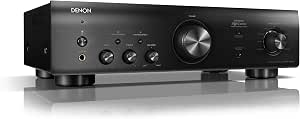 | Best for Digital Sources and Vinyl | Channels: 2 | Power output: 70 watts per channel at 4 ohms | Inputs: Phono, 2 optical, 1 coaxial | VIEW ON AMAZON | See Our Full Breakdown |
| Donner MAMP2 2-Channel Stereo Audio Amplifier with Bluetooth 5.3 |  | Best for Karaoke and Multi-Speaker Setups | Channels: 2 | RMS power: 60 watts × 2 | Peak power: 600 watts | VIEW ON AMAZON | See Our Full Breakdown |
| Sony STR-DH190 2-Channel Home Stereo Receiver with Phono Input and Bluetooth |  | Best for A/B Speaker Switching | Channels: 2 | Output power: 100 watts per channel at 8 ohms, 1 kHz | Speaker impedance: 6–16 ohms | VIEW ON AMAZON | See Our Full Breakdown |
| Sony STR-DH190 Stereo Receiver and SS-CS5 Bookshelf Speakers Bundle |  | Best Complete Starter System | Receiver: Sony STR-DH190, 2 channels | Speaker system: Sony SS-CS5, 3-way, 3-driver bookshelf speakers | Connectivity: Bluetooth, phono input, four analog inputs, one output | VIEW ON AMAZON | See Our Full Breakdown |
| Yamaha R-N600A Network Receiver with Streaming, Phono Input, and Built-in DAC, Silver |  | Best for Network Streaming | Model: Yamaha R-N600ASL | Channels: 2 | Listed wattage: 160 watts | VIEW ON AMAZON | See Our Full Breakdown |
| Sony STR-DH190 2-Channel Stereo Receiver with Phono Inputs and Bluetooth |  | Best Simple Bluetooth Pick | Model: Sony STR-DH190 | Channels: 2 | Listed wattage: 200 watts | VIEW ON AMAZON | See Our Full Breakdown |
| Yamaha A-S501BL Natural Sound Integrated Stereo Amplifier |  | Best for a Turntable-and-TV Stereo | Model: Yamaha A-S501BL | Power output: 85 W per channel, 20 Hz–20 kHz, 0.019% THD | Inputs: Digital coax, TOSLINK optical, analog including phono | VIEW ON AMAZON | See Our Full Breakdown |
| Yamaha R-N600A Network Receiver with Streaming, Phono Input, and Built-In DAC |  | Best Black Network Receiver | Model: Yamaha R-N600ABL | Channels: 5, as listed | Listed output wattage: 175 watts | VIEW ON AMAZON | See Our Full Breakdown |
| stereo receiver with phono input | Channels | Connectivity | Inputs |
|---|---|---|---|
| Yamaha R-N1000A Network Receiv | 7 (as listed) | Bluetooth, Ethernet, HDMI, Wi-Fi | — |
| Sony STRDH190 2-Ch Stereo Rece | 2 | — | Phono, 4 stereo RCA, 3.5 mm aux |
| Denon PMA-600NE Bluetooth Ster | 2 | — | Phono, 2 optical, 1 coaxial |
| Donner MAMP2 2-Channel Stereo | 2 | Bluetooth 5.3, USB, RCA, AUX, phono, optical, coaxial, FM radio | — |
| Sony STR-DH190 2-Channel Home | 2 | — | Phono, 4 stereo RCA, 3.5 mm |
| Sony STR-DH190 Stereo Receiver | — | Bluetooth, phono input, four analog inputs, one output | — |
| Yamaha R-N600A Network Receive | 2 | Bluetooth, Wi-Fi, Ethernet | Phono, optical, USB, RCA, 3.5 mm |
| Sony STR-DH190 2-Channel Stere | 2 | Bluetooth | — |
| Yamaha A-S501BL Natural Sound | — | — | Digital coax, TOSLINK optical, analog including phono |
| Yamaha R-N600A Network Receive | 5, as listed | Bluetooth, Wi-Fi, Ethernet | — |
More Details on Our Top Picks
Yamaha R-N1000A Network Receiver with Phono, HDMI and Built-in DAC, Black
I’d choose the Yamaha R-N1000A when a turntable is one part of a broader, high-resolution listening setup. Its phono input sits alongside Wi-Fi, Ethernet, Bluetooth, HDMI, and a built-in ESS SABRE DAC, so it can connect a record player, network sources, and a TV without relying on a separate DAC. YPAO room adjustment is another advantage over the simpler Sony STR-DH190: it can tailor playback to the room rather than leaving placement and acoustics entirely to the listener.
The tradeoff is that its single HDMI port gives less flexibility for several video sources, and its network features make it a more involved choice than the Denon PMA-600NE. I’d skip it if vinyl and basic stereo inputs are all you need; the extra connectivity is the point, but it also adds setup complexity.
Pros:- Phono input combines turntable playback with extensive network and wired connectivity.
- Built-in ESS SABRE DAC supports high-resolution digital sources.
- YPAO room adjustment can help adapt playback to room acoustics.
- HDMI connection adds a route for integrating a TV.
Cons:- Only one HDMI port limits connections for multiple video devices.
- Network features and room adjustment involve more setup than a basic stereo receiver.
- Listed power and wattage figures may be difficult to interpret when matching speakers.
Best for: Vinyl listeners building a networked stereo system who also want HDMI TV connectivity and room adjustment.
Not ideal for: Buyers who only need a straightforward turntable-and-speaker setup, or who need several HDMI inputs for video sources.
- Channels:7 (as listed)
- Power output:140 watts (as listed)
- Phono input:Yes
- DAC:ESS SABRE ES9080Q
- Connectivity:Bluetooth, Ethernet, HDMI, Wi-Fi
- HDMI ports:1
- Room adjustment:YPAO
- Color:Black
Our verdict“Choose the R-N1000A if you want a phono-equipped stereo receiver that can anchor network music and TV audio, rather than a simple vinyl-first setup.”
Sony STRDH190 2-Ch Stereo Receiver with Phono Inputs and Bluetooth Bundle
The Sony STRDH190 bundle is a good fit when the goal is a conventional two-channel system with a direct turntable connection and a few familiar ways to play music. Its phono input, four stereo RCA inputs, Bluetooth, and FM presets cover common listening without the network setup of the Yamaha R-N1000A. The 100-watt-per-channel rating also gives it more listed output than the Denon PMA-600NE’s 70 watts per channel, though those figures come from different specifications and should not be treated as a direct sound-quality comparison.
Its main limitation is the analog-only wired input selection: there are no optical or coaxial inputs for digital sources. Compared with the Denon, it is less flexible for connecting a TV or digital player. I’d pick it for a straightforward vinyl-and-Bluetooth system, but not for a setup that needs digital inputs or network streaming.
Pros:- Built-in phono input connects a compatible turntable directly.
- Bluetooth offers wireless playback from compatible devices.
- Four stereo RCA inputs accommodate multiple analog sources.
- FM tuner includes 30 presets and the bundle lists extended protection.
Cons:- No optical or coaxial digital inputs.
- Two-channel design does not provide surround sound.
- Does not offer the network streaming and room adjustment found on the Yamaha R-N1000A.
Best for: Listeners who want a two-channel turntable system with Bluetooth, FM radio, and several analog sources.
Not ideal for: Buyers connecting a TV or digital audio player through optical or coaxial cables, or seeking network music features.
- Channels:2
- Power output:100 watts per channel
- Speaker impedance:6–16 ohms
- Inputs:Phono, 4 stereo RCA, 3.5 mm aux
- Bluetooth:Yes
- FM presets:30
- Headphone jack:1/4 inch
- Dimensions:11.25 × 17 × 5.25 inches (D × W × H)
Our verdict“Choose this Sony bundle for a simple analog-focused stereo system with Bluetooth, and skip it if digital inputs or network features matter.”
Denon PMA-600NE Bluetooth Stereo Amplifier, 2 Channel Home Audio
The Denon PMA-600NE suits listeners who want a two-channel system that can handle a turntable and digital components without moving up to a full network receiver. Alongside its phono input, it has two optical inputs and one coaxial input, giving it a practical advantage over the analog-only Sony STRDH190 when connecting a TV or digital player. Bluetooth adds wireless listening, while the built-in DAC handles those digital connections within the amplifier.
At 70 watts per channel at 4 ohms, it is a more restrained power proposition than the Sony’s listed 100 watts per channel at 8 ohms; buyers should match either unit to their speakers rather than compare headline figures alone. Unlike the Yamaha R-N1000A, the Denon does not list Wi-Fi, Ethernet, HDMI, or room adjustment. It is a focused choice for wired sources, not a streaming hub.
Pros:- Phono input supports direct connection of a compatible turntable.
- Two optical and one coaxial input connect digital audio sources.
- Built-in DAC serves connected digital components.
- Bluetooth provides wireless playback.
Cons:- Two-channel output is not suited to surround sound systems.
- No Wi-Fi, Ethernet, or HDMI connectivity is listed.
- The 70-watt-per-channel rating is specified at 4 ohms, so speaker matching needs attention.
Best for: Stereo listeners pairing a turntable with a TV or digital player through optical or coaxial connections.
Not ideal for: Buyers who need network streaming, HDMI connectivity, room correction, or multichannel surround sound.
- Channels:2
- Power output:70 watts per channel at 4 ohms
- Inputs:Phono, 2 optical, 1 coaxial
- Bluetooth:Yes
- DAC:Built-in
- Dimensions:17.1 × 12.1 × 4.76 inches (D × W × H)
- Weight:18 pounds
- Color:Black
Our verdict“Choose the Denon if you need phono and digital audio inputs in one stereo amplifier, but look to the Yamaha R-N1000A for network and HDMI features.”
Donner MAMP2 2-Channel Stereo Audio Amplifier with Bluetooth 5.3
The Donner MAMP2 is the most flexible pick here for households that need more than turntable playback. Its phono input is joined by optical, coaxial, USB, RCA, AUX, Bluetooth 5.3, and FM radio, while two microphone inputs and talkover controls make it suited to karaoke or announcements. It also supports up to two groups of four compatible speakers and one subwoofer, a different kind of system flexibility from the focused two-speaker Denon PMA-600NE.
The tradeoff is that its broad feature set prioritizes source and microphone options over a polished network-receiver experience: there is no HDMI input, and Wi-Fi or Ethernet streaming is not listed. Its 60-watt RMS-per-channel rating is clearly stated, but buyers should not confuse it with the separate 600-watt peak figure. I’d skip it for a minimal, music-only system.
Pros:- Phono, optical, coaxial, USB, RCA, AUX, Bluetooth, and FM cover varied sources.
- Two microphone inputs and talkover controls suit karaoke and speech.
- Supports up to two groups of four compatible speakers and one subwoofer.
- Treble, midrange, bass, echo, and talkover settings offer playback adjustment.
Cons:- No HDMI input for connecting a TV by HDMI.
- Wi-Fi and Ethernet network streaming are not listed.
- The peak-power figure may confuse buyers comparing it with its 60-watt RMS-per-channel rating.
Best for: Karaoke hosts and households that want a phono input, microphone controls, and support for multiple speaker groups.
Not ideal for: Listeners seeking HDMI or network streaming, or a simple stereo amplifier focused only on turntable and music playback.
- Channels:2
- RMS power:60 watts × 2
- Peak power:600 watts
- Speaker impedance:4–16 ohms
- Speaker support:Up to 2 groups of 4 speakers
- Subwoofer support:1
- Connectivity:Bluetooth 5.3, USB, RCA, AUX, phono, optical, coaxial, FM radio
- Microphone inputs:2 × 1/4-inch
- Warranty:1 year
Our verdict“Choose the MAMP2 for a phono-equipped system that also needs microphones and multi-speaker support, not for a streamlined network stereo setup.”
Sony STR-DH190 2-Channel Home Stereo Receiver with Phono Input and Bluetooth
This Sony STR-DH190 makes sense for a vinyl listener who wants a familiar stereo receiver and the option to switch between speaker pairs. Its phono input, four stereo RCA inputs, Bluetooth, and FM tuner cover everyday playback, while A/B switching can serve up to four speakers. That feature gives it a different use from the Denon PMA-600NE, which adds optical and coaxial inputs but is presented here as a two-channel amplifier without the Sony’s listed A/B switching.
The Sony’s 100-watt-per-channel rating is specified at 8 ohms and 1 kHz, with a stated speaker range of 6–16 ohms. It remains a two-channel receiver, not a surround-sound unit, and its analog inputs leave digital-source owners better served by the Denon. The separate Sony STRDH190 bundle has similar core features; this listing is the straightforward receiver choice for buyers who do not need that bundle’s extended protection pack.
Pros:- Phono input supports direct turntable connection.
- A/B switching supports up to four speakers.
- Bluetooth and FM radio with 30 presets add everyday listening options.
- Four stereo RCA inputs accommodate multiple analog sources.
Cons:- No optical or coaxial digital inputs are listed.
- Two-channel stereo does not provide multichannel surround sound.
- Listed speaker impedance is limited to 6–16 ohms.
Best for: Vinyl listeners with two speaker pairs who want A/B switching, Bluetooth, FM radio, and several analog inputs.
Not ideal for: Buyers who need optical or coaxial digital inputs, HDMI, network streaming, or multichannel surround sound.
- Channels:2
- Output power:100 watts per channel at 8 ohms, 1 kHz
- Speaker impedance:6–16 ohms
- Inputs:Phono, 4 stereo RCA, 3.5 mm
- Speaker switching:A/B; up to 4 speakers
- Wireless connectivity:Bluetooth
- Radio:FM with 30 presets
- Headphone jack:1/4 inch
- Power requirement:AC 120 V, 60 Hz
Our verdict“Choose this Sony when A/B speaker switching and straightforward vinyl playback matter more than digital inputs or network features.”
Sony STR-DH190 Stereo Receiver and SS-CS5 Bookshelf Speakers Bundle
This bundle is the easiest route here from a turntable to a working stereo: the STR-DH190 has a phono input, and the package includes Sony SS-CS5 bookshelf speakers, speaker wire, and banana plugs. That saves a first-time buyer from matching components and sourcing basic wiring separately. Unlike the Yamaha R-N600A, it keeps things focused on Bluetooth and analog sources rather than Wi-Fi streaming, network playback, or high-resolution file support. Four analog inputs leave room for other components, while A/B switching can serve a second pair of front speakers. The tradeoff is a two-channel, non-networked setup, and the supplied wire uses CCA conductors. Choose this bundle for convenience; skip it if you already own speakers or want streaming built into the receiver.
Pros:- Phono input and Bluetooth cover turntable and compatible wireless playback.
- Includes SS-CS5 bookshelf speakers, 50 feet of speaker wire, and banana plugs.
- Four analog inputs accommodate several additional audio components.
- A/B switching supports two sets of front speakers.
Cons:- Two-channel stereo does not provide a surround-sound upgrade path.
- No Wi-Fi or network streaming is listed.
- Included speaker wire uses CCA conductors.
Best for: Turntable owners assembling their first two-channel system who want speakers and connection accessories in the same package.
Not ideal for: Buyers who already have suitable speakers, want Wi-Fi or MusicCast streaming, or need surround-sound channels.
- Receiver:Sony STR-DH190, 2 channels
- Speaker system:Sony SS-CS5, 3-way, 3-driver bookshelf speakers
- Connectivity:Bluetooth, phono input, four analog inputs, one output
- Speaker switching:A/B function for two sets of front speakers
- Receiver height:5.25 inches
- Included speaker wire:14 AWG, 50 feet; CCA conductors
- Included banana plugs:Five pairs, gold-plated, open-screw type
- Color:Black
Our verdict“Choose this bundle for a ready-to-connect turntable system with speakers; pick the Yamaha R-N600A instead if built-in network streaming matters more.”
Yamaha R-N600A Network Receiver with Streaming, Phono Input, and Built-in DAC, Silver
For a turntable system that also serves as a connected music hub, the Yamaha R-N600A offers more source flexibility than the Sony STR-DH190: its phono input sits alongside Wi-Fi, Ethernet, Bluetooth, USB, and an optical input for TV audio. MusicCast and Spotify support make network listening part of the receiver rather than an add-on, while the ESS SABRE DAC and listed DSD and PCM playback rates appeal to buyers with high-resolution files. It remains a two-channel receiver, so those digital capabilities do not add surround channels. Compared with the Yamaha A-S501, this model is the stronger fit for streaming and network playback, while the A-S501 is a simpler integrated amplifier. Check the cabinet carefully: the supplied dimensions call for substantial shelf space.
Pros:- Phono input combines turntable playback with network and Bluetooth sources.
- MusicCast, Wi-Fi, Ethernet, and Spotify support built-in streaming options.
- Optical input can accept TV audio.
- ESS SABRE DAC supports listed DSD 11.2 MHz and PCM 384 kHz playback.
Cons:- Two-channel output does not provide surround sound.
- Listed dimensions may demand substantial shelf space.
- More network and file-playback features may be unnecessary for a simple turntable setup.
Best for: Vinyl listeners who also want Wi-Fi or Ethernet streaming, USB playback, and an optical connection for TV audio in a two-channel setup.
Not ideal for: Buyers with shallow or narrow equipment shelves, or anyone seeking multichannel home-theater sound.
- Model:Yamaha R-N600ASL
- Channels:2
- Listed wattage:160 watts
- DAC:ESS SABRE ES9010K2M
- Playback support:Native DSD 11.2 MHz and PCM 384 kHz
- Connectivity:Bluetooth, Wi-Fi, Ethernet
- Inputs:Phono, optical, USB, RCA, 3.5 mm
- Dimensions and weight:12 × 20 × 25 inches (D × W × H); 12 pounds
- Color and warranty:Silver; 2 years
Our verdict“Pick the silver R-N600A if you want a phono-equipped stereo receiver that doubles as a network music hub and have room for its listed dimensions.”
Sony STR-DH190 2-Channel Stereo Receiver with Phono Inputs and Bluetooth
The standalone Sony STR-DH190 is a straightforward choice when the main requirements are a phono connection and Bluetooth, without paying for a streaming platform or bundled speakers. It shares its basic two-channel approach with the STR-DH190-and-SS-CS5 bundle, but this version leaves speaker selection to you and includes a one-year CPS protection plan. Bluetooth gives compatible phones and tablets a wireless route into the system; the phono input handles a turntable. Compared with the Yamaha R-N600A, it offers fewer listed digital and network options, so buyers who want Wi-Fi streaming, USB playback, or an optical TV connection should look to Yamaha. The listed 200-watt figure does not change the central limitation: this is a two-channel receiver, and the supplied information does not specify per-channel output conditions.
Pros:- Phono input supports direct connection to a compatible turntable.
- Bluetooth allows playback from compatible phones and tablets.
- RCA and 3.5 mm connections provide wired source options.
- Includes a one-year CPS enhanced protection plan.
Cons:- Two-channel design does not support surround sound.
- No Wi-Fi, Ethernet, or built-in streaming service is listed.
- Speakers are not included, and the listed wattage lacks per-channel conditions.
Best for: Listeners who already own speakers and want a conventional two-channel receiver for a turntable and Bluetooth playback.
Not ideal for: Buyers who want speakers included, network streaming, an optical TV input, or a multichannel system.
- Model:Sony STR-DH190
- Channels:2
- Listed wattage:200 watts
- Connectivity:Bluetooth
- Connectors:3.5 mm jack and RCA
- Audio formats:WAV, WMA
- Dimensions:11.25 × 17 × 5.25 inches (D × W × H)
- Included protection:One-year CPS enhanced protection plan
Our verdict“Choose this Sony if you have speakers and want a basic phono-and-Bluetooth receiver; choose the Yamaha R-N600A for network streaming and broader digital-source support.”
Yamaha A-S501BL Natural Sound Integrated Stereo Amplifier
The Yamaha A-S501BL suits buyers who want a phono-equipped integrated amplifier with digital inputs for a TV or other source, but do not need network streaming. Its 85 watts per channel are specified across the full 20 Hz–20 kHz range at 0.019% THD, giving a clearer power reference than the Sony STR-DH190 listing, whose supplied wattage does not include those test conditions. Gold-plated coaxial and optical inputs add a practical digital connection path, while the auto-standby function can reduce idle power use. The tradeoff against the Yamaha R-N600A is straightforward: the R-N600A adds Wi-Fi, Ethernet, and streaming, while the A-S501 keeps the system centered on connected components. At 22.7 pounds, this amplifier is also a substantial unit to place or move.
Pros:- Phono input supports turntable playback.
- 85 watts per channel is specified with frequency range and distortion conditions.
- Optical and coaxial digital inputs accommodate compatible digital sources.
- Auto standby and 0.5-watt standby consumption support lower idle use.
Cons:- No Bluetooth, Wi-Fi, or network streaming is listed.
- At 22.7 pounds, it is relatively heavy.
- 85 watts per channel may not suit buyers seeking higher specified output.
Best for: Listeners building a two-channel system around a turntable and TV or digital source who prefer component connections over built-in streaming.
Not ideal for: Buyers seeking Wi-Fi, MusicCast, or lightweight equipment, or those who need a higher specified output than 85 watts per channel.
- Model:Yamaha A-S501BL
- Power output:85 W per channel, 20 Hz–20 kHz, 0.019% THD
- Inputs:Digital coax, TOSLINK optical, analog including phono
- Auto standby:Yes; 8 hours
- Standby power consumption:0.5 W
- Weight:22.7 pounds
Our verdict“Choose the A-S501BL for a defined-power stereo amplifier with phono and digital inputs; choose the Yamaha R-N600A if built-in streaming is a priority.”
Yamaha R-N600A Network Receiver with Streaming, Phono Input, and Built-In DAC
This black R-N600A gives vinyl listeners the same broad network-and-digital focus as the silver Yamaha R-N600A, with a listed output of 175 watts and five channels. That channel count differs from the silver model’s supplied two-channel specification, so buyers should verify the exact configuration before choosing between the listings rather than treating the variants as identical. The stated feature set includes phono, optical, USB, and RCA inputs, plus MusicCast, Spotify, Wi-Fi, and Ethernet. Its ESS SABRE DAC supports native DSD up to 11.2 MHz and PCM up to 384 kHz, making it more suitable for network and high-resolution playback than the simpler Sony STR-DH190. The tradeoff is a larger, heavier component than the Sony, and the supplied details do not identify the supported voice assistant or audio format.
Pros:- Phono input accommodates a turntable alongside optical, USB, and RCA sources.
- MusicCast, Spotify, Wi-Fi, and Ethernet provide built-in network playback options.
- ESS SABRE DAC supports listed DSD up to 11.2 MHz and PCM up to 384 kHz.
- Optical input provides a connection for TV audio.
Cons:- The supplied five-channel specification conflicts with the two-channel silver R-N600A listing.
- At 21.6 pounds, it is heavier than the listed Sony STR-DH190.
- Supported voice assistant and audio format are not specified in the supplied data.
Best for: Buyers who want a black Yamaha network receiver for turntable, TV, and high-resolution network or USB playback, after confirming the channel configuration they need.
Not ideal for: Shoppers who need an unambiguous two-channel specification, a compact receiver, or confirmed voice-assistant and format details.
- Model:Yamaha R-N600ABL
- Channels:5, as listed
- Listed output wattage:175 watts
- Connectivity:Bluetooth, Wi-Fi, Ethernet
- Audio inputs:Phono, USB, RCA, optical
- DAC and playback:ESS SABRE ES9010K2M; DSD up to 11.2 MHz and PCM up to 384 kHz
- Music services:MusicCast, Spotify
- Dimensions and weight:15.37 × 17.12 × 6 inches (D × W × H); 21.6 pounds
- Color and warranty:Black; 2 years
Our verdict“Consider this black Yamaha for its phono input and network playback, but confirm the channel count before buying if you need a conventional two-channel receiver.”

How We Picked
I compared the products on how well they fit the specific job of connecting a turntable to a stereo system. The key criteria were a built-in phono input, useful connections for other sources, support for streaming or Bluetooth where listed, and how much a buyer needs to add before the system is usable. I also distinguished full-featured network receivers from simpler stereo receivers and integrated amplifiers, since those categories suit different rooms and habits.
The ranking favors breadth and flexibility first: the Yamaha R-N1000A leads because it combines phono with network playback, HDMI, and a built-in DAC. The Yamaha R-N600A follows for buyers who want network features without HDMI, while the Sony STR-DH190 variants earn their place for uncomplicated vinyl-and-Bluetooth use. Bundles and amplifier-style alternatives rank according to how well their included or focused feature set serves a particular buyer; repeated STR-DH190 and R-N600A listings are treated as distinct listed configurations only where the product title indicates a bundle or finish difference.
| stereo receiver with phono input | Connectivity | Inputs |
|---|---|---|
| Yamaha R-N1000A Network Receiv | Bluetooth, Ethernet, HDMI, Wi-Fi | — |
| Sony STRDH190 2-Ch Stereo Rece | — | Phono, 4 stereo RCA, 3.5 mm aux |
| Denon PMA-600NE Bluetooth Ster | — | Phono, 2 optical, 1 coaxial |
| Donner MAMP2 2-Channel Stereo | Bluetooth 5.3, USB, RCA, AUX, phono, optical, coaxial, FM radio | — |
| Sony STR-DH190 2-Channel Home | — | Phono, 4 stereo RCA, 3.5 mm |
| Sony STR-DH190 Stereo Receiver | Bluetooth, phono input, four analog inputs, one output | — |
| Yamaha R-N600A Network Receive | Bluetooth, Wi-Fi, Ethernet | Phono, optical, USB, RCA, 3.5 mm |
| Sony STR-DH190 2-Channel Stere | Bluetooth | — |
| Yamaha A-S501BL Natural Sound | — | Digital coax, TOSLINK optical, analog including phono |
| Yamaha R-N600A Network Receive | Bluetooth, Wi-Fi, Ethernet | — |
Factors to Consider When Choosing Stereo Receiver With Phono Input
A phono input is only one part of choosing a stereo system. I’d match the receiver’s source connections and operating style to the rest of the setup before deciding how much capability to buy.
Check Whether Your Turntable Needs a Phono Preamp
A built-in phono input is designed for a turntable’s low-level signal and applies the equalization needed for records. It is the simplest match for a turntable with a PHONO output and no built-in preamp. If your turntable has a LINE output or a switchable preamp, connect it to a regular line input instead; sending an already amplified signal into a phono input can make playback too loud or distorted. Some turntables offer both settings, so check the selector before troubleshooting the receiver. Also confirm that the turntable’s ground wire can be connected if it has one, since a missing ground can cause hum.
Choose Sources Before Choosing Extra Features
List every source you expect to connect now, not just the turntable: a television, CD player, cassette deck, or phone may call for different inputs. Bluetooth is convenient for casual wireless playback, while network streaming is a better fit if you want access to online services without routing music through a phone. HDMI can simplify TV audio connections, but it adds little value in a system built only around records and passive speakers. A built-in DAC matters when you plan to connect digital sources, not when all your listening is analog. Buying connections you will never use can add complexity without improving your actual setup.
Match the Receiver to Your Speakers and Room
Receiver wattage alone does not tell you how well a system will work in your room. Check that the receiver supports your speakers’ impedance and that its output suits the listening distance and volume you prefer. Large rooms or demanding speakers may call for more amplifier capability than a small near-field setup. Avoid choosing speakers only by appearance or a power-handling number; sensitivity and placement also affect how easily a pair plays at comfortable levels. If you are buying a bundle, check whether its included speakers fit your room and whether you can add a subwoofer later.
Decide Between a Receiver, an Integrated Amplifier, and a Bundle
A stereo receiver typically combines an amplifier with radio or other source features, while an integrated amplifier focuses on switching sources and powering speakers. In this lineup, product names include both types, so compare the actual connections rather than relying on the label. A bundle can reduce guesswork for a first system, but it limits your initial speaker choice and may not suit a future upgrade plan. A receiver-only purchase offers more freedom, though you must budget attention for speaker matching and cables. Choose the format that fits how much of the system you want to assemble yourself.
Pay for the Features You Will Use
A basic phono-and-Bluetooth receiver can be enough if your routine is records at home and occasional phone playback. Network features make more sense when you regularly stream music or want the receiver to act as a hub for several digital sources. HDMI is most useful when the stereo system will also handle television sound. A more capable model can reduce the need for separate boxes, but it may bring extra setup steps and features that go unused. I’d spend more for a specific connection or listening habit, not simply for a longer feature list.
Frequently Asked Questions
Can I connect a turntable with a built-in preamp to any of these phono inputs?
Usually, you can connect it, but set the turntable’s output to LINE and use a regular line-level input if that option is available. A built-in preamp raises and equalizes the signal already, so routing that output into a receiver’s phono input can over-amplify it. If the turntable has no LINE setting, use its PHONO output with the receiver’s phono input as directed by its manual. Check the turntable’s labels before connecting, since PHONO and LINE outputs serve different paths. This avoids a common source of harsh, distorted sound.
Should I choose the Yamaha R-N1000A or R-N600A for a turntable system?
Both listed Yamaha models pair a phono input with network features, so the decision hinges on the rest of your system. The R-N1000A is the more versatile fit if you also want HDMI or value having its broader connection set and built-in DAC. The R-N600A is a better match if streaming and vinyl are the priorities and HDMI is unnecessary. Before deciding, check the exact connections you need for a TV and other digital sources. Paying for a feature you will not connect does not make the system more useful.
Is Bluetooth enough, or should I look for network streaming?
Bluetooth is a straightforward choice when you mainly play audio from a phone or tablet and want a quick wireless connection. Network streaming is more suitable if you want the receiver to access music services over your home network without relying on a phone as the source. The Yamaha R-N1000A and R-N600A represent the network-oriented side of this roundup, while the Sony STR-DH190 options keep the feature set simpler with Bluetooth. Check which services and control methods you use before choosing, since network capabilities vary by product. If vinyl is nearly all you play, either wireless option may be secondary.
Does the Sony STR-DH190 speaker bundle make more sense than buying the receiver alone?
The bundle makes sense if you want the receiver and SS-CS5 bookshelf speakers together and are comfortable starting with that speaker pairing. It reduces the number of separate choices for a first system, but it also gives you less freedom to select speakers suited to a particular room or listening preference. The receiver-only STR-DH190 listings leave that choice open, which can be useful if you already own speakers. Compare the bundle’s contents with what you have before buying, including speaker cables and any other required components. Do not assume a bundle is the better fit just because it is more complete.
Will an integrated amplifier such as the Denon PMA-600NE or Yamaha A-S501BL work as a stereo receiver?
These models can be relevant alternatives for a two-channel system, but they are identified as integrated amplifiers rather than the network receivers in the lineup. Confirm the specific phono input and other connections in the product listing before choosing either one; model names and product descriptions can vary by configuration. Also check whether you need radio, network streaming, HDMI, or Bluetooth, since amplifier-style systems may not provide the same mix of features as a receiver. The Denon listing specifies Bluetooth, while the Yamaha A-S501BL listing emphasizes amplification. Pick based on the sources you will actually connect, not the category label alone.
Conclusion
For the best overall, I’d choose the Yamaha R-N1000A if you want vinyl alongside network playback, HDMI, and digital-source flexibility. The Yamaha R-N600A is my pick for buyers who want a network-capable phono receiver without needing HDMI. For best value and best for beginners, the Sony STR-DH190 is the straightforward choice for turntable and Bluetooth listening; choose the speaker bundle if you need a matching starting set, or the receiver alone if you already own speakers. For a premium, feature-rich system, the R-N1000A is the standout in this lineup, while the Denon PMA-600NE or Yamaha A-S501BL may suit buyers specifically seeking an integrated-amplifier approach. I’d look at the Donner MAMP2 only if its simpler, compact format matches your needs; for a conventional stereo hub, the Yamaha and Sony options offer clearer paths.