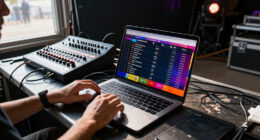
Wireless IEM adapters for stage monitoring let performers hear a monitor mix without a cable running from the mixer to their beltpack, but range, receiver count, and compatibility vary widely. My best overall pick is the Xvive U4 Wireless In-Ear Monitor System Set for a familiar all-in-one transmitter-and-receiver format, while the M-VAVE SWS-12 with two receivers stands out for sharing one feed with two listeners. The Xvive U45C is a strong option for buyers who value a charging case and 5.8 GHz operation. The main tradeoffs are choosing a frequency band that suits your venue, checking whether a product includes the receiver you need, and deciding whether stereo or extra receivers matter more than simplicity. Read on for the full breakdown of all 13 options and how I’d match them to different stage setups.

Get audio and creator gear delivered free with Prime
- Fast, free delivery on millions of items
- Prime Video, Amazon Music and more included
- Member-only deals all year
Complete the kit


Key Takeaways
- The included receiver changes the buying decision: the LEKATO MS-1 is receiver-only, so it makes sense as an addition to a compatible setup, not as a standalone transmitter-and-receiver kit.
- One transmitter can serve more than one listener: the M-VAVE SWS-12 package with two receivers is the clearest fit here for a shared monitor feed, while many other options are presented as single-listener systems.
- Frequency band is a venue decision, not a quality shortcut: the lineup includes 2.4 GHz and 5.8 GHz systems, so local wireless congestion and other stage equipment should guide the choice.
- Stereo and low latency matter most when the mix depends on them: stereo-focused models such as the XTUGA J02S and M-VAVE SWS-12(WP-12) suit buyers prioritizing channel separation and timing, while simpler setups may not need those features.
- Portable extras solve different problems: the Xvive U45C’s charging case favors easier transport and charging, while clip-on transmitters and automatic pairing on the JOYO JW-07 prioritize straightforward setup.


More Details on Our Top Picks
JOYO JW-07 Wireless In-Ear Monitor System 2.4GHz with Clip-on Transmitter and Automatic Pairing for Studio, Guitar, DJ, Live Performance
The JOYO JW-07 is a strong fit for performers who prioritize quick response: its stated latency is under 5 ms, making it a better match for tight playing cues than the LEKATO MS-1, which lists latency under 12 ms. Frequency hopping is intended to help limit dropouts, while automatic pairing keeps setup simple for rehearsal or a compact stage rig. Its 12 channels, arranged in four groups, give users more channel choices than a basic single-channel setup, though they do not solve the key limitation: one transmitter cannot feed multiple receivers. The stated battery life exceeds eight hours, but its 40–60-foot open-space range is shorter than the MELONARE PM-2S’s stated reach. I’d choose it for solo performers who value speed over shared monitoring.
Pros:- Stated latency under 5 ms suits monitoring where timing response matters.
- Frequency hopping is designed to help maintain a stable connection.
- More than eight hours of stated battery life supports extended sessions.
- Automatic pairing and 12 channels simplify setup and channel selection.
Cons:- A single transmitter cannot connect to multiple receivers.
- Its stated 40–60-foot open-space range is more limited than the MELONARE PM-2S’s stated range.
- The 2.4 GHz band can be busy in venues with crowded wireless environments.
Best for: Solo guitarists, DJs, and performers who want low-latency monitoring and a clip-on transmitter for rehearsals or smaller stages.
Not ideal for: Bands that need one transmitter to send a monitor mix to several performers, or acts that need a longer stated range.
- Wireless band:2.4 GHz
- Audio quality:48 kHz / 16-bit
- Latency:Under 5 ms
- Operating range:40–60 ft in open space
- Battery life:More than 8 hours
- Channels:12 channels across 4 groups
- Transmitter and pairing:Clip-on transmitter; automatic pairing
Our verdict“Choose the JOYO JW-07 if low stated latency and straightforward solo monitoring matter more than feeding several receivers.”
LEKATO MS-1 Wireless In-Ear Monitor System (Receiver Only)
The LEKATO MS-1 receiver has a specific use in this lineup: it is an add-on for a compatible setup, not a complete wireless IEM system. Its multi-receiver support can help a band share a transmitter’s monitor feed, and the stated 90-foot range exceeds the JOYO JW-07’s 40–60-foot open-space figure. The tradeoff is that this listing includes only the receiver, so buyers need a compatible transmitter already in place or must source one separately. Its latency is listed under 12 ms, slower on paper than the JOYO and LEKATO MS-50, and battery life is up to five hours. The aluminum body is compact, but the 2.4 GHz band may face congestion in busy venues. I’d treat it as a practical expansion piece, not a first-system pick.
Pros:- Supports multiple receivers with a compatible transmitter.
- Stated range reaches up to 90 feet.
- Compact aluminum construction weighs 0.09 kg.
- Auto-pairing reduces setup steps when adding a receiver.
Cons:- Receiver only; a transmitter is not included.
- Up to five hours of battery life may not cover long event days without recharging.
- The 2.4 GHz band may be affected by wireless congestion, and listed latency is under 12 ms.
Best for: Performers who already own a compatible LEKATO MS-1 transmitter and need another receiver for a bandmate.
Not ideal for: First-time IEM buyers or anyone expecting a complete transmitter-and-receiver system in the package.
- Wireless frequency:2.4 GHz
- Latency:Under 12 ms
- Frequency response:20 Hz–20 kHz
- Dynamic range:105 dB
- Range:Up to 90 ft
- Battery life:Up to 5 hours
- Package contents:Receiver, 3.5 mm audio cable, and charging cable
- Material and weight:Aluminum; 0.09 kg
Our verdict“Buy this receiver only if you already have a compatible transmitter and need to add another listener to the monitor feed.”
MELONARE PM-2S Portable Wireless In-Ear Monitor System
The MELONARE PM-2S stands out for band setups that need one transmitter to serve multiple receivers. It also claims over 10 hours of battery life, which gives it a longer stated runtime than the M-VAVE SWS-12’s six-hour receivers. Mono/stereo switching is available at a button press, so performers can choose a simpler mono feed or stereo monitoring to suit the mix. Its 24-bit/48 kHz specification is a step up on paper from the JOYO JW-07’s 16-bit format, while OTG input adds a route for audio from a phone, tablet, or laptop. The stated 150-foot range is the longest in this batch, though real stage conditions can reduce reach, and operation remains on 2.4 GHz. I’d favor it for shared feeds and extended rehearsals over a single-listener system.
Pros:- One transmitter can connect to multiple receivers, with up to 10 simultaneous sets listed.
- More than 10 hours of stated battery life supports long rehearsals and performances.
- One-touch mono/stereo switching adapts the feed to different monitoring needs.
- OTG input supports audio connections from phones, tablets, and laptops.
Cons:- Uses the 2.4 GHz band, which can be congested in some venues.
- The stated 150-foot range depends on setup and environmental conditions.
- The listed signal-to-noise ratio is 100 dB, below the LEKATO MS-1’s stated 105 dB dynamic range, though these are different measurements.
Best for: Bands, worship teams, and rehearsal groups that want one transmitter to serve multiple receivers and need long stated battery life.
Not ideal for: Performers whose venues have crowded 2.4 GHz wireless traffic or who need a range guarantee independent of the environment.
- Wireless band:2.4 GHz
- Audio resolution:24-bit / 48 kHz
- Audio modes:Mono and stereo
- Frequency response:20 Hz–20 kHz
- Signal-to-noise ratio:100 dB
- Wireless range:Up to 150 ft
- Battery life and capacity:More than 10 hours; 300 mAh
- Input and receiver support:OTG audio input; one transmitter supports multiple receivers
Our verdict“Choose the PM-2S for shared monitoring and long runtime, provided your stage environment can accommodate a 2.4 GHz system.”
M-VAVE SWS-12 2.4 GHz Wireless In-Ear Monitor System with Transmitter and Two Receivers
The M-VAVE SWS-12 makes sense for duos who want two receivers included rather than buying an extra unit later. Its single- and dual-channel modes give a pair of performers some flexibility over how they share or separate feeds, while automatic frequency hopping is designed to help with connection stability. Compared with the MELONARE PM-2S, this kit has a shorter stated receiver runtime—up to six hours versus more than 10—but it includes a charging case and two receivers in the box. The transmitter’s stated 24-hour battery life is generous, though it does not remove the need to recharge the receivers during longer days. Audio is listed at 24-bit/48 kHz with latency under 14.9 ms, so it is less speed-focused than the JOYO JW-07 or LEKATO MS-50.
Pros:- Includes two receivers, making shared monitoring possible from the start.
- Single- and dual-channel modes offer flexibility for different monitor arrangements.
- Automatic frequency hopping is designed to help maintain a stable signal.
- Charging case is included, and the transmitter is listed for up to 24 hours of battery life.
Cons:- Receiver battery life is listed at up to six hours.
- Latency under 14.9 ms is higher on paper than the JOYO JW-07 and LEKATO MS-50.
- Operates on 2.4 GHz, which may be crowded in some live environments.
Best for: Duos and small performance teams who want a transmitter with two receivers included and need selectable single- or dual-channel operation.
Not ideal for: Performers needing receiver runtimes beyond six hours without a recharge, or those seeking the lowest stated latency in this batch.
- Wireless band:2.4 GHz
- Audio sampling:24-bit / 48 kHz
- Latency:Under 14.9 ms
- Included receivers:2
- Operating modes:Single-channel and dual-channel
- Battery life:Transmitter: up to 24 hours; receivers: up to 6 hours
- Charging:USB-C / Type-C; charging case included
- Audio impedance:22 ohm
Our verdict“Pick the M-VAVE SWS-12 when two performers need receivers in the same kit and can plan around the receiver recharge interval.”
LEKATO MS-50 5.8 GHz Wireless In-Ear Monitor System
The LEKATO MS-50 is the clearest alternative here for performers who want to avoid the lineup’s repeated reliance on 2.4 GHz. Its 5.8 GHz band and stated range of 100 feet or more line of sight make it a compelling option for stage monitoring, though range still depends on obstacles and venue conditions. In mono mode, latency is listed under 5 ms; stereo mode rises to under 9 ms, so players should choose based on whether stereo separation is worth the added delay. Unlike the JOYO JW-07, the MS-50 supports one transmitter with multiple receivers, with up to four simultaneous sets listed. Its runtime exceeds six hours, shorter than the MELONARE PM-2S’s stated 10-plus hours. USB-C charging and one-touch mute add useful stage control, but the stereo latency tradeoff is real.
Pros:- 5.8 GHz operation offers an alternative to the 2.4 GHz systems in this batch.
- Latency is listed under 5 ms in mono and under 9 ms in stereo.
- One transmitter can pair with multiple receivers, with up to four simultaneous sets listed.
- Clip-on design, USB-C charging, and one-touch mute support practical stage use.
Cons:- Stereo mode has higher stated latency than mono mode.
- Battery life is more than six hours, shorter than the MELONARE PM-2S’s stated runtime.
- The 100-foot-plus range applies to line-of-sight use and may be reduced by obstacles.
Best for: Performers who want a 5.8 GHz system, low stated mono latency, and the option to send a feed to multiple receivers.
Not ideal for: Musicians who require the lowest possible latency in stereo mode or need more than six hours of operation between charges.
- Wireless band:5.8 GHz
- Audio sampling:24-bit / 48 kHz
- Latency:Under 5 ms mono; under 9 ms stereo
- Transmission range:100 ft / 30 m or more, line of sight
- Operating modes:Mono and stereo
- Battery life:More than 6 hours
- Battery capacity:Transmitter: 600 mAh; receiver: 500 mAh
- Charging and controls:USB-C; approximately 2-hour full charge; volume adjustment and one-touch mute
- Included items:Transmitter, receiver, 6.35 mm adapter, and audio cable
Our verdict“Choose the MS-50 if you want a 5.8 GHz system with fast mono response and can accept higher latency in stereo mode.”
XTUGA J02S 2.4G Stereo In-Ear Monitor System
The XTUGA J02S is a strong fit for performers who need a longer run between charges without giving up low-latency monitoring. Its stated 10-hour battery life is a clear advantage over the Xvive U45C, which is listed for about five hours, while its transmission latency under 4.5 ms suits real-time playing. A 50-meter range gives performers room to move, and support for multiple receivers makes it useful for shared mixes. The tradeoff is that setup for multiple units may take some technical attention; the LEKATO MS-02 spells out its four-receiver capacity and offers mono and stereo modes. The J02S data does not specify those details or warranty coverage, so buyers who need a clearly documented multi-performer setup may prefer the LEKATO.
Pros:- Stated 10-hour battery life suits long rehearsals and performances.
- Latency under 4.5 ms supports responsive stage monitoring.
- 50-meter stated wireless range offers room to move on stage.
- Supports multiple receivers from one system.
Cons:- Multiple-unit setup may require technical configuration.
- Receiver capacity and operating modes are not specified in the supplied product data.
- Warranty information is not provided.
Best for: Performers and small stage teams who need long operating time and a stated 50-meter range from a 2.4 GHz system.
Not ideal for: Buyers who want documented warranty terms or a clearly specified receiver limit and step-by-step multi-unit setup details.
Our verdict“Choose the XTUGA J02S if longer battery life and room to move matter more than fully documented multi-receiver setup details.”
LEKATO MS-02 Wireless In-Ear Monitor System
The LEKATO MS-02 makes sense for a small band that wants to share one transmitter across several performers without guessing at the system’s limits: it supports up to four receivers and offers both mono and stereo modes. That gives it a more clearly described group setup than the XTUGA J02S, whose supplied details do not state a receiver count or modes. Its receiver adds five volume levels and status LEDs, helpful for quick adjustments between songs, while the stated 100-foot range applies to open areas rather than every venue. Battery life of six to eight hours is shorter than the XTUGA’s 10 hours, and earbuds are not included. This is a practical choice for compact setups, but buyers should factor in their own earphones and avoid treating the range figure as a guarantee through crowded stages or walls.
Pros:- One transmitter can connect to up to four receivers.
- Mono and stereo modes suit different monitoring setups.
- Receiver volume controls and status LEDs make adjustments easier.
- Includes charging cables and 3.5 mm-to-6.35 mm adapter.
Cons:- Earbuds are not included.
- Six-to-eight-hour battery life is shorter than the XTUGA J02S’s stated 10 hours.
- The 100-foot range is specified for open areas.
Best for: Small bands or worship teams needing mono or stereo monitoring for up to four performers from one transmitter.
Not ideal for: Performers who need included earbuds, longer battery life than a typical set, or a dependable range figure for obstructed venues.
Our verdict“Pick the LEKATO MS-02 for a clearly specified, flexible four-person setup if you already have suitable earbuds.”
Aokeo AK-680 Wireless In-Ear Monitor System
The Aokeo AK-680 stands apart from the 2.4 GHz XTUGA J02S and LEKATO MS-02 by using 5.8 GHz transmission, a useful distinction for performers concerned about congestion around common Wi-Fi equipment. Automatic pairing and a clip-on receiver with push-button volume controls favor quick setup and onstage adjustments. Its stated 12-hour playback also outlasts the Xvive U45C’s five-hour battery figure, making the Aokeo a better fit for long rehearsal blocks. The tradeoff is a less detailed specification set: the supplied data does not give latency, audio resolution, range, or simultaneous channel capacity. It also needs audio gear with a standard headphone output. Compared with the Xvive, it offers longer stated runtime and simpler connectivity, but less documented information for planning a multi-channel professional rig.
Pros:- 5.8 GHz transmission is an alternative to the 2.4 GHz XTUGA J02S and LEKATO MS-02.
- Up to 12 hours of playback suits extended rehearsals.
- Automatic pairing reduces setup steps.
- Clip-on receiver has onboard volume controls and the package includes connection adapters.
Cons:- Latency, audio resolution, wireless range, and channel capacity are not stated in the supplied data.
- Requires source equipment with a standard headphone output.
- Up to 12 hours is a stated maximum, not an unlimited runtime.
Best for: Musicians rehearsing or performing around busy 2.4 GHz wireless activity who want automatic pairing and long stated runtime.
Not ideal for: Production teams that need published latency, audio-resolution, range, or multi-channel specifications before choosing a system.
Our verdict“Choose the Aokeo AK-680 if 5.8 GHz operation and long stated battery life matter more than detailed published system specifications.”
Xvive U45C Wireless In-Ear Monitor System with Charging Case, 5.8 GHz IEM
The Xvive U45C is the most clearly specified option here for a stage rig that needs channel planning and flexible mixer connections. Its true-diversity 5.8 GHz receiver uses dual antennas, and it supports up to six simultaneous channels; balanced XLR and 1/4-inch TS connections with selectable level modes make it easier to match different mixer outputs. Those details give it a more production-oriented profile than the Aokeo AK-680, whose supplied data omits channel capacity and latency. The Xvive also lists 24-bit/48 kHz audio and latency under 5 ms. The major compromise is its roughly five-hour battery life, well below the XTUGA J02S’s 10 hours and Aokeo’s 12. Buyers planning longer shows need a charging plan, even with the charging case.
Pros:- True-diversity 5.8 GHz transmission uses a dual-antenna receiver.
- Supports up to six simultaneous channels.
- Balanced XLR and 1/4-inch TS connections with selectable level modes suit varied mixer outputs.
- 24-bit/48 kHz audio and latency under 5 ms are specified.
Cons:- About five hours of battery life is shorter than the XTUGA J02S and Aokeo AK-680 figures.
- A full charge takes two hours, which can complicate turnaround between sets.
- More channel and connection options may be unnecessary for a solo performer.
Best for: Stage technicians and multi-performer groups who need up to six channels, dual-antenna reception, and flexible mixer inputs.
Not ideal for: Performers playing long sets without charging breaks or anyone prioritizing long battery life over channel and connection options.
Our verdict“Choose the Xvive U45C for a multi-channel stage rig that needs flexible mixer connections, provided you can manage its shorter runtime.”
M-VAVE SWS-12(WP-12) Wireless In-Ear Monitor System 2.4GHz Stereo Low Latency
The M-VAVE SWS-12 is the strongest match in this group for a band that wants one transmitter to serve many performers: it supports up to eight receivers, more than the LEKATO MS-02’s four. Its claimed sub-2 ms latency is also the lowest stated figure among these five products, supporting tight musical timing, while auto pairing and independent volume control make shared use more manageable. There is a substantial battery split: the transmitter is listed for 24 hours, but each receiver for only six, so the receivers—not the transmitter—set the practical limit for a long show. Like the XTUGA and LEKATO, it uses 2.4 GHz, which may be less appealing in crowded wireless environments than the 5.8 GHz Aokeo or Xvive. The supplied data also gives no sweat-resistance rating.
Pros:- Supports up to eight receivers, twice the stated capacity of the LEKATO MS-02.
- Sub-2 ms latency is the lowest stated latency in this group.
- Independent volume control and mute give each receiver user local control.
- Auto pairing and a 24-hour transmitter battery rating support extended use.
Cons:- Receiver battery life is listed at six hours, far shorter than the transmitter’s 24 hours.
- 2.4 GHz operation may face interference in busy wireless environments.
- No waterproof or sweat-resistant rating is provided.
Best for: Bands or ensembles that need one transmitter to feed up to eight performers and value very low stated latency.
Not ideal for: Performers in congested 2.4 GHz venues, or those needing receiver runtime beyond six hours without a charging break.
Our verdict“Pick the M-VAVE SWS-12 for a larger group sharing one transmitter, but plan around six-hour receiver runtime and 2.4 GHz congestion.”
WP12 2.4GHz Wireless In-Ear Monitor Transmitter and Receiver with Auto-Pairing
The WP12 is the strongest fit here when one stage mix needs to reach several performers: it supports up to four receivers, while the package includes only two. Its 24-bit/48kHz audio and latency below 14.9ms give it a clear feature advantage over the Xvive U4’s published sub-5ms latency, though the Xvive is the more compelling option when minimizing monitoring delay is the priority. The WP12’s mono, stereo, true-stereo, and mute modes give a band more ways to adapt the feed without changing systems. Auto-pairing helps simplify setup, but buyers still need to understand wireless audio routing, and the transmitter’s 24-hour battery life greatly exceeds the receiver’s six hours. I’d choose it for flexible group monitoring, not for a receiver that can run through a particularly long performance without charging.
Pros:- Supports up to four receivers from one transmitter
- Offers mono, stereo, true-stereo, and mute modes
- 24-bit/48kHz audio with latency below 14.9ms
- Auto-pairing and Type-C fast charging simplify setup and charging
Cons:- Only two receivers are included despite support for four
- Receiver battery life is six hours, much shorter than transmitter life
- No carrying case is included, and setup may challenge newcomers to wireless audio
Best for: Small bands or worship teams that want to expand one wireless monitor feed to as many as four receivers and can manage charging between sets.
Not ideal for: Performers who need the lowest stated latency or a receiver that can reliably cover exceptionally long sessions without recharging.
- Wireless technology:2.4GHz
- Audio resolution:24-bit/48kHz
- Latency:Less than 14.9ms
- Supported receivers:Up to 4
- Modes:Mono, stereo, true stereo, mute
- Transmitter battery life:Up to 24 hours
- Receiver battery life:Up to 6 hours
- Charging:Type-C fast charging
Our verdict“Choose the WP12 if flexible routing to several performers matters more than the Xvive U4’s lower stated latency.”
Wireless In-Ear Monitor System, 2.4GHz IEM Transmitter and Receiver for Stage
This system makes the most sense for performers who want a ready-to-run monitor link without spending much time configuring it. The pre-paired transmitter and receiver reduce setup steps, and XLR mono input with stereo support via adapter gives it a practical route into common stage audio connections. It also includes 3.5mm audio and headphone outputs, making it more connection-flexible than the Xvive U4, whose listed connectivity is a 3.5mm jack. The tradeoff is less detail about performance: the listing gives no latency or range figure, so I can’t rank it as confidently for timing-sensitive monitoring or larger stages. Its stated battery life exceeds 10 hours, but users should charge it before the first session, and shared 2.4GHz spaces may limit how many sets can operate together.
Pros:- Pre-paired transmitter and receiver reduce setup work
- Supports mono and stereo transmission
- XLR mono input with stereo support via adapter
- More than 10 hours of stated battery life
Cons:- No latency or operating-range figure is provided
- Limited to five sets in the same location to reduce interference
- Initial charging is recommended before use
Best for: Musicians who need a pre-paired system with XLR-based stage connections and straightforward mono or stereo monitoring for rehearsals and gigs.
Not ideal for: Players who need a published latency or range target, or bands planning to run more than five sets in the same location.
- Wireless frequency:2.4GHz
- Input:XLR mono; stereo via adapter
- Outputs:3.5mm audio and headphone outputs
- Transmission modes:Mono and stereo
- Battery life:Over 10 hours
- Battery type:Rechargeable lithium-ion
- Sets per location:Up to 5 to reduce interference
- Warranty:1 year
Our verdict“Pick this system for a quick, connection-flexible stage setup; choose the Xvive U4 if a published low-latency figure matters more.”
Xvive U4 Wireless In-Ear Monitor System Set
The Xvive U4 is the clearest pick for performers who put timing and wireless range ahead of long battery life. Its stated latency is under 5ms, substantially lower than the WP12’s under-14.9ms figure, which can matter when close timing between a performer’s playing and monitor feed is a priority. A listed range of 27 meters also gives it a defined operating target, while six channels offer options for choosing a channel in a busy setup. The included 1/4-inch-to-XLR adapter and bag make it more stage-ready out of the box than the WP12, which has no carrying case. The main compromise is runtime: up to five hours is shorter than the other two systems here, and the unit is not water resistant. I’d favor it for shorter gigs over all-day events.
Pros:- Latency under 5ms suits timing-sensitive stage monitoring
- Listed range of 27 meters
- Six channels provide channel-selection options
- Includes a 1/4-inch-to-XLR adapter and carrying bag
Cons:- Battery life is up to five hours
- Not water resistant
- The listed 320g weight and bulkier design may be less convenient to carry
Best for: Performers in small venues who prioritize a low stated latency, a defined wireless range, and included connection and storage accessories.
Not ideal for: Musicians playing long sets without charging breaks or performers who need water resistance and a compact, lightweight setup.
- Wireless technology:2.4GHz
- Range:27 meters
- Channels:6
- Latency:Less than 5ms
- Battery life:Up to 5 hours
- Connectivity:3.5mm jack
- Weight:320g
- Included:Transmitter, receiver, 1/4-inch-to-XLR adapter, bag
Our verdict“Choose the Xvive U4 for low stated latency and included stage accessories, provided its five-hour battery limit fits your performance schedule.”

How We Picked
I compared these 13 products for their usefulness as stage-monitoring systems, rather than treating every wireless IEM listing as interchangeable. I focused on what a buyer can determine from the stated configuration: whether the package includes a transmitter and receiver, how many receivers are supplied, the listed frequency band, stereo or low-latency claims, and practical details such as automatic pairing or a charging case. Those details affect setup, listener count, and how a system may fit into a real performance workflow.
The ranking favors options with a clear use case and fewer surprises about what is included. A complete set is more useful to most first-time buyers than a receiver-only unit, while a multi-receiver bundle earns notice for shared monitoring. I also distinguish 2.4 GHz and 5.8 GHz models without claiming either band will perform better in every venue; local interference and the full system’s specifications matter. Since product names alone do not establish range, sound quality, or compatibility, I avoid treating unverified performance claims as proven advantages.
Factors to Consider When Choosing Wireless Iem Adapters For Stage Monitoring
Before choosing among these wireless IEM adapters, match the system to your signal path, number of listeners, and venue conditions. A small mismatch—such as ordering a receiver without its compatible transmitter—can matter more than a headline feature. These factors help narrow the field beyond the product-by-product comparisons.
Check Exactly What the Package Includes
Read the package description as a signal-chain checklist: you generally need a transmitter connected to the monitor output and a receiver for each performer. The LEKATO MS-1 is listed as receiver-only, which makes it a potential expansion component rather than a complete starter system. Do not assume that two products from the same brand pair together; confirm the exact model and system compatibility before adding a receiver. Also check whether the listing includes the cables and power accessories your mixer and stage setup require. Buying a complete set may be simpler at first, while extra receivers make more sense once you know the transmitter supports them.
Choose a Frequency Band Around Your Venue
These products include both 2.4 GHz and 5.8 GHz options, but a band label alone cannot predict how well a system will work at your venue. Wi-Fi access points, wireless instruments, audience devices, and other stage systems can all shape the radio environment. Ask the venue or sound engineer what wireless equipment is already in use, then check the system’s channel-selection and operating guidance before buying. A frequency that works well in a rehearsal room may face more congestion at a busy venue. Avoid choosing solely by the idea that one band is universally clearer; the local conditions and the product’s available controls matter.
Decide Whether You Need Mono, Stereo, or a Shared Feed
Consider what your monitor mix needs to communicate before paying extra attention to stereo claims. Stereo can preserve left-right placement and may help separate instruments in a dense mix, but it also depends on the mixer output and the system supporting the intended signal path. A mono feed can be a practical choice when the goal is clear vocal and band monitoring with minimal setup. If several performers can use the same mix, a package with two receivers, such as the M-VAVE SWS-12 bundle, may reduce the need for separate systems. Shared listening is not the same as individual mixes, though; performers who need different balances still need separate monitor sends and a compatible wireless arrangement.
Treat Latency as Part of the Whole Signal Chain
Wireless delay is only one part of what a performer hears: the mixer, digital processing, instruments, and acoustic sound on stage all contribute to timing. A low-latency claim is useful, but not a complete guarantee that the setup will feel natural for every singer or player. Vocalists and musicians who rely on tight timing should check the manufacturer’s latency specifications and, where possible, compare the system with their actual monitor mix before a show. Avoid stacking unnecessary digital processing in the signal path if timing is already a concern. For less timing-sensitive monitoring, ease of setup or receiver count may matter more than chasing the smallest advertised figure.
Plan for Receiver Fit, Power, and Stage Movement
A wireless pack is only convenient if it stays secure and has enough power for the performance and changeovers. Look at how the receiver attaches to clothing, how it charges, and whether its controls are reachable without disrupting a set. A charging case can simplify transport and charging, as on the Xvive U45C, while other designs may put more emphasis on a clip-on transmitter or automatic pairing. Check the expected run time and charging method in the product details rather than assuming all portable systems behave alike. If performers move between sets or share equipment, pack labeling and a repeatable charging routine can prevent last-minute confusion.
Pay for Features That Solve a Real Stage Problem
More receivers, stereo capability, a charging case, and quick pairing can each be useful, but none is automatically worth prioritizing for every buyer. Spend toward the bottleneck in your setup: extra receivers for a shared mix, convenient charging for frequent transport, or straightforward pairing when a quick changeover matters. A beginner with one performer and a simple monitor send may be better served by a complete, easy-to-understand set than by a bundle built for expansion. Conversely, a band should confirm how many independent mixes it needs before buying a multi-receiver package that only shares one feed. Compare the full system configuration and support details, not just a single feature in the product name.
Frequently Asked Questions
Can I buy the LEKATO MS-1 as my first wireless IEM system?
Not on the listed configuration alone: the LEKATO MS-1 is identified as a receiver-only unit. A working system also needs a compatible transmitter connected to your mixer or monitor output. Before buying it, confirm which transmitter it pairs with and whether that transmitter is already part of your setup. If you need a complete system, choose a package explicitly listing both transmitter and receiver instead. This check can prevent buying a component that cannot operate by itself.
Will a 2.4 GHz or 5.8 GHz system work better at my venue?
Neither band is guaranteed to work better in every room. The result depends on the venue’s wireless traffic, nearby access points, other stage equipment, and the system’s available channel controls. Ask the venue’s sound engineer about its current wireless setup and check the manufacturer’s frequency and channel guidance. The lineup includes both bands, so you can compare options after learning what the room is likely to contain. If possible, test the chosen system in the actual performance space before relying on it for a show.
Can two performers use one transmitter and hear different monitor mixes?
A package with two receivers, such as the listed M-VAVE SWS-12 bundle, is designed around more than one listener sharing a feed. That does not by itself provide separate mixes for each performer. Individual balances usually require separate monitor outputs or sends and a system arrangement that supports the extra transmitters and receivers. Confirm the transmitter’s supported receiver count and routing before planning a multi-performer setup. If performers need different mixes, map out the mixer outputs first, then select wireless equipment to match.
Should I choose stereo if I only monitor vocals and a few instruments?
Not necessarily. Stereo can help retain left-right placement in a detailed mix, but a simple vocal-focused monitor feed may work well as mono if it is clear and easy to manage. Your mixer outputs and the wireless system must both support the signal format you intend to use. A stereo setup can also add routing steps that are unnecessary for a straightforward stage mix. Choose stereo when channel separation helps you perform, not just because the feature appears in the product description.
What should I verify before using a wireless IEM system at a live show?
Confirm that the transmitter and receiver pair, that the mixer output is routed correctly, and that the receiver has enough charge for the full performance. Check the selected frequency or channel against the venue’s wireless plan, then test the system from the positions where you will perform. Listen for dropouts, unwanted noise, and timing issues at realistic stage volume before relying on it. Keep a wired monitoring fallback available for important shows, especially when the venue’s radio conditions are unfamiliar. A short rehearsal check can reveal setup problems that a specification list cannot.
Conclusion
For most performers seeking a complete, recognizable setup, my best overall recommendation is the Xvive U4 Wireless In-Ear Monitor System Set. For a shared feed with two listeners, choose the M-VAVE SWS-12 package with two receivers; for standout portable charging and 5.8 GHz operation, the Xvive U45C is my premium-leaning pick. Beginners should start with a clearly complete system such as the JOYO JW-07, whose automatic pairing and clip-on transmitter suit a simpler setup. The strongest value depends on what you already own: the LEKATO MS-1 can make sense as an add-on only if you have its compatible transmitter, while it is the wrong choice as a standalone kit. For stereo-focused monitoring, compare the XTUGA J02S and M-VAVE SWS-12(WP-12); for every option, confirm package contents, venue frequency conditions, and receiver compatibility before choosing.