Choosing between direct drive and belt drive turntables can be confusing because each suits different listening styles. If you’re into DJing or need quick start-up and precise control, a direct drive is ideal. If you want a quieter, more refined sound for home listening, a belt drive works better. Both have their strengths, but understanding your priorities helps. Keep exploring to discover which option matches your vibe and needs best.

Get audio and creator gear delivered free with Prime
- Fast, free delivery on millions of items
- Prime Video, Amazon Music and more included
- Member-only deals all year
Key Takeaways
- Direct drive offers quick start-up and precise control, ideal for DJing, while belt drive provides better vibration isolation for audiophile listening.
- Belt drive turntables minimize external vibrations, resulting in cleaner sound quality, whereas direct drive models may transmit motor vibrations.
- Direct drive turntables excel in responsiveness and torque, making them suitable for scratching and cueing; belt drives are better for high-fidelity sound.
- Belt drive turntables are easier and cheaper to maintain with simple belt replacements, while direct drives require motor and platter alignment.
- Your choice depends on whether you prioritize DJ performance or pure audio quality for home listening.
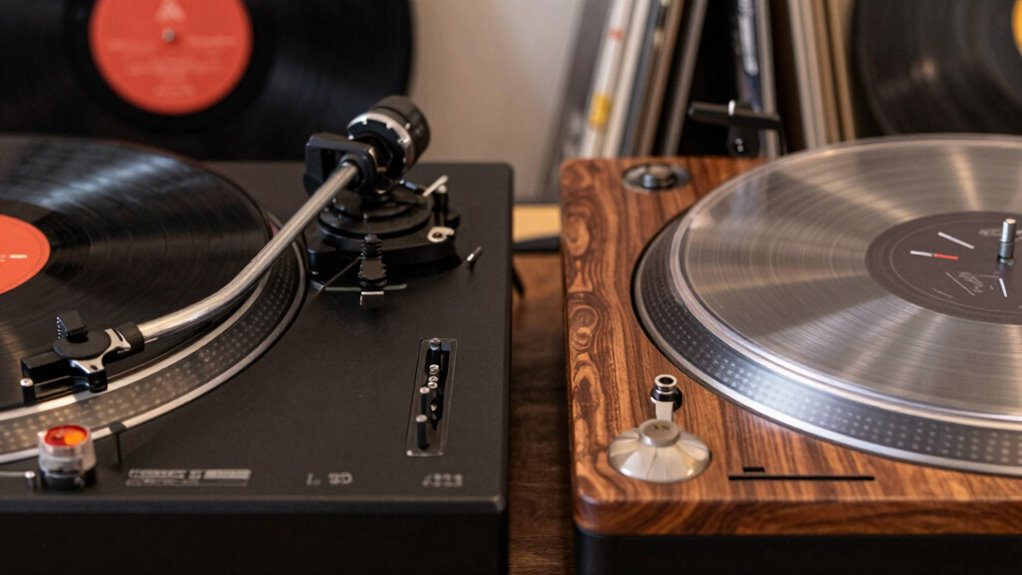
When choosing between direct drive and belt drive turntables, understanding their key differences can substantially impact your listening experience. Both types have unique advantages and drawbacks, and your choice will influence sound quality, maintenance needs, and overall performance. As a new vinyl enthusiast, you might find the decision confusing, but focusing on how each system operates helps clarify which suits your needs best.
Direct drive turntables use a motor directly attached to the platter, ensuring quick start-up times and consistent speed. This design is preferred by DJs because it offers excellent torque, allowing for precise pitch adjustments and rapid response during scratching or cueing. However, because the motor is in close contact with the platter, some users worry about increased vibrations transmitting through the system. These vibrations can affect sound quality, especially if the turntable isn’t well-isolated. Regular turntable maintenance becomes essential here to keep the motor and platter aligned, minimizing any unwanted noise or speed fluctuations. For audiophiles prioritizing pure sound, this potential for vibration noise might be a concern, but many high-quality direct drive models include damping features to mitigate these issues. Additionally, advancements in direct drive technology have improved noise reduction and stability, narrowing the gap with belt drive models.
Direct drive turntables deliver quick starts and precise control but may transmit vibrations affecting sound quality without proper isolation.
In contrast, belt drive turntables often incorporate vibration isolation techniques that further enhance their sound quality, making them a preferred choice for many home listeners.
Belt drive turntables, on the other hand, feature a motor connected to the platter via a rubber belt. This design isolates the motor from the platter, reducing vibration transfer and often resulting in a cleaner sound. The trade-off is that belt drive turntables typically have slightly slower start-up times and less torque, which isn’t a big deal for casual listening but might matter if you’re into DJing or live mixing. When it comes to sound quality comparison, belt drives tend to produce a purer audio experience because their design minimizes external vibrations and resonance, making them a popular choice for home audiophiles. Their simplicity also makes maintenance easier, as replacing a belt is straightforward and inexpensive, and there’s less risk of motor noise influencing the audio.
Ultimately, your choice hinges on what you prioritize: if you want a turntable for DJing or quick responsiveness, a direct drive might be better, but if you focus on high-fidelity sound and minimal maintenance, a belt drive could suit you more. Both systems require regular upkeep—cleaning the stylus, checking connections, and ensuring parts are in good condition—to maintain optimal performance. Keep in mind that the sound quality comparison often favors belt drives in terms of pure audio clarity, but advancements in direct drive technology have narrowed that gap. Your decision should align with your listening habits, space, and how much effort you want to put into turntable maintenance to enjoy the best possible vinyl experience.
Frequently Asked Questions
Which Turntable Type Offers Better Sound Quality for Beginners?
If you’re a beginner, belt drive turntables typically offer better tone quality because they reduce motor vibrations, resulting in clearer sound. They’re usually more affordable, making them a great entry point. Direct drive turntables provide more power and stability for DJing but can transmit motor noise that affects sound quality. For pure listening, belt drive models are generally the better choice, especially considering price comparison and sound clarity.
Are Belt Drives More Durable Than Direct Drives?
Belt drives tend to be less durable than direct drives because their belts can wear out over time, increasing maintenance costs. However, they often have a more aesthetic appeal with a sleeker, vintage look. If you’re okay with occasional belt replacements, belt drives are a great choice. But if durability is your priority, direct drives might be better, even if they require more upkeep.
How Does Motor Noise Differ Between the Two Types?
You might be surprised by how motor noise differs between the two. With direct drive turntables, you’re likely to notice more motor vibration, leading to subtle noise that can disturb your listening. Belt drive models excel in noise isolation, offering quieter operation because the motor’s vibrations are isolated from the platter. This quieter environment makes your music sound clearer, creating a more immersive experience.
Can I Upgrade From Belt to Direct Drive Later?
Yes, you can upgrade from belt to direct drive later, but it’s not always straightforward. Consider maintenance ease, as direct drives often require less upkeep, and cost comparison, since upgrades can be pricey. You might find it more practical to buy the type you prefer initially, saving money and effort. Upgrades can involve replacing the entire turntable, which can be complicated and costly depending on your setup.
Which Is More Suitable for DJING and Scratching?
Think of your turntable as a race car—smooth handling is key. For DJing and scratching, direct drive turntables are your turbocharged engine. They deliver stronger torque, making tone quality sharp and responsive, perfect for quick, precise movements. Plus, their noise levels stay low during intense scratching sessions. You’ll find they handle the demands of DJing better than belt drive models, giving you the control and durability needed for live performances.
Conclusion
So, choosing between direct drive and belt drive might feel like deciding whether to ride a rocket or a roller coaster—both are wild rides! But remember, your turntable is your spaceship, and the right choice will launch your vinyl experience into orbit. Don’t let the confusion hold you back—pick your engine, hit play, and prepare for a sonic adventure that’s out of this world. Your ultimate vinyl voyage starts now—strap in and enjoy the ride!
Halloween Picks
halloween
As an affiliate, we earn on qualifying purchases.