
Humidity is a silent threat to your vinyl collection that many overlook. Fluctuations in moisture can cause warping, mold growth, and surface cracks, damaging both the physical record and sound quality. Too much humidity invites mold and warping, while too little makes vinyl brittle. Maintaining a stable environment with proper storage, humidity control tools, and monitors is key to protecting your collection long-term. Keep going to discover how to master your storage conditions.
Key Takeaways
- Humidity fluctuations cause vinyl warping, cracking, and surface damage, often silently affecting record quality over time.
- Excess moisture promotes mold growth, which can be invisible initially but deteriorates vinyl and reduces sound fidelity.
- Maintaining a stable humidity level (around 40-50%) is crucial, yet many overlook the importance of consistent environment control.
- Inadequate storage solutions and ignoring environmental monitoring lead to long-term damage with subtle, irreversible effects.
- Proper dehumidification and regular environment checks are vital to preserving vinyl records, yet often go unnoticed as key preservation factors.
Why Humidity Is a Hidden Threat to Your Vinyl Records

Humidity might not seem like an immediate threat to your vinyl records, but it can cause significant damage over time. High humidity creates a moist environment that accelerates record deterioration. When moisture seeps into your collection, it can lead to warping, mold growth, and the formation of mold spores that cling to the vinyl surface. These issues weaken the material and compromise sound quality. Over time, high humidity can cause the grooves to swell or distort, making records skip or become unplayable. Even if you don’t notice any damage now, sustained exposure to humid conditions can silently ruin your collection. Therefore, controlling the environment’s ambient conditions is crucial for long-term preservation. Protecting your vinyl records from high humidity is essential to preserving their sound quality and physical integrity for years to come.
How Humidity Affects the Physical Condition of Records
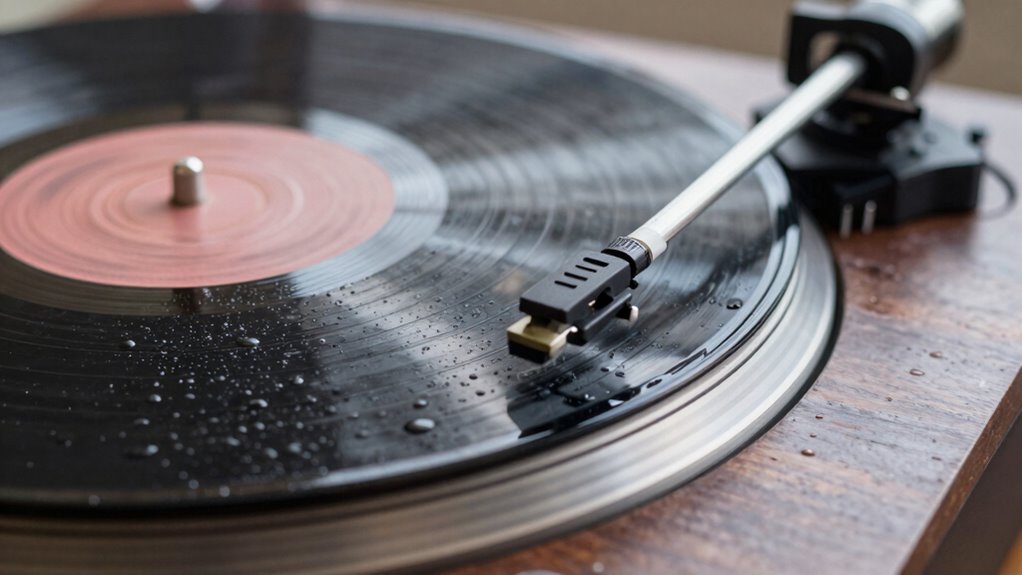
High humidity can cause your records to warp, making them difficult to play properly. It also creates a perfect environment for mold to develop on the surface, damaging the vinyl. Additionally, excessive moisture can accelerate the deterioration of the record’s physical condition, leading to cracks or warping over time. Understanding these effects helps you protect your collection from irreversible damage.
Moisture Causing Warping
When moisture levels fluctuate unexpectedly, records are at risk of warping, which can distort sound quality and damage your collection. Humidity causes vinyl to undergo humidity expansion and contraction. If humidity rises suddenly, vinyl absorbs moisture and expands, leading to warping. Conversely, when humidity drops, vinyl contracts, increasing the risk of warping and cracking. To prevent this, control your environment’s humidity levels consistently. Here’s how different humidity levels affect your records:
| Humidity Level | Effect on Vinyl | Recommended Action |
|---|---|---|
| Low (<30%) | Vinyl contracts, becomes brittle | Use a humidifier, store properly |
| Ideal (45-55%) | Minimal expansion or contraction | Maintain steady humidity levels |
| High (>70%) | Vinyl expands, warps easily | Use dehumidifier, avoid damp areas |
| Fluctuating | Accelerates warping and cracking | Keep environment stable |
| Excessive | Severe warping, irreversible damage | Seek professional storage solutions |
Maintaining a consistent environment is crucial for preserving your records and preventing damage caused by humidity fluctuations.
Humidity Promoting Mold
Excess moisture in the environment creates an ideal breeding ground for mold to develop on your vinyl records. Mold growth thrives when humidity levels stay high, especially in poorly ventilated spaces. If air circulation is limited, moisture lingers around your records, accelerating mold formation. Mold can attach to the surface, causing visible spots and a musty odor, and can even damage the vinyl over time. To prevent this, guarantee proper air flow in your storage area by using fans or dehumidifiers, and avoid storing records in damp or enclosed spaces. Regularly inspecting your collection helps catch mold early, making it easier to clean and preserve your records’ condition. Proper humidity control and promoting air circulation are essential steps to protect your vinyl from mold damage.
Signs Your Records Are Suffering From Humidity Damage

Humidity damage often shows itself through warping or buckling of your records, making them difficult to play and damaging your equipment. You might notice subtle signs that your vinyl isn’t in good shape.
- You hear persistent vinyl cracking during playback, especially after humidity fluctuations.
- The record edges start to curl or warp, creating uneven surfaces.
- You observe visible warping or buckling, which affects tracking and sound quality.
- The surface develops small cracks or splits, compromising the record’s integrity.
These signs indicate humidity has compromised your vinyl’s stability. Recognizing these issues early helps prevent further damage and preserves your collection’s sound quality. Keep an eye out for cracking sounds and warping patterns as key indicators.
What’s the Ideal Humidity Level for Vinyl Storage?
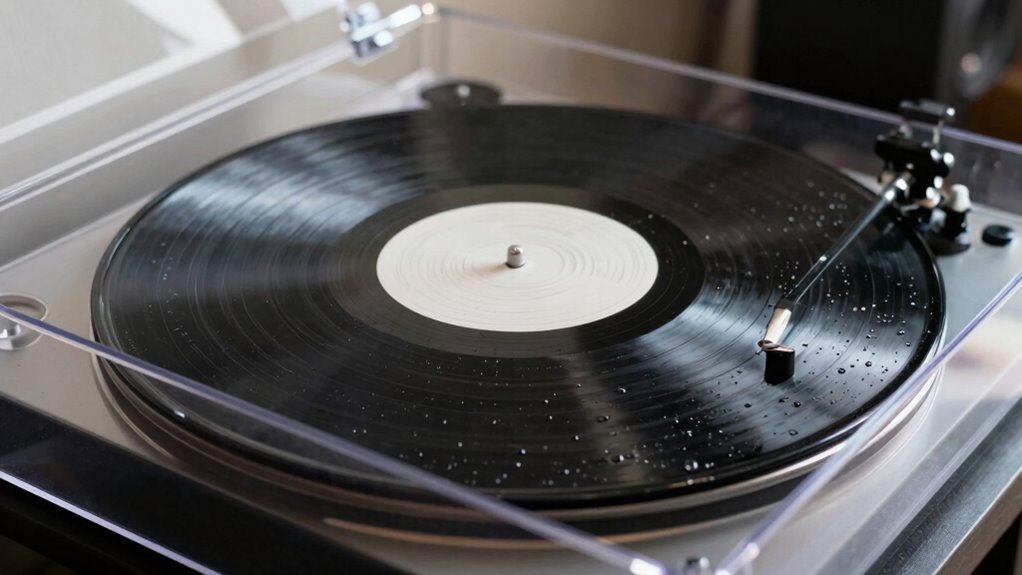
To keep your vinyl in top shape, aim for a humidity level between 40% and 50%. Too much moisture can cause warping and mold, while too little may make the records brittle. Recognizing the signs of improper levels helps you protect your collection effectively. Maintaining proper air quality is essential for preserving your vinyl and preventing environmental damage.
Optimal Humidity Range
Maintaining the right humidity level is essential for preserving your vinyl records’ condition. The ideal range is between 40% and 50%, which helps with humidity measurement accuracy and mold prevention. When humidity falls outside this range, records can warp or crack. To stay within the perfect zone:
- Regularly check your storage environment with a hygrometer.
- Keep humidity stable to prevent fluctuations that cause damage.
- Use dehumidifiers or humidifiers if needed to maintain consistent levels.
- Ensure proper ventilation to reduce excess moisture and discourage mold growth.
- Be aware that electric bikes can produce significant power and may influence the environment if used indoors, indirectly affecting humidity control.
Sticking to this range minimizes the risk of mold and other humidity-related issues, ensuring your vinyl collection remains in excellent condition for years to come.
Risks of Excess Moisture
Excess moisture poses a significant threat to your vinyl records, as it can accelerate mold growth, cause warping, and damage the record’s surface. When humidity levels are too high, surface condensation can form on your records, especially if they’re stored in areas with poor air circulation. This moisture creates a damp environment that promotes mold and mildew, which can stain or ruin your collection. Warping occurs as the vinyl absorbs excess water, losing its shape and affecting sound quality. To prevent these risks, guarantee proper air circulation around your storage area and keep humidity levels within the ideal range. Maintaining a stable environment is crucial for preserving your collection’s longevity, and using dehumidifiers or humidity control packs can help achieve this. This helps maintain a stable environment, protecting your records from moisture-related damage over time.
Signs of Improper Levels
When humidity levels fall outside the ideal range, signs of improper storage become noticeable. You might see visible warping or curling at the edges of your vinyl records, indicating moisture imbalance. Cracks and brittle spots also appear, showing humidity effects that threaten vinyl preservation. Warped records can cause skipping or poor sound quality during playback. You may notice mold or mildew spots if humidity is too high, which damages both the vinyl and your collection. Conversely, static buildup from overly dry conditions can cause excessive dust attraction. Finally, a warped or cracked surface signals that your storage environment isn’t suitable for long-term preservation. Maintaining proper humidity levels helps prevent these issues and keeps your vinyl in top condition. Proper storage conditions are essential to ensuring your collection remains in pristine shape over time.
Easy Ways to Control Humidity in Your Record Space
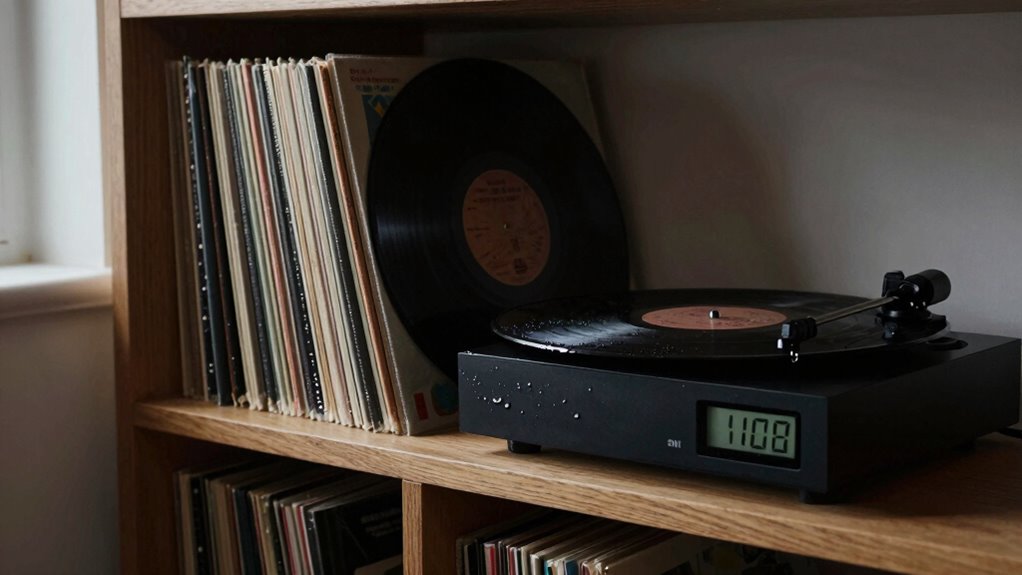
Controlling humidity in your record space is essential to preserving your vinyl collection and ensuring ideal sound quality. Start with proper record storage, keeping your records upright in a cool, dry area. Use DIY humidity control solutions like silica gel packets or activated charcoal to absorb excess moisture. Placing these in your storage bins or shelves helps maintain stable humidity levels. Regularly monitor the environment with a hygrometer so you can take quick action if levels fluctuate. Avoid placing records near windows, vents, or sources of moisture. Ventilate periodically to prevent stale air buildup. Understanding the importance of environmental conditions can help you make informed decisions about your storage setup. By implementing simple DIY methods and paying attention to your storage conditions, you can keep humidity in check and protect your vinyl from warping, mold, and deterioration.
Best Storage Solutions to Keep Humidity Fluctuations at Bay

To effectively minimize humidity fluctuations in your vinyl storage, choosing the right storage solutions is crucial. First, invest in sturdy, sealed shelving that maintains a stable environment and prevents moisture intrusion. Second, organize your records with proper shelf placement, keeping frequently played albums accessible and avoiding overcrowding that causes temperature shifts. Third, incorporate regular record cleaning to remove dust and moisture, which can exacerbate humidity issues. Fourth, consider using airtight storage boxes for valuable or sensitive records, adding silica gel packs to absorb excess moisture. These solutions help stabilize your environment, protect your collection, and reduce the risk of warping or mold. Proper shelf organization and diligent record cleaning are key steps in keeping humidity fluctuations at bay and preserving your vinyl’s quality. Additionally, monitoring your storage conditions with a hygrometer can help you maintain optimal humidity levels and prevent potential damage.
How to Use Monitors and Dehumidifiers to Protect Your Records
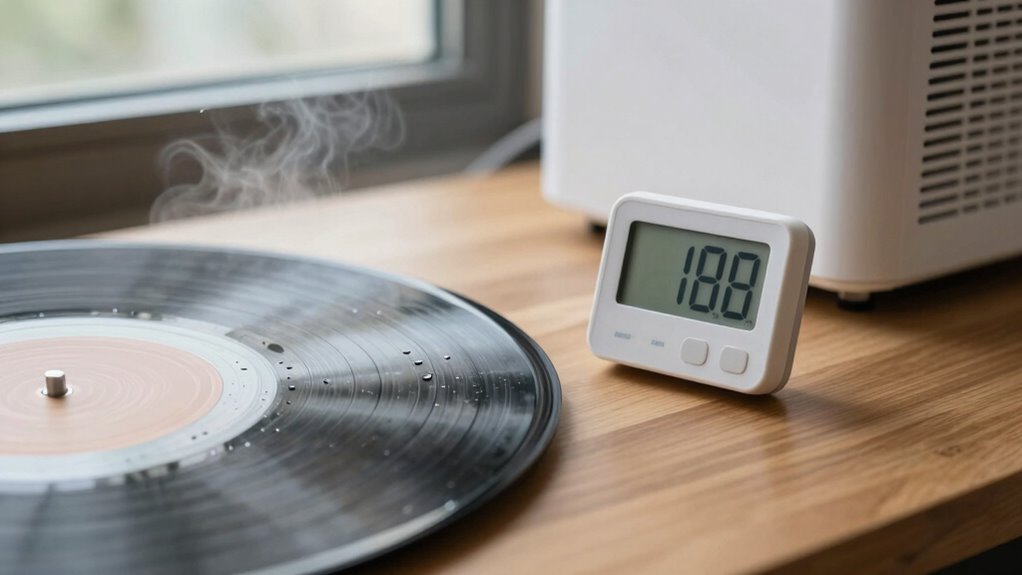
After setting up proper storage solutions, monitoring and controlling humidity levels becomes the next essential step in protecting your vinyl collection. Use humidity sensors to keep an eye on the environment inside your storage space, ensuring levels stay between 40-50%. Place your dehumidifier strategically—near problem areas but away from direct contact with records—to optimize moisture removal without causing fluctuations. Regularly check sensor readings to catch any spikes or drops in humidity. Set your dehumidifier to maintain consistent conditions, avoiding rapid changes that can harm your records. Proper dehumidifier placement and reliable sensors work together to create a stable environment, reducing the risk of warping, mold, or deterioration. Consistent monitoring is key to preserving your vinyl collection in the best possible condition.
Common Mistakes That Put Your Records at Humidity Risk

One of the biggest mistakes you can make is neglecting to regularly check and calibrate your humidity sensors. Faulty sensors give false readings, leading you to mismanage your environment. To avoid this, ensure you:
- Regularly test your humidity sensors with a reliable calibration kit.
- Avoid relying solely on cheap or unverified sensors; invest in quality ones.
- Keep your vinyl dehumidifiers clean and maintain them as per manufacturer instructions.
- Monitor humidity levels consistently, especially during seasonal changes.
Ignoring these steps risks exposing your records to fluctuating humidity, which can warp or damage vinyl. Proper calibration and maintenance of your humidity sensors help you keep conditions stable. This, combined with effective vinyl dehumidifiers, shields your collection from humidity-related harm.
Long-Term Tips for Maintaining a Stable, Humidity-Controlled Environment

Maintaining a stable, humidity-controlled environment over the long term requires consistent vigilance and proactive management. First, debunk humidity myths—believing that a single dehumidifier or humidifier solves all issues can lead to problems. Regularly monitor your environment with a reliable hygrometer to ensure humidity stays between 40-50%. Proper vinyl maintenance involves storing records upright in a cool, dark place and using protective sleeves to prevent moisture exposure. Keep temperature fluctuations minimal, as extreme changes can cause condensation and damage. Avoid placing vinyl near windows or heat sources. Consistent airflow and proper storage are key to preventing humidity-related issues. By staying attentive and understanding these tips, you can preserve your collection’s integrity for years to come.
Frequently Asked Questions
Can Humidity Levels Vary Seasonally in My Vinyl Storage Area?
Yes, humidity levels can vary seasonally in your vinyl storage area. During humid seasons, moisture increases, risking vinyl warping or mold growth. In dry seasons, levels drop, causing vinyl to crack or become brittle. To manage these fluctuations, use effective storage solutions like dehumidifiers or climate-controlled environments. Regularly monitor humidity levels with a hygrometer, ensuring your vinyl stays protected throughout the year.
How Does Humidity Specifically Affect the Sound Quality of Records?
Did you know that high humidity can reduce your records’ sound quality by causing moisture-induced warping and static electricity buildup? When moisture levels fluctuate, warping distorts the grooves, leading to poorer sound fidelity. Static electricity can cause crackles and pops, disrupting your listening experience. Maintaining consistent humidity helps preserve sound clarity, prevents warping, and minimizes static, ensuring your records sound their best every time you play them.
Are Certain Types of Vinyl More Sensitive to Humidity Damage?
Yes, certain vinyl types are more sensitive to humidity damage. For example, thinner or softer vinyl compositions, like 180-gram records, are more prone to warping and mold if stored in a poor environment. You should always keep your records in a stable storage environment with controlled humidity levels. Proper storage guarantees your vinyl maintains sound quality and prevents damage caused by fluctuating moisture levels.
Can Humidity Damage Be Reversed Once Records Are Affected?
Yes, humidity damage to records can sometimes be reversed through record restoration techniques. You should carefully clean your vinyl to remove mold and prevent further issues. Using proper cleaning solutions, gentle scrubbing, and air drying can help restore your records. To prevent future damage, focus on mold prevention by controlling humidity levels in your storage area. Regular maintenance keeps your collection sound and preserves their quality over time.
What Are the Best Materials for Record Sleeves to Prevent Humidity Harm?
You should choose record sleeves made from breathable fabrics with anti-static properties, like rice paper or high-quality polyethylene. These materials help prevent moisture buildup and reduce static, which can attract humidity. Avoid plastic sleeves that trap moisture, causing damage over time. By using breathable, anti-static sleeves, you protect your records from humidity harm, ensuring they stay in good condition and play perfectly for years to come.
Conclusion
Think of your records as delicate gardens; humidity is the unpredictable weather that can ruin them. By keeping your environment stable, you’re tending to your musical sanctuary, ensuring each record blooms beautifully over time. Don’t let unseen moisture be the storm that erodes your collection’s soul. With mindful control, you become the steady gardener, nurturing your vinyl treasures so they can sing their timeless songs for years to come.