
To optimize your vinyl sound, you need to set the right phono gain and cartridge loading. Your turntable’s signal is weak, so the preamp boosts it properly—different cartridges, like Moving Magnet or Moving Coil, require specific gain levels. Loading adjusts resistance and capacitance to improve clarity and detail. Getting these settings right guarantees balanced, natural sound with rich bass and sharp highs. Keep exploring to master these adjustments and get the most from your records.

Get audio and creator gear delivered free with Prime
- Fast, free delivery on millions of items
- Prime Video, Amazon Music and more included
- Member-only deals all year
Key Takeaways
- Proper phono gain amplifies the weak signal from the cartridge to line level without distortion.
- Loading involves adjusting resistance and capacitance to optimize frequency response and clarity.
- Moving Magnet (MM) cartridges typically require standard gain and loading, while Moving Coil (MC) need precise adjustments.
- Correct gain and loading settings prevent distortion and enhance high-frequency response for better sound quality.
- Consult cartridge manuals to match gain and loading for optimal performance and sound fidelity.
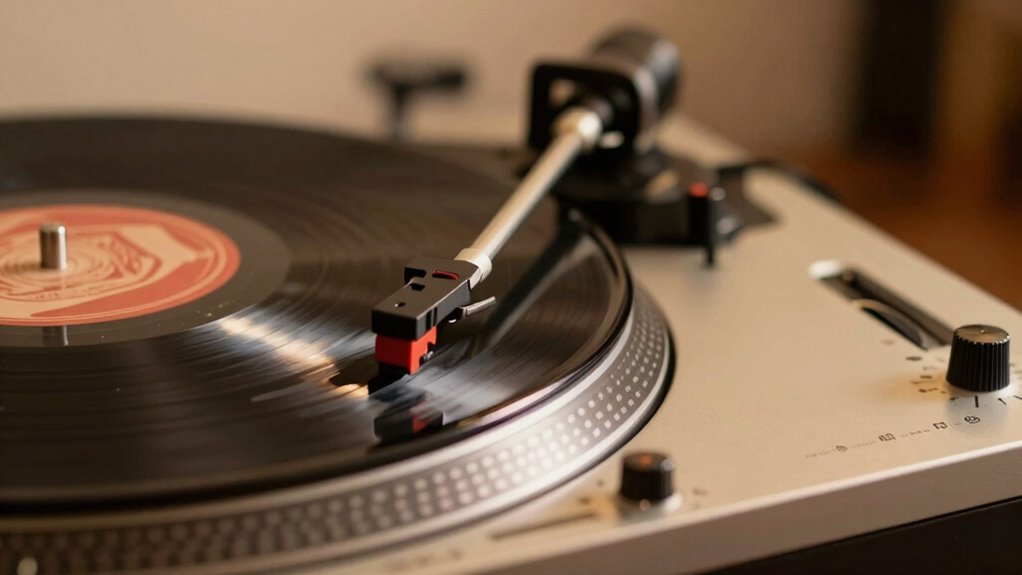
Have you ever wondered how your turntable’s signal gets properly amplified and shaped before reaching your speakers? It all starts with understanding the basics of phono gain and loading. When your turntable plays a record, the tiny movements of the stylus generate a very weak electrical signal. This signal needs to be boosted and processed correctly to sound good and stay true to the original recording. That’s where the phono preamp comes in, providing the necessary gain and setting the right loading conditions. Different cartridge types influence how you set up your system. Moving magnet (MM) cartridges tend to have higher output levels and are more forgiving when it comes to loading, often working well with standard settings. Moving coil (MC) cartridges produce lower output signals, requiring more precise gain adjustments and specific loading conditions to maximize their performance. Knowing which cartridge you have helps you select the correct phono stage or adjust your existing setup to match its needs. Proper equalization settings are also essential because records are recorded with a specific equalization curve—most commonly RIAA. When the signal leaves the cartridge, it’s unprocessed and needs to be equalized again to restore the original sound. If this isn’t done correctly, music can sound dull, overly bright, or unbalanced. Many phono preamps feature adjustable equalization settings, allowing you to fine-tune based on your cartridge’s specifications. Ensuring these are correctly set guarantees that the frequency response remains true, preserving the quality and detail of your vinyl. Additionally, understanding the concept of phono gain helps you achieve the correct amplification level for your system. Proper loading, which involves adjusting the resistance and capacitance in the circuit, also plays an indispensable role. Proper loading can enhance the cartridge’s ability to produce a clear, detailed sound. An understanding of the electrical characteristics of your cartridge will help you achieve optimal sound quality, as these influence how the loading should be configured. Consulting your cartridge’s datasheet or manual can provide valuable insights into its recommended loading values, ensuring you set the system to match the cartridge’s specifications. Matching gain and loading correctly is essential to prevent distortion and to optimize high-frequency response. Too much or too little load can distort the sound or reduce high-frequency response. Manufacturers often recommend specific loading values for their cartridges, so consulting your cartridge’s datasheet or manual is wise. When you match the gain and loading correctly, you’re giving your cartridge the best environment to perform at its best, resulting in richer bass, sharper highs, and a more natural overall sound. In essence, understanding how to manage phono gain and loading isn’t just technical jargon—it’s about ensuring your vinyl sounds exactly how it should. By paying attention to your cartridge type and carefully adjusting equalization settings and load, you’re taking control of your listening experience. This level of setup might seem intricate at first, but with practice, it becomes second nature. The payoff is a more dynamic, detailed, and true-to-record sound, making every spin on your turntable a genuinely satisfying experience.
As an affiliate, we earn on qualifying purchases.
Frequently Asked Questions
How Do I Match My Cartridge With My Phono Preamp?
To match your cartridge with your phono preamp, start by checking the recommended load impedance and gain settings from the cartridge manufacturer. Proper cartridge alignment guarantees peak sound quality and minimizes stylus wear. Adjust the preamp’s loading controls to match the specifications, and carefully align your stylus to avoid uneven wear. Regularly verify these settings to maintain audio fidelity and prolong your cartridge’s lifespan.
What Happens if I Choose Incorrect Loading Resistances?
Choosing incorrect loading resistances is like tuning a guitar poorly — the sound suffers. You might notice distorted audio or lost detail, which can strain your cartridge, reducing its longevity. Proper loading enhances sound quality, revealing richer bass and clearer highs. If you mismatch, your setup won’t perform effectively, and you’ll miss out on the full sonic potential. Always match your resistance for the best listening experience and cartridge health.
Can I Upgrade My Existing Phono Stage Easily?
Yes, you can upgrade your existing phono stage, but it requires careful attention to cartridge placement and turntable setup. To get the best sound, make sure your cartridge is correctly aligned and your turntable is level. Upgrading involves choosing a new phono stage compatible with your cartridge’s loading and gain requirements. Proper setup ensures peak performance, so follow manufacturer instructions or consult a professional if you’re unsure.
How Does Temperature Affect Phono Cartridge Performance?
Temperature fluctuations can impact your phono cartridge’s performance by affecting temperature stability. If your environment isn’t consistent, it may cause the cartridge to produce less accurate sound or even damage it over time. Maintaining a stable temperature helps guarantee peak performance and extends your cartridge’s longevity. Keep your setup in a climate-controlled space, and you’ll enjoy consistent sound quality and protect your investment in the long run.
Is There a Standard Loading Value for All Cartridges?
There’s no universal loading value for all cartridges because calibration depends on your specific cartridge and turntable setup. You need to adjust loading to optimize cartridge performance and minimize vinyl resonance issues. Always start with the manufacturer’s recommended load, but be prepared to tweak it based on your listening tests. Proper cartridge calibration enhances sound clarity and reduces distortion, ensuring you get the best possible playback from your vinyl records.
As an affiliate, we earn on qualifying purchases.
Conclusion
Understanding phono gain and loading isn’t just technical jargon; it’s the key to liberating your vinyl records’ full potential. Did you know that improper loading can reduce your cartridge’s lifespan by up to 30%? By mastering these basics, you’ll enjoy richer sound, better clarity, and a more immersive listening experience. So, take the time to fine-tune your setup—you’ll be rewarded with vinyl sound quality that truly captures the music’s soul.
moving coil cartridge gain adjustment
As an affiliate, we earn on qualifying purchases.
As an affiliate, we earn on qualifying purchases.
vinyl record player cartridge setup
As an affiliate, we earn on qualifying purchases.
As an affiliate, we earn on qualifying purchases.
Halloween Picks
halloween
As an affiliate, we earn on qualifying purchases.