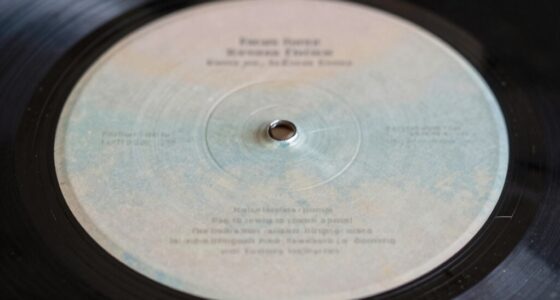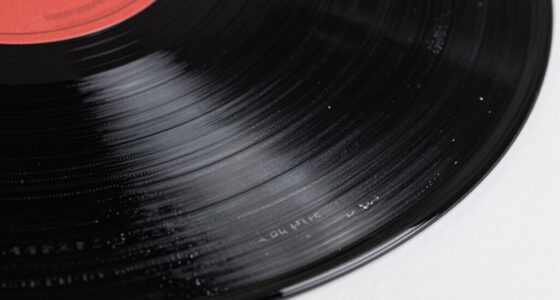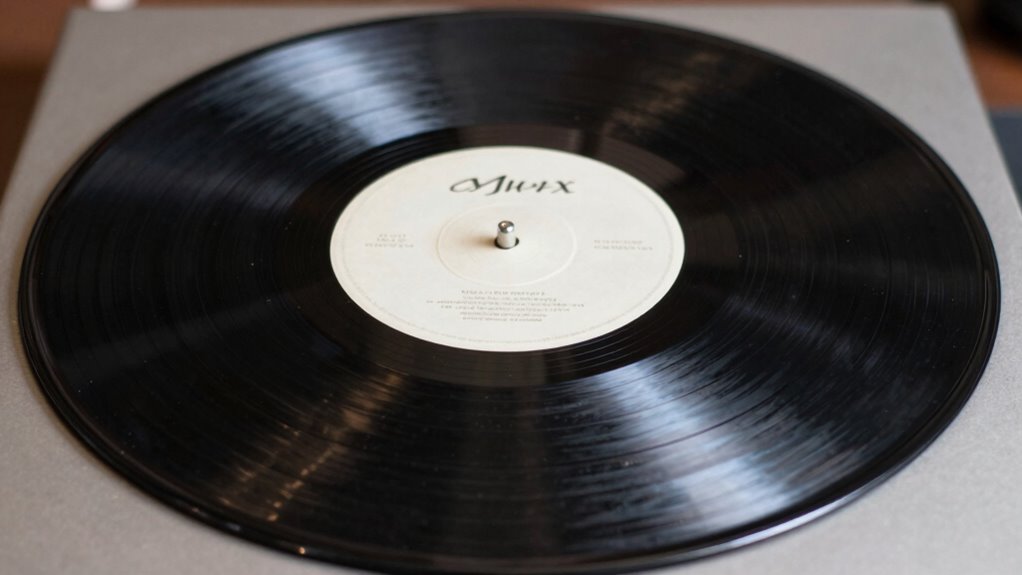

When you see ‘NM’ (Near Mint), it means your record looks almost perfect—clean vinyl with no visible flaws and plays with minimal noise. ‘VG+’ (Very Good Plus) indicates slight wear, like light surface scuffs, but still sounds good with minor background noise. Knowing these grades helps you understand a record’s condition and value more accurately. Exploring this further will give you a clearer picture of what to expect and how to handle your collection confidently.

Get audio and creator gear delivered free — and shop member deals
- Fast, free delivery on millions of items
- Access to Prime Big Deal Days deals on October 6–7
- Prime Video, Amazon Music and more included
Key Takeaways
- NM (Near Mint) indicates an almost perfect record with pristine vinyl and flawless cover, playing with minimal surface noise.
- VG+ (Very Good Plus) shows slight wear or scuffs, but sound quality remains good with minor background noise.
- Grading standards help buyers and sellers assess condition, value, and collectibility accurately.
- NM is the highest grade, representing near-perfect condition, while VG+ is a solid, well-used but presentable grade.
- Proper handling and storage preserve record condition, ensuring grades like NM or VG+ reflect the actual quality.
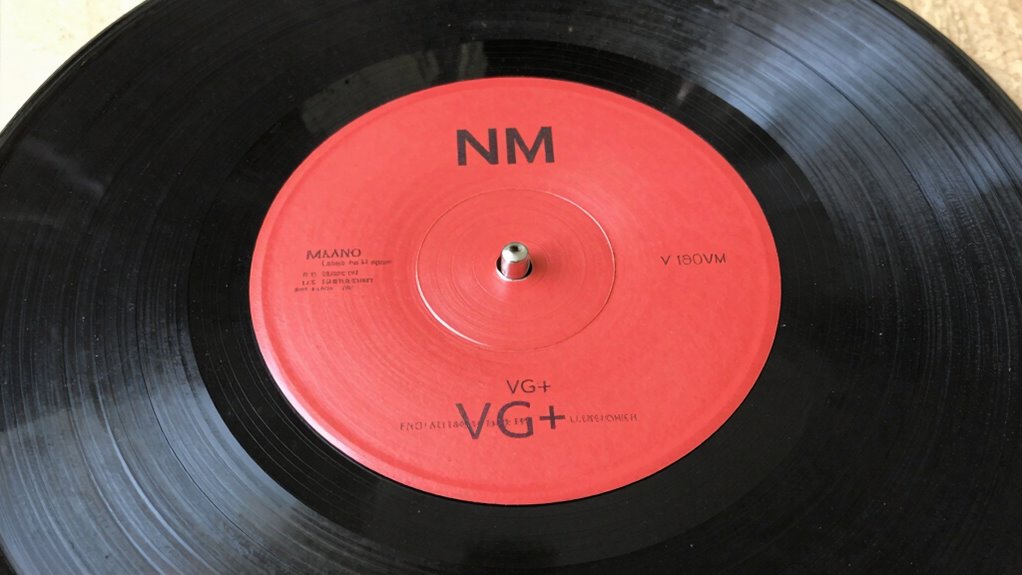
If you’re a vinyl collector or music enthusiast, understanding record grading is vital for evaluating a record’s condition and value. Grading helps you determine the quality of a vinyl, guiding your buying and selling decisions. It’s also essential for vinyl preservation, as knowing a record’s condition can influence how you handle and store it over time. The grading criteria are standardized scales used by collectors and dealers to describe a record’s condition, ranging from Near Mint (NM) to Poor. Familiarizing yourself with these categories allows you to assess records more accurately and avoid surprises when purchasing or appraising a collection.
When a record is graded as Near Mint (NM), it indicates that the vinyl is in almost perfect condition. It should look pristine with no visible scratches or scuffs, and the cover should be free of seam splits, creases, or markings. An NM record plays with minimal surface noise, and the audio quality is very close to the original studio sound. This grade is often reserved for records that have been carefully stored and handled, making them highly desirable for collectors who prioritize vinyl preservation. The grading criteria for NM are strict, and many collectors view it as the benchmark for an almost flawless record.
A grade of Very Good Plus (VG+) sits just below Near Mint but still signifies a record in quite good condition. You might notice light surface wear or minor scuffs, but these shouldn’t markedly impact sound quality. The record may have some light background noise, but it shouldn’t overpower the music. The cover may show some minor signs of handling, like slight corner wear or small creases, but it remains intact and presentable. VG+ is a popular grade because it balances quality with affordability, especially for older releases or records that have seen some use. When evaluating a VG+ record, consider how much surface noise you’re willing to accept and how it fits into your collection’s overall quality. Additionally, understanding vinyl grading standards can help you compare records across different sellers more confidently.
Understanding these grading criteria helps you make informed decisions about vinyl investments and how to care for your collection. Proper vinyl preservation involves handling records gently, storing them upright in a cool, dry environment, and avoiding excessive exposure to sunlight or humidity. Knowing what each grade means ensures you know exactly what you’re getting and how much a record might be worth. Whether you’re a seasoned collector hunting for pristine pressings or a casual listener seeking good sound at a reasonable price, grasping the nuances of record grading empowers you to build a collection that aligns with your preferences and budget.
As an affiliate, we earn on qualifying purchases.
Frequently Asked Questions
How Does Grading Affect a Record’s Resale Value?
Grading directly impacts your record’s resale value by influencing collector perceptions and highlighting grading inconsistencies. When a record is graded higher, like NM, collectors see it as near mint, boosting its worth. Conversely, lower grades like VG+ may lower its appeal and price. Be aware that grading inconsistencies can cause discrepancies in value, so accurate grading guarantees you get fair resale prices and maintains trust with buyers.
Can Grading Vary Between Different Record Stores?
Yes, grading can vary between record stores because of differences in grading consistency and store-specific standards. You might find that one store rates a record as VG+ while another considers it closer to VG. These differences happen because each store has its own standards and experience with grading. To avoid surprises, you should ask about their grading criteria and compare multiple stores’ standards before making a purchase.
What Should I Look for in a Visually Graded Record?
You should look for minimal surface wear and a clean, unmarred vinyl surface, as studies show over 70% of visual flaws impact sound quality. Focus on the vinyl’s surface for scratches or scuffs, which can cause skips. Also, examine the label condition—check for tears or heavy marks—that might indicate mishandling. A well-preserved record with a clean vinyl surface and intact label generally offers the best listening experience.
Are There Universal Standards for Record Grading?
There aren’t universal standards for record grading, which can lead to grading disputes and inconsistent grading across sellers. You should expect some variation in grading consistency, so it is crucial to thoroughly inspect records and read seller descriptions carefully. Relying on reputable sources and detailed photos helps manage expectations and reduces disputes. Remember, understanding common grading terms like NM or VG+ can guide you, but always verify specifics before buying.
How Do Grading Scales Compare Across Different Countries?
You’ll find grading scales vary across countries, which can impact grading consistency. Some nations follow stricter international grading standards, making comparisons easier, while others have more localized systems. To guarantee you understand a record’s condition globally, look for grading labels aligned with international standards. This helps you accurately assess quality, regardless of where the record was graded, and ensures your collection maintains consistent quality across different markets.
record storage and preservation supplies
As an affiliate, we earn on qualifying purchases.
As an affiliate, we earn on qualifying purchases.
Conclusion
Understanding record grades like NM and VG+ is like decoding a secret language—once you get the hang of it, you’ll see records in a whole new light. It’s not just about labels; it’s about knowing what you’re truly getting. So, next time you pick up a record, remember these grades are your map through the treasure chest of vinyl. With this knowledge, you’re ready to navigate the world of records with confidence and ease.
As an affiliate, we earn on qualifying purchases.
As an affiliate, we earn on qualifying purchases.
Halloween Picks
halloween
As an affiliate, we earn on qualifying purchases.