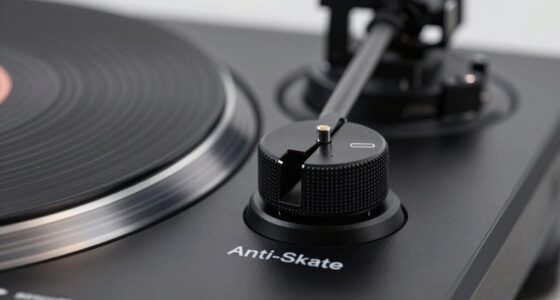

Static on records happens mainly due to dust, dirt, and improper handling that cause static buildup and crackling sounds. Environmental factors like low humidity, along with loose ground wires or misaligned cartridges, can also contribute. To reduce static, keep your records clean, store them properly, handle them by edges, and make sure your turntable is grounded. If you’re curious about more ways to improve sound quality and prevent static, you’ll find helpful tips below.
Key Takeaways
- Dust, dirt, and oils on records increase static buildup and cause crackling sounds during playback.
- Proper grounding of the turntable to a grounded outlet helps drain static charges and reduce noise.
- Using anti-static brushes, sleeves, and solutions minimizes static electricity and dust attraction.
- Maintaining optimal humidity levels in the environment prevents static buildup on records.
- Correct cartridge alignment and regular cleaning of contacts improve sound quality and reduce static-related issues.

Professional 4-Channel DJ Audio Mixer, Bluetooth Sound Board with USB MP3 Input & 48V Phantom Power for Karaoke, Podcasting, Live Streaming & Home Recording
【Audio device connection】The 4 Channel Audio Mixer is features USB audio interface, XLR, and 6.35mm jack, with a+48V...
As an affiliate, we earn on qualifying purchases.
Why Do Records Crackle and How Can I Fix It?

Ever wondered why your records sometimes crackle during playback? The culprit often comes down to grounding issues or improper cartridge alignment. Grounding problems create static and noise, so guarantee your turntable is properly grounded to reduce unwanted crackles. Check that the grounding wire is securely attached to your amplifier or receiver. Additionally, cartridge alignment plays an essential role; if the cartridge isn’t correctly aligned, it can cause uneven contact with the record’s grooves, leading to crackling sounds. Use a protractor to precisely align your cartridge and follow the manufacturer’s instructions. Regularly inspecting and adjusting these components can considerably improve sound quality, reducing static and crackles. Proper grounding and alignment are key steps toward a smooth, noise-free listening experience. Maintaining cartridge tracking and ensuring your turntable is in good condition also contribute significantly to minimizing static.

ALTO TX408 350W 8" Powered PA Speaker with Bluetooth, 2-Channel Mixer, Line Level for Mobile DJs and Musicians, for Small Venues, Rehearsals and Events
Sonic Might - The most compact in the TX Series, the TX408 loudspeaker is made for any live...
As an affiliate, we earn on qualifying purchases.
Common Causes of Static and Noise on Vinyl Records
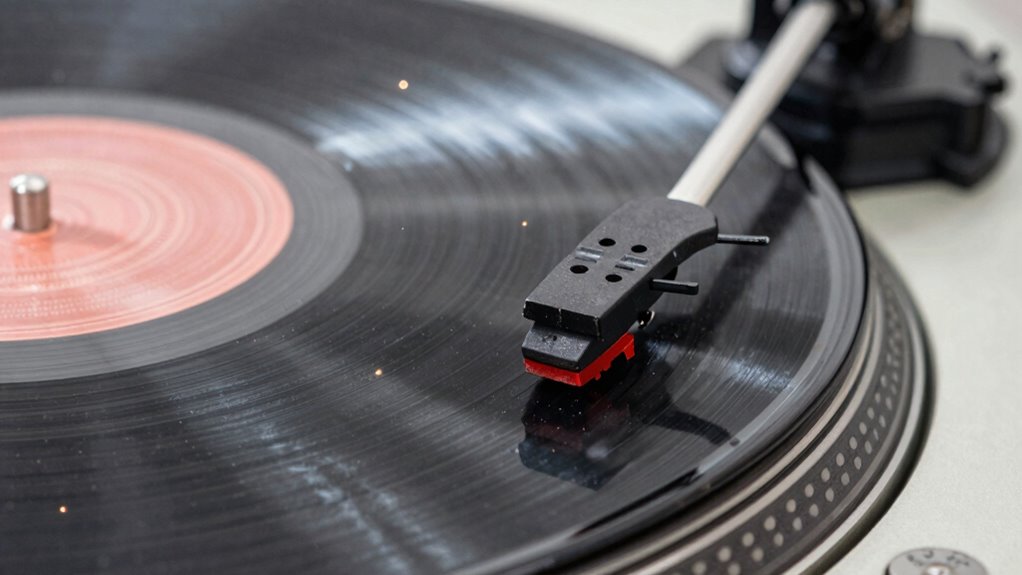
Dust and dirt on your records can cause unwanted noise and static. When these particles settle on the surface, they create friction that increases static buildup. Additionally, static electricity can accumulate from handling or the environment, making your records more prone to crackles and pops. Using anti-static record brushes or sprays can help reduce static and improve playback quality.
Dust and Dirt Accumulation
One of the most common causes of static and noise on vinyl records is the buildup of dust and dirt on the surface. Dust buildup occurs naturally over time, especially if you don’t regularly clean your records. When dust settles on the record surface, it can cause unwanted noise during playback and attract more dirt, making the problem worse. Proper record surface maintenance is essential to reduce static and noise. Before playing your records, always inspect and gently clean them with a soft, anti-static brush or cloth. Store your records in a dust-free environment, and handle them by the edges to prevent oils and dirt from transferring. Consistent cleaning and careful handling help keep your records clean, reducing static and improving sound quality. Regularly checking for silly tantrums or pet antics can also help prevent unexpected noises caused by external disturbances.
Static Electricity Build-up
Static electricity buildup occurs when friction causes electrons to transfer between the vinyl surface and surrounding materials, creating an imbalance of charge. This charge attracts dust and causes crackling noises during playback. To reduce static, use anti static mats on your turntable and workspace, which help dissipate static charges safely. Grounding techniques are also effective; connect a grounding wire from your turntable to a grounded outlet or a metal pipe to drain static buildup. Handling records by the edges and avoiding plastic sleeves that generate static can further prevent static charges. Regularly cleaning your records with anti-static solutions and keeping your environment humidity-controlled also minimizes static. Additionally, incorporating natural materials in your storage and handling can help reduce static buildup. Implementing these practices ensures your records stay free of static and deliver cleaner sound.

BOMGE Audio Mixer, Sound Board Mixing Console with 5 Channel Digital USB Bluetooth Echo Delay Effect, 48V Phantom Power Stereo DJ Mixers for Recording, Live Streaming, Podcasting (BM-05 5 canales)
***Mic Line + Stereo Line Inputs The Mini Mixing Console is great for multiple devices connectivity.3 XLR Lines...
As an affiliate, we earn on qualifying purchases.
How to Troubleshoot Your Turntable and Cartridge for Static

If you notice a crackling or popping noise when your turntable is playing, static might be the culprit. Start by checking grounding issues; a loose or disconnected ground wire can cause static buildup. Next, inspect your cartridge alignment—misalignment can increase static and distort sound. Ensure your cartridge is perfectly aligned and securely mounted. Sometimes, static results from improper grounding or misaligned cartridges that generate static electricity. Here’s a quick troubleshooting guide:
| Issue | Solution | Effect |
|---|---|---|
| Grounding issues | Reconnect or improve ground connection | Reduces static and hum |
| Cartridge misalignment | Adjust cartridge to proper alignment | Clearer sound, less static |
| Dirty contacts | Clean cartridge and tonearm contacts | Smooth static-free playback |
Address these points, and you’ll notice an immediate reduction in static noise.

Rockville RPM80BT 2400w Powered 8 Channel Mixer/Amplifier w/Bluetooth/EQ/Effects
POWERFUL 500W RMS OUTPUT: Delivers 500W RMS (250W x 2 @ 8 Ohm) and 2400W peak to drive...
As an affiliate, we earn on qualifying purchases.
Easy Tips to Reduce Static and Improve Sound Quality

Reducing static and enhancing sound quality on your turntable is simpler than you might think. Start by regularly performing record cleaning to remove dust and static buildup. Use a high-quality record brush or a cleaning solution designed for vinyl to keep your records pristine. When not in use, store records in anti static sleeves, which help prevent static charge from accumulating. Handling records by the edges also minimizes static transfer from your hands. Additionally, consider using a grounding wire on your turntable to reduce static electricity. These small steps make a noticeable difference, improving sound clarity and reducing unwanted noise. Proper grounding can further help in minimizing static buildup and enhancing overall sound quality. With consistent care, you’ll enjoy cleaner, crisper sound and a more satisfying listening experience.
Best Practices for Handling and Storing Vinyl to Prevent Static
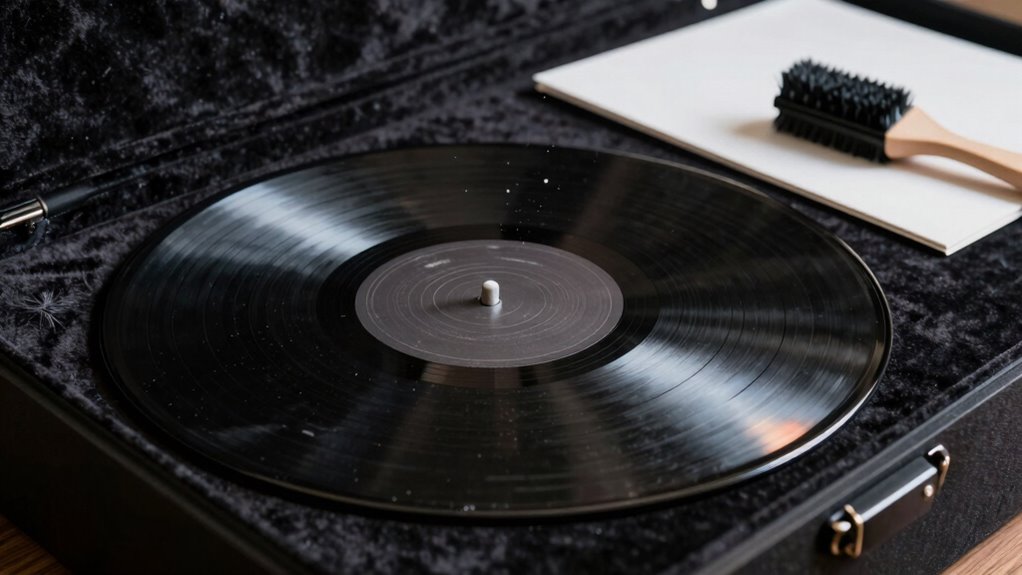
Proper handling and storage are key to preventing static buildup on your vinyl records. Use proper storage solutions like outer sleeves and sturdy inner sleeves to protect your records from dust and static. Store records vertically in a cool, dry place away from direct sunlight and electrical sources. When handling records, always hold them by the edges and label to avoid touching the grooves, which can generate static. Use clean, dry hands or wear cotton gloves if possible. Keep your storage area free of clutter and static-generating materials like plastic bags or synthetic fabrics. Regularly wipe storage shelves and storage containers to minimize dust. Additionally, understanding electrostatic charge can help you better control static buildup and protect your collection. Implementing these handling techniques and choosing appropriate storage solutions considerably reduces static and keeps your records sounding their best.
When to Get Your Vinyl Professionally Cleaned or Repaired
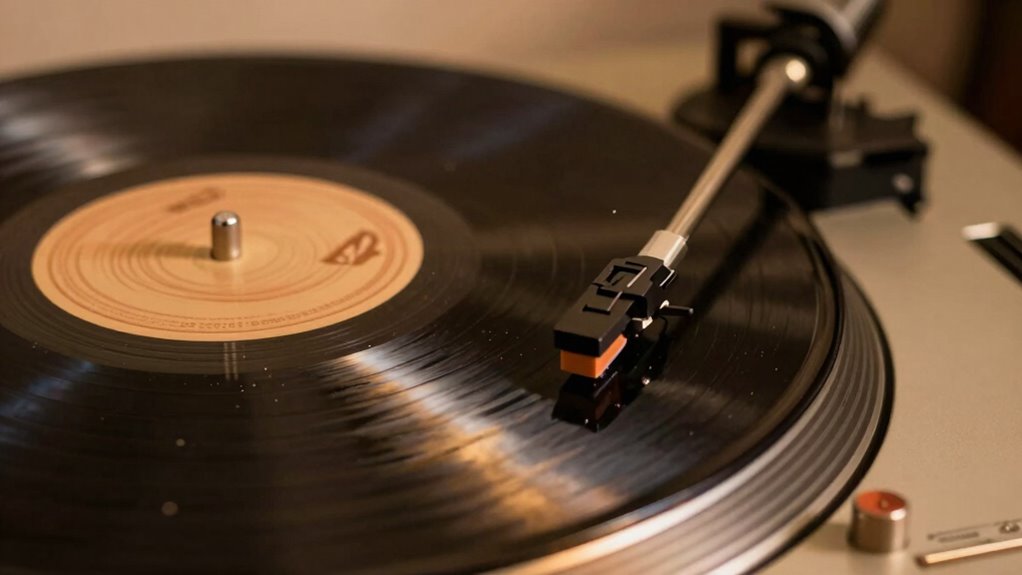
Knowing when to seek professional cleaning or repair for your vinyl records is essential to preserving their sound quality and longevity. If your records show persistent static, excessive surface noise, or skipping despite proper handling, it’s time to consider expert help. Professional repairs can address deeper issues like warping or damaged grooves that simple cleaning can’t fix. To determine if you need professional intervention, ask yourself:
Knowing when to seek professional cleaning or repair helps preserve your vinyl’s sound quality and lifespan.
- Is there visible dirt or grime that won’t remove with basic cleaning?
- Are you experiencing consistent pops, crackles, or skips?
- Has your record developed warps or cracks?
- Do you notice sound quality deterioration after regular record cleaning?
If you answered yes to any of these, investing in professional repairs or record cleaning can restore your vinyl’s ideal sound and extend its lifespan. Regular maintenance can also prevent auditory processing issues that affect sound quality over time.
Frequently Asked Questions
Can Static Damage My Vinyl Records Over Time?
Static generally won’t damage your vinyl records over time, but it can cause annoying pops and skips. To prevent this, use antistatic sleeves and regularly clean your records with proper record cleaning methods. These steps reduce static buildup, protect your records, and improve sound quality. While static isn’t harmful physically, minimizing it helps preserve your vinyl’s condition and ensures you enjoy clear, uninterrupted playback.
Does Room Humidity Affect Static Buildup on Records?
A stitch in time saves nine, and when it comes to static on records, humidity effects matter. Higher room humidity reduces static buildup, making static prevention easier. Low humidity, however, increases static, causing records to cling and produce pops. To keep static at bay, maintain moderate humidity levels—ideally around 45-50%. This simple step helps preserve your records and ensures smooth, crackle-free listening sessions.
Are Certain Record Materials More Prone to Static?
Yes, certain record materials are more prone to static buildup. For example, vinyl records with a matte or textured surface tend to attract more static than smoother, glossy finishes. Environmental factors like low humidity can worsen static issues regardless of material. You should consider using anti-static sleeves and maintaining proper humidity levels to reduce static, especially with sensitive or static-prone record materials.
Can Using a Humidifier Reduce Static on Records?
A gentle touch of a humidifier can indeed work wonders for static reduction on your records. By increasing moisture in the air, you harness the humidifier benefits to create a more conductive environment, reducing static buildup. Incorporate static reduction techniques such as maintaining proper humidity levels and handling records carefully. This approach keeps your listening experience pristine, allowing the music to flow without the interference of unwanted static interference.
Is Static More Common With New or Old Vinyl Records?
Static is more common with new vinyl records because they often have manufacturing differences that create a smoother surface, increasing static buildup. As records age, their surfaces develop tiny scratches and dust, which can reduce static. You can help minimize static on new records by properly cleaning them and storing them in anti-static sleeves, as aging naturally decreases static issues over time.
Conclusion
By understanding what causes static, troubleshooting effectively, and practicing good handling and storage, you can reduce noise and enjoy clearer sound. Addressing your turntable, cleaning your records, and controlling your environment all work together to prevent static buildup. Stay attentive, stay consistent, and stay proactive—keep your records pristine, your equipment optimized, and your listening experience uninterrupted. With these steps, static becomes a thing of the past, leaving you with pure, beautiful music every time.