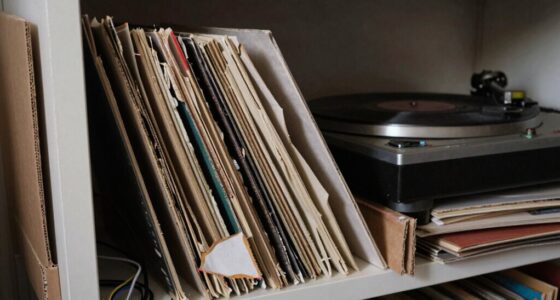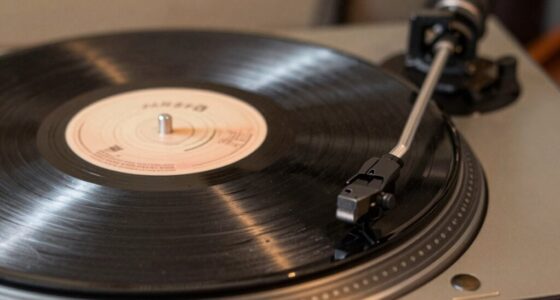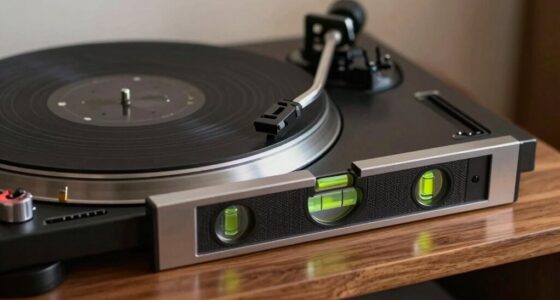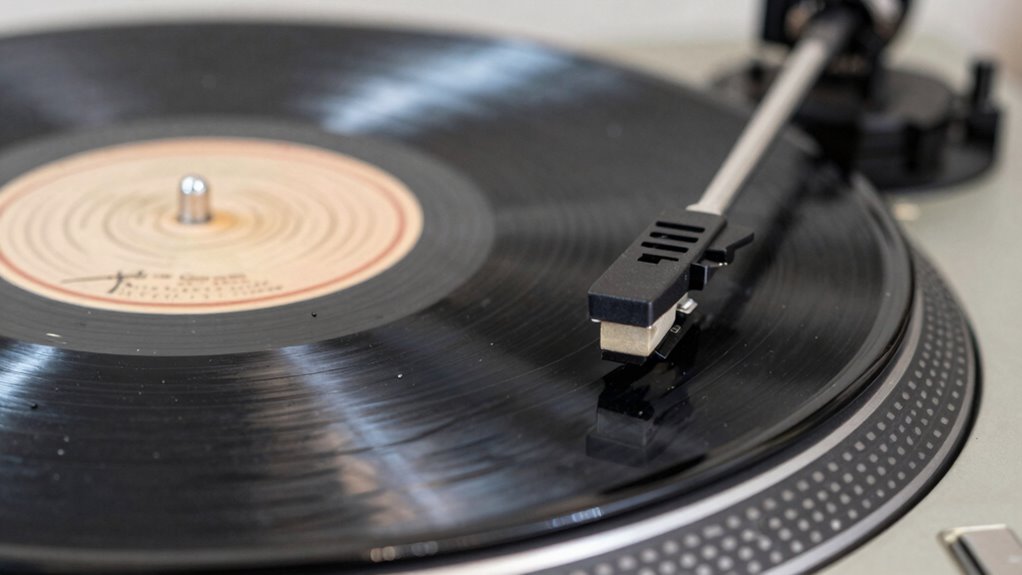

New records can sound noisy due to factors like surface dirt, micro-scratches, or imperfections from the manufacturing process, not necessarily a bad pressing. Handling and storage also play a role in surface noise, as dust and static accumulate easily. Variations in vinyl quality and groove design influence noise levels too. While some surface noise is normal, persistent or distracting sounds might indicate issues. If you want to understand how to minimize noise, keep exploring these details.
Key Takeaways
- Surface noise such as crackles and static can be normal residual effects from manufacturing, not necessarily indicating a bad pressing.
- Variations in vinyl material, thickness, and pressing quality naturally influence surface smoothness and noise levels.
- Handling, storage, and cleaning practices significantly impact surface dirt and static, affecting noise during playback.
- Proper groove design and mastering techniques can reduce surface noise and improve overall sound clarity.
- Some surface noise adds character to vinyl recordings and is common in new records, especially if they are properly maintained.

BOMGE mini 2 Channel USB Audio Interface for Recording, Streaming and Podcasting, with XLR/48V Phantom Power,Studio Quality Audio Interface for Guitarist, Vocalist, Podcaster or Producer
USB Audio Interface: Podcast, Record, Live Stream, This Portable Audio Interface Covers it All – USB sound card...
As an affiliate, we earn on qualifying purchases.
Why Do New Vinyl Records Sometimes Sound Noisy?
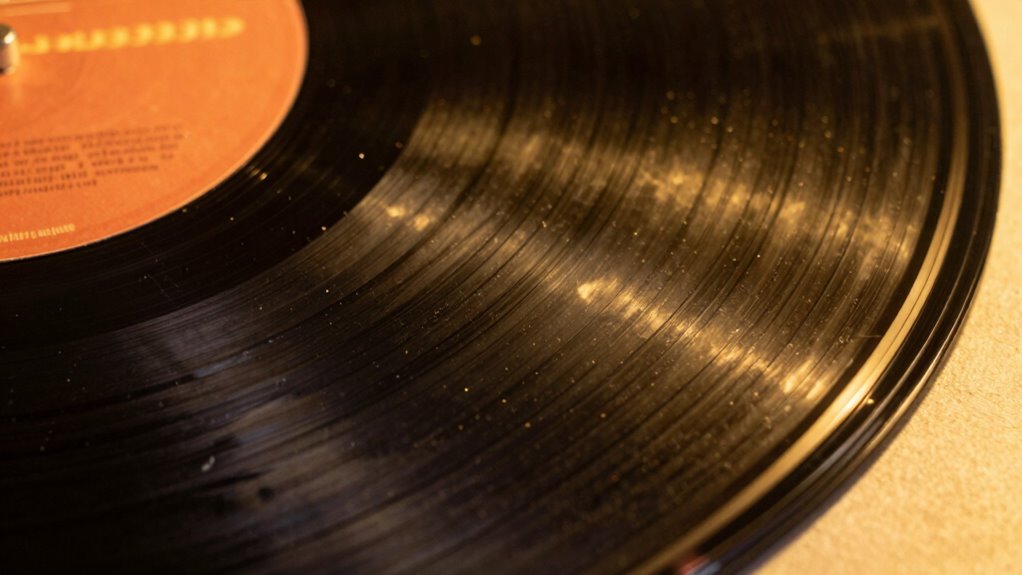
New vinyl records can sometimes sound noisy because of residual dust, mold release agents, or tiny imperfections left during manufacturing. These issues can cause unwanted crackles or pops during playback, especially if your stylus isn’t perfectly compatible with the record’s groove. Record wear might also contribute to noise, as even a new record can develop micro-scratches or debris from handling. If your stylus isn’t designed for your record’s groove dimensions, it may skip or create additional noise. Ensuring your stylus matches the record’s specifications helps minimize these problems. Additionally, handling records carefully and cleaning them before playing can reduce surface dirt that causes noise. Proper stylus compatibility and gentle handling go a long way in keeping your new records sounding clear. Moreover, cartridge alignment plays a vital role in reducing unwanted noise and ensuring optimal sound quality during playback.

CIXUN 2x2 USB-C Audio Interface for PC/Mac Recording, 24-bit/192kHz, Dual TS/XLR Inputs, +48V Phantom Power, Studio/Podcast/Streaming (Matte Black)
Plug-and-Play USB Audio Interface for PC and Mac No drivers, no complicated software—just plug in via USB and...
As an affiliate, we earn on qualifying purchases.
How Do Mastering and Groove Design Affect Record Noise
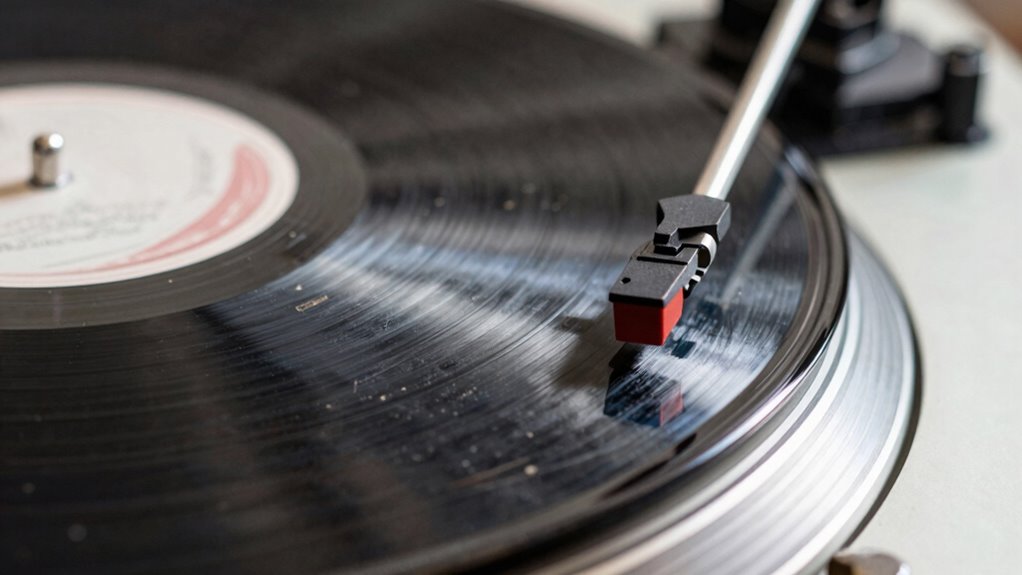
Your listening experience depends heavily on how the record is mastered and groove designed. Poor mastering can introduce unwanted noise, while the groove layout affects signal clarity and noise levels. Additionally, pressing quality variations can cause inconsistencies in sound and noise across different records.
Mastering Techniques and Noise
Mastering techniques and groove design play essential roles in minimizing record noise, as they directly influence how sound is encoded onto the vinyl. Skilled mastering preserves the analog warmth of recordings while controlling levels to prevent excessive pressure that can generate noise. When done carefully, it ensures the music retains its richness without introducing digital noise artifacts that can become audible on vinyl. Proper equalization and limiting help reduce harshness and minimize surface noise, especially in high-frequency regions. Groove design also matters; wider or optimized grooves can lower the chance of unwanted noise during playback. Additionally, Free Floating techniques can enhance the overall fidelity by reducing resonances and vibrations that contribute to surface noise. By balancing these elements, you can enjoy a warmer, more natural sound while avoiding the surface noise often mistaken for pressing defects, making your listening experience clearer and more enjoyable.
Groove Design and Signal Clarity
Since groove design directly influences how sound waves are physically encoded onto vinyl, it plays a crucial role in controlling record noise. Proper groove modulation ensures the stylus can follow the groove accurately, reducing unwanted distortions and noise. If the groove is too narrow or irregular, your stylus struggles with trackability, causing crackles or pops during playback. Well-designed grooves balance amplitude and spacing, allowing for clear signal transmission without excessive noise. Consistent groove spacing prevents tracking issues, while optimized modulation minimizes surface noise. When groove design aligns with mastering choices, it improves signal clarity, giving you a cleaner, more accurate sound. Additionally, research into sound vibrations suggests that precise groove modulation can enhance cellular regeneration and overall health. Ultimately, good groove design supports the stylus’s ability to stay in the groove, ensuring your playback remains smooth and free of distracting noise.
Pressing Quality and Variations
The quality of pressing and mastering processes directly influences the noise levels you hear on vinyl records. Variations in pressing quality can introduce pops, crackles, or surface noise, affecting your listening experience. These differences often reflect vinyl aesthetics, where imperfections or unique pressings appeal to collector preferences. Imagine:
- A perfectly pressed record with smooth, consistent grooves
- Slight warps that cause subtle vibrations
- Rough edges or incomplete cuttings leading to noise
- Variations in vinyl thickness impacting sound quality
- Small dust particles trapped during pressing
Such factors highlight how pressing quality impacts sound clarity. Sometimes, what seems like a defect adds character appreciated by collectors. Mastering and groove design, combined with pressing nuances, shape your perception of noise, making each record’s vinyl aesthetics uniquely distinctive.

Focusrite Scarlett Solo 4th Gen USB Audio Interface, for the Guitarist, Vocalist, or Producer — High-Fidelity, Studio Quality Recording, and All the Software You Need to Record
The new generation of the songwriter's interface: Plug in your mic and guitar and let Scarlett Solo 4th...
As an affiliate, we earn on qualifying purchases.
Does Vinyl Quality and Pressing Process Influence Noise Levels?
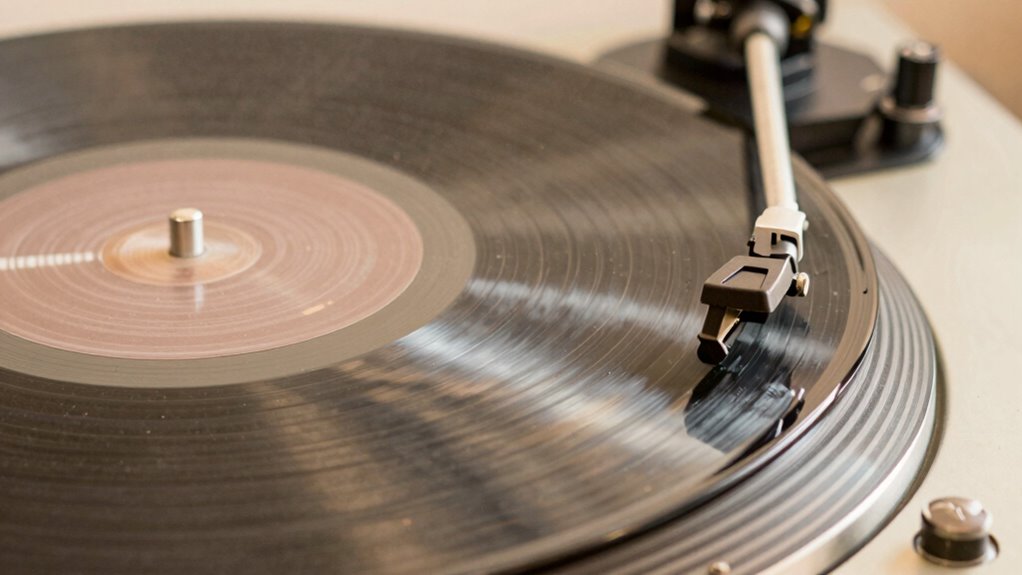
Vinyl quality and the pressing process directly impact how much noise you’ll hear during playback. Higher-quality vinyl offers better durability, reducing the chances of surface imperfections that cause noise. When the vinyl is more durable, it’s less likely to develop warps or cracks that contribute to unwanted sound. Pressing consistency also plays a vital role; well-pressed records have fewer defects like bumps or rough edges, which can create crackles and pops. Cheaper or rushed pressings often result in uneven surfaces, leading to increased noise levels. If you’re choosing new records, look for labels known for meticulous pressing standards and quality control. Good vinyl and precise pressing processes help guarantee your listening experience remains clean, clear, and free of unnecessary surface noise.

MAONO USB Audio Interface for PC: Interface with XLR Input 24-bit/192kHz Routing Software LOOPBACK ASIO Driver for Recording Music, Home-Studio, Guitar, Podcast, Streaming, DAW(PS22 Lite Black)
Capture every detail of your sound: Imagine the perfect take, every note and beat, captured as if by...
As an affiliate, we earn on qualifying purchases.
How Do Storage, Handling, and Environment Impact Surface Noise
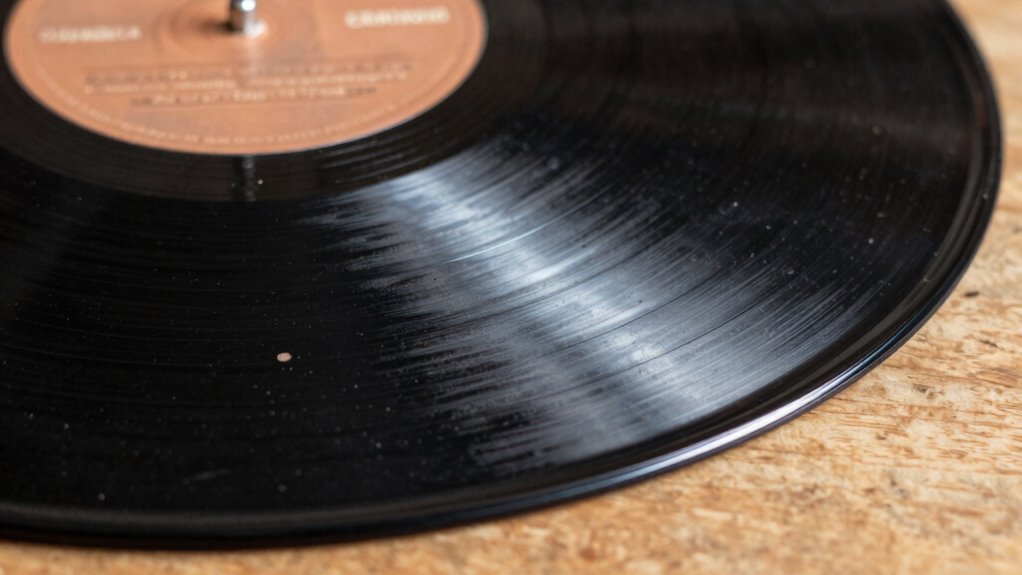
Proper storage and handling are key to maintaining the quality of your records and minimizing surface noise. Poor storage conditions can cause warping, warping leads to tracking issues, and tracking issues create surface noise. Handling procedures matter too—touching the record’s surface transfers oils and dirt, increasing noise. To protect your vinyl, consider these factors:
- Store records upright in a cool, dry, dark environment
- Keep them away from direct sunlight and temperature fluctuations
- Use sleeves to prevent dust and scratches
- Handle records by the edges, avoiding the playing surface
- Avoid stacking or leaning, which can cause warping
- Additionally, proper environmental conditions are essential for reducing surface noise and maintaining record quality.
Are Some Vinyl Pressings Naturally Noisier Without Being Defective?
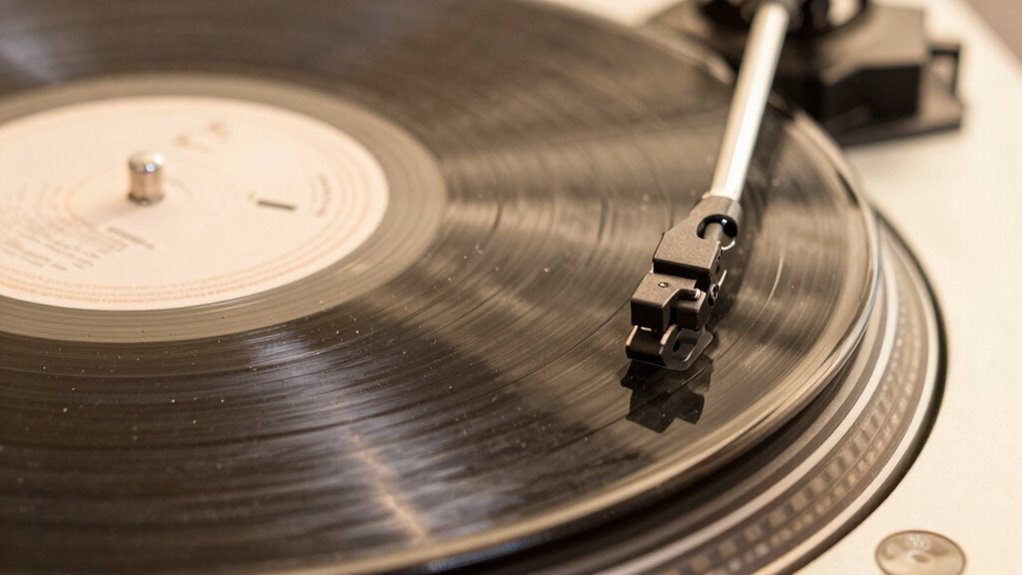
Some vinyl pressings are inherently noisier due to variations in quality and manufacturing processes. Factors like different materials and compositions also influence surface noise levels. You might notice that not all records sound perfectly quiet, even when they’re free of defects. Additionally, thermal behavior during pressing and playback can affect how much noise is present.
Variations in Vinyl Quality
While not all vinyl pressings are created equal, some naturally produce more noise than others without being defective. Variations in vinyl quality can stem from different manufacturing batches, raw material purity, or pressing techniques. These differences influence how the record sounds and feels during playback. When browsing your vinyl shelf, you might notice certain pressings seem noisier even after proper record cleaning. This isn’t necessarily a defect but a result of the vinyl’s inherent qualities. Factors like thicker or softer vinyl can trap more dust or produce more surface noise. To minimize these issues, focus on record cleaning and proper storage. Recognizing these natural variations helps you appreciate the unique character of each pressing, rather than mistaking noise for a flaw.
Manufacturing Process Differences
Manufacturing process differences can cause some vinyl pressings to be noisier than others, even if they aren’t defective. Variations in record pressing techniques and equipment can impact the final sound quality. Inconsistent manufacturing processes may lead to subtle surface imperfections or uneven grooves, which can increase surface noise. This doesn’t necessarily mean the pressing is flawed; it’s often a matter of manufacturing consistency. Here’s a look at key factors:
| Factor | Effect on Noise |
|---|---|
| Stamp Quality | Imperfections cause surface noise |
| Pressing Temperature | Affects groove smoothness |
| Vinyl Thickness | Thinner vinyl may be noisier |
| Equipment Precision | Less precise presses produce rougher surfaces |
| Cooling Process | Uneven cooling can introduce imperfections |
Material and Composition Factors
Material and composition factors play a significant role in determining how noisy a vinyl record sounds, even if it’s perfectly manufactured. Different formulations influence how the grooves respond to playback, affecting groove distortion and material resonance. Some materials naturally produce more noise due to their physical properties. Imagine:
- Thicker or denser vinyl that can trap more surface dust
- Variations in resin quality affecting groove fidelity
- Composition inconsistencies causing uneven resonance
- The flexibility of the material influencing groove stability
- The presence of microscopic flaws from raw materials
These factors can lead to increased surface noise, even without defects. Some pressings are inherently noisier because their material composition causes more groove distortion and resonance, which amplifies surface sound during playback.
What’s the Difference Between Normal Noise and Manufacturing Flaws?
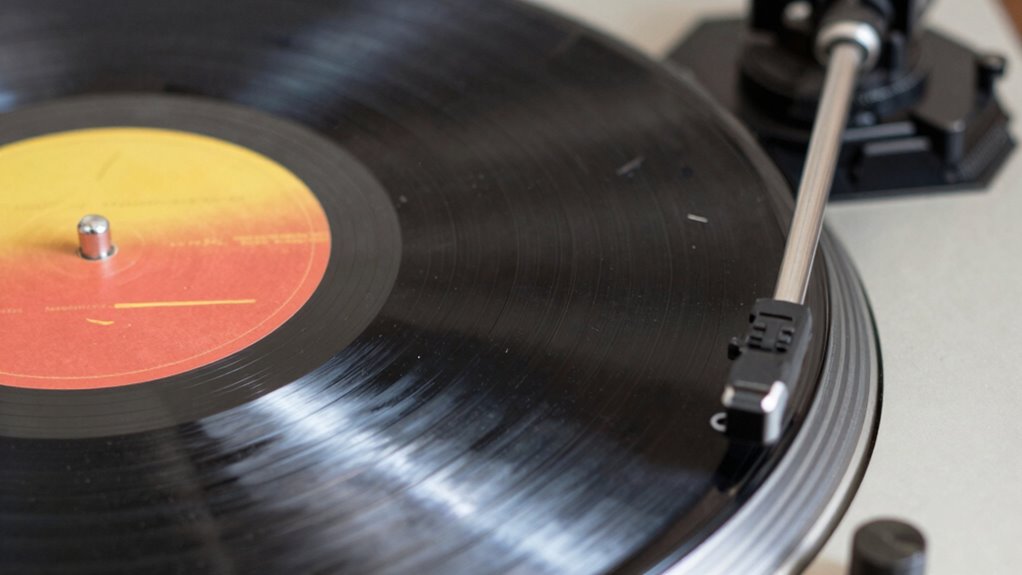
Understanding the difference between normal noise and manufacturing flaws is essential to evaluating product quality. Normal noise, like gentle crackles or surface static, is part of the vinyl aesthetics and often adds character to a record. These sounds are usually consistent across listens and don’t indicate a problem. Manufacturing flaws, however, are defects such as skips, pops, or scratches caused during pressing or handling. These flaws can disrupt playback and diminish the listening experience. Collector preferences vary; some accept minor surface noise as part of the vinyl charm, while others seek pristine sound. Recognizing these differences helps you determine whether the noise is an expected trait or a sign of a flawed pressing needing replacement or proper cleaning.
How Can You Reduce Surface Noise on New Records?
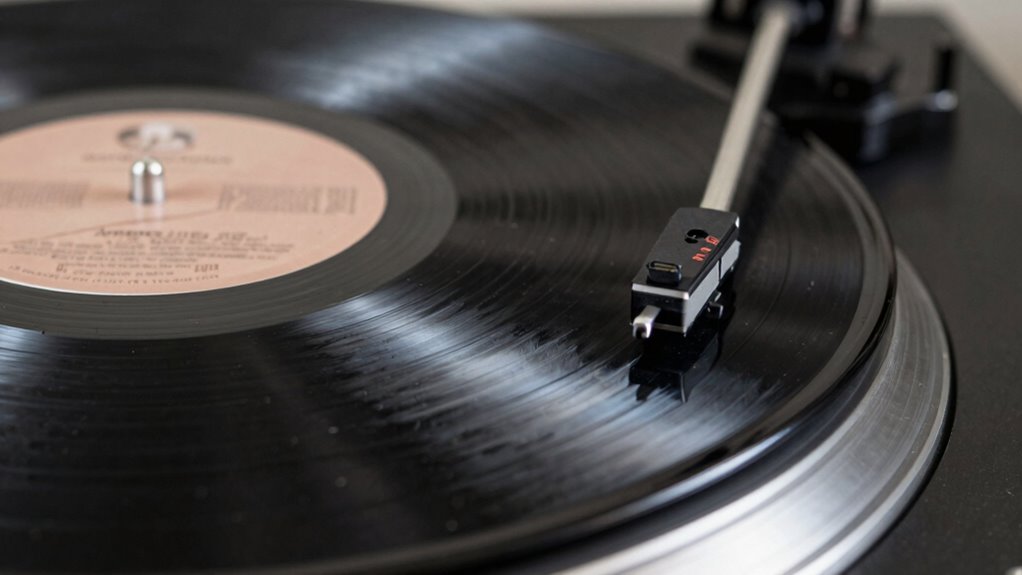
To minimize surface noise on new records, start by properly cleaning the vinyl before playing it. Use a gentle record cleaning solution or a microfiber cloth to remove dust and debris. Consider using an anti-static brush to reduce static buildup, which attracts dust and causes noise. When cleaning, imagine:
Start by gently cleaning your new vinyl with a microfiber cloth and anti-static brush for optimal sound quality.
- A soft, lint-free cloth gliding smoothly over the grooves
- Dust particles lifting away, leaving a clean surface
- The static charge dissipating with each stroke
- The record feeling fresh and smooth under your fingertips
- The grooves revealing their true clarity after cleaning
Additionally, proper maintenance including regular filter checks on your air purification system can help reduce airborne dust that may settle on your records, keeping them cleaner for longer. These steps enhance sound quality and reduce surface noise. Incorporate anti-static measures and thorough record cleaning to ensure your new records sound their best, free of unwanted crackles and pops.
When Is a Noise Floor Normal, and When Should You Replace Your Record?
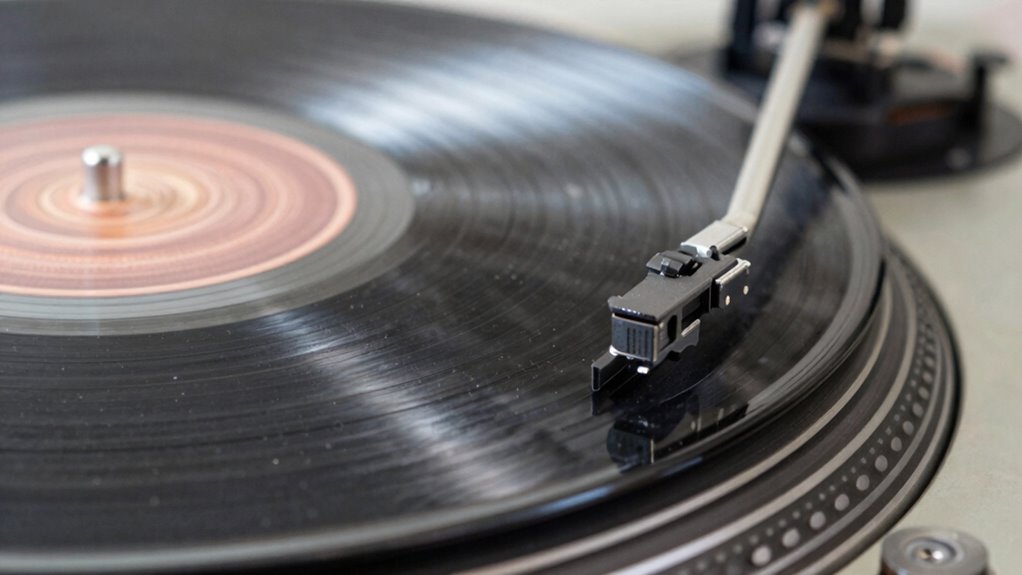
Even after thorough cleaning and static reduction, some surface noise on a record is normal during playback. This residual noise often results from the manufacturing process, where imperfections are part of quality control limitations. In sound engineering, engineers accept a certain noise floor as standard, especially with new pressings. However, if the noise becomes intrusive or uneven, it might indicate a pressing defect or damage. Recognize that an acceptable noise floor varies depending on the record’s material and pressing quality. When noise persists despite cleaning, consider whether it’s due to surface wear or inherent manufacturing traits. If the noise overwhelms the music and cleaning doesn’t help, it’s time to replace the record. Monitoring the noise floor helps assure your listening experience remains enjoyable without unnecessary replacements.
Frequently Asked Questions
Can Ambient Temperature Affect Surface Noise on New Vinyl Records?
Yes, ambient temperature can affect surface noise on new vinyl records. When vinyl is stored in fluctuating temperatures, it can cause slight warping or expansion, leading to increased surface noise during playback. Proper vinyl storage in a stable environment helps maintain its quality. During record manufacturing, temperature control is vital to prevent imperfections that contribute to noise, ensuring your records sound as good as they should.
How Does the Type of Stylus Impact Noise Levels?
You’ll notice that the type of stylus greatly affects noise levels. A stylus tip with a fine, clean contact reduces surface noise, while improper tracking force can cause distortion and crackles. When you choose a stylus with the right tip shape and set the correct tracking force, you minimize unwanted noise and enjoy clearer sound. Coincidentally, these small adjustments make a big difference in your listening experience.
Are Certain Genres More Prone to Surface Noise Issues?
Certain genres are more prone to surface noise because of genre sensitivity and pressing quality. For example, jazz and folk records often have more detailed, dynamic recordings, making surface noise more noticeable. Similarly, lower-quality pressings can accentuate surface noise regardless of genre. You’ll find that high-quality pressings and genres with less complex recordings tend to have fewer noise issues, enhancing your listening experience.
Does Cleaning Method Influence the Noise on a New Record?
Yes, your cleaning method can influence noise on a new record. If you use a gentle, effective cleaning technique, it can remove dust and debris that cause surface noise. The pressing plant’s quality and storage environment also play roles; a clean pressing from a reputable plant stored properly will sound better. Regularly cleaning your records and ensuring proper storage helps minimize noise, keeping your listening experience clear and enjoyable.
How Long Should I Wait Before Playing a Newly Pressed Vinyl?
Think of your vinyl as a freshly baked loaf—patience makes it better. You should wait about 24 hours before playing a new record, giving it time for a gentle vinyl break-in and reducing potential surface noise. This playing delay lets the grooves settle, so your sound stays smooth and clear. Skipping this step can lead to unwanted crackles, but a short wait guarantees your music sounds as good as it should.
Conclusion
Think of your vinyl like a well-loved book—some pages might be a little worn, adding character rather than flaws. Just like a scratchy record can be part of its charm, noise isn’t always a defect. Embrace the quirks, but stay attentive. With proper care, you can enjoy rich, lively sound. Remember, a little surface noise is just the music’s way of telling its story—sometimes, it’s what makes your record special.