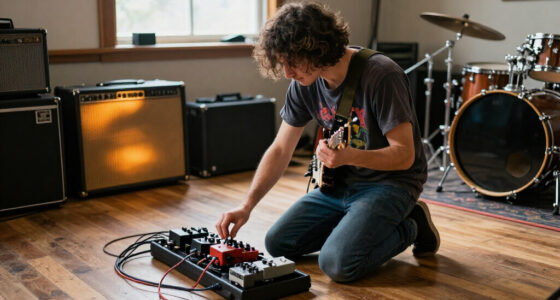
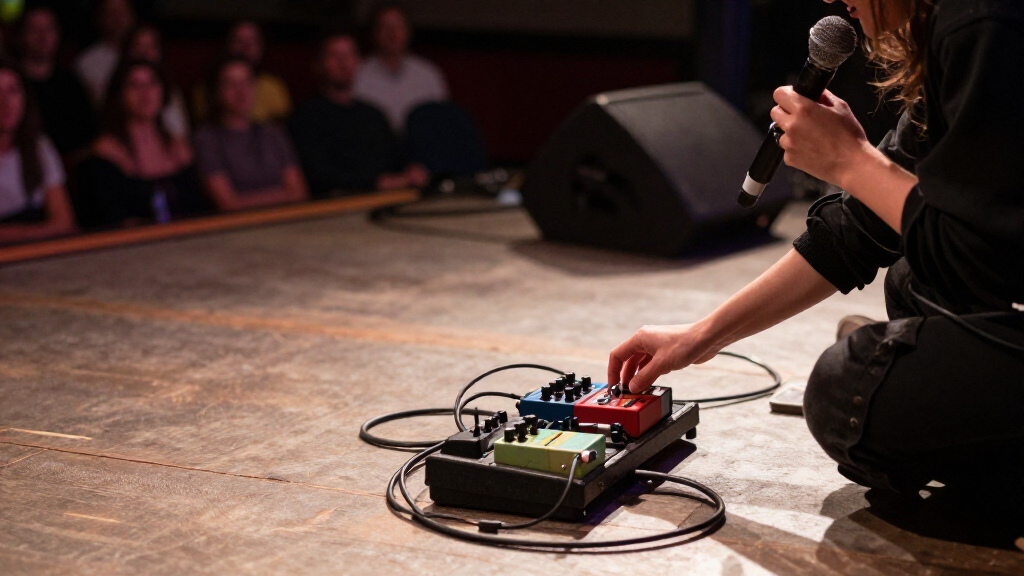

For most singers who want one flexible pedal for live vocals, I would start with the BOSS VE-22, while the HeadRush VX5 stands out for singers who want AutoTune-style correction and the BOSS VE-1 for straightforward vocal echo. The main choice is between a compact pedal with a few dependable effects and a larger processor with more sounds, controls, and setup demands. Harmony, pitch correction, looping, and guitar input can each shape the right pick, but not every singer needs all of them. My roundup compares 15 options by their fit for different performance styles, levels of control, and setup needs. Read on for the full breakdown and help matching a pedal to your voice and rig.

Get audio and creator gear delivered free with Prime
- Fast, free delivery on millions of items
- Prime Video, Amazon Music and more included
- Member-only deals all year
Complete the kit


Key Takeaways
- The BOSS VE-22 is the strongest all-round choice for singers who want a broad set of vocal tools in one performance-oriented unit, while simpler pedals suit singers who only need one or two effects.
- Harmony pedals differ in how much control they offer. TC Helicon Harmony Singer and Harmony Singer 2 focus on accessible harmony, while the BOSS VE-2 and FLAMMA FV04 offer alternatives for singers seeking a dedicated harmony workflow.
- Auto-tune-style correction is a separate buying priority from harmony. HeadRush VX5 and MOOER MVP1 suit singers prioritizing pitch correction, while the BOSS VE-1 centers on echo rather than a broad processing suite.
- Acoustic performers should weigh guitar integration. The BOSS VE-8 is designed to handle vocals and acoustic guitar together, a more relevant fit for singer-guitarists than a voice-only stompbox.
- More effects can mean more setup and operating complexity. The MOOER VE200 and BOSS VE-22 offer broader processing than compact choices such as the FLAMMA FV02, but buyers should match that extra control to their actual stage needs.
| Audota AVE-100 Vocal Effects Processor with Pitch Correction, Harmony, Reverb, Delay, and Loop Recorder |  | Best Feature Mix for Layering | Brand and model: Audota AVE-100 | Effects: Harmony, loop recording, pitch correction, reverb, and delay | Microphone input: XLR with 48V phantom power | VIEW LATEST PRICE | See Our Full Breakdown |
| BOSS VE-1 Vocal Echo Effects Processor |  | Best for Simple Vocal Ambience | Brand and model: BOSS VE-1 | Effects: Seven ambience types, double-tracking, enhancement, and pitch correction | Controls: Knobs | VIEW LATEST PRICE | See Our Full Breakdown |
| FLAMMA FV02 Vocal Doubling Effects Pedal |  | Best for Vocal Thickening | Brand and model: FLAMMA FV02 | Effects: Vocal doubling, chorus, and reverb | Vocal modes: Warm, Bright, and Normal | VIEW LATEST PRICE | See Our Full Breakdown |
| HeadRush VX5 Vocal Effects Pedal with AutoTune |  | Best Premium Performance Rig | Brand and model: HeadRush VX5 | Pitch correction: Antares AutoTune with Retune Speed and Humanize controls | Effects: Compression, reverb, delay, chorus, and lo-fi | VIEW LATEST PRICE | See Our Full Breakdown |
| MOOER MVP1 Autuner Vocal Effects Processor |  | Best for Adjustable Pitch Correction | Brand and model: MOOER MVP1 | Pitch correction: Adjustable from 0–100 | Effects: Delay and reverb | VIEW LATEST PRICE | See Our Full Breakdown |
| TC Helicon Harmony Singer Vocal Effects Stompbox |  | Best for Guitar-Guided Harmony | Model: Harmony Singer 2 | Harmony voices: One to two | Effects: Vocal harmony, reverb, Adaptive Tone | VIEW LATEST PRICE | See Our Full Breakdown |
| MOOER VE200 Vocal Multi Effects Processor with AI StemLab and Touch Screen |  | Best Feature-Rich Vocal Workstation | Effects: Pitch correction, harmony, vocoder, modulation, delay, reverb, looper | Display: 1.28-inch color touchscreen | Key feature: Smart key learning | VIEW LATEST PRICE | See Our Full Breakdown |
| BOSS VE-22 Vocal Performer Multi-Effects Processor |  | Best Overall for Versatile Vocal Processing | Effects: Compressor, EQ, delay, echo, reverb, pitch correction, harmony, doubling, specialty effects | Controls: Knob, button, and footswitch | Power: Battery powered; 9 V, 260 mA | VIEW LATEST PRICE | See Our Full Breakdown |
| FLAMMA FV03 Vocal Effects Pedal with Voice Changing, Delay, and Reverb |  | Best for Character Voice Effects | Model: FV03 | Voice effects: Male, Female, Baby, and three Robot effects | Reverb: Three options | VIEW LATEST PRICE | See Our Full Breakdown |
| BOSS VE-2 Vocal Harmonist Effects Processor |  | Best for Simple Harmony Without Guitar | Model: VE-2 | Harmonies: 24 | Effects: Reverb and delay | VIEW LATEST PRICE | See Our Full Breakdown |
| FLAMMA FV01 Vocal Effects Processor with Pitch Correction |  | Best Compact Pitch-Correction Pick | Model: FV01 | Effects: Pitch correction and delay | Tone modes: Warm, Bright, Normal | VIEW LATEST PRICE | See Our Full Breakdown |
| TC Electronic Harmony Singer 2 Vocal Effects Pedal |  | Best for Guitar-Guided Harmonies | Model: HARMONYSINGER2 | Effects: Harmony and reverb | Harmony styles: 8 | VIEW LATEST PRICE | See Our Full Breakdown |
| BOSS VE-8 Acoustic Singer Preamp and Effects Processor |  | Best All-in-One for Acoustic Singer-Guitarists | Power: 9V; corded electric | Current: 30mA | Signal format: Analog | VIEW LATEST PRICE | See Our Full Breakdown |
| FLAMMA FV04 Vocal Harmony Effects Pedal | 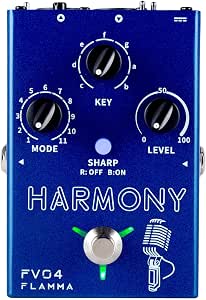 | Best Value for Harmony Variety | Harmony modes: 11 | Inputs: Microphone and guitar | Effects: Harmony and reverb | VIEW LATEST PRICE | See Our Full Breakdown |
| TC-Helicon Mic Mechanic 2 Vocal Effects Pedal |  | Best Minimal Vocal-Enhancement Option | Model: Mic Mechanic 2 | Model number: VTMM2d1 | Audio signal format: Analog | VIEW LATEST PRICE | See Our Full Breakdown |
| vocal effects pedals for singer | Effects | Dimensions | Power | Weight |
|---|---|---|---|---|
| Audota AVE-100 Vocal Effects P | Harmony, loop recording, pitch correction, reverb, and delay | — | Battery powered; 9 V, 500 mA | 320 g |
| BOSS VE-1 Vocal Echo Effects P | Seven ambience types, double-tracking, enhancement, and pitch correction | 9 x 5 x 7 inches | — | 599 g |
| FLAMMA FV02 Vocal Doubling Eff | Vocal doubling, chorus, and reverb | 4.9 x 3.4 x 2.4 inches | Corded electric; 9 V, 500 mA | 12.8 ounces |
| HeadRush VX5 Vocal Effects Ped | Compression, reverb, delay, chorus, and lo-fi | — | — | — |
| MOOER MVP1 Autuner Vocal Effec | Delay and reverb | 6.02 x 5 x 2.95 inches | — | — |
| TC Helicon Harmony Singer Voca | Vocal harmony, reverb, Adaptive Tone | 6.4 x 5 x 2.85 in | Battery powered; 9 V | 1.1 lb |
| MOOER VE200 Vocal Multi Effect | Pitch correction, harmony, vocoder, modulation, delay, reverb, looper | 5.87 x 4.56 x 2.21 in | Battery powered; 9 V, 1.5 A | 0.41 kg |
| BOSS VE-22 Vocal Performer Mul | Compressor, EQ, delay, echo, reverb, pitch correction, harmony, doubling, specialty effects | 8.72 x 5.72 x 2.56 in | Battery powered; 9 V, 260 mA | 16 oz |
| FLAMMA FV03 Vocal Effects Peda | — | 3.31 x 2.36 x 4.92 in | Corded electric; 9 V | — |
| BOSS VE-2 Vocal Harmonist Effe | Reverb and delay | 8.9 x 6.6 x 4.55 in | Four AA batteries | 16 oz |
| FLAMMA FV01 Vocal Effects Proc | Pitch correction and delay | 4.9 x 3.4 x 2.4 inches | 9V, 500mA; corded electric | 0.37 kg |
| TC Electronic Harmony Singer 2 | Harmony and reverb | 6.4 x 4.8 x 3 inches | 9V; battery powered | — |
| BOSS VE-8 Acoustic Singer Prea | Distortion, reverb, chorus, and radio voice effect | 13.3 x 8.9 x 5.1 inches | 9V; corded electric | 1.5 kg |
| FLAMMA FV04 Vocal Harmony Effe | Harmony and reverb | 3.4 x 2.4 x 4.9 inches | — | 12.8 ounces |
| TC-Helicon Mic Mechanic 2 Voca | — | 3 x 5 x 6 inches | — | — |
More Details on Our Top Picks
Audota AVE-100 Vocal Effects Processor with Pitch Correction, Harmony, Reverb, Delay, and Loop Recorder
The AVE-100 puts pitch correction, harmony, ambience, and looping in one unit, making it a flexible choice for solo singers who want more than polish on a live vocal. Its KeyLearn feature detects the backing track’s key, which can make harmony setup less involved, while the loop recorder lets a performer build vocal layers without a separate looper. Compared with the BOSS VE-1, which concentrates on ambience and vocal enhancement, the Audota offers a broader toolkit for arranging a performance. That range comes with some uncertainty: the available details do not state loop capacity or recording time, so buyers cannot judge how much layering it supports. It also runs on battery power, which means power management belongs in the gig plan.
Pros:- Combines pitch correction, harmony, reverb, and delay
- KeyLearn detects the backing track’s key for harmony use
- Built-in loop recorder supports vocal layering
- XLR input with 48V phantom power accommodates condenser microphones
Cons:- Battery-powered operation requires attention to power during performances
- Loop recording time and capacity are not specified
- The listed knob controls provide less detail about hands-on adjustment than a control layout with dedicated parameters
Best for: Solo performers and streamers who want pitch correction, key-aware harmony, and vocal looping in a single pedal.
Not ideal for: Singers who need clearly specified loop duration or prefer a mains-powered setup for long performances.
- Brand and model:Audota AVE-100
- Effects:Harmony, loop recording, pitch correction, reverb, and delay
- Microphone input:XLR with 48V phantom power
- Instrument input:6.35 mm
- Other interfaces:1/4-inch audio, 3.5 mm audio, USB Type-C
- Power:Battery powered; 9 V, 500 mA
- Weight:320 g
- Warranty:1 year
Our verdict“Choose the AVE-100 if you want a broad vocal toolkit with looping and automatic key detection, and can accept unclear loop limits and battery management.”
BOSS VE-1 Vocal Echo Effects Processor
The VE-1 is the straightforward pick here for singers who mainly want a more finished vocal, rather than a pedal built around harmony or looping. Seven ambience types give the singer options for shaping space, while double-tracking, enhancement, and pitch correction add useful polish without requiring a large effects setup. Its knob-based controls suit quick adjustments at practice or during a performance. Compared with the Audota AVE-100, it gives up a loop recorder and dedicated harmony features in exchange for a more focused approach to vocal ambience. That simplicity is also its limit: singers seeking layered arrangements or broad effect combinations may outgrow it. The supplied data also lists an unusual 1 V specification, so I would check power requirements with the seller or documentation before relying on that figure.
Pros:- Seven adjustable ambience types offer several ways to shape vocal space
- Double-tracking can thicken a vocal without adding another singer
- Enhancement and pitch correction add practical vocal-focused processing
- Knob controls keep sound shaping direct
Cons:- Does not list vocal harmony or loop recording
- The stated 1 V voltage specification is unclear
- Its focused effects set is less versatile for layered arrangements than the Audota AVE-100
Best for: Singers who want accessible reverb-style ambience, double-tracking, and light pitch correction without a complex vocal effects rig.
Not ideal for: Performers who need vocal harmony, looping, or a clearly documented power specification before buying.
- Brand and model:BOSS VE-1
- Effects:Seven ambience types, double-tracking, enhancement, and pitch correction
- Controls:Knobs
- Power source:Battery powered; AC power adapter and batteries listed as included
- Listed voltage and current:1 V; 300 mA
- Interface:USB
- Weight:599 g
- Dimensions:9 x 5 x 7 inches
Our verdict“Pick the VE-1 if ease of use and vocal ambience matter more than harmony, looping, or a wider effects palette.”
FLAMMA FV02 Vocal Doubling Effects Pedal
The FV02 focuses on making a vocal sound fuller through doubling and chorus, with reverb available for added space. Its Warm, Bright, and Normal modes give singers a simple starting point for matching the effect to a voice, while separate or mixed outputs can help keep microphone and guitar signals organized. That makes it a more targeted choice than the Audota AVE-100, which adds pitch correction, key detection, and looping rather than centering on vocal thickening. The FV02 does not list pitch correction or harmony generation, so it will not cover those needs. It also requires corded power, which is less convenient for a minimal setup, and the supplied description is unclear about output-mode wording. Buyers who need precise routing should verify the connections before choosing it.
Pros:- Vocal doubling and chorus are suited to thickening a lead vocal
- Warm, Bright, and Normal modes provide distinct vocal starting points
- 48V phantom power supports condenser microphones
- Offers separate or mixed signal output options for microphone and guitar
Cons:- Does not list pitch correction or harmony generation
- Corded power limits flexibility where a power outlet is not convenient
- Output-mode wording in the product description is unclear
Best for: Singers who want a thicker, chorus-like vocal sound and need to route a microphone and guitar through one compact pedal.
Not ideal for: Vocalists looking for pitch correction, generated harmonies, or a battery-powered option.
- Brand and model:FLAMMA FV02
- Effects:Vocal doubling, chorus, and reverb
- Vocal modes:Warm, Bright, and Normal
- Inputs:Microphone, guitar, and line-in
- Phantom power:48V
- Power:Corded electric; 9 V, 500 mA
- Dimensions:4.9 x 3.4 x 2.4 inches
- Weight:12.8 ounces
- Warranty:2 years
Our verdict“Choose the FV02 for straightforward vocal thickening and guitar routing, but skip it if pitch correction or harmony is a priority.”
HeadRush VX5 Vocal Effects Pedal with AutoTune
The VX5 is the most studio-oriented option in this group, pairing Antares AutoTune with dedicated Retune Speed and Humanize controls so singers can shape correction from subtle to pronounced. Its compression, reverb, delay, chorus, lo-fi effects, and vocal harmony broaden the sound palette, while presets help recall setups between songs. Compared with the BOSS VE-1, this is a deeper performance and recording tool, with USB audio interface and MIDI connectivity rather than a mainly ambience-focused feature set. That capability brings a more involved setup and a larger footprint than a simple vocal pedal. The listed weight is 1.2 kg, and operation requires corded power. It also has no listed cons in the supplied data, but buyers should still weigh its greater complexity against simpler options if they only need echo or reverb.
Pros:- Antares AutoTune includes dedicated Retune Speed and Humanize controls
- Combines vocal harmony with compression, reverb, delay, chorus, and lo-fi effects
- Stores up to 250 presets for recalling different vocal setups
- USB audio interface and MIDI connectivity support recording and rig integration
Cons:- Corded power and 1.2 kg weight make it less convenient for a minimal portable rig
- Its broad feature set may be more involved than needed for singers who only want ambience
- Requires an external 9 V, 1 A power source according to the listed specifications
Best for: Gigging vocalists and home-recording singers who want adjustable AutoTune, harmony, preset recall, and USB recording connectivity.
Not ideal for: Singers seeking a lightweight, battery-powered pedal for basic vocal ambience and minimal setup.
- Brand and model:HeadRush VX5
- Pitch correction:Antares AutoTune with Retune Speed and Humanize controls
- Effects:Compression, reverb, delay, chorus, and lo-fi
- Harmony:Vocal harmony
- Presets:99 factory presets; stores up to 250
- Microphone input and main output:Balanced mono XLR input and balanced XLR output
- Audio interface:USB-B; stereo, 24-bit/48 kHz
- Phantom power:Switchable +48V
- Power and weight:Corded electric; 9 V, 1 A; 1.2 kg
Our verdict“Choose the VX5 if you want hands-on AutoTune control, extensive effects, and recording connectivity in a performance-ready vocal processor.”
MOOER MVP1 Autuner Vocal Effects Processor
The MVP1 is a focused option for singers who want to set the strength of pitch correction themselves, with adjustable correction from 0–100 plus delay and reverb for basic vocal shaping. Its 48V phantom power supports condenser microphones, and the 1/4-inch instrument connections let guitar and voice share the processing setup. Compared with the HeadRush VX5, the MOOER is less expansive: it does not list presets, USB audio interface features, or a broad selection of modulation effects. That narrower remit can suit a singer who wants core correction and ambience without building a preset-based rig. The tradeoff is that its compact controls may take some learning, and the 9V DC supply is required. Its guitar routing is useful, but the supplied information does not detail how the combined signals are controlled.
Pros:- Pitch correction intensity is adjustable from 0–100
- Built-in delay and reverb cover basic vocal ambience
- 48V phantom power supports both dynamic and condenser microphone setups
- 1/4-inch instrument input and output accommodate guitar alongside vocals
Cons:- Requires a 9V DC power supply
- Compact controls and hidden modes may take time to learn
- Offers a narrower effects and connectivity set than the HeadRush VX5
Best for: Singers who want to adjust pitch-correction intensity and add basic delay or reverb while connecting a guitar.
Not ideal for: Performers who need preset storage, USB recording, extensive effect choices, or a battery-powered pedal.
- Brand and model:MOOER MVP1
- Pitch correction:Adjustable from 0–100
- Effects:Delay and reverb
- Microphone input and output:XLR
- Phantom power:48V
- Instrument input and output:1/4-inch
- Power source:9V DC
- Dimensions:6.02 x 5 x 2.95 inches
- Weight and warranty:0.6 kg; 1-year manufacturer warranty
Our verdict“Pick the MVP1 if adjustable pitch correction and basic vocal effects are your priorities, and you do not need presets or USB recording.”
TC Helicon Harmony Singer Vocal Effects Stompbox
The Harmony Singer suits singers who want harmony without programming parts: connect a guitar and it follows the chords to add one or two vocal voices. Its three reverb styles and Adaptive Tone processing—EQ, compression, de-essing, and gating—also cover several basic vocal-polishing jobs in one stompbox. Compared with the BOSS VE-2, it is more dependent on guitar input for harmony guidance, while the VE-2 can create harmonies without a guitar. Momentary and latched footswitch modes give you a useful choice between brief accents and sustained harmonies during a song. The tradeoff is a narrower effects palette than the BOSS VE-22, which adds pitch correction, doubling, and more effect types. This is a focused harmony pedal, not an all-purpose vocal workstation.
Pros:- Adds one or two harmonies guided by guitar chords.
- Adaptive Tone combines EQ, compression, de-essing, and gating.
- Three reverb styles add ambience without a separate effects unit.
- Momentary and latched modes support both brief harmony accents and sustained parts.
Cons:- Harmony guidance depends on a connected guitar.
- Its effects range is narrower than the BOSS VE-22’s.
- The listed battery-powered setup may be less convenient than a dedicated mains-powered rig.
Best for: Singers who play guitar and want chord-following harmony with straightforward vocal treatment at their feet.
Not ideal for: Singers who perform without guitar or want pitch correction, looping, or a broad set of creative effects.
- Model:Harmony Singer 2
- Harmony voices:One to two
- Effects:Vocal harmony, reverb, Adaptive Tone
- Harmony control:Momentary and latched modes
- Audio connection:1/4-inch audio interface; XLR connector
- Power:Battery powered; 9 V
- Dimensions:6.4 x 5 x 2.85 in
- Weight:1.1 lb
Our verdict“Choose it if guitar-guided harmonies and basic vocal polish matter more than a wide range of effects.”
MOOER VE200 Vocal Multi Effects Processor with AI StemLab and Touch Screen
The MOOER VE200 is the most expansive choice here for singers who want several kinds of vocal processing in one compact unit. Pitch correction, harmony, vocoder, modulation, delay, reverb, and a built-in looper cover more ground than the focused TC Helicon Harmony Singer, while smart key learning can help generate harmony without relying on guitar chords. Its color touchscreen, footswitches, Bluetooth, and USB-C OTG support a setup that can span live performance, streaming, and mobile music-making. AI StemLab is another unusual feature for working with audio on the fly. The tradeoff is operational complexity: the touchscreen-led range of functions may take more setup than the direct harmony controls of the BOSS VE-2. Its stated battery life is about five hours, so long sets may call for external power.
Pros:- Combines pitch correction, harmonies, vocoder, modulation, delay, and reverb.
- Smart key learning supports quick harmony generation.
- Touchscreen and footswitches provide access to multiple live controls.
- Bluetooth and USB-C OTG offer flexible connections for mobile and streaming setups.
Cons:- Its range of functions can create a learning curve for beginners.
- Stated battery life of about five hours may not cover longer performances.
- More complex than focused options such as the TC Helicon Harmony Singer.
Best for: Performers and streamers who want pitch correction, harmony, looping, and creative vocal effects in one portable processor.
Not ideal for: Singers seeking a simple plug-in harmony pedal or planning long sessions without access to external power.
- Effects:Pitch correction, harmony, vocoder, modulation, delay, reverb, looper
- Display:1.28-inch color touchscreen
- Key feature:Smart key learning
- Connectivity:Bluetooth and USB-C OTG
- Battery life:Up to five hours
- Power:Battery powered; 9 V, 1.5 A
- Dimensions:5.87 x 4.56 x 2.21 in
- Weight:0.41 kg
Our verdict“Pick the VE200 if you want a portable vocal-effects hub and are willing to learn a more involved interface.”
BOSS VE-22 Vocal Performer Multi-Effects Processor
The BOSS VE-22 earns the most versatile spot in this group because it pairs everyday vocal shaping—compression and EQ—with pitch correction, harmony, doubling, delay, echo, and reverb. That breadth makes it a stronger fit for a singer who moves between polished lead vocals and more produced effects than the TC Helicon Harmony Singer, which focuses on guitar-guided harmony and reverb. The VE-22 also suits practice, recording, live performance, and livestreaming, so its role need not end at the stage. The tradeoff is that it is still a vocal-specific processor, not a general audio effects unit. It also runs on batteries, and its larger feature set may be more than a singer needs if the main goal is simply adding harmony. For broad vocal control in one unit, it is the most balanced pick.
Pros:- Covers vocal basics and creative effects, including compression, EQ, pitch correction, and doubling.
- Real-time harmony and doubling add options beyond a simple reverb pedal.
- Supports practice, recording, stage performance, and livestreaming.
- Knob, button, and footswitch controls provide several ways to operate the unit.
Cons:- Its vocal-focused design is less useful for processing other audio sources.
- Battery operation requires keeping suitable batteries available.
- The broader feature set may be unnecessary for singers who only want harmony and reverb.
Best for: Singers who want one pedal for vocal cleanup, pitch correction, harmony, doubling, and creative effects across live and recording use.
Not ideal for: Guitar-playing singers who only need straightforward chord-guided harmonies, or musicians who need a processor for non-vocal sources.
- Effects:Compressor, EQ, delay, echo, reverb, pitch correction, harmony, doubling, specialty effects
- Controls:Knob, button, and footswitch
- Power:Battery powered; 9 V, 260 mA
- Connector:USB-C
- Weight:16 oz
- Dimensions:8.72 x 5.72 x 2.56 in
- Included components:Startup guide, four AA alkaline batteries, safety leaflet
Our verdict“Choose the VE-22 if you want a versatile vocal processor rather than a pedal dedicated to one effect.”
FLAMMA FV03 Vocal Effects Pedal with Voice Changing, Delay, and Reverb
The FLAMMA FV03 is the specialist choice for singers who want an unmistakably altered voice rather than realistic backing harmony. Male, Female, Baby, and three Robot settings give it a playful character that the BOSS VE-2 and its harmony-and-studio-effects focus do not aim to provide. Delay, three reverb options, and Warm, Bright, and Normal EQ modes add some practical shaping around those transformations. A line input also lets it connect with a microphone amplifier or another FV-series pedal. Compared with the broader BOSS VE-22, though, the FV03 offers less conventional vocal processing: its listed effects center on voice changing, delay, and reverb rather than pitch correction or harmony. It also needs corded power. This makes the most sense as a deliberate creative effect, not as the main vocal processor for every song.
Pros:- Offers Male, Female, Baby, and three Robot voice effects.
- Three reverb options and delay support atmospheric or more dramatic sounds.
- Warm, Bright, and Normal EQ modes allow basic tone adjustment.
- Line input supports a microphone amplifier or another FV-series pedal.
Cons:- Its voice-changing emphasis is less suited to natural vocal enhancement than the BOSS VE-22.
- Does not list harmony or pitch correction.
- Requires corded power rather than battery operation.
Best for: Singers, performers, and creators who want robotic or character-voice effects with basic ambience and EQ options.
Not ideal for: Vocalists seeking natural harmony, pitch correction, or a battery-powered pedal for a mobile setup.
- Model:FV03
- Voice effects:Male, Female, Baby, and three Robot effects
- Reverb:Three options
- Other audio effects:Delay
- EQ modes:Warm, Bright, Normal
- Controls:Knob and footswitch
- Power:Corded electric; 9 V
- Dimensions:3.31 x 2.36 x 4.92 in
Our verdict“Pick the FV03 when character voices are the point, not when you need a general-purpose singer’s effects pedal.”
BOSS VE-2 Vocal Harmonist Effects Processor
The BOSS VE-2 stands out for singers who want harmony without building a setup around a guitar. It can generate harmonies on its own or follow guitar chords, giving it more flexibility than the TC Helicon Harmony Singer, whose harmony guidance depends on guitar input. Reverb and delay add useful ambience, while four AA batteries support portable use and USB connectivity offers a path into a studio setup. Its narrower effects selection is also easier to approach than the multi-effect menus of the BOSS VE-22 or MOOER VE200. That simplicity comes with limits: the listed feature set centers on harmony, reverb, and delay, rather than pitch correction, looping, or extensive creative processing. Choose it when harmony is the main job; skip it if you want one unit to cover a wider vocal-effects palette.
Pros:- Creates harmonies with or without guitar input.
- Adds reverb and delay for basic vocal ambience.
- Four AA batteries support portable use.
- USB connectivity supports studio use.
Cons:- Its effects selection is narrower than the BOSS VE-22 and MOOER VE200.
- Does not list pitch correction or looping.
- Battery operation requires carrying and replacing AA batteries.
Best for: Solo singers who want straightforward harmonies with or without guitar, plus basic reverb and delay for portable or studio use.
Not ideal for: Performers who need pitch correction, looping, or a broader selection of vocal effects in one processor.
- Model:VE-2
- Harmonies:24
- Effects:Reverb and delay
- Harmony input:Standalone generation or guitar-guided
- Power:Four AA batteries
- Connectivity:USB
- Weight:16 oz
- Dimensions:8.9 x 6.6 x 4.55 in
Our verdict“Choose the VE-2 if accessible harmony matters more than an expansive set of vocal-processing tools.”
FLAMMA FV01 Vocal Effects Processor with Pitch Correction
The FLAMMA FV01 is a compact choice for singers who want pitch correction and a little polish without committing to a large processor. Its Warm, Bright, and Normal tone modes offer quick ways to shape a mic signal, while delay adds a basic spatial effect. Compared with the FLAMMA FV04, the FV01 prioritizes pitch correction over harmony options, so it suits singers focused on vocal tuning rather than stacked parts. It also accepts optional 48V phantom power and can route guitar and microphone signals together or separately, which is useful for a small live setup. The tradeoff is a narrower feature set than the BOSS VE-8, and it needs corded power; it is not a battery-ready grab-and-go pedal.
Pros:- Combines pitch correction and delay in a compact unit
- Three vocal tone modes provide straightforward tone shaping
- Optional 48V phantom power supports condenser microphones
- Can mix or separate guitar and microphone outputs
Cons:- Requires corded 9V power
- Does not offer the FV04’s broad selection of harmony modes
- Limited effect range compared with the BOSS VE-8
Best for: Solo singers who want pitch correction, simple tone shaping, and delay in a small pedal, especially those pairing vocals with guitar.
Not ideal for: Singers seeking multiple harmony voices, extensive vocal effects, or battery-powered operation.
- Model:FV01
- Effects:Pitch correction and delay
- Tone modes:Warm, Bright, Normal
- Phantom power:Optional 48V
- Power:9V, 500mA; corded electric
- Outputs:Mixed or separate guitar and microphone signals
- Dimensions:4.9 x 3.4 x 2.4 inches
- Weight:0.37 kg
Our verdict“Choose the FV01 if pitch correction and compact vocal shaping matter more than extensive harmony and looping features.”
TC Electronic Harmony Singer 2 Vocal Effects Pedal
For a guitarist who sings, the Harmony Singer 2 makes adding backing parts a straightforward live option. It generates one or two guitar-guided harmonies, so the voices can follow the chords being played instead of requiring a separate harmony arrangement. Eight harmony styles and three reverb choices provide more vocal layering than the FLAMMA FV01, which focuses on pitch correction and delay. Adaptive tone processing and automatic mic gain are aimed at reducing setup adjustments, while battery operation can help with portable rigs. The main limitation is built into its strength: harmony generation depends on a guitar input, making it a poor match for keyboard-led or guitar-free performances. Compared with the BOSS VE-8, it is more focused and compact, but lacks the VE-8’s guitar processing and independent looping.
Pros:- Adds one or two harmonies guided by guitar chords
- Eight harmony styles and three reverb options provide useful variety
- Adaptive tone processing and automatic mic gain simplify setup
- Battery-powered operation supports portable performance setups
Cons:- Harmony generation relies on a guitar input
- Battery life is not specified in the supplied product details
- Does not provide the VE-8’s vocal-and-guitar processing or independent looper
Best for: Singing guitarists who want quick, chord-following vocal harmonies and reverb without building a larger multi-effects setup.
Not ideal for: Keyboardists, singers performing without guitar, or players who need looping and extensive guitar processing.
- Model:HARMONYSINGER2
- Effects:Harmony and reverb
- Harmony styles:8
- Reverb styles:3
- Power:9V; battery powered
- Audio output:Analog
- Connector:1/4-inch (6.35 mm) mono audio jack
- Dimensions:6.4 x 4.8 x 3 inches
Our verdict“Pick the Harmony Singer 2 if your guitar is the center of your live set and you want uncomplicated guided harmonies.”
BOSS VE-8 Acoustic Singer Preamp and Effects Processor
The BOSS VE-8 earns its place for performers who need their vocal and acoustic-guitar rig handled by one unit. It combines vocal and guitar processing with real-time harmonies, tuning and feedback control, plus an 80-second looper that records guitar and vocals independently. That looping flexibility sets it apart from the more focused TC Electronic Harmony Singer 2, which adds guitar-guided harmony and reverb but does not offer the same guitar processing or separate loops. The VE-8 can also create harmonies from guitar input or manual key settings, giving singers more freedom when guitar chords are not the only guide. The tradeoff is size and specialization: it is larger than the FLAMMA pedals and is built around acoustic singer-guitarists, not singers seeking a simple vocal-only effect. It also requires corded power.
Pros:- Processes both vocals and acoustic guitar in one unit
- Creates harmonies from guitar input or manual key settings
- Independent guitar and vocal looping up to 80 seconds
- Includes vocal and guitar effects, tuning, and feedback control
Cons:- Larger and heavier than compact options such as the FLAMMA FV01
- Designed mainly for acoustic singer-guitarists rather than vocal-only rigs
- Requires corded power
Best for: Acoustic singer-guitarists who want vocal effects, guitar processing, harmonies, and separate looping in one performance unit.
Not ideal for: Vocalists who do not play acoustic guitar, or performers prioritizing a small, battery-powered vocal pedal.
- Power:9V; corded electric
- Current:30mA
- Signal format:Analog
- Connectors:1/4-inch (6.35 mm) and XLR
- Looper recording time:80 seconds
- Effects:Distortion, reverb, chorus, and radio voice effect
- Controls:Physical
- Dimensions:13.3 x 8.9 x 5.1 inches
- Weight:1.5 kg
Our verdict“Choose the VE-8 when you play acoustic guitar and want one unit to cover vocal effects, guitar processing, harmony, and looping.”
FLAMMA FV04 Vocal Harmony Effects Pedal
The FLAMMA FV04 is the harmony-focused alternative for singers who want plenty of vocal options without the broader guitar-processing setup of the BOSS VE-8. It provides 11 harmony modes, major and minor scale shifting, and dedicated reverb for microphone and guitar inputs. That range gives it more harmony choices than the TC Electronic Harmony Singer 2, although the TC model offers guitar-guided harmonies and battery operation. Mixed or separate outputs let a performer send vocals and guitar through different paths, while 48V phantom power supports condenser mics. The included 9V supply also means the power source is ready to use. Its tradeoff is a focused, hands-on design: the listed controls are a knob and footswitch, and it needs corded power rather than batteries.
Pros:- Offers 11 harmony modes with major and minor scale shifting
- Accepts microphone and guitar inputs
- Dedicated reverb and mixed or separate output routing
- Includes 48V phantom power and a 9V power supply
Cons:- Requires corded power, unlike the battery-powered Harmony Singer 2
- Controls are limited to a knob and footswitch
- Does not provide the VE-8’s independent vocal and guitar looper
Best for: Singers who play guitar and want many harmony choices, scale shifting, reverb, and flexible vocal-guitar routing in a compact pedal.
Not ideal for: Performers who need battery operation, extensive looping, or a highly detailed control interface.
- Harmony modes:11
- Inputs:Microphone and guitar
- Effects:Harmony and reverb
- Phantom power:48V
- Power supply:9V, 500mA; included
- Outputs:Mixed or separate vocal and guitar channels
- Controls:Knob and footswitch
- Dimensions:3.4 x 2.4 x 4.9 inches
- Weight:12.8 ounces
Our verdict“Choose the FV04 if varied harmonies and flexible mic-guitar routing matter more than battery use or advanced performance controls.”
TC-Helicon Mic Mechanic 2 Vocal Effects Pedal
The TC-Helicon Mic Mechanic 2 is the simplest fit in this group for a singer who wants a dedicated vocal pedal rather than a guitar-and-vocal workstation. Its compact format and vocal-enhancement focus make it easier to place in a basic mic signal chain than the BOSS VE-8, which adds guitar processing, harmony, and looping at the cost of a larger, more specialized unit. However, the supplied product details identify only an analog audio format and a 3.5 mm interface; they do not specify particular effects, control options, or power requirements. That lack of detail makes it harder to compare its capabilities with the FLAMMA FV01, whose pitch correction, delay, and tone modes are listed. This pick makes most sense when a small vocal-focused form is the priority, not when a buyer needs clearly documented effect choices.
Pros:- Designed specifically to enhance a microphone signal
- Compact dimensions suit space-limited rigs
- Analog audio signal format
Cons:- Supplied details do not specify its effects or control options
- Power requirements are not listed in the supplied product data
- The listed 3.5 mm interface gives less connection detail than the VE-8’s XLR and 1/4-inch connectors
Best for: Singers seeking a compact, vocal-focused pedal and willing to check the available effect and connection details before buying.
Not ideal for: Buyers who need specified harmony, pitch correction, looping, phantom power, or detailed technical documentation.
- Model:Mic Mechanic 2
- Model number:VTMM2d1
- Audio signal format:Analog
- Audio interface:3.5 mm
- Dimensions:3 x 5 x 6 inches
- Color:Red and white
- Unit count:1
Our verdict“Consider the Mic Mechanic 2 for a compact vocal-only setup, but choose a better-documented pedal if you need specific effects or connections.”

How We Picked
I compared these vocal effects pedals for singers by the jobs they can do onstage: adding harmony, shaping tone with echo or reverb, correcting pitch, changing vocal character, and supporting looping or acoustic guitar setups where applicable. I also weighed how readily a singer can select and adjust sounds during a performance, how much control the unit offers, and whether that flexibility brings extra setup demands. Product fit matters more than a long feature list: a singer who wants a single echo effect has different needs from a performer building multiple vocal presets.
The order reflects versatility, practical usability, and role-specific value, rather than treating every extra effect as an automatic advantage. Broad processors rank well when their expanded controls serve varied live needs; focused stompboxes remain strong picks for singers who prefer a simpler workflow. The lineup includes products with distinct purposes, so a lower-ranked option may still be the better choice for a specific voice, instrument setup, or performance style. I judged them as options for singers, not as general-purpose guitar pedals.
Factors to Consider When Choosing Vocal Effects Pedals For Singers
Before choosing a pedal, I would start with the performance problem you want to solve, not the number of effects listed on the box. These broader checks can help you avoid paying for controls you will not use—or choosing a unit that leaves a key part of your setup unsupported.
Choose the Effect You Will Use Most
Decide whether your main goal is harmony, pitch correction, ambience, doubling, or vocal character. These effects solve different problems: harmony adds another musical line, while echo and reverb change space and sustain. Pitch correction may suit a singer seeking tighter notes, but it is not a substitute for learning how the effect behaves with a particular vocal style. A common mistake is choosing a feature-packed unit before identifying the sound you actually need. Start with one priority, then check whether the pedal can support a second likely use without making live operation harder.
Think About Control During a Song
A pedal can offer many effects yet still be a poor fit if you cannot change them comfortably mid-performance. Look at how presets, footswitches, knobs, and any screen are meant to be used while singing and playing. Hands-free control matters when you need to switch effects between sections; detailed editing is more useful during rehearsal or studio preparation. Buyers sometimes focus on sound options while overlooking how many actions a change requires. If you perform alone, favor a layout that makes your most-used settings easy to reach without interrupting your vocals.
Match the Pedal to Your Microphone and Stage Setup
Check your microphone connection, signal path, power needs, and how the pedal fits between the mic and the rest of your sound system. If you sing while playing guitar, decide whether you want a dedicated shared vocal-and-guitar unit or separate processing for each signal. Compatibility and routing shape the real setup, even when two pedals list similar effects. Do not assume every vocal pedal will integrate with your existing mixer or stage arrangement in the same way. Sketching your signal chain before buying can reveal whether you need extra cables, a mixer input, or a different connection plan.
Decide How Much Editing You Really Need
Some singers want to select a preset and perform; others want to adjust several parameters and store distinct sounds for different songs. A broader processor can reward careful programming, but extra menus and options can add rehearsal work. Preset depth is only useful when you will maintain it and remember which sound belongs to each part of a set. If you rarely change your vocal sound, a focused pedal may be easier to operate and less distracting. Consider who will set up the unit, how often the setlist changes, and whether you need quick access to multiple configurations.
Pay for Flexibility Only When It Fits Your Set
More processing can be worthwhile when you regularly switch between songs, perform several roles, or need one unit to cover multiple vocal tasks. It is less compelling when you mainly want a single effect that stays on all night. Value comes from usable capability, not the longest feature list. Before choosing a more involved unit, write down the effects you expect to use and how often you will change them. This simple check helps separate genuinely useful flexibility from features that add setup time without changing your performance.
Frequently Asked Questions
Do I need a vocal effects pedal with pitch correction if I already use harmony?
No. Harmony and pitch correction serve different purposes: harmony adds additional notes alongside your lead vocal, while pitch correction affects the tuning of the lead signal. You may want both if your arrangements call for harmonies and you also want pitch assistance, but one does not replace the other. If you mainly want a second vocal line, prioritize harmony features and ease of control. If your main concern is tuning, compare correction-focused options instead of choosing by harmony presets alone.
Can I use a vocal effects pedal while playing acoustic guitar?
Yes, but the right setup depends on whether you want to process the guitar as well as your voice. A vocal-only pedal may suit a guitarist who already has a separate guitar signal chain, while a combined unit such as the BOSS VE-8 is aimed at singer-guitarists who want both signals handled together. Check the pedal’s inputs and outputs against your instrument, microphone, and mixer before buying. Combining signals can make a rig more compact, but separate units may offer a workflow that better matches a specialized guitar setup.
Is a multi-effects processor a better choice than a simple vocal pedal?
Only if you expect to use the additional functions. A multi-effects processor can cover several needs and give you more ways to shape vocal sounds, but it may take longer to set up and operate. A focused pedal can be the better stage choice when you mainly want echo, doubling, or harmony with minimal adjustment. Choose by the number of sounds you will use live, not by the total number available. If you are unsure, list the effects needed for your current set before adding future possibilities to the decision.
Will a vocal effects pedal work with any microphone and PA?
Do not assume that every pedal will fit every microphone and PA arrangement. Check the manufacturer’s connection and power requirements, then compare them with your microphone, mixer inputs, and existing signal chain. A pedal sits in the audio path, so an incompatible connection or routing plan can create problems even if its effects suit your needs. Confirm the full chain before purchasing, including any cables or adapters your setup may require. When a venue provides the sound system, ask how you will connect the processed vocal signal to it.
Should I choose a pedal with looping for solo performances?
A looper can help a solo performer build vocal parts or create repeated backing material, but it is only useful if looping fits the songs and your live routine. It also adds timing and foot-control demands while you sing, so it may require practice before it feels natural onstage. If you mainly need a polished lead vocal, a pedal focused on harmony, pitch, or ambience may be a more direct fit. Choose looping for a planned performance role, rather than treating it as a bonus feature you might never use. Check how recording and playback are controlled if looping is central to your set.
Conclusion
For the broadest live-vocal toolkit, I recommend the BOSS VE-22 as my best overall pick; singers seeking an effects-heavy setup should also compare the MOOER VE200. For best value and a focused sound, look at the FLAMMA FV02 if vocal doubling is the main goal, or the BOSS VE-1 if echo is your priority. The BOSS VE-2 is a practical beginner choice for singers who want accessible harmony without starting with a large processor. My premium-style recommendation goes to the HeadRush VX5 for singers prioritizing AutoTune-style correction, while the BOSS VE-8 is the specific pick for acoustic singer-guitarists. Choose the effect you will use most, then let your stage workflow decide how much extra control is worth carrying.