If you store records or digital files, keeping the temperature within the safe range of 50°F to 70°F is essential. Many overlook how fluctuations and higher temperatures can cause hardware failures, data corruption, or long-term damage. Cold environments also pose risks like condensation. Maintaining consistent temperature control is a key part of proper preservation, but many ignore this. Staying informed about best practices helps protect your valuable data — if you continue, you’ll discover more ways to safeguard your storage environment.

Get audio and creator gear delivered free with Prime
- Fast, free delivery on millions of items
- Prime Video, Amazon Music and more included
- Member-only deals all year
Key Takeaways
- The recommended safe storage temperature for digital records is between 50°F and 70°F (10°C to 21°C).
- Many people ignore the importance of maintaining consistent temperatures, risking data degradation.
- Fluctuations outside the safe range can accelerate media deterioration and cause hardware failures.
- Temperature monitoring enables early detection of deviations, preventing irreversible damage.
- Proper climate-controlled environments and continuous monitoring are essential for digital preservation.
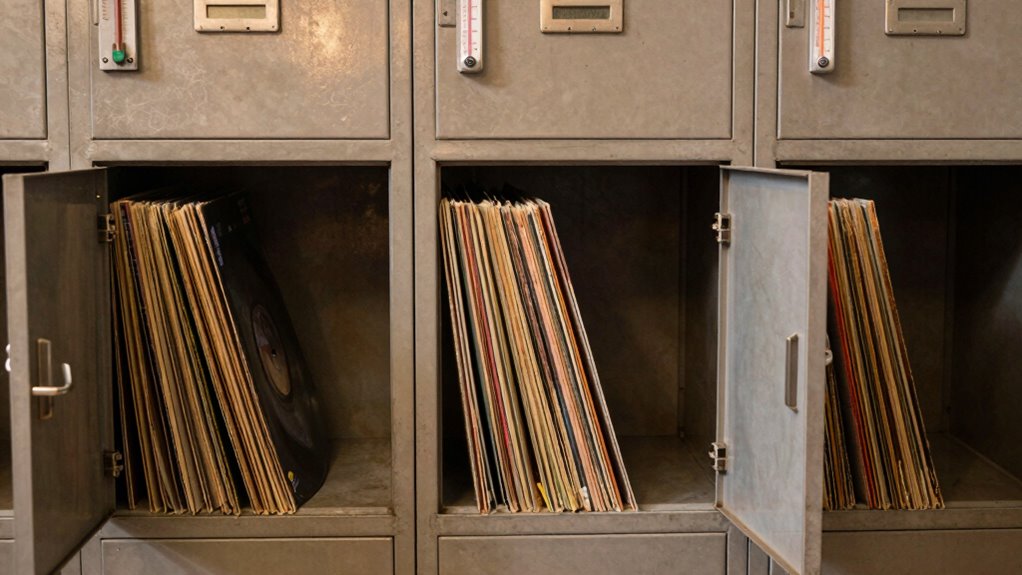
Proper record storage temperature is essential for maintaining the integrity and longevity of your documents, recordings, or digital files. If you ignore the importance of temperature control, you risk compromising your records, leading to costly damage or data loss. Digital preservation relies heavily on keeping storage environments within specific temperature ranges. Even slight deviations can accelerate deterioration, especially for sensitive media like photographs, film, or digital data stored on physical servers. That’s why temperature monitoring isn’t just a good practice—it’s a necessity. Regularly checking and recording the temperature ensures you stay within the safe zone and catch any fluctuations early before irreversible harm occurs.
Many people underestimate how important consistent temperature control is for long-term preservation. You might think that storing files on a hard drive or in a climate-controlled environment protects them indefinitely, but that’s not always the case. Digital files are vulnerable to heat, humidity, and temperature swings that can cause hardware failure or data corruption. When temperatures rise beyond the recommended range, it speeds up the degradation of storage media, risking the loss of critical information. Conversely, excessively cold environments can cause condensation and other issues that also threaten data integrity. By implementing a reliable temperature monitoring system, you can receive alerts if conditions stray outside the ideal range, allowing you to take immediate action. Temperature stability is a crucial factor in safeguarding digital archives over time.
Understanding the proper temperature range for digital preservation is key. Generally, most digital storage media should be kept between 50°F and 70°F (10°C to 21°C). Maintaining this range minimizes the risk of physical and chemical degradation. If you’re storing valuable archives, consider investing in climate-controlled storage facilities that offer precise temperature control and continuous monitoring. This proactive approach helps prevent the slow but relentless damage caused by temperature fluctuations. You’ll also want to keep humidity levels in check, but temperature monitoring remains the backbone of good preservation practices.
digital data temperature monitor
As an affiliate, we earn on qualifying purchases.
As an affiliate, we earn on qualifying purchases.
Frequently Asked Questions
How Do Temperature Fluctuations Affect Stored Records Over Time?
Temperature fluctuations cause your stored records to suffer from climate impact, accelerating record deterioration over time. When temperatures swing, materials like paper, film, and digital media expand and contract, weakening their structure. This instability increases the risk of damage, mold, and fading. To preserve your records effectively, keep storage conditions stable within the recommended temperature range, minimizing climate impact and ensuring your records stay intact for years to come.
What Are the Risks of Storing Records Outside Recommended Temperature Ranges?
A stitch in time saves nine, and ignoring proper climate control risks damaging your digital archives. Storing records outside recommended temperature ranges can cause deterioration, data loss, or mold growth. Fluctuations accelerate decay, making recovery tougher and costly. You might think it’s safe, but extreme heat or cold stresses storage media, risking irreparable harm. Keep records within safe temperature limits to preserve their integrity and ensure long-term access.
Which Types of Records Are Most Sensitive to Temperature Variations?
Digital records and physical archives are most sensitive to temperature variations. You might notice digital files become corrupted or inaccessible when exposed to extreme heat or cold. Physical archives, such as paper documents and photographs, can suffer from fading, warping, or mold growth if stored outside recommended temperature ranges. To protect your records, you should maintain stable temperatures, ideally between 65-70°F, and avoid fluctuations that could lead to irreversible damage.
How Can I Monitor and Control Storage Temperature Effectively?
Think of your storage area as a delicate ecosystem; you control it with precision. You can monitor and control temperature effectively by installing digital sensors that provide real-time data. Connect these sensors to a climate control system that automatically adjusts to maintain ideal conditions. Regularly check the sensor readings and set alerts for temperature fluctuations, ensuring your records stay safe and intact, no matter what.
Are There Specific Storage Materials That Better Withstand Temperature Changes?
You should choose archival materials that are climate-resistant for better temperature change endurance. Materials like acid-free paper, polyester film, and inert plastics resist temperature fluctuations and help preserve records longer. Store these in climate-resistant storage units designed to maintain consistent temperatures. This combination guarantees your documents stay protected from damage caused by temperature shifts, giving you peace of mind that your records remain intact over time.
climate-controlled storage for records
As an affiliate, we earn on qualifying purchases.
As an affiliate, we earn on qualifying purchases.
Conclusion
Ignoring the recommended storage temperatures is like playing with fire—you might get burned. When you keep records outside the safe range, you risk losing valuable information forever. Think of temperature guidelines as a trusted map guiding your data safely home. Don’t let negligence turn your precious records into digital dust. Stay vigilant, follow the proper temperature range, and keep your memories and important data alive and well—because they’re the backbone of your peace of mind.
temperature and humidity data logger
As an affiliate, we earn on qualifying purchases.
As an affiliate, we earn on qualifying purchases.
As an affiliate, we earn on qualifying purchases.
Halloween Picks
halloween
As an affiliate, we earn on qualifying purchases.