
To build a simple vinyl cleaning routine, handle your records by the edges and store them upright in a cool, dry space. Use a soft brush or lint-free cloth to remove dust regularly, and clean with a mild solution sparingly when needed. Keep environmental conditions stable, avoiding humidity and temperature fluctuations. Consistent, gentle care helps preserve sound quality and extends your collection’s life—stay tuned to learn more tips for effortless maintenance.

Get audio and creator gear delivered free with Prime
- Fast, free delivery on millions of items
- Prime Video, Amazon Music and more included
- Member-only deals all year
Key Takeaways
- Establish a consistent cleaning frequency based on your listening habits and environment.
- Use gentle tools like a record brush or lint-free cloth for routine cleaning.
- Handle records by edges and store upright in a cool, dry space to prevent damage.
- Incorporate environmental controls, such as reducing dust and static, into your routine.
- Keep cleaning methods simple and avoid overusing cleaning solutions to maintain ease.
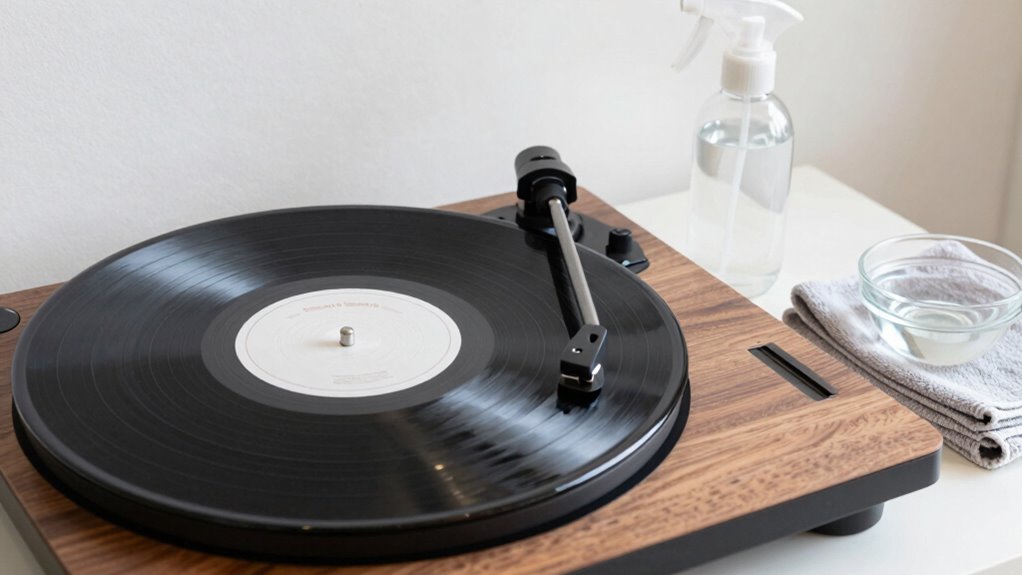
Maintaining your vinyl records doesn’t have to be complicated. With a straightforward routine, you can guarantee your collection stays in top shape without spending hours each week on maintenance. The key lies in understanding the basics of record preservation and establishing a consistent cleaning frequency that works for your listening habits. By doing so, you’ll prevent dust and dirt buildup, which can cause surface noise and even damage over time.
Start by making cleaning a regular part of your vinyl routine. You don’t need to clean after every listen, but setting a schedule—say, once every few weeks or after every few albums—helps keep your records in good condition. The right cleaning frequency depends on how often you play your records and your environment. If you keep your collection in a dusty or humid space, more frequent cleaning might be necessary. Conversely, if your records are stored in a controlled environment, less frequent cleaning suffices. The goal is to remove dust and grime before they accumulate enough to impact sound quality or cause long-term damage.
Regular cleaning tailored to your environment keeps your vinyl collection sounding its best.
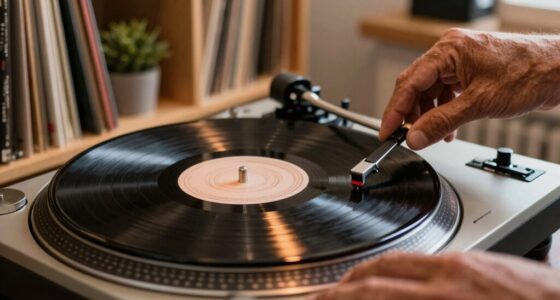
When it comes to record preservation, gentle handling and proper storage are essential. Always hold your records by the edges and avoid touching the grooves, as oils from your fingers can attract dust and degrade the vinyl. Store your records upright in a cool, dry space, away from direct sunlight and temperature fluctuations. Using inner and outer sleeves made of anti-static material can further protect the surface from static and dust. When you do clean your records, use a soft, lint-free cloth or a dedicated record brush to remove loose dust before applying any cleaning solution. This step minimizes the risk of scratching the surface. Additionally, understanding biodiversity and the importance of maintaining healthy ecosystems can influence how we treat our environment, including the spaces where we store and handle our records. Proper environmental conditions and a clean environment play a crucial role in the longevity of your collection. Creating a dedicated space for your records can help prevent contamination and prolong their lifespan. Implementing proper storage techniques can further enhance the preservation of your vinyl.
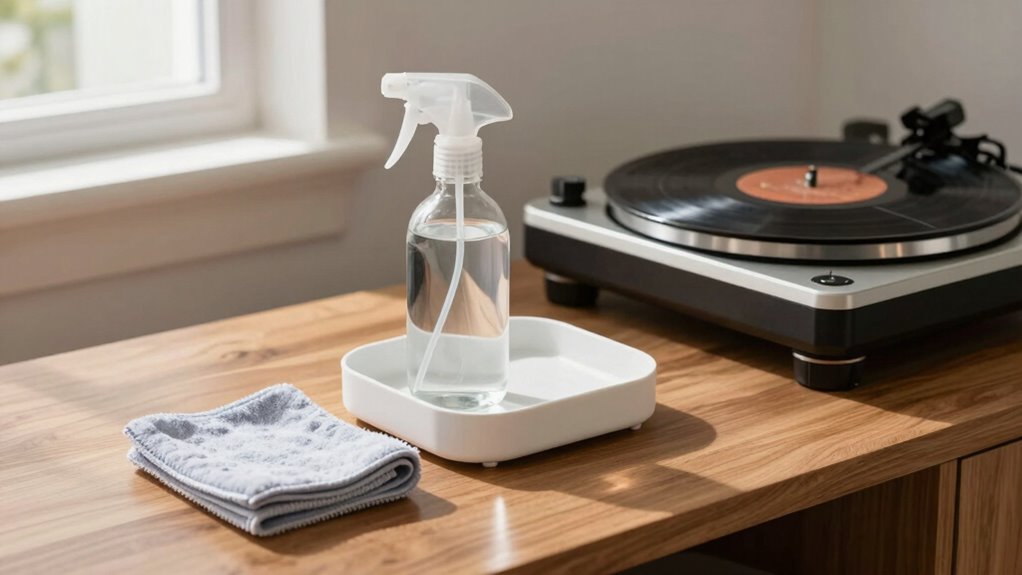
Choosing a simple cleaning method keeps things easy and effective. Many enthusiasts prefer a record cleaning solution combined with a microfiber cloth or a specialized record cleaning brush. Apply the cleaner sparingly to avoid saturating the vinyl, and gently wipe along the grooves. For deeper cleaning, some use a record cleaning machine, but this isn’t necessary for most casual collectors. The important part is consistency—regular, gentle cleaning preserves the integrity of your records and ensures superior sound quality. Maintaining a clean environment is also vital for preventing dust buildup and static. This simple routine not only prolongs the life of your collection but also makes listening more enjoyable, knowing your records are well cared for. By sticking to a manageable cleaning schedule and handling your vinyl properly, you can keep your collection sounding great for years to come.
anti-static record cleaning brush
As an affiliate, we earn on qualifying purchases.
As an affiliate, we earn on qualifying purchases.
Frequently Asked Questions
How Often Should I Clean My Vinyl Records?
You should clean your vinyl records after every few listens or if they appear dusty or sticky. Regular cleaning helps maintain sound quality and protects your record collection. Keep your records in proper record storage to prevent dust buildup. Adjust the cleaning frequency based on usage and storage conditions—more frequent cleanings are necessary if you notice surface noise or dust. Consistent care keeps your records sounding great longer.
Can I Use Household Cleaners on Vinyl?
Imagine your vinyl records as delicate lace, fragile yet beautiful. Household chemicals can be harsh, like rough hands ripping at that lace, risking vinyl damage. Avoid using household cleaners—they often contain abrasives or alcohol that strip away protective coatings, impairing sound quality. Instead, opt for gentle, record-specific solutions. Keeping your records safe means respecting their delicate nature, ensuring they stay vibrant and pristine for countless listening sessions.
What Tools Are Best for Deep Cleaning?
For deep cleaning vinyl records, you’ll want a soft, anti-static cleaning brush, like a carbon fiber or microfiber brush, to gently remove debris. Use record cleaning solutions designed specifically for vinyl, which effectively lift dirt without damaging the surface. A lint-free cloth can help wipe away excess solution, ensuring your records stay pristine. Combining the right cleaning brush types with quality record cleaning solutions keeps your vinyl collection in top condition.
How Do I Prevent Scratches During Cleaning?
Imagine your vinyl as a delicate treasure, fragile yet invaluable. To prevent scratches during cleaning, use soft, lint-free cloths and gentle motions, avoiding abrasive materials. Regular cleaning frequency helps maintain your records, reducing the need for aggressive scrubbing. Handle records by the edges, and always clean in the direction of the grooves. These careful steps ensure your vinyl remains pristine, preserving its sound quality and your collection’s integrity.
Is It Safe to Use Water on Vinyl Records?
Yes, it’s safe to use water on vinyl records if you do it correctly. Use a slightly damp, soft microfiber cloth to gently clean the surface, avoiding excess water that can seep into the edges. Keep your records in proper record storage to prevent dirt buildup. Stick to a regular cleaning frequency—about once a month or when visibly dirty—to keep your records in top condition and prevent scratches during cleaning.
lint-free microfiber cloth for vinyl records
As an affiliate, we earn on qualifying purchases.
As an affiliate, we earn on qualifying purchases.
Conclusion
By sticking to a simple vinyl cleaning routine, you’ll keep your records sounding great and your collection looking sharp. Think of it as giving your vinyl a gentle hug every so often—consistent care keeps the magic alive. Don’t let the process overwhelm you; a few minutes now can save you hours of frustration later. With this straightforward approach, your records will stay in perfect harmony, spinning smoothly like a well-tuned symphony.
As an affiliate, we earn on qualifying purchases.
As an affiliate, we earn on qualifying purchases.
Fall Picks
fall essentials
As an affiliate, we earn on qualifying purchases.