

Create a focused rehearsal checklist that includes warm-ups, technical drills, and specific goals for each session. Stick to a schedule, use timers, and record performances to stay disciplined. Avoid aimless jamming by setting clear objectives, monitoring progress, and providing feedback. Incorporate structured segments like song run-throughs and progressions. Staying intentional transforms hours of aimless playing into productive practice—keep exploring this guide to learn how to maximize every rehearsal.

Get audio and creator gear delivered free with Prime
- Fast, free delivery on millions of items
- Prime Video, Amazon Music and more included
- Member-only deals all year
Key Takeaways
- Establish a clear agenda with specific segments like warm-up, drills, run-throughs, and full practice.
- Set measurable goals for each rehearsal, such as mastering transitions or tightening timing.
- Use timers to keep sessions disciplined and ensure all areas are covered without drifting.
- Record rehearsals to analyze progress and maintain focus on targeted improvements.
- Conduct feedback sessions to identify weaknesses and set actionable targets for the next practice.
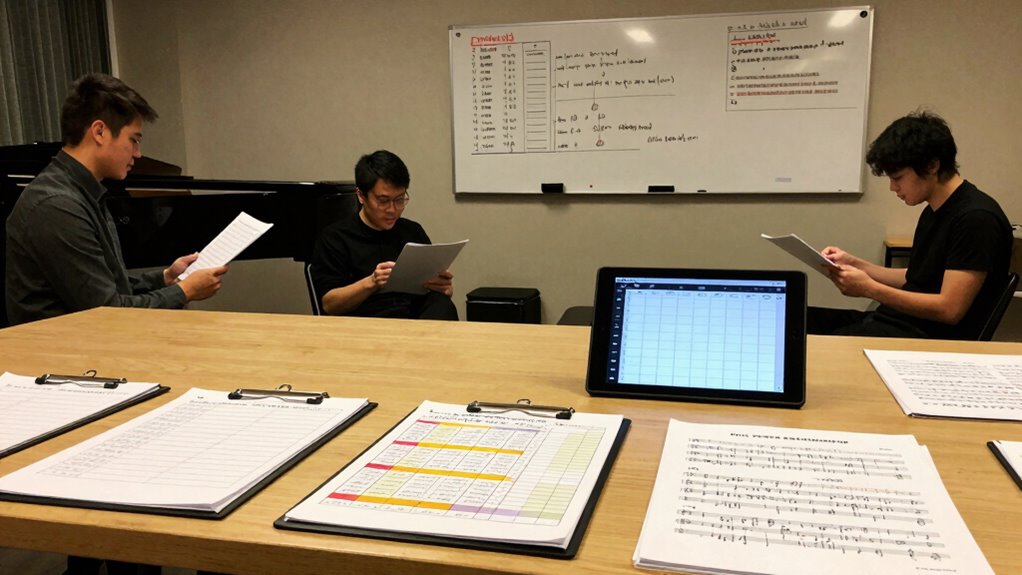
Are you prepared for your upcoming performance or presentation? If not, you risk falling into the trap of just jamming for two hours without making meaningful progress. To avoid this, you need a solid rehearsal checklist that keeps you focused and intentional. One critical aspect is understanding music theory. Before stepping onto the stage, you should review key concepts like chord progressions, scales, and song structures. Having a firm grasp of music theory allows you to anticipate changes, improvise effectively, and communicate clearly with your bandmates. It also boosts your confidence, helping you deliver a polished performance instead of just improvising aimlessly. Alongside music theory, cultivating your stage presence is vital. This isn’t just about playing notes correctly; it’s about engaging your audience and projecting confidence. Practice your body language, facial expressions, and eye contact during rehearsals. Visualize yourself performing in front of an audience, and rehearse movements that convey energy and emotion. When you’re intentional about your stage presence, the performance becomes more compelling and memorable, transforming a simple jam into a captivating show. To keep your rehearsals productive, create a clear agenda for each session. Break down your practice into segments: warm-up, technical drills, run-throughs of specific sections, and full run-throughs. Stick to this schedule to prevent drifting into aimless playing. Use a timer if needed, so you stay disciplined and cover everything important. Recording rehearsals can be invaluable too. Listening back allows you to catch inconsistencies, identify areas for improvement, and track your progress over time. Don’t just play through songs; analyze what’s working and what’s not. Be intentional about your goals for each session—whether it’s mastering a tricky transition, tightening timing, or developing your stage presence. Communicate with your bandmates or team to ensure everyone’s on the same page, setting specific objectives for each rehearsal. This prevents unproductive “just jamming” that lacks direction. Incorporating natural pools and outdoor elements into your rehearsal space can also inspire creativity and refresh your perspective. Incorporate warm-up routines to get everyone physically and mentally prepared, which enhances focus and reduces mistakes. FINALLY, don’t forget to leave time for feedback and reflection at the end of each rehearsal. Discuss what went well, what needs work, and set clear targets for your next session. Staying disciplined with your rehearsal checklist ensures you make steady progress, avoid wasting time, and enter your performance with confidence and clarity. Remember, a well-planned rehearsal isn’t about playing endlessly; it’s about being strategic, intentional, and focused so your performance truly shines.
As an affiliate, we earn on qualifying purchases.
Frequently Asked Questions
How Often Should Rehearsals Be Scheduled?
You should schedule rehearsals with consistent timing, ideally weekly or bi-weekly, to maintain momentum and improve coordination. Regular rehearsal frequency helps everyone stay sharp and aligned, preventing long gaps that lead to unproductive jam sessions. By establishing a steady schedule, you ensure continuous progress, avoid last-minute cramming, and keep your team motivated. Consistency in timing and rehearsal frequency makes a significant difference in your overall performance quality.
What Equipment Is Essential for Effective Rehearsals?
You need essential equipment like reliable microphones with proper placement to capture your sound clearly, and guarantee instrument tuning is spot-on before rehearsal starts. Use a good sound system or audio interface to monitor levels, and consider a music stand or sheet music if needed. These tools help keep everyone on the same page, improve sound quality, and make rehearsals more productive and focused.
How Do I Handle Creative Differences During Rehearsals?
Imagine your rehearsal as a river flowing smoothly; creative conflict can cause splashes. When disagreements arise, stay calm and listen like a quiet lake reflecting every detail. Use collaboration strategies such as open dialogue and compromise to navigate differences. Embrace diverse ideas as colorful stones in your path, turning conflict into a creative current that pushes your project forward, ensuring everyone feels heard and united.
What Are Signs of Rehearsal Fatigue?
You’ll notice signs of rehearsal fatigue when your energy dips and attention lapses, making it harder to stay focused or perform at your best. You might feel physically tired, lose enthusiasm, or struggle to remember routines. These signs indicate it’s time to take a break, hydrate, or switch activities. Recognizing these cues helps you prevent burnout and keeps rehearsals productive and engaging.
How Can I Measure Rehearsal Progress Effectively?
Picture your rehearsal as a journey—you wouldn’t navigate without a map. To measure progress effectively, track rehearsal metrics like timing, accuracy, and cohesion. Use recordings or checklists to compare performances over time. Regularly review these metrics to see improvements or identify areas needing focus. This way, you turn vague progress into concrete milestones, ensuring each session takes you closer to your goal rather than just passing time.
music rehearsal recording device
As an affiliate, we earn on qualifying purchases.
As an affiliate, we earn on qualifying purchases.
Conclusion
Think of your rehearsal as a well-tuned engine; each step in your checklist is a crucial part that keeps everything running smoothly. When you stay organized and stick to your plan, you’ll avoid the chaos of “just jamming” and instead hit your stride with purpose. Remember, a little preparation is like oil in the engine—keeps you moving forward without hiccups. Finish strong, and let your performance shine brighter than ever.
As an affiliate, we earn on qualifying purchases.
As an affiliate, we earn on qualifying purchases.
Halloween Picks
halloween
As an affiliate, we earn on qualifying purchases.