To create a simple hand-signal language for your band, start by identifying key moments like starting, stopping, adjusting volume, or cueing solos, and design clear, easy-to-remember gestures for each. Keep signals intuitive, distinguish similar commands with unique motions, and practice them regularly during rehearsals to build muscle memory. Guarantee your signals are visible and consistent in all performances. If you keep refining your system, you’ll master effective communication on stage with ease.

Get audio and creator gear delivered free — and shop member deals
- Fast, free delivery on millions of items
- Access to Prime Big Deal Days deals on October 6–7
- Prime Video, Amazon Music and more included
Key Takeaways
- Keep signals simple, quick to perform, and easy to remember for all band members.
- Use universal or intuitive gestures, like thumbs-up or raised hand, to ensure clarity.
- Assign specific, distinct signals for key cues such as start, stop, volume change, or solos.
- Practice the signals regularly in rehearsals, simulating performance noise and movement conditions.
- Ensure consistency across performances by standardizing signals and reviewing them with the band.
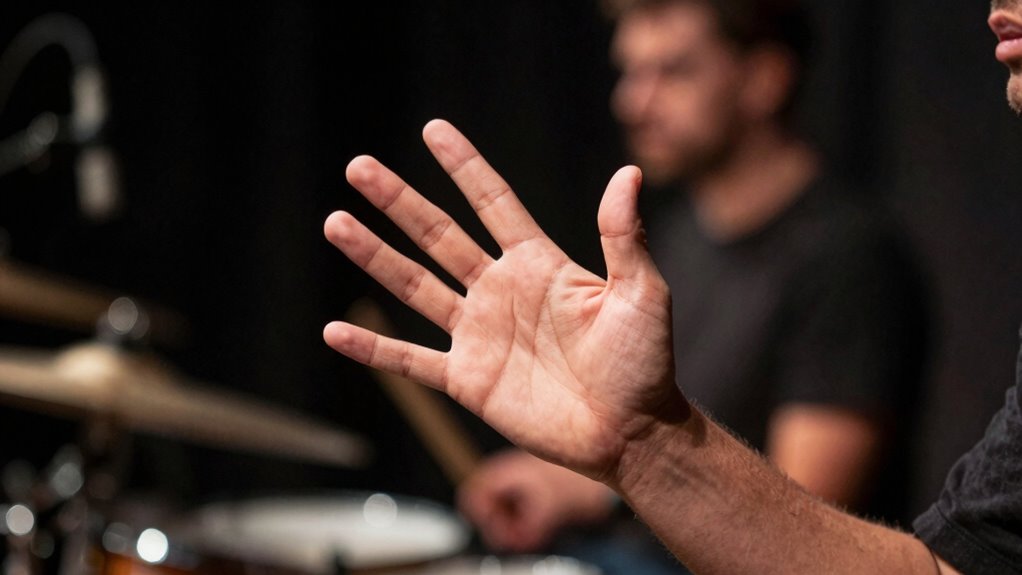
Effective communication is essential for a band’s tight performances, and developing a hand-signal language can substantially enhance your on-stage coordination. When your band members understand each other’s cues without needing to shout or rely solely on verbal cues, your musical communication becomes more seamless. This non-verbal system helps you stay in sync during complex passages, sudden tempo changes, or when stage noise makes spoken communication difficult. Creating a simple hand-signal language isn’t complicated, but it requires clarity and consistency. You want signals that are easy to remember, quick to execute, and unambiguous so everyone interprets them the same way.
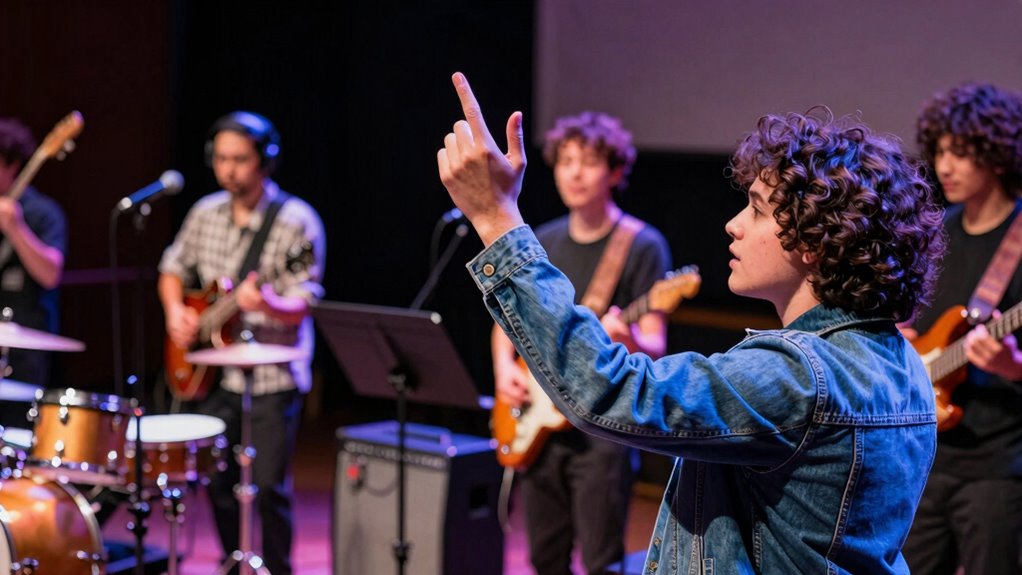
Start by identifying the key moments where you need to communicate most often—like starting or stopping, adjusting volume, switching instruments, or signaling a solo. Keep the signals straightforward: a single finger raised might mean “bring it up,” a fist could indicate “stop,” and a waving hand might mean “fade out.” Ensure each gesture has a clear, distinct meaning that everyone agrees upon. When designing your signals, consider using universal or intuitive gestures that won’t be confused with other movements. For instance, a thumbs-up can signal “good,” while a motion across the chest might indicate “pause.” Use different hand positions or motions to differentiate between similar commands to avoid misinterpretation during a performance.
Practice makes perfect. Incorporate these signals into your rehearsals so your band members become familiar with them. During practice, simulate performance conditions—loud volumes, movement, and stage noise—to guarantee your signals are visible and understood in real situations. Encourage feedback from your bandmates to refine the gestures, making sure they’re quick to perform and easy to see from the stage. Consistency is key; use the same signals in every performance to build muscle memory and reduce confusion.
As an affiliate, we earn on qualifying purchases.
Frequently Asked Questions
How Do I Ensure All Band Members Understand the Signals?
You guarantee all band members understand the signals by practicing regularly and emphasizing signal consistency. Use clear, simple gestures and confirm everyone knows their meaning. During rehearsals, repeat the signals often and encourage feedback from musicians to clarify any confusion. Keep your communication open, and review the signals periodically, especially before performances, so everyone stays confident and synchronized in their musician communication.
What if Multiple Signals Are Needed During a Song?
When multiple signals are needed mid-song, you’ll love the chaos—said no one ever. Use gesture combinations to convey complex commands efficiently, but prioritize signals clearly. Assign a hierarchy so essential cues like “stop” or “change tempo” take precedence over less urgent ones. This way, your band stays in sync, even during the musical equivalent of a juggling act, ensuring everyone knows what to do without turning your performance into a circus.
How Can I Make Signals Visible in Large Venues?
To make signals visible in large venues, you should enhance lighting visibility by using brightly colored gloves or flags, guaranteeing they stand out under stage lights. Keep signal consistency so band members recognize cues easily. Consider adding illuminated or reflective elements to your signals for clarity. Practice with your team to ensure everyone responds promptly, and position yourself where all members can see your signals clearly, regardless of venue size.
Should Signals Be Standardized Across Different Band Performances?
Yes, you should standardize signals across performances to guarantee performance consistency. When signals are consistent, everyone knows what to expect, reducing confusion during shows. However, allow some flexibility for signal customization to accommodate different venues or band members’ preferences. This balance helps maintain clarity while adapting to specific situations, making your band’s communication more effective and reliable everywhere you perform.
How Often Should the Hand-Signal System Be Reviewed or Updated?
You should review your hand-signal system regularly, ideally every few months, to maintain signal consistency and guarantee everyone stays on the same page. Update frequency depends on how often your band changes or experiments with new signals. If you notice confusion or miscommunication, it’s time for a quick refresh. Consistent review keeps your system effective, clear, and adaptable to your band’s evolving needs.
musician stage communication signals
As an affiliate, we earn on qualifying purchases.
As an affiliate, we earn on qualifying purchases.
Conclusion
Think of your hand signals as the secret language of your band’s orchestra. Just like a conductor guiding musicians through a symphony, your signals keep everyone in harmony. With clear, simple gestures, you create a smooth flow, turning chaos into melody. When your band understands this silent language, you’re not just playing music—you’re conducting a masterpiece, where every gesture is a note and every pause a pause in the song.
performance hand gesture training kit
As an affiliate, we earn on qualifying purchases.
As an affiliate, we earn on qualifying purchases.
musical band rehearsal hand signals
As an affiliate, we earn on qualifying purchases.
As an affiliate, we earn on qualifying purchases.
Halloween Picks
halloween
As an affiliate, we earn on qualifying purchases.