To effectively remove dust from your vinyl records, avoid quick wipes with rough cloths or harsh chemicals that can just spread debris around. Instead, use gentle tools like microfiber cloths, carbon fiber brushes, or record cleaning machines to lift dust from grooves without redistributing it. Proper techniques guarantee dust is removed completely rather than pushed deeper. Want to discover the best practices to keep your records pristine? Keep going for expert tips and safe cleaning methods.
Key Takeaways
- Use soft, lint-free tools like microfiber cloths or carbon fiber brushes to lift dust without spreading it.
- Gentle, circular motions with minimal pressure effectively remove dust from grooves and surface.
- Record cleaning machines with suction and fluid help dissolve and lift debris, preventing redistribution.
- Avoid harsh chemicals or abrasive tools that can push dust deeper or scratch the vinyl surface.
- Proper storage, handling, and air quality control prevent dust accumulation, maintaining cleaner records over time.
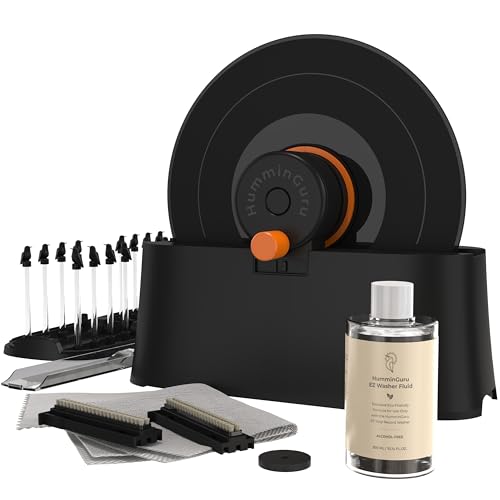
HumminGuru EZ Record Washer, Manual Vinyl Record Cleaner Machine with Easy Spin & Watertight Label Clamp, Record Cleaning Kit with Gentle Goat-Hair Brushes, Alcohol-Free LP Fluid, Drying Rack & Cloth
- Watertight Label Clamp: Secures records with waterproof seal
- Easy Spin Handle: Smooth manual back-and-forth rotation
- Gentle Goat-Hair Brushes: Soft brushes for safe cleaning
As an affiliate, we earn on qualifying purchases.
As an affiliate, we earn on qualifying purchases.
Why Proper Record Cleaning Matters for Sound and Longevity
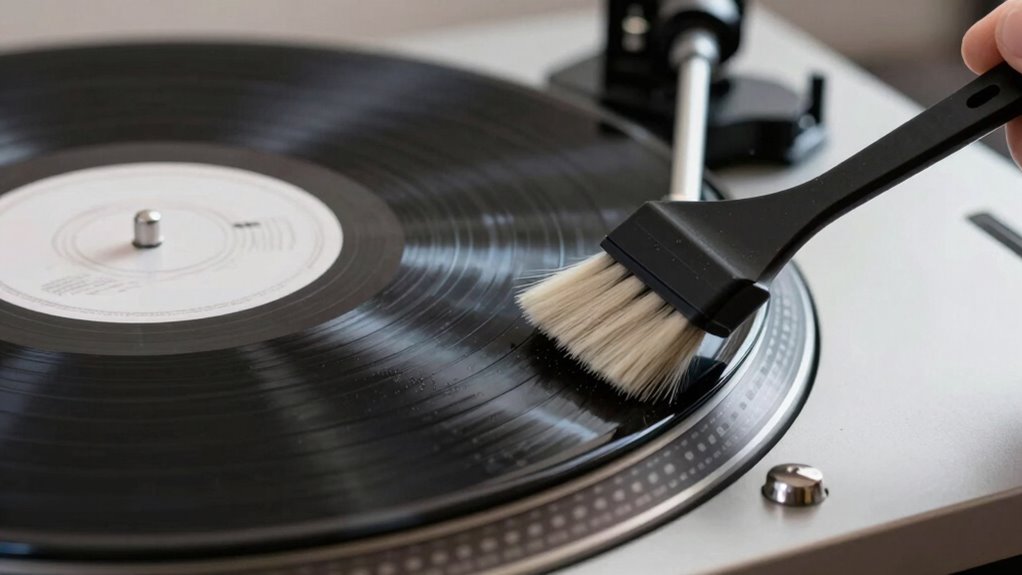
Proper record cleaning is essential because dust, fingerprints, and dirt can considerably degrade sound quality and damage your vinyl over time. When you neglect cleaning, debris can settle into the grooves, impairing acoustic fidelity and making your listening experience less clear. Additionally, accumulated grime can cause scratches that harm the record’s surface and compromise the record label preservation. Regular cleaning ensures your vinyl stays in prime condition, maintaining the clarity and richness of the original sound. By keeping your records clean, you prevent buildup that could lead to permanent damage. This care not only preserves the integrity of your music but also extends the lifespan of your vinyl collection, allowing you to enjoy high-quality sound for years to come. Properly calibrated cleaning tools and techniques are vital to ensure you remove dust effectively without spreading it further or causing scratches, preserving the color fidelity of your records.

Hudson Hi-Fi Anti Static Microfiber Record Cleaning Cloth – 5 pk – The Audiophiles Anti-Scratch Lint & Dust Magnets – 7X Capillary Absorption LP & Record Cover Cleaner Protector Cleaning Cloths
- Effective Dust and Dirt Removal: Cleans vinyl without scratching, deep into grooves
- Portable and Versatile: Suitable for all vinyl records and surfaces
- Safe for All Surfaces: Ideal for electronics, screens, lenses, and more
As an affiliate, we earn on qualifying purchases.
As an affiliate, we earn on qualifying purchases.
How to Tell if Your Vinyl Record Is Clean or Still Dirty

Wondering how to tell if your vinyl record needs cleaning? The key is to observe its surface regularly. Your record cleaning frequency depends on how often you play it and the environment, but visual inspection techniques are most effective. Hold the record under a bright light and look for dust, fingerprints, or smudges on the grooves. If you see visible debris or a dull, cloudy appearance, it’s time to clean. Even if it looks clean, a quick wipe can remove unseen particles that cause noise. Remember, a record that appears clean might still trap dust deep in the grooves, so regular inspection helps maintain ideal sound quality and prolongs your record’s lifespan. Staying vigilant and understanding record maintenance practices will help you keep your collection sounding its best.

Boundless Audio Record Cleaner Brush – Carbon Fiber Anti-Static Vinyl Brush – Record Player Accessories for Vinyl Cleaning
- Quick Vinyl Cleaning: Easily cleans records before playback
- Dust and Dirt Removal: Dual-row soft carbon fiber bristles
- Static Elimination: Reduces static for clearer sound
As an affiliate, we earn on qualifying purchases.
As an affiliate, we earn on qualifying purchases.
Best Tools and Techniques for Effective Record Cleaning
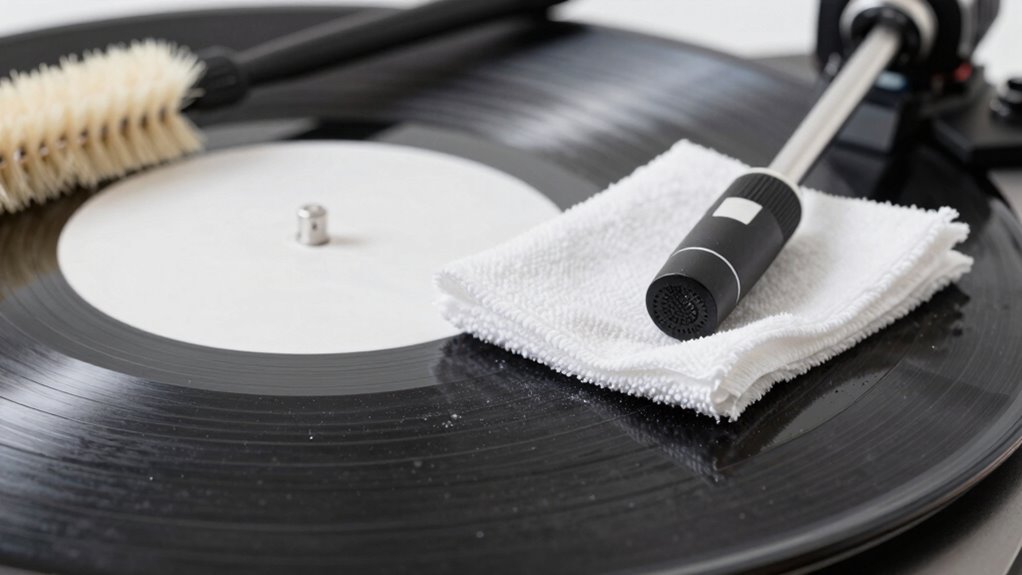
To keep your records sounding their best, choosing the right tools and techniques is essential. Start with quality record cleaning tools like microfiber cloths, carbon fiber brushes, and specialized cleaning pads. These tools effectively remove dust and static without damaging the vinyl surface. For deeper cleaning, use an anti-static record cleaning brush combined with effective cleaning techniques such as gentle circular motions and consistent pressure. Consider investing in a record cleaning machine if you have many records or want a more thorough clean. Always avoid abrasive materials that can scratch the surface. Remember, effective cleaning techniques involve patience and gentle handling to prevent damage while removing dirt and debris. Proper tools and techniques ensure your records stay pristine and sound their best. Additionally, understanding the relationship building and parenting strategies can help maintain a respectful and positive environment around your collection.
Boundless Audio Record Cleaner Brush – Carbon Fiber Anti-Static Vinyl Brush
- Quick Vinyl Cleaning: Easily cleans records before playback
- Dust and Dirt Removal: Dual-row soft carbon fiber bristles
- Static Elimination: Reduces static for clearer sound
As an affiliate, we earn on qualifying purchases.
As an affiliate, we earn on qualifying purchases.
Cleaning Products to Avoid and Why They Damage Records
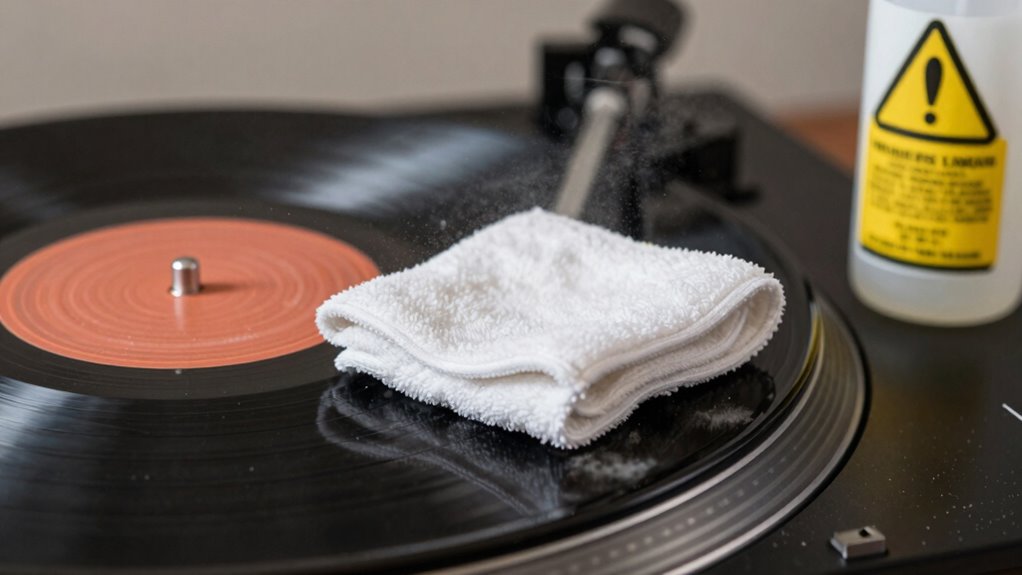
Many cleaning products contain harmful chemical additives that can damage your records’ delicate surfaces. Using abrasive tools or harsh scrubbing can cause scratches, ruining the sound quality. Additionally, overusing alcohol-based solvents can strip away the record’s protective layer, leading to long-term harm. To ensure your records remain in optimal condition, it’s best to avoid non-ideal cleaning methods that can undermine their longevity.
Harmful Chemical Additives
Certain chemical additives found in many cleaning products can cause serious damage to your records. These additives can degrade the vinyl’s surface, hinder record preservation, and lead to permanent scratches or warping. Common culprits include solvents, alcohols, and ammonia-based cleaners that seem effective but actually harm your records over time. To avoid these risks, steer clear of products with harsh chemicals. Here’s a quick guide:
| Chemical Additive | Potential Damage | Alternative Solution |
|---|---|---|
| Alcohol | Cracks, warping | Use distilled water |
| Solvents | Surface degradation | Use specialized record cleaners |
| Ammonia-based | Vinyl deterioration | Use gentle, non-abrasive cleaners |
| Phosphates | Residue buildup | Choose pH-neutral solutions |
Stick to safe, record-preserving cleaners for long-lasting sound quality.
Abrasive Cleaning Tools
Abrasive cleaning tools can cause significant damage to your records if you’re not careful. Using rough or harsh materials like certain microfiber cloths or aggressive record brushes can scratch the delicate surface of your vinyl. While microfiber cloths might seem gentle, some cheaper or improperly used ones can contain fibers that are too abrasive, risking tiny scratches over time. Similarly, aggressive record brushes with stiff bristles can gouge or wear down the vinyl groove, leading to permanent damage and affecting sound quality. Instead, opt for soft, high-quality microfiber cloths designed for delicate surfaces, and use gentle, well-made record brushes specifically crafted to clean without scratching. Avoid any tools that seem rough or stiff—they’re more likely to harm your records than help keep them clean. Proper cleaning techniques help ensure your records stay in good condition and preserve sound quality over time.
Overuse of Alcohol-Based Solvents
While alcohol-based solvents might seem effective for quick cleaning, overusing them can seriously damage your records. Alcohol solvents, like isopropyl or rubbing alcohol, can break down the delicate vinyl surface if applied excessively. This leads to record damage, causing warping, loss of audio fidelity, or even surface cracks. Many believe these solvents are safe, but repeated use strips away the protective layer, exposing the vinyl to further harm. Instead of relying on alcohol-based products, stick to proper cleaning solutions specifically designed for records. Using them sparingly and appropriately preserves your vinyl’s integrity and sound quality. Remember, quick fixes often come at the expense of long-term record health, so avoid overusing alcohol solvents to keep your records in pristine condition.
Step-by-Step: How to Safely Clean Your Vinyl Records
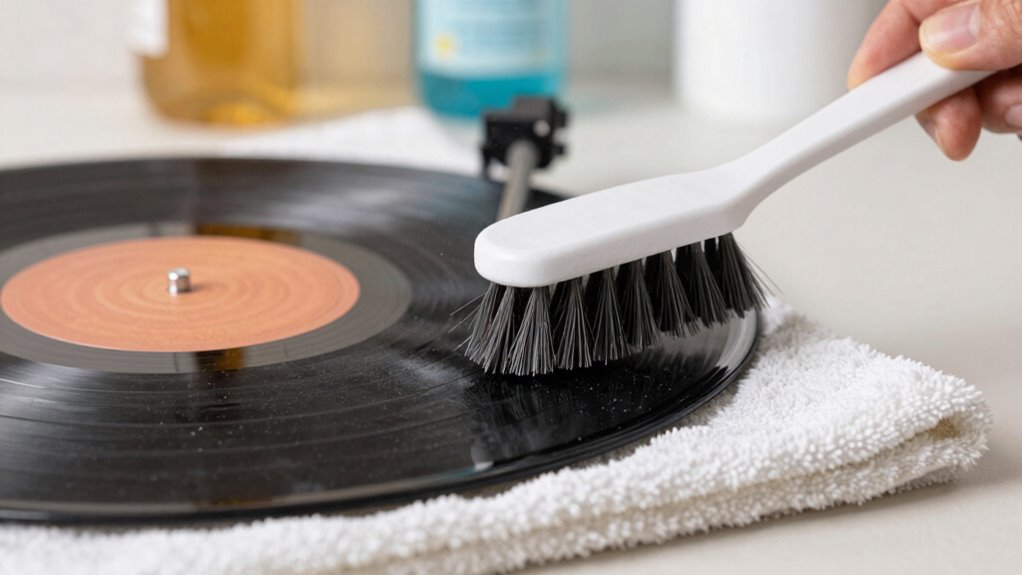
To clean your vinyl records safely, start by gathering the right supplies like a soft brush, microfiber cloth, and cleaning solution. Gently remove dust before applying any liquids to prevent scratches. After cleaning, dry the record thoroughly and store it properly to keep it in top condition. Utilizing Free Floating techniques can help distribute cleaning efforts evenly without causing damage.
Gather Necessary Supplies
Before you start cleaning your vinyl records, gather all the necessary supplies to guarantee a safe and effective process. Clearing your workspace and having everything ready prevents accidental damage and minimizes dust spread. To avoid record cleaning myths, use genuine vinyl care essentials like a soft microfiber cloth, a record cleaning brush, and a gentle cleaning solution specifically designed for records. Avoid household cleaners or harsh chemicals that can damage your records. You’ll also need distilled water to prevent mineral spots. Having these supplies on hand ensures you won’t need to rush or improvise during the cleaning. Proper preparation helps preserve your records’ sound quality and longevity, making your cleaning routine both safe and efficient. Additionally, ensuring proper airflow around your cleaning area can help remove airborne dust and improve overall cleaning results air purifier maintenance.
Remove Dust Gently
Gently removing dust is a crucial first step in preserving your vinyl records’ sound quality. To do this, use gentle wiping with a soft, lint-free cloth or microfiber. Avoid applying pressure, as this can scratch the surface. Instead, use soft brushing to loosen and lift dust particles from the grooves without damaging the vinyl. A soft-bristled brush or a dedicated record brush works well for this purpose. Always brush in the direction of the grooves, not across them. This careful approach prevents spreading dust further into the record’s surface. Remember, the goal is to remove dust without pushing it deeper or causing scratches. Taking your time with gentle wiping and soft brushing ensures your records stay clean and sound their best. Additionally, local automation can help remind you to perform regular cleaning routines, maintaining optimal audio quality over time.
Dry and Store Properly
Proper drying and storage are essential for maintaining your vinyl records’ quality over time. After cleaning, ensure records are completely dry before storing to prevent warping or mold. Store your records vertically in a cool, dry place to avoid warping and minimize dust accumulation. To optimize dust prevention and record longevity, consider these tips:
- Use anti-static sleeves to reduce static buildup and dust attraction
- Keep records in a dedicated, dust-free storage area
- Avoid stacking records horizontally, which can cause warping
- Regularly clean storage shelves to prevent dust transfer
- Implement air purification to improve indoor air quality and reduce airborne dust that can settle on your records.
Tips for Maintaining Your Records and Preventing Dust
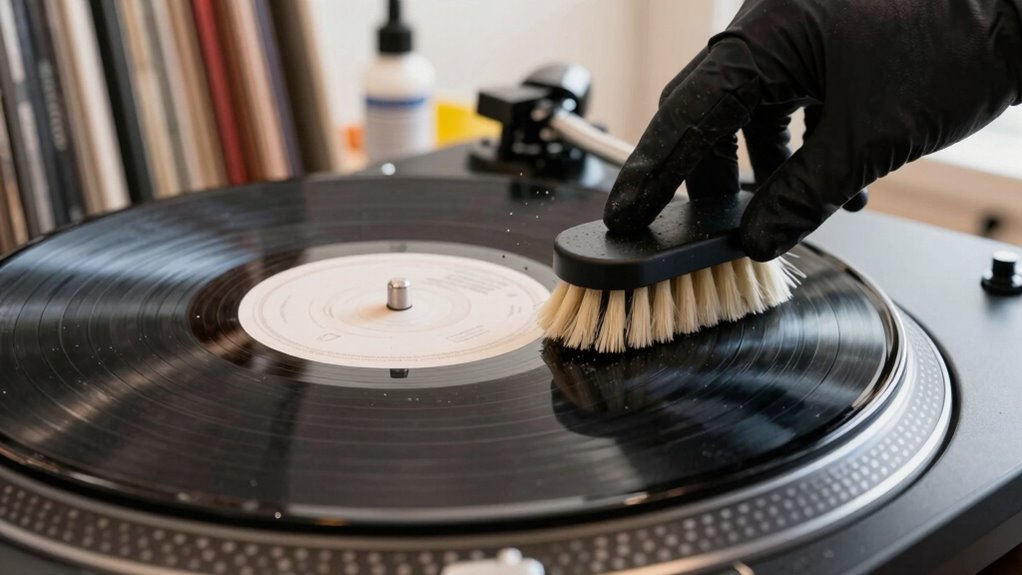
Keeping your records in good condition requires regular maintenance to prevent dust buildup and deterioration. Proper record storage is essential; store your vinyl in a cool, dry place away from direct sunlight and humidity. Use anti-static inner sleeves to reduce dust attraction and protect your records’ surfaces. Always handle records by their edges to avoid transferring oils and dirt. Regularly dust your storage area with a soft cloth or vacuum using a gentle brush attachment, ensuring dust doesn’t settle on your collection. Avoid stacking records horizontally, which can cause warping. Implementing these dust prevention tips helps keep your records clean and sounding their best over time. Consistent care minimizes the need for frequent cleaning and prolongs the lifespan of your collection. Additionally, understanding how auditory processing can impact listening and perception may help in developing better maintenance routines for sensitive collections.
Frequently Asked Questions
Can Cleaning a Record Too Often Harm Its Surface?
Cleaning your record too often can potentially harm its surface, especially if you’re using harsh chemicals or abrasive materials. While frequent cleaning helps remove dust, excessive cleaning may wear down the grooves or strip protective coatings. To avoid damage, keep your cleaning frequency balanced, use gentle cleaning solutions, and handle your records carefully. This way, you preserve the record surface and guarantee ideal sound quality over time.
How Long Should a Record Stay Wet During Cleaning?
You should keep your record wet during cleaning until you’ve loosened and removed most dust and dirt, which usually takes about 30 seconds to a minute. Don’t let it stay soaked too long, as this can damage the surface. Use a dry cloth to gently wipe away excess moisture afterward. Avoid cleaning too frequently; over-cleaning can wear down your record’s surface. Balance cleaning frequency with proper techniques for best results.
Do Different Record Materials Require Specific Cleaning Methods?
Yes, different record materials require specific cleaning methods to guarantee ideal cleaning compatibility. For example, vinyl records are durable and can handle gentle cleaning with a vinyl-safe solution, while shellac or acetate records need more delicate treatment to prevent damage. Always check your record’s material and follow recommended cleaning procedures to avoid warping, cracking, or other damage. Using incompatible methods can harm your records and reduce their lifespan.
Is Ultrasonic Cleaning More Effective Than Manual Cleaning?
Ultrasonic cleaning is generally more effective than manual cleaning because it uses high-frequency sound waves to loosen and remove dust and dirt from record surfaces thoroughly. You’ll notice a deeper, more consistent clean, reducing static and dust spread. Manual cleaning can be effective, but ultrasonic provides superior cleaning effectiveness, especially for stubborn grime. So, if you want the best results, ultrasonic cleaning is the way to go.
What Are the Signs of Damage Caused by Improper Cleaning?
You’ll notice damage from improper cleaning if your records develop deep scratches, warping, or persistent skipping. Using abrasive tools or harsh chemical cleaners can scratch the vinyl surface or weaken the record’s structure. You might also see discoloration or chemical residue, which indicates damage. Always opt for gentle cleaning methods and avoid aggressive tools or chemicals, ensuring your records stay in good shape and play smoothly.
Conclusion
Keeping your records clean is like tending a delicate garden—you need the right tools and techniques to prevent dust from taking root. By choosing effective cleaning methods and avoiding harmful products, you’ll preserve your vinyl’s sound and lifespan. Think of your records as treasures that deserve gentle care; with proper maintenance, they’ll continue to bring you rich, warm melodies for years to come. Your effort today guarantees a lifetime of musical enjoyment tomorrow.