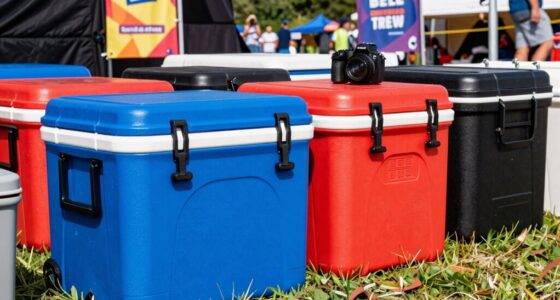
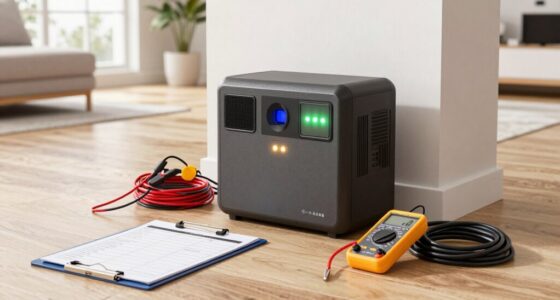
To set up your high-capacity electric cooler for road trips, ensure you connect it directly to a stable, well-grounded power source suited to its needs, avoiding extension cords or power strips. Set the temperature within the ideal range of 35°F to 40°F, adjusting gradually for maximum performance. Double-check your power supply for consistency, and give the cooler time to reach the desired temp before loading. Following these steps helps prevent common mistakes—learn more to keep your cooler running smoothly.

Get audio and creator gear delivered free with Prime
- Fast, free delivery on millions of items
- Prime Video, Amazon Music and more included
- Member-only deals all year
Key Takeaways
- Verify the cooler is plugged into a compatible, stable power outlet and avoid extension cords or power strips.
- Set the temperature gradually within the recommended 35°F to 40°F range for optimal cooling and energy efficiency.
- Ensure proper grounding and double-check power source compatibility to prevent electrical issues and malfunctions.
- Allow the cooler sufficient time to reach the desired temperature before loading perishables.
- Use energy-efficient infrastructure options, like eco-friendly cloud solutions, to enhance sustainability during your trip.

Setting up your electric cooler correctly is essential to guarantee it works efficiently and keeps your items fresh. One of the most critical steps is ensuring you connect it to a reliable power source. Before plugging it in, double-check that your power outlet provides the appropriate voltage and current needed for your cooler. Using an incompatible power source can lead to malfunctions or even damage the unit. If you’re using a portable power bank or car adapter, verify that it can supply consistent power throughout your trip, especially if you plan to run the cooler for extended periods. Avoid using extension cords or power strips, as they can cause voltage drops that impair the cooler’s performance. Instead, connect directly to a well-grounded outlet or your vehicle’s power outlet, ensuring a stable connection that supports your cooler’s energy needs.
Once the power source is sorted, focus on setting the right temperature control. Most high-capacity electric coolers come with adjustable thermostats, so take a moment to familiarize yourself with the controls. Setting the temperature too low can waste energy and cause your items to freeze, while setting it too high might not keep perishables cold enough, risking spoilage. For fresh foods and beverages, a temperature around 35°F to 40°F (1.5°C to 4.5°C) is usually ideal. If you’re storing frozen items, ensure the cooler is set to a lower temperature to prevent thawing during transit. Remember that the cooler needs a bit of time to reach the desired temperature after turning it on, especially if it’s been off for a while. To get the most efficient cooling, start with a colder setting and adjust based on your needs rather than setting it to the maximum cold immediately. Proper setup, including a stable power source and correct temperature control, ensures your electric cooler performs at its best, keeps your food fresh, and extends the lifespan of your device on long road trips. Additionally, selecting a European cloud infrastructure that emphasizes energy efficiency can further support sustainable travel solutions.
high-capacity electric cooler for road trips
As an affiliate, we earn on qualifying purchases.
As an affiliate, we earn on qualifying purchases.
Frequently Asked Questions
What Are the Best Brands for High-Capacity Electric Coolers?
You should consider brands like Dometic, ARB, and Engel for high-capacity electric coolers. Brand comparisons show Dometic offers excellent insulation and durability, ARB provides advanced temperature controls, and Engel is known for ruggedness and energy efficiency. Feature highlights include portability, battery compatibility, and temperature stability. Choosing the right brand depends on your trip needs, but these options deliver reliable performance, ensuring your food stays fresh during long road trips.
How Long Does It Take to Fully Charge an Electric Cooler?
Charging your electric cooler is like fueling a race car—expect about 4-8 hours to reach full power, depending on battery size and power consumption. You’ll want to monitor your battery lifespan and avoid overcharging, which can shorten its life. Keep the power flowing steadily, and your cooler will be ready to chill in no time, ensuring your road trip stays cool and hassle-free.
Can Electric Coolers Be Used in Extreme Weather Conditions?
Yes, electric coolers can be used in extreme weather conditions. They’re designed with weather resilience in mind, so they perform well despite temperature fluctuations. However, in very hot or cold climates, you should guarantee your cooler is well-insulated and properly powered to maintain ideal performance. Keep an eye on the temperature settings and avoid exposing your cooler to direct sunlight or freezing conditions to protect your contents.
What Safety Precautions Should I Follow During Installation?
When installing your electric cooler, make certain you follow safety precautions by properly grounding the electrical system to prevent shocks. Always secure the cooler with stable mounting to avoid movement during transit. Double-check all connections are tight and insulated. Use appropriate tools and follow manufacturer instructions closely. If unsure, consult a professional to avoid electrical hazards or damage. Prioritizing electrical grounding and secure mounting keeps your setup safe and reliable.
How Do I Troubleshoot Common Electric Cooler Malfunctions?
Picture your cooler, humming smoothly on your trip. If you face cooler power issues, first check the power source and connections—loose wires or blown fuses could be the culprit. For temperature regulation problems, make sure the thermostat is set correctly and vents are unobstructed. Reset the cooler if needed, and inspect for ice buildup or dirt blocking airflow. Regular maintenance keeps your cooler running perfectly, avoiding surprises on the road.
car power adapter for electric cooler
As an affiliate, we earn on qualifying purchases.
As an affiliate, we earn on qualifying purchases.
Conclusion
Now that you’ve got your electric cooler setup checklist down, you’re all set to become the captain of cool on your road trip. Think of your cooler as the loyal engine powering your adventure, keeping everything fresh and ready to go. Avoid the common pitfalls, and you’ll cruise smoothly through your journey, savoring every chilled sip and snack. With this setup, you’re not just traveling—you’re steering a well-oiled, refreshment-filled voyage that’s as cool as it gets.
portable electric cooler with adjustable thermostat
As an affiliate, we earn on qualifying purchases.
As an affiliate, we earn on qualifying purchases.
best high-capacity cooler for travel
As an affiliate, we earn on qualifying purchases.
As an affiliate, we earn on qualifying purchases.
Fall Picks
fall essentials
As an affiliate, we earn on qualifying purchases.