

For bookshelf speakers for home theater fronts, I’d start with the Polk Audio Monitor XT15: its format suits either front-channel or surround duties, giving a system room to grow. The Klipsch R-51M is a stronger fit if you want a larger bookshelf speaker, while the Sony SS-CS5M2 offers a compact three-way design. The main tradeoffs are speaker size, amplifier compatibility, placement flexibility, and whether you need a matched center channel. A pair alone will not deliver the same dialogue coverage as a complete front stage, so plan for your center speaker and room layout too. Read on for how these 10 options differ and which one best fits your setup.

Get audio and creator gear delivered free with Prime
- Fast, free delivery on millions of items
- Prime Video, Amazon Music and more included
- Member-only deals all year
Complete the kit


Key Takeaways
- The Polk Monitor XT15 stands out for flexibility: its stated support for front or surround placement makes it the clearest fit for buyers building a system in stages.
- The Klipsch R-41M bundle includes a matching R-52C center: that can simplify front-stage matching, though the bundle makes less sense if you already own a center speaker.
- The Klipsch R-51M is the larger Klipsch bookshelf option here: compare its footprint and placement needs with the more compact R-41M before choosing by brand alone.
- The Sony SS-CS5M2 and Saiyin three-way models offer different routes to a three-way design: compare cabinet dimensions, system integration, and amplification needs rather than relying on driver count alone.
- Several listings are passive pairs, not complete theater systems: the RIWOIS, Edifier P12, Polk T15, and other passive models need a compatible amplifier or receiver.
| RIWOIS Passive Bookshelf Speakers for Home Stereo and Record Player |  | Best for Flexible Placement | Speaker type: Passive bookshelf speakers | Woofer diameter: 4 inches | Impedance: 4 ohms | VIEW ON AMAZON | See Our Full Breakdown |
| Edifier P12 Passive Bookshelf Speaker – 2-Way, Wall-Mountable, Wood Finish, Pair |  | Best for a Compact Wood-Finish Setup | Speaker type: Passive bookshelf | Number of speakers: 2 | Driver size: 4 inches | VIEW ON AMAZON | See Our Full Breakdown |
| Klipsch R-41M Bookshelf Speakers (Pair) and R-52C Center Channel Home Theater Bundle |  | Best Complete Front-Stage Bundle | Included models: R-41M pair and R-52C center channel | Speaker types: Bookshelf and center channel | R-41M woofer diameter: 4 inches | VIEW ON AMAZON | See Our Full Breakdown |
| Acoustic Audio AA321B Mountable Indoor Speakers 400 Watts Black Bookshelf Pair |  | Best for Tight Spaces | Speaker size: 2.5-inch woofer | Power handling: 200 watts maximum; 100 watts RMS | Frequency response: 150 Hz–20 kHz | VIEW ON AMAZON | See Our Full Breakdown |
| Klipsch R-41M Reference Bookshelf Speakers (Pair), Black |  | Best for a Detailed, Compact Klipsch Front Pair | Woofer diameter: 4 inches | Tweeter diameter: 1 inch aluminum LTS with Tractrix Horn | Frequency response: 68 Hz–21 kHz | VIEW ON AMAZON | See Our Full Breakdown |
| Polk Audio T15 100 Watt Home Theater Bookshelf Speakers, Black, 1 Pair |  | Best for Flexible Placement | Speaker type: Bookshelf | Woofer diameter: 5.25 inches | Impedance: 8 ohms | VIEW ON AMAZON | See Our Full Breakdown |
| Polk Monitor XT15 Pair of Bookshelf or Surround Sound Speakers – Hi-Res Audio Certified, Dolby Atmos & DTS:X Compatible |  | Best for Expanding a Modern Surround System | Speaker type: Bookshelf | Woofer diameter: 5.25 inches | Tweeter diameter: 1 inch | VIEW ON AMAZON | See Our Full Breakdown |
| Klipsch R-51M Bookshelf Speaker (Pair), Black |  | Best for High-Output Front Channels | Speaker type: Bookshelf | Tweeter diameter: 1 inch | Woofer diameter: 5.25 inches | VIEW ON AMAZON | See Our Full Breakdown |
| Sony SS-CS5M2 3-Way 3-Driver Hi-Res Compact Bookshelf Speakers (Pair) | 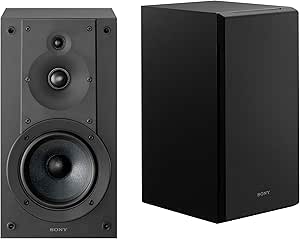 | Best for Detailed Three-Way Playback | Speaker type: Bookshelf | Driver count: 3 | Woofer diameter: 5.12 inches | VIEW ON AMAZON | See Our Full Breakdown |
| Saiyin 3-Way Passive Bookshelf Speakers 5.25-inch Woofer |  | Best for Adjustable Bass in a Budget-Conscious System | Speaker type: Bookshelf | Driver system: 3-way, 3-driver | Woofer diameter: 5.25 inches | VIEW ON AMAZON | See Our Full Breakdown |
| bookshelf speakers for home theater front | Impedance | Speaker type | Woofer diameter | Mounting |
|---|---|---|---|---|
| RIWOIS Passive Bookshelf Speak | 4 ohms | Passive bookshelf speakers | 4 inches | Tabletop or wall-mount |
| Edifier P12 Passive Bookshelf | 6 ohms | Passive bookshelf | — | Wall-mountable |
| Klipsch R-41M Bookshelf Speake | — | — | — | Shelf |
| Acoustic Audio AA321B Mountabl | 8 ohms | — | — | Shelf mount |
| Klipsch R-41M Reference Booksh | 8 ohms | — | 4 inches | — |
| Polk Audio T15 100 Watt Home T | 8 ohms | Bookshelf | 5.25 inches | Wall mount with integrated keyhole slot |
| Polk Monitor XT15 Pair of Book | 8 ohms | Bookshelf | 5.25 inches | Wall mount |
| Klipsch R-51M Bookshelf Speake | 8 ohms | Bookshelf | 5.25 inches | — |
| Sony SS-CS5M2 3-Way 3-Driver H | 6 ohms | Bookshelf | 5.12 inches | — |
| Saiyin 3-Way Passive Bookshelf | 4 ohms | Bookshelf | 5.25 inches | — |
More Details on Our Top Picks
RIWOIS Passive Bookshelf Speakers for Home Stereo and Record Player
The RIWOIS pair suits a front-speaker setup where placement options matter as much as sound. Its wall-mount bracket can help position the speakers around a screen without using floor space, while the 4-inch woofer and rear bass-reflex ports offer more low-end support than the tiny Acoustic Audio AA321B. The silk dome horn tweeter is aimed at clear high frequencies, useful for dialogue detail and effects, though these remain compact passive speakers—not a substitute for a subwoofer in a full home theater system. Unlike the Klipsch R-41M bundle, RIWOIS does not include a center channel, so dialogue duties depend on a separate center speaker or receiver processing. You’ll also need an amplifier or receiver and speaker wire, neither of which is included.
Pros:- Wall-mount bracket supports placement beside a TV without taking up shelf space.
- 4-inch woofer and dual rear bass-reflex ports offer more bass support than the Acoustic Audio AA321B’s 2.5-inch drivers.
- Silk dome horn tweeter is designed to provide crisp high-frequency detail.
- Furniture-style cabinet offers a more finished appearance than a basic utility speaker.
Cons:- Requires a separate amplifier or AV receiver and speaker wire.
- No center channel is included, unlike the Klipsch R-41M and R-52C bundle.
- Not water-resistant and unsuitable for outdoor installation.
Best for: Home theater owners who need compact front speakers that can be wall-mounted beside a screen and already have a compatible receiver.
Not ideal for: Buyers seeking a ready-made front stage with a matching center speaker, or anyone who needs weather-resistant speakers for outdoor use.
- Speaker type:Passive bookshelf speakers
- Woofer diameter:4 inches
- Impedance:4 ohms
- Audio channels:2
- Additional features:Dual bass-reflex ports; wall-mountable
- Mounting:Tabletop or wall-mount
- Enclosure materials:ABS, metal, and MDF
Our verdict“Choose the RIWOIS pair if you need passive front speakers with wall-mount flexibility and already own the amplification they require.”
Edifier P12 Passive Bookshelf Speaker – 2-Way, Wall-Mountable, Wood Finish, Pair
The Edifier P12 is a practical fit when you want a small, traditional-looking pair for the left and right channels and have an AV receiver ready. Its 4-inch bass drivers and silk dome tweeters put it in a similar compact class to the RIWOIS, while the wood cabinet gives it a more conventional furniture match. The included wall-mount option is useful when a media console is crowded, though the listed 6-ohm impedance means you should check that your receiver supports the load. Unlike the Klipsch R-41M bundle, the P12 is sold as a pair without a center channel, so it does not form as complete a front stage on its own. The passive design also means no built-in amplification or wireless playback; the listed connectivity does not change that requirement.
Pros:- Pair includes two passive speakers for left and right front channels.
- 4-inch drivers and silk dome tweeters suit compact home theater installations.
- Wall-mountable design gives more placement options than shelf-only models such as the Klipsch R-41M.
- Wood finish can blend with furniture more naturally than black cabinet alternatives.
Cons:- Needs a separate amplifier or AV receiver to operate.
- Does not include a center speaker, unlike the Klipsch R-41M and R-52C bundle.
- 6-ohm impedance requires checking receiver compatibility.
Best for: Receiver owners building a compact, wall-mountable front pair that coordinates with wood-finish furniture.
Not ideal for: Buyers who want active speakers, wireless sound without an external amplifier, or a bundle that includes a center channel.
- Speaker type:Passive bookshelf
- Number of speakers:2
- Driver size:4 inches
- Tweeter diameter:1.9 cm
- Impedance:6 ohms
- Maximum power:40 watts
- Dimensions:5.04 × 6.61 × 9.37 inches
- Mounting:Wall-mountable
Our verdict“Pick the Edifier P12 for a compact, wood-finish front pair if you already have a compatible receiver and do not need a bundled center channel.”
Klipsch R-41M Bookshelf Speakers (Pair) and R-52C Center Channel Home Theater Bundle
For a front-stage build, this bundle has a clear advantage over the other entries: it pairs the R-41M left and right speakers with an R-52C center channel. That dedicated center can anchor dialogue across the screen, a useful step up from the RIWOIS and Edifier P12 pairs, which leave center-channel duties to another speaker or receiver processing. The copper-spun woofers and aluminum LTS tweeters are designed for detailed playback, while the MDF cabinets suit indoor use. Compared with the standalone R-41M pair, this package saves you from sourcing a separate center speaker, but it still does not provide surround or height channels. Its compact four-inch bookshelf drivers may also call for a subwoofer in a room where deep effects and bass impact matter.
Pros:- Includes a dedicated center channel for clearer, screen-centered dialogue.
- Matched Klipsch left, right, and center speakers simplify front-stage coordination.
- Aluminum LTS tweeters and copper-spun IMG woofers are designed for detailed playback.
- MDF enclosures provide a sturdy indoor cabinet construction.
Cons:- Surround speakers and a subwoofer are not included.
- Four-inch R-41M woofers may not deliver deep, room-filling bass on their own.
- Requires a separate AV receiver or amplifier.
Best for: Home theater buyers who want matched left, right, and center speakers in one purchase and plan to add surrounds or a subwoofer later.
Not ideal for: Anyone seeking a complete surround package, powerful bass without a subwoofer, or front speakers for a large listening room.
- Included models:R-41M pair and R-52C center channel
- Speaker types:Bookshelf and center channel
- R-41M woofer diameter:4 inches
- R-52C woofer diameter:5.25 inches
- Tweeter:1-inch aluminum LTS
- Power output:100 watts
- Enclosure material:MDF
- Mounting:Shelf
Our verdict“Choose this bundle if a matched center speaker is your priority and you are building a system in stages rather than buying a full surround set.”
Acoustic Audio AA321B Mountable Indoor Speakers 400 Watts Black Bookshelf Pair
The Acoustic Audio AA321B is the most space-conscious option here, with 2.5-inch woofers and included mounting brackets for installations where larger cabinets will not fit. That makes it easier to place near a screen than the Klipsch R-41M, but the compact driver comes with a substantial front-speaker compromise: its stated 150 Hz lower frequency limit leaves more bass work to a subwoofer or other speakers. It can serve as a small-room left and right pair, or as part of a larger system where space is tight, but it is less suited to delivering weighty movie effects by itself. The sealed ABS cabinets are practical for indoor mounting, and wired operation keeps the setup conventional. You will need an amplifier; the high power-handling claim does not replace one.
Pros:- Compact 2.5-inch drivers fit tight spaces more easily than the Klipsch R-41M cabinets.
- Included brackets support straightforward indoor mounting.
- Sealed ABS enclosures are suited to practical indoor installations.
- 8-ohm impedance is a common load for home audio amplifiers.
Cons:- 150 Hz lower frequency response limits bass output compared with the 4-inch RIWOIS and Klipsch options.
- Requires a separate amplifier and wired speaker connections.
- A subwoofer is strongly suited to movie playback if you want convincing low-frequency effects.
Best for: Small-room theater owners who need lightweight, mountable front speakers and already plan to use a subwoofer.
Not ideal for: Listeners who want full-sounding fronts without a subwoofer or need larger drivers for robust music and movie playback.
- Speaker size:2.5-inch woofer
- Power handling:200 watts maximum; 100 watts RMS
- Frequency response:150 Hz–20 kHz
- Impedance:8 ohms
- Enclosure material:ABS
- Mounting:Shelf mount
- Connectivity:Wired
Our verdict“Pick the AA321B only when compact mounting matters more than bass weight and a subwoofer will cover the low end.”
Klipsch R-41M Reference Bookshelf Speakers (Pair), Black
The standalone Klipsch R-41M makes sense for buyers who want a defined left-and-right pair and prefer to choose their own center channel. Its 90 dB sensitivity and horn-loaded aluminum LTS tweeter set it apart from the Edifier P12’s more conventional silk-dome design, while the 4-inch spun copper woofer keeps cabinet size manageable. For home theater fronts, the stated 68 Hz–21 kHz response gives a clearer sense of its low-frequency limits than a broad “deep bass” claim: a subwoofer can take over the lowest movie effects. The R-41M bundle reviewed above is the more convenient route if you also need a matching center; this pair is better when you already own one or want to select a different model. It remains passive and needs a receiver or amplifier.
Pros:- 90 dB sensitivity can make the speakers a practical match for a range of home theater receivers.
- Horn-loaded aluminum LTS tweeter is designed to deliver detailed treble.
- Reinforced MDF cabinet helps limit enclosure vibration.
- Compact 4-inch woofer design is easier to place than larger bookshelf speakers.
Cons:- No center channel is included, unlike the Klipsch R-41M and R-52C bundle.
- 68 Hz lower frequency limit means a subwoofer is useful for deep movie bass.
- Requires a separate amplifier or AV receiver.
Best for: Home theater builders who want compact, sensitive left and right speakers and already have—or intend to choose—a separate center channel.
Not ideal for: Buyers who need a center speaker in the same purchase, deep bass from the front pair alone, or speakers for a very cramped shelf.
- Woofer diameter:4 inches
- Tweeter diameter:1 inch aluminum LTS with Tractrix Horn
- Frequency response:68 Hz–21 kHz
- Impedance:8 ohms
- Sensitivity:90 dB
- Power handling:50 watts continuous; 200 watts peak
- Dimensions:11.3 × 5.75 × 7.9 inches
- Cabinet material:Reinforced MDF with textured wood-grain vinyl
Our verdict“Choose the R-41M pair if you want compact, horn-loaded left and right speakers and prefer to build the rest of your front stage separately.”
Polk Audio T15 100 Watt Home Theater Bookshelf Speakers, Black, 1 Pair
The Polk T15 makes the most sense when front-speaker placement needs to adapt to the room: its integrated keyhole slots allow wall mounting, while its 5.25-inch woofer is intended to deliver fuller sound than a tiny satellite speaker. Polk describes its output as clear and balanced, a useful fit for movie dialogue and everyday listening in a starter surround system. Compared with the more explicitly high-resolution-focused Polk Monitor XT15, the T15 is the simpler, flexible pick rather than the more feature-led option. Its stated wired connection suits a conventional receiver, but the supplied product details do not establish wireless operation, so I would not choose it for a cable-free setup. It can serve as a front pair, though buyers wanting a stronger emphasis on detailed playback should compare the XT15 as well.
Pros:- Integrated keyhole slots allow wall mounting and flexible front-speaker placement
- 5.25-inch woofer is suited to fuller sound than compact satellite speakers
- Designed to connect with most home theater receivers or stereos
- Can fill front, rear, or surround roles as a system changes
Cons:- Wired connectivity means a receiver and speaker cable are needed
- The product data does not give a detailed frequency-response range for judging low-end extension
- Indoor-only design has no water-resistance rating
Best for: Home theater buyers who need a receiver-connected front pair that can be wall-mounted to free up shelf space
Not ideal for: Listeners seeking wireless front speakers or a clearly specified high-resolution feature set; the T15 is a wired, straightforward receiver speaker
- Speaker type:Bookshelf
- Woofer diameter:5.25 inches
- Impedance:8 ohms
- Mounting:Wall mount with integrated keyhole slot
- Connectivity:Wired
- Enclosure material:Wood
- Audio output mode:Surround
Our verdict“Choose the T15 if flexible wall mounting and straightforward receiver use matter more than a more detailed feature set.”
Polk Monitor XT15 Pair of Bookshelf or Surround Sound Speakers – Hi-Res Audio Certified, Dolby Atmos & DTS:X Compatible
The Monitor XT15 is the more forward-looking Polk option here: it pairs a 1-inch Terylene tweeter with a 5.25-inch dynamically balanced woofer and is described as compatible with Dolby Atmos and DTS:X systems. Those formats do not make the speaker an Atmos module by themselves, but the flexible bookshelf-or-surround role can help when building a system around an AV receiver. Compared with the simpler Polk T15, the XT15 has a clearer high-resolution and format-compatibility pitch; compared with the Klipsch R-51M, it gives more emphasis to system flexibility than a large stated maximum-power figure. It remains a passive, wired speaker, and the listed specs do not include a power rating or detailed dimensions. Plan for stands or suitable mounting hardware rather than assuming placement accessories are included.
Pros:- Compact design supports bookshelf or surround placement
- 1-inch Terylene tweeter and 5.25-inch woofer provide a dedicated two-driver design
- Described as compatible with Dolby Atmos and DTS:X systems
- Seven-year warranty is specified in the product data
Cons:- Wired connectivity requires speaker cable and a suitable receiver or amplifier
- Stands or mounting hardware may be needed for effective placement
- No power-handling figure is provided in the supplied specifications
Best for: AV receiver owners building a wired surround setup who want compact speakers with stated Dolby Atmos and DTS:X compatibility
Not ideal for: Buyers who need wireless speakers, included placement hardware, or detailed power-handling specifications before choosing
- Speaker type:Bookshelf
- Woofer diameter:5.25 inches
- Tweeter diameter:1 inch
- Impedance:8 ohms
- Frequency response:40 kHz (as listed)
- Mounting:Wall mount
- Connectivity:Wired
- Warranty:7 years
Our verdict“Pick the Monitor XT15 when surround-system flexibility and stated format compatibility matter more than wireless convenience or fully detailed power specs.”
Klipsch R-51M Bookshelf Speaker (Pair), Black
For front channels that need to keep their presence in a lively movie mix, the Klipsch R-51M stands out for its 340-watt maximum power rating, horn-loaded aluminum tweeter design, and dual 5.25-inch spun-copper IMG woofers. Its bass-reflex port is intended to reinforce low frequencies, though it does not replace a dedicated subwoofer for deep effects. Compared with the Polk Monitor XT15, the R-51M leans more toward output and a bold speaker design than compact surround flexibility. The supplied specs list a 62 Hz frequency-response figure, so I would still pair it with a subwoofer for movie soundtracks that demand lower bass. At about 13.3 inches tall and 11 pounds per speaker, it also needs a stable shelf or stand and clear room around the port; it is not the pick for hidden or wall-mounted placement.
Pros:- 340-watt maximum power rating supports high-output system planning
- Aluminum LTS tweeters and spun-copper woofers are specified for the driver array
- Bass-reflex port supports stronger bass response
- Pair format provides matching left and right front speakers
Cons:- Requires wired connection to a receiver or amplifier
- Bass response listed from 62 Hz does not cover the deepest movie effects
- Needs shelf or stand space and is not described as wall-mountable
Best for: Movie watchers with a capable receiver who want substantial, high-output bookshelf speakers for the left and right front channels
Not ideal for: Small-room buyers who need wall-mounted or discreet speakers, or listeners expecting deep cinematic bass without a subwoofer
- Speaker type:Bookshelf
- Tweeter diameter:1 inch
- Woofer diameter:5.25 inches
- Frequency response:62 Hz (as listed)
- Impedance:8 ohms
- Maximum power:340 watts
- Dimensions:13.3 x 7 x 8.5 inches
- Weight:11 pounds
Our verdict“Choose the R-51M for a receiver-powered front pair prioritizing strong output, and add a subwoofer if deep effects matter.”
Sony SS-CS5M2 3-Way 3-Driver Hi-Res Compact Bookshelf Speakers (Pair)
Sony’s SS-CS5M2 takes a different route from the two-way Polk Monitor XT15: its three-driver arrangement adds a wide-dispersion super tweeter alongside a 5.12-inch woofer and high-precision tweeter. For front-channel use, that design is aimed at spreading detailed sound across a listening area, while the stated 53–50,000 Hz response signals broad high-frequency coverage. It is a wired passive pair, so an AV receiver or amplifier remains part of the setup. The listed 6-ohm impedance also makes receiver compatibility worth checking, especially in a system with several speakers. Compared with the output-focused Klipsch R-51M, Sony puts more emphasis on driver layout and frequency range than on a stated high maximum-power figure. Its compact footprint can suit a shelf, but the supplied weight and power details are limited, so buyers should verify their placement and amplification needs.
Pros:- Three-driver design includes a dedicated wide-dispersion super tweeter
- Broad stated frequency response of 53–50,000 Hz
- Compact dimensions suit shelves and smaller front-speaker locations
- 100-watt power output is listed
Cons:- 6-ohm impedance calls for checking receiver compatibility
- Wired passive design needs an external receiver or amplifier
- The supplied product data gives limited detail about weight and power-handling conditions
Best for: Listeners who want a compact, three-way wired front pair and have an AV receiver that supports 6-ohm speakers
Not ideal for: Buyers who need wireless operation, robustly documented power handling, or speakers that can be used without an amplifier
- Speaker type:Bookshelf
- Driver count:3
- Woofer diameter:5.12 inches
- Tweeter diameter:0.98 inches
- Frequency response:53–50,000 Hz
- Impedance:6 ohms
- Power output:100 watts
- Dimensions:8.7 x 7 x 13.2 inches
Our verdict“Choose the Sony pair for compact three-way playback if your receiver supports its 6-ohm load and you do not need wireless speakers.”
Saiyin 3-Way Passive Bookshelf Speakers 5.25-inch Woofer
The Saiyin pair earns its place through a useful combination of a three-way driver layout and removable foam bass-port plugs. That gives receiver owners a way to adapt bass response to the front speakers’ location: plugging the ports can help when placement near a wall makes bass too prominent, while open ports allow more output from the cabinet. Its 48 Hz lower response figure is a helpful point of comparison with the Klipsch R-51M, whose listed response starts at 62 Hz, though figures alone do not predict how either speaker will sound in a room. The tradeoff is a 4-ohm impedance and 85 dB sensitivity, so I would check the receiver’s support before choosing it for a multichannel system. Unlike the powered convenience some buyers expect, Saiyin is passive: amplification and speaker wire are not included.
Pros:- Three-way design assigns separate drivers to highs, mids, and bass
- Removable foam port plugs allow adjustment for room placement
- 48 Hz stated lower frequency limit is lower than the R-51M’s listed 62 Hz figure
- Gold-plated terminals are specified
Cons:- 4-ohm impedance may rule it out for receivers without suitable load support
- Passive speakers require a separate amplifier or AV receiver
- Speaker wire is not included, and there is no wireless connectivity
Best for: Receiver owners who want a three-way front pair with adjustable porting and can confirm their amplifier supports 4-ohm speakers
Not ideal for: Beginners seeking powered or wireless speakers, or anyone whose receiver is not rated for a 4-ohm load
- Speaker type:Bookshelf
- Driver system:3-way, 3-driver
- Woofer diameter:5.25 inches
- Frequency response:48 Hz–20 kHz
- Impedance:4 ohms
- Sensitivity:85 dB
- Dimensions:12.2 x 7.7 x 6.7 inches
- Enclosure material:ABS and metal
Our verdict“Choose Saiyin for adjustable bass and a three-way layout if your receiver supports 4 ohms and you already plan to supply amplification and wire.”

How We Picked
I ranked these speakers for their usefulness as left and right home theater fronts, not as general music speakers. I weighed listed configuration and format, whether the product is sold as a pair or as part of a center-channel bundle, and how clearly its stated design suits front-stage placement. I also considered system-building needs: passive speakers require an amplifier or AV receiver, while flexibility for other roles can help buyers expanding a surround setup.
The order favors options with clearer home theater utility and fewer surprises for a front-channel buyer. The Polk Monitor XT15 ranks first for its stated front-or-surround versatility; the Klipsch R-41M bundle earns a distinct place for including a center speaker. Models with narrower listed positioning, sparse specifications, or a more specialized fit rank lower—not because they cannot work, but because buyers have less information or flexibility when planning a complete front stage. I have not treated wattage claims or driver count alone as proof of sound quality.
| bookshelf speakers for home theater front | Speaker type | Mounting |
|---|---|---|
| RIWOIS Passive Bookshelf Speak | Passive bookshelf speakers | Tabletop or wall-mount |
| Edifier P12 Passive Bookshelf | Passive bookshelf | Wall-mountable |
| Klipsch R-41M Bookshelf Speake | — | Shelf |
| Acoustic Audio AA321B Mountabl | — | Shelf mount |
| Klipsch R-41M Reference Booksh | — | — |
| Polk Audio T15 100 Watt Home T | Bookshelf | Wall mount with integrated keyhole slot |
| Polk Monitor XT15 Pair of Book | Bookshelf | Wall mount |
| Klipsch R-51M Bookshelf Speake | Bookshelf | — |
| Sony SS-CS5M2 3-Way 3-Driver H | Bookshelf | — |
| Saiyin 3-Way Passive Bookshelf | Bookshelf | — |
Factors to Consider When Choosing Bookshelf Speakers For Home Theater Fronts
Choosing front speakers is a system decision: the pair has to fit the room, work with the receiver, and blend with a center channel you may add later. These broader checks can prevent a common mismatch—buying a speaker pair first and discovering it does not suit the room or the rest of the system.
Match the Front Pair to Your Room and Listening Distance
Room size and seating distance affect how much speaker output and cabinet presence make sense. A small bookshelf speaker may be easier to place in a compact room, while a larger cabinet can take up more shelf space and may need more room around it. Do not choose by woofer size or power wording alone; look for the manufacturer’s sensitivity and impedance details, then check that your receiver can drive the load. If those specifications are not readily available, seek them out before buying. A speaker that fits the room and receiver is a safer choice than one selected from a headline number.
Plan the Center Channel Before You Buy
For movies and television, the center speaker carries much of the dialogue, so its tonal match with the left and right speakers matters. A bundled front pair and center, such as the R-41M and R-52C set in this lineup, can simplify matching, but it is a poor fit if your system already has a center you intend to keep. If you buy the pair first, check whether the brand offers a compatible center and whether it will fit below or above your display. Avoid assuming that two speakers alone will create the same dialogue presentation as a three-speaker front stage. Budget and furniture space for the center before settling on the fronts.
Check Receiver Compatibility, Not Just Power Claims
Most models in this roundup are passive, so they need an AV receiver or amplifier; a television cannot power them directly. Confirm the speaker’s impedance and the receiver’s supported range, then check that the receiver has enough channels for the surround format you want. Large wattage figures in a product name do not tell you how well a speaker will work with a particular receiver or at your usual listening level. A mismatch can limit system choices and may lead to poor performance at louder playback. If you are starting without a receiver, treat its cost, connections, and channel count as part of the speaker decision.
Allow for Placement, Stands, and Wall Mounting
Bookshelf speakers still need a stable, suitable location; a shelf is not automatically the best acoustic position. Check cabinet dimensions against available stands or furniture, and leave room for any rear-facing ports if the manufacturer calls for clearance. Wall-mountable designs can help when floor space is limited, but confirm how they attach and whether the intended front-channel height works for your seating. Keep the left and right speakers at comparable heights and distances from the main seat when possible. Buying stands or mounting hardware after choosing the speakers can reveal a fit problem that was easy to miss on a product page.
Decide Whether You Need Front-Stage Matching or Future Flexibility
If the speakers will remain the front pair, a matching center and a sensible fit for your room may matter more than flexibility for other channels. If you expect to move them to surround duty later, a model explicitly presented for multiple roles, such as the Polk Monitor XT15, may give the system more options. That flexibility does not replace checking dimensions, receiver compatibility, or center-channel matching. Buyers who already own speakers should also ask whether a new pair will blend with them, rather than expecting every brand or series to match. Choose for the next realistic system step, not a hypothetical upgrade that may never happen.
Treat Driver Count as One Clue, Not a Sound-Quality Ranking
A two-way or three-way label describes how a speaker divides frequency duties among its drivers; it does not establish how natural, clear, or balanced it will sound in your room. The Sony SS-CS5M2 and Saiyin option both advertise three-way designs, but that shared label does not make them interchangeable. Look at the full specifications, cabinet size, receiver match, and availability of a suitable center speaker. Where possible, listen to a pair with familiar dialogue and music at a level close to your normal use. Avoid choosing solely because one listing has more drivers or a larger number in its name.
Frequently Asked Questions
Can I use any passive bookshelf speaker as the left and right front channels?
Many passive bookshelf speakers can serve as left and right fronts if they connect to an AV receiver and fit its impedance and power requirements. The main questions are whether the speakers suit your room and whether you can match them with a center channel later. Check the connection type and specifications before buying, especially if your receiver is already chosen. Also confirm that the pair can be placed at similar heights and distances from your main seat. A speaker being labeled for stereo does not by itself make it a poor theater front, but system fit still matters.
Should I buy the Klipsch R-41M bundle if I already own a center speaker?
The R-41M and R-52C bundle is most useful when you need both front speakers and a center channel. If your current center is in good condition, buying a bundle that includes another center may add a speaker you do not need. Before deciding, check whether your existing center matches the tone and series of the R-41M pair closely enough for consistent dialogue as sound moves across the screen. If matching is a priority, a coordinated front stage may be preferable to mixing models. If not, compare the R-41M pair on its own against other options and choose based on fit and receiver compatibility.
Is the Polk Monitor XT15 a better choice than the Polk T15 for front speakers?
The Monitor XT15 has the clearer flexibility case in this roundup because it is listed for bookshelf or surround use and names Dolby Atmos and DTS:X compatibility. That may appeal to someone building a system in stages. The T15 is also identified for home theater use, so it remains a candidate if its specifications and placement fit your setup. Compare the exact impedance, sensitivity, dimensions, and center-channel options before deciding; the listing titles alone do not establish which will sound better in your room. If you do not need future surround flexibility, let fit and system matching guide the choice.
Do I need a separate center speaker if I buy one of these pairs?
No, a pair can operate as the left and right front channels without a center speaker if your receiver supports a phantom-center setup. Dialogue will then be reproduced by the front pair, which can work well for a listener seated near the middle. A separate center may be more practical when several people sit across a wide couch or dialogue needs clearer placement on screen. Check that your receiver can configure the system without a center and select the correct speaker settings. If you expect to add one later, consider matching availability and physical fit now.
What should I check before choosing a three-way bookshelf speaker for a home theater?
Start with the speaker’s complete specifications and physical dimensions rather than treating three-way construction as a guarantee of better sound. Confirm that the impedance and sensitivity work with your receiver, and check whether a matching center speaker is available if you plan a conventional front stage. A larger or more complex cabinet may also demand more shelf depth or stand space. The Sony SS-CS5M2 and Saiyin three-way model illustrate why driver layout alone is not enough to settle the choice. If possible, compare them using dialogue and familiar material in a setup similar to yours.
Conclusion
Best overall: I’d choose the Polk Monitor XT15 for a buyer who wants front speakers that can also suit surround duties as a system grows. Best value-minded fit: the Polk T15 is a straightforward home-theater-focused option to compare when you want a basic passive pair, subject to receiver and room compatibility. Best premium-oriented pick: the Klipsch R-51M is the larger Klipsch bookshelf option here for shoppers who can accommodate its footprint and want that model’s front-speaker format. Best for beginners: the Klipsch R-41M and R-52C bundle simplifies the first front-stage choice by including a center, though skip it if you already own one. For specific needs, consider the wall-mountable Edifier P12 when mounting flexibility matters, or the Sony SS-CS5M2 if a compact three-way design is on your shortlist. Check receiver match, dimensions, and center-channel plans before choosing any pair.
Halloween Picks
halloween
As an affiliate, we earn on qualifying purchases.