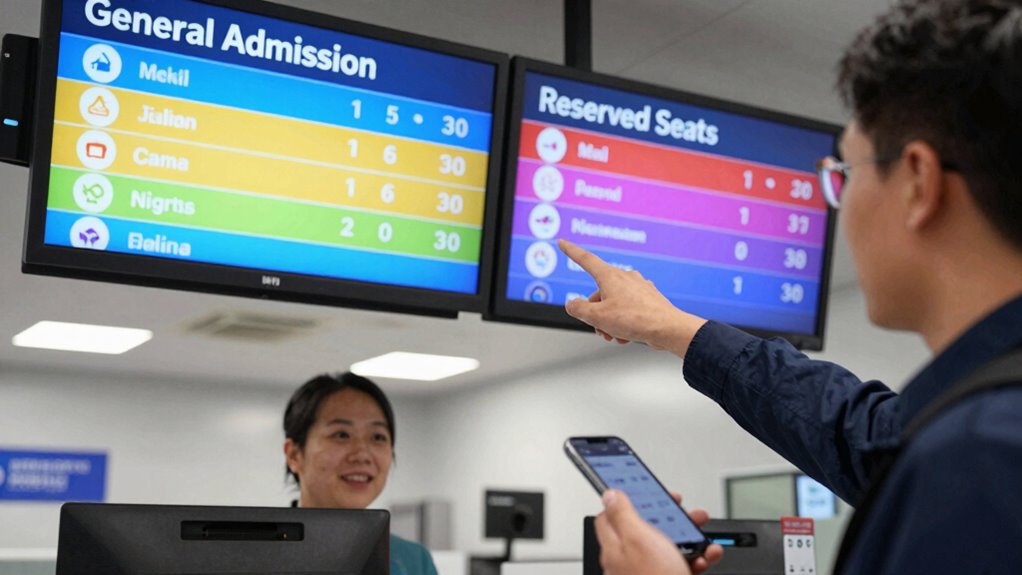

To decide between GA and reserved seats without guessing, first consider your budget—GA is usually cheaper, but reserved gives you certainty and comfort. Think about how much control you want over your view and social experience; GA offers flexibility and a lively atmosphere, while reserved seats provide stability and better sightlines. Reflect on your priorities, such as convenience or spontaneity. Keep exploring; you’ll find tips to make your choice even clearer.
Key Takeaways
- Assess your budget to determine if the higher cost of reserved seats aligns with your comfort preferences.
- Consider your desire for flexibility versus certainty; choose GA for spontaneity, reserved for guaranteed spots.
- Identify your preferred event atmosphere—dynamic and social or stable and comfortable.
- Evaluate the importance of optimal viewing angles and proximity; reserved seats often offer better sightlines.
- Prioritize planning ahead to reduce uncertainty and select the seating option that best matches your event goals.

Choosing between general admission (GA) and reserved seats can considerably impact your event experience. To make an informed decision, you need to understand how different seating options align with your preferences, budget, and the event’s nature. One of the key considerations is pricing strategies. Generally, GA tickets tend to be more affordable because they don’t guarantee a specific spot, giving you flexibility but less control over your view. Reserved seating, on the other hand, often comes at a higher price point since it guarantees you a designated seat, which can be especially valuable for events where good vantage points matter, like concerts or sports games. By evaluating the pricing strategies, you can determine whether paying extra for reserved seats fits your budget or if sticking with GA offers better value for your money.
Seat allocation plays a vital role in this decision. With GA tickets, you’re free to arrive early or late, and you can choose your spot on a first-come, first-served basis. This setup works well if you enjoy the thrill of snagging a prime spot or don’t mind wandering around to find the best view. However, it also means you risk ending up far from the stage or main attraction, especially if the event is popular and seats fill up quickly. Reserved seats provide certainty; your specific spot is allocated in advance, allowing you to plan your arrival accordingly. If you prefer having control over where you sit and want to minimize stress, reserved seating becomes a more attractive option. Additionally, understanding projector technology and how it influences viewing experiences can help you decide if particular seating arrangements will support optimal visual quality during events or screenings.
Another factor to consider is the event’s atmosphere and your social preferences. If you like mingling and a more dynamic experience, GA might be perfect because it encourages interaction and spontaneity. Conversely, if you’re attending with a group or want to ensure a certain level of comfort and convenience, reserved seats offer the stability and predictability you need. Also, think about how seat allocation affects your overall experience — for example, proximity to amenities like food stalls or restrooms. Reserved seating often positions you closer to these conveniences, enhancing your comfort throughout the event.
Ultimately, your choice depends on weighing these variables against your priorities. Do you value flexibility and saving money, or do you prefer certainty and comfort? By understanding the implications of pricing strategies and seat allocation, and how they align with your preferences, you can make a confident decision without guessing. Planning ahead and considering what matters most to you will ensure your event experience is enjoyable and stress-free, whether you choose GA or reserved seating.
Frequently Asked Questions
Can I Switch From GA to Reserved Seats Later?
Yes, you can switch from GA to reserved seats later, but flexibility varies by airline. Usually, airlines allow changes, offering more certainty if you prefer a specific seat. However, pricing considerations come into play—changing might incur fees or fare differences. Check your airline’s policy beforehand, so you’re aware of potential costs. Planning early guarantees you can select the best option for your comfort and budget.
Are Reserved Seats Refundable if Plans Change?
Think of reserved seats as your safety net—yes, they’re typically refundable, but it depends on the event’s refund policy. You’ll find that reserved seats often offer some seating flexibility if plans change, but always check the specific refund policy before booking. Some venues allow full refunds, while others deduct a fee. So, review the terms carefully to guarantee your plans can adapt without losing your money.
How Do Seat Preferences Impact My Choice?
Your seat preferences considerably impact your choice between GA and reserved seats. If you prioritize seat comfort or need accessibility options, reserved seats are better since they guarantee a specific spot with amenities suited to your needs. On the other hand, if you’re flexible and comfortable with standing or moving around, GA might work. Think about what matters most—comfort and accessibility or flexibility—and choose accordingly to enhance your experience.
Is There a Price Difference Between GA and Reserved?
They say, “You get what you pay for,” and with seat choices, this rings true. Generally, reserved seats often have a higher seat cost difference compared to general admission (GA), reflecting added comfort or perks. The pricing comparison shows that reserved seats usually cost more, but if you value guaranteed space and specific views, paying extra might be worth it. Always check the event’s pricing details for the best decision.
What Are the Risks of Choosing the Wrong Option?
Choosing the wrong ticket type can impact your experience by limiting flexibility or increasing costs. You risk losing the ability to change plans if you pick a non-refundable reserved seat when your schedule shifts. Conduct a risk assessment by considering your need for ticket flexibility and potential changes. If plans are uncertain, opting for a General Admission ticket might reduce your risk, offering more adaptability and peace of mind.
Conclusion
Choosing between GA and reserved seats is like planting a seed—you need to contemplate your comfort level and plans. If you want flexibility and spontaneity, go for GA, like riding the waves freely. If you prefer certainty and a guaranteed spot, reserved seats are your anchor. Trust your preferences and the event’s vibe to make the right call. With this approach, you’ll navigate your seating choices confidently, steering clear of guesswork and sailing smoothly to your ideal experience.