

To leave a tight crowd smoothly, stay aware of your personal space and move gently, avoiding sudden jerks or pushes. Watch for subtle cues like others stepping back or shifting away, and adjust your approach accordingly. Find a natural opening near less crowded areas, angle your body, and make non-threatening gestures to signal your intent. Patience and respectful body language are key. Continuing will reveal more tips for a confident, conflict-free exit.
Key Takeaways
- Observe social cues and body language to identify when others are comfortable with your movement.
- Move slowly and deliberately to avoid startling or pushing others in the crowd.
- Use open body language and eye contact to signal your intention to leave respectfully.
- Identify less congested areas or gaps near the edges to exit smoothly.
- Be patient, wait for natural openings, and leave quietly to prevent disturbance.
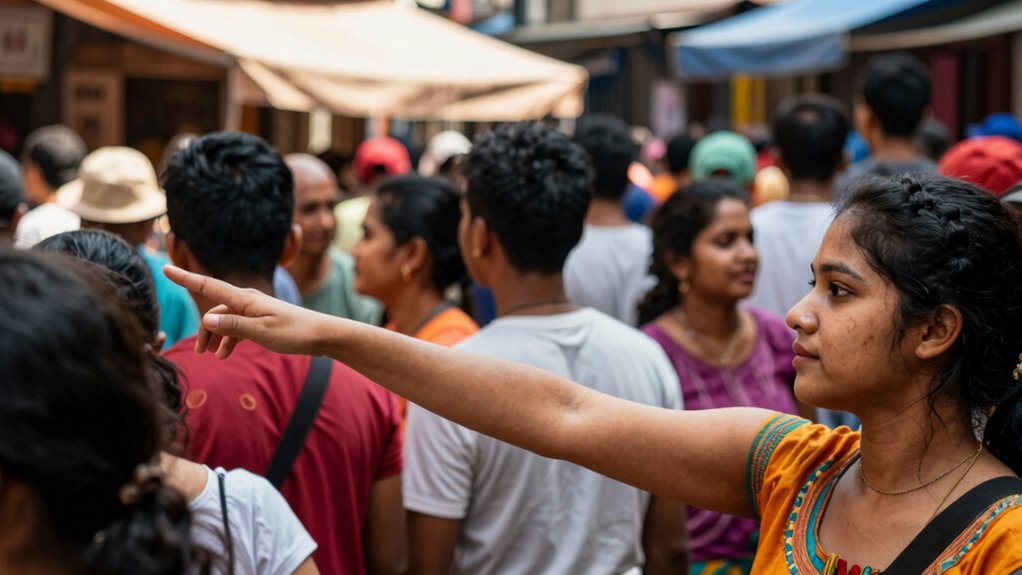
Moving through a tight crowd can feel overwhelming, but knowing how to leave smoothly can make the experience less stressful. When you’re packed in with others, maintaining awareness of your personal space is crucial. Respect others’ boundaries by keeping your movements deliberate and gentle, avoiding sudden jerks or pushes. This helps prevent causing discomfort or triggering defensive reactions. As you prepare to exit, pay close attention to social cues from those around you. People often subtly signal whether they’re open to interaction or prefer to keep their distance. If someone steps back or shifts away, it’s a sign they might want more space. Recognizing these cues allows you to adjust your approach, reducing the risk of accidental intrusion or confrontation.
Respect personal space and social cues to navigate crowds smoothly and avoid discomfort or conflict.
When you’re ready to make your move, plan your exit carefully. Instead of trying to push directly through the center of the crowd, look for gaps or less congested areas. These usually form near the edges or where people are less engaged in conversation. By moving toward these openings, you can leave the crowd more smoothly and with less disruption. Keep your body language open and non-threatening—avoid facing directly into the crowd or making sudden movements that could draw attention or cause others to block your way. Instead, angle your body slightly, signaling your intent to leave without alarming those nearby.
As you navigate toward the exit, use subtle social cues to gauge how others are responding. If someone looks uncomfortable or shifts away, don’t press forward aggressively. Instead, slow your pace, give them space, and wait for a natural opening. Communicate non-verbally by making eye contact and giving a polite nod or a small smile to acknowledge your intention to pass. These gestures show respect and can prevent misunderstandings. Remember, patience is key. Rushing or forcing your way out can escalate tension or cause accidental contact, which might lead to awkward or confrontational situations. Being attentive to social cues helps you adjust your actions accordingly. Additionally, understanding the importance of personal space can guide your movements and reduce potential conflicts.
Finally, as you step out of the crowd, take a moment to breathe and regain your composure. Leaving quietly and respectfully not only preserves your own peace but also respects the comfort of others around you. Paying attention to personal space and social cues throughout the process ensures a smoother exit, reducing the chances of making things worse. With awareness and patience, you can navigate even the tightest crowds with confidence and ease.

Personal Space Camp: A Picture Book About Respecting Others' Physical Boundaries
As an affiliate, we earn on qualifying purchases.
As an affiliate, we earn on qualifying purchases.
Frequently Asked Questions
How Can I Leave Discreetly Without Attracting Attention?
To leave discreetly, pay attention to social cues and wait for a natural pause in the conversation. Engage in small talk briefly, then excuse yourself politely, like mentioning a prior commitment or needing to check on something. Keep your body language relaxed, avoid drawing attention, and subtly start to drift away. This way, you exit smoothly without disrupting the flow or making others feel awkward.
What Should I Say to Politely Excuse Myself?
You can politely excuse yourself by saying something like, “It’s been great chatting, but I need to step away for a moment.” Keep it simple and friendly, mentioning a small talk topic like, “I’ve got to catch up with someone,” or use a polite excuse such as, “I don’t want to hold you up.” This way, you leave gracefully without drawing unnecessary attention or making things awkward.
How Do I Handle Persistent People Who Won’t Let Me Go?
When someone won’t respect your personal space, gently but firmly use clear social cues. You might step back slightly and say, “I need a bit of space,” or “I’m feeling a little crowded.” Keep your tone calm and friendly. If they persist, reinforce your boundaries politely but assertively. Remember, it’s okay to prioritize your comfort and politely but firmly communicate that you need to leave or create distance.
Is It Better to Leave Abruptly or Gradually?
It’s better to leave gradually rather than abruptly, as it aligns with social etiquette and minimizes discomfort. Use gentle exit strategies like thanking your hosts or saying you need to make a call. Slowly distancing yourself while engaging in a polite conversation helps avoid awkwardness and keeps the atmosphere friendly. This approach shows respect for others and makes your exit smoother, preventing any tension or misunderstandings.
What Are Non-Verbal Cues to Signal I Need to Exit?
Think of your body language as a gentle lighthouse beam guiding others. To signal you’re about to leave, subtly straighten your posture, avoid eye contact, and look at your watch or phone. Your facial expressions should soften or show a polite smile, indicating you’re not upset. These non-verbal cues quietly communicate your need to exit, helping you leave smoothly without disrupting the group’s flow.
crowd navigation body language guide
As an affiliate, we earn on qualifying purchases.
As an affiliate, we earn on qualifying purchases.
Conclusion
Remember, slipping away from a tight crowd is like quietly closing a heavy door—delicate yet decisive. You don’t have to cause a storm to find your breeze; sometimes, the gentlest nudge is enough to set your spirit free. Trust your instincts, and leave with grace, knowing that stepping back allows your true path to unfold. Like a bird unfurling its wings, your escape can be a beautiful release into open skies.

The Social Skills Picture Book: For High School and Beyond
As an affiliate, we earn on qualifying purchases.
As an affiliate, we earn on qualifying purchases.
As an affiliate, we earn on qualifying purchases.